
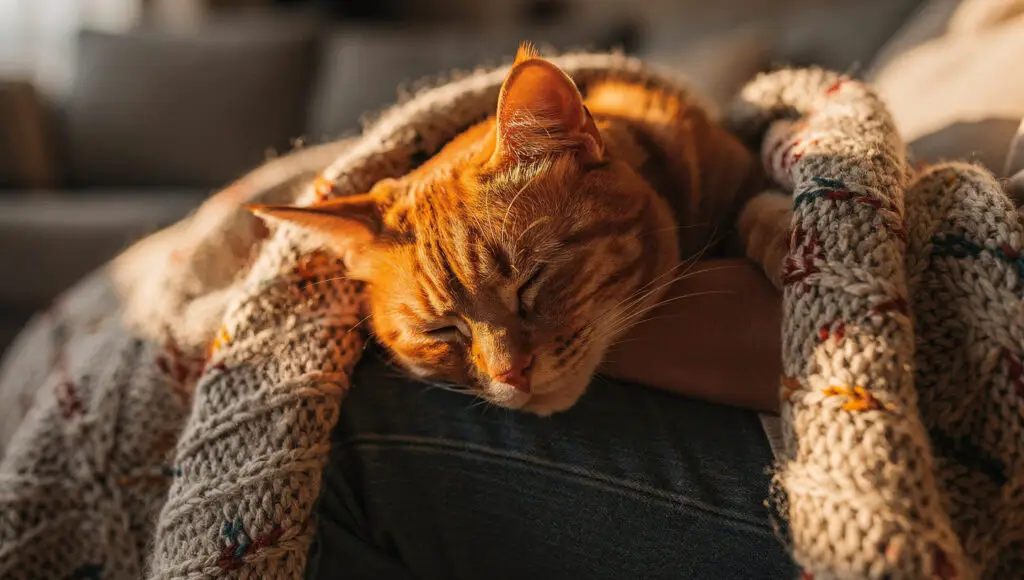
Why does my cat bite me during calm moments like petting or cuddling? You’re relaxed on the couch. Your cat is curled beside you, eyes half-closed, purring loudly as you gently stroke their fur. Everything feels perfect…
And then—CHOMP.
It hurts. It’s sudden. And honestly, it feels a bit like a betrayal. In that moment, many cat owners think the same thing: “Why did my cat do that? Did I upset them? Does my cat hate me?”
Many owners later start wondering why does my cat bite me even when everything seemed calm and affectionate.
Let’s be very clear right away: Your cat does not hate you.
What you experienced is frustrating, but in most cases, it is a form of communication, not aggression. As we explore in our guide on Cat Tail Language: The Ultimate Guide to What Your Cat Is Telling You, cats have complex ways of signaling their feelings. When those signals are missed, teeth become their last resort.
The good news? Once you understand why it happens, stopping it becomes much easier—and kinder for both of you.
Table of Contents
- Why Does My Cat Bite Me? The “Love Bite” Explained
- Overstimulation: When Touch Becomes “Too Much”
- Play Aggression: When You Become the Prey
- Medical Causes: When Biting Means “I Hurt”
- How to Stop Cat Biting (The Right Way)
- Understanding What Your Cat’s Bite Really Means
- Frequently Asked Questions
- Why does my cat bite me and then lick me?
- Why does my cat bite me when I pet her?
- Why does my cat bite me gently out of nowhere?
- Why does my cat bite me while purring?
- Why does my cat bite me softly?
- Why does my cat bite me playfully?
- Why does my cat bite my hands but not hard?
- How can I stop my cat from biting me during play?
- Is it normal for cats to bite their owners?
- When should I worry about my cat biting?
- Should I spray water on my cat when they bite?
Why Does My Cat Bite Me? The “Love Bite” Explained
Yes, the term “love bite” is real—and no, it doesn’t mean your cat is trying to hurt you.
A love bite is usually a gentle nibble that happens during moments of intense closeness: petting, cuddling, or grooming. In the wild, cats groom and lightly nip each other to strengthen social bonds.
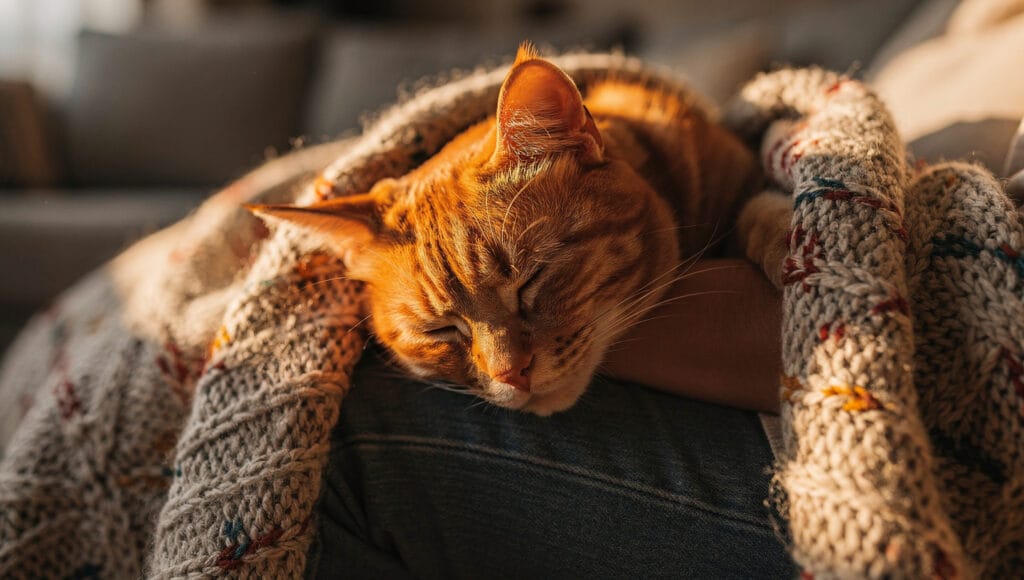
Here’s what’s really happening:
- Deep Connection: Your cat feels comfortable and emotionally safe.
- Instinct: Their grooming instincts kick in.
- Mixed Signals: Sometimes, the feeling of safety triggers a burst of energy they don’t know how to release.
If your cat bites you gently while purring, check out our article on Why Do Cats Purr? to understand how purring isn’t always just about happiness—it’s a complex healing mechanism that can sometimes coincide with over-arousal.
Affection vs. Aggression: How to Tell the Difference
- Love Bite: Soft pressure, purring continues, body remains relaxed.
- Aggressive Bite: Sudden hard pressure, hissing, growling, or flattened ears.
Overstimulation: When Touch Becomes “Too Much”
This is arguably the most misunderstood reason for cat biting. It is often called Petting-Induced Aggression.
Cats have a specific threshold for physical touch. At first, your rhythmic petting feels soothing. But after a few minutes, repetitive stroking can cause their nerve endings to become over-sensitive. From a veterinary perspective, this is a neurological response—not an emotional one.
Your cat isn’t thinking, “I’m angry at you.” Your cat is thinking, “This sensation is overwhelming—make it stop!”
Warning Signs Owners Often Miss
Before the teeth come out, your cat usually begs you to stop using body language. If you miss these whispers, they have to shout (bite).
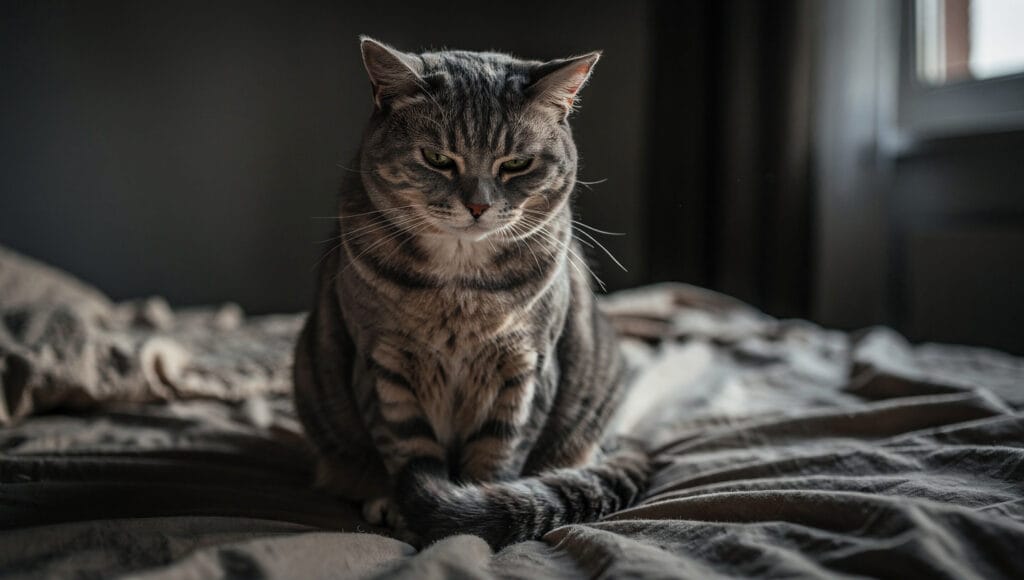
Watch for these “Pre-Bite” Signals:
- The Tail: Is it starting to twitch or thrash? (See our Cat Tail Language guide for specific movements).
- The Skin: Rippling or twitching along their back.
- The Ears: Rotating sideways (“airplane ears”) or flattening back.
- The Freeze: A sudden pause in purring or movement.
Pro Tip: If you see any of these signs, stop petting immediately. Let them reset.
Play Aggression: When You Become the Prey
Cats are predators. Even the sweetest house cat carries the DNA of a skilled hunter. They are hard-wired to stalk, chase, pounce, and bite. When these instincts don’t have a proper outlet (like toys), cats will choose new targets—often your ankles or hands.
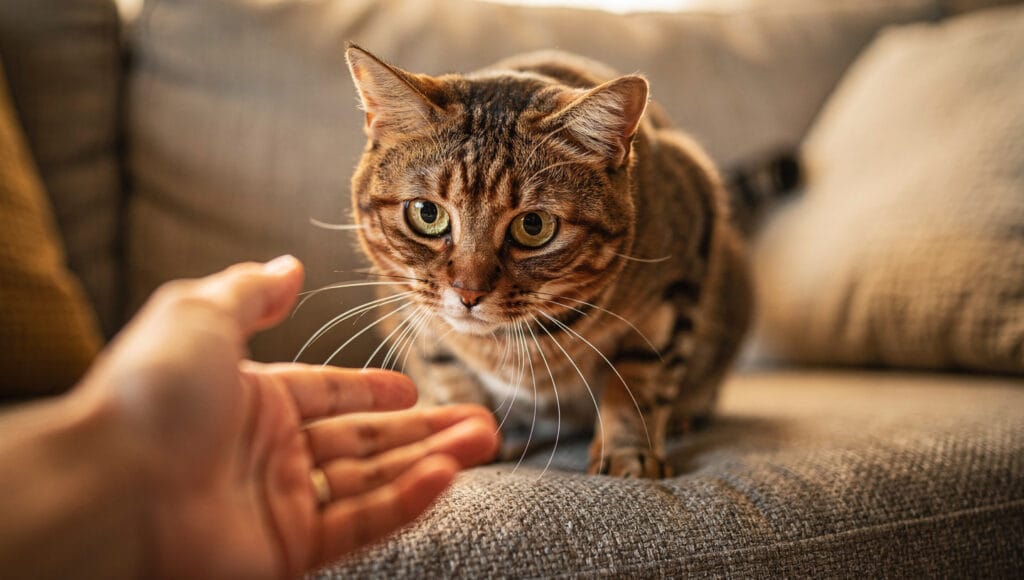
The #1 Mistake Cat Owners Make: Using your hands to wrestle with kittens.
It seems cute when they are tiny balls of fluff. But behavioral experts warn that this teaches a dangerous lesson: “Human skin is a toy.” As the cat grows, the claws get sharper and the jaw gets stronger, but the habit remains.
Note: For more on natural behaviors, reading about Why Do Cats Sleep So Much? can help you understand their energy cycles—hunt, eat, groom, sleep.
Medical Causes: When Biting Means “I Hurt”
If a normally calm, affectionate cat suddenly starts biting or snapping when touched, this is a major red flag.
Pain is a common trigger for sudden aggression. Since cats are masters at hiding illness, biting might be the only way they can say, “Don’t touch me there, it hurts.”
Common hidden medical causes include:
- Dental Disease: A sore tooth makes head petting agonizing.
- Arthritis: Common in older cats; touching the hips or spine can cause a defensive snap.
- Injuries: Hidden sprains or abscesses.
Source: According to the Cornell Feline Health Center, sudden behavioral changes warrant an immediate vet visit.
How to Stop Cat Biting (The Right Way)
Stopping biting is absolutely possible, but you cannot “train” a cat with punishment.
The Golden Rule: Never Punish. No hitting, no yelling, and no spraying water. Punishment creates fear, and a fearful cat is more likely to bite in self-defense, not less.
1. The Art of Redirection
When you notice the eyes dilate or the tail flick, you have a split second to change the narrative. Don’t pull your hand away quickly (that triggers the chase instinct). Instead, give them something appropriate to kill.
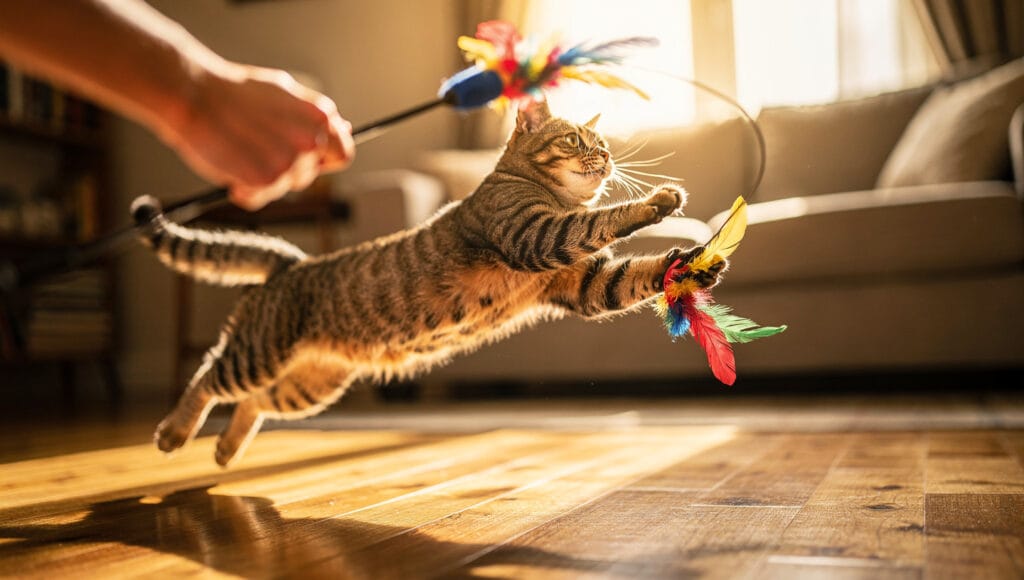
- Toss a toy: Keep a mouse toy in your pocket to throw.
- Use a Wand: This keeps your hands far away from the “danger zone.”
- Kicker Toys: Large plush toys they can bunny-kick are excellent for releasing aggression.
2. The “Time-Out” Method
If a bite does happen:
- Do not scream (high-pitched noises can sound like prey).
- Go limp: Stop moving your hand. Movement encourages biting.
- Disengage: Calmly stand up and walk away. Close the door if necessary.
- Ignore: Deny them attention for 5-10 minutes.
Cats learn by association. They will quickly understand: Gentle play = Fun continues. Biting = Fun ends.
Understanding What Your Cat’s Bite Really Means
Cats rarely bite without a reason. In most cases, biting is simply another way for them to communicate how they feel in that moment. Sometimes it’s playful excitement, sometimes it’s a gentle love nip, and other times it’s their way of saying “that’s enough.”
The key is learning to read the small signals your cat gives before the bite happens. Cats usually warn us through body language long before their teeth come into play. By paying attention to those signals, you can understand what your cat is trying to say and avoid the bite altogether.
The table below explains some of the most common biting situations and what your cat may actually be trying to communicate.
| Situation | Type of Bite | What Your Cat Is Communicating |
|---|---|---|
| While petting your cat | Overstimulation bite | Your cat enjoyed the affection at first but has reached its limit and wants you to stop. |
| During playtime | Play aggression | Your cat’s hunting instincts are activated and your hands may be mistaken for prey. |
| Followed by licking | Affectionate nip | A small “love bite” that can happen during bonding or grooming behavior. |
| Suddenly out of nowhere | Warning bite | Your cat may feel annoyed, overstimulated, or wants personal space. |
| At night | Attention-seeking bite | Your cat is bored, energetic, or trying to wake you up to play. |
| When touching a painful area | Defensive bite | Your cat may be experiencing discomfort or a hidden health issue. |
| When you stop petting | Demand bite | Your cat may want more attention or interaction. |
Frequently Asked Questions
Why does my cat bite me and then lick me?
This behavior can actually be a mix of affection and instinct. Cats often groom the people they feel bonded with. The small bite may be a gentle “love nip,” and the licking that follows is similar to how cats groom each other. In many cases, it’s simply your cat showing attachment and comfort around you.
Why does my cat bite me when I pet her?
Many cats enjoy being petted, but only for a certain amount of time. When the stimulation becomes too much, they may give a quick bite as a signal that they’ve had enough. Watch for warning signs like tail flicking, flattened ears, or sudden body tension.
Why does my cat bite me gently out of nowhere?
A gentle bite can be a form of communication rather than aggression. Cats sometimes give small nips when they want attention, when they’re slightly overstimulated, or when they’re trying to initiate play.
Why does my cat bite me while purring?
Purring doesn’t always mean complete relaxation. Some cats purr while feeling excited or overstimulated. If your cat bites while purring during petting, it could mean they’re enjoying the interaction but reaching their sensory limit.
Why does my cat bite me softly?
Soft bites are often playful or affectionate. Kittens especially learn biting behavior while playing with littermates. If this behavior continues into adulthood, it may simply be leftover play behavior rather than aggression.
Why does my cat bite me playfully?
Playful biting is tied to a cat’s natural hunting instincts. When cats play, they practice stalking, grabbing, and biting prey. If your hands become part of the game, your cat may treat them like a moving target.
Why does my cat bite my hands but not hard?
This is usually a controlled bite during play. Cats are capable of adjusting the strength of their bite. A light bite often means your cat is interacting with you in a playful way rather than trying to hurt you.
How can I stop my cat from biting me during play?
The best way is to redirect your cat’s hunting instincts toward toys instead of your hands. Use wand toys, feather toys, or small moving toys that allow your cat to chase and pounce safely without targeting you.
Is it normal for cats to bite their owners?
Yes, occasional biting can be normal depending on the situation. However, frequent or aggressive biting may signal stress, lack of stimulation, or underlying discomfort that needs attention.
When should I worry about my cat biting?
If biting becomes frequent, aggressive, or happens without clear triggers, it may be worth consulting a veterinarian or a feline behavior specialist. Sometimes biting can be linked to pain, anxiety, or behavioral stress.
Should I spray water on my cat when they bite?
No. The ASPCA advises against using punishment like water spraying. It damages the bond with your cat and can increase anxiety-induced aggression.
Cat biting isn’t a mystery—and it isn’t personal. It’s a language.
Understanding why does my cat bite me helps us listen to that language instead of reacting with frustration. When we slow down, watch the body signals, and respond with redirection rather than anger, trust is rebuilt. With patience and the right toys, biting doesn’t have to define your relationship. It can be the challenge that helps you understand your feline friend better than ever before.