

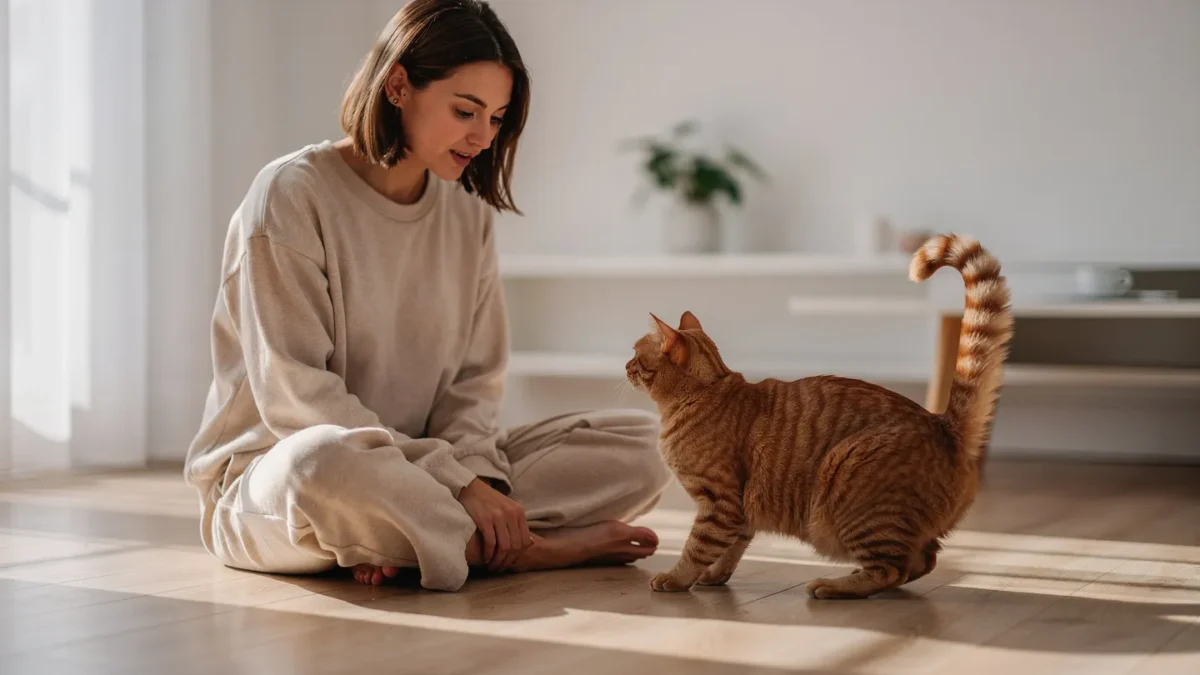
I remember the first time my cat, Luna, walked up to me with her tail held perfectly straight up in the air — like a little flagpole. I had no idea what it meant. Was she mad? Excited? About to knock something off the counter just to spite me?
Turns out, she was saying hello. And once I started learning cat tail meanings, everything changed. I could actually understand her.
Honestly, it’s one of those things nobody tells you when you first get a cat. You spend all this time learning what food they like, how often to clean the litter box… but the tail? It’s basically a mood meter — and most people have no idea how to read it.
This guide breaks down the most common cat tail positions and what they really mean, so you can stop guessing and actually connect with your cat on a whole new level.
Quick Note: This article is based on personal experience with cats and research from trusted sources like ASPCA and AVMA. It’s for informational purposes only and isn’t a substitute for professional veterinary advice. If your cat’s tail behavior seems unusual or is accompanied by other symptoms, please consult your vet.
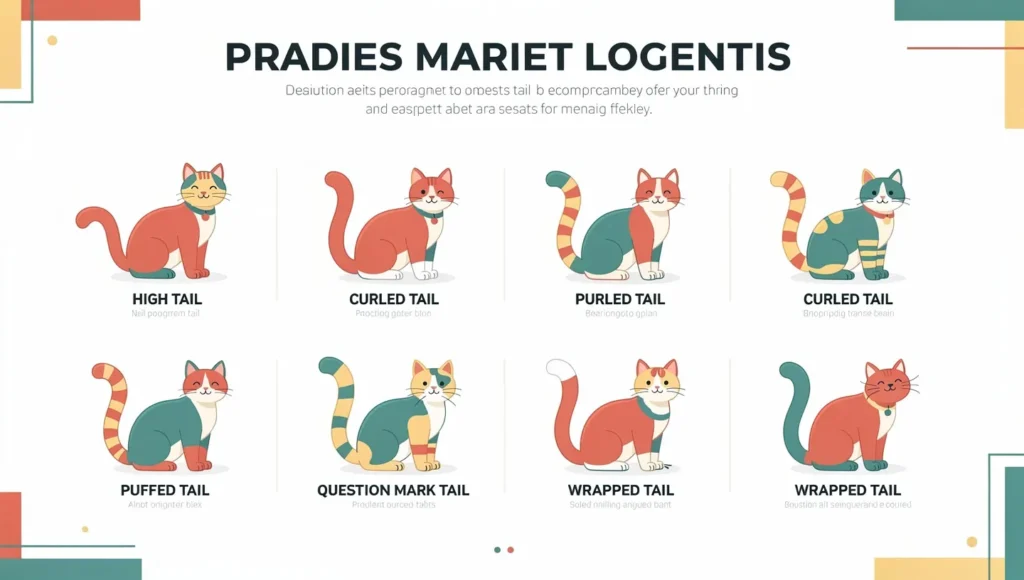
Table of Contents
- Cat Tail Meanings Chart: Quick Visual Guide
- Why Understanding Cat Tail Meanings Is So Important
- 10 Common Cat Tail Meanings (Explained Clearly)
- 1. Tail Straight Up (The Confidence Signal)
- 2. Question Mark Tail (Friendly & Curious)
- 3. Puffed-Up Tail (Fear or Aggression)
- 4. Tail Flicking (Irritation Warning)
- 5. Tail Wagging (Not Always Happy!)
- 6. Tail Low or Tucked (Anxiety or Submission)
- 7. Tail Wrapped Around You (Affection)
- 8. Tail Twitching Tip (Focus Mode)
- 9. Tail Wrapped Around Body (Comfort or Protection)
- 10. Tail Thumping (Annoyance or Overstimulation)
- Cat Tail Wagging Meaning: The Most Misunderstood Signal
- Cat Tail Meanings While Lying Down (Hidden Signals)
- When to Worry About Your Cat’s Tail Behavior
- How to Read Cat Tail Meanings + Body Language Together
- Common Mistakes When Reading Cat Tail Meanings
- Cat Tail Questions Answered
- Why does my cat wag its tail?
- What does a question mark tail mean?
- Why is my cat’s tail puffed up?
- What does a straight-up tail mean?
- Is tail flicking a bad sign?
- Final Thoughts: What Your Cat Is Really Trying to Tell You
Cat Tail Meanings Chart: Quick Visual Guide
Before we dive deep, here’s a fast overview of the most common positions and what they signal:
| Tail Position | What It Usually Means |
|---|---|
| Straight up | Confident, happy, friendly |
| Question mark shape | Playful, curious, wants to engage |
| Puffed up | Scared or feeling threatened |
| Low or tucked | Anxious, submissive, or unwell |
| Slow wagging | Focused or mildly irritated |
| Fast thrashing | Annoyed — back off! |
| Wrapped around you | Affection and trust |
| Twitching tip | Intense focus or light irritation |
| Wrapped around body | Relaxed or self-soothing |
| Thumping on ground | Overstimulated or frustrated |
Keep this as your cheat sheet. We’ll go into detail on each one below.
Why Understanding Cat Tail Meanings Is So Important
Here’s the thing — cats don’t meow at each other. That’s actually mostly reserved for us, their humans. Their real language? It’s physical. It’s in the ears, the eyes, the posture… and especially the tail.
When I finally started paying attention to Luna’s tail, I stopped getting scratched during petting sessions. I learned when she wanted to play versus when she wanted to be left alone. That’s not a small thing. That’s the difference between a stressed cat and a happy one.
Most people get this wrong. They assume a wagging tail means happiness — that’s dogs. In cats, it’s almost the opposite.
Understanding cat tail meanings helps you:
- Prevent bites and scratches — you’ll see the warning signs before they happen
- Reduce your cat’s stress — because you’ll respond to what they’re actually communicating
- Build a stronger bond — cats feel understood when you respect their signals
- Catch health issues early — sometimes tail behavior is the first sign something’s off
And it’s not just about the tail in isolation. The tail works together with the whole body. A puffed tail paired with flattened ears means something very different from a puffed tail with relaxed eyes. We’ll get into that later in the guide.
If you want to go deeper on the full picture, I put together a detailed breakdown over here: How to Read Your Cat’s Full Body Language — it pairs really well with this guide.
10 Common Cat Tail Meanings (Explained Clearly)
1. Tail Straight Up (The Confidence Signal)
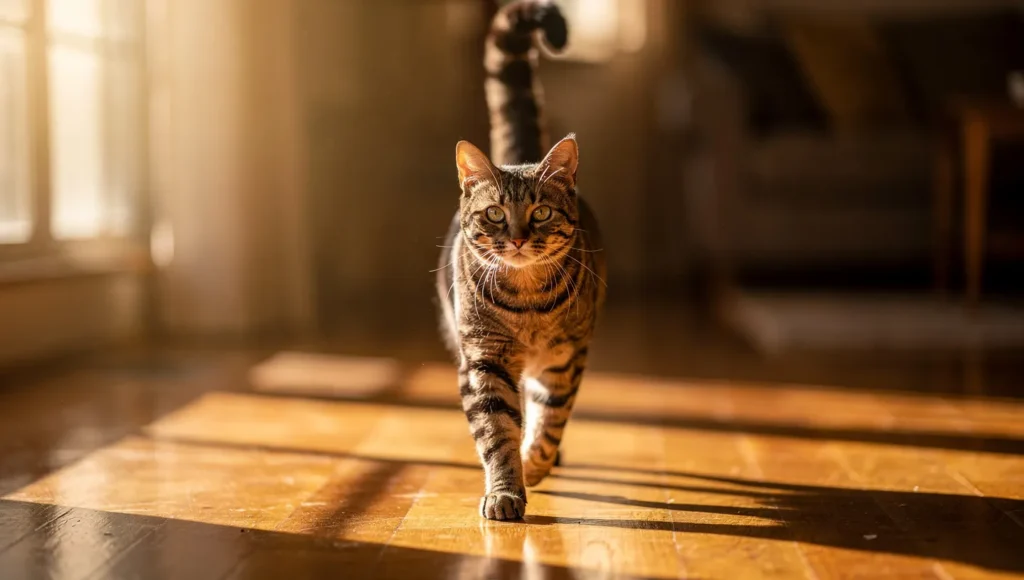
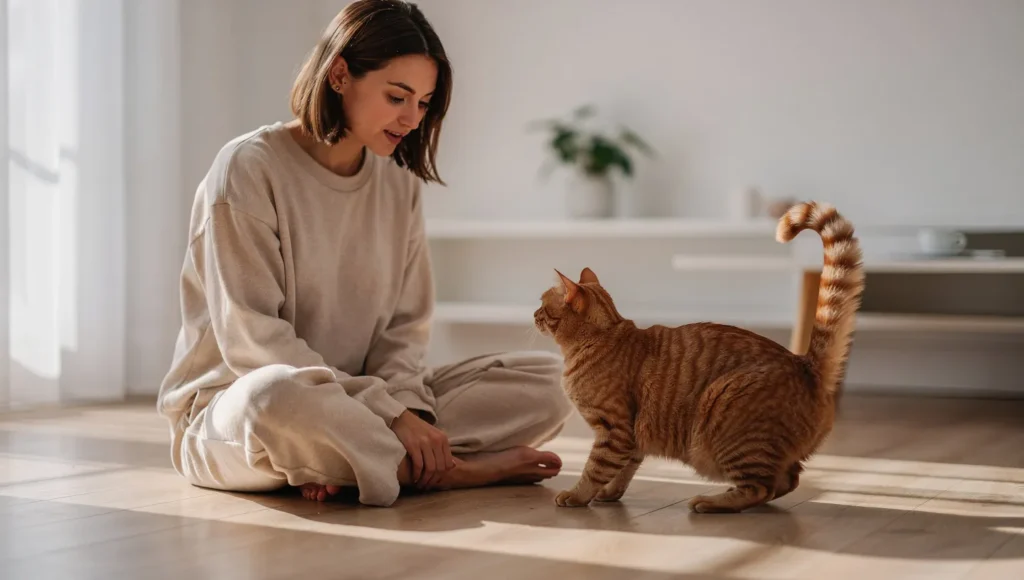
This is the green light. When your cat walks toward you with their tail pointing straight up — sometimes with a tiny curl at the tip — they’re basically saying “Hey, I’m happy to see you.” It’s a greeting. A good one.
2. Question Mark Tail (Friendly & Curious)
That little hook at the top? Pure invitation. Your cat wants to play or just hang out. This is a great moment to initiate interaction — they’re in the mood.
3. Puffed-Up Tail (Fear or Aggression)
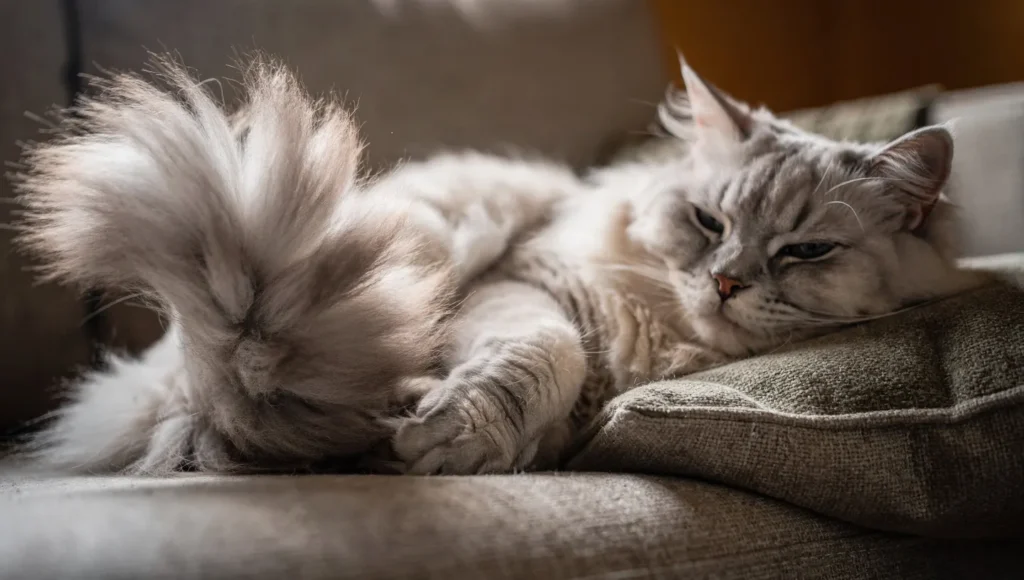
The classic Halloween cat look. The tail puffs up when your cat feels threatened or scared. They’re trying to look bigger. Don’t push it — give them space and let them calm down on their own.
4. Tail Flicking (Irritation Warning)
A slow, deliberate flick is your cat saying “I’m getting annoyed.” If you’re mid-petting session and the tail starts flicking — stop. This is usually what happens right before a bite.
- Slow flick = mild irritation
- Fast whipping = serious warning
If your cat bites after this, it’s not random. Here’s why cats bite and how to read it early.
5. Tail Wagging (Not Always Happy!)
This one trips up almost every new cat owner. Unlike dogs, a wagging cat tail usually means focus, frustration, or overstimulation — not joy. Context matters a lot here.
6. Tail Low or Tucked (Anxiety or Submission)
A tail held low or tucked between the legs signals fear, stress, or feeling unwell. If you see this regularly, something in their environment (or their health) might need attention.
7. Tail Wrapped Around You (Affection)
When your cat wraps their tail around your leg or arm, that’s a cat hug. It’s a trust signal. Take it as the compliment it is.
8. Tail Twitching Tip (Focus Mode)
You’ll see this when they’re watching a bird through the window or tracking a toy. Just the very tip twitching — that’s pure hunter focus. They’re locked in.
9. Tail Wrapped Around Body (Comfort or Protection)
A cat sitting with their tail neatly wrapped around their body is relaxed and self-contained. Think of it as their version of sitting with arms crossed — comfortable, not closed off.
10. Tail Thumping (Annoyance or Overstimulation)
That loud thump on the floor isn’t dramatic — it’s a clear signal. Your cat has had enough. Whether it’s too much petting, a noise they don’t like, or just general frustration, the thumping tail means “I need a break.”
If your cat combines this with nighttime restlessness, it might be worth reading: Why Cats Meow at Night and What To Do About It.
Cat Tail Wagging Meaning: The Most Misunderstood Signal
People assume tail wagging = happy. That’s a dog thing.
In cats, wagging speed tells the whole story:
- Slow, sweeping wag — your cat is focused or mildly annoyed
- Fast side-to-side thrash — they’re frustrated or overstimulated, back off
- Gentle, rhythmic sway while lying down — they’re relaxed but still aware
Personally, once I understood this, I stopped misreading Luna’s “leave me alone” tail as a “come pet me more” invitation. Game changer.
Cat Tail Meanings While Lying Down (Hidden Signals)
A lot of people ignore the tail when their cat is resting. Big mistake.
- Tail still and relaxed — fully comfortable, no stress
- Slow tip twitch — half-asleep but aware of their surroundings
- Sudden tail thump — something caught their attention or annoyed them
- Tail tucked under body — seeking comfort, possibly anxious
These subtle signals are easy to miss but really useful once you start noticing them.
When to Worry About Your Cat’s Tail Behavior
Most tail behavior is completely normal. But sometimes it’s worth paying closer attention.
Watch out if you notice:
- Tail held low constantly (not just occasionally)
- Tail twitching or trembling without any obvious trigger
- Your cat avoiding using or seeming sensitive around their tail
- Sudden change in tail position habits with no clear reason
These can sometimes point to pain, neurological issues, or stress that’s gone unaddressed. When in doubt, a vet visit is always the right call. For a broader look at warning signs, this guide on how to tell if your cat is sick is a good place to start.
How to Read Cat Tail Meanings + Body Language Together
The tail never tells the whole story on its own. You have to read the full picture.
| Tail Signal | + Body Cue | = Meaning |
|---|---|---|
| Puffed up | Flattened ears | Genuinely scared or threatened |
| Straight up | Slow blink | Relaxed and affectionate |
| Low and tucked | Crouched posture | Extreme stress or pain |
| Flicking | Dilated pupils | About to swipe or bite |
For the full breakdown on ears, eyes, and posture together:
- Cat Body Language: The Complete Expert Guide
- Cat Slow Blink Meaning
- Cat Chirping: What That Bird-Like Sound Really Means
Common Mistakes When Reading Cat Tail Meanings
Most people make at least one of these — I definitely did.
- Assuming wagging = happy (it usually doesn’t in cats)
- Ignoring the tail while lying down (subtle signals, real meaning)
- Reading the tail without the rest of the body (always read the full picture)
- Pushing interaction when the tail says stop (this is how scratches happen)
This is where things change — once you stop projecting dog behavior onto your cat, everything starts making more sense.
Cat Tail Questions Answered
Why does my cat wag its tail?
Usually focus, irritation, or overstimulation — not happiness. Speed and context matter.
What does a question mark tail mean?
It’s a friendly, playful signal. Your cat wants to engage. Good moment to play or give attention.
Why is my cat’s tail puffed up?
Fear or feeling threatened. Give them space and let them settle down on their own.
What does a straight-up tail mean?
Confidence and friendliness. One of the most positive signals your cat can give you.
Is tail flicking a bad sign?
Not always — but it’s a warning. If you’re petting and the tail starts flicking, slow down or stop.
Final Thoughts: What Your Cat Is Really Trying to Tell You
Cats communicate constantly. They’re not mysterious or unpredictable — they’re just speaking a language most people never learned.
Start with the tail. Watch it during meals, playtime, and cuddle sessions. You’ll be surprised how quickly the patterns click.
And once you’ve got the tail down, the rest of the body language will start making sense too. That’s when the relationship with your cat really shifts.