

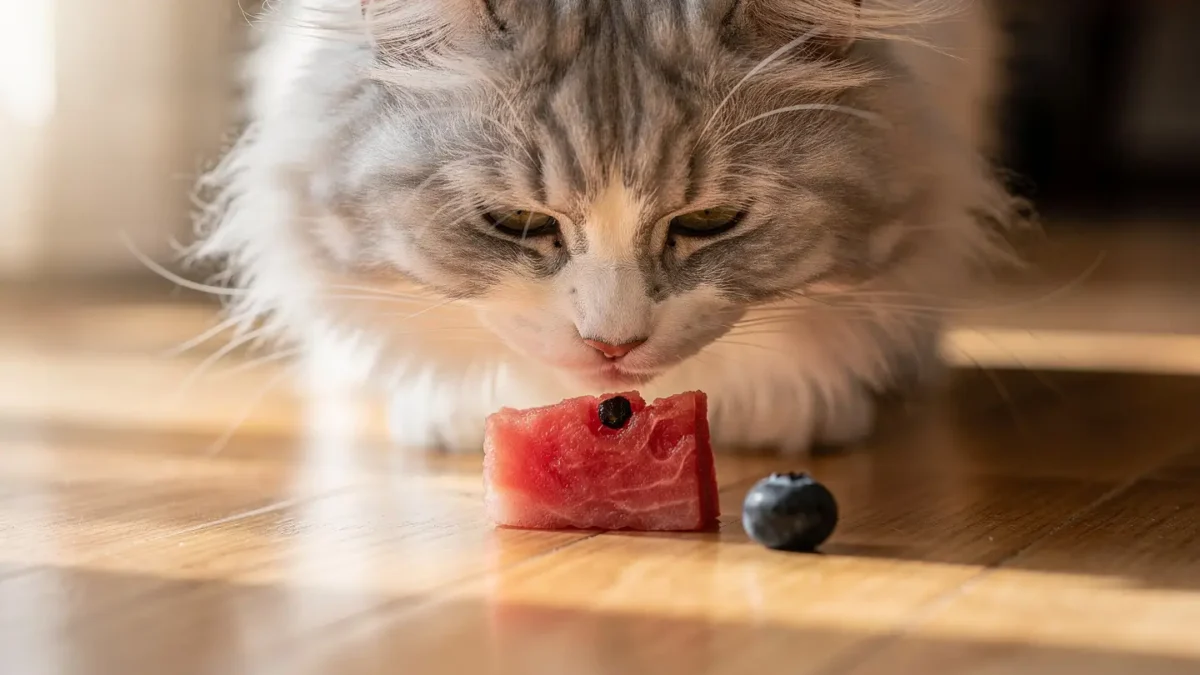
I still remember the exact moment I became that guy at work.
It was a Tuesday morning, coffee in hand, and I was telling my coworkers how I’d spent twenty minutes the night before Googling “can cats eat grapes” — after Kovu had already swiped one off my plate and I panicked like he’d swallowed a battery. Marcus nearly choked on his latte. Dave, without missing a beat, looked at me dead serious and said: “Bro. You’ve had that cat for three months.”
Yeah. That was me. A grown adult, cat owner of three months, learning about fruit safety in real time at 11 PM.
Here’s the thing — nobody actually tells you this stuff when you first bring a cat home. You figure out the litter box, the feeding schedule, the whole scratching-everything-you-own situation… but fruit? That’s the chapter nobody warns you about.
Quick note: Everything in this guide about safe fruits for cats is based on personal experience and research from trusted sources like ASPCA and PetMD. It’s meant to inform, not replace your vet’s advice — especially if your cat has any health conditions. When in doubt, call your vet first.
So, are there safe fruits for cats? Yes — but with some important rules attached.
The short answer: cats can occasionally enjoy small amounts of certain fruits as treats. They don’t need fruit (more on that in a second), but a few bites of the right ones won’t hurt them.
The safest fruits for cats include:
- 🫐 Blueberries
- 🍉 Watermelon (seedless, no rind)
- 🍓 Strawberries
- 🍌 Banana (tiny amounts)
But before you start turning your cat’s bowl into a fruit salad — let’s talk about what’s actually going on here.
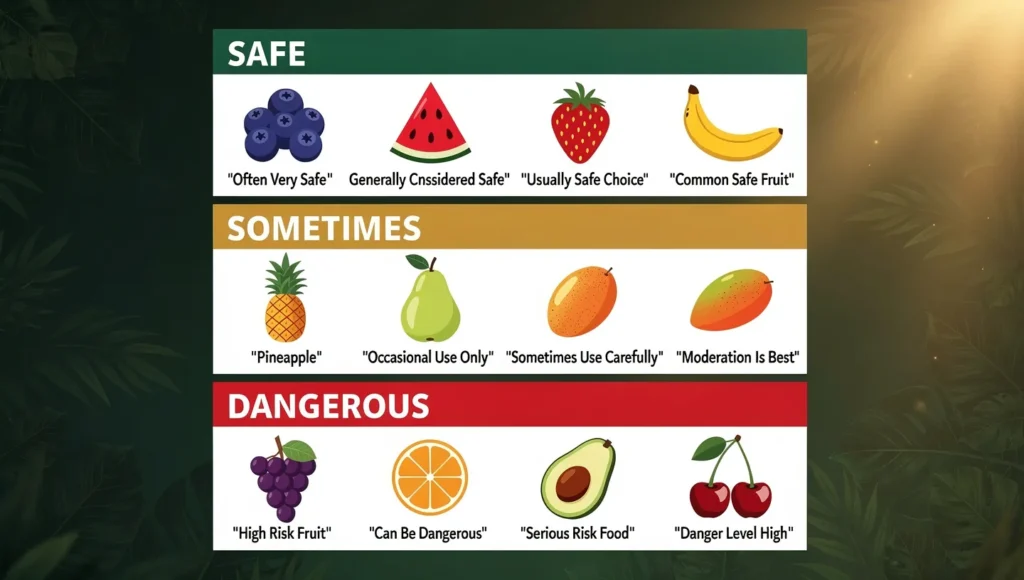
Table of Contents
- Wait — Do Cats Even Need Fruit?
- Safe Fruits for Cats — The Green Light List 🟢
- 🫐 Blueberries — The Safest Bet
- 🍉 Watermelon — Especially Good in Summer
- 🍓 Strawberries — Fine, But They Won’t Care
- 🍌 Banana — Only a Tiny Bit
- 🍎 Apple — Safe With Prep Work
- 🥭 Mango — Yes, But Careful
- 🍈 Cantaloupe & Honeydew — Surprisingly Popular
- Quick Reference Table — Safe Fruits for Cats
- The “Sometimes Okay” Zone 🟡
- 🍍 Pineapple — Small, Infrequent, Fresh Only
- 🍐 Pear — Possible, With Prep
- 🥥 Coconut — My Honest Opinion
- Fruits That Are Actually Dangerous 🔴
- 🍇 Grapes & Raisins — Hard No. Full Stop.
- 🍊 Citrus — Lemon, Orange, Lime, Grapefruit
- 🍒 Cherries — Not Worth the Risk
- 🍅 Tomatoes (Especially Unripe)
- 🥑 Avocado — Keep It Away
- The Coffee Break That Changed Everything ☕
- How to Actually Serve Fruit to Your Cat
- Your Burning Questions About Safe Fruits for Cats — Answered Honestly
- Is it safe for cats to eat strawberries?
- Is it safe for cats to eat grapes or raisins?
- Is it safe for cats to eat watermelon?
- Is it safe for cats to eat bananas?
- Is it safe for cats to eat blueberries?
- Is it safe for cats to eat oranges or citrus?
- Is it safe for cats to eat mango?
- Should cats eat fruit every day?
- Before You Go — A Note to the People Who Actually Taught Me This
Wait — Do Cats Even Need Fruit?
Short answer: nope. Not even a little.
Cats are obligate carnivores, which means their bodies are literally designed to run on meat. Unlike dogs (or, let’s be honest, most humans), cats don’t have the enzymes to properly break down plant sugars, and they can’t even taste sweetness the way we do. So when Kovu ignored that strawberry I offered him the first time? He wasn’t being difficult. He just genuinely didn’t understand why I was excited about it.
Safe fruits for cats work purely as an occasional treat — not a nutritional source. Think of it like a little bonus, not a meal plan upgrade.
If you want to understand what cats actually need to eat, I’d really recommend checking out What Do Cats Eat: The Ultimate Guide to the Best Diet for a Healthy Cat — it breaks down the whole picture really clearly. And if you’re curious about which human foods cross over safely in general, What Can Cats Eat? The Complete Vet-Approved Guide is worth a read too.
The rule I personally follow: fruit should never be more than 10% of daily calories. For most cats, that’s roughly the size of one or two blueberries. Not a fruit bowl. Two blueberries.
Honestly? Kovu usually sniffs it, gives me a look that says “what is wrong with you,” and walks away. But every now and then — especially with watermelon in summer — he’s surprisingly into it.
Safe Fruits for Cats — The Green Light List 🟢
Let’s start with the good news.
There are fruits your cat can actually enjoy — safely — as long as you prepare them right and keep the portions small. And when I say small, I mean it. We’re talking abou pieces roughly the size of your fingertip. Not a slice. Not a handful. One or two little bites, max.
Here’s what made it onto the safe list — and why.
🫐 Blueberries — The Safest Bet
If I had to pick one fruit to recommend without hesitation, it’s blueberries.
They’re low in sugar (for a fruit), soft enough that there’s no choking risk, and packed with antioxidants. According to PetMD, blueberries top the list of safe fruits for cats that vets consistently recommend in small amounts.
The first time Kovu actually ate one voluntarily, I genuinely felt proud of him. Like he’d passed some kind of test. He batted it across the floor for about four minutes first — but eventually, he ate it. Progress.
Serve them fresh, whole or halved. No sugar, no syrup, no “blueberry-flavored” anything from a package. Just the real thing.
🍉 Watermelon — Especially Good in Summer
Here’s something most people don’t know: watermelon is about 92% water. Which makes it a sneaky little hydration booster for cats who don’t drink enough — and trust me, most indoor cats don’t drink nearly enough.
The catch? Seeds and rind are off the table. Seeds can cause intestinal blockages, and the rind is just too tough for their digestive system to handle comfortably. Stick to the soft red flesh only, cut into fingertip-sized pieces, and you’re good.
If your cat struggles with hydration (super common with dry food diets), this one’s worth trying. I actually wrote a whole guide on keeping cats properly hydrated if you want to go deeper on that.
🍓 Strawberries — Fine, But They Won’t Care
Strawberries are safe. No toxins, no dangerous compounds, nothing alarming.
But here’s the honest truth: most cats are completely indifferent to them. Remember — cats can’t taste sweetness. So that strawberry you’re excitedly holding out? From their perspective, it’s just a slightly weird-smelling red blob.
Still, if your cat happens to show interest, it’s totally fine. Remove the leaves and stem (they can be mildly irritating), cut it into small pieces, and let them decide. Don’t be offended when they walk away.
🍌 Banana — Only a Tiny Bit
Banana is technically safe, but it’s on the higher end of the sugar scale — which means moderation really matters here.
A piece about the size of your pinky fingernail. That’s the serving. Not a whole slice.
Not “half a banana because he seemed to like it.” Just a small taste, occasionally.
High sugar intake over time can contribute to weight gain and digestive upset in cats. Since most indoor cats already have a sedentary lifestyle, extra sugar is the last thing they need.
🍎 Apple — Safe With Prep Work
Peeled, seedless apple is fine in small amounts. The flesh itself is harmless.
What’s NOT fine: the seeds. Apple seeds contain a compound called amygdalin, which releases cyanide when metabolized. In the tiny amounts we’re talking about, it’s unlikely to cause serious harm — but why risk it? Just remove the seeds completely, peel the skin, and cut a small piece.
Personally, I skip apple most of the time. Too much prep for something Kovu has never shown any interest in.
🥭 Mango — Yes, But Careful
Mango flesh (ripe, peeled, pit removed) is safe in small amounts. It’s soft, easy to chew, and cats occasionally find the smell interesting.
The pit is a hard no — it’s a choking hazard and contains trace amounts of cyanide
compounds similar to apple seeds. The skin can also cause digestive irritation. So: flesh only, small pieces, and not too often given the sugar content.
🍈 Cantaloupe & Honeydew — Surprisingly Popular
This one genuinely surprised me the first time I read about it. Cats are sometimes attracted to melon because the amino acid profile of its scent is similar to proteins found in meat. So if your cat goes a little crazy around cantaloupe, that’s actually why — they’re not being weird, they’re just confused by the smell.
Both cantaloupe and honeydew are safe. Same rules apply: remove seeds and rind, cut small, serve fresh.
Quick Reference Table — Safe Fruits for Cats
| Fruit | Safe Part | Serving Size | How Often |
|---|---|---|---|
| Blueberries | Whole berry | 1–2 berries | 2–3x per week |
| Watermelon | Red flesh only | 1 fingertip-size piece | 2x per week |
| Strawberry | Flesh only (no stem/leaves) | ½ small strawberry | Once a week |
| Banana | Flesh only | Pinky-nail size piece | Occasionally |
| Apple | Peeled flesh, no seeds | 1 small cube | Occasionally |
| Mango | Flesh only, no pit/skin | 1 small cube | Occasionally |
| Cantaloupe | Flesh only, no seeds/rind | 1 fingertip-size piece | 2x per week |
The “Sometimes Okay” Zone 🟡
This is where things get a little murky — and where most owners either overthink it or not think about it enough.
These aren’t on the core safe fruits for cats list — but they aren’t toxic the way grapes are either. But they come with enough asterisks that I’d call them “proceed carefully” territory.
🍍 Pineapple — Small, Infrequent, Fresh Only
Fresh pineapple (not canned, never in syrup) is okay in very small amounts. The enzyme bromelain that makes pineapple interesting for humans can cause mild mouth irritation and digestive upset in cats if they eat too much.
A single small cube, occasionally. That’s the ceiling.
And please — not canned pineapple. The sugar content in canned fruit is way too high, and the additives aren’t doing your cat any favors.
🍐 Pear — Possible, With Prep
Peeled, seedless pear flesh is generally considered safe. The seeds, like apple seeds, contain cyanide compounds and need to go completely.
Pear is high in fiber, which sounds good but can actually cause loose stools if your cat eats more than a tiny bit. So this one stays firmly in the “small, occasional” category.
🥥 Coconut — My Honest Opinion
Coconut is one of those where you’ll find conflicting information depending on where
you look. The flesh and coconut water aren’t considered toxic — but the high fat content can cause digestive upset, and in cats prone to pancreatitis or weight issues, it’s genuinely not worth the risk.
Personally? I skip it. There are safer options that don’t come with a list of potential side effects. But if you really want to try it, a tiny amount of fresh coconut flesh — not coconut milk, not sweetened coconut — and only after checking with your vet.
Fruits That Are Actually Dangerous 🔴
Most people get this wrong.
They assume “natural” means safe. And for a lot of things in life, that’s a reasonable assumption. But cats are not most animals, and some perfectly natural fruits can cause serious harm — or worse.
This section isn’t about being dramatic. It’s about knowing what to keep off the counter when your cat is in the room.
🍇 Grapes & Raisins — Hard No. Full Stop.
This is the one I’m most serious about.
Grapes and raisins are toxic to cats. The exact mechanism still isn’t fully understood by researchers, which honestly makes it more alarming — not less. What we do know is that even small amounts have been linked to acute kidney failure in some cats.
According to the ASPCA Animal Poison Control Center, grapes and raisins are among the most dangerous foods for cats and dogs alike.
No amount is “probably fine.” No testing to see if your cat is one of the okay ones. This is one where the risk is simply not worth taking.
🍊 Citrus — Lemon, Orange, Lime, Grapefruit
The oils and compounds in citrus fruits — limonene, linalool, psoralens — are toxic to cats. The fruit itself is irritating to their digestive system, and the peel and seeds are even worse.
Most cats actually hate citrus smell, which is nature’s way of keeping them away from it. If your cat is one of the rare ones that shows curiosity — redirect immediately.
Interestingly, that’s exactly why citrus-based sprays are sometimes used as cat deterrents. The smell that we find fresh and pleasant? Cats genuinely cannot stand it.
🍒 Cherries — Not Worth the Risk
Cherry flesh isn’t hugely toxic in tiny amounts, but the pits, stems, and leaves contain cyanogenic glycosides — which break down into hydrogen cyanide. The problem is that it’s genuinely hard to ensure your cat only ever gets the flesh and nothing else.
Given that there are safer options available, cherries just aren’t worth the hassle or the risk.
🍅 Tomatoes (Especially Unripe)
Ripe tomato flesh is sometimes listed as “okay in tiny amounts” — but unripe tomatoes and all other parts of the tomato plant (leaves, stems, vines) contain solanine, which is toxic to cats.
Given how easy it is to accidentally give a piece that has a bit of unripe flesh or a stem attached, I personally put tomatoes in the avoid column entirely.
🥑 Avocado — Keep It Away
Avocado contains persin, a compound that can cause vomiting, diarrhea, and in larger amounts, more serious cardiovascular issues in cats. The pit is also a serious choking and obstruction hazard.
This one should just stay off the menu completely.
For a full breakdown of dangerous human foods — not just fruit — it’s worth bookmarking Human Foods Toxic to Cats: The Ultimate Safety Guide. And if you have houseplants, Toxic Plants for Cats is the companion piece — because the overlap between plant toxicity and fruit toxicity trips up a lot of owners.
The Coffee Break That Changed Everything ☕
It was a Saturday afternoon. Me, Marcus, Dave, and Dr. Sami — our friend and the only actual veterinarian in our group — sitting around with coffee, somehow ending up deep in a conversation about cats and fruit. Classic us.
Dave, completely serious, announced he’d been giving his cat orange slices because “she seemed curious about them.” Sami put his cup down slowly. The look on his face said everything before he even opened his mouth.
“Dave. Citrus is literally used as a cat repellent.”
The table lost it. Dave did not live that down.
But between the laughing, Sami gave us the clearest breakdown I’d ever heard: cats don’t need fruit, a few safe ones won’t hurt them, and the dangerous ones are genuinely dangerous — not “maybe risky” dangerous.
That conversation probably saved me from making a few mistakes I didn’t even know I was about to make.
If you don’t have a Dr. Sami in your life — hopefully this article is the next best thing.
How to Actually Serve Fruit to Your Cat
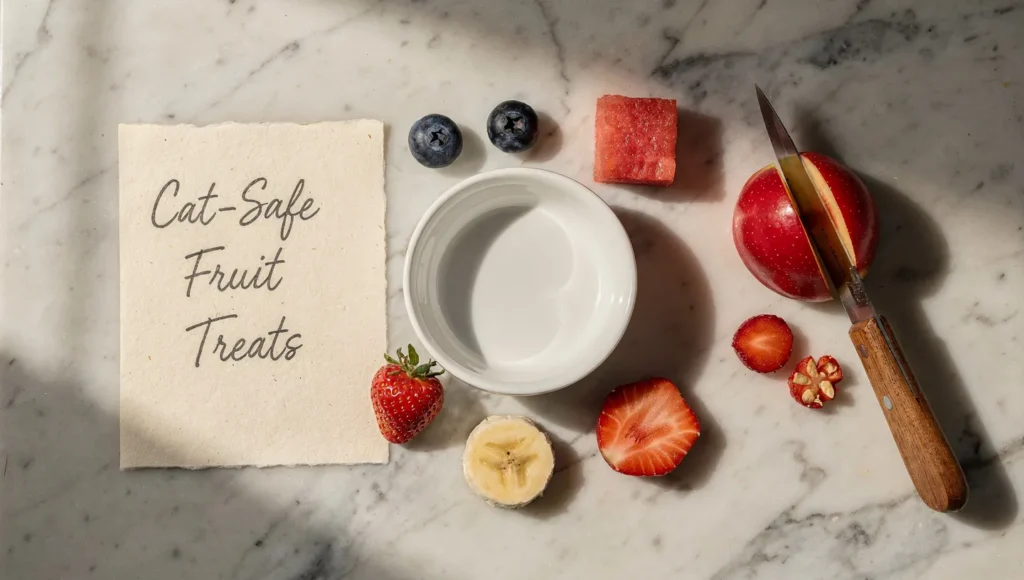
Keep it simple. Keep it small. Keep it safe.
- Remove everything first: seeds, pits, stems, leaves, skin, rind. No exceptions.
- Cut small: pieces no bigger than your fingertip. Cats don’t chew the way we do — smaller is always safer.
- Fresh only: no canned fruit, no dried fruit, no fruit in syrup. The added sugar and preservatives aren’t worth it.
- 10% rule: treats — including fruit — should never exceed 10% of your cat’s daily calorie intake. For most cats, that’s one or two small pieces. That’s it.
- Introduce slowly: first time trying a new fruit? Give one tiny piece and wait 24 hours. Watch for vomiting, diarrhea, or unusual lethargy.
One more thing — fruit has water content, which makes it a surprisingly useful tool for cats who don’t drink enough. Watermelon especially. If hydration is a concern for your cat, the Cat Hydration Guide has everything you need. And if you want to get creative with safe treats at home, the Homemade Cat Treats recipes are genuinely worth trying.
Your Burning Questions About Safe Fruits for Cats — Answered Honestly
Is it safe for cats to eat strawberries?
Yes — strawberries make the safe fruits for cats list without much debate. Remove the stem and leaves, cut small, serve fresh.
Is it safe for cats to eat grapes or raisins?
Absolutely not. Grapes and raisins are toxic to cats and linked to acute kidney failure. Not “risky in large amounts” — dangerous at any amount. Keep them away completely.
Is it safe for cats to eat watermelon?
Yes — seedless, rind removed, red flesh only. It’s also a nice hydration boost. Check out the Cat Hydration Guide if your cat is a reluctant water drinker.
Is it safe for cats to eat bananas?
In tiny amounts, yes. Think pinky-fingernail size. High sugar content means this one stays firmly occasional.
Is it safe for cats to eat blueberries?
Yes — and honestly, it’s the fruit I’d recommend most. Low sugar, antioxidant-rich, soft, and low choking risk. Best option on the list.
Is it safe for cats to eat oranges or citrus?
No. The oils and compounds in citrus are toxic to cats. Most cats hate the smell anyway — that instinct exists for a reason.
Is it safe for cats to eat mango?
Yes, with prep. Flesh only — no skin, no pit. Small amount, not too often given the sugar content.
Should cats eat fruit every day?
No. Fruit is a treat, not a dietary staple. Cats are obligate carnivores — their bodies don’t need or process plant sugars efficiently. Occasional, small, and always safe-listed only.
Before You Go — A Note to the People Who Actually Taught Me This
I started this whole cat thing knowing basically nothing. I didn’t know about fruit, I didn’t know about hydration, I didn’t know Kovu would somehow become the most opinionated creature I’d ever shared a home with.
What I did have was Marcus, who researched everything before I even
thought to ask. Dave, who made every mistake first so I didn’t have to (sorry, Dave). And Dr. Sami, who never made me feel like an idiot for not knowing things — even when I absolutely deserved it.
This article exists because of that coffee table. Those conversations. Those moments of “wait, seriously?” and “why didn’t anyone tell us this?”
So if any of this helped you — genuinely helped you — do me a favor.
Share it with someone who just got their first cat. Or drop your own story in the comments. Has your cat ever stolen something off your plate and sent you into a panic spiral at 11 PM? Because I know I’m not the only one.
And if you want to keep learning how to actually read what your cat is telling you — beyond the food stuff — Cat Body Language: The Ultimate Expert Guide is one of my favorite pieces on this site. Your cat is communicating with you constantly. You just have to know what to look for.