
This article is for informational purposes only and does not replace professional veterinary advice. If you’re concerned about your cat’s health, please consult a licensed veterinarian.
I still remember the evening I noticed something odd about my cat, Luna.
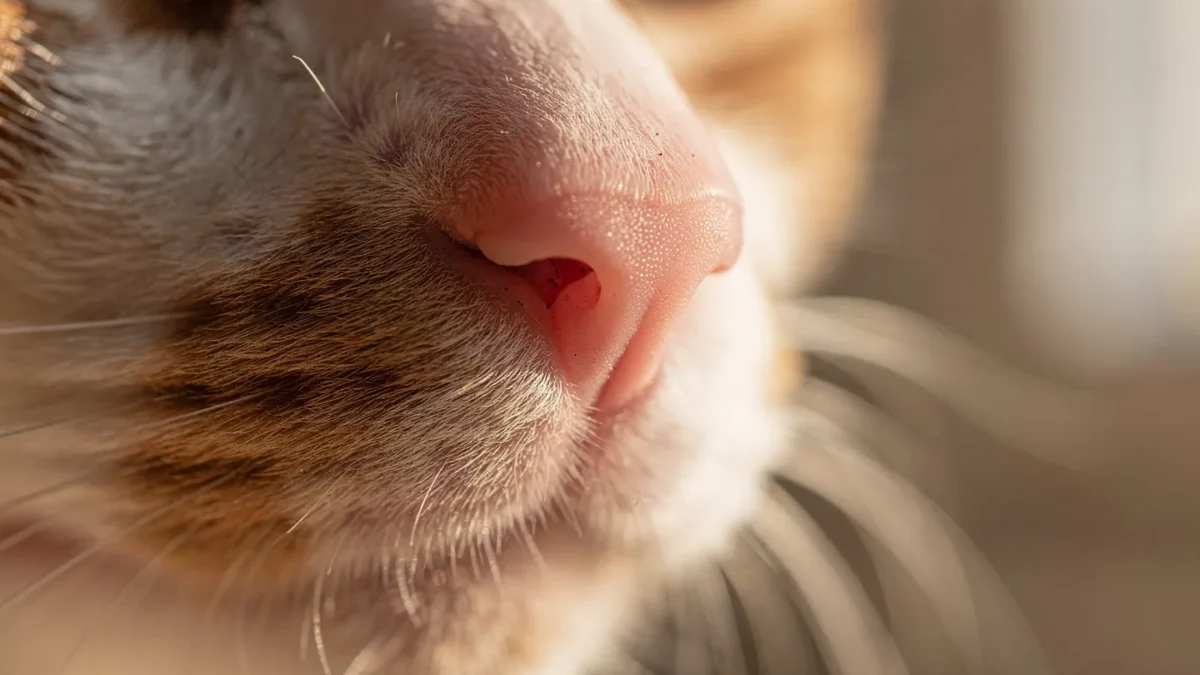
She was curled up on the couch as usual, but when I leaned in to give her a little scratch behind the ears, I froze. Her nose — normally a soft, warm pink — had turned noticeably pale. Almost white.
My stomach dropped.
I spent the next hour down a rabbit hole of searches, trying to figure out if this was serious or if I was just overreacting. Sound familiar? If you’ve ever noticed a sudden cat nose color change and felt that same wave of panic, you’re definitely not alone.
Here’s the thing: sometimes a color shift is completely harmless — caused by nothing more than a cold room or a moment of excitement. But other times, it can be your cat’s body quietly waving a red flag that something’s wrong.
Based on research from sources like ASPCA and PetMD, along with what I’ve observed over years of living with cats, a nose color change can range from totally normal to genuinely urgent — and knowing the difference matters.
In this guide, you’ll learn exactly what each nose color means, what causes these changes, and the specific warning signs that mean it’s time to call your vet.
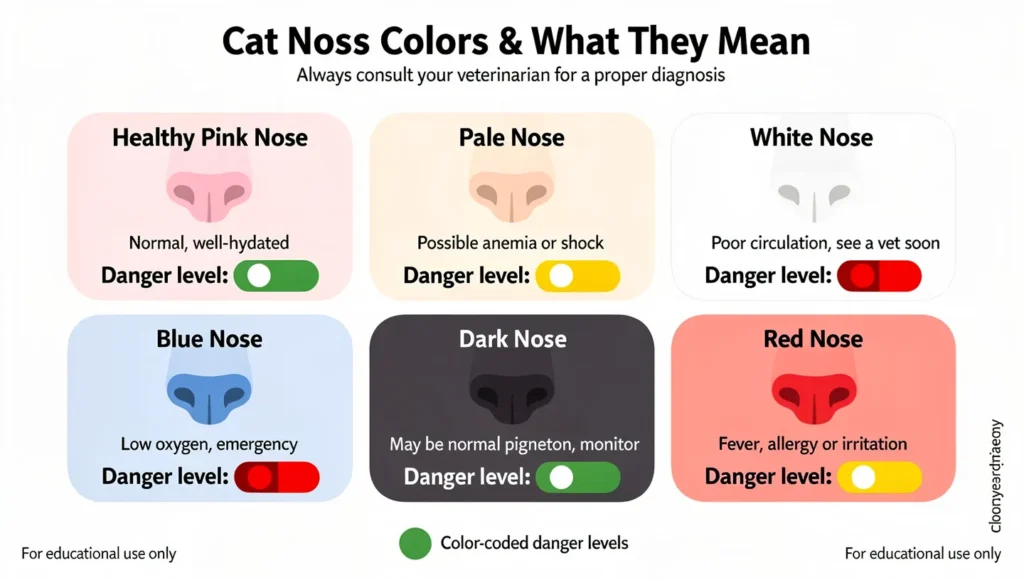
Table of Contents
- ⚡ Quick Answer: Is a Cat Nose Color Change Normal?
- 🎨 Cat Nose Color Change Chart: What Each Color Means
- 🧠 what causes a cat nose color change?
- Temperature & Blood Flow
- Mood, Stress & Excitement
- Age & Natural Pigmentation Changes
- Cat Nose Color Change Due to Health Conditions
- 9 Medical Reasons Behind a Cat Nose Color Change
- 1. 🩸 Anemia
- 2. 💧 Dehydration
- 3. 🥶 Hypothermia
- 4. 🫁 Lack of Oxygen (Cyanosis)
- 5. 🦠 Infection or Fungal Disease
- 6. 🔬 Feline Leukemia Virus (FeLV)
- 7. 🩺 Diabetes
- 8. ☀️ Skin Conditions or Sunburn
- 9. 🫀 Circulatory Issues
- ⚠️ When Should You Worry? (Warning Signs Checklist)
- 🚨 Signs That Require an Immediate Vet Visit
- 💡 Expert Tip
- 🧪 How to Check Your Cat’s Nose Health at Home
- 🚫 Common Mistakes Cat Owners Make
- 💡 Helpful Tips for Monitoring Your Cat’s Nose
- ❓ Frequently Asked Questions
- Is cat nose color change normal?
- Why is my cat’s nose turning pale or white?
- What does a blue nose mean in cats?
- Can stress cause a cat’s nose to change color?
- Why does my cat’s nose go from pink to dark?
- When should I take my cat to the vet for a nose color change?
- Final Thoughts
⚡ Quick Answer: Is a Cat Nose Color Change Normal?
In many cases, yes — a cat nose color change can happen temporarily due to temperature, blood flow changes, mood, or age-related pigmentation. These short-term changes are usually harmless.
However, if the color change is sudden, persistent, or accompanied by other symptoms like lethargy, loss of appetite, or difficulty breathing, it may point to an underlying health issue that needs veterinary attention.
🎨 Cat Nose Color Change Chart: What Each Color Means
One of the first things I learned is that not all color changes carry the same weight. Some are completely expected. Others are a reason to act fast.
Here’s a simple reference guide based on commonly observed patterns and veterinary resources:
| Nose Color | Possible Meaning | Normal or Warning? |
|---|---|---|
| Pink | Healthy circulation, normal state | ✅ Normal |
| Pale / Light Pink | Cold temperature, mild anemia | ⚠️ Monitor |
| White | Shock, severe anemia, poor circulation | 🚨 Warning |
| Blue / Purple | Oxygen deficiency (cyanosis) | 🚨 Emergency |
| Dark / Black | Natural pigmentation, age-related change | ✅ Usually normal |
| Red / Inflamed | Sunburn, infection, irritation | ⚠️ Monitor |
| Brown / Crusty | Dryness, fungal infection, nasal discharge | ⚠️ Monitor |
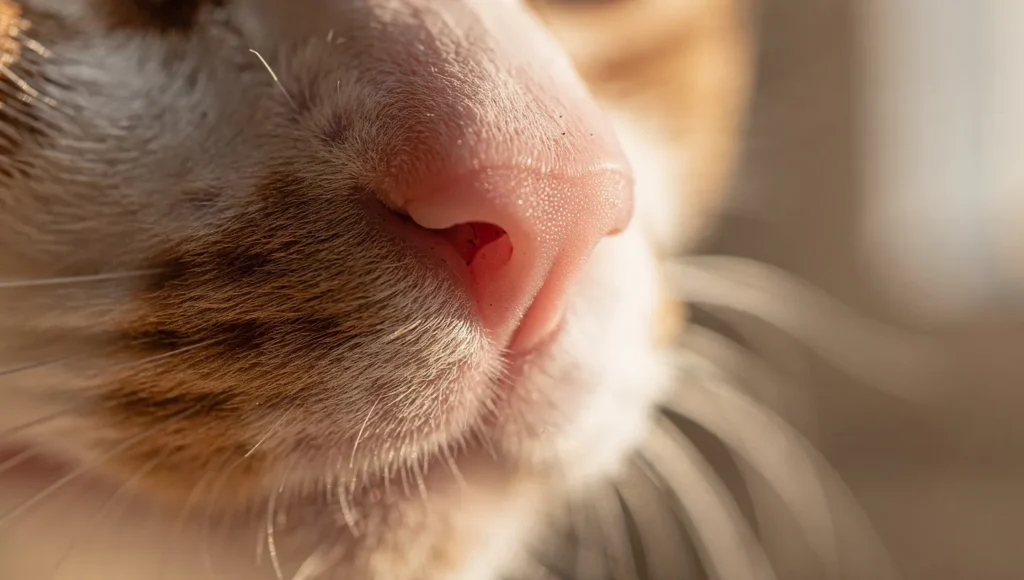
A quick note: Always observe your cat’s nose in natural light. Artificial lighting can distort color and lead to unnecessary worry — or worse, cause you to miss something real.
This cat nose color change chart helps you quickly understand what each color means and when to worry.
🧠 what causes a cat nose color change?
Before jumping to conclusions, it helps to understand what’s actually happening beneath the surface. There are several common — and completely benign — reasons a cat’s nose might look different from one hour to the next.
Temperature & Blood Flow
This one surprised me when I first learned about it.
Cats regulate blood flow to their extremities based on body temperature. When your cat is cold, blood vessels near the skin constrict — a process called vasoconstriction — which can cause the nose to appear lighter or paler than usual.
Warm your cat up, and the color often returns to normal within minutes.
Mood, Stress & Excitement
I’ve noticed this with Luna during play sessions. When she gets really worked up chasing a toy, her nose flushes slightly pinker. When she’s anxious — like during a car ride — it can go the other direction.
Adrenaline and stress hormones affect circulation, which directly impacts nose color. If your cat just had a wild play session or a stressful encounter with another animal, a temporary color shift is nothing to worry about.
You might also notice changes in their body language during these moments — flattened ears, puffed tail, or dilated pupils often accompany stress-related nose changes.
Age & Natural Pigmentation Changes
Kittens are a great example here. Many kittens are born with pink noses that gradually darken as they age — this is simply melanin production doing its job. Some adult cats also develop small dark spots on their noses over time, which is typically harmless.
Cat Nose Color Change Due to Health Conditions
This is where things get more serious.
When a cat nose color change is persistent, dramatic, or comes with other symptoms, it’s often the body’s way of signaling something internal. Conditions ranging from anemia to oxygen deficiency can all show up first as a change in nose color — making it one of the earliest visible health indicators you have access to.
We’ll break these down in detail in the next section.
9 Medical Reasons Behind a Cat Nose Color Change
This is the section I wish I’d had during that panicked evening with Luna. Let’s go through each cause clearly and practically.
1. 🩸 Anemia
Anemia — a reduction in red blood cells — is one of the most common medical reasons for a pale or white nose. Without enough red blood cells, circulation becomes poor and visible tissues lose their color.
According to information from veterinary sources, signs to watch alongside a pale nose include:
- Weakness or lethargy
- Pale gums (check inside the mouth)
- Rapid breathing
- Loss of appetite
If you notice pale gums alongside a pale nose, that combination warrants a vet visit — not a wait-and-see approach.
2. 💧 Dehydration
Dehydration affects blood volume, which in turn affects circulation and color. A dehydrated cat may show a slightly pale or dull-looking nose.
A simple home check: gently pinch the skin at the back of your cat’s neck. If it doesn’t spring back immediately, your cat may be dehydrated. You can read more about this in the cat hydration guide — it covers practical strategies for cats that refuse to drink enough water.
3. 🥶 Hypothermia
A cat that’s been exposed to cold for too long can develop hypothermia. The nose often turns pale or even bluish as the body redirects blood away from the extremities to protect vital organs.
If your cat feels cold to the touch, is shivering, or seems unusually still and unresponsive, warm them up gently and contact your vet.
4. 🫁 Lack of Oxygen (Cyanosis)
A blue or purple nose is one of the clearest emergency signals in cats. This condition — called cyanosis — means the blood isn’t carrying enough oxygen.
This is not a wait-and-see situation. A blue nose, especially combined with open-mouth breathing or visible distress, requires immediate veterinary care.
5. 🦠 Infection or Fungal Disease
Certain infections, including fungal conditions like cryptococcosis, can affect the nasal tissue directly. You might notice redness, swelling, crustiness, or unusual discharge alongside a color change.
According to ASPCA veterinary resources, nasal infections in cats can sometimes be linked to environmental factors, including exposure to certain plants and molds.
6. 🔬 Feline Leukemia Virus (FeLV)
FeLV suppresses the immune system and can cause anemia, which as we covered, leads to pale nasal tissue. Cats with FeLV may show a gradual, persistent lightening of the nose over time.
This is one reason regular vet checkups matter — FeLV can progress silently before other symptoms become obvious.
7. 🩺 Diabetes
Diabetic cats can experience circulation issues that affect skin and tissue color. A pale nose, combined with increased thirst, frequent urination, or weight loss, might be worth discussing with your vet.
8. ☀️ Skin Conditions or Sunburn
Light-colored or white cats are especially vulnerable to nasal sunburn, which can cause redness, flaking, and over time, even tissue damage. What looks like a simple color change could be early sun damage — which, left unaddressed, can develop into more serious skin conditions.
9. 🫀 Circulatory Issues
Heart disease and other circulatory conditions reduce the efficiency of blood flow throughout the body. The nose, as a peripheral area, is often one of the first places where poor circulation becomes visible — showing up as paleness or a bluish tint.
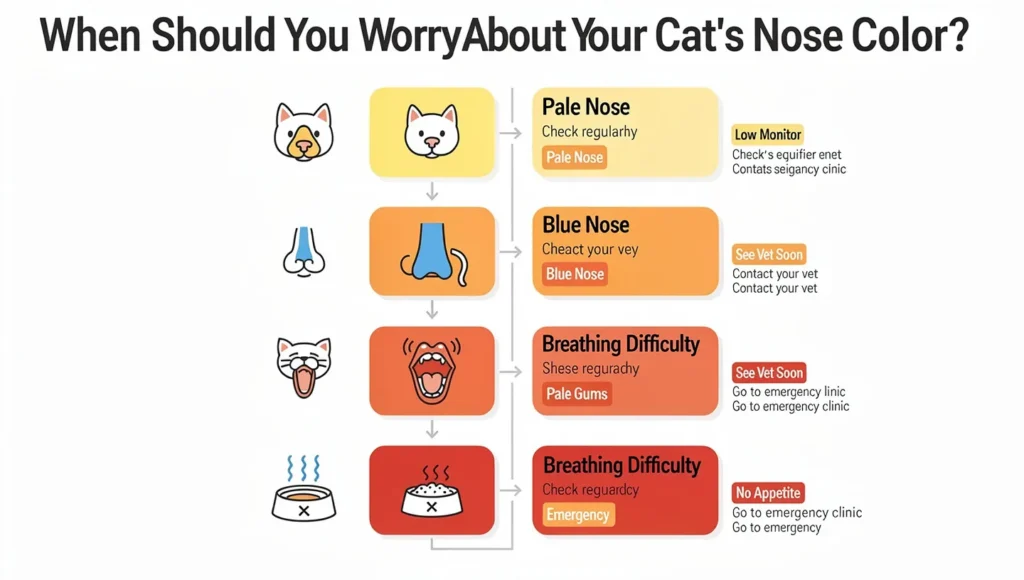
⚠️ When Should You Worry? (Warning Signs Checklist)
A temporary color shift that resolves on its own is usually nothing to stress about.
But based on what I’ve seen and researched, these are the signs that mean something
more serious may be going on:
- 🔴 The color change appeared suddenly and hasn’t gone back to normal
- 🔴 Your cat’s nose is blue, purple, or completely white
- 🔴 Pale or white gums alongside a pale nose
- 🔴 Lethargy, weakness, or unusual stillness
- 🔴 Loss of appetite for more than 24 hours
- 🔴 Labored or open-mouth breathing
- 🔴 Nasal discharge, crusting, or swelling
If you’re seeing 2 or more of these at the same time — don’t wait. Contact your vet immediately.
It also helps to keep an eye on broader behavioral shifts.
Knowing how to read your cat’s overall signals — not just their nose —
can help you catch problems earlier. This guide on
how to tell if your cat is sick covers the 10 most critical signs
every owner should know.
🚨 Signs That Require an Immediate Vet Visit
Some situations don’t call for monitoring — they call for action right now:
- Blue or purple nose — possible oxygen deprivation (cyanosis)
- White nose + white gums — possible shock or severe anemia
- Open-mouth breathing or gasping — respiratory emergency
- Sudden collapse or unresponsiveness
- Seizures or extreme disorientation
These are not “let’s see how she is in the morning” situations.
If any of these appear, get to an emergency vet clinic without delay.
💡 Expert Tip
Always check your cat’s gums alongside the nose.
Healthy gums should be pink and moist.
Pale, white, or bluish gums are often a more reliable early warning signal
than nose color alone — and vets use this check routinely.
🧪 How to Check Your Cat’s Nose Health at Home
A quick 60-second check can tell you a lot. Here’s what I do regularly:
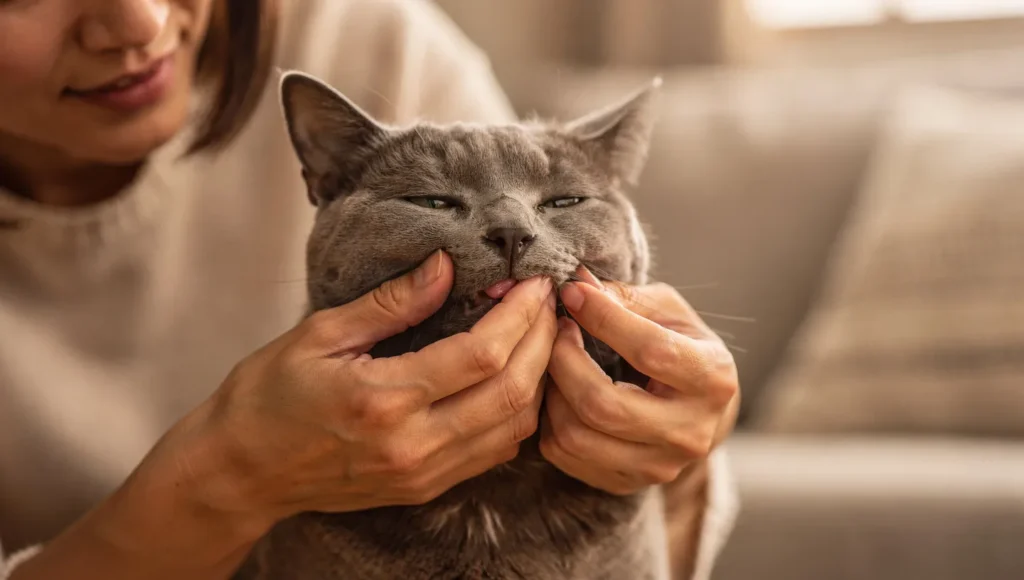
- Check in natural light — move near a window before drawing conclusions
- Look at the gums — press gently, release, and watch color return
(should take under 2 seconds) - Feel the nose — slightly cool and moist is normal;
very cold, very dry, or cracked warrants attention - Observe behavior — eating, drinking, energy levels tell the full story
If your cat is showing signs of dehydration alongside a color change,
the cat hydration guide has practical strategies to help — including
the at-home skin-pinch test explained step by step.
🚫 Common Mistakes Cat Owners Make
- Checking nose color under artificial light — it distorts everything;
always use natural daylight - Assuming a dry nose = sick cat — dryness alone means very little
without other symptoms - Waiting too long when the nose turns blue or white —
these colors are not “monitor and see,” they’re “act now” - Ignoring gum color — pale gums are often the more urgent signal
- Googling symptoms in a panic instead of calling the vet —
a 2-minute phone call to your vet’s office can save a lot of unnecessary worry
💡 Helpful Tips for Monitoring Your Cat’s Nose
- Take a photo of your cat’s nose in natural light once a month —
it gives you a reliable baseline to compare against - Learn what your specific cat’s normal nose color looks like;
it varies by breed, pigmentation, and age - Cats with white or light-colored fur need extra sun protection —
ask your vet about pet-safe sunscreen for the nose area - Pair nose checks with your regular grooming routine so it becomes
second nature — brushing sessions are a perfect time
❓ Frequently Asked Questions
Is cat nose color change normal?
Yes — temporary changes due to temperature, mood, or blood flow are common
and usually harmless. Persistent or dramatic changes are worth investigating.
Why is my cat’s nose turning pale or white?
Pale noses often signal reduced blood flow — caused by cold, stress, anemia,
or in serious cases, shock. If the paleness doesn’t resolve quickly
or comes with other symptoms, contact your vet.
What does a blue nose mean in cats?
A blue or purple nose typically indicates cyanosis — insufficient oxygen
in the blood. This is a medical emergency. Don’t wait for it to improve on its own.
Can stress cause a cat’s nose to change color?
Yes. Stress and anxiety trigger adrenaline responses that affect circulation,
which can temporarily lighten or flush the nose. It usually resolves
once the stressor is removed. If your cat is frequently anxious,
this post on cat separation anxiety may be worth reading.
Why does my cat’s nose go from pink to dark?
Gradual darkening is usually just natural pigmentation — completely harmless.
It’s common in aging cats and certain breeds. If darkening happens rapidly
or the texture changes, a vet check is a good idea.
When should I take my cat to the vet for a nose color change?
When the change is sudden and persistent, when the color is blue or white,
or when it’s accompanied by any other symptoms — lethargy, breathing changes,
pale gums, or loss of appetite.
Final Thoughts
A cat nose color change is one of those things that can mean everything
or nothing at all — and the difference usually comes down to context.
In my experience, the best thing you can do is know your cat’s baseline.
Know what their nose normally looks like, pay attention when something
feels off, and don’t talk yourself out of calling the vet when
your gut is telling you something’s wrong.
Tthe temporary stuff resolves on its own. The serious stuff rarely does.
This article is intended for informational purposes only and is not a substitute for professional veterinary advice. If you have concerns about your cat’s health, please consult a licensed veterinarian.