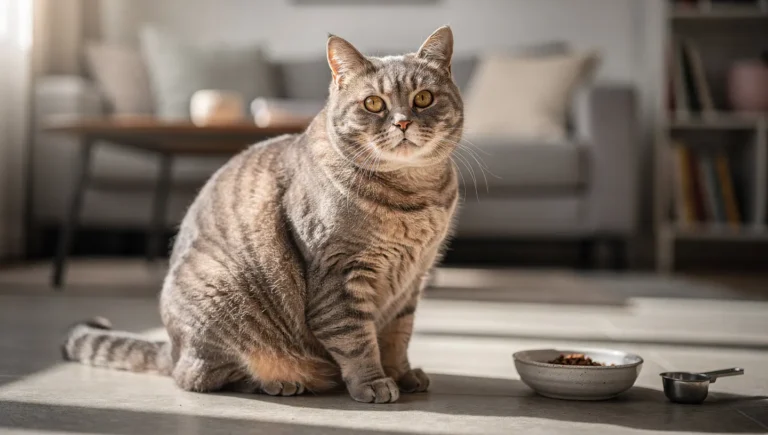

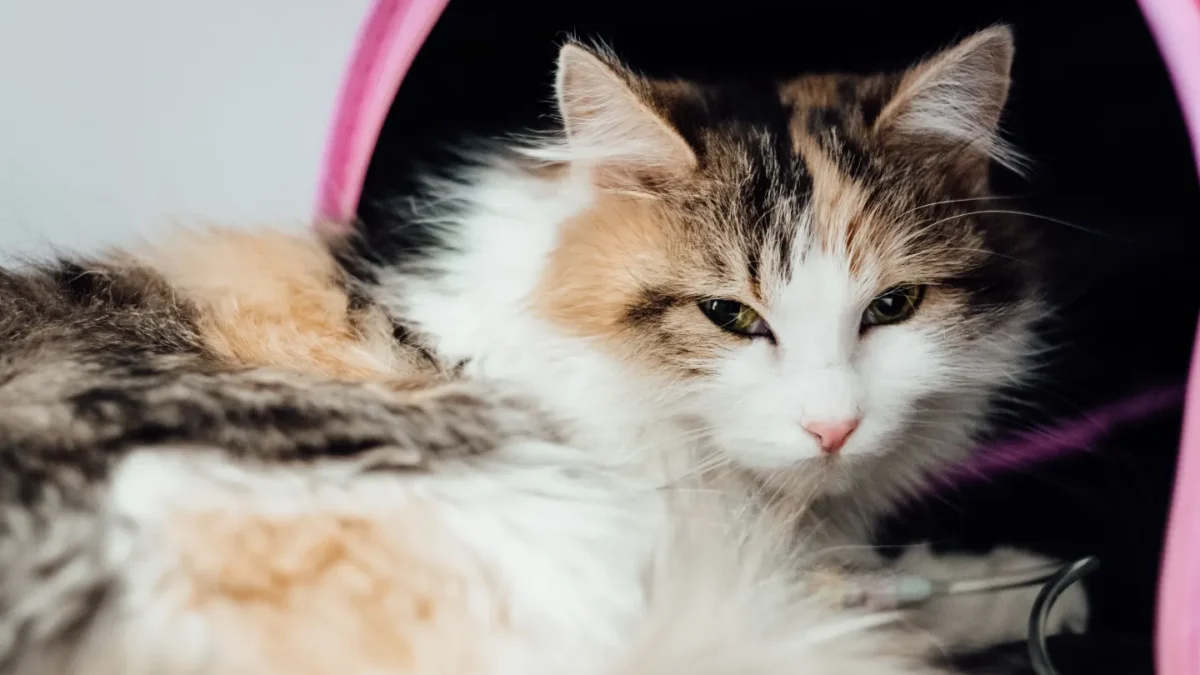
I’ll be honest with you — when I first brought Luna home, I genuinely thought cats were just… furry little humans in disguise. Specifically, I thought that if she ever got sick, she’d walk up to me, place a tiny paw on her forehead, and announce in a raspy voice: “Luca, I’m not feeling well today. Could you warm up some chicken soup and maybe turn down the TV?”
Yeah. I was that naive. And honestly, not knowing how to tell if your cat is sick almost cost Luna more than one vet visit.
So one Tuesday morning, I woke up and Luna — my three-year-old tabby who normally launches herself at my ankles the second my alarm goes off — was just… sitting in the corner of the bedroom. Staring at the wall. Completely still. Like a tiny, judgmental statue.
No greeting. No meowing. No dramatic ankle attack.
My stomach dropped. Because even without knowing the signs, something in me was already asking: how do you tell if your cat is sick?
I showed up to work looking like I hadn’t slept in three days, which, honestly, was close to the truth. My coworker Lina took one look at me and gasped like I’d just told her the office coffee machine was broken permanently.
“Luca, what happened to your face?”
Before I could answer, Dave — bless his catastrophically confident heart — spun around in his chair and held up one finger like he was about to reveal the secrets of the universe.
“Dude. It’s simple. Touch her nose. If it’s warm and dry, she’s dying. If it’s cold and wet, she’s totally fine. That’s how my grandpa checked his farm cats for forty years.”
Reader, I almost went home and did exactly that.
Thankfully, Marcus — who has strong opinions about everything and had apparently once read half a veterinary textbook for fun — immediately turned around and shook his head with the energy of a disappointed professor.
“Dave, that’s folklore, not science. Luca, cats are both predators and prey animals. Evolutionarily, they’re hardwired to conceal illness. What you need to watch for is lethargy, anorexia, and behavioral deviation from baseline — not nasal moisture levels.”
Dave and Marcus started arguing. I quietly walked away and called Dr. Sami.
Dr. Sami has been my trusted vet for years. He picked up at 7 AM, didn’t judge me for panicking, and spent twenty minutes walking me through exactly what to look for. Within two days, Luna was back to terrorizing my ankles and demanding food at inappropriate hours.
That phone call — and everything I learned from it — is basically what this article is.
⚠️ Quick note before we dive in: Everything in this article is based on my personal experience as a cat owner and research from trusted veterinary sources like ASPCA and AVMA. It’s meant to help you recognize warning signs — not replace an actual vet visit. If your gut says something’s wrong, trust it and call your vet. Every time.
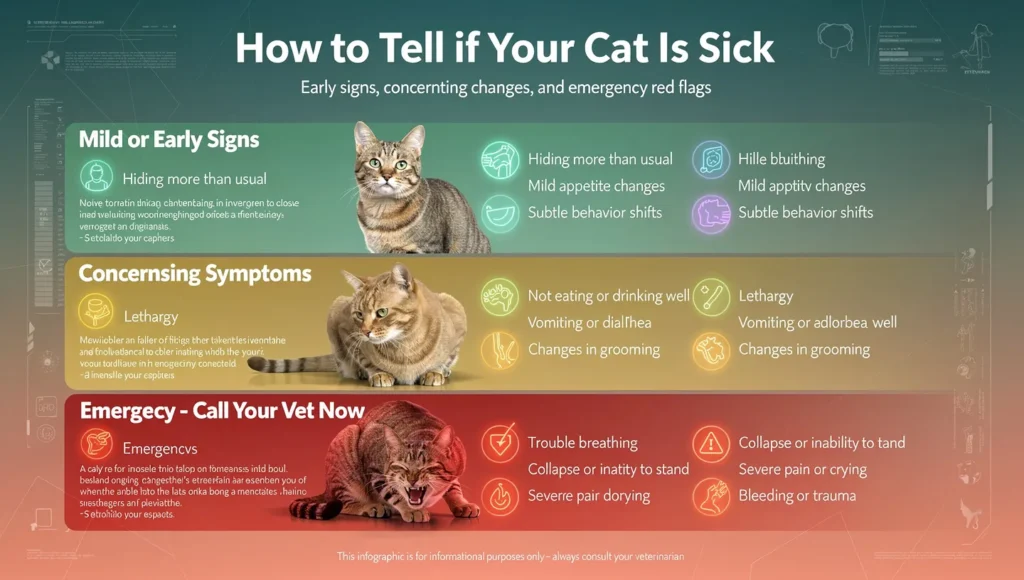
Table of Contents
- How to Tell if Your Cat Is Sick vs. Just Tired (The Truth Most Owners Miss)
- 10 Critical Signs Your Cat Is Sick (Ranked by Urgency)
- 🟢 Watch & Wait (Monitor for 24 Hours)
- 🟡 Call Your Vet Soon (Within 24 Hours)
- 🔴 Emergency — Go Now (Don’t Wait)
- The Silent Signs Most Owners Miss (And Dave Would Never Catch)
- How to Tell if Your Cat Is in Pain (The Home Check)
- When to Go to the Vet — The 24-Hour Decision Framework
- FAQ — Your Real Questions Answered
- What is the silent killer of cats?
- How to Tell if Your Cat Is Sick by the Way She Acts?
- Cat nose warm and dry — does it mean she’s sick?
- How do I know if my cat is dying?
- How can I help a sick cat at home?
- When should I actually worry my cat is sick?
- One Last Thing Before You Go
How to Tell if Your Cat Is Sick vs. Just Tired (The Truth Most Owners Miss)
Cats don’t show illness the way dogs do — or the way Dave thinks they do.
A sick cat won’t necessarily cry, limp dramatically, or refuse to move. In fact, most of the time, the earliest signs are behavioral, not physical — and incredibly easy to miss if you don’t know what you’re looking for.
Knowing how to tell if your cat is sick starts with one key insight: the most reliable early signs are behavioral, not physical. Watch for avoiding favorite spots, skipping normal routines, grooming less, or sitting in an unusually hunched posture — these shifts almost always appear before any visible symptoms.
Here’s the thing most people don’t know: cats are hardwired to hide weakness. In the wild, showing vulnerability — even a slight limp or a change in posture — can make an animal a target. That survival instinct doesn’t disappear just because your cat lives on a heated blanket and gets premium wet food twice a day.
According to the ASPCA, cats are masters at masking discomfort, which is exactly why so many owners miss the early warning signs entirely.
So what does early illness actually look like?
The silent signs most owners overlook:
- Sleeping in a different location than usual — not just more, but where.
A cat who suddenly retreats to a closet or bathroom when she normally sleeps
on your bed is sending a message. - Reduced slow blinking — if you’re familiar with the slow blink as a sign
of feline contentment (and if you’re not, go read our guide on
Cat Slow Blink Meaning
right now), a sudden drop in this behavior can signal stress or discomfort. - The “loaf with a hunch” — there’s a difference between a relaxed loaf
position and a tightly tucked, slightly hunched posture with elbows pressed
inward. The second one is a pain posture. It’s subtle, but once you see it,
you can’t unsee it. - Grooming changes — both directions matter. Over-grooming a specific spot
can indicate localized pain. Grooming less (dull, matted fur appearing) can
signal systemic illness or depression. - Not greeting you — this one hit me hardest with Luna. A cat who always
meets you at the door and suddenly doesn’t isn’t just “in a mood.” That
routine change is data.
Honestly, understanding your cat’s baseline behavior is the entire game. Once you know what normal looks like for your specific cat, the deviations become obvious.
For a deeper understanding of what your cat’s body is telling you on a regular day, our guide on Cat Body Language breaks down every signal in detail — it’s worth bookmarking alongside this one.
10 Critical Signs Your Cat Is Sick (Ranked by Urgency)
Most cat illness articles give you a flat list of symptoms and leave you standing there wondering: okay, but is this an emergency or not?
This is where things change.
Instead of another generic list, here’s a three-tier severity system — the same framework Dr. Sami walked me through that morning — so you always know exactly what to do next.
🟢 Watch & Wait (Monitor for 24 Hours)
These signs alone don’t necessarily mean a vet trip right now. But they do mean you need to pay close attention and keep a mental log of frequency and duration.
- Occasional sneezing (a few times, no discharge) — single sneezing
episodes happen. A cat who sneezes eight times in a row, or has colored
discharge, is a different story entirely. If it continues past 24 hours or
gets worse, that’s your cue to call. For context on what respiratory symptoms
can escalate into, our article on
Cat Respiratory Infection Symptoms
covers the full progression. - Temporary low energy — cats sleep between 12 and 16 hours a day
normally. One lazy afternoon after a big play session or a hot day isn’t
alarming. The red flag is when the lethargy is accompanied by other
changes, or when it stretches beyond a day without explanation. - Mild, brief stomach upset — one vomiting episode without blood or
foreign material, eating normally after. Watch and wait. Two or more
episodes, or vomiting combined with any other symptom on this list?
Move to yellow.
And this is important: “watch and wait” doesn’t mean ignore. It means actively observe. Set a phone reminder. Check back in six hours. Notice if anything shifts.
🟡 Call Your Vet Soon (Within 24 Hours)
These signs mean something is off enough that a professional should hear about it — even if it’s not a 3 AM emergency call.
- Suddenly sleeping in a new location — especially if it’s somewhere isolated, cool, or tucked away. Cats instinctively withdraw when they feel vulnerable. This one fooled me with Luna completely. Our deep-dive on Why Do Cats Hide explains the instinct behind this behavior and when it crosses into concerning territory.
- Refusing food for more than 24 hours — cats are not dogs. They
don’t skip meals casually. A cat who turns away from food she normally
inhales is telling you something. Beyond 24 hours, the risk of hepatic
lipidosis (fatty liver disease) starts to become a real concern.
Cat Not Eating
has a full decision tree for exactly this situation. - Noticeable weight loss — you might not notice it immediately,
especially with a fluffy cat. Run your hands along her spine and ribs.
If the bones feel more prominent than usual, that’s a flag. Gradual
unexplained weight loss is one of the most common signs of serious
underlying illness in cats — hyperthyroidism, diabetes, kidney disease.
Our guide on
Cat Weight Loss
walks through what to look for and how to track it accurately at home. - Nose color change — a cat’s nose leather should be consistent in
color. Sudden paleness, bluish tinge, or deep brick-red discoloration
are all worth a call. We have a full color guide at
Cat Nose Color Change
with a breakdown of what each shade might signal. - Hiding continuously — once is a quirk. All day, every day,
for two or more days? That’s a pattern, and patterns mean something.
🔴 Emergency — Go Now (Don’t Wait)
Most people get this wrong. They wait. They Google. They text Dave.
Please don’t.
These symptoms require immediate veterinary attention. No monitoring period. No “let’s see how she is in the morning.”
- Difficulty breathing — open-mouth breathing in a cat (outside of
extreme heat or extreme exertion) is never normal. Neither is rapid
shallow breathing, labored chest movement, or a blue tint to the gums.
This is a 911-level situation. - Crying out or vocalizing when touched — a cat who hisses, yowls,
or flinches sharply when you touch a specific area is telling you she’s
in pain. Don’t probe further. Get her to a vet. - Complete unresponsiveness or collapse — if your cat is unresponsive,
can’t stand, or has lost coordination suddenly, this is a neurological
or cardiovascular emergency. - Straining to urinate with little or no output — especially in male
cats, a urinary blockage can become fatal within 24 to 48 hours.
If your cat is visiting the litter box repeatedly and producing nothing,
or crying while trying to go, this is an emergency.
Full breakdown at
Signs of UTI in Cats. - Fever with full shutdown — a cat running a high fever will often
stop eating, stop moving, and feel hot to the touch around the ears and
belly. Combined with any respiratory symptom, this needs same-day care.
See our guide on
Cat Fever Symptoms
for temperature ranges and what they actually mean.

The Silent Signs Most Owners Miss (And Dave Would Never Catch)
Here’s a small confession: even after the Luna incident, it took me another six months to fully appreciate how many signals I was walking past every day without registering them.
Cats don’t announce illness. They perform normalcy for as long as they physically can — and then they can’t anymore. This is exactly what makes learning how to tell if your cat is sick one of the most valuable things you can do as an owner.
By the time the obvious symptoms appear — the vomiting, the limping, the total refusal to eat — the illness has often been brewing for days. Sometimes longer. The real early warning system lives in behavior, not biology.
Behavioral shifts that precede physical symptoms:
- Stopping self-grooming — a cat’s coat is a health report. Dullness,
patchiness, or mats appearing on a cat who was previously meticulous
about grooming is a quiet alarm bell. - Sitting differently — subtle postural changes are huge. A cat who
normally sprawls dramatically across your lap and now sits upright,
tense, and slightly hunched is guarding something.
For the full language of feline posture,
Cat Posture Meaning
covers 17 specific positions and what they communicate. - The glassy stare — eyes that look slightly unfocused, pupils that
seem off, or a cat who’s staring at nothing without the relaxed quality
of normal resting. Our detailed guide on
Cat Eyes Meaning
is genuinely one of the most useful reads for any cat owner. - Drinking more water than usual — increased thirst (polydipsia) is
one of the classic early signs of kidney disease, diabetes, and
hyperthyroidism. If you notice the water bowl emptying faster, pay
attention. - Litter box behavior changes — going more frequently, going outside
the box, producing unusually small or unusually large amounts. Any
significant shift here deserves a second look.
Personally, I now do what I call a “five-second check” every morning.
Just a quick mental scan: Did she greet me? Does her coat look right? Is she sitting normally? Did she eat? It takes five seconds and has already helped me catch one issue early enough that it never became a real problem.
How to Tell if Your Cat Is in Pain (The Home Check)
Cats in pain rarely cry. That’s the part nobody tells you.
According to the AVMA, feline pain is consistently underrecognized and undertreated — largely because cats suppress the outward signs so effectively.
So how do you actually tell?
Veterinary researchers developed what’s known as the Feline Grimace Scale — a pain assessment tool based on five facial markers. You don’t need to memorize the clinical version. Here’s the practical home version:
👁️ Eyes: Are they partially closed or squinted, even in normal light? Pain often causes a subtle orbital tightening — the eyes look slightly smaller or more tense than usual.
👂 Ears: Ears rotated outward and slightly flattened — not pinned back in aggression, but turned sideways and downward — indicate discomfort. This is different from the alert forward position or the fear-flat position. For a complete guide to what ear positions mean, see our article on Cat Ear Position Meaning.
👃 Muzzle tension: A relaxed cat has a soft muzzle. A cat in pain often shows slight tension around the mouth and whisker pads — the whiskers may be pulled back slightly, the muzzle appears tighter.
🐾 Body position: The hunched loaf we mentioned earlier. Elbows pressed close to the body, weight shifted, head held lower than normal. Combined with the 17-signal framework in our Cat Posture Meaning guide, you’ll have a remarkably complete picture.
🐱 Reaction to touch: Gently run your hands along her back, sides, and belly — lightly, with no pressure. A flinch, a sudden turn to look at your hand, a tightening of muscles, or a low warning sound when you reach a specific area are all meaningful responses.
And here’s the contrast that helps: a genuinely happy, comfortable cat looks completely different. Soft eyes, loose body, easy breathing, relaxed whiskers. If you want a clear baseline to compare against, How to Tell if Cat Is Happy is a genuinely useful reference to read alongside this one.
When to Go to the Vet — The 24-Hour Decision Framework
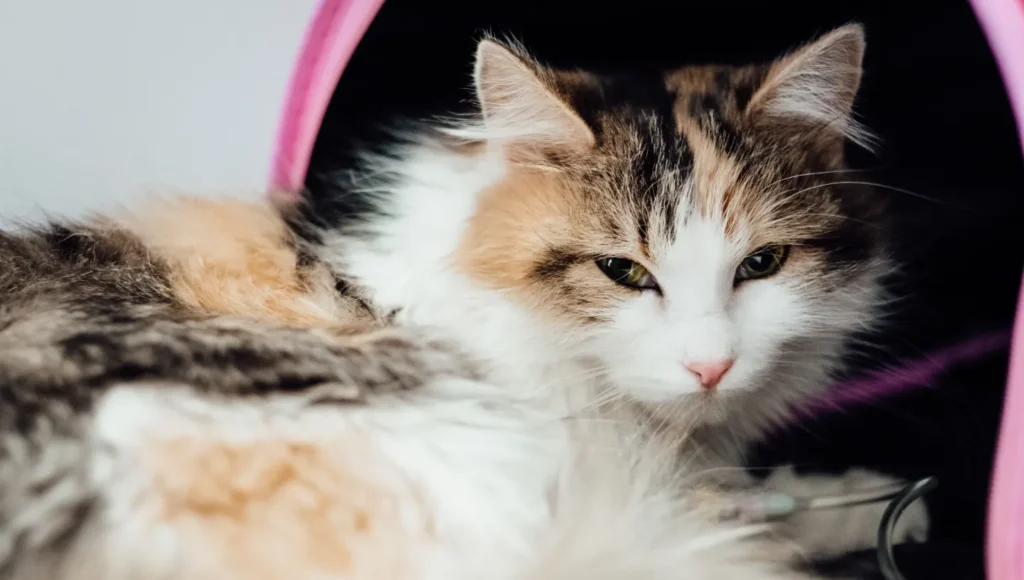
When you’re trying to figure out how to tell if your cat is sick, most people get stuck in the worst possible place: the middle.
Not obviously fine. Not obviously dying. Just… off. And that’s exactly where the anxiety lives — in the gray zone where you’re not sure if you’re overreacting or dangerously under-reacting.
This is where things change.
Here’s the framework Dr. Sami actually gave me, simplified into something you can use at 11 PM on a Sunday when you’re spiraling:
| What You’re Seeing | What It Means | What to Do |
|---|---|---|
| One symptom, mild, first time | Low urgency | Monitor every 6 hours |
| One symptom persisting 24+ hrs | Moderate concern | Call your vet next morning |
| Two or more symptoms together | Elevated concern | Call today, even after hours |
| Any 🔴 emergency sign (see above) | Critical | Go now. Don’t wait. |
| Your gut says something is wrong | Always valid | Call. Always call. |
The last row in that table is the one I wish someone had told me earlier.
You know your cat. You know her baseline. If something feels wrong — even if you can’t name it, even if she “seems okay” by every checklist — that instinct is information.
From my experience, the times I ignored that feeling were the times I regretted it. The times I called Dr. Sami “just to be safe” were never a waste.
Combinations that should always accelerate your timeline:
- Not eating + hiding + lethargy (all three together = call today)
- Vomiting + lethargy + not drinking
- Litter box changes + weight loss + increased thirst
- Any single 🔴 symptom = immediate care, no exceptions
For digestive issues specifically, our guides on Why Does My Cat Throw Up After Eating and Why Does My Cat Have Diarrhea break down the difference between “probably fine” and “needs a vet today” with real clarity.
And if you’re seeing any signs of parasites — weight loss with increased appetite, visible changes in stool, or scooting — don’t overlook the possibility of worms. Symptoms of Worms in Cats covers all five major types and what each one looks like in practice.
FAQ — Your Real Questions Answered
What is the silent killer of cats?
Chronic kidney disease is widely considered the most common silent killer in cats — particularly in cats over seven years old. The reason it’s so dangerous is exactly that: it’s silent. Early-stage kidney disease often produces no obvious symptoms. By the time most owners notice something is wrong, the disease has already progressed significantly.
The earliest warning signs are subtle — slightly increased thirst, marginally more frequent urination, mild weight loss over several months. None of these scream “emergency” on their own, which is why annual bloodwork for cats over seven is so important. According to AVMA guidelines, senior cats should have wellness exams at least twice a year.
How to Tell if Your Cat Is Sick by the Way She Acts?
A sick cat usually becomes quieter and more withdrawn than usual. She may sleep more, eat less, groom less, and avoid interaction — essentially pulling back from her normal routines. The key word there is her normal. What looks like laziness in one cat might be completely out of character for another.
The behavioral withdrawal almost always comes before the physical symptoms become obvious. That’s why — when it comes to how to tell if your cat is sick — knowing your individual cat’s baseline is genuinely the most useful diagnostic tool you have.
Cat nose warm and dry — does it mean she’s sick?
Honestly? No. And I say this with full awareness that Dave is somewhere reading this and feeling personally targeted.
A cat’s nose temperature and moisture level change throughout the day based on activity, hydration, sleep, and ambient temperature. A warm, dry nose after a long nap is completely normal. It is not a reliable indicator of fever or illness.
What you should actually look at: behavior, appetite, energy, and the combination of symptoms — not the nose. Cat Nose Color Change covers what the nose can actually tell you — which is mostly about color, not texture.
How do I know if my cat is dying?
This is the question nobody wants to type into Google, and I understand why.
The signs that a cat is in serious decline include: complete withdrawal from all interaction, refusing all food and water for multiple days, extreme weight loss, labored or irregular breathing, very low body temperature (feeling cold to the touch, especially the paws and ears), and a general loss of responsiveness.
If you’re seeing a combination of these signs, please don’t rely on the internet. Call your vet today. They can help you understand what’s happening and give you actual guidance for your specific cat’s situation — including honest conversations about quality of life when that’s needed.
How can I help a sick cat at home?
The honest answer: supportive care while you get professional guidance.
That means keeping her warm and comfortable, making sure fresh water is always accessible and nearby (not across the house — right next to her), not forcing food but offering something warming and aromatic like a small amount of warmed wet food to stimulate appetite, and minimizing stress — no loud noises, no new animals, no major changes.
What it doesn’t mean: skipping the vet and hoping it resolves. Home care is a bridge, not a destination.
When should I actually worry my cat is sick?
The moment you notice a meaningful change from her normal behavior — especially if it lasts more than 24 hours, involves more than one change at once, or involves any of the 🔴 emergency signs listed above.
Here’s a useful rule of thumb: if you’re worried enough to Google “is my cat sick,” you’re probably worried enough to make a call. Most vets would far rather take a two-minute reassurance call than see a case that waited too long.
One Last Thing Before You Go
Two days after that terrible Tuesday morning, Luna came charging around the corner of my kitchen at full speed, skidded across the tile floor on all four paws, and stood directly on my feet demanding breakfast like nothing had ever happened.
I actually teared up a little. I’m not embarrassed about that.
The point of this whole article isn’t to make you paranoid every time your cat takes a long nap. It’s to give you a real system for how to tell if your cat is sick — so that when something is actually wrong, you catch it early enough to matter.
Huge thanks to Lina for her dramatic, heartfelt concern that morning.
To Marcus, whose unsolicited academic lecture was, I grudgingly admit, completely accurate. And an international public health warning regarding Dave’s nose-touching methodology — please, for the love of all cat owners everywhere, do not use it.
And to Dr. Sami: genuinely, from the bottom of my heart, thank you.
Luna says thank you too. She expresses this by occasionally sitting next to me instead of on the opposite side of the room, which for her is basically a standing ovation.
Keep this one bookmarked. Not because your cat is sick right now — but because the day you need it, you’ll want it fast.
And hey — drop a comment below. What’s the strangest, most unexpected sign that tipped you off that your cat wasn’t feeling well? And have you ever received advice as scientifically groundbreaking as Dave’s nose theory? I read every single one. Every time.
Share this with a fellow cat owner who deserves better than Dave’s advice.
They’ll thank you for it.