
Why do cats knead? Those tiny paws start pressing into you just as you sink into the couch after a long day. One… two… push. It’s gentle, rhythmic, almost like a massage—until the claws remind you they’re very real.
Cat parents call this moment “making biscuits,” and once you’ve experienced it, the name just sticks. It’s oddly comforting, a little funny, and deeply personal.
But this isn’t random play or a quirky habit. When a cat kneads, something much deeper is happening. According to the American Animal Hospital Association (AAHA), it is a behavior woven from instinct, memory, and affection—one that connects your adult cat to their earliest days of safety, warmth, and love. When those paws move, they’re speaking a quiet emotional language.
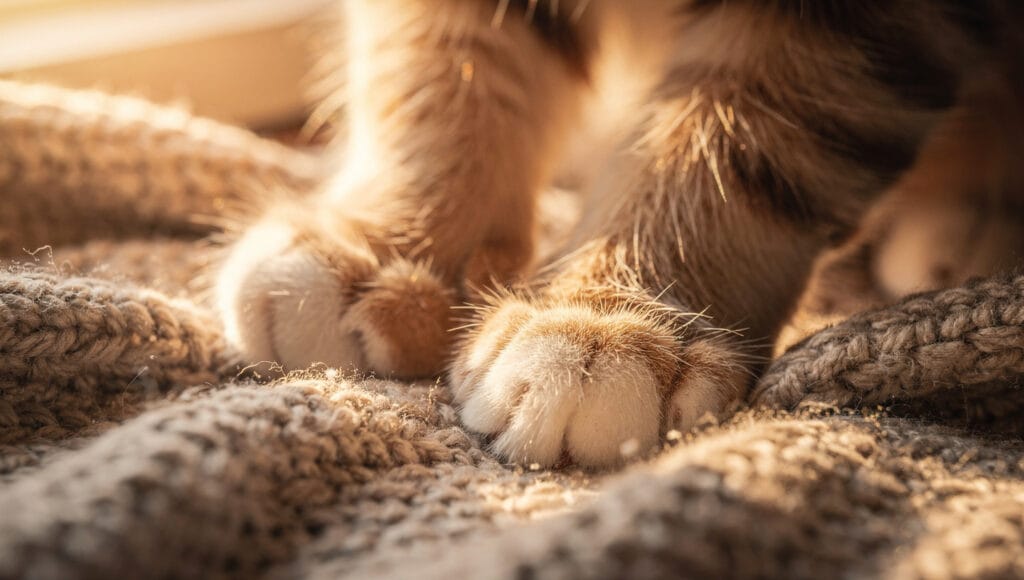
A close-up of a cat kneading a soft blanket with its paws, a behavior commonly known as “making biscuits.”
Table of Contents
- What Does It Mean When a Cat Kneads?
- Back to Kittenhood — The Science Behind Cat Kneading
- A Behavior That Never Grows Up (Neoteny Explained)
- Kneading and Nursing — A Memory from Mom
- Why Do Cats Knead Their Owners?
- The Ultimate Sign of Trust and Affection
- Scent Glands — “You Are Mine”
- Why Do Cats Knead and Bite Blankets?
- Blankets Feel Like Mom
- Biting While Kneading — Is It Normal?
- Love Hurts — What to Do When Kneading Gets Painful
- Never Punish a Kneading Cat
- Practical & Kind Solutions
- Frequently Asked Questions About Cat Kneading
- A Small Gesture, A Big Meaning
What Does It Mean When a Cat Kneads?
Cat kneading is the slow, rhythmic pushing of a cat’s front paws, usually alternating left and right. You’ll often see it happen on soft surfaces—blankets, pillows, your lap—or sometimes directly on you.
The nickname “making biscuits” comes from how closely this motion resembles kneading dough. The paws press down, pull back, then press again, as if your cat is preparing an invisible batch of bread. It’s adorable, slightly confusing, and unmistakably cat-like.
Most importantly, kneading is a comfort behavior. Cats do it when they feel safe, relaxed, and emotionally content. That’s why it often shows up during quiet moments—bedtime, cuddle sessions, or when your cat is settling in for a nap.
And while it looks simple on the surface, this gentle motion has deep roots. To truly understand why cats knead, we have to travel back to the very beginning—when your cat was still a tiny kitten, nursing and learning what comfort feels like.
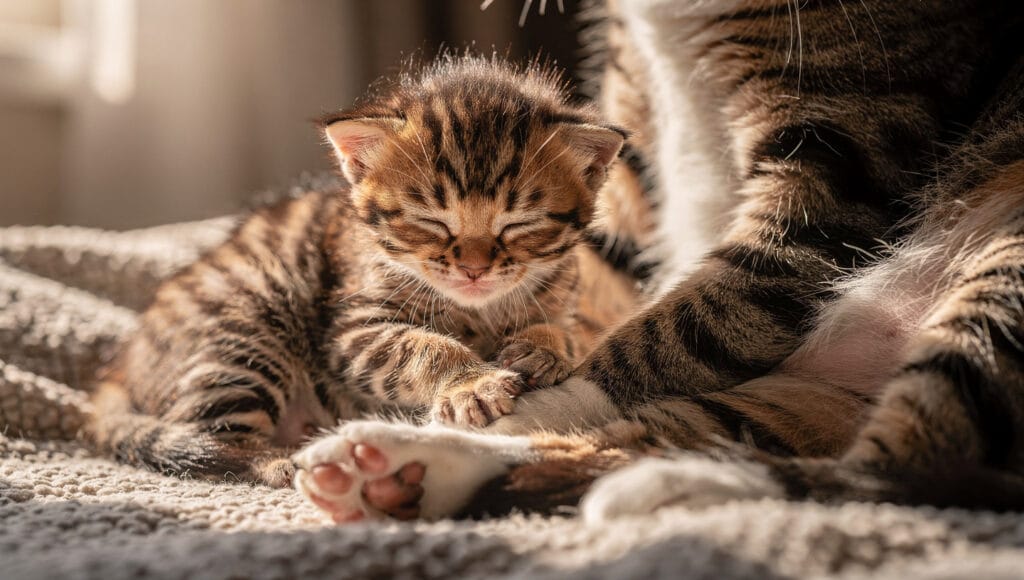
A small kitten kneading its mother’s belly while nursing, illustrating the origin of kneading behavior in early kittenhood
Back to Kittenhood — The Science Behind Cat Kneading
That gentle, repetitive motion isn’t something your cat invented as an adult. It’s much older than that. In fact, kneading is a behavior rooted in kittenhood—one that never truly fades away.
A Behavior That Never Grows Up (Neoteny Explained)
Cats are masters of something scientists call neoteny. It simply means holding on to baby-like behaviors long after growing up. Think of it as emotional childhood staying switched on.
Unlike wild animals, domestic cats continue to treat trusted humans as maternal figures. You feed them, protect them, speak softly to them, and provide warmth. To a cat’s brain, that checks all the boxes of “mom.”
So when your adult cat kneads on you, they’re not being childish—they’re being emotionally honest. That soft pawing is a leftover comfort behavior from kittenhood, triggered when they feel completely safe. In that moment, you aren’t just a person. You’re home.
Kneading and Nursing — A Memory from Mom
When kittens are nursing, kneading serves a very practical purpose. As they press their paws against their mother’s belly, it helps stimulate milk flow, making feeding easier and more satisfying.
Over time, the kitten’s brain links this motion with powerful feelings:
- Warmth
- Fullness
- Security
- Calm
Those sensations become deeply imprinted. Long after nursing ends, the movement remains stored as a shortcut to comfort. So when an adult cat kneads a blanket—or your lap—they’re not looking for milk. They’re reactivating that same emotional state. It’s a self-soothing ritual that says, “I am safe. I am relaxed. Everything is right.”
Why Do Cats Knead Their Owners?
When your cat chooses you as their favorite kneading spot, it’s not accidental. This behavior is deeply personal—and emotionally loaded.
The Ultimate Sign of Trust and Affection
Cats don’t knead just anyone. They save this behavior for the person (or place) where they feel completely safe. Kneading puts a cat in a vulnerable position: muscles relaxed, guard down, fully immersed in the moment. Instinctively, cats only allow this level of exposure around someone they trust without question.
That’s why being kneaded feels so intimate. Your cat isn’t just sitting near you—they’re emotionally leaning into you.
Often, kneading comes with a rhythmic purr, slow blinks, or half-closed eyes. These signals usually appear together because they all come from the same emotional place: deep comfort and contentment. If you’ve ever wondered about the science behind that soothing sound, this moment connects closely with why cats purr—both behaviors are expressions of safety and emotional bonding.
In simple terms: if your cat kneads you, you’re not just liked. You’re trusted.
Scent Glands — “You Are Mine”
Here’s the fascinating biological layer beneath the sweetness. Cats have scent glands in the soft pads of their paws, utilized for territorial marking. You can’t see them, and you can’t smell them—but other cats absolutely can. When your cat kneads on you, they’re gently releasing their unique scent onto your skin, clothes, or blanket.
This is called scent marking. So while it feels like a massage, something else is happening: your cat is leaving an invisible signature that says, “This human belongs to me.” Not in an aggressive way—but in a family way.
To your cat, scent equals familiarity, safety, and ownership. By marking you, they’re blending you into their inner circle—their territory of comfort. You’re no longer just a person in their world. You’re part of it.
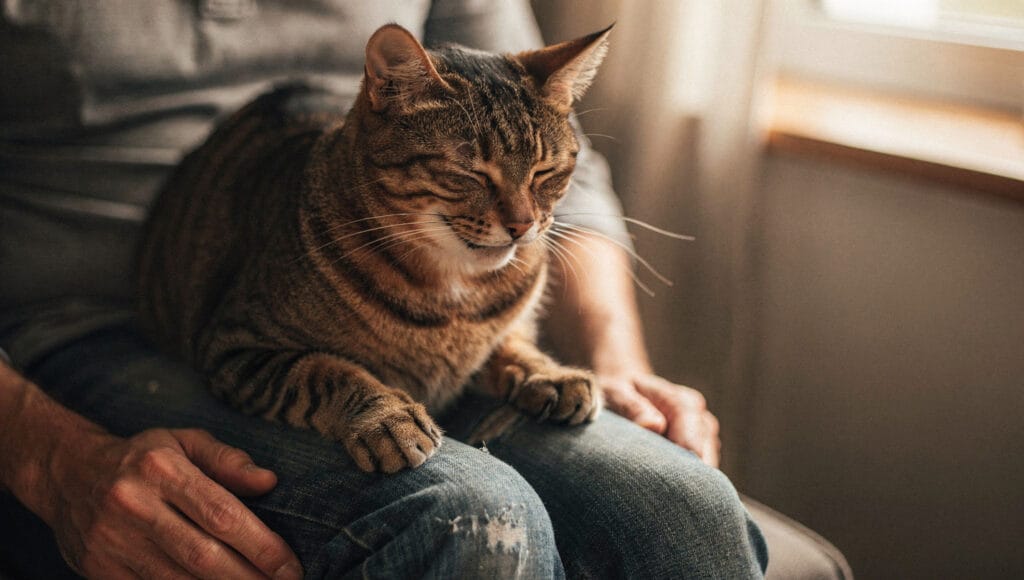
A relaxed tabby cat kneading its owner’s lap as a sign of trust, comfort, and emotional bonding.
Why Do Cats Knead and Bite Blankets?
Few things confuse cat parents more than this combo: kneading with total focus… while biting, sucking, or gripping a blanket with intense determination. It can look strange, even a little dramatic—but in most cases, it’s completely normal.
Blankets Feel Like Mom
Cats are incredibly sensitive to texture. Soft fabrics like fleece, wool, or plush blankets closely mimic the feel of a mother cat’s fur. The moment a cat’s paws sink into that softness, instinct takes over.
That familiar texture acts like a switch. It immediately pulls your cat back to a time when life was simple—warmth beneath them, a steady heartbeat nearby, and no need to be alert or cautious. Blankets provide the perfect stand-in for that early comfort, which is why cats often seek them out during kneading sessions.
Biting While Kneading — Is It Normal?
Yes—this type of biting is usually not aggression at all. When cats knead and gently bite or hold fabric in their mouth, they’re often reenacting nursing behavior. As kittens, they would grip their mother’s fur with their mouth to steady themselves while feeding. This behavior can resurface later in life, especially during moments of deep relaxation.
Veterinarians describe this as a self-soothing behavior. It helps cats calm their nervous system, release tension, and settle into a relaxed state—much like a child sucking their thumb before sleep.
That said, there’s an important distinction to make. If the biting shifts from blankets to you, or becomes sharp, frequent, and painful, that’s a different situation. In those cases, it’s worth understanding why cats bite and how to recognize signs of overstimulation or stress. For blankets, though? This knead-and-bite ritual is simply your cat finding comfort the only way they know how.
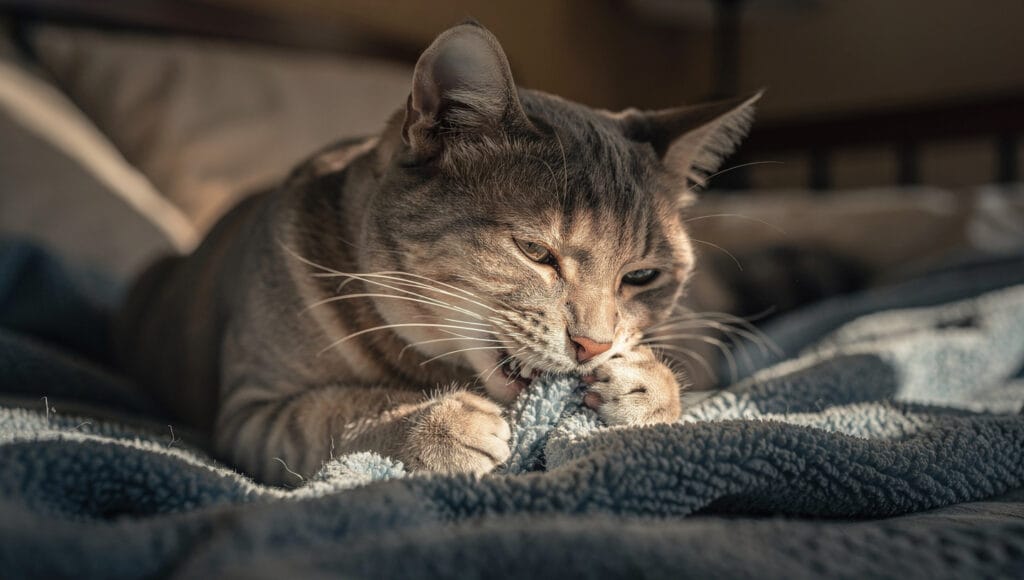
A cat kneading and gently biting a blanket, showing a self-soothing behavior linked to comfort and security.
Love Hurts — What to Do When Kneading Gets Painful
Kneading is sweet… until it isn’t. Those loving paws can turn into tiny needles, leaving you torn between enjoying the moment and protecting your skin. The good news? You don’t have to choose.
Never Punish a Kneading Cat
It’s important to understand what kneading means before reacting to it. When a cat kneads, they’re expressing comfort, trust, and emotional safety. Yelling, pushing them away harshly, or showing frustration sends a very confusing message.
From your cat’s perspective, they’re saying “I feel safe with you.” Punishment turns that moment into uncertainty. This kind of reaction doesn’t teach a cat to stop kneading—it teaches them that closeness can suddenly become unsafe. Over time, that can weaken trust.
Practical & Kind Solutions
You can protect yourself without rejecting your cat’s affection. These gentle adjustments make all the difference:
- Keep Nails Trimmed: Regular nail trimming softens the impact of kneading dramatically. Short, smooth nails turn sharp pressure into gentle tapping—making cuddle time far more enjoyable for both of you.
- The Barrier Method: Place a thick blanket, folded towel, or pillow between you and your cat. This creates a soft buffer without removing them from your lap.
- Gentle Redirection: If the kneading becomes intense, calmly stroke your cat’s head or cheeks to help them settle.
The message to your cat should always be the same: your love is welcome here.
Frequently Asked Questions About Cat Kneading
Do cats knead when they are happy? Yes. Kneading is one of the clearest signs of happiness and relaxation in cats. It usually happens when they feel safe, content, and emotionally comfortable. If your cat is kneading, they’re in a calm state and enjoying the moment.
Why does my cat stare at me while kneading? That steady gaze is a form of bonding. Your cat is checking in with you, reinforcing trust and emotional connection. Eye contact during kneading often means your presence adds to their sense of comfort rather than distracting from it.
Why do some cats use all four paws when kneading? Using all four paws shows deeper immersion in the behavior. It often means the cat is extremely relaxed and mentally “back in kittenhood.” This full-body kneading reflects intense comfort and emotional security.
A Small Gesture, A Big Meaning
What feels like tiny paws pressing into you carries a lifetime of meaning. Cat kneading is instinct, memory, trust, and love wrapped into one quiet ritual. It’s a cat’s way of returning to safety—and inviting you there with them.
So the next time your cat starts making biscuits on your lap, take a moment before you shift away. Those paws aren’t asking for space. They’re saying something simple and profound:
I feel safe. I feel loved. And you’re part of my world.