
Why Do Cats Knead? The Sweet Truth About “Making Biscuits”
I still remember the exact moment it happened.
It was a Tuesday evening — maybe three weeks after I brought Mochi home. She’d finally stopped hiding under the couch (progress!), and I was sitting on the sofa, half-watching TV, half-wondering if I’d made a terrible life decision by adopting a creature that clearly found me suspicious.
Then she jumped up, walked in three slow circles on my lap like she was solving a math problem, and started… kneading.
Tiny paws. Rhythmic. Almost meditative.
Cute, right?
Until the claws came out.
I’m not saying it felt like a tiny acupuncture session performed by someone who skipped training. But I’m also not not saying that. Each little press was this perfect combo of “aww” and “ow” that I genuinely didn’t know how to feel about. I just sat there, frozen, afraid to move in case I broke whatever mysterious ritual was happening on my thighs.
My first thought? Is she… kneading me like dough?
My second thought? Should I be flattered or concerned?
I texted my coworker Sarah the next day. She has a cat too — a gloriously chaotic orange tabby named Pickle — and I figured she’d have answers.
Her response: “Oh girl, Pickle does that ALL the time on my good blanket. I have no idea why but I just let him. He looks so happy I can’t say no.”
Which… wasn’t exactly the scientific clarity I was looking for. But honestly? Same, Sarah. Same.
That conversation stuck with me. Two cat moms, zero answers, just vibes and claw marks.
So I went digging. Read the research, talked to vet sources, paid way too much attention to Mochi’s paw movements for the next two weeks. And what I found genuinely surprised me — not just why cats knead, but what it actually means when they do it to you specifically.
Spoiler: it’s not random. And it’s kind of beautiful.
Quick note: Everything I’m sharing here is based on personal experience and research from trusted sources like PetMD and ASPCA. I’m a cat owner, not a vet — so if you’re ever worried about a behavioral change in your cat, a real vet visit is always the right call.
Table of Contents
- What Does It Mean When a Cat Kneads?
- The Real Reasons Behind Cat Kneading
- 1. It Goes All the Way Back to Kittenhood
- 2. Your Cat Is Basically Saying “I Feel Safe Here”
- 3. She’s Marking You — Yes, You’re Officially Hers Now
- Why Does My Cat Knead Me Specifically?
- Kneading + Purring + Drooling — The Happiness Trifecta (Yes, Drooling)
- When Should I Actually Worry About Kneading?
- Should I Let My Cat Knead Me? (Practical Tips)
- Your Kneading Questions, Answered
- Are cats happy when they knead?
- What does it mean if a cat kneads you?
- Should I pet my cat while she’s kneading?
- Why does my cat knead and bite at the same time?
- One Last Thing Before You Go
What Does It Mean When a Cat Kneads?
Cat kneading is a natural behavior where cats rhythmically press their paws — alternating left and right — against a soft surface. It almost always signals comfort, safety, or emotional bonding, and it traces back to kittenhood instincts that never fully go away.
That’s the short answer. But the full answer is way more interesting.
The Real Reasons Behind Cat Kneading
Here’s the thing most articles get wrong: they list the reasons like a grocery list and move on.
But kneading isn’t one thing. It’s a whole language. And once you learn to read it, you start seeing your cat completely differently.
Let me break it down.
1. It Goes All the Way Back to Kittenhood
This is where it all starts — and honestly, once you understand this part, everything else makes sense.
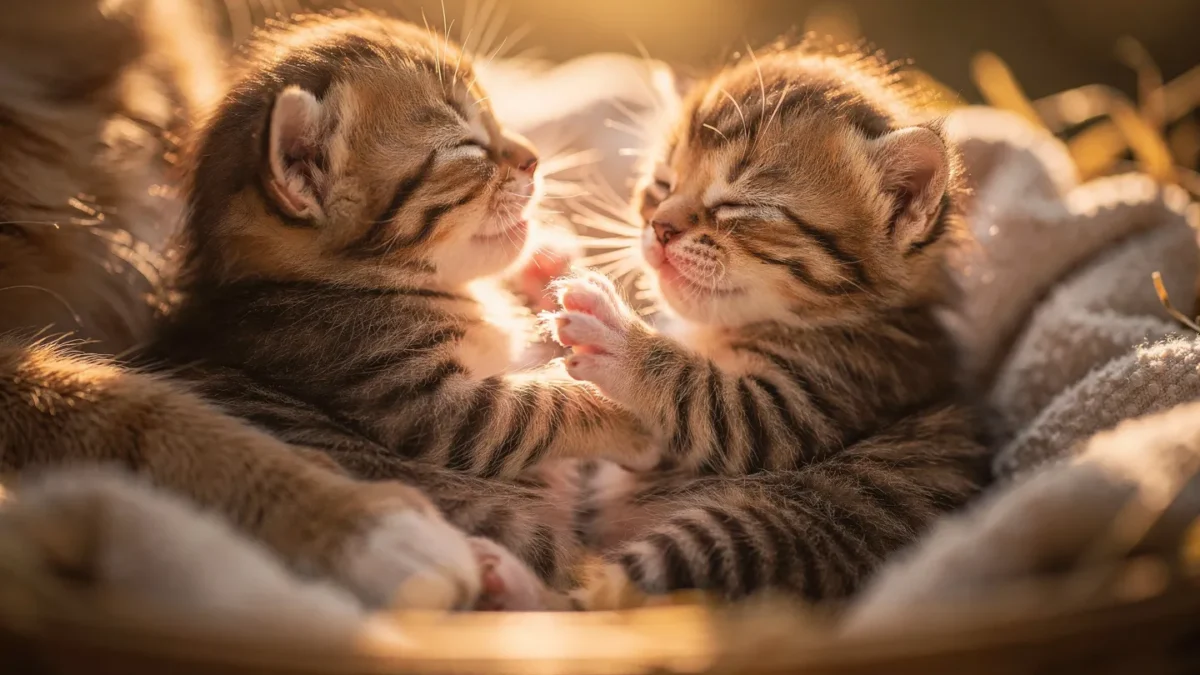
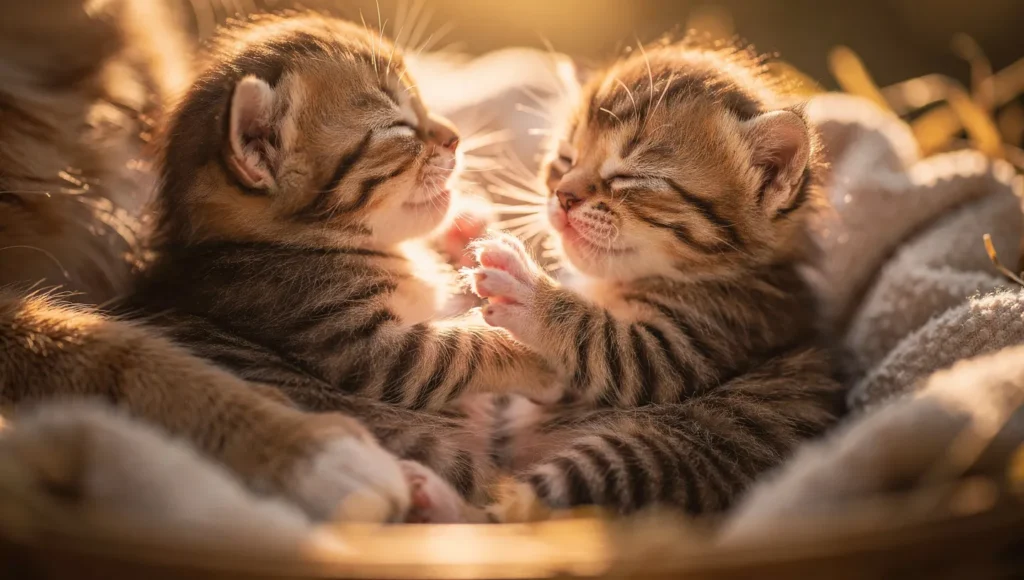
When kittens nurse, they instinctively knead their mother’s belly to stimulate milk flow. It’s rhythmic, it’s soothing, and it works. The kneading motion gets hardwired into their brains as something that brings warmth, food, and safety — all at the same time.
Then they grow up. They stop nursing. But the motion? It stays.
According to PetMD, adult cats retain this behavior because the emotional memory attached to it never disappears. When your cat kneads, some part of her brain is still back in that warm, safe, milk-and-mama moment.
Personally, I find this both adorable and slightly heartbreaking in the best possible way. Mochi is a whole grown cat who once launched herself off a bookshelf for reasons I’ll never understand — and she’s still, in some corner of her soul, a tiny kitten looking for comfort.
Most people get this wrong. They think kneading is just a quirky cat thing. It’s actually one of the most emotionally loaded behaviors your cat has.
2. Your Cat Is Basically Saying “I Feel Safe Here”
Here’s the thing.
Kneading doesn’t happen when a cat is stressed, scared, or on high alert. It happens when they are deeply, genuinely relaxed.
Think about it — Mochi doesn’t knead in new environments. She doesn’t knead when there’s a loud noise or a stranger in the apartment. She kneads on me, on her blanket, in her spot on the couch. The places and people she’s claimed as safe.
According to ASPCA, kneading in adult cats is closely tied to feelings of contentment and security. When your cat kneads, she’s essentially telling you: I am safe. I am happy. This is good.
And if she’s kneading you specifically? We’ll get to that. But trust me — it means something.
This is also why you’ll notice kneading often happens alongside purring — the two behaviors are deeply connected, both expressing the same internal state of calm and comfort.
3. She’s Marking You — Yes, You’re Officially Hers Now
And this is important.
Cats have scent glands in their paw pads. When they knead, they’re not just doing a little massage — they’re leaving their scent on whatever (or whoever) they’re pressing on.
In the cat world, scent marking is how you say: this is mine, this is familiar, this is safe.
So when Mochi kneads me? She’s not just being cute.
She’s claiming me.
Honestly, I’m not sure how to feel about being claimed by a 9-pound cat who also once knocked my coffee off the table while making direct eye contact. But here we are.
Understanding this scent-marking behavior is a huge part of reading cat body language overall — kneading is just one piece of a much bigger communication system your cat uses every single day.
Why Does My Cat Knead Me Specifically?
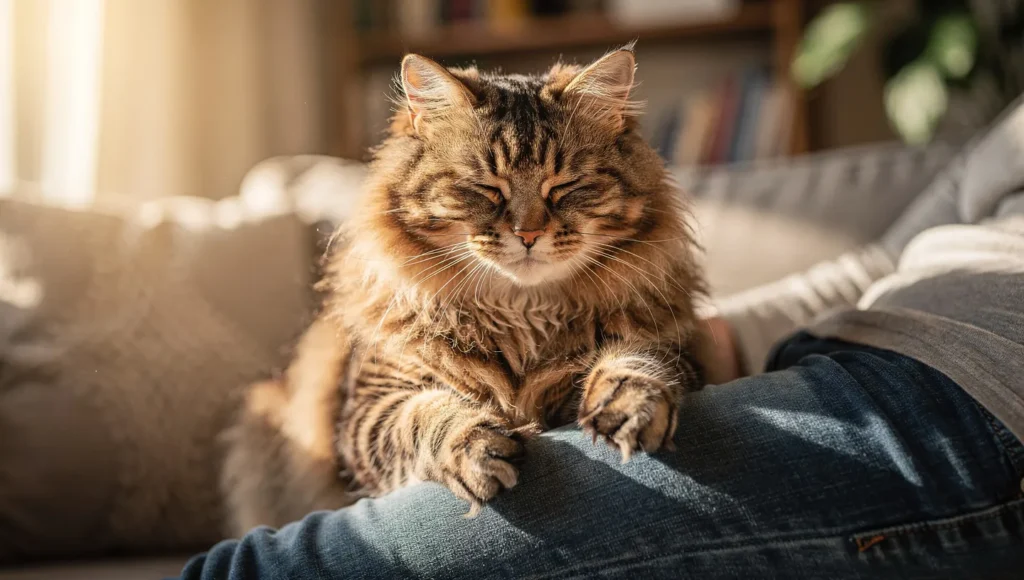
If your cat kneads you — and not just blankets or pillows — it means she sees you as a source of comfort, safety, and warmth. In simple terms: you’re her person.
And I don’t say that lightly.
Cats are not obligate social creatures the way dogs are. They don’t need to bond with humans to survive. So when a cat chooses to knead you — specifically you, on your lap, on your chest, on your stomach at 2am when you have work tomorrow — that’s a deliberate emotional statement.
She’s not confused. She’s not just looking for a soft surface.
She picked you.
Think about that for a second. This tiny, independent, sometimes-chaotic creature — who also once judged you silently from across the room for 45 minutes — decided that you are safe enough, warm enough, and trustworthy enough to trigger her deepest comfort instinct.
Honestly? That hits different.
If you want to understand the full picture of how your cat communicates love and trust, the cat slow blink is another beautiful piece of the same puzzle — cats have a whole silent language, and kneading is just one word in it.
Kneading + Purring + Drooling — The Happiness Trifecta (Yes, Drooling)
Okay. So.
I need to tell you about Pickle.
A few months after my initial Mochi conversation with Sarah, she texted me a video. No context. Just a video.
It was Pickle — magnificent, chaotic, aggressively orange Pickle — sitting on Sarah’s lap, kneading her favorite cardigan with the focused intensity of a professional bread baker. Purring loud enough to hear through the phone. And just… drooling.
A thin, glistening, completely undignified little drool string.
Sarah’s caption: “He does this every single time. Is he broken???”
I laughed for three minutes straight.
But here’s what I told her — and what I want you to know too:
Pickle was not broken. Pickle was in a state of pure, unfiltered bliss.
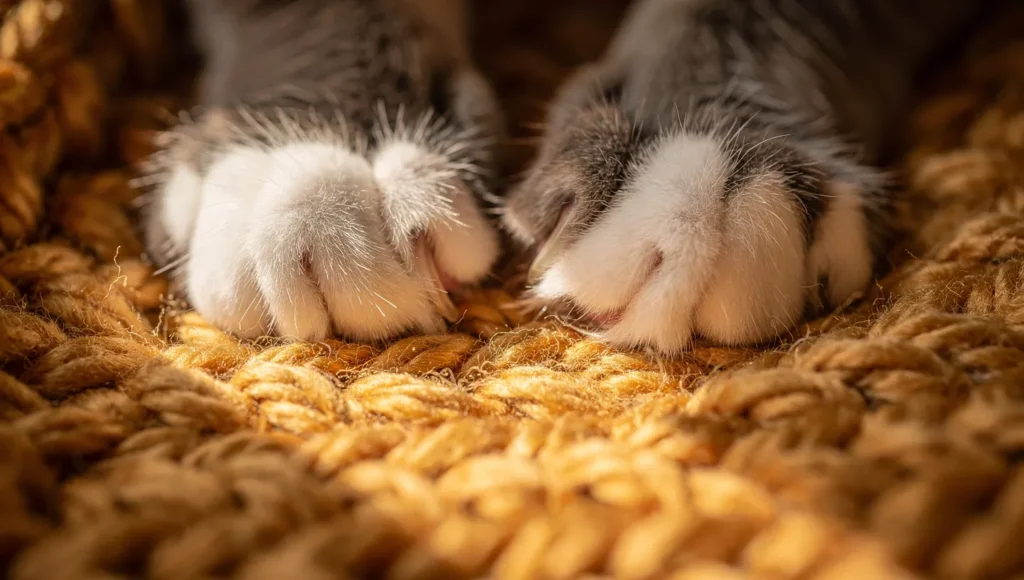
When kneading, purring, and drooling all happen together, you’re witnessing what I like to call the Happiness Trifecta. According to PetMD, the drooling happens because the cat is so deeply relaxed that her body essentially forgets to swallow. It’s the same reason happy dogs drool — pure physiological contentment.
The kneading triggers a release of endorphins. The purring reinforces the calm state. And the drooling is basically your cat’s body saying: I have achieved maximum comfort. Everything is perfect. I have no notes.
So if your cat does all three on you simultaneously?
Congratulations. You are, objectively, the best thing in your cat’s life.
This trio is also deeply connected to why cats purr in the first place — it’s all part of the same emotional release system, and it’s honestly one of the most fascinating things about feline behavior.
When Should I Actually Worry About Kneading?
This is where things change.
Most kneading is completely normal and beautiful. But there are a few situations where it’s worth paying closer attention.
Here’s a simple framework I put together based on research and personal experience:
| Situation | What It Likely Means | What To Do |
|---|---|---|
| Kneads on you while purring | Deep contentment, bonding | Enjoy it (and maybe trim those nails) |
| Kneads blankets before sleeping | Pre-sleep nesting instinct | Totally normal, nothing to do |
| Kneads suddenly more than usual | Possible stress or anxiety | Check for recent changes at home |
| Kneads and seems restless or vocal | Could be in heat (unspayed cats) | Consider vet consultation |
| Kneads obsessively and ignores food/play | Possible anxiety or discomfort | Vet visit recommended |
| Kneads specific body part repeatedly | Possible pain or seeking warmth | Monitor and consult vet if persistent |
The key thing to watch is change. If your cat has always been a casual kneader and suddenly becomes obsessive about it, or stops entirely after always doing it — that shift is worth noting.
If you suspect stress or anxiety is the root cause, this 14-day plan for cat separation anxiety has some genuinely helpful behavioral strategies that go beyond just the kneading itself.
Should I Let My Cat Knead Me? (Practical Tips)
Short answer: yes, absolutely — with a few small adjustments.
Here’s what actually works:
Put a soft barrier between you and the claws. A folded blanket on your lap does the job perfectly. Mochi doesn’t even notice the difference, and my thighs are eternally grateful.
Never punish or push her away. This is important. Kneading is a vulnerable, trusting behavior. If you respond with frustration, you’re essentially rejecting her at her most emotionally open moment. Gently redirect instead — move her paws, shift position, let her settle.
Keep nails trimmed regularly. This single step changed my life. A quick trim every 2–3 weeks means the kneading stays cute without the acupuncture side effects. If you haven’t figured out a stress-free nail routine yet, this guide to trimming cat nails safely is exactly what you need.
Consider Soft Claws nail caps. These are small vinyl caps that go over the claws — they’re safe, vet-approved, and completely eliminate the sharpness. Perfect for cats who knead frequently or enthusiastically. Mochi wore them for a while and honestly looked like she was ready for a spa day.
Your Kneading Questions, Answered
Are cats happy when they knead?
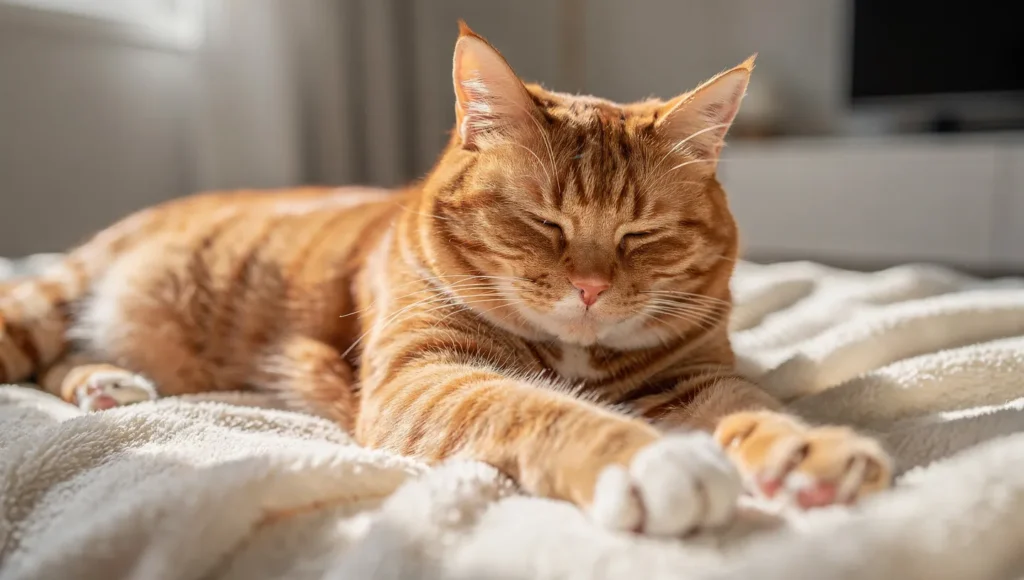
Almost always, yes. Kneading is one of the clearest signs of contentment in cats. When your cat kneads — especially while purring — she’s in a relaxed, happy state rooted in the comfort she felt as a kitten.
What does it mean if a cat kneads you?
It means she trusts you deeply and sees you as a safe, comforting presence. Cats don’t knead just any surface — they knead what (and who) makes them feel genuinely secure. You’ve earned that.
Should I pet my cat while she’s kneading?
Yes — gentle, slow strokes during kneading can actually deepen the bonding moment. Just keep it calm and avoid sudden movements that might startle her out of her happy zone.
Why does my cat knead and bite at the same time?
This one’s common and usually harmless. Some cats knead and gently nibble — it’s called “love biting” and it’s part of the same kittenhood memory. However, if the biting is hard or aggressive rather than gentle, it might signal overstimulation. Learning to read those signals is a big part of understanding cat body language overall.
One Last Thing Before You Go
If you’ve made it this far, you now know more about cat kneading than most cat owners ever will.
You know it starts in kittenhood. You know it’s about safety and love and scent. You know the drooling is a feature, not a bug. And you know when to just enjoy it — and when to pay closer attention.
Mochi is currently asleep next to me as I write this. No kneading right now, just that slow, peaceful breathing that cats do when they’ve decided the world is acceptable.
I hope your cat gives you a kneading session today. Claws and all.
And Sarah — if you’re reading this (and knowing you, you absolutely are) — thank you for sending that Pickle video. That ridiculous, drooling, cardigan-destroying little man is more helpful than he’ll ever know. Give him an extra treat tonight. He’s earned it. 🧡
Now I want to hear from you.
Does your cat knead? On you, on blankets, on that one specific spot on the couch? Does it come with purring? Drooling? A look of absolute spiritual peace?
Drop your story in the comments — I read every single one, and honestly, cat kneading stories are my favorite kind of internet content.