
What can cats eat safely is a question many owners ask when they are standing in their kitchen right now, holding a piece of food in their hand and thinking: “Can my cat eat this… or am I about to make a terrible mistake?”
Every cat parent knows this moment—the mix of love, worry, and that look your cat gives you, as if saying “Just one bite… please?”
And because we care so much, we panic. We search Google. We overthink.
We want to feed them something tasty, but we’re terrified of accidentally giving them something harmful.
As a veterinary professional with 10 years of experience in feline nutrition, I’ve met countless owners who shared the same fear.
The good news? You’re not alone, and you’re in the right place.
This guide will give you clear, safe, vet-approved answers—so you’ll finally know exactly what your cat can eat, what they shouldn’t touch, and how to keep them happy and healthy without stress.
Let’s start with the quick, no-nonsense answer you came looking for.
Quick Answer: What Can Cats Eat?
(Fast, Vet-Approved Guide)
Short version:
Cats can eat plain cooked meats, certain vegetables and fruits in small amounts, and a few dairy products—with caution.
They must avoid toxic foods like onions, garlic, chocolate, grapes, raisins, caffeine, and artificial sweeteners (especially xylitol).
* ✔️ Safe for Cats (In Moderation): Cooked Chicken, Turkey, Beef, Pumpkin, Blueberries.
* ❌ Foods Cats Should Never Eat: Onions, Garlic, Chocolate, Grapes, Alcohol, Caffeine.
* ⚠️ Safe Only Under Specific Conditions: Raw meat (bacteria risk), Canned tuna (mercury risk).
Table of Contents
- What Can Cats Eat in Their Natural Diet?
- Why Cats Are Obligate Carnivores (In Simple Words)
- Safe Foods Cats Can Eat (Vet-Approved Guide)
- 1. Safe Proteins for Cats
- 2. Safe Vegetables for Cats
- 3. Cat-Friendly Fruits (Tiny Portions Only)
- 4. Dairy Products (With Caution)
- Foods Cats Should NOT Eat (Critical Safety Section)
- ⚠️ WARNING: Highly Toxic Foods for Cats
- How Much Human Food Should Cats Eat? (The 90/10 Rule)
- When to Call the Vet (Emergency Warning Signs)
- Frequently Asked Questions (FAQ)
- 1. Can cats drink milk?
- 2. Can cats eat canned tuna?
- 3. Can cats eat dog food?
- 4. Can cats eat bread or rice?
- 5. What should I do if my cat eats something toxic?
What Can Cats Eat in Their Natural Diet?
If you’ve ever watched your cat stalk a toy with military precision, you already know: cats are born hunters.
Their bodies, teeth, and digestive systems were all designed for one primary job—processing meat.
And this is where the key concept comes in… To understand their full nutritional needs, you might want to check our guide on What Do Cats Eat? which covers balanced meal planning.
Why Cats Are Obligate Carnivores (In Simple Words)
Cats are called obligate carnivores because their bodies must get certain nutrients from animal sources.
They simply can’t make everything they need on their own.
Here are the two nutrients I always explain to worried cat owners:
1. Taurine — The Heart & Vision Protector
Humans and dogs can make taurine. Cats cannot. They need to get it directly from meat.
* Why it matters: Taurine keeps your cat’s heart, eyes, and immune system working properly.
* Without enough taurine: Cats can develop serious heart disease (DCM) and vision loss.
2. Arginine — The “Emergency Detox” Amino Acid
Cats rely on arginine to remove ammonia (a natural toxin) from the body.
* Why it matters: Without enough arginine even for one day, a cat can experience severe neurological symptoms.
3. High Protein = High Energy
Cats use protein for energy, not carbohydrates like humans. This is why many carb-heavy human foods are unnecessary—or even harmful—for them.
Safe Foods Cats Can Eat (Vet-Approved Guide)
Now let’s dig into the foods your cat can enjoy safely.
I’ll walk you through each one the same way I explain it to clients during a clinic visit: benefit, risk, and serving tip.
1. Safe Proteins for Cats
Cooked Chicken
* Benefit: Chicken is a lean, high-quality protein source that supports muscles, skin, and immune health.
* Risk: Avoid bones—they splinter easily. Also avoid seasoning; even a sprinkle of garlic powder can be toxic.
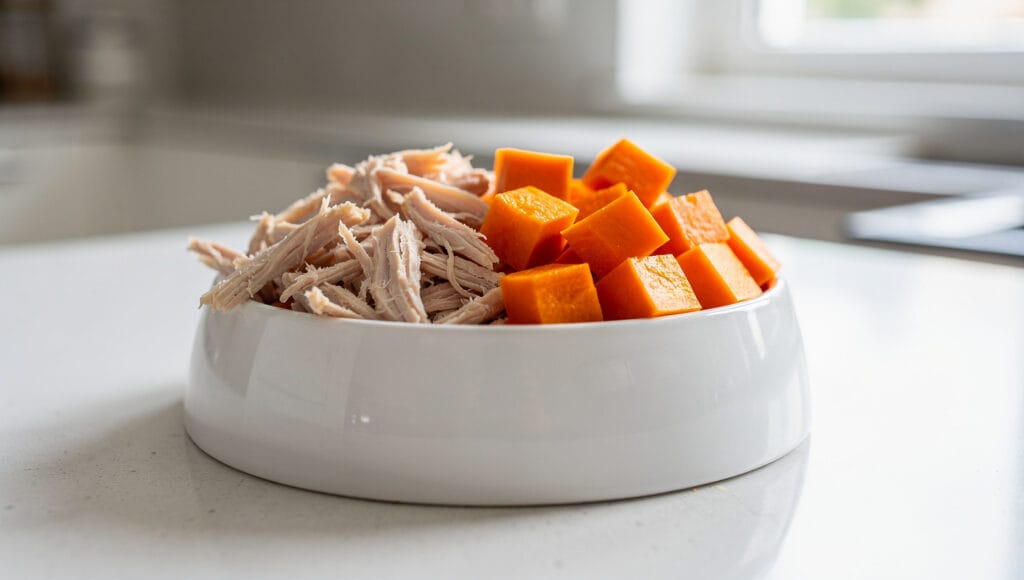
* Serving Tip: Boil or steam plain chicken. No oil, no spices. Cut into small bite-sized pieces.
Turkey
* Benefit: Similar to chicken but slightly richer in nutrients. Great for cats with sensitive stomachs.
* Risk: Skin can be too fatty. Remove it to avoid stomach upset.
* Serving Tip: Serve cooked white turkey meat only. Shred it lightly.
Beef
* Benefit: Excellent source of iron and B vitamins—great for cats who need energy.
* Risk: High-fat cuts can cause diarrhea or pancreatitis.
* Serving Tip: Choose lean beef. Boil or grill it plain, then finely chop.
Fish (Cooked Only)
* Benefit: Provides omega-3 fatty acids that support skin, coat, and joint health.
* Risk: Fish bones are dangerous. Raw fish can cause thiamine deficiency, leading to neurological issues.
* Serving Tip: Use boneless, cooked salmon or white fish. Serve small amounts once or twice a week—not daily.
Eggs (Cooked)
* Benefit: Highly digestible protein and amino acids. Many cats love the taste.
* Risk: Raw eggs increase the risk of Salmonella and biotin deficiency.
* Serving Tip: Scramble or boil an egg with no butter, no oil. Offer 1–2 teaspoons at a time.
2. Safe Vegetables for Cats
Pumpkin
* Benefit: My go-to recommendation for constipation and diarrhea. Pumpkin is full of soluble fiber.
* Risk: Canned pumpkin pie mix (with sugar/spices) is unsafe.
* Serving Tip: Use plain, unsweetened pumpkin. 1 teaspoon is enough for most cats.
Carrots
* Benefit: Packed with beta-carotene, great for immune health.
* Risk: Hard raw carrots can be a choking hazard.
* Serving Tip: Steam until soft. Mash or cut into tiny cubes.
Green Beans
* Benefit: Low-calorie, high-fiber treat—fantastic for overweight cats.
* Risk: Too many can cause gas.
* Serving Tip: Serve steamed green beans, chopped finely.
3. Cat-Friendly Fruits (Tiny Portions Only)
Blueberries
* Benefit: Antioxidants for immune support.
* Risk: High sugar for cats.
* Serving Tip: Give 1–2 blueberries max. Cut in half for kittens.
Apples (No Seeds!)
* Benefit: A little fiber and vitamin C.
* Risk: Apple seeds contain cyanide—dangerous for cats.
* Serving Tip: Remove peel and seeds. Cut tiny cubes.
Watermelon (Seedless)
* Benefit: Hydrating and refreshing in hot weather.
* Risk: Seeds and rind can cause stomach issues.
* Serving Tip: Use seedless watermelon and offer small bites only.
4. Dairy Products (With Caution)
Plain Yogurt (Small Amounts)
* Benefit: Some cats tolerate yogurt well; it may aid digestion.
* Risk: Most adult cats are lactose intolerant.
* Serving Tip: Use plain, unsweetened yogurt. Start with 1 teaspoon.
Foods Cats Should NOT Eat (Critical Safety Section)
This is the section I always slow down for when speaking with clients—because these foods don’t just cause stomach upset.
Some of them can be life-threatening. Please read this carefully.
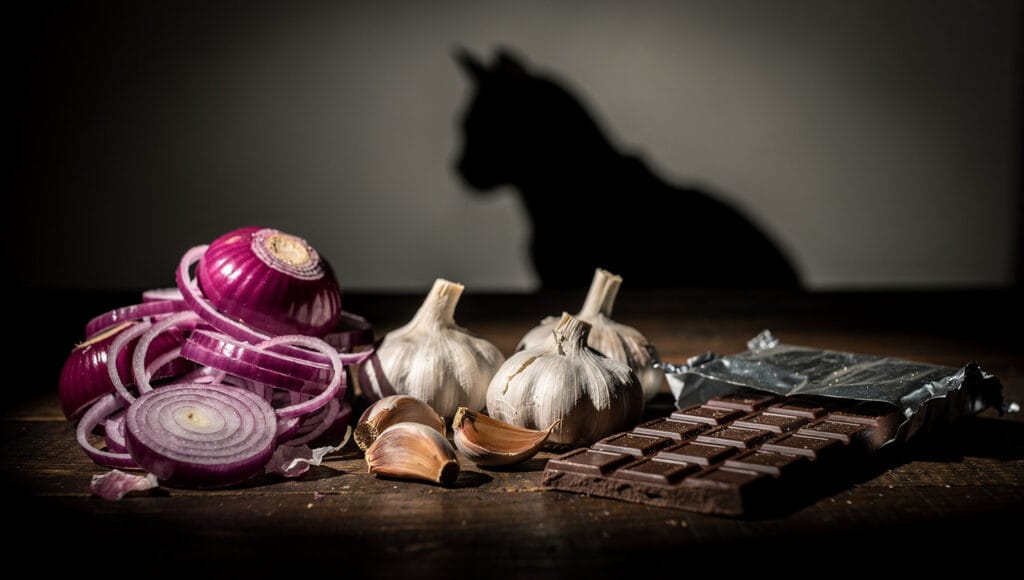
⚠️ WARNING: Highly Toxic Foods for Cats
Onions, Garlic, Leeks & Chives
* Why they are dangerous: They contain thiosulfates which cats cannot process.
* What happens: This damages red blood cells, leading to hemolytic anemia.
* Symptoms: Lethargy, pale gums, rapid breathing.
* Note: Garlic powder in seasoned meat is enough to cause harm.
Chocolate & Cocoa
* Why chocolate is deadly: It contains theobromine and caffeine.
* What happens: Toxins overstimulate the heart and nervous system, leading to seizures or cardiac arrest.
Grapes & Raisins
* Why they’re dangerous: Even small amounts can cause acute kidney failure in some cats.
* Symptoms: Vomiting, loss of appetite, dehydration.
Xylitol (Artificial Sweetener)
Found in sugar-free gum and some peanut butters. It causes a sudden release of insulin leading to dangerously low blood sugar and liver failure. For more details on dangerous ingredients, you can visit the ASPCA Poison Control center.
How Much Human Food Should Cats Eat? (The 90/10 Rule)
When considering what can cats eat from your plate, remember the rule I repeat constantly in my clinic: The 90/10 Rule.
* 90% of your cat’s calories should come from complete, balanced cat food.
* 10% or less can come from safe human foods and treats.
Why this matters: Cat food contains essential nutrients (like taurine) in the correct amounts. Human foods, even safe ones, are nutritionally incomplete for cats. Too many treats lead to obesity and nutrient imbalances.
Vet Pro Tip: How to Introduce New Foods Safely
Never introduce a new food suddenly.
Start with ½ teaspoon. Offer it alone (not mixed with other new foods) and wait 24 hours.
Watch for diarrhea, vomiting, or gas. If any of these appear → stop immediately.
When to Call the Vet (Emergency Warning Signs)
If your cat eats something unsafe—or you’re unsure—do not wait.
🚨 Call Your Vet Immediately If You See:
* Repeated vomiting or diarrhea.
* Drooling or foaming at the mouth.
* Difficulty breathing.
* Tremors or seizures.
* Sudden lethargy or collapse.
Trust your instincts. If you notice your cat is unwell after eating, read our guide on Why does my cat throw up after eating? to distinguish between minor issues and emergencies.
When it comes to poisoning, time truly saves lives.
Frequently Asked Questions (FAQ)
1. Can cats drink milk?
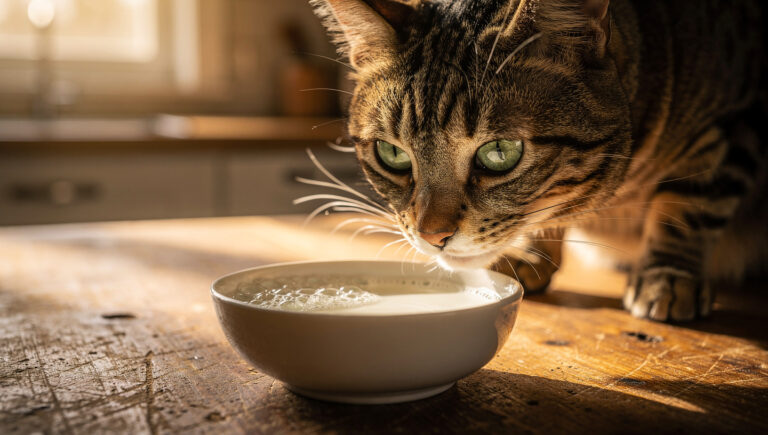
Most adult cats are lactose intolerant, which means milk can cause diarrhea and stomach pain. While kittens can digest milk, adult cats should avoid it. If you want to offer dairy, choose lactose-free milk or plain yogurt in tiny amounts.
2. Can cats eat canned tuna?
Yes—but only occasionally. Canned tuna lacks essential nutrients and may contain mercury. Think of it as a treat, not a regular meal.
3. Can cats eat dog food?
Dog food won’t poison your cat, but it’s nutritionally incomplete for cats. Cats need taurine and higher protein levels, which dog food does not provide. Eating it long-term can cause serious health problems.
4. Can cats eat bread or rice?
Plain bread or rice won’t harm your cat in small amounts, but they offer little nutritional value. Cats don’t need carbohydrates, so these foods should be rare treats only.
5. What should I do if my cat eats something toxic?
Contact your veterinarian or an emergency animal clinic immediately. Do not wait for symptoms to appear. Acting fast can save your cat’s life.
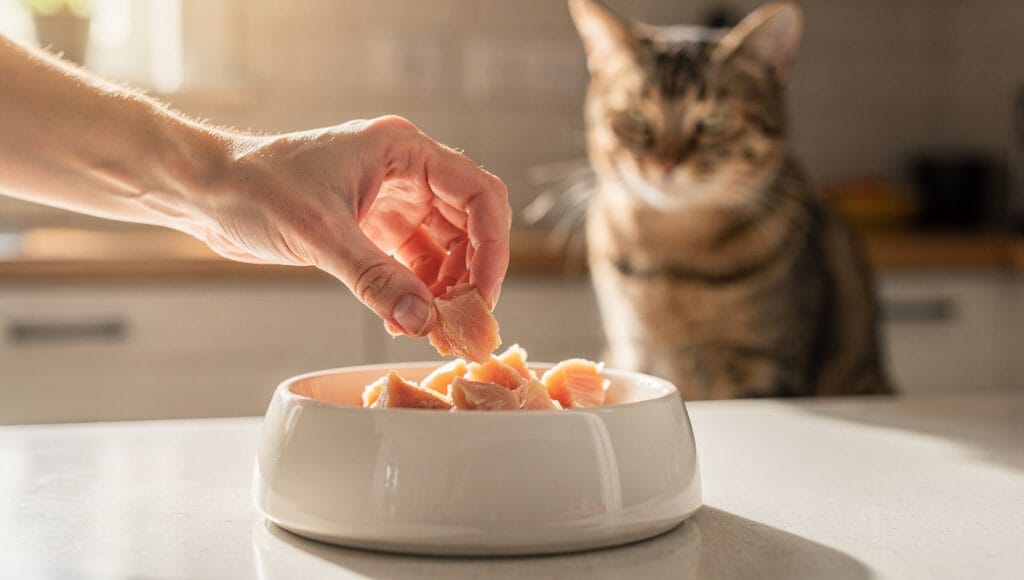
When it comes to feeding your cat, the rule for what can cats eat is simple: Safe foods are plain, cooked, and animal-based.
Toxic foods—like onions, garlic, and chocolate—should never be “tested.”
Remember, being cautious doesn’t make you an anxious pet parent—it makes you a responsible and loving one.
If you’re ever unsure, trust your instincts, check reliable sources, or ask your vet. Your cat depends on you, and with the right knowledge, you’re doing an amazing job keeping them safe.