
How to trim cat nails is one of those tasks every cat parent knows they should do… but secretly dreads. You reach for your cat’s paw. They pull back. You try again—and suddenly there’s a scratch on your hand, claw marks on the couch, and that guilty feeling hits hard.
Here’s the truth most guides won’t tell you: Nail trimming doesn’t go wrong because you’re careless. It goes wrong because you’re using the wrong tools—or the wrong ones the wrong way. This guide is built for real homes, real cats, and real fears. No vet jargon. No rushing. Just calm, practical steps that actually work.
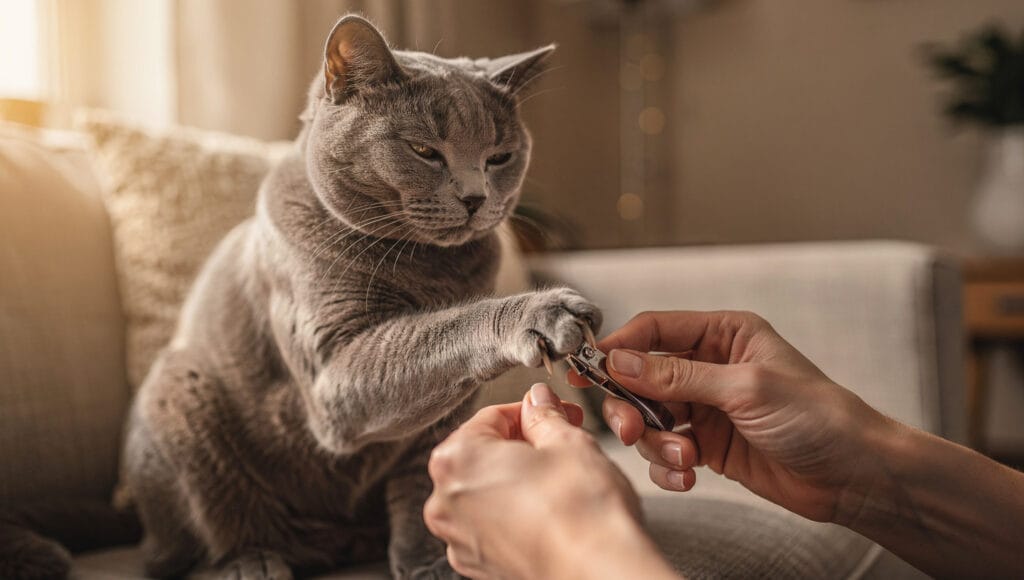
Table of Contents
- 🛠️ How to Trim Cat Nails: Choosing the Right Clippers
- ✂️ Scissor-Style Cat Nail Clippers (Best Overall)
- 🪓 Guillotine-Style Cat Nail Clippers
- ❌ Human Nail Clippers (Why They’re a Bad Idea)
- 📊 Quick Tool Comparison Table
- ✋ How to Hold a Cat to Trim Nails (Step-by-Step Positioning)
- 🧘 The Calm Hold (For Relaxed Cats)
- 🌯 The Towel Burrito Method (Beginner’s Lifesaver)
- ⚠️ How to Trim Angry Cat Claws (When Your Cat Hates It)
- ❌ Why Experts Say “Don’t Scruff”
- ⏱️ The Micro-Session Strategy
- 🩹 How to Cut Cat’s Nails Without Getting Scratched
- ⏰ The Golden Timing Rule
- 🖐️ Safety Maneuvers
- 🐱 How to Clip Kitten Nails (Special Tips for Kittens)
- 🐾 The Touch-First Method
- 📸 Where to Cut — Understanding Cat Nail Anatomy
- 🩷 The Safe Zone vs. The Quick
- 🔗 Common Mistakes to Avoid When Trimming Cat Nails
- 🔍 Expert Answers: Your Cat Nail Trimming FAQs
- 1. How often should I trim my cat’s nails?
- 2. Can I use human nail clippers on my cat?
- 3. What should I do if my cat’s nail starts bleeding?
- 4. Why is my cat’s nail “splitting” or “peeling” after a trim?
- 5. My cat is aggressive during nail trims; what can I do?
- Beyond the Scratch: Building a Lifetime of Trust 🐾
🛠️ How to Trim Cat Nails: Choosing the Right Clippers
Before learning the technique, you need to understand something critical: The tool you choose can decide whether the session is calm… or chaotic. Let’s break this down like a product review—because not all clippers are created equal.
✂️ Scissor-Style Cat Nail Clippers (Best Overall)
- Designed for Precision: Specifically made for the curved shape of cat claws.
- Full Control: Gives you the best handle on pressure and angle.
- Lower Risk: Minimizes the chance of crushing the nail.
Best for: Beginners, nervous cats, and adults with thicker nails. If you only buy one tool, make it this one.
🪓 Guillotine-Style Cat Nail Clippers
- Clean Cut: Works well if used perfectly.
- Learning Curve: Harder to see exactly where you are cutting, making it risky for squirmy cats.
❌ Human Nail Clippers (Why They’re a Bad Idea)
Many people try this first—and regret it. Human clippers flatten and crush cat nails, increasing the risk of splitting and causing pain. If you are serious about learning how to trim cat nails safely, invest in a dedicated tool.
📊 Quick Tool Comparison Table
| Tool Type | Ease of Use | Best For |
|---|---|---|
| Scissor-Style | Very Easy | Beginners & All Cats |
| Guillotine | Moderate | Experienced Owners |
| Human Clippers | Dangerous | Not Recommended |
Expert Tip: Keep some styptic powder or cornstarch nearby. If you accidentally cut too close, this stops the bleeding instantly.
✋ How to Hold a Cat to Trim Nails (Step-by-Step Positioning)
How to trim cat nails doesn’t start with clippers. It starts with how you hold your cat. Most scratches happen because the cat felt unsafe and reacted. Let’s fix that with two proven methods.
🧘 The Calm Hold (For Relaxed Cats)
- The Setup: Sit down and place your cat on your lap, facing away from you.
- The Support: Rest their back gently against your stomach or chest.
- The Technique: Use one hand to support the paw and apply gentle pressure on the toe pad to extend the claw.
🌯 The Towel Burrito Method (Beginner’s Lifesaver)
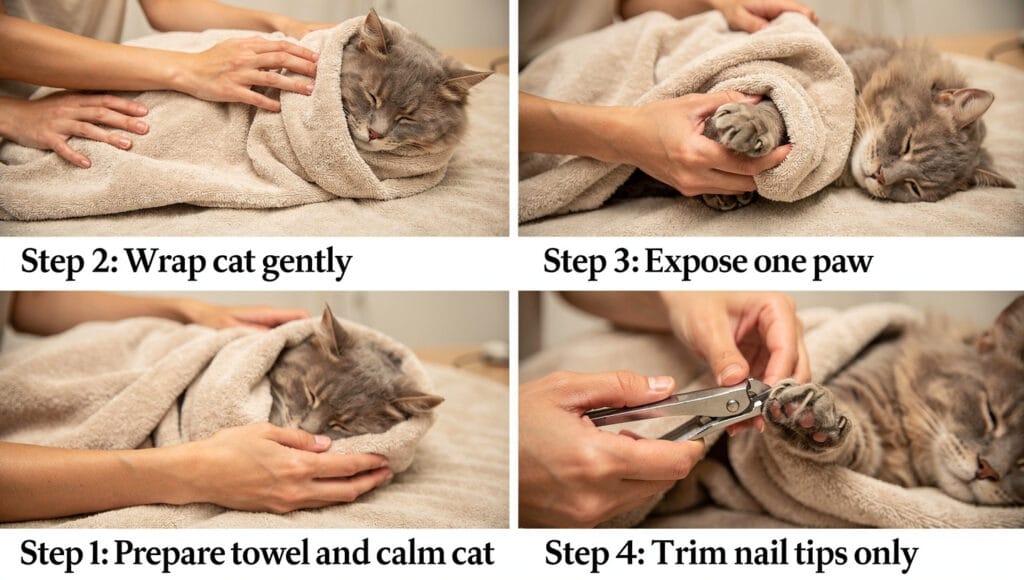
The towel burrito isn’t about restraint; it’s about reducing choices, which lowers panic. It is a fundamental skill when learning how to trim cat nails for difficult pets.
- Lay a towel flat on a table or couch.
- Place your cat in the center calmly.
- Wrap both sides snugly around the body, leaving only one paw out at a time.
⚠️ How to Trim Angry Cat Claws (When Your Cat Hates It)
If your heart starts racing when it’s time for grooming, you aren’t alone. Anger in cats is usually defensive. To handle an aggressive reaction, you must understand the signs of overstimulation in cats before things escalate.
❌ Why Experts Say “Don’t Scruff”
Grabbing the loose skin on the neck (scruffing) triggers fear and can increase aggression. Instead, use gentle restraint methods for cats like the towel wrap to build trust rather than breaking it.
⏱️ The Micro-Session Strategy
- Small Wins: Trim only 1–2 nails per session.
- Instant Reward: End immediately after a successful cut.
- Consistency: Resume later or the next day. Small wins compound fast.
🩹 How to Cut Cat’s Nails Without Getting Scratched
Avoiding scratches is all about choosing the right window of time. Cats have natural periods of calm where their reactions are slower.
⏰ The Golden Timing Rule
- Post-Nap: Right after they wake up and are still groggy.
- Post-Play: After a high-energy session when they are tired.
- Post-Meal: When they are feeling comfortable and drowsy.
🖐️ Safety Maneuvers
- One Nail, Then Reset: Release the paw for 3 seconds between each cut.
- Downward Motion: When releasing, move your hand down, not backward, to avoid hook scratches.
🐱 How to Clip Kitten Nails (Special Tips for Kittens)
Start early, and nail trims become normal. If you focus on building positive grooming habits early, you will save yourself years of struggle. For kittens, the goal is comfort, not perfection.
🐾 The Touch-First Method
- Week 1: Just touch their paws and press the pads daily without using clippers.
- Introduction: Let them see and hear the “click” of the clippers before ever making a cut.
- Positive Association: Always follow a paw-touching session with a high-value treat.
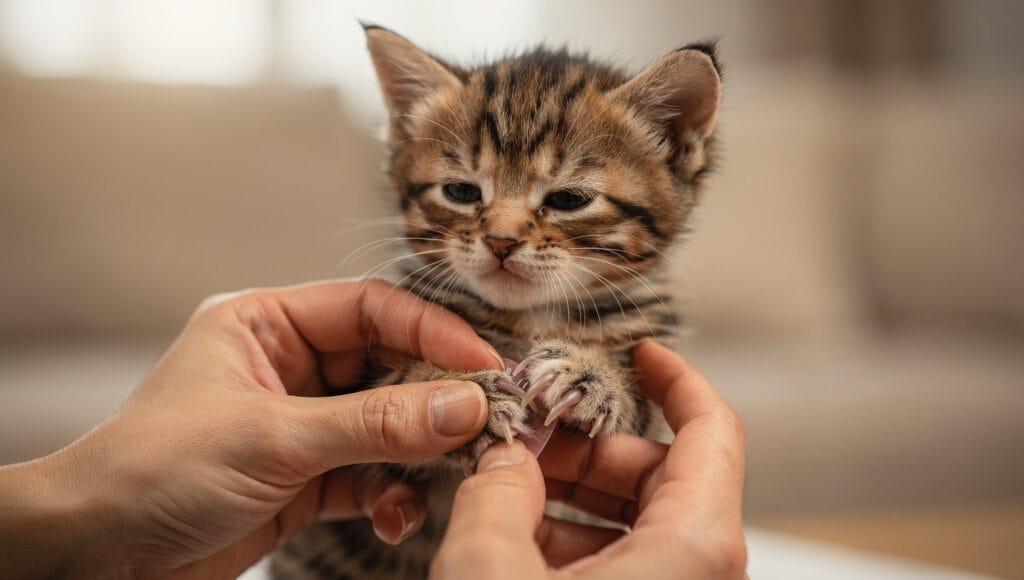
📸 Where to Cut — Understanding Cat Nail Anatomy
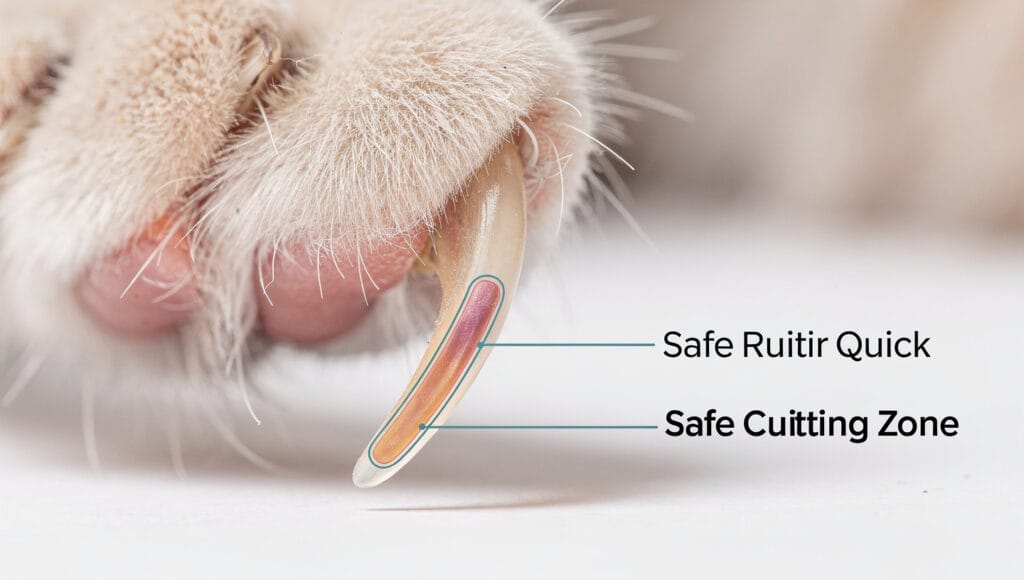
Inside every cat nail is a sensitive area called the Quick. This contains blood vessels and nerve endings. Understanding this is the most technical part of learning how to trim cat nails.
🩷 The Safe Zone vs. The Quick
- Clear/White Tip: Safe to cut.
- Pink Core: The sensitive quick inside the nail which must be avoided.
For dark nails where the quick is hidden, cut very small amounts at a time. Stop as soon as you see a darker, solid center appearing in the middle of the nail. If you remember nothing else: Clear = Cut. Pink = Pause. Unsure = Stop.
🔗 Common Mistakes to Avoid When Trimming Cat Nails
- Punishing Resistance: Yelling or forcing the cat only teaches them that trimming is dangerous.
- Using Dull Tools: Dull blades crush the nail, causing pressure pain even if you don’t hit the quick.
- Rushing the Process: Trying to do all 20 nails at once is a human goal, not a cat-friendly one.
📌 Quick Summary: Trimming in 30 Seconds
- Calm environment = Calm cat.
- Use sharp, cat-specific scissor clippers.
- Always avoid the pink part (the quick).
- One nail at a time is perfectly fine.
🔍 Expert Answers: Your Cat Nail Trimming FAQs
Based on the most common concerns I’ve encountered from cat owners, here are the direct answers to what you need to know:
1. How often should I trim my cat’s nails?
Most experts recommend a trimming frequency of every 2–4 weeks. A simple rule of thumb: if you hear a “clicking” sound when your cat walks on hard floors, or if their nails are getting snagged in blankets, it’s time for a trim.
2. Can I use human nail clippers on my cat?
While technically possible, I strongly advise against it. Human clippers crush the nail rather than slicing it, which can cause painful splintering. Always use sharp, cat-specific “scissor” or “guillotine” clippers designed for their curved nail shape.
3. What should I do if my cat’s nail starts bleeding?
First, don’t panic—your cat will sense your stress. This happens when you accidentally nick the “quick” (the pink part). Apply pressure with styptic powder or cornstarch for 30 seconds. The bleeding will stop quickly. Stop the session immediately and offer a high-value treat to maintain trust.
4. Why is my cat’s nail “splitting” or “peeling” after a trim?
This is usually a sign of dull clippers or poor technique. If the blade isn’t sharp enough, it crushes the nail layers. Ensure you are using high-quality stainless steel tools and cutting in a single, swift motion to keep the nail healthy and smooth.
5. My cat is aggressive during nail trims; what can I do?
Never force it. I’ve found that the “burrito method” (wrapping them in a towel) or trimming while they are sleepy works best. If they only allow one nail per day, that is perfectly fine. Building trust is more important than finishing all ten nails at once.
Beyond the Scratch: Building a Lifetime of Trust 🐾
Trimming your cat’s nails isn’t just about protecting your furniture; it’s a vital part of preventive healthcare that prevents painful ingrown claws and snagging injuries. In my experience, the secret isn’t in the tool you use, but in the patience you show.
By keeping sessions short, rewarding every small victory with treats, and respecting your cat’s boundaries, you turn a dreaded chore into a simple bonding ritual. Your furniture will be safer, your hands will be scratch-free, but most importantly, your cat will feel secure in your care.