

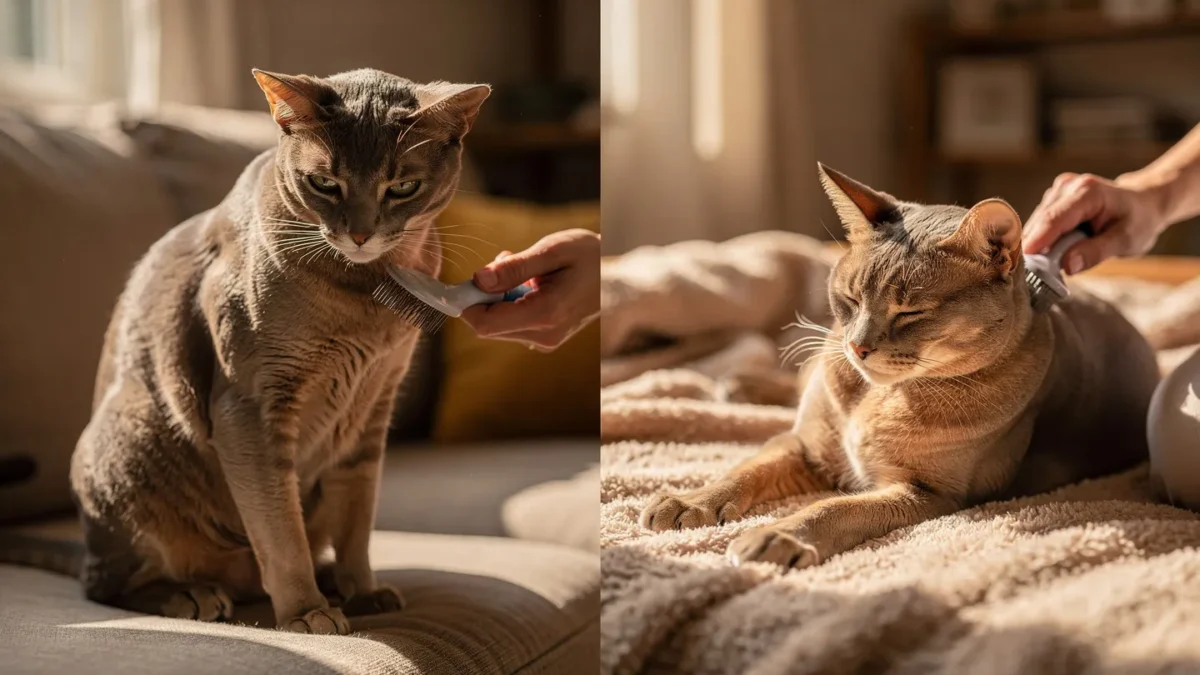
The first time I tried to brush my cat Luna, she lasted exactly forty-five seconds before bolting under the bed. I sat there holding the brush, wondering if I’d ever get this right. Sound familiar?
If you’re wondering how to brush your cat without getting scratched or stressed, you’re definitely not alone.
A lot of cat owners tell me that learning how to brush your cat feels less like grooming and more like a wrestling match. The scratching, the hissing, the dramatic escape — it can make you want to skip it altogether. But skipping it comes at a real cost to your cat’s health.
The good news? With the right approach, brushing doesn’t have to be a battle. In this guide, I’ll walk you through every step — from picking the right brush to handling a cat that absolutely refuses to cooperate. By the end, you’ll have a real routine that actually works.
This guide is based on real experience with cats and backed by trusted veterinary sources. It’s for educational purposes only — if your cat has skin issues or pain, always consult your veterinarian.
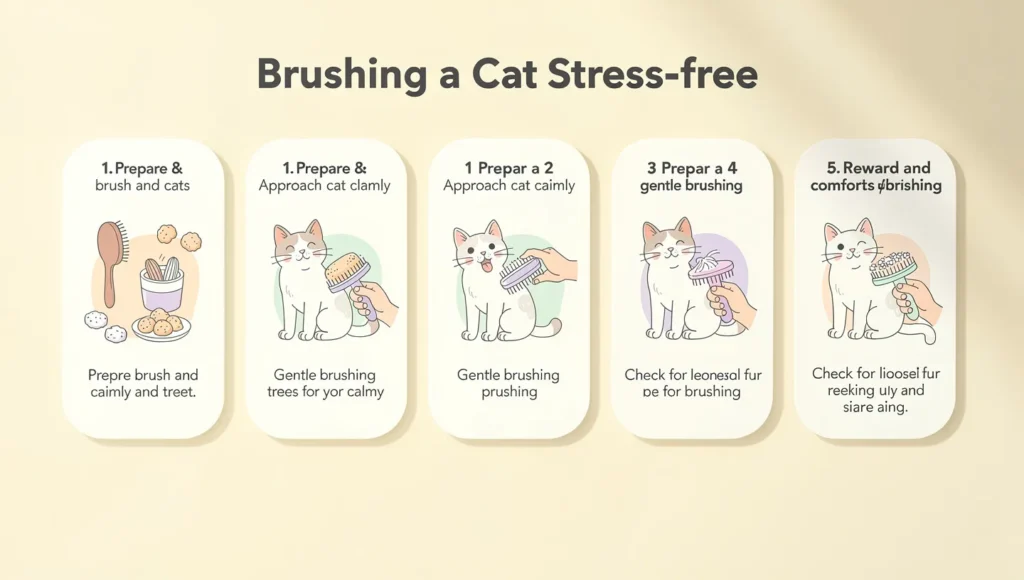
Table of Contents
- 🐾 Why Brushing Your Cat Is More Important Than You Think
- 🛠️ Before You Start: What You Need (Tools & Setup)
- 🪮 Choosing the Right Brush for Your Cat
- 🏠 Creating a Calm Environment Before You Begin
- 🐱 Step-by-Step: How to Brush Your Cat Without Stress
- ✅ Step 1: Let Your Cat Get Familiar With the Brush
- ✅ Step 2: Start With Gentle Strokes in a Comfortable Zone
- ✅ Step 3: Always Follow the Direction of Hair Growth
- ✅ Step 4: Handle Sensitive Areas With Extra Care
- ✅ Step 5: Keep Sessions Short and Always End Positively
- 😾 How to Brush a Cat That Hates Being Brushed
- 📅 How Often Should You Brush Your Cat?
- ⚠️ Common Brushing Mistakes to Avoid
- 🐈 Special Cases: Long Hair, Shedding Season & Matted Fur
- 🌿 Long-Haired Cats
- 🍂 Shedding Season
- 🪢 Dealing With Mats
- 💡 Best Tips to Make Brushing Easier (Quick Wins)
- ❓ FAQ: Your Brushing Questions Answered
- How long should I brush my cat each session?
- Can I brush my cat every day?
- What if my cat scratches me during brushing?
- What’s the best brush for cats?
- My cat is older and seems uncomfortable during brushing — is that normal?
- A Better Bond Starts With a Brush
🐾 Why Brushing Your Cat Is More Important Than You Think
I used to think brushing was just about keeping fur off the couch. Regular brushing isn’t just about aesthetics; it significantly reduces the buildup of cat dander in your home, which is a lifesaver for owners with mild allergies. But from what I’ve learned and seen over the years, it goes way deeper than that..
For one thing, brushing dramatically reduces shedding. Less loose fur means less fur swallowed during self-grooming — and that means fewer hairballs. According to veterinary sources, hairballs can sometimes cause serious digestive issues if left unchecked.
Beyond that, brushing improves skin health. The motion stimulates natural oil production, which keeps your cat’s coat shiny and their skin moisturized. It also gives you a chance to spot anything unusual — lumps, parasites, or skin irritation — before it becomes a bigger problem.
And honestly? There’s a bonding element that surprised me. Once Luna got used to it, she’d actually walk toward the brush. That shift — from stress to comfort — is completely possible with patience and the right technique. If you’re also thinking about other grooming habits like dental care, brushing is a great place to start building that routine.
🛠️ Before You Start: What You Need (Tools & Setup)
Before you learn how to brush your cat, the setup matters just as much as the technique. I learned this the hard way — wrong brush, wrong timing, and you’ve already lost before you started.
🪮 Choosing the Right Brush for Your Cat
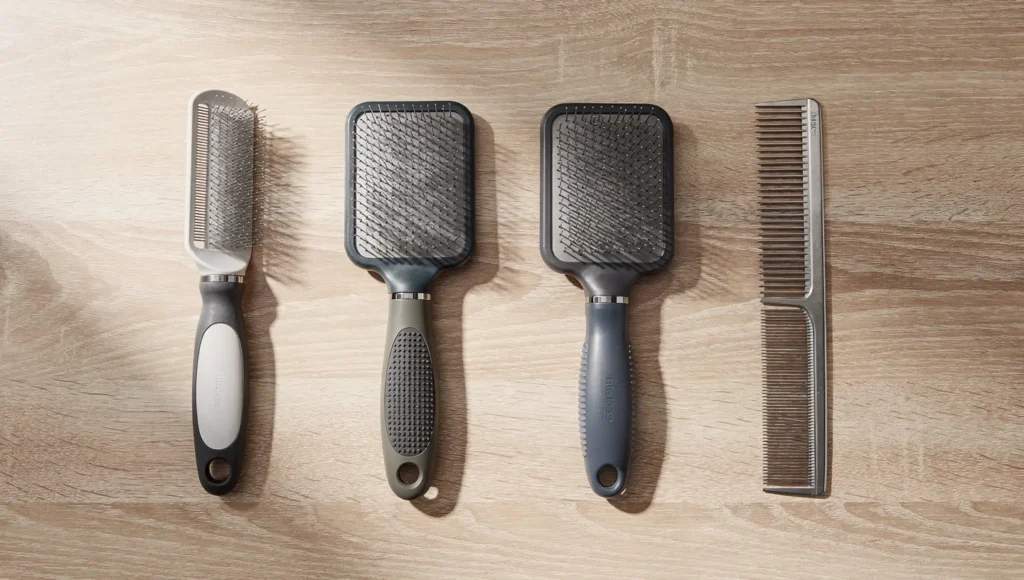
Not all brushes work the same way, and using the wrong one can actually make your cat uncomfortable. From what I’ve seen and researched, the type of brush you need really depends on your cat’s coat.
- Short-haired cats: A rubber grooming mitt or a soft-bristle brush works well. It removes loose fur without irritating the skin.
- Long-haired cats: A wide-tooth comb or a slicker brush helps detangle without pulling. For heavy shedders, a deshedding tool like the Furminator can make a noticeable difference.
- Sensitive or older cats: Look for brushes with extra-soft bristles to avoid discomfort on thinner skin.
A quick rule of thumb: if your cat flinches every time the brush touches them, the bristles might be too firm. Switching to something softer can completely change the experience — for both of you. If you’re also managing issues like cat dander and allergies, choosing the right deshedding brush can make a real difference in your home’s air quality too.
🏠 Creating a Calm Environment Before You Begin
Timing and environment can make or break a grooming session. I’ve found the best time is right after a meal or a play session — when your cat is naturally relaxed and low-energy. Avoid trying to brush a cat that’s already hyper or agitated.
Pick a quiet spot with no loud noises or sudden movement. A couch, a bed, or even the floor works — as long as your cat feels safe there. Some cats respond well to a familiar blanket or their favorite resting spot.
Keep your energy calm too. Cats are incredibly sensitive to tension. If you approach with nervous energy or in a rush, they’ll pick up on it immediately. Take a breath, move slowly, and let them sniff the brush before anything else happens.
🐱 Step-by-Step: How to Brush Your Cat Without Stress
This is the part most guides skip over when explaining how to brush your cat properly. The actual technique matters — not just which brush you use, but how you move, where you start, and when you stop. Here’s what’s worked for me and for many cat owners I’ve talked to.
✅ Step 1: Let Your Cat Get Familiar With the Brush
Before the first stroke, just set the brush down near your cat and let them investigate it. Cats are territorial about their personal space, and a strange object moving toward them triggers instant defensiveness. Give them a minute to sniff it on their own terms.
Once they’ve acknowledged it — or ignored it — try holding it near them without touching. If they stay relaxed, that’s your green light. This simple step alone can cut the resistance in half.
✅ Step 2: Start With Gentle Strokes in a Comfortable Zone
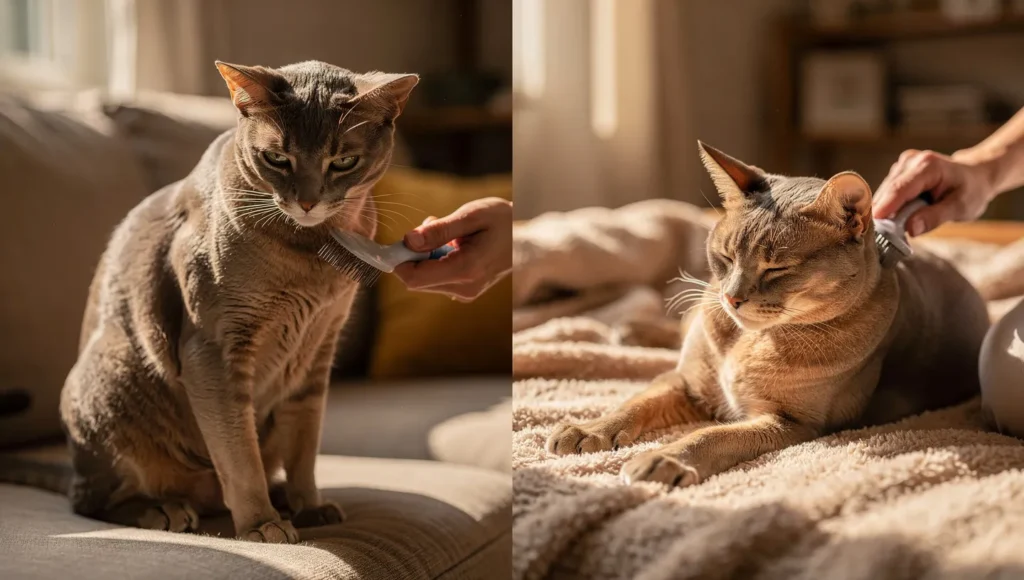
Don’t start at the back or belly. Begin at the base of the neck or between the shoulder blades — areas most cats actually enjoy being touched. Use light, slow strokes in the direction the fur naturally grows.
Watch their reaction closely. Ears forward, relaxed body, maybe a slow blink — those are good signs. A twitching tail, flattened ears, or a turned head mean you should pause and let them reset.
✅ Step 3: Always Follow the Direction of Hair Growth
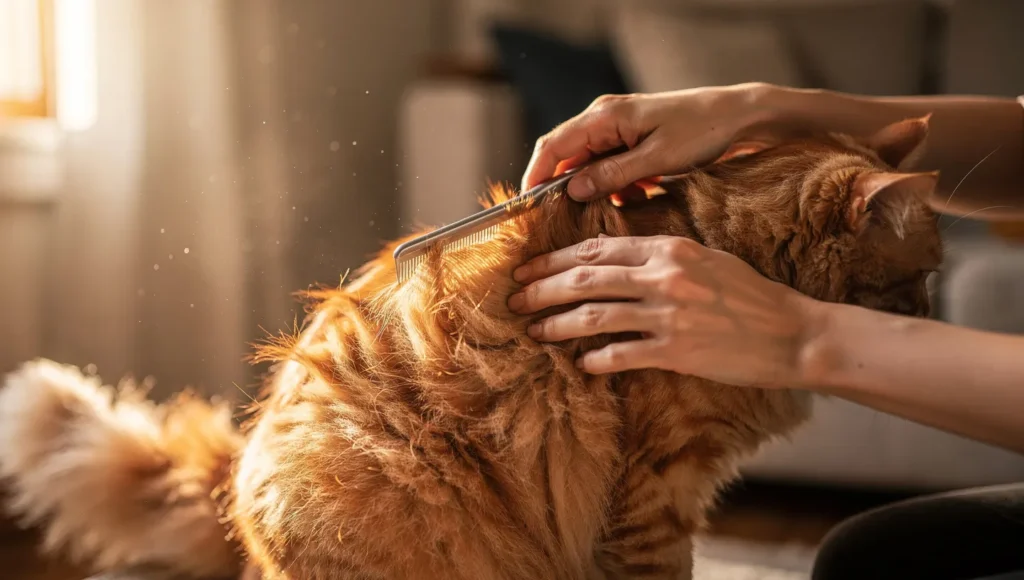
Brushing against the grain pulls the fur and tugs at the skin — which is uncomfortable and builds negative associations fast. Always brush in the direction the fur naturally lies, moving from neck toward tail in smooth, even strokes.
For long-haired cats, work in sections. Start at the ends and gently work your way toward the skin to avoid painful pulling. Rushing this step is one of the most common mistakes I’ve seen.
✅ Step 4: Handle Sensitive Areas With Extra Care
The belly, inner legs, and tail base are all sensitive zones. Many cats won’t tolerate brushing there at all — and that’s okay. Focus on the areas they’re comfortable with, and only attempt sensitive spots once they’re fully relaxed and trust the process.
If your cat reacts by swatting or biting when you reach certain areas, don’t push through it. Back off, reward them, and try again another day. Understanding your cat’s body language during grooming can help you catch early stress signals before they escalate.
✅ Step 5: Keep Sessions Short and Always End Positively
For a cat that’s new to brushing, two to three minutes is plenty. End the session before they show any signs of frustration — always leave on a good note. Over time, you can gradually extend the sessions as they become more comfortable.
Finish with a treat, some gentle petting, or a short play session. You’re essentially teaching your cat that the brush predicts good things. That association builds over weeks, not days — so consistency matters more than duration.
😾 How to Brush a Cat That Hates Being Brushed
This section is for cat owners trying to figure out how to brush your cat when they run at the sight of a brush — and I’ve been there. Luna used to disappear the moment she heard the drawer open. The approach that finally worked wasn’t about restraint — it was about retraining.
Start with something that isn’t even a brush. A soft glove or just your hand mimics the motion without the foreign object. Once your cat is comfortable with that sensation, you can introduce the actual brush — slowly and without pressure.
Pair every session with high-value treats — something they don’t get at any other time. The goal is simple: brush appears, good things happen. Over days and weeks, that connection rewires their response. Research suggests that positive reinforcement is far more effective than restraint for building long-term grooming tolerance in cats.
If your cat swats or bites during grooming, it’s worth understanding why. Sometimes it’s overstimulation, sometimes it’s pain — especially in older cats. Reading the article on why cats bite can help you figure out what’s actually driving the behavior.
📅 How Often Should You Brush Your Cat?
There’s no single answer — it really depends on your cat’s coat type and how much they shed. From what I’ve seen, most owners either brush too rarely or feel like they need to do it every single day when they don’t.
| Coat Type | Recommended Frequency |
|---|---|
| Short-haired cats | 1–2 times per week |
| Long-haired cats (Persian, Maine Coon) | Daily or every other day |
| Heavy seasonal shedders | Daily during shedding season |
| Senior or low-grooming cats | 2–3 times per week minimum |
During spring and fall — peak shedding seasons — you may need to increase frequency even for short-haired cats. I noticed a huge difference just by adding one extra session per week during those months. Less fur on everything, and fewer hairball episodes too.
⚠️ Common Brushing Mistakes to Avoid
Most problems people face when learning how to brush your cat come down to a handful of consistent mistakes. The good news is they’re all easy to fix once you know what to look for.
- Pressing too hard: The brush should glide through the fur, not dig into the skin. If your cat is flinching, lighten your touch significantly.
- Moving too fast: Rushing through a session increases tension and builds negative associations. Slow, deliberate strokes are always better.
- Ignoring small knots: Small tangles become painful mats quickly, especially in long-haired cats. Address them early with a wide-tooth comb before they tighten.
- Forcing it when they’re stressed: If your cat is already anxious, brushing in that moment will only make future sessions harder. Wait for a calmer moment.
- Skipping the reward: Ending a session without a treat or positive interaction misses the most powerful part of the training loop.
If you’re dealing with existing tangles or mats, don’t try to force them out with a regular brush. Check out this guide on how to safely remove matted cat fur — it walks through the process step by step without hurting your cat.
🐈 Special Cases: Long Hair, Shedding Season & Matted Fur
🌿 Long-Haired Cats
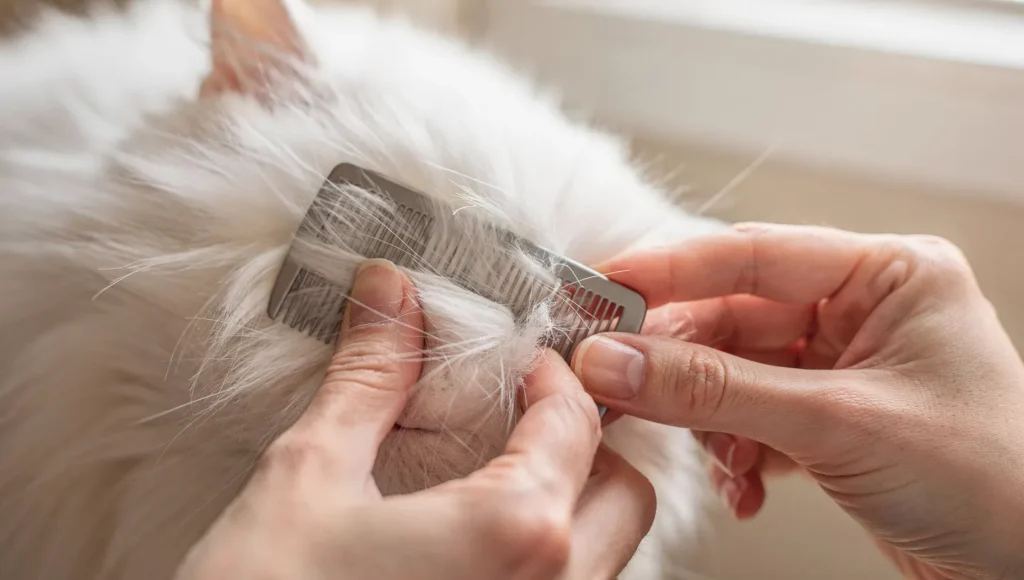
Breeds like Persians, Maine Coons, and Ragdolls need daily attention to prevent tangles from forming. I’d recommend a two-tool approach: a wide-tooth comb first to detangle, followed by a slicker brush to smooth and remove loose fur.
Pay special attention to areas where mats form fastest — behind the ears, under the armpits, and around the collar area. These spots are easy to miss and tend to tighten quickly.
🍂 Shedding Season
Twice a year — usually spring and fall — most cats shed heavily as they transition between coats. During these periods, even short-haired cats benefit from more frequent brushing. A deshedding tool used once or twice a week can dramatically reduce the amount of fur ending up on your furniture and in your cat’s digestive system.
🪢 Dealing With Mats
If you find a mat, resist the urge to cut it out with scissors — that’s how accidental skin cuts happen. Work a detangling spray into the mat, hold the fur at the base (close to the skin) to reduce pulling, and use a mat splitter or wide-tooth comb to gently tease it apart from the outside in.
💡 Best Tips to Make Brushing Easier (Quick Wins)
- Build a routine: Cats thrive on predictability. Brushing at the same time each day — after dinner works well — helps them anticipate and accept it.
- Use high-value treats only for brushing: Save a specific treat exclusively for grooming sessions so the association stays strong.
- Let them set the pace: Some days will go better than others. If your cat signals they’re done, respect it and try again tomorrow.
- Keep the brush in plain sight: Leaving the brush somewhere your cat can sniff and interact with it between sessions reduces the “stranger danger” reaction.
- Stay consistent even when it’s hard: The first few weeks are the toughest. Most cats come around with enough patience and positive reinforcement.
❓ FAQ: Your Brushing Questions Answered
How long should I brush my cat each session?
For most cats, five to ten minutes is ideal. Beginners or resistant cats can start with just two to three minutes and build from there. Quality matters more than length.
Can I brush my cat every day?
Yes — especially for long-haired breeds, daily brushing is actually recommended. For short-haired cats, a few times a week is usually enough unless it’s shedding season.
What if my cat scratches me during brushing?
Stop immediately, give them space, and don’t react with frustration. Scratching is communication — it usually means they’re overstimulated or uncomfortable. Revisit your technique and consider starting over with shorter, gentler sessions.
What’s the best brush for cats?
It depends on coat type. A rubber grooming mitt for short hair, a slicker brush for medium to long hair, and a deshedding tool for heavy shedders. When in doubt, ask your vet at your next checkup.
My cat is older and seems uncomfortable during brushing — is that normal?
Senior cats can develop joint sensitivity or skin changes that make grooming uncomfortable. Based on information from sources like AVMA, older cats benefit from extra-gentle techniques and more frequent but shorter sessions. If discomfort seems significant, a vet check is worth it.
A Better Bond Starts With a Brush
When I first learned how to brush your cat with Luna, I honestly thought some cats just couldn’t be groomed at home. Turns out, I was just doing it wrong — wrong brush, wrong timing, wrong energy.
What changed everything was slowing down, reading her signals, and making every session end on a positive note. It took a few weeks, but eventually the brush stopped being something she fled from and became something she’d lean into.
That shift is available to you and your cat too. Start small, stay consistent, and trust the process. The grooming routine you build now pays off in healthier skin, fewer hairballs, and honestly — a stronger bond between you and your cat. ❤️