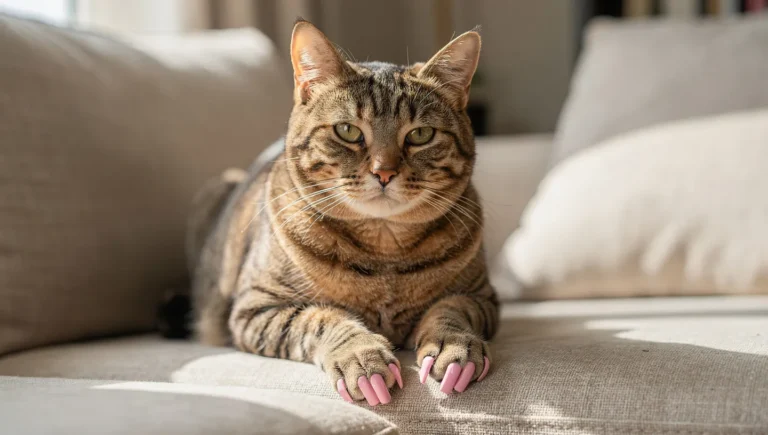

I’ll never forget the afternoon I walked into a client’s home to find their sweet tabby, Luna, peeing deliberately on their brand-new couch—right in front of her owner.
The litter box? Tucked in a dark, damp basement corner next to a rumbling washing machine.
Luna wasn’t being spiteful. She was stressed, overstimulated, and desperate for a bathroom she actually felt safe using.
That single placement mistake cost them months of behavioral trouble, hundreds in vet bills, and a ruined sofa.
Litter box placement isn’t just about convenience—it’s about preventing stress, territorial anxiety, and inappropriate elimination before they even start.
In this guide, you’ll learn exactly where to place your cat’s litter box for maximum comfort and cleanliness, which spots to avoid at all costs, and how to adapt your setup for apartments, multi-cat homes, and tricky floor plans.
Let’s get it right from day one.
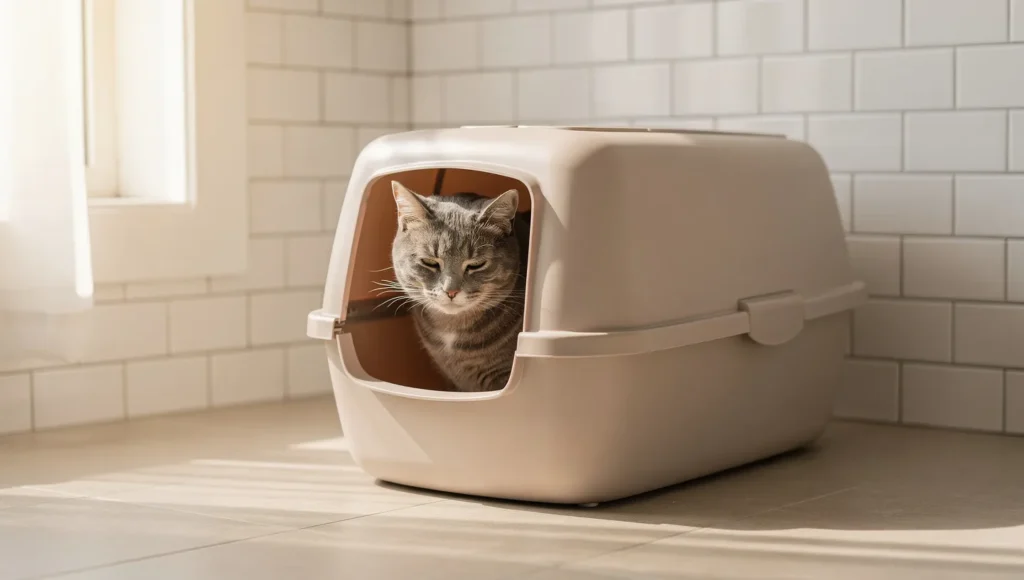
Table of Contents
- 🎯 5 Golden Rules for Proper Litter Box Placement
- 1. Quiet, But Not Isolated
- 2. Away From Food and Water Bowls
- 3. Easy, Unrestricted Access
- 4. Good Ventilation
- 5. Clear Escape Routes (Especially in Multi-Cat Homes)
- 🏠 Best Litter Box Placement Locations in Your Home
- 🚿 Bathroom
- 🛋 Spare Room or Low-Traffic Area
- 🧺 Laundry Room (When It Works)
- 🪴 Corner of the Living Room (Hidden Strategically)
- 🏚 Basement (Pros & Cons)
- 🚫 Worst Litter Box Placement Mistakes to Avoid
- ❓ Litter Box Placement FAQs
- Where is the best place to put a litter box?
- Can I put a litter box in the bathroom?
- Should I put a litter box on every floor?
- Is it okay to keep a litter box in the bedroom?
- Can a litter box be in the closet?
- 🏢 Litter Box Placement in a Small Apartment
- 🐾 Litter Box Placement for Multiple Cats
- 💡 Expert Tip
- 🧠 Why Placement Affects Cat Behavior
- 🧼 How Placement Affects Odor Control
- ✅ The Perfect Litter Box Placement Checklist
- 🏁 Final Thoughts
🎯 5 Golden Rules for Proper Litter Box Placement
Before we talk about specific rooms, let’s cover the five non-negotiable principles that apply to every home.
1. Quiet, But Not Isolated
Your cat needs privacy—but not solitary confinement.
A litter box shoved into a forgotten basement corner or behind a closed door feels like a trap, not a bathroom. Cats are hardwired to stay alert while eliminating, and they won’t use a spot where they can’t monitor their surroundings.
The sweet spot? A low-traffic area that’s still easy to access and escape from.
2. Away From Food and Water Bowls
Cats are fastidious by nature. In the wild, they never eliminate near their food source—it’s a survival instinct to avoid attracting predators.
Placing a litter box within 10 feet of food or water bowls can trigger avoidance behavior, even in the most easygoing cat.
3. Easy, Unrestricted Access
No closed doors. No baby gates. No furniture blockades.
If your cat has to push through obstacles to reach the box—especially if they’re older, arthritic, or anxious—they’ll find somewhere easier. I’ve worked with cats who started peeing in bathtubs simply because the litter box was behind a door that kept swinging shut.
4. Good Ventilation
Cats have a sense of smell 14 times stronger than ours.
A stuffy, enclosed space with poor airflow becomes unbearable fast—for them and for you. Proper ventilation doesn’t just control odor; it also prevents ammonia buildup, which can irritate your cat’s respiratory system.
5. Clear Escape Routes (Especially in Multi-Cat Homes)
This one’s critical if you have more than one cat.
A litter box in a dead-end corner or enclosed furniture can become a trap if one cat blocks the exit. The trapped cat will avoid that box entirely—and you’ll start finding accidents around the house.
Always ensure your cat has at least two exit paths from any litter box location.
🏠 Best Litter Box Placement Locations in Your Home
Now let’s get practical. Here are the best rooms and spots for litter box placement, based on real-world testing with hundreds of cats.
🚿 Bathroom
Why it works:
Bathrooms are naturally designed for waste management. They’re easy to clean, usually well-ventilated, and already associated with privacy in your cat’s mind.
Best for:
Single-cat homes, apartment dwellers, or anyone who wants to centralize cleanup in one area.
Watch out for:
If your bathroom door closes frequently, prop it open with a doorstop or install a cat door. Also, avoid placing the box directly next to the toilet or shower—splashing water and sudden flushing sounds can startle sensitive cats.
In my experience, a bathroom corner opposite the shower works beautifully, especially if you add a litter mat to catch tracking.
🛋 Spare Room or Low-Traffic Area
Why it works:
Guest rooms, home offices, or unused corners of larger rooms offer the perfect balance of quiet and accessibility. Your cat gets privacy without isolation.
Best for:
Multi-cat homes, anxious cats, or anyone with enough space to dedicate a room.
Watch out for:
Make sure the door stays open 24/7. I’ve seen too many situations where a guest closed the door overnight, and the cat had an accident by morning.
🧺 Laundry Room (When It Works)
Why it can work:
Laundry rooms often have tile floors (easy cleanup), good ventilation, and are located away from main living areas.
Why it often doesn’t:
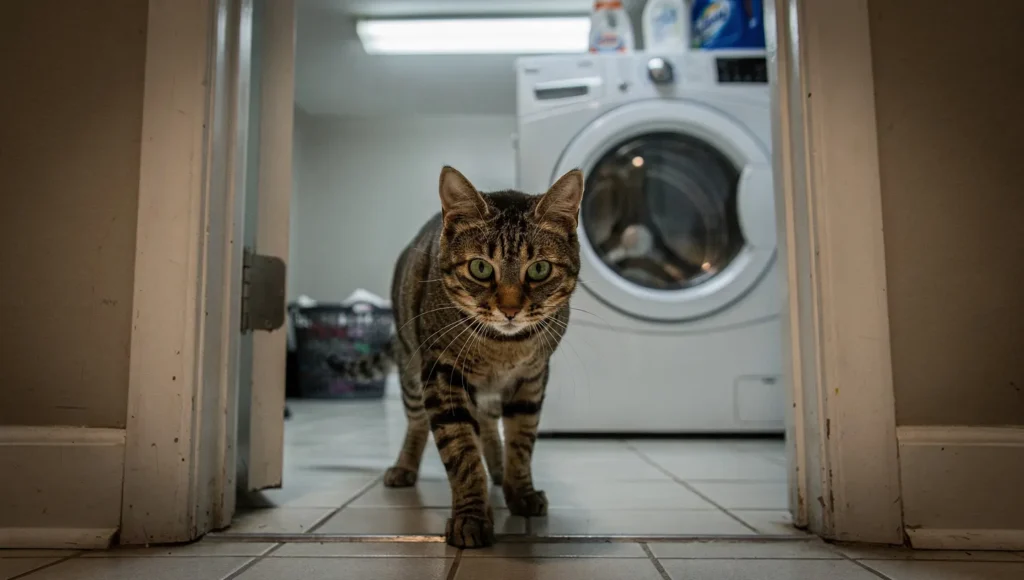
Washing machines and dryers are loud. The sudden spin cycle or buzzer can terrify a cat mid-elimination, leading to long-term avoidance.
Best for:
Confident, noise-tolerant cats—and only if you can commit to never running the machines when your cat might be using the box.
Pro tip: If you must use the laundry room, place the box as far from the machines as possible, ideally in a corner with a sound barrier (like a storage shelf).
🪴 Corner of the Living Room (Hidden Strategically)
Why it works:
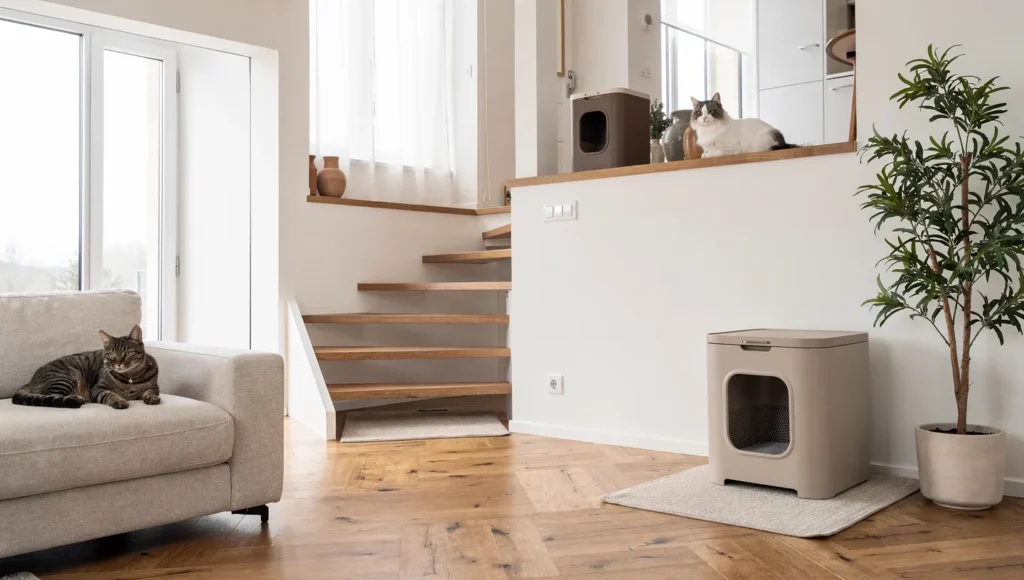
Modern litter box furniture and decorative screens let you keep the box in a central area without sacrificing aesthetics. Your cat gets easy access, and you get odor control.
Best for:
Studio apartments, open-concept homes, or cats who refuse to use boxes in isolated areas.
Watch out for:
Choose furniture-style enclosures with two openings so your cat never feels trapped. And make sure the enclosure has adequate ventilation—some decorative boxes are beautiful but suffocating.
I often recommend corner placement near a window (but not directly under it) to balance natural light and airflow.
🏚 Basement (Pros & Cons)
Why it sometimes works:
Basements offer space, separation from living areas, and usually good ventilation if finished properly.
Why it often fails:
Many basements are cold, damp, dark, and full of scary noises (furnaces, water heaters, sump pumps). Older cats or kittens may also struggle with stairs.
Best for:
Multi-level homes where you’re placing a second litter box (not the only one), and only if the basement is finished, well-lit, and climate-controlled.
One mistake I often see: Owners place the box at the bottom of a dark stairwell, then wonder why their cat avoids it. If you’re using a basement, position the box in the most inviting, warmest corner—and always keep a light on.
🚫 Worst Litter Box Placement Mistakes to Avoid
Some spots seem convenient—until your cat refuses to use them. Here’s what to avoid:
- Next to food bowls: Cats won’t eliminate where they eat. Keep at least 10 feet of distance.
- High-traffic hallways: Constant foot traffic = constant stress. Your cat will hold it or find a quieter spot (like your bed).
- Near loud appliances: Furnaces, water heaters, and dryers trigger fear-based avoidance.
- Inside tight closets: No ventilation, no escape route, no thank you.
- Under HVAC vents: Blowing air spreads litter dust and amplifies odor—your cat will notice before you do.
One mistake I see repeatedly? Placing the box in a “convenient” corner that happens to be right next to the washing machine. The first spin cycle creates a trauma your cat won’t forget.
❓ Litter Box Placement FAQs
Where is the best place to put a litter box?
A quiet, low-traffic area with good ventilation and easy access—like a bathroom corner, spare room, or strategically hidden living room spot. Avoid isolation, noise, and anywhere near food.
Can I put a litter box in the bathroom?
Yes, and it’s one of the best options. Just keep the door propped open 24/7 and avoid placing it directly next to the toilet or shower.
Should I put a litter box on every floor?
Absolutely, if you have a multi-level home. Cats won’t reliably climb stairs during emergencies, and older cats with arthritis need accessible options on each floor.
Is it okay to keep a litter box in the bedroom?
It’s safe, but not ideal unless you have excellent odor control (high-quality clumping litter, daily scooping, and an air purifier). Most cats and owners are happier with the box in a bathroom or spare room.
Can a litter box be in the closet?
Only if the closet door stays open permanently, has good airflow, and offers a clear escape route. Most closets fail on ventilation alone.
🏢 Litter Box Placement in a Small Apartment
Studio or one-bedroom? You’re not stuck with a visible litter box in your living space.
Smart solutions:
- Furniture enclosures: Modern designs look like side tables or planters. Choose ones with two openings.
- Behind a decorative screen: Creates privacy without full enclosure.
- Bathroom corner: Classic choice for apartments—just add a litter mat.
- Under a console table: Works if the table has open sides for ventilation.
Odor control is critical in tight spaces. Use a high-quality clumping litter (we recommend checking our guide to the best cat litter for 2026), scoop twice daily, and consider a small air purifier nearby.
In my years working with apartment dwellers, the biggest win is always choosing furniture that hides the box without trapping the cat.

🐾 Litter Box Placement for Multiple Cats
The golden rule: one box per cat, plus one extra.
But placement matters just as much as quantity.
Strategic tips:
- Spread boxes across different rooms—never cluster them all in one area. Dominant cats will guard territories.
- One per floor minimum if you have a multi-level home.
- Ensure line-of-sight separation: Boxes shouldn’t face each other. A nervous cat won’t use a box if a bully can ambush them mid-elimination.
- Multiple exit routes: No dead-end corners. Ever.
I’ve worked with multi-cat homes where tensions vanished the moment we moved one box from a basement corner to an upstairs bathroom. Territory wasn’t the issue—access was.
If you’re introducing a second cat, proper box placement prevents conflicts before they start. Learn the full process in our guide on how to introduce two cats.
💡 Expert Tip
Pro Insight from 10+ Years of Cat Behavior Work:
“One mistake I often see is placing the litter box behind a door that swings shut. Cats need a clear escape route—especially in multi-cat homes. A trapped cat will avoid that box entirely, and you’ll start finding accidents on your bed or couch. Always test the space yourself: Can your cat enter and exit without obstacles? If not, it’s the wrong spot.”
🧠 Why Placement Affects Cat Behavior
Litter box avoidance isn’t defiance—it’s a stress response.
When a box is in a threatening location (loud, isolated, or blocked), your cat’s brain registers it as unsafe. The result? They’ll hold their urine longer than healthy, or eliminate somewhere that feels safer—like your laundry pile or bathtub.
Key behavioral triggers:
- Noise sensitivity: Sudden sounds (appliances, doorbells) create negative associations.
- Territorial insecurity: Cats won’t use boxes in areas they don’t control, especially in multi-cat homes.
- Learned avoidance: One bad experience (being startled mid-elimination) can ruin a location forever.
According to Cornell Feline Health Center, environmental stressors are the leading cause of litter box aversion—and placement is the easiest factor to control.
If your cat is already avoiding the box and targeting your bed instead, you’re dealing with a placement or stress issue. Our guide on why cats pee on the bed walks through the full troubleshooting process.
🧼 How Placement Affects Odor Control
Even the best litter can’t fight physics.
Ventilation matters:
- Enclosed spaces trap ammonia, making the box unbearable for your cat (and you).
- Placing a box near an HVAC return vent pulls odor into your home’s air system.
- Bathrooms and laundry rooms win here—they’re designed for airflow and moisture control.
Smart additions:
- A small air purifier with a HEPA filter placed 3–4 feet from the box works wonders.
- Litter mats prevent tracking, which reduces odor spread.
- Avoid direct sunlight on the box—it accelerates bacterial growth and intensifies smell.
In my experience, a well-placed box in a ventilated bathroom will always smell better than an expensive “odor-eliminating” box shoved in a stuffy closet.
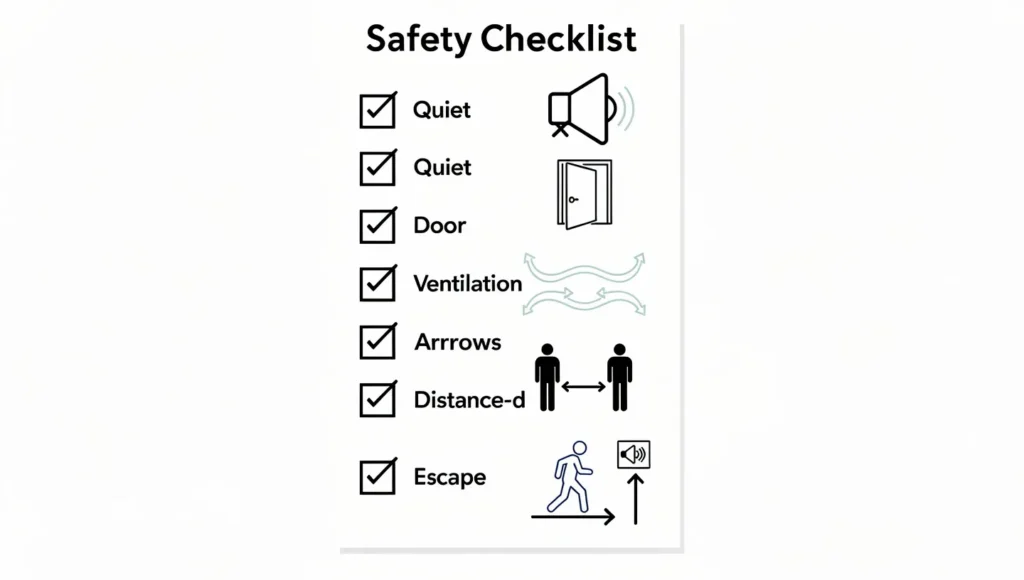
✅ The Perfect Litter Box Placement Checklist
Before you commit to a spot, run through this quick checklist:
- ✅ Quiet location (low foot traffic, no sudden noises)
- ✅ Accessible 24/7 (no closed doors or obstacles)
- ✅ At least 10 feet from food and water
- ✅ Good ventilation (avoid stuffy closets or enclosed furniture without airflow)
- ✅ Clear escape routes (at least two exit paths, especially for multi-cat homes)
- ✅ One box per floor (if you have stairs)
- ✅ No direct HVAC vents (above or next to the box)
Print this, check it twice, and you’ll avoid 90% of litter box problems before they start.
🏁 Final Thoughts
Litter box placement isn’t about where you want the box—it’s about where your cat feels safe using it.
A quiet bathroom corner beats a convenient basement trap every single time.
If your cat is avoiding the box, start here: move it. You’d be surprised how often a simple location change solves months of frustration.
Take five minutes today to evaluate your current setup using the checklist above. Your cat—and your furniture—will thank you.
And if you’re ready to upgrade the box itself, check out our 2026 guide to the best cat litter for odor control that actually works.