


If you’re dealing with a cat peeing on the bed, you already know that specific kind of shock — the smell hits you before your brain even processes what happened.
It was 5:47 a.m. when my phone buzzed.
Sarah — one of my closest friends and a night-shift nurse — had just walked through her front door after a brutal 12-hour shift. All she wanted was to collapse into bed, close her eyes, and disappear for a few hours. She’d earned it.
Instead, she was greeted by Oliver.
Oliver is her tabby cat. Fluffy, dramatic, and deeply beloved. The kind of cat who has his own side of the couch and absolutely knows it. Sarah used to text me photos of him mid-nap with captions like “honestly living his best life while I’m out here saving people.”
But this morning? No funny caption. Just a phone call.
“He peed on my bed. Like… on my actual bed. I just got home. I’m exhausted. I smell it from the doorway. What do I do??”
She wasn’t angry, exactly. She was that specific kind of tired-plus-confused that hits you when something completely unexpected happens at the worst possible moment. I could hear it in her voice.
I talked her through it. And honestly? That conversation is the whole reason this article exists.
Because if Sarah — a smart, caring, attentive cat owner — had no idea why Oliver did this or what to do next, I’m pretty sure a lot of you don’t either. And that’s okay. This stuff isn’t obvious.
So let’s figure it out together.
📝 Quick Note: This article is based on personal experience raising cats, along with research from trusted sources like ASPCA and PetMD. It’s meant to be informational only and doesn’t replace professional veterinary advice. If your cat is showing signs of pain or distress, please contact your vet.

Table of Contents
- So Why Did Your Cat Do This? (The Short Answer)
- The Real Reasons Your Cat Is Peeing on the Bed
- 1. Medical Causes: The First Thing to Rule Out
- 2. Stress and Anxiety
- 3. Litter Box Problems
- 4. Territorial Marking: The Bed as a Safe Haven
- 5. Age-Related Issues (Senior Cats)
- Does It Matter When or Where? (Specific Scenarios)
- First Time vs. Keeps Happening
- Cat Peeing on the Bed at Night
- Cat Peeing on the Bed While You’re Sleeping
- Male vs. Female — Is There a Difference?
- Is This an Emergency? When to Call the Vet
- What to Do Right Now — Step-by-Step
- Step 1 — Rule Out Medical Issues First
- Step 2 — Clean It the Right Way (This Part Is Critical)
- Step 3 — Fix the Litter Box Setup
- Step 4 — Reduce Stress Triggers
- Mistakes Most Owners Make (That Make It Worse)
- How to Prevent It From Happening Again
- Questions I Actually Get Asked (A Lot)
- Why did my cat pee on my bed all of a sudden?
- What can I spray to stop my cat from peeing on the bed?
- Should I punish my cat for peeing on the bed?
- How do I clean cat pee from a mattress?
- Will my cat do this again?
- Before You Go
So Why Did Your Cat Do This? (The Short Answer)
Cats pee on beds for several reasons — and most of them have nothing to do with revenge or spite. The most common causes include a urinary tract infection or other medical issue, stress or anxiety, a problem with the litter box setup, or territorial behavior triggered by a change in the home environment.
In most cases, it’s your cat’s way of communicating something — even if that message is really hard to receive at 5 a.m.
Here’s what’s important to understand: a single incident doesn’t mean you have a “problem cat.” But it does mean something changed — in their body, their environment, or their routine. Your job is to figure out which one.
The Real Reasons Your Cat Is Peeing on the Bed
This is where most articles just hand you a generic list and call it a day. We’re not doing that. Let’s actually break down what’s going on — medically, behaviorally, and emotionally.
1. Medical Causes: The First Thing to Rule Out
Here’s the thing — when a cat suddenly starts peeing outside the litter box, especially somewhere soft like your bed, a medical issue is almost always the first thing to check.
The most common culprits?
- UTI (Urinary Tract Infection): This is probably the reason cats pee in unusual places. It causes urgency, discomfort, and sometimes they just can’t make it to the box in time. According to PetMD, lower urinary tract disease is one of the most frequently seen conditions in domestic cats.
- Kidney disease or diabetes: Both can increase how frequently your cat needs to urinate — sometimes dramatically.
- Bladder stones or blockages: More serious, and more urgent. If your cat is straining to urinate or crying while in the litter box, that’s a vet call, now.
- Arthritis (especially in older cats): Sometimes the issue isn’t the bladder at all — it’s that getting to the litter box has become painful. Your soft bed is closer and easier.
If your cat has never done this before and it seems sudden, start here. Check out the signs of UTI in cats — some of them are subtle enough that a lot of owners miss them entirely.
2. Stress and Anxiety
Cats are creatures of habit. Like, deeply, intensely attached to their routines. And when something shifts — a new person in the house, a move, a change in your schedule, even rearranged furniture — some cats respond by… marking somewhere that smells like you.
Which, yes, is often the bed.
From my experience, this one catches people off guard the most. You’re thinking “nothing changed” — but your cat might be responding to something you didn’t even clock as significant. A new coworker’s scent on your clothes. A neighbor’s dog. Even your own stress levels. Cats pick up on all of it.
If your cat has been following you everywhere lately or acting more clingy than usual, anxiety might be the root cause.
3. Litter Box Problems
Honestly? This one is underrated.
Most people assume their cat’s litter box setup is fine — but a rejected litter box is one of the most overlooked reasons behind a cat peeing on the bed repeatedly. Dirty box, wrong type of litter, box that’s too small, box that’s in a noisy or uncomfortable location, not enough boxes for multiple cats.
The general rule, according to most veterinary behaviorists, is one litter box per cat, plus one extra. If you have two cats and one box — that’s your problem right there.
Also worth checking: litter box placement matters more than most people realize. A box next to a loud washing machine or in a high-traffic hallway? A lot of cats will silently refuse it.
4. Territorial Marking: The Bed as a Safe Haven
Most people get this wrong.
When a cat pees on your bed, the instinct is to think they’re angry at you or trying to claim dominance. But here’s what’s actually happening — your bed smells like you. Deeply, powerfully, unmistakably you. And for a cat under stress, your scent is the most comforting thing in the world.
Mixing their scent with yours isn’t an act of aggression. It’s an act of comfort-seeking. They’re not saying “this is mine.” They’re saying “I need to feel safe, and you are safe.”
Understanding that shift in framing changes everything about how you respond to it.
5. Age-Related Issues (Senior Cats)
If your cat is 10+ years old, the equation changes a little. Senior cats can develop cognitive dysfunction (yes, similar to dementia in humans), reduced bladder control, or mobility issues that make reaching the litter box difficult.
This doesn’t mean something is catastrophically wrong — but it does mean the solution will look different. If you want a deeper dive, the senior cat care guide breaks down what aging looks like in cats and what adjustments actually help.

Does It Matter When or Where? (Specific Scenarios)
Short answer: yes, actually.
The timing and location of the incident can tell you a lot about what’s really going on. Let me break down the most common scenarios I hear about.
First Time vs. Keeps Happening
If this is the first time your cat has ever done this — don’t spiral. One incident, especially in a cat who’s never had issues before, is usually triggered by something specific: a stressful day, a dirty litter box, or an early sign of a UTI.
But if it’s happening repeatedly? That’s a pattern, and patterns mean something needs to change. Don’t just clean the spot and hope for the best. (More on that in a sec.)
Cat Peeing on the Bed at Night
A cat peeing on the bed at night tends to freak
people out the most — and understandably so. Nighttime accidents often point to one of two things: anxiety (your cat seeks your scent while you’re deeply asleep and unavailable) or a medical issue causing urgency that can’t wait.
If Oliver had done this at night while Sarah was home and asleep? I’d have told her to get him checked out the next morning, no question.
Cat Peeing on the Bed While You’re Sleeping
Okay, this feels particularly violating, I know. But here’s what it usually means: your cat felt safe enough to be that close to you, got the urge, and just… didn’t make it. Or chose the softest, most familiar-smelling surface available.
It’s rarely malicious. It’s almost always medical or anxiety-related.
Male vs. Female — Is There a Difference?
Kind of. Unneutered males are more likely to spray for territorial reasons — and that’s a different behavior from peeing (it’s usually a small amount on vertical surfaces). Females, especially unspayed ones, can also mark, but it’s less common.
If your cat is not spayed or neutered, that’s genuinely one of the first things to address. According to the ASPCA, fixing your cat significantly reduces hormonally-driven marking behavior in both sexes.
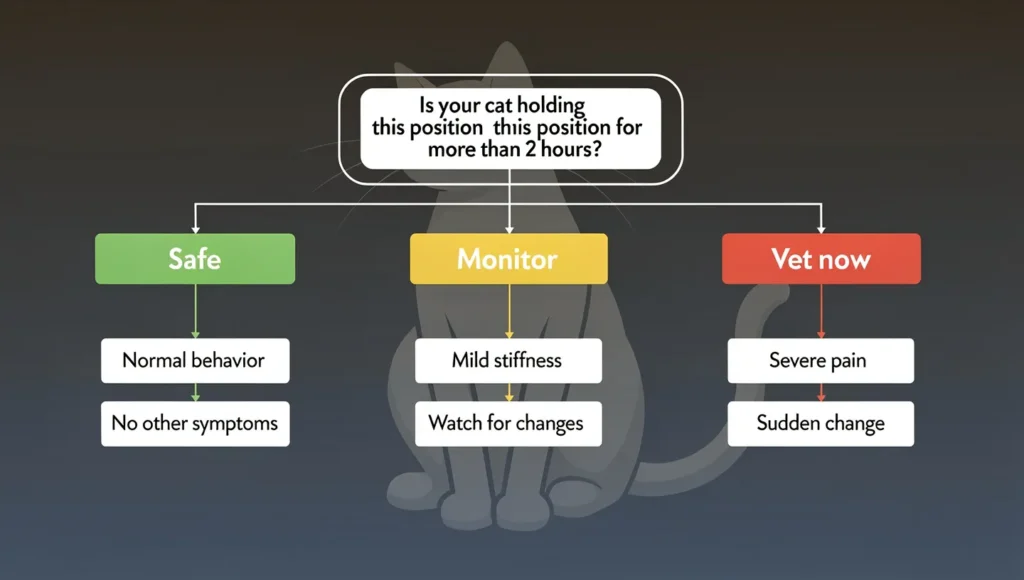
Is This an Emergency? When to Call the Vet
Here’s where I want you to slow down and actually read this part.
Most cases of a cat peeing on the bed are not an emergency. But some are. And knowing the difference matters — especially if you’re a night-shift worker who just got home and doesn’t have the mental bandwidth to figure it out from scratch.
Use this table:
| What You’re Seeing | Level | What to Do |
|---|---|---|
| One-time accident, cat acting normal | 🟢 Low | Monitor, check litter box, watch for repeat |
| Repeat accidents over 2–3 days | 🟡 Medium | Schedule vet visit within 48 hours |
| Straining to urinate, crying in litter box | 🔴 Urgent | Call vet NOW — possible blockage |
| Blood in urine | 🔴 Urgent | Emergency vet visit |
| Lethargy + not eating + peeing outside box | 🔴 Urgent | Emergency vet visit |
| Senior cat, sudden change in behavior | 🟡 Medium | Vet visit within 24 hours |
| Intact male, small amounts on vertical surfaces | 🟡 Medium | Neuter consult + vet check |
And here’s a simple decision path to follow:
Did this happen once, and is your cat acting completely normal?
→ Yes → Monitor for 48 hours. Check litter box. Watch for repeats.
→ No, it’s happened multiple times → Schedule a vet visit.
Is your cat straining, crying, or producing no urine at all?
→ Yes → Stop reading and call the vet right now. This can be life-threatening in male cats.
If you’re unsure whether what you’re seeing counts as “sick behavior,” this guide on how to tell if your cat is sick walks through 10 specific signs that most owners miss.
What to Do Right Now — Step-by-Step
Okay. You’ve identified a possible cause. Now what do you actually do?
Here’s the exact plan I walked Sarah through — and the one I’d give anyone in the same situation.
Step 1 — Rule Out Medical Issues First
Before you rearrange litter boxes or buy calming sprays, get your cat checked out. A vet visit that rules out a UTI or kidney issue saves you weeks of guessing.
If your cat checks out medically clean? Great. Now you know it’s behavioral, and you can address it with confidence.
Step 2 — Clean It the Right Way (This Part Is Critical)
Most people get this wrong. And when they do, the cat comes back to the same spot.
Here’s why: regular cleaners don’t break down the uric acid crystals in cat urine. They might mask the smell for you — but your cat can still detect it. And that scent acts like a signal: “this is an appropriate place to go.”
The only thing that actually works is an enzymatic cleaner — one specifically designed to break down pet urine at the molecular level. Spray it on, let it sit for at least 10 minutes, then blot (don’t rub). Repeat if needed.
And please — do not use anything with ammonia. Cat urine already contains ammonia, so cleaning with it basically just reinforces the scent. It’s counterproductive in the worst way.
Step 3 — Fix the Litter Box Setup
Ask yourself honestly:
- When did you last scoop? (Cats notice a dirty box way before you do.)
- Is the box big enough? (It should be 1.5x the length of your cat.)
- Is it in a quiet, low-traffic spot?
- Do you have enough boxes?
If you’ve never really thought about placement strategy, the litter box placement guide breaks down exactly which spots in your home work — and which ones quietly drive your cat away from the box.
Step 4 — Reduce Stress Triggers
Think back. What changed recently?
New furniture. A visitor. A baby. A new pet. A change in your own schedule — like, say, picking up extra night shifts. Cats feel those changes even when you think you’ve hidden them well.
Some things that genuinely help:
- Feliway diffusers (synthetic calming pheromones)
- Keeping feeding and play schedules consistent
- Adding vertical space (shelves, cat trees) so your cat feels secure
- More one-on-one time — even 10 minutes of focused play can make a difference
I actually circled back to Sarah about a week after that early-morning call. Turns out Oliver had a mild UTI — caught early, treated quickly, and completely resolved. But here’s what she told me that stuck with me: once she understood that Oliver wasn’t doing it out of spite, she stopped being frustrated at him. She started paying closer attention to his behavior overall. She noticed he’d been drinking more water than usual for about a week before the incident — a sign she’d overlooked because life was busy.
That’s the thing about cats. They give you signals. We just have to slow down enough to see them.

Mistakes Most Owners Make (That Make It Worse)
Most people get this wrong. Here are the four that I see come up again and again:
1. Using the wrong cleaner.
Already covered — but it’s worth repeating. Regular detergent, vinegar, or anything ammonia-based doesn’t remove the scent signal. Your cat will return to that spot.
2. Punishing the cat.
This one genuinely breaks my heart a little. Rubbing their nose in it, raising your voice, putting them outside — none of it connects the punishment to the behavior in your cat’s mind. All it does is make your cat afraid of you. It damages trust without solving anything.
From my experience, the cats who get punished for this tend to become more anxious — which often makes the behavior worse, not better.
3. Waiting too long to see the vet.
People assume it’ll just stop on its own. Sometimes it does. But if there’s a medical cause that goes untreated, you’re looking at weeks of repeated accidents — and a cat in unnecessary discomfort.
4. Fixing only the symptom, not the cause.
You can waterproof your mattress, restrict bedroom access, and deep-clean everything — and the behavior will keep happening if the root cause hasn’t been addressed. The bed isn’t the problem. Whatever’s driving your cat to the bed is the problem.
How to Prevent It From Happening Again
Once you’ve dealt with the immediate situation, here’s how to make sure it doesn’t become a recurring thing:
- Waterproof mattress protector — not glamorous, but genuinely worth it while you’re working through the issue
- Scoop the litter box daily — this alone prevents a surprising number of problems
- Keep your cat’s routine as stable as possible — same feeding times, same sleep spots, same play routine
- Pay attention to water intake — increased thirst can be an early warning sign of several conditions (as Sarah discovered)
- Annual vet checkups — especially for cats over 7, when subtle health changes can start quietly shifting behavior
If your cat has been showing signs of anxiety beyond just this one incident, it might be worth reading about cat separation anxiety — particularly if you work long shifts and your cat is alone for extended periods.

Questions I Actually Get Asked (A Lot)
Why did my cat pee on my bed all of a sudden?
Sudden changes almost always point to either a medical trigger (UTI, early kidney issue) or an environmental stressor your cat noticed before you did. A one-time incident in an otherwise healthy cat usually means something shifted — check both the litter box situation and schedule a vet visit to rule out anything physical
What can I spray to stop my cat from peeing on the bed?
After cleaning with an enzymatic cleaner, you can use a citrus-scented deterrent spray on the area — cats generally dislike citrus and will avoid treated surfaces. Some owners also use aluminum foil temporarily as a texture deterrent. But honestly? These are band-aids if the root cause hasn’t been addressed.
Should I punish my cat for peeing on the bed?
No. Not even a little. Punishment doesn’t teach your cat where to go — it just teaches them to be afraid of you. Cats don’t connect consequences to past actions the way humans do. Address the cause, not the cat.
How do I clean cat pee from a mattress?
Blot up as much as you can first (don’t rub). Then saturate the area with an enzymatic cleaner, let it sit for 10–15 minutes, and blot again. Air dry completely — don’t use heat, which can set the smell permanently. You may need to repeat once or twice for a deep soak.
Will my cat do this again?
Depends entirely on whether the cause has been resolved. If it was a UTI that got treated — probably not. If the stressor hasn’t changed, or the litter box situation hasn’t improved — possibly yes. Track it. One incident is a warning. Two or three is a pattern that needs active attention.
Before You Go
I want to take a second to say something to Sarah — because she’s going to read this.
You work long, exhausting shifts taking care of strangers at their most vulnerable. You come home smelling like the hospital, running on zero sleep, and somehow you still make sure Oliver has fresh water and a clean box before you crash. That kind of consistency matters — even when (especially when) your cat does something that makes you want to sit on the floor and stare at the ceiling for a minute.
Oliver wasn’t trying to ruin your morning. He was trying to tell you something. And now you know how to listen.
If this helped you figure out what’s going on with your cat, I’d love to hear about it. Drop a comment below — tell me your cat’s name, what happened, and what ended up being the cause. Sometimes just knowing you’re not alone in this makes the 5 a.m. phone calls a little easier to handle. And if you know someone whose cat has done this recently, share this with them. You might save them a very confusing morning.