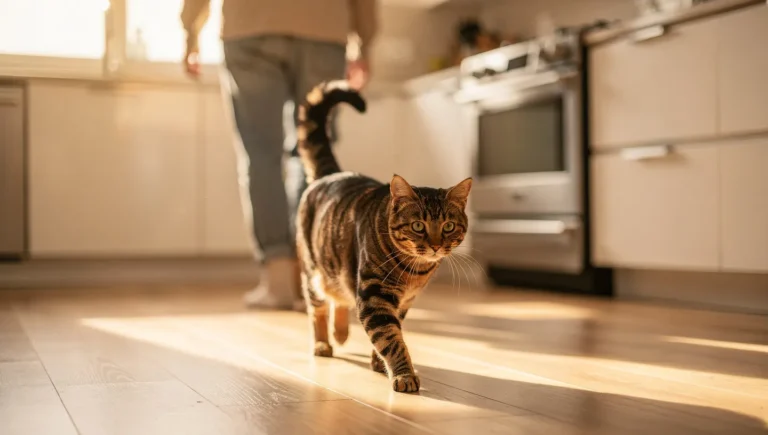

Cat tail language is one of the clearest ways cats communicate their emotions.
Your cat is talking to you right now—not with sounds, not with meows,
but with their tail.
Many cat owners miss this completely. They see a tail moving and assume it means the same thing it does with dogs. Happiness. Excitement. Joy.
That assumption causes more scratches, bites, and broken trust than almost anything else.
Cats are not small dogs.
And a wagging tail does not mean the same thing.
In fact, when a cat moves their tail, they are often doing the opposite of celebrating. They may be irritated, overwhelmed, conflicted, or quietly warning you to stop. The problem isn’t the cat. It’s that most humans were never taught how to read the signs properly.
According to experts at
The Humane Society of the United States
, understanding feline body language is the key to a safe and happy relationship. A cat’s tail is a barometer of their emotional state. It measures comfort, stress, confidence, fear, and aggression—sometimes all within a few seconds. Every flick, swish, puff, and curl is information. Clear. Honest. Unfiltered.
Once you learn this language, everything changes.
You know when to lean in.
You know when to pause.
And most importantly, you know when to step back before a loving moment turns into a painful one.
This guide will teach you how to read your cat’s tail the way experienced veterinarians and behaviorists do—so you can finally understand what your cat has been telling you all along.
Table of Contents
- Quick Answer: What Does Cat Tail Language Mean?
- Cat Tail Language: The Happy & Safe Tail (Signs of Trust and Comfort)
- The Question Mark Tail (The Friendly Hello)
- The Tail Wrap (The Cat Hug)
- The Warning Signals (When the Tail Says “Enough”)
- Why Do Cats Wag Their Tails? (The Big Misunderstanding)
- Tail Flicking vs. Tail Swishing (The Dangerous Difference)
- The Defensive Tail (Fear, Shock, and Self-Defense)
- Cat Puffed Tail Meaning (The “Bottle Brush” Effect)
- How to Respond to Your Cat’s Tail (Read, Don’t React)
- Frequently Asked Questions About Cat Tail Language
- What does it mean when a cat slowly swishes its tail?
- Why do cats puff up their tails?
- Is a wagging tail a sign of happiness in cats?
- Can I understand my cat’s mood by tail position alone?
- The Tail Never Lies
Quick Answer: What Does Cat Tail Language Mean?
Cat tail language is one of the clearest ways cats communicate their emotions and intentions. The position, movement, and speed of a cat’s tail can signal happiness, fear, curiosity, aggression, or stress. By observing tail behavior—such as upright tails, slow swaying, or puffed fur—cat owners can better understand what their cat is feeling and respond appropriately.
Cat Tail Language: The Happy & Safe Tail (Signs of Trust and Comfort)
Understanding cat tail language is an essential part of reading your cat’s overall behavior. To fully decode what your cat is trying to communicate, it’s helpful to also understand cat body language, including ear positions, eye contact, and posture.
When a cat feels relaxed, confident, and emotionally safe, their tail tells a beautiful story. These are the moments every cat parent hopes for—the quiet proof that your cat trusts you and feels at home in your presence.
The Question Mark Tail (The Friendly Hello)
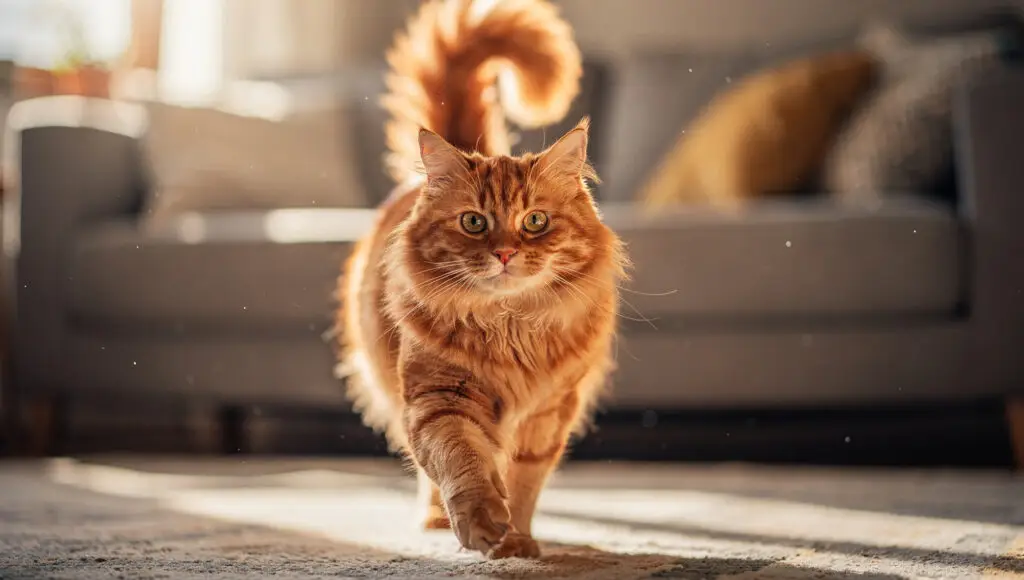
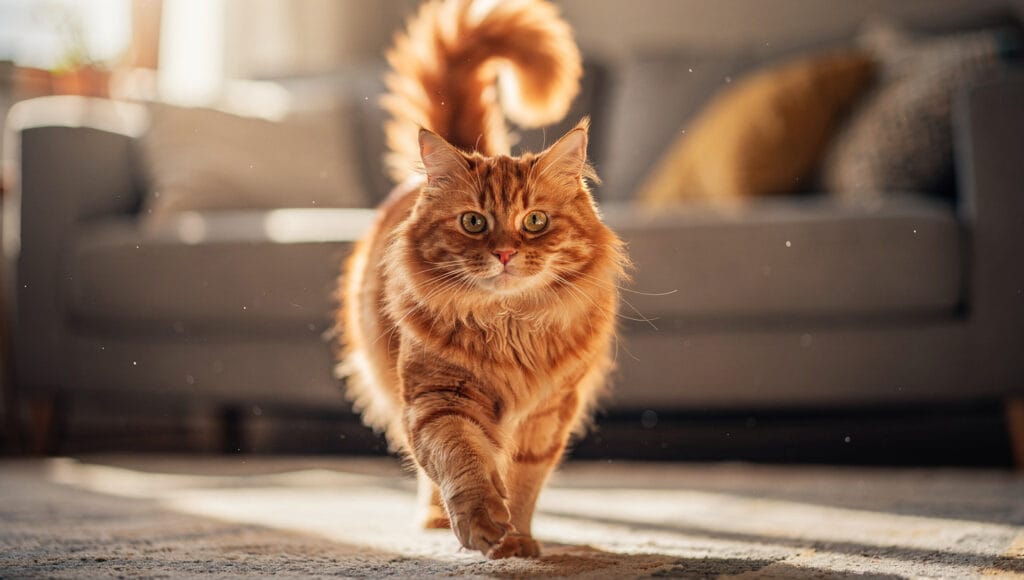
Picture this: your cat walks toward you with their tail held straight up, the very tip gently curved like a question mark.
This is one of the most positive signals a cat can give.
The raised tail shows confidence and comfort.
The soft curve at the end adds friendliness.
Behaviorists often call this the “universal greeting” of cats. It’s their way of saying, “I see you, I feel safe, and I’m happy you’re here.” Kittens use this posture with their mothers, and adult cats reserve it for people and animals they genuinely trust.
You’ll most often see this tail position when:
You come home after being away.
Your cat approaches you voluntarily.
A calm interaction is about to begin.
And here’s an important detail many owners notice but don’t connect right away:
You will often hear a soft rumble accompanying this tail position.
That gentle vibration is no coincidence. This posture commonly appears alongside the healing power of cat purrs—a sound strongly linked to comfort, bonding, and emotional well-being.
When you see the question mark tail, you’re being invited into your cat’s safe space.
The Tail Wrap (The Cat Hug)
When a cat wraps their tail around your leg, arm, or even another cat, it may look subtle—but it carries deep meaning.
This movement is the feline equivalent of a handshake or a hug.
Cats don’t touch casually. Physical contact is intentional, and using the tail in this way signals a high level of trust. Your cat is choosing to include you in their social circle, marking you as familiar, safe, and emotionally significant.
You may see tail wrapping when:
Your cat rubs against your legs.
Two bonded cats sit close together.
Your cat pauses beside you during a calm moment.
This is not a demand for food or attention. It’s connection.
For many cat owners, realizing this truth is deeply reassuring. That gentle tail wrap is your cat’s quiet way of saying, “You’re mine—and I feel secure with you.”
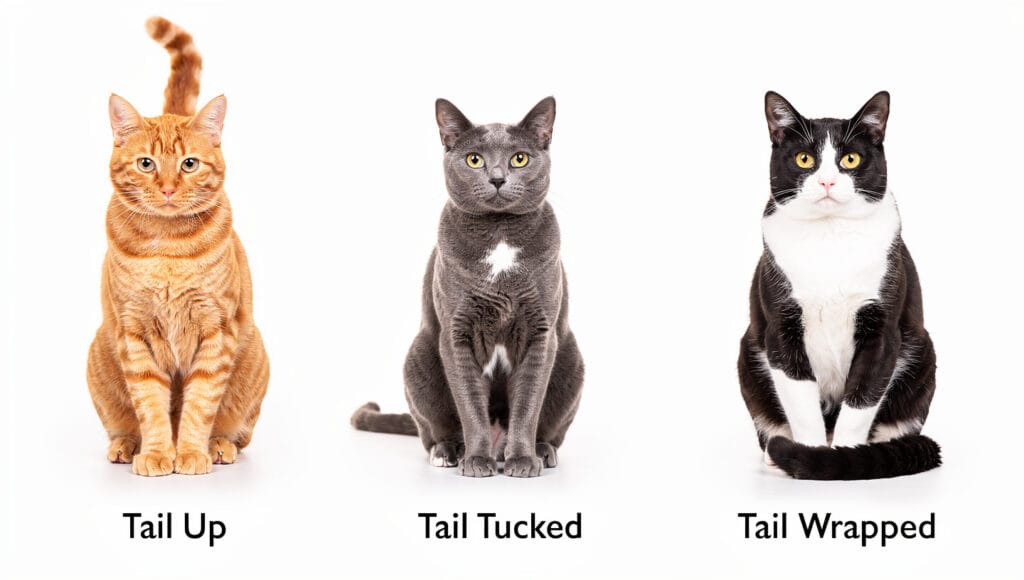
| Tail Position | Meaning |
|---|---|
| Tail held high | Confidence, happiness, and friendly mood |
| Tail puffed up | Fear, shock, or defensive behavior |
| Slow tail swishing | Focus or mild irritation |
| Fast tail whipping | Anger or overstimulation |
| Tail tucked between legs | Anxiety, fear, or submission |
| Tail wrapped around body | Relaxation or uncertainty |
The Warning Signals (When the Tail Says “Enough”)
This is where most misunderstandings happen.
And this is where people get hurt.
When a cat’s tail starts moving with purpose, it is not an invitation. It is communication. Ignoring these signals is one of the main reasons owners believe their cat is “unpredictable” or “aggressive,” when in reality, the warning was there all along.
Why Do Cats Wag Their Tails? (The Big Misunderstanding)
Here’s the truth that surprises many cat owners:
If a dog wags their tail, they’re usually happy.
If a cat wags their tail, something is wrong.
Tail wagging in cats is most often a sign of overstimulation or inner conflict.
Your cat may want to be near you, but not want to be touched. They may enjoy the interaction at first, then suddenly feel overwhelmed. This emotional tug-of-war shows up first in the tail.
The
Cornell Feline Health Center
notes that recognizing these early signs of agitation is crucial to preventing feline aggression.
Common situations where this happens:
Petting goes on for too long.
Touching sensitive areas (like the belly or lower back).
Loud environments or sudden movements.
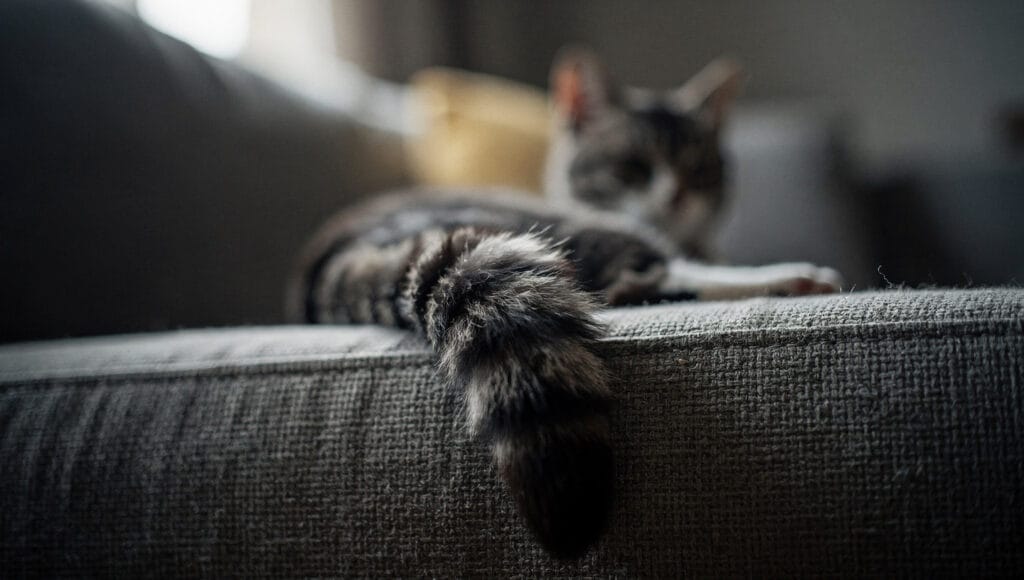
The tail becomes a physical outlet for mental tension. It’s the cat’s way of saying, “I’m trying to tolerate this… but my patience is running out.”
Tail Flicking vs. Tail Swishing (The Dangerous Difference)
Tail Flicking
This is a quick, sharp movement at the tip of the tail only.
Stress-related tail behaviors often appear alongside excessive vocalization. If your cat shows restless tail movements at night, you may also notice frequent meowing, which we explain in our article about cats meowing at night.
Think of it as the check engine light on your dashboard.
Your cat is mildly irritated, uncomfortable, or losing patience.
Tail Swishing
This is a strong, forceful movement of the entire tail, swinging side to side like a whip or a snake.
This is the red light.
If you ignore this thrashing tail, the next step is almost always a cat bite or a scratch.
If you want to understand what happens when warnings are ignored, read our guide:
Why Does My Cat Bite Me?
The Defensive Tail (Fear, Shock, and Self-Defense)
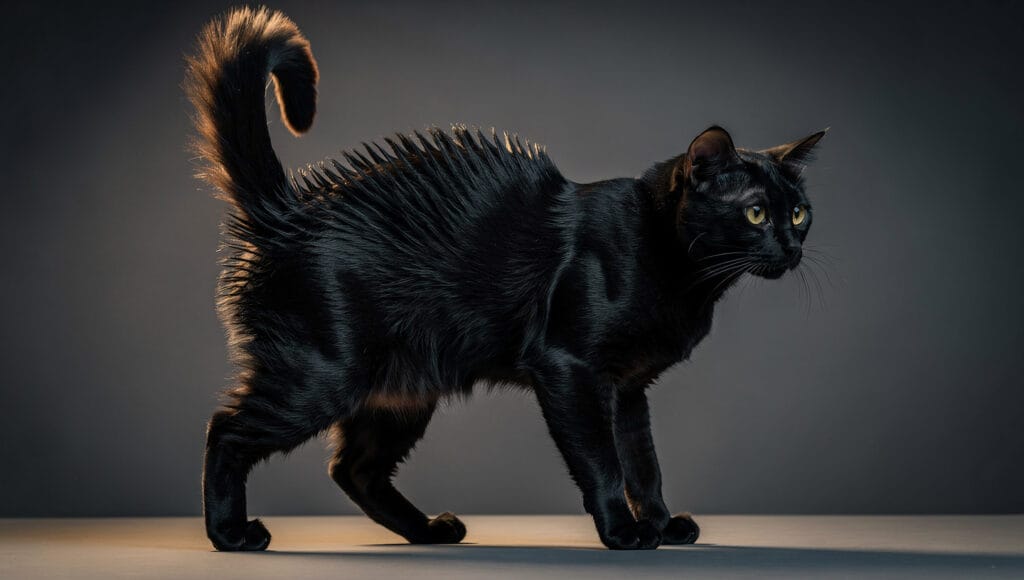
When a cat’s tail suddenly doubles in size, you are not seeing aggression.
You are witnessing fear.
Cat Puffed Tail Meaning (The “Bottle Brush” Effect)
A puffed-up tail looks dramatic and impossible to miss.
The scientific name for this reaction is piloerection.
As explained by veterinary resources like
PetMD
, this response is designed to make the cat appear larger and more intimidating to threats.
Cat Tail Meaning Chart (Quick Reference)
How to Respond to Your Cat’s Tail (Read, Don’t React)
The golden rule is simple: listen with your eyes.
If the tail is moving fast or thrashing, step back. Give space.
If the tail is upright and relaxed, it’s safe to approach and engage.
Frequently Asked Questions About Cat Tail Language
What does it mean when a cat slowly swishes its tail?
Slow tail swishing usually means your cat is focused or slightly irritated. It’s a warning sign that your cat may want space.
Why do cats puff up their tails?
Cats puff up their tails when they feel threatened or frightened. This reaction makes them appear larger to potential dangers.
Is a wagging tail a sign of happiness in cats?
Unlike dogs, a wagging tail in cats often signals irritation or overstimulation rather than happiness.
Can I understand my cat’s mood by tail position alone?
Tail position gives strong clues, but it should always be interpreted alongside ear position, body posture, and vocalizations.
The Tail Never Lies
Your cat doesn’t hide their emotions.
The tail is a complete emotional language.
It warns before teeth.
It welcomes before purring.
It protects when fear takes over.
Start watching your cat’s tail today.
Not casually—but intentionally.
You may be surprised by how much your cat has been telling you… once you finally learn how to listen.