
You walk to the kitchen to grab a glass of water. Your cat is right behind you.
You head to the bathroom. Your cat is already waiting outside the door — or worse, squeezing through before you can close it.
You sit back down on the couch, and there they are again, curled up two inches from your leg.
If you’ve ever wondered why does my cat follow me everywhere, you’re definitely not alone. It’s one of the most common questions cat owners ask — and honestly, one of the most endearing. That little shadow following your every move isn’t random. There’s real instinct, emotion, and communication behind it.
The good news? In most cases, it’s completely normal. Let’s unpack what’s actually going on.
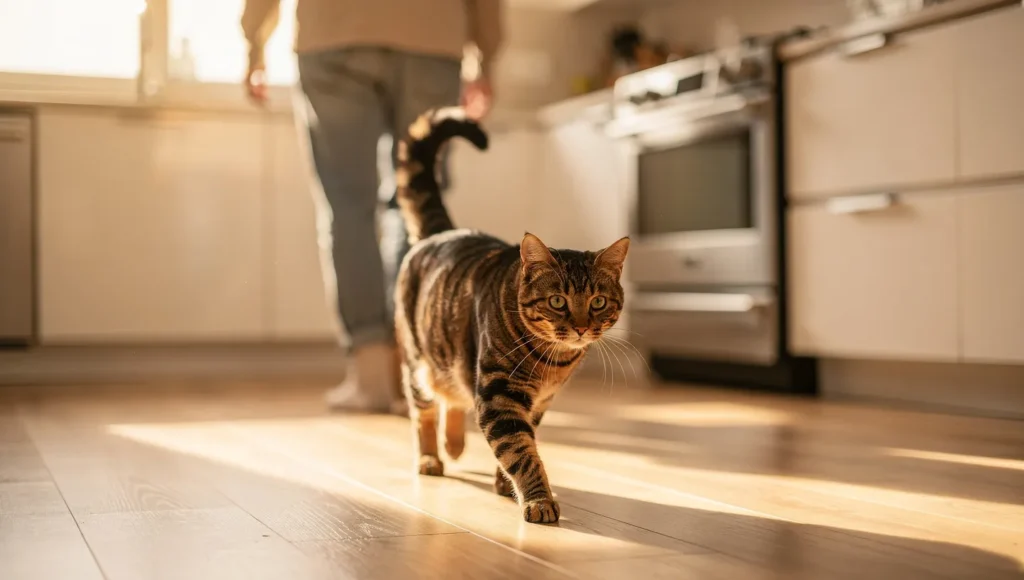
Table of Contents
- Is It Normal for a Cat to Follow You Everywhere?
- Do Cats Choose a Favorite Person?
- 9 Reasons Your Cat Follows You Everywhere
- 1. 💛 Your Cat Loves You and Feels Safe Around You
- 2. 🔍 Your Cat Is Curious About Everything You Do
- 3. 🍽️ Your Cat Associates You With Food
- 4. 🎮 Your Cat Is Bored and Wants Stimulation
- 5. 🙋 Your Cat Is Seeking Attention or Playtime
- 🧠 Expert Tip
- 6. 🗺️ Your Cat Thinks You’re Part of Its Territory
- 7. ⏰ Your Cat Is Following a Routine
- 8. 😰 Your Cat May Have Separation Anxiety
- 9. 📢 Your Cat Is Trying to Communicate Something
- Why Does My Cat Follow Me Everywhere and Meow?
- Why Does My Cat Follow Me to the Bathroom?
- Why Does My Cat Follow Me Everywhere Even When I Sleep?
- Is It a Problem If My Cat Follows Me Everywhere?
- When Should You Worry About Clingy Cat Behavior?
- How to Encourage Healthy Independence in Your Cat
- Signs Your Cat Is Emotionally Attached to You
- Frequently Asked Questions ❓
- Why does my cat follow me everywhere?
- Why is my cat so clingy all of a sudden?
- Why does my cat follow me and stare at me?
- Do cats choose a favorite person?
- Final Thoughts
Is It Normal for a Cat to Follow You Everywhere?
Short answer: yes, for most cats.
Cats have a reputation for being independent and aloof — but anyone who’s actually lived with one knows that’s only half the story. Many domestic cats form deep, genuine attachments to their owners.
In my experience, the cats that follow their owners most intensely are often the ones who were socialized early, spent a lot of time bonding with one person, or simply have an affectionate personality by nature.
Research suggests that cats bond with their humans in a way that mirrors how kittens attach to their mothers. Your cat doesn’t just see you as a food source. To them, you’re a safe base — a familiar, comforting presence in an unpredictable world.
Indoor cats especially tend to develop this behavior. Without the stimulation of outdoor territory, their world shrinks to the four walls of your home — and you become the most interesting thing in it.
That said, there’s a difference between a cat that enjoys following you around and one that can’t function without being physically attached to you. We’ll get to that distinction later.
Do Cats Choose a Favorite Person?
Absolutely — and if your cat follows you specifically (and not your partner, your kids, or your roommate), that’s your answer right there.
Cats tend to bond most strongly with the person who:
- Feeds them consistently
- Respects their boundaries and lets them come and go
- Spends calm, quiet time near them without forcing interaction
- Communicates in “cat language” — slow blinks, soft voices, relaxed posture
One mistake I often see is owners who try too hard. They pick up their cat constantly, pursue them for cuddles, and get frustrated when the cat retreats. Ironically, the person who pays the cat less attention often becomes the favorite — because cats are drawn to people who don’t feel threatening.
If your cat follows you everywhere, it’s a real compliment. You’ve earned their trust.
Fun fact: A 2019 study published in Current Biology found that cats show secure attachment behaviors toward their owners — similar to dogs and even human infants. Your cat genuinely depends on you emotionally.
9 Reasons Your Cat Follows You Everywhere
Here’s where it gets interesting. The behavior looks the same on the surface, but the why behind it can vary a lot depending on your cat’s personality, age, history, and current needs.
1. 💛 Your Cat Loves You and Feels Safe Around You
This is the simplest and most common reason — and the one most cat owners overlook because it feels too obvious.
Cats don’t follow people they’re indifferent to. If your cat chooses to be near you, it means you make them feel secure.
In the wild, cats are both predators and prey. Safety is everything. When a cat voluntarily stays close to you, they’re communicating: I trust you. You make me feel protected.
This is especially true for cats that had rough starts — rescues, strays, or cats that experienced instability early in life. When they follow you, they’re not being clingy. They’re healing.
2. 🔍 Your Cat Is Curious About Everything You Do
Cats are hardwired to investigate. Movement triggers their predatory instinct — and you, walking around the house, are basically a constant source of low-level stimulation.
I’ve worked with cats that would sprint from the other side of the house the second they heard a cabinet open or a plastic bag crinkle. It’s not that they wanted food every time — they just had to know what was happening.
Your cat follows you because you do interesting things. You open things, cook things, move things around. From a cat’s perspective, you’re endlessly fascinating.
3. 🍽️ Your Cat Associates You With Food
Let’s be real — food is a powerful motivator.
Cats are incredibly good at learning routines. If you feed your cat at 7 a.m. every morning, don’t be surprised if they start following you around at 6:45. They’re not being dramatic. They’ve simply connected you with food, and they’re making sure you don’t forget.
This kind of following tends to be time-specific. You’ll notice it most in the 20–30 minutes before their usual meal. After eating, the shadowing typically fades — until the next feeding window approaches.
If your cat’s following is heavily food-motivated, it may be worth exploring puzzle feeders or slow-feed bowls to add some mental engagement to mealtime.
4. 🎮 Your Cat Is Bored and Wants Stimulation
Indoor cats live in a remarkably small world. No territory to patrol, no prey to hunt, no other cats to interact with. For a species designed to be active and mentally engaged, that’s a real challenge.
When a cat follows you from room to room, sometimes it’s the feline equivalent of “I have nothing to do and you’re the most interesting option available.”
This is especially common in:
- Single-cat households
- Cats left alone for long periods
- Cats without vertical space or enrichment
If boredom is the driver, you’ll often notice the following is accompanied by restlessness — pacing, chirping, knocking things off shelves. Your cat isn’t just fond of you. They need more to do.
A cat tree with multiple levels, window perches, and rotating toys can make a significant difference for a bored indoor cat.
5. 🙋 Your Cat Is Seeking Attention or Playtime
Sometimes your cat isn’t following you — they’re recruiting you.
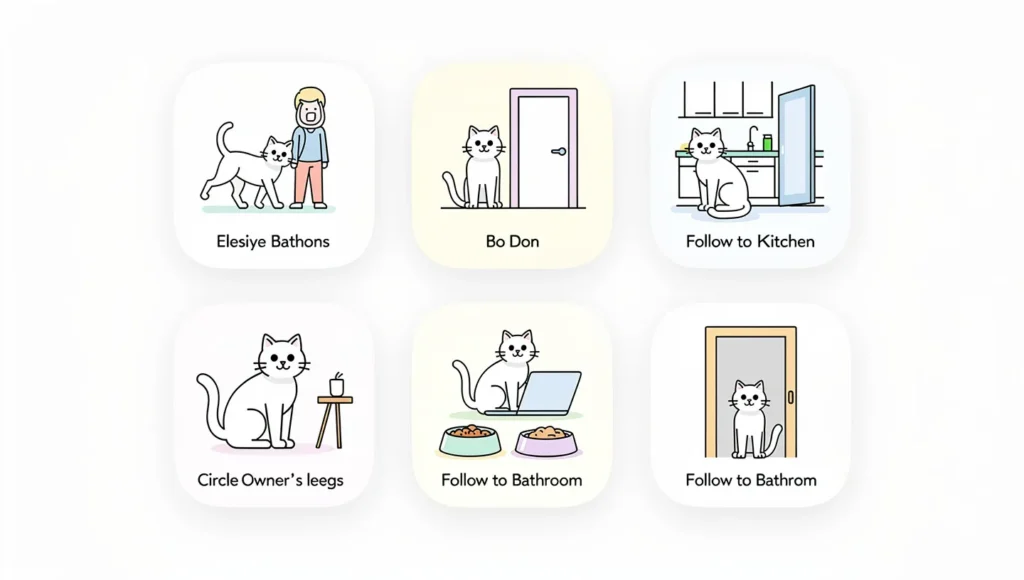
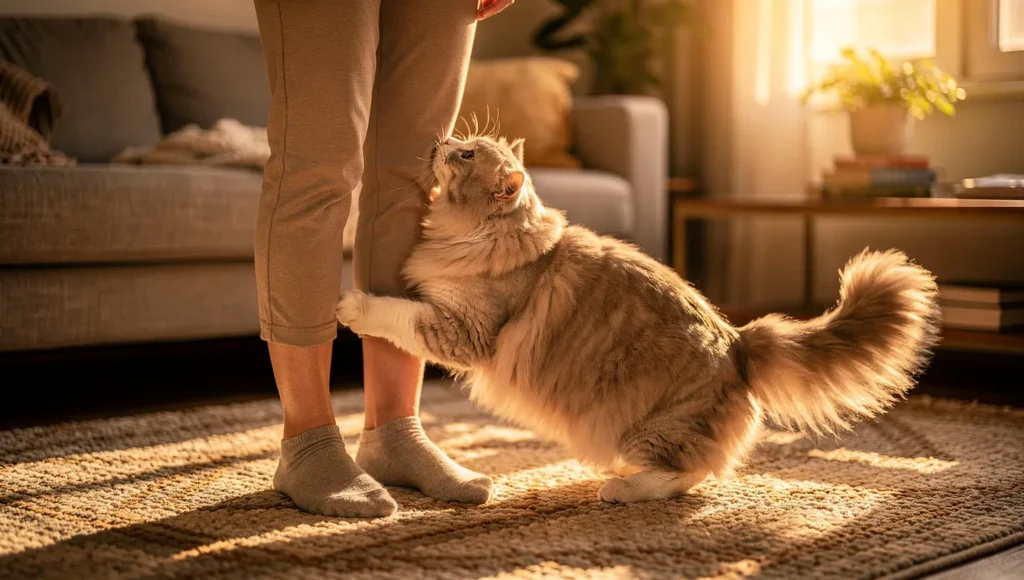
Attention-seeking behavior looks a lot like regular following, but there are subtle differences. An attention-seeking cat will:
- Make eye contact and hold it
- Meow or chirp while following
- Rub against your legs and then look up at you
- Lead you toward their food bowl, toys, or favorite play spot
Think of it as your cat trying to communicate: Hey. I need something. Follow me.
This is actually quite sophisticated social behavior. Cats that do this have learned that you respond to their cues — which means the bond between you is working exactly as it should.
🧠 Expert Tip
Not all following behavior means the same thing — context is everything.
Ask yourself: When does my cat follow me? How do they act while doing it?
- Following before meals = food association
- Following with vocalizing = communication or attention-seeking
- Following silently and calmly = bonding and security
- Following with signs of distress = possible anxiety (more on this below)
Once you identify the pattern, you can respond to what your cat actually needs — instead of guessing.
6. 🗺️ Your Cat Thinks You’re Part of Its Territory
Your cat doesn’t just own the couch and the sunny windowsill — they own you.
Cats mark their territory through scent, and every time your cat rubs against your legs or bumps their head on you, they’re leaving their scent marker. Following you around is an extension of this: they’re supervising their territory — and you’re in it.
7. ⏰ Your Cat Is Following a Routine
Cats are creatures of habit. If you always make coffee at 8 a.m., watch TV at 9 p.m., or work at your desk from 10 to 2, your cat has mapped your entire day.
They follow you because they know what comes next — and they want to be part of it. Routine = safety in a cat’s world.
8. 😰 Your Cat May Have Separation Anxiety
This one is worth paying attention to.
Some cats don’t just enjoy your company — they need it to feel okay. Signs this has crossed into anxiety territory:
- Destructive behavior when you leave
- Excessive grooming or hair loss
- Vomiting or refusing to eat when alone
- Crying at doors or windows after you leave
If this sounds familiar, check out our in-depth guide on cat separation anxiety — it covers a full 14-day behavioral reset plan.
9. 📢 Your Cat Is Trying to Communicate Something
Sometimes following is just your cat’s way of saying: Hey, I need something.
Watch for these cues:
- Leading you toward the food bowl → hungry
- Sitting near the litter box → something’s off
- Pawing at you then moving away → wants play
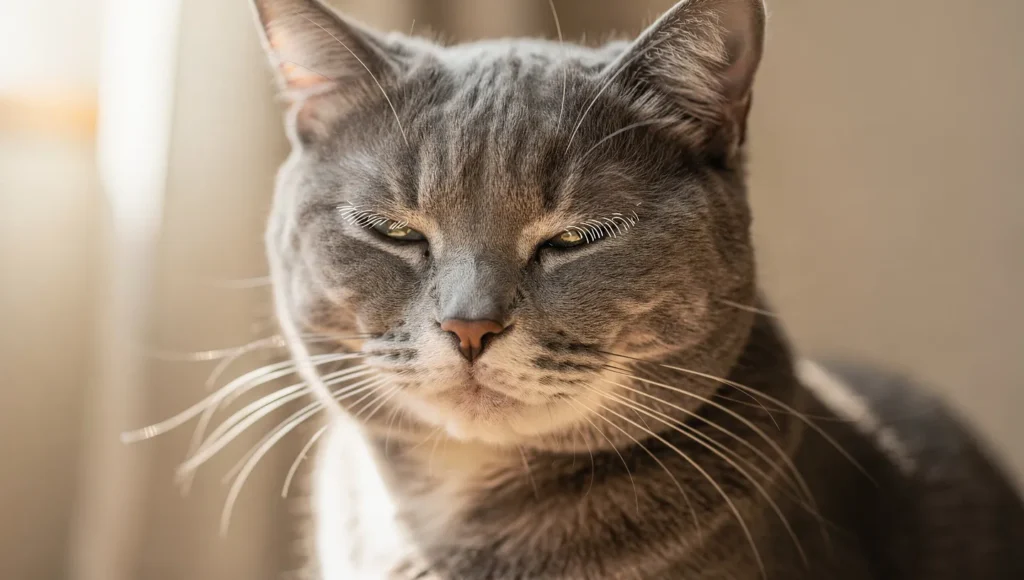
- Slow blinking while following → pure affection
Your cat can’t talk. Following you is one of the clearest ways they have to get your attention.
Why Does My Cat Follow Me Everywhere and Meow?
If you’re wondering why does my cat follow me everywhere and meow, the answer usually comes down to communication.
When following comes with a vocal soundtrack, your cat isn’t just seeking proximity — they’re making a request.
- Demand meowing = feed me, play with me, open that door
- Attention meowing = I’m bored, I want interaction
- Soft chirping = I’m excited or curious about what you’re doing
If the nighttime meowing is keeping you up, this guide on cat meowing at night breaks down the causes and solutions clearly.
Why Does My Cat Follow Me to the Bathroom?
Some cats develop what’s often called “velcro cat behavior”, where they stick close to their favorite person throughout the day.
You’re not imagining it — the bathroom is fascinating to cats.
- Running water triggers natural curiosity and attraction
- Warmth from the shower makes it a cozy spot
- Closed doors are basically an invitation (cats hate being locked out)
- Vulnerability — cats instinctively stay close to their humans in exposed situations
It’s also worth noting: in the wild, cats don’t have the luxury of being distracted. Staying alert near a vulnerable pack member is a deeply instinctive behavior.
Why Does My Cat Follow Me Everywhere Even When I Sleep?
Nighttime following is about security and warmth — plain and simple.
Your cat feels safest next to you. Your breathing is steady, your body is warm, and your presence signals that everything is okay. If they’re curling up near your head specifically, there’s even more to it — check out why cats sleep next to your head for the full breakdown.
Is It a Problem If My Cat Follows Me Everywhere?
Most of the time, no. But context matters.
| Normal Following | Worth Monitoring |
| Calm and relaxed | Visibly anxious or panicked |
| Stops when distracted | Can’t be redirected at all |
| Occasional and situational | Constant, all-day shadowing |
| No distress when you sit down | Cries or paces when you’re out of sight |
When Should You Worry About Clingy Cat Behavior?
A sudden change in behavior is always the key signal.
If you notice additional symptoms, our guide on how to tell if your cat is sick can help you identify early warning signs.
If your cat was independent and has become suddenly clingy, it could indicate:
- Pain or illness — cats seek comfort when something hurts
- Cognitive decline — common in senior cats (disorientation increases attachment)
- Environmental stress — new pet, new baby, recent move
- Hormonal changes — especially in unspayed females
According to the Cornell Feline Health Center, sudden behavioral changes in cats — including increased clinginess — are one of the early signs that warrant a veterinary check-up.
If your cat shows any physical symptoms alongside the clingy behavior (vomiting, hiding, appetite changes), don’t wait — rule out a medical cause first.
How to Encourage Healthy Independence in Your Cat
You don’t need to reject your cat’s affection — just make sure they have a rich enough world that you’re not their only source of stimulation.
- Rotate toys regularly to keep novelty high — interactive toys work especially well for mentally stimulating solo play
- Add vertical space — a cat tree gives them territory to own independently
- Use puzzle feeders to make mealtime mentally engaging
- Schedule 2 dedicated play sessions daily — 10 minutes each is enough to reduce attention-seeking behavior significantly
- Practice short separations — leave the room, come back calmly, repeat. This teaches your cat that your absence is temporary and safe.
Signs Your Cat Is Emotionally Attached to You
These are classic cat bonding behaviors that show your pet feels emotionally connected to you.
- Slow blinking at you from across the room
- Head bunting (pressing their forehead into you)
- Kneading on your lap or beside you
- Sleeping near you or making physical contact while you rest
- Greeting you at the door when you come home
- Following you — yes, the very behavior we’ve been talking about
According to a study published in Current Biology, cats display secure attachment behaviors toward their owners — comparable to what researchers observe in dogs and human infants. That shadow behind you? It’s not clinginess. It’s trust.
Frequently Asked Questions ❓
Why does my cat follow me everywhere?
Most cats follow their owners out of affection, curiosity, or routine. It’s a sign of trust and attachment — especially if the behavior is calm and consistent. In most cases, it’s completely normal.
Why is my cat so clingy all of a sudden?
Sudden clinginess can signal stress, illness, pain, or a change in environment. If the behavior appeared out of nowhere and is accompanied by other changes, a vet visit is a good first step.
Why does my cat follow me and stare at me?
Staring combined with following usually means your cat wants something — food, play, or attention. If the stare is soft with relaxed body language, it’s affection. Slow-blink back at them. It works.
Do cats choose a favorite person?
Yes. Cats tend to bond most with the person who respects their boundaries, spends calm time with them, and responds consistently to their needs. If your cat follows *you* specifically, you’re that person.
Final Thoughts
Your cat following you everywhere isn’t a quirk — it’s communication.
If you’ve ever asked yourself why does my cat follow me everywhere, the answer is usually simple: trust, curiosity, and a deep emotional bond.
It means you’ve built a relationship strong enough that your presence genuinely matters to them. Enjoy it. Return the affection. Just make sure they have enough enrichment, play, and independence so that following you is a choice — not a need born from anxiety.
That’s the difference between a happy shadow and a stressed one.