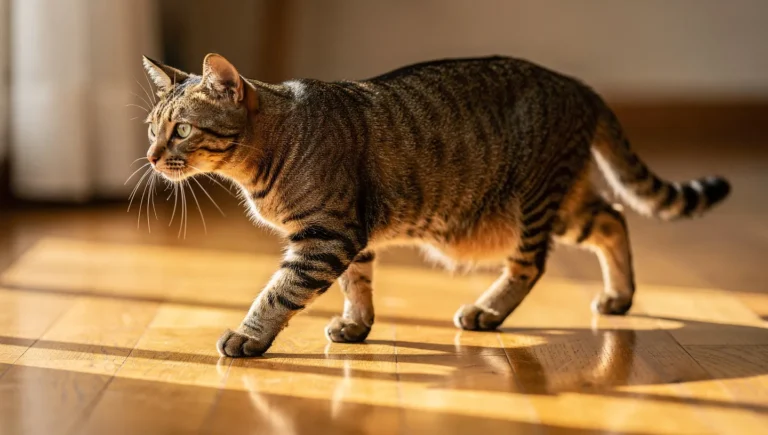

You refill the water bowl every morning, but three days later, it’s still sitting there—untouched. Your cat seems fine, eating normally, playing like usual. But that nagging voice in your head won’t stop: Why does my cat not drink water? Is something wrong?
You’re not alone. Thousands of cat owners face this mystery every day, and the answer isn’t always obvious. Cats are masters at hiding discomfort, and dehydration can sneak up fast—especially in older cats or those eating only dry food.
Here’s the truth: some cats get enough hydration from wet food and genuinely don’t need much water. Others are silently dehydrated, putting their kidneys at risk. The key is knowing the difference.
In this guide, I’ll walk you through the 7 most common reasons why cats refuse water, how to spot dehydration at home (including the simple skin tent test), and proven strategies to get even the most stubborn cat drinking again. No fluff, no scare tactics—just practical advice from someone who’s spent over a decade helping anxious cat owners solve this exact problem.
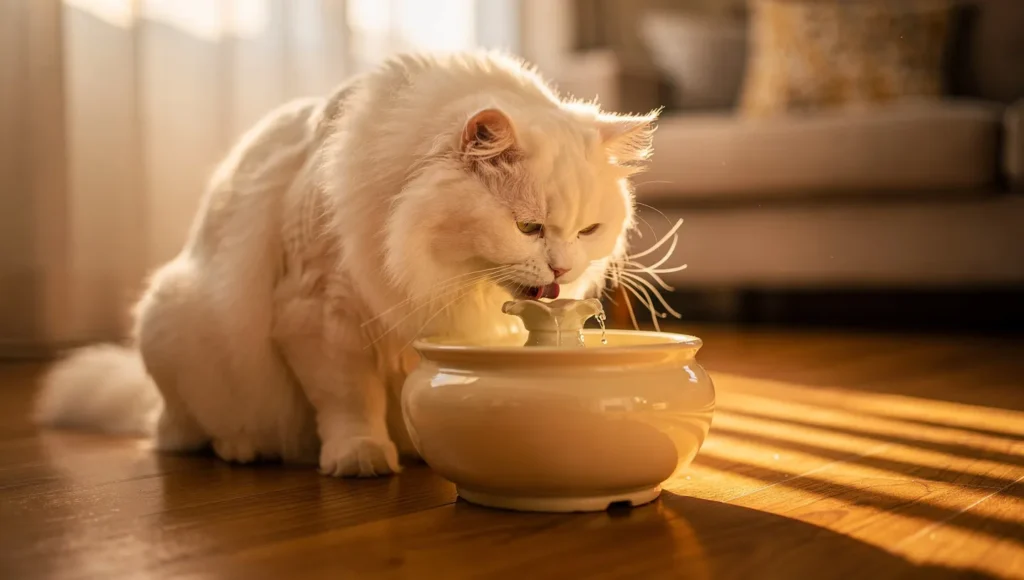
Table of Contents
- 🧪 Is It Normal If My Cat Doesn’t Drink Water? (Understanding Feline Hydration)
- How Much Water Should a Cat Drink Per Day?
- ⚠️ How to Tell If Your Cat Is Dehydrated (Signs You Can’t Ignore)
- 1. The Skin Tent Test (Takes 10 Seconds)
- 2. Capillary Refill Time (Check the Gums)
- Other Warning Signs of Dehydration in Cats:
- 🔍 Why Does My Cat Not Drink Water? 7 Proven Reasons
- 1️⃣ Whisker Fatigue (The Bowl Problem Most Owners Miss)
- 2️⃣ Location, Location, Location (Your Cat Hates Where You Put the Bowl)
- 3️⃣ The Water Tastes… Wrong (Chlorine, Minerals, or Stale Water)
- 4️⃣ Your Cat Is Getting Hydration From Food (Wet vs Dry Food)
- 5️⃣ Still Water = Boring (Cats Love Movement)
- 6️⃣ Stress or Environmental Changes (The Silent Hydration Killer)
- 7️⃣ Underlying Health Issues (When to Worry)
- 💡 Quick Expert Tip Box
- 💧 How to Hydrate a Cat That Won’t Drink (8 Proven Strategies)
- 1. Switch to Wet Food (or Increase the Ratio)
- 2. Add Water to Dry Food
- 3. Make Ice Cubes a Game
- 4. Create Multiple Water Stations
- 5. Invest in a Cat Water Fountain
- 6. Flavor the Water (Sparingly)
- 7. Use Wide, Shallow Ceramic or Stainless Steel Bowls
- 8. Let Them Drink from the Faucet (Supervised)
- 🚨 When Should You Call the Vet? (Red Flags)
- 🔴 Emergency (Go to Vet NOW):
- 🟡 Urgent (Call Vet Today):
- 🟢 Monitor Closely (Schedule Vet Visit This Week):
- ❓ FAQ: Your Top Questions Answered
- How long can a cat go without drinking water?
- Should I force my cat to drink water?
- Is it normal for older cats not to drink water?
- Why is my cat not drinking water but eating normally?
- Conclusion: Small Changes, Big Impact
🧪 Is It Normal If My Cat Doesn’t Drink Water? (Understanding Feline Hydration)
Let’s start with some perspective: cats evolved in the deserts of North Africa. Their wild ancestors got most of their moisture from prey—mice, birds, and lizards are about 70% water. Domestic cats inherited this low-thirst drive, which is why you rarely see them guzzling water like dogs do.
But here’s where it gets tricky: “not drinking much” is different from “not drinking at all.”
A healthy cat on a wet food diet might take just a few sips per day—and that’s completely normal. But a cat eating only dry kibble (which contains about 10% moisture) needs to drink significantly more to compensate. If they don’t, dehydration becomes a real risk.
How Much Water Should a Cat Drink Per Day?
The general rule is simple: cats need about 3.5 to 4.5 ounces of water per 5 pounds of body weight daily. This includes water from both food and their bowl.
Here’s a breakdown:
| Cat Weight | Daily Water Needs | Wet Food (75% moisture) | Dry Food (10% moisture) |
|---|---|---|---|
| 8 lbs | 5.6–7.2 oz | May drink 1–2 oz from bowl | Needs 4–5 oz from bowl |
| 10 lbs | 7–9 oz | May drink 2–3 oz from bowl | Needs 5–7 oz from bowl |
| 12 lbs | 8.4–10.8 oz | May drink 2–4 oz from bowl | Needs 6–8 oz from bowl |
In my experience, most cats on high-quality wet food barely touch their water bowls—and their owners panic unnecessarily. Meanwhile, kibble-fed cats who drink less than expected often show subtle signs of chronic dehydration that go unnoticed for months.
The bottom line? If your cat’s hydration needs are being met through food, minimal drinking is fine. But if they’re on dry food and ignoring water, we need to investigate.
⚠️ How to Tell If Your Cat Is Dehydrated (Signs You Can’t Ignore)
Before we dive into why your cat isn’t drinking, let’s make sure they’re actually dehydrated. Many owners assume their cat is fine because they’re eating and acting normal—but dehydration doesn’t always show obvious symptoms until it’s severe.
Here are two simple at-home tests you can do right now:
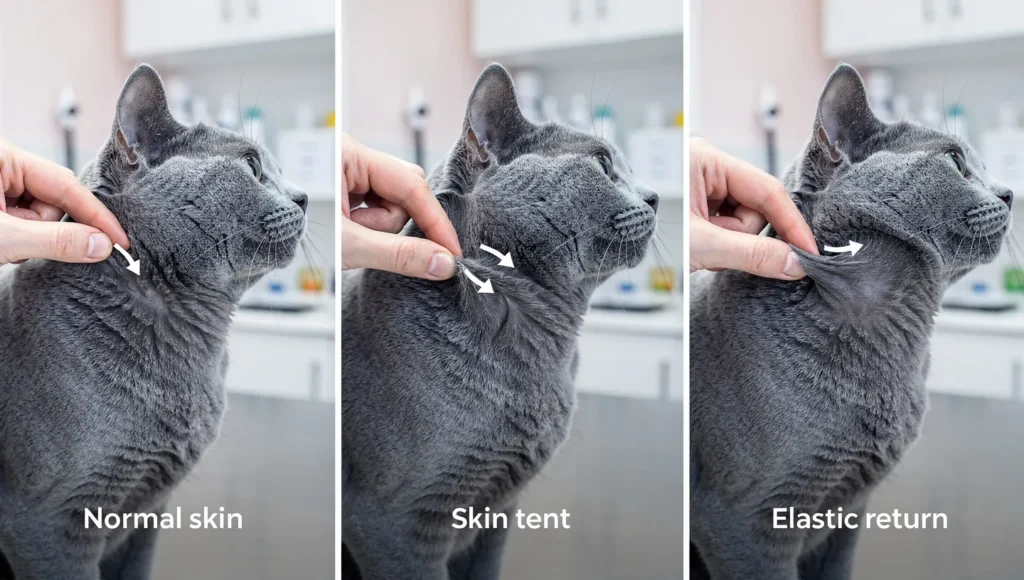
1. The Skin Tent Test (Takes 10 Seconds)
Gently pinch the skin between your cat’s shoulder blades and lift it up about an inch. Let go and watch what happens:
- Normal hydration: The skin snaps back immediately (within 1 second)
- Mild dehydration: The skin takes 2–3 seconds to flatten
- Severe dehydration: The skin stays “tented” for several seconds or doesn’t flatten at all
This works because hydrated skin is elastic. When fluids drop, skin loses that bounce-back ability.
Pro tip: Older cats naturally have less elastic skin, so this test is slightly less reliable for seniors. Combine it with other signs.
2. Capillary Refill Time (Check the Gums)
Lift your cat’s upper lip and press your finger gently against their gums until the area turns white. Remove your finger and count how long it takes for the pink color to return:
- Normal: 1–2 seconds
- Dehydrated: 3+ seconds (or gums feel dry/sticky)
Other Warning Signs of Dehydration in Cats:
✗ Sunken eyes or a “hollow” look to the face
✗ Lethargy or weakness (hiding more than usual)
✗ Dry, tacky gums instead of moist and slippery
✗ Decreased urination (smaller clumps in the litter box)
✗ Loss of appetite
✗ Panting (rare in cats—this is serious)
If your cat shows any combination of these symptoms, especially if they haven’t drunk water in 24+ hours, don’t wait. Call your vet today.
According to research from the Cornell Feline Health Center, dehydration is one of the earliest signs of chronic kidney disease in cats—a condition that affects up to 30% of cats over age 10. Catching it early can add years to your cat’s life.
Now that you know how to assess hydration status, let’s figure out why your cat refuses to drink—and what you can do about it.
🔍 Why Does My Cat Not Drink Water? 7 Proven Reasons
Now let’s get to the heart of the problem. I’ve worked with hundreds of cats who “refused” water, and in almost every case, the issue wasn’t stubbornness—it was environment, instinct, or an underlying health concern their owner didn’t recognize.
Here are the 7 most common reasons, ranked from easiest to fix to most serious:
1️⃣ Whisker Fatigue (The Bowl Problem Most Owners Miss)
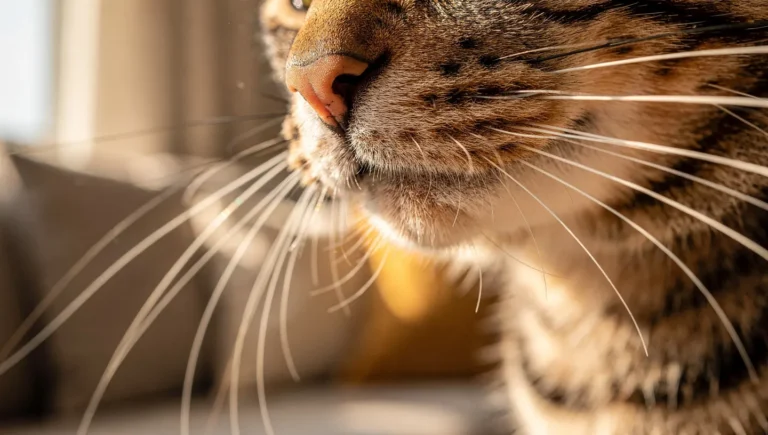
Your cat’s whiskers aren’t just cute—they’re highly sensitive tactile organs packed with nerve endings. When those whiskers repeatedly brush against the sides of a narrow or deep water bowl, it creates an uncomfortable sensation called whisker fatigue (also known as whisker stress).
Think of it like someone constantly poking your fingertips while you eat. You’d avoid that plate, right? Your cat does the same with their water bowl.
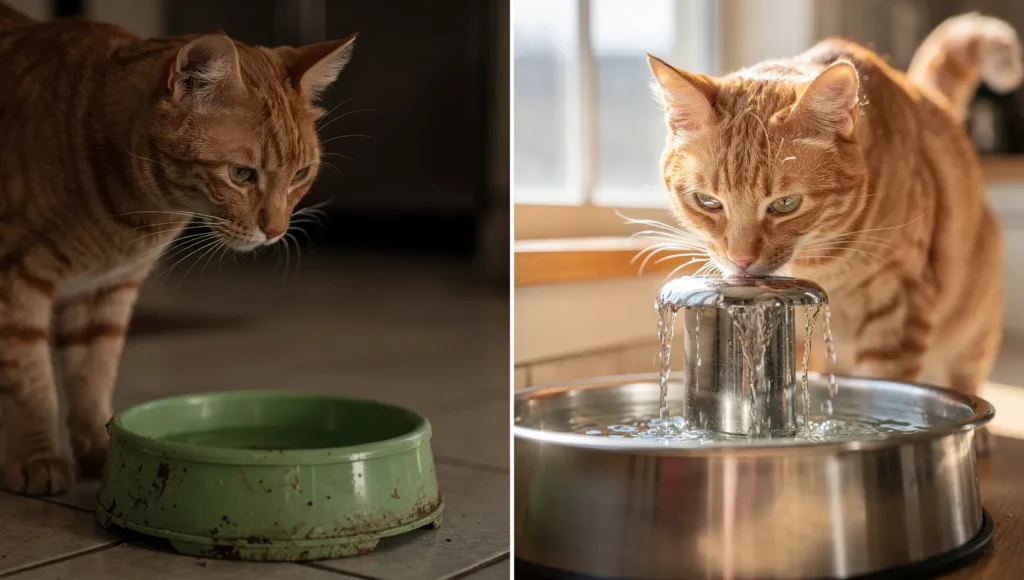
The fix is embarrassingly simple: Switch to a wide, shallow bowl—at least 5–6 inches in diameter. Ceramic or stainless steel works best (avoid plastic, which can harbor bacteria and cause chin acne).
In my experience, this one change solves the problem for about 20% of cats. I’ve seen cats who “hated” water suddenly drink normally within 24 hours of getting a proper bowl.
2️⃣ Location, Location, Location (Your Cat Hates Where You Put the Bowl)
Cats are picky about where they drink, and their preferences are rooted in survival instincts:
❌ Don’t place water near:
- The litter box (cats instinctively avoid drinking near “contaminated” areas)
- Their food bowl (in the wild, prey carcasses can contaminate water sources—cats prefer separation)
- High-traffic areas (hallways, near washing machines, or loud appliances)
✓ Do place water in:
- Quiet corners where your cat feels safe
- Multiple locations around the house (cats like options)
- Near their favorite napping spots
One trick I recommend: set up 3–4 “water stations” in different rooms. You’ll quickly discover which spot your cat prefers. Sometimes it’s that random corner in the guest bedroom you’d never expect.
3️⃣ The Water Tastes… Wrong (Chlorine, Minerals, or Stale Water)
Cats have a sense of smell 14 times stronger than humans. That “fresh” tap water you just poured? Your cat might detect chlorine, metal from old pipes, or mineral buildup—and refuse to touch it.
What I’ve seen work:
- Filtered water: Use a basic Brita pitcher or under-sink filter to remove chlorine and impurities
- Freshness matters: Change the water at least once daily (twice is better). Stale water develops a bacterial biofilm your cat can smell
- Room temperature: Some cats prefer slightly cool water; others hate it ice-cold
Here’s a test: fill one bowl with tap water and another with bottled spring water. See which one your cat drinks from first. If they consistently choose bottled, your tap water quality might be the issue.
4️⃣ Your Cat Is Getting Hydration From Food (Wet vs Dry Food)
This is the #1 reason owners panic unnecessarily. If your cat not drinking water but eating normally, check their diet first.
Wet food contains 70–80% moisture. A 10-pound cat eating 5.5 ounces of wet food daily gets about 4–4.5 ounces of water from the food alone—nearly meeting their entire hydration needs.
Compare that to dry kibble (10% moisture), which provides almost no hydration. A cat on an all-kibble diet must drink 3–4 times more water to stay healthy.
I’ve lost count of how many panicked emails I’ve received from owners whose cats “stopped drinking”—only to discover they’d recently switched to 100% wet food. Their cats were perfectly hydrated; they just didn’t need the bowl anymore.
Quick check: If your cat eats primarily wet food and pees normally (check for moist litter clumps 2–3 times daily), they’re probably fine. If they’re on dry food and ignoring water, that’s when you need to intervene. Learn more about this in our detailed guide on wet vs dry cat food.
5️⃣ Still Water = Boring (Cats Love Movement)
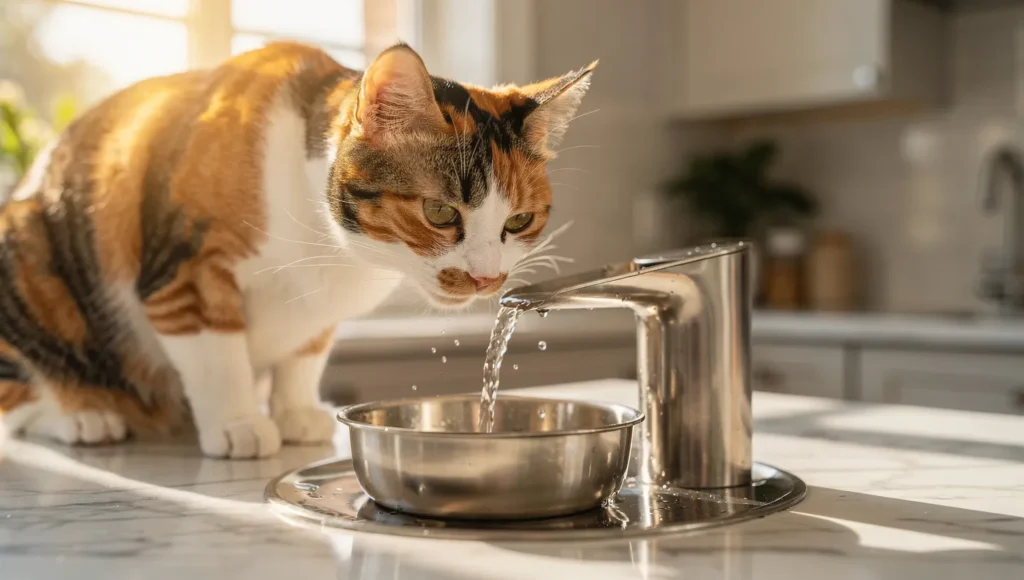
In the wild, moving water is safer than stagnant water. Flowing streams are less likely to harbor bacteria or parasites than still puddles. Your cat’s brain is hardwired to prefer motion—which is why so many cats obsess over dripping faucets, shower drains, or toilet bowls (yes, really).
The solution? A cat water fountain.
I was skeptical about fountains until I tried one with my own cats. Within 48 hours, their water intake doubled. The sound of trickling water, the ripples on the surface—it activates their prey drive and makes drinking interesting.
What to look for in a fountain:
- Quiet pump (cheap ones sound like jet engines)
- Dishwasher-safe parts
- Replaceable carbon filters
- Large capacity (60+ oz for multi-cat homes)
One client told me her senior cat, who’d barely touched water for months, now sits by her fountain “like it’s a TV show.” That’s the power of appealing to instinct.
6️⃣ Stress or Environmental Changes (The Silent Hydration Killer)
Cats are creatures of rigid routine. Any disruption—moving to a new home, a new pet, construction noise, even rearranging furniture—can trigger stress that suppresses thirst.
Common triggers I see:
- New cat or dog in the house (territorial anxiety)
- Change in work schedule (your cat misses you)
- Renovations or loud noises
- A recent vet visit (lingering fear)
If your cat stopped drinking water suddenly, think back: what changed in the past week?
How to help:
- Stick to feeding schedules religiously
- Use a pheromone diffuser like Feliway (mimics calming facial pheromones)
- Give them a “safe zone”—a quiet room with water, food, and a hiding spot
- Be patient. Stress-related drinking issues usually resolve in 3–7 days once the stressor is removed.
7️⃣ Underlying Health Issues (When to Worry)
This is the most serious category, and it’s why I always tell owners: if your cat isn’t drinking water AND showing other symptoms, see a vet immediately.
The most common medical causes:
🔴 Chronic Kidney Disease (CKD)
Affects 30–40% of cats over age 10. Ironically, cats with early kidney disease often drink less because their damaged kidneys don’t send proper thirst signals. By the time they’re visibly sick, significant damage has occurred.
Red flags: Weight loss, bad breath (uremic odor), increased urination despite low intake, vomiting.
If you have an older cat not drinking water, don’t wait. Ask your vet for a senior wellness panel (bloodwork + urinalysis). Early detection can add 2–3 quality years to their life. Our guide on senior cat hydration covers this in depth.
🔴 Urinary Tract Issues (UTI, Crystals, Blockage)
Painful urination makes cats associate their water bowl with discomfort. They drink less, which concentrates urine and worsens the problem—a vicious cycle.
Red flags: Straining in the litter box, crying while urinating, blood in urine, frequent small urinations.
🔴 Diabetes
Diabetic cats are often extremely thirsty or lose interest in water as the disease progresses. You might also notice increased appetite with weight loss.
🔴 Dental Pain
Broken teeth, gum disease, or oral tumors make drinking (and eating) painful. Cats won’t tell you their mouth hurts—they’ll just quietly stop using it.
The bottom line: If your cat refuses water for more than 24 hours, shows signs of dehydration, or has any other symptoms (lethargy, vomiting, changes in urination), call your vet that day. Kidney disease and urinary blockages can become life-threatening fast.
💡 Quick Expert Tip Box
Pro Tip from 10 Years of Cat Care:
“If your cat not drinking water but peeing normally (2–3 times daily with good-sized clumps), they’re likely getting hydration from wet food. But if urination drops or stops—even if they’re eating—call your vet immediately. Urinary blockages can kill a cat in 24–48 hours.”
I’ve seen too many owners delay because their cat “seemed fine otherwise.” Trust your instincts. When in doubt, make the call.
💧 How to Hydrate a Cat That Won’t Drink (8 Proven Strategies)
Now that you understand why your cat refuses water, let’s talk solutions. These strategies work for picky drinkers, stressed cats, and even seniors with declining thirst drives. I’ve ranked them from easiest to most effective:
1. Switch to Wet Food (or Increase the Ratio)
This is the single most impactful change you can make. A cat eating 100% wet food gets 70–80% of their hydration needs met automatically—no behavior modification required.
If your cat currently eats dry kibble, try this transition:
- Week 1: 75% dry, 25% wet (mixed together)
- Week 2: 50/50 split
- Week 3: 25% dry, 75% wet
- Week 4: 100% wet (or stay at a ratio that works for your budget)
Most cats show improved hydration within 5–7 days.
2. Add Water to Dry Food
If you’re sticking with kibble, add 2–3 tablespoons of warm water (not hot) to each meal. Let it soak for 2–3 minutes before serving. The kibble absorbs the water, and your cat gets extra hydration with every bite.
Pro tip: Start with just 1 tablespoon if your cat is skeptical of “soggy” food. Increase gradually.
3. Make Ice Cubes a Game
Some cats are fascinated by ice cubes sliding across tile floors. Drop a few cubes in a shallow bowl or on the floor and let your cat “hunt” them. As they melt, your cat licks the water—sneaky hydration in action.
Bonus: freeze low-sodium chicken broth into cubes for extra appeal.
4. Create Multiple Water Stations
Don’t rely on one bowl in one location. Set up 3–4 stations around the house:
- Near their favorite window perch
- In the bedroom where they sleep
- Far from the litter box (at least 10 feet)
- In quiet corners where they feel safe
Cats are more likely to drink when water is always conveniently available.
5. Invest in a Cat Water Fountain
I’ve mentioned this already, but it’s worth repeating: fountains are game-changers. The movement and sound trigger drinking behavior that still bowls can’t match.
Top features to prioritize:
- Quiet motor (under 30 decibels)
- Replaceable carbon filters (remove impurities and odors)
- Stainless steel or ceramic (not plastic—it scratches and harbors bacteria)
- Large reservoir (60+ oz capacity)
I recommend placing the fountain in a calm area away from food. Give your cat 2–3 days to get curious—most can’t resist investigating the sound.
6. Flavor the Water (Sparingly)
Add a teaspoon of low-sodium chicken broth or a few drops of tuna juice to their water. The scent attracts picky drinkers.
Important: Use this as a short-term trick, not a daily habit. Too much sodium stresses the kidneys. Once your cat starts drinking regularly, phase out the flavoring.
7. Use Wide, Shallow Ceramic or Stainless Steel Bowls
We covered whisker fatigue earlier, but this deserves emphasis: bowl type matters.
Avoid:
- ❌ Plastic bowls (scratch easily, harbor bacteria, cause chin acne)
- ❌ Deep, narrow bowls (whisker stress)
Choose:
- ✅ Ceramic or stainless steel (easy to clean, no odor retention)
- ✅ 5–6 inch diameter minimum
- ✅ Shallow depth (2–3 inches max)
8. Let Them Drink from the Faucet (Supervised)
I know, I know—it’s not “ideal.” But if your cat obsesses over running water and refuses their bowl, a dripping faucet might be the compromise that keeps them hydrated.
Make it work safely:
- Clean the sink basin regularly (no soap residue)
- Run the water at a slow drip (not full blast—saves water)
- Supervise initially to ensure they’re actually drinking, not just playing
One of my clients set up a “faucet time” routine twice daily for her senior cat. It became a bonding ritual—and her cat’s hydration improved dramatically.
🚨 When Should You Call the Vet? (Red Flags)
Most hydration issues resolve with environmental changes. But some situations require immediate veterinary attention. Here’s when to stop troubleshooting and pick up the phone:
🔴 Emergency (Go to Vet NOW):
- Your cat hasn’t urinated in 12+ hours (possible blockage—life-threatening)
- Straining to urinate with little to no output
- Vomiting repeatedly (3+ times in 24 hours)
- Collapse, extreme lethargy, or unresponsiveness
🟡 Urgent (Call Vet Today):
- No water intake for 24+ hours despite trying multiple strategies
- Visible signs of dehydration (skin tent test fails, dry gums, sunken eyes)
- Decreased urination (smaller litter clumps than usual)
- Weight loss combined with reduced drinking
- Bad breath or mouth pain (possible dental disease)
🟢 Monitor Closely (Schedule Vet Visit This Week):
- Gradual decrease in drinking over several days
- Senior cat (10+ years) drinking less than usual—could indicate early kidney disease
- Behavioral changes (hiding more, less active) alongside reduced water intake
How long can a cat go without drinking water? Technically, a cat can survive 3–4 days without water before organ damage occurs. But dehydration symptoms start within 24 hours, and waiting that long puts your cat at serious risk. Don’t test their limits—intervene early.
Here’s a quick reference table:
| Symptom | Severity | Action |
|---|---|---|
| No drinking 12–24 hrs + eating/peeing normally | Medium | Try strategies above, monitor closely |
| No drinking 24+ hrs + lethargic or hiding | High | Call vet today |
| No drinking + no urination or vomiting | Emergency | Go to emergency vet immediately |
| Senior cat drinking less over weeks | Medium-High | Schedule wellness exam + bloodwork |
If you’re unsure, err on the side of caution. A quick vet call costs nothing and could save your cat’s life. Learn more about recognizing early warning signs in our guide on how to tell if your cat is sick.
❓ FAQ: Your Top Questions Answered
How long can a cat go without drinking water?
A cat can technically survive 3–4 days without water before experiencing organ failure, but dehydration begins within 24 hours. Cats with underlying health issues (kidney disease, diabetes) deteriorate faster. If your cat refuses water for more than 24 hours, contact your vet—don’t wait to see how long they can “last.”
Should I force my cat to drink water?
No. Forcing water (syringe-feeding or holding them to the bowl) creates negative associations and increases stress—which can worsen the problem. Instead, use the behavioral strategies outlined above: wet food, fountains, multiple stations, and bowl adjustments. If these fail and your cat is dehydrated, your vet can administer subcutaneous fluids safely.
Is it normal for older cats not to drink water?
It’s common but not necessarily “normal” in the sense of being healthy. Senior cats often have a diminished thirst drive due to aging kidneys, medications, or chronic conditions. This is exactly why older cats are at higher risk for chronic kidney disease. If your senior cat drinks less than before, don’t assume it’s “just age”—schedule a vet check to rule out underlying issues.
Why is my cat not drinking water but eating normally?
If your cat eats wet food, they’re likely meeting most of their hydration needs through their diet. Wet food is 70–80% moisture, so minimal drinking is expected. However, if they eat dry kibble and ignore water, that’s concerning. Check for signs of dehydration and consider switching to wet food or adding water to their kibble.
Conclusion: Small Changes, Big Impact
If you’re wondering why does my cat not drink water, the answer is rarely simple—but it’s almost always fixable.
Start with the basics: check your bowl type and location. Switch to wet food if possible. Add a fountain. If your cat shows signs of dehydration or refuses water for more than 24 hours, don’t hesitate to call your vet.
Most importantly, trust your instincts. You know your cat better than anyone. If something feels off, it probably is.
With a little detective work and patience, you can turn even the most stubborn cat into a hydration success story. And when you see those litter clumps getting bigger and your cat’s energy improving, you’ll know you got it right.
Need more help? Check out our complete cat hydration guide for advanced strategies and troubleshooting tips.