

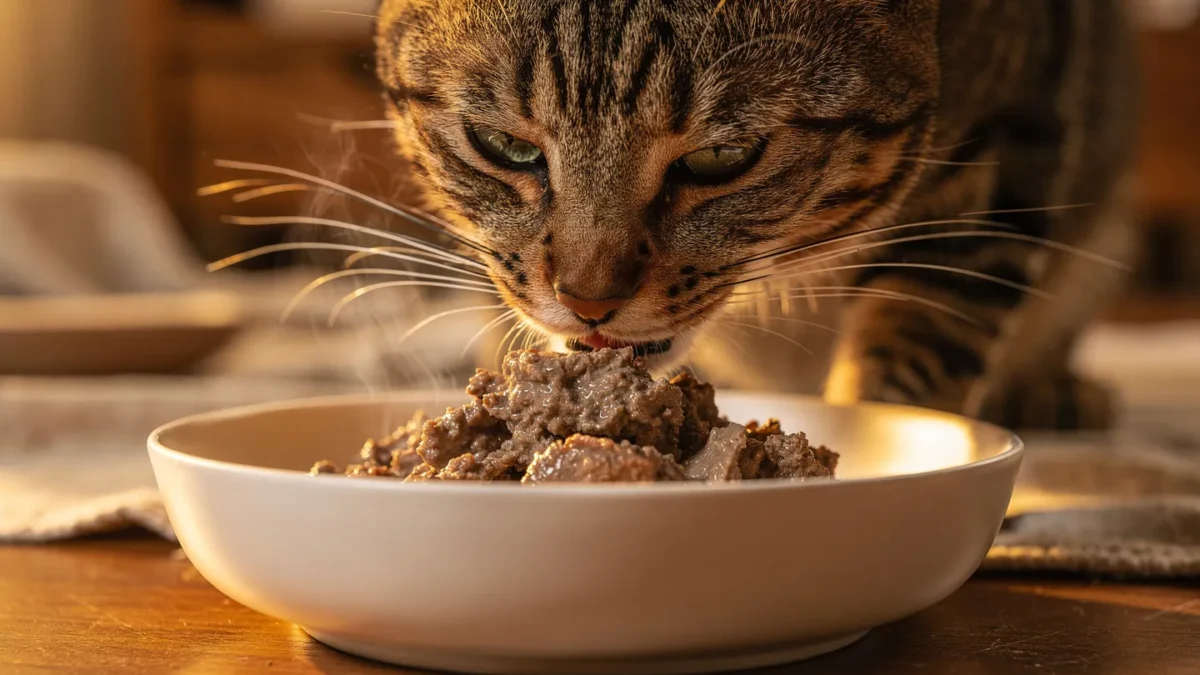
Luna went on strike.
Full hunger strike. Sat next to her bowl of kibble, looked me dead in the eyes, and walked away. No drama, no meowing — just pure, silent judgment.
Meanwhile, at the office the next day, I vented to my coworker Dave, who swore dry food is “basically cat pizza — they love it.” Marcus jumped in saying wet food is the only real option. And Lena, who owns three cats, just put her head on the desk and muttered “I’ve tried everything.”
Then I called Dr. Sami — our vet — and asked him straight up about wet vs dry cat food. He said something that stuck with me:
“You’re probably not ruining your cat’s health. But you may be missing one important thing.”
That one sentence sent me down a rabbit hole. And honestly? What I found surprised me.
Quick heads-up: This article is based on personal experience and research from trusted sources. It’s meant for informational purposes only and is not a substitute for professional veterinary advice. When in doubt, always check with your vet.
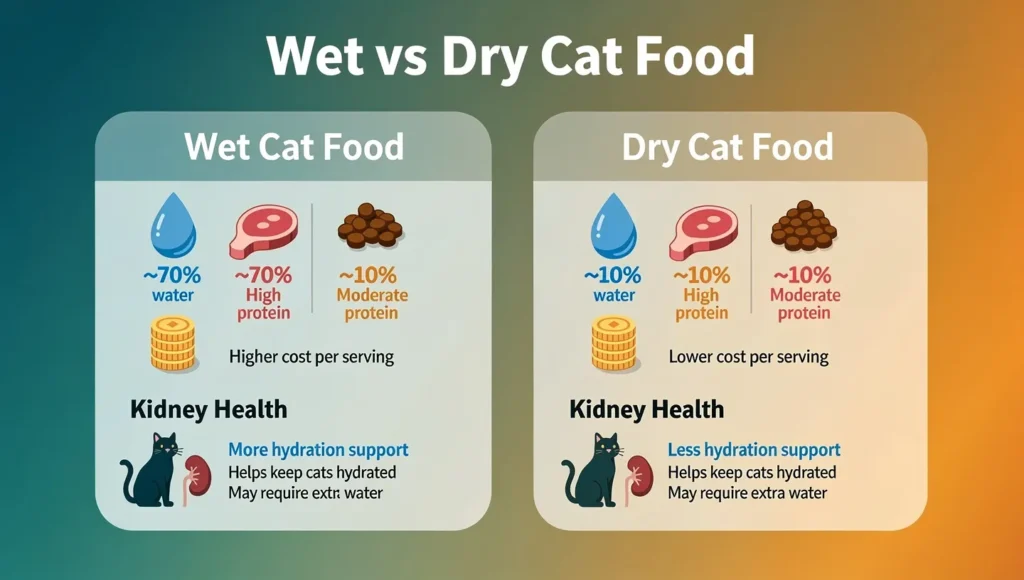
Table of Contents
- Is Wet Food or Dry Food Better for Cats?
- Wet vs Dry Cat Food — The Real Comparison
- Myth Busting — Does Dry Food Really Clean Your Cat’s Teeth?
- The Guilt Nobody Talks About
- Your 2026 Decision Framework — What’s Actually Right for YOUR Cat
- The Hybrid Feeding System — Smart Mixing Done Right
- The Morning Routine
- The Evening Ritual
- The Golden Calorie Rule
- Feeding by Life Stage — Real Scenarios
- 🍼 Kittens
- 🧓 Senior Cats
- 🤢 Sensitive Stomachs
- FAQ — Every Burning Question Answered
- Can cats eat wet and dry food together?
- Wet vs dry cat food — which is harder on the kidneys?
- How often should I feed my cat wet food?
- What are the disadvantages of wet cat food?
- Do cats actually need dry food?
- So — Kibble Addict or Wet Food Fanatic?
Is Wet Food or Dry Food Better for Cats?
Neither is universally “better” — it depends on your cat’s health, hydration habits, and life stage. That said, most vets lean toward wet food as the foundation, especially for hydration and kidney health, with dry food playing a supporting role when chosen carefully.
Wet vs Dry Cat Food — The Real Comparison
Okay, let’s actually look at what’s inside the bag versus what’s inside the can.
| Wet Food | Dry Food | |
|---|---|---|
| Water Content | 70–80% | 8–10% |
| Calories (per oz) | Lower | Higher |
| Monthly Cost | Higher | Lower |
| Shelf Life (once opened) | 30–60 min | 1–2 days |
| Kidney & Urinary Health | ✅ Excellent | ⚠️ Needs attention |
| Stool Odor | Stronger | Milder |
| Convenience | Lower | Higher |
| Dental Benefit | Minimal | Also minimal (yes, really) |
Here’s what that wet vs dry cat food table actually means in real life:
Hydration is the big one. Cats evolved as desert animals. Their thirst drive is naturally low — which means they were designed to get most of their water from food, not from a bowl. Wet food mimics that. Dry food… doesn’t.
This is why cats on a dry-only diet are quietly at higher risk for urinary issues and kidney problems over time. It’s not a guarantee they’ll get sick — but it’s a real risk worth knowing about. If your cat already drinks very little water, this matters even more.
You can read more about this in our full Cat Hydration Guide — it covers everything from testing hydration at home to getting stubborn cats to drink more.
Cost is real, but so is the trade-off. Wet food costs more. There’s no getting around it. But it also tends to be more filling per calorie, which means your cat may actually eat less of it. For a weight management perspective? That’s not nothing.
Convenience goes to dry food — obviously. You can fill a bowl in the morning and not stress. Or use an automatic feeder. It doesn’t spoil sitting out all day. For people with busy schedules, that matters.
Personally? I use both. But more on that in a bit.
If you’re already feeding dry and wondering which brands are actually worth it, check out our Best Dry Cat Food Brands guide — it breaks down the labels, the fillers, and the ones that actually deliver quality protein.
Myth Busting — Does Dry Food Really Clean Your Cat’s Teeth?
Oh, this one. This one drives me crazy.
You’ve probably seen it on packaging — “supports dental health!” And look, I understand why pet food companies say it. It sounds logical: crunchy food = scrubbing = cleaner teeth. Makes sense, right?
Except… not really.
Here’s the thing. Most cats don’t actually chew their kibble enough for any scrubbing to happen. They tend to crack it and swallow. And even if they do crunch it, the kibble mostly hits the tips of the teeth — not the gumline, which is where dental disease actually starts.
Think about it this way: if someone told you that eating crackers was a substitute for brushing your teeth, you’d laugh. Same principle.
According to the AVMA, dental disease affects the majority of cats over age three — regardless of whether they eat wet or dry food.
Most people get this wrong. And honestly, the marketing around “dental kibble” has done a lot of cats a quiet disservice.
The real solution for dental health? Actual brushing, dental treats designed specifically for it, or regular vet cleanings. We go deep on all of this in our Cat Dental Care Guide.
The Guilt Nobody Talks About
Can I be honest for a second?
A lot of cat owners — myself included, at some point — feel genuinely bad about feeding dry food. Like they’re somehow failing their cat. You read one article that says wet food is essential, and suddenly every scoop of kibble feels like a moral failure.
And then there’s the opposite: people who spent years feeding only wet food, convinced they were doing everything right, only to find out their cat gained too much weight because they were overfeeding without realizing it.
Both camps carry this quiet guilt. And it’s exhausting.
Here’s what I want you to hear: if you’re reading this article, you already care more than most. The fact that you’re even asking the question puts you ahead of a huge percentage of cat owners who just pour whatever’s cheapest into a bowl without a second thought.
Feeding a cat well on a budget is absolutely doable. It’s not about spending the most — it’s about spending smart. Our Best Affordable Cat Food guide is basically a roadmap for exactly that situation. Real quality, real nutrition, without draining your wallet every month.
You’re not failing your cat. You’re figuring it out. That counts.
Your 2026 Decision Framework — What’s Actually Right for YOUR Cat
This is where things change.
Instead of telling you “wet food is better” and calling it done, let’s actually figure out what works for your specific cat. Because a senior cat with kidney issues and a healthy two-year-old indoor cat have completely different needs.
| If your cat… | The best approach |
|---|---|
| Rarely drinks water / has UTI history | Wet food as the primary diet |
| Is overweight or mostly indoor | Wet food (high protein, low carbs) |
| You’re on a tight budget | Smart hybrid — wet + quality dry |
| You work 10–12 hours a day | Quality dry + automatic feeder |
| Is a senior (7+ years) or has kidney issues | Wet food as the foundation |
| Is a picky eater who ignores wet food | Start with toppers, transition slowly |
Honestly, most cats fall somewhere in the middle — and that’s exactly why the hybrid approach exists.
A few quick notes on the table above:
If your cat has ever had a UTI or urinary crystals, wet food isn’t optional — it’s genuinely important. The extra hydration helps flush the system and keeps things moving the way they should. Our Signs of UTI in Cats article covers the warning signs most owners miss until it’s already a problem.
If you’re gone most of the day, dry food with an automatic feeder is a totally reasonable solution — as long as the kibble quality is decent. Not all dry food is created equal. Check out our Automatic Cat Feeder Guide if you want to know which feeders actually work and which ones jam at 6am and leave your cat staring at an empty bowl.
And if your cat is indoor-only and not very active? Calories matter more than you think. Indoor cats burn less, which means the calorie-dense nature of dry food can quietly lead to weight gain over months. Our Best Cat Food for Indoor Cats guide goes into exactly this.

The Hybrid Feeding System — Smart Mixing Done Right
This is the part I wish someone had told me years ago.
The hybrid approach to wet vs dry cat food isn’t a compromise. When done right, it’s actually the smartest feeding strategy for most healthy adult cats. You get the hydration benefits of wet food and the convenience of dry, without breaking the bank or your cat’s kidneys.
Here’s how I do it. And yes, this is literally my actual routine with Luna.
The Morning Routine
Dry food goes in the automatic feeder, set to dispense a measured portion in the morning. Luna gets her kibble while I’m still half-asleep, nobody has to suffer. The key word there is measured — not a full bowl, a portion. This is important.
The Evening Ritual
This is the one I actually look forward to. A small portion of wet food, served around dinnertime. Luna goes from “cat who tolerates me” to “cat who actually seems happy to see me.”
And this is important — the evening wet food feeding isn’t just about nutrition. It’s interaction time. You open the can, she comes running, you put it down, she eats while you watch. It sounds small, but it genuinely matters for the bond. Cats are routine creatures, and a predictable positive moment every evening builds trust over time.
The Golden Calorie Rule
Here’s where most people mess up the hybrid approach: they add wet food on top of the normal dry food amount instead of adjusting. Then wonder why their cat is gaining weight.
The fix is simple. Add up the total daily calories your cat needs — generally around 20 calories per pound of body weight for an average indoor cat — and split that between wet and dry. Don’t double it.
If the wet food is, say, 30 calories per ounce and you’re giving 2 ounces at dinner, that’s 60 calories accounted for. Subtract that from the dry food amount for the day. Done.
For a deeper dive into label reading and calorie math, our Cat Food Labels Guide breaks it down without making your brain hurt. And if weight is already a concern, the Cat Weight Loss Guide has a full calculator system you can use at home.
Feeding by Life Stage — Real Scenarios
Because what works for a kitten is not what works for a ten-year-old cat with a sensitive stomach. Life stages matter more than most feeding guides admit.
🍼 Kittens
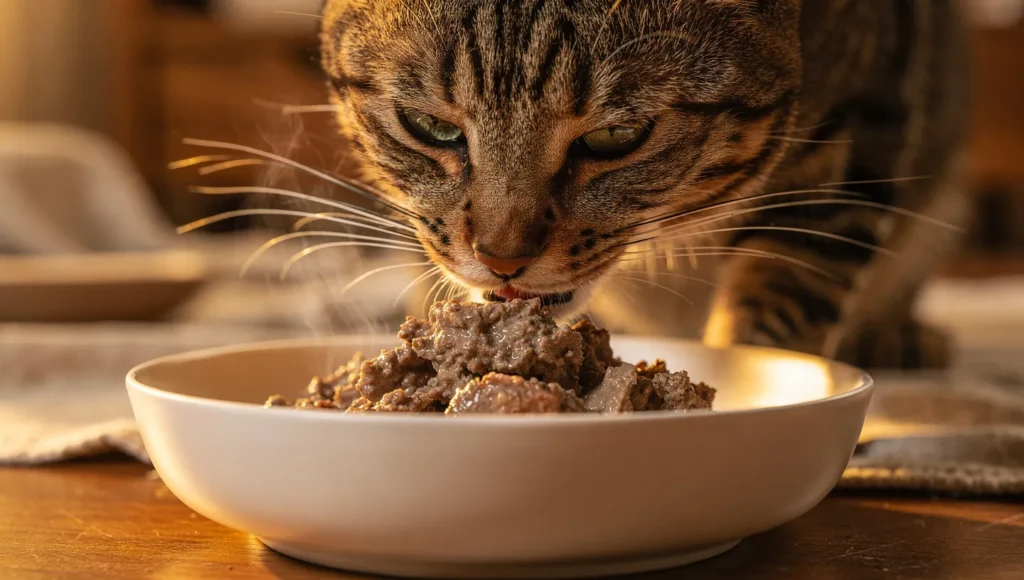
Kittens need a lot of protein and calories. Their bodies are building muscle, bone, and organ tissue — they’re basically in construction mode 24/7. Wet food is especially helpful here because it’s easy to eat, easy to digest, and supports the hydration habits you want them to develop early.
One thing most people don’t think about: variety early on matters. Kittens who only ever eat one texture or one protein source can become extremely picky as adults — refusing anything outside that narrow experience. It’s called food neophobia, and it’s a real headache once it sets in. Introduce different textures and proteins while they’re young and open to it.
For exact feeding amounts by age and weight, our How Much to Feed a Kitten chart is probably the most practical resource on the site. And if you want the best canned options specifically for kittens, High Quality Canned Kitten Food covers the label secrets most brands hope you don’t notice.
🧓 Senior Cats
Once a cat hits around seven or eight years old, the kidneys start to become a priority. Not because they’re necessarily sick — but because kidney function naturally decreases with age, and hydration becomes the single most protective thing you can do.
Wet food as the primary diet for senior cats isn’t just a recommendation — it’s something most vets will tell you unprompted if you ask. The water content alone makes a measurable difference in how hard the kidneys have to work.
Our Senior Cat Care Guide goes into the full picture — hydration strategies, specialized diets, and the signs that a senior cat’s needs are changing.
🤢 Sensitive Stomachs
This one I have personal experience with. Luna went through a phase — about four months of on-and-off vomiting — that turned out to be a protein sensitivity. The fix was switching to a single-protein wet food with a short ingredient list.
For sensitive stomach cats, the general rule is: fewer ingredients, cleaner protein, no mystery fillers. Wet food tends to win here because it’s easier to find limited-ingredient options that don’t cost a fortune. Our Best Cat Food for Sensitive Stomach guide covers exactly what to look for and what to avoid.
FAQ — Every Burning Question Answered
Can cats eat wet and dry food together?
Yes, absolutely. Mixing them in the same bowl is fine as long as you’re watching total calorie intake. Some cats actually prefer the texture combo — the kibble adds a little crunch to the wet food, which they seem to enjoy.
Wet vs dry cat food — which is harder on the kidneys?
Not inherently bad, but it does put more pressure on the kidneys over time simply because cats aren’t getting enough water from it. For a healthy cat who drinks well, it’s manageable. For a cat who barely touches the water bowl, it’s worth paying attention to. Our Why Does My Cat Not Drink Water article has some practical fixes if that sounds familiar.
How often should I feed my cat wet food?
Most cats do well with wet food once or twice a day. If budget is a concern, even once a day — especially in the evening — makes a real difference compared to zero.
What are the disadvantages of wet cat food?
Cost, shelf life, and smell are the main ones. Once opened, wet food needs to be refrigerated and used within 24 hours. It also smells stronger, which some owners find unpleasant. And yes, it costs more per meal than dry food.
Do cats actually need dry food?
No, not technically. Cats can thrive on a wet-food-only diet if it’s nutritionally complete. Dry food is convenient and cost-effective, but it’s not a biological necessity.
So — Kibble Addict or Wet Food Fanatic?
Luna eventually came around. Not to the kibble — she’s still deeply unimpressed by it. But to the routine. Dry food in the morning through the feeder, a small can of something good in the evening, and one cat who has apparently decided I’m acceptable company.
Dave still insists dry food is fine. Marcus still says wet is the only real option. And Lena? She texts me occasionally with updates on her three cats’ latest food drama.
The honest answer to the wet vs dry cat food question is: it’s not one or the other. It’s about knowing your cat, understanding what she actually needs, and building a routine that works for both of you — without guilt, without overthinking, and without spending your rent money on premium pâté.
If this helped you figure out even one thing about your cat’s diet, I’d love to hear what your cat is currently eating — and whether they’re being dramatic about it. Drop a comment below.
Seriously. Tell me I’m not alone with the hunger strike thing. 🐱