
Why does my cat throw up after eating, especially right after meals, and should you be worried?
Gag… gag… heaving.
It’s 3 a.m. The house is quiet. Then that sound hits your ears—the one every cat owner knows too well. You jump out of bed already thinking, “Please not the carpet. I just cleaned it.”
A few seconds later, there it is. Food on the floor. Again.
If your cat regularly throws up right after eating, it’s frustrating, exhausting, and honestly a little scary. You start wondering if you’re doing something wrong—or worse, if something is seriously wrong with your cat.
Here’s the good news: not all “throwing up” is the same, and many cases are far less serious than they look. According to the
Cornell Feline Health Center,
distinguishing between types of vomiting is the key to knowing what you’re actually seeing.
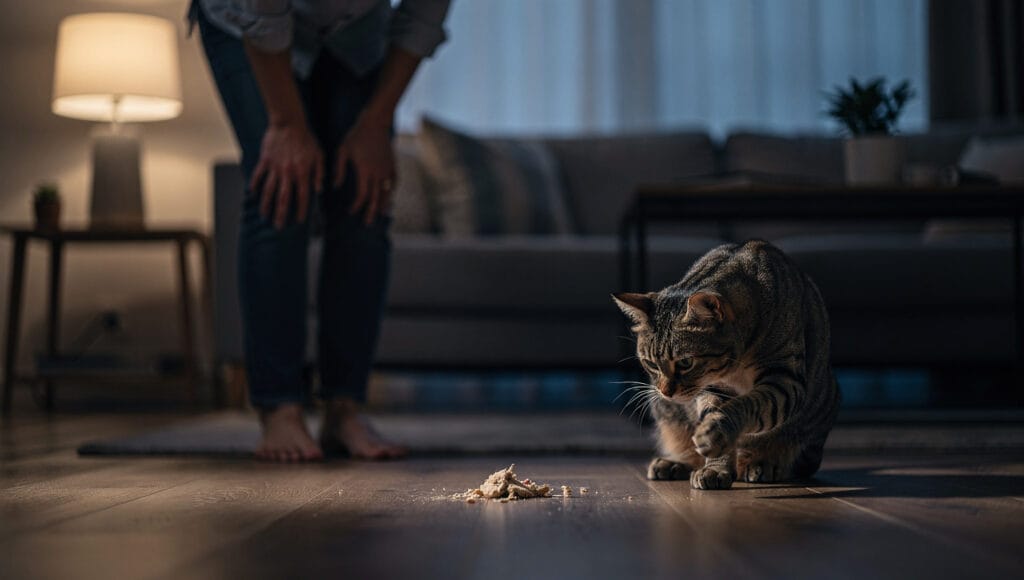
Cat owner discovering a mess on the carpet, wondering why their cat throws up after eating
Table of Contents
- Regurgitation vs. Vomiting — They Are NOT the Same Thing
- What Is Regurgitation in Cats?
- What Is Vomiting in Cats?
- Why Does My Cat Throw Up After Eating? The Most Common Reasons
- Eating Too Fast (“Scarf and Barf”)
- Hairballs
- Food Intolerance or Rapid Diet Changes
- Red Flags — When Vomiting Is NOT Normal
- Frequency Matters
- Concerning Appearance
- Dangerous Behavioral Changes
- Serious Causes
- What You Can Do Today — Practical Solutions That Work
- 1. Use a Slow Feeder Bowl (A True Game-Changer)
- 2. Brush Your Cat More Often
- 3. Follow the “7-Day Switch” Rule
- Frequently Asked Questions (FAQ)
- Is it normal for cats to throw up after eating?
- Why does the vomit look like a sausage?
- Can dry food cause vomiting?
Regurgitation vs. Vomiting — They Are NOT the Same Thing
This distinction matters more than most cat owners realize. Regurgitation and vomiting look similar on the floor, but inside your cat’s body, they are very different events.
What Is Regurgitation in Cats?
Regurgitation is passive. There is no stomach effort involved. The food comes back up because it never really made it to the stomach in the first place.
* Appearance: Undigested, shaped like a tube or sausage.
* Timing: Happens immediately or within minutes after eating.
* Cause: Often caused by eating too fast.
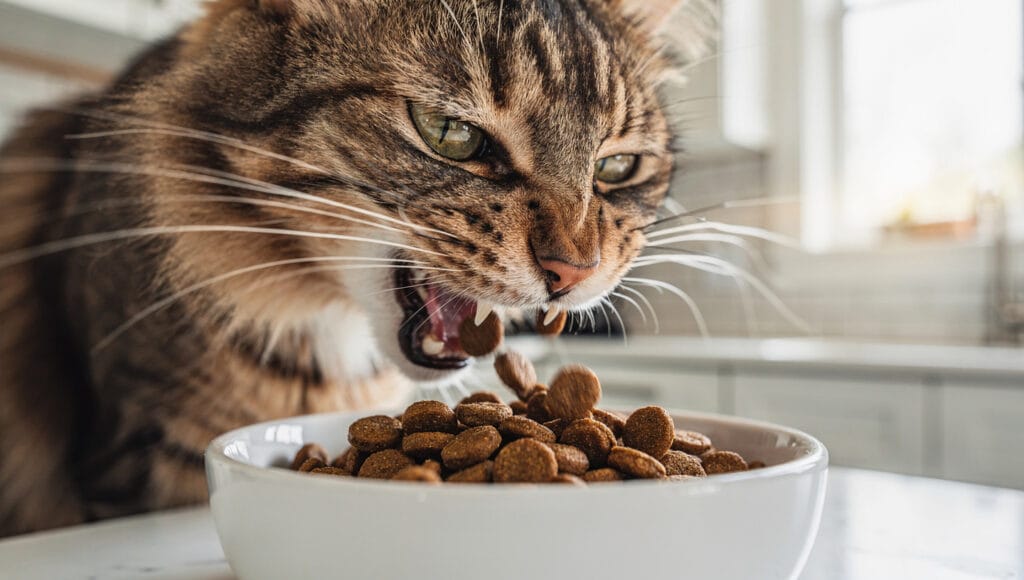
Cat eating dry food too quickly, which causes regurgitation and vomiting
What Is Vomiting in Cats?
Vomiting is active and involves the stomach. You’ll usually see clear signs that your cat feels unwell before anything comes up.
* Appearance: Partially digested, liquid, foamy, or mixed with bile.
* Timing: Happens later after eating (sometimes hours).
* Signs: Gagging, retching, and visible stomach contractions.
Quick Check:
* Tube shape + No effort = Regurgitation (Usually manageable).
* Liquid/Bile + Heaving = Vomiting (Potentially medical).
Why Does My Cat Throw Up After Eating? The Most Common Reasons
In most healthy cats, the cause is usually simple—and fixable. Many cat owners wonder why does my cat throw up after eating even when the food and routine seem normal.
Eating Too Fast (“Scarf and Barf”)
This is the most common reason cats bring food back up after meals. When a cat eats too fast, they swallow large amounts of air and unchewed food. The stomach expands too quickly, and the body rejects it. This is classic regurgitation.
Hairballs
Cats are meticulous groomers. Every lick pulls loose fur into the mouth. When hair builds up, it irritates the stomach and triggers vomiting.
Hairballs often bring food with them. You can also understand related behaviors by reading
Why Do Cats Knead?,
since grooming and comfort behaviors are closely connected.
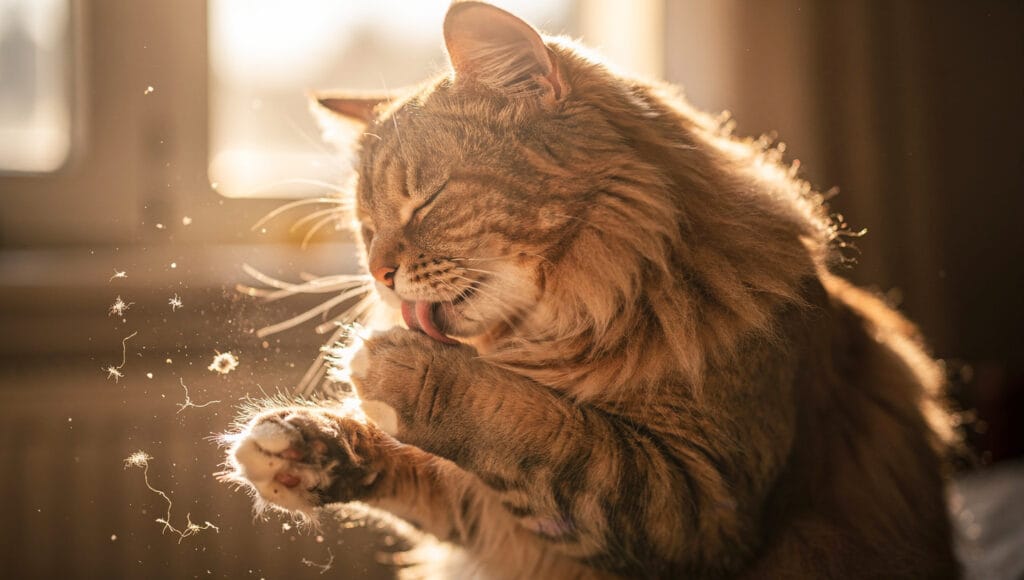
Long-haired cat grooming itself, leading to hairballs and stomach irritation
Food Intolerance or Rapid Diet Changes
Cats have sensitive stomachs. Switching brands suddenly without a transition period is a major trigger. This is closely related to what cats should and should not eat, which is explained in
What Can Cats Eat?.
Red Flags — When Vomiting Is NOT Normal
Occasional vomiting can happen. But there are clear moments when it becomes a medical warning.
Frequency Matters
A cat that throws up once a month may be fine. But vomiting multiple times a day or daily is NOT normal.
Concerning Appearance
Seek veterinary care immediately if you see:
* Blood (bright red or coffee-ground appearance).
* Foreign objects (string, plastic, toys).
Dangerous Behavioral Changes
Contact a vet urgently if your cat is lethargic, hiding, or losing weight. Behavioral stress signals can also appear in body language, which you can learn in
Cat Tail Language: The Ultimate Guide.
Serious Causes
* Poisoning: Plants, chemicals, or meds. (Check the
ASPCA Animal Poison Control
list if you suspect a toxin).
* Intestinal Blockage: Swallowed strings or toys can block the intestines, requiring emergency surgery.
What You Can Do Today — Practical Solutions That Work
In many cases, small changes at home can make a big difference.
1. Use a Slow Feeder Bowl (A True Game-Changer)
If your cat eats like a vacuum cleaner, this is the solution. A slow feeder bowl forces your cat to pause between bites, reducing swallowed air.
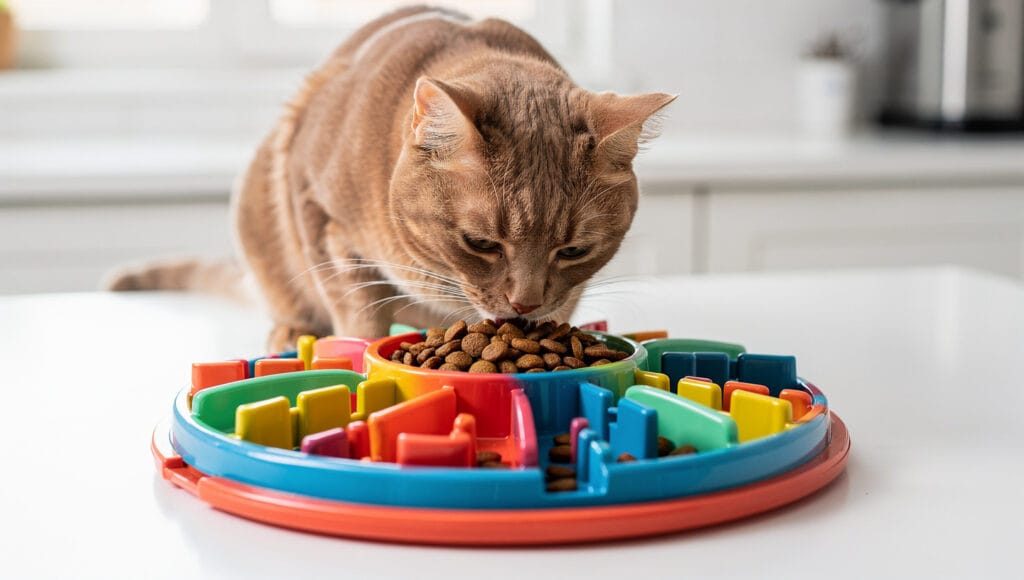
Using a slow feeder bowl to help a cat eat slowly and prevent vomiting
2. Brush Your Cat More Often
Hairballs don’t start in the stomach; they start on the coat. Regular brushing removes loose fur before it’s swallowed.
3. Follow the “7-Day Switch” Rule
Any time you switch food, mix it gradually:
* Days 1–2: Mostly old food.
* Days 3–4: 50/50 mix.
* Days 5–7: Mostly new food.
Frequently Asked Questions (FAQ)
Is it normal for cats to throw up after eating?
Occasional vomiting (once every few weeks) can happen. But daily vomiting is NOT normal and should be checked by a vet.
Why does the vomit look like a sausage?
That tube shape is a classic sign of regurgitation. It means the food came back up undigested, usually because your cat ate too fast.
Can dry food cause vomiting?
Yes. Dry food expands in the stomach by absorbing moisture. If eaten quickly, it can cause immediate regurgitation. Understanding why does my cat throw up after eating helps you respond calmly and protect your cat’s long-term health.
In most cases, when a cat throws up after eating, the cause is simple: eating too fast, hairballs, or a sudden food change.
The key is learning to spot the difference between regurgitation and vomiting and watching for red flags. With a few smart tweaks like a slow feeder or better grooming, your carpet—and your cat—will be safe again.