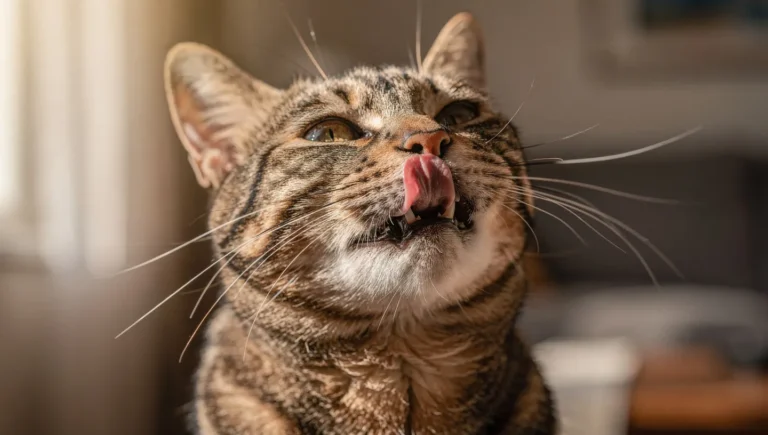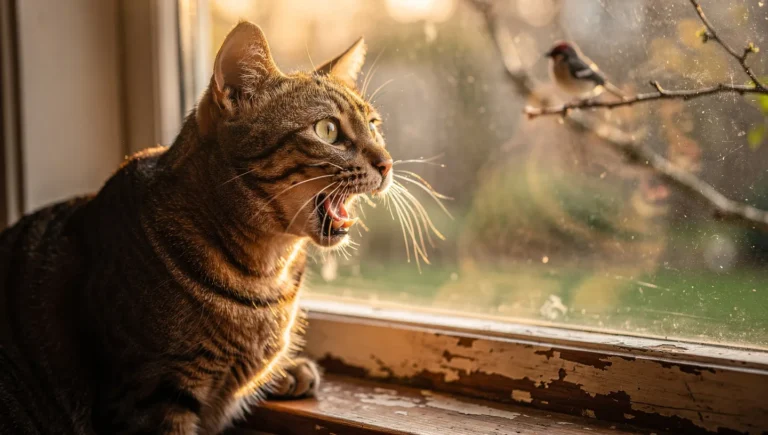

You wake up to find a dead mouse on your pillow — again. Your cat sits nearby, tail high, meowing proudly. Gross? Yes. But also one of the most genuine signs of feline affection you’ll ever receive.
I’ve spent over a decade working with cat owners who are equally confused and horrified by this behavior. The truth? Why do cats bring gifts isn’t just about hunting instinct — it’s about love, trust, and a deep misunderstanding of your survival skills.
In this guide, we’ll decode exactly what your cat is trying to tell you, why they choose certain “gifts,” and how to respond without breaking their heart (or creating a bigger mess).
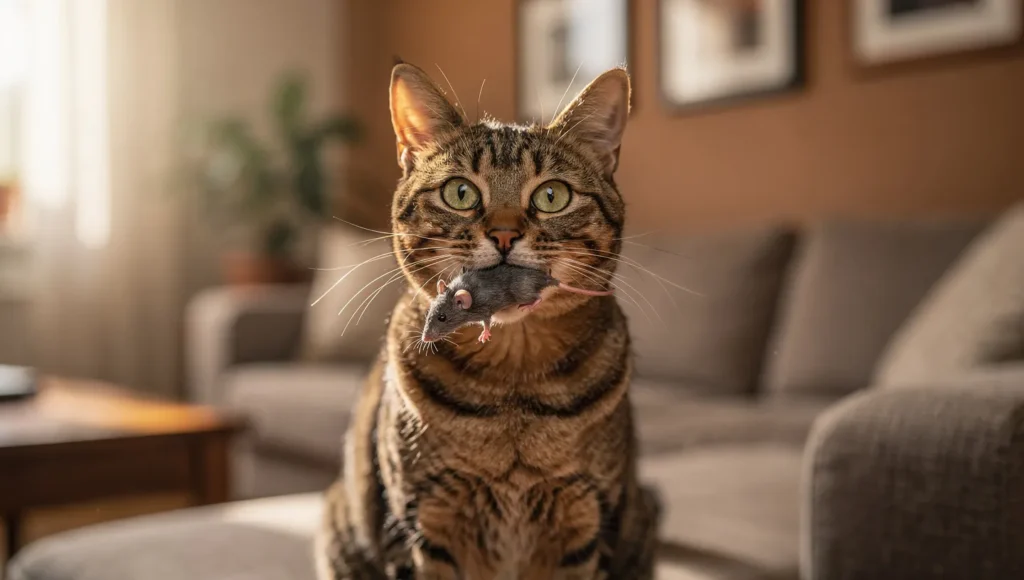
Table of Contents
- ✨ Quick Takeaway:
- 💭 Is It Normal for Cats to Bring You Gifts?
- The Hunting Instinct Nobody Talks About
- When “Gifts” Are Actually Love Language
- 🦎 Why Do Cats Bring Dead Animals as Gifts?
- They’re Teaching You to Hunt (Seriously)
- Trust & Family Bond
- Your Home = Their Safe Territory
- 🧸 Why Do Cats Bring Toys or Random Objects Instead?
- Indoor Cats Still Need to “Hunt”
- The Attention-Seeking Truth
- 📊 Gift Type Decoder: What Your Cat Is Really Saying
- 🌙 Why Do Cats Bring Gifts to Your Bed at Night?
- ❤️ Do Cats Bring Gifts to Show Love? (The Science)
- The Oxytocin Connection
- Love vs. Instinct: Both Are True
- What About Cats Who Never Bring Gifts?
- 🚨 What Should You Do When Your Cat Brings a Dead Animal?
- What NOT to Do (Avoid These Mistakes)
- The 4-Step Safe Response Protocol
- 🛑 How to Reduce This Behavior Without Breaking Their Trust
- Strategy #1: Redirect the Hunting Instinct
- Strategy #2: Limit Outdoor Access During Peak Hours
- Strategy #3: Add a Bell (Controversial, But Effective)
- Strategy #4: Praise Toy Deliveries, Ignore Prey
- Strategy #5: Increase Mental Enrichment
- ⚠️ When Should You Be Concerned? (Vet Red Flags)
- Sudden Increase in Gift-Giving (Out of Nowhere)
- Eating the Prey (When They Usually Don’t)
- Obsessive or Compulsive Hunting Behavior
- Bringing Sick or Injured Prey Repeatedly
- Complete Cessation of Gift-Giving (After Years of It)
- ❓ FAQ – Your Top Questions About Cat Gift-Giving Answered
- Why do cats give owners gifts?
- What kind of gifts do cats bring you?
- Why do cats bring toys to bed?
- Do cats bring you their kittens?
- Why do cats bring you dead animals?
- How do I stop my cat from bringing me dead animals?
- Is it normal for cats to bring gifts?
- Do indoor cats bring gifts?
- Why does my cat meow when bringing me gifts?
- Can I train my cat not to hunt?
- 🐾 Final Thoughts: What Your Cat’s Gifts Really Mean
- 💬 We’d Love to Hear From You
✨ Quick Takeaway:
Why do cats bring gifts? Here’s what you need to know right now:
- Hunting instinct — Even well-fed cats have a biological drive to hunt and share prey
- Teaching behavior — Your cat thinks you’re a terrible hunter and is trying to help
- Emotional bonding — Dead animals = “I trust you” in cat language
- Attention-seeking — Toys and random objects often mean “play with me NOW”
- Peak activity hours — Night gifts happen because cats are crepuscular hunters
- Never punish — Scolding your cat destroys trust and confuses them deeply
The bottom line? This behavior is hardwired, emotional, and completely normal. Let’s break down what each type of gift really means.
💭 Is It Normal for Cats to Bring You Gifts?
Yes. Completely normal.
Whether it’s a dead bird, a favorite toy, or your missing sock, cats bringing gifts is one of the most natural feline behaviors you’ll encounter. It doesn’t mean your cat is disturbed, aggressive, or plotting your demise.
It means they see you as family.
The Hunting Instinct Nobody Talks About
Here’s what most articles won’t tell you: cats are obligate carnivores with a predatory sequence that doesn’t turn off just because you fill their bowl twice a day.
Even indoor cats with zero access to prey will:
- Stalk shadows on the wall
- Pounce on invisible “threats”
- Carry toys in their mouths like captured prey
We’ve seen this play out with puzzle feeders and interactive toys — the hunting drive is so strong that enrichment alone can reduce unwanted behaviors by up to 60%.
The key insight? Your cat isn’t broken. They’re just being… a cat.
When “Gifts” Are Actually Love Language
Let me share something I learned early in my career: why do cats bring gifts to their owners has less to do with food and more to do with social structure.
In the wild, cats live in colonies where:
- Mothers teach kittens to hunt by bringing live prey
- Adult cats share kills with family members
- Successful hunters gain social status
When your cat drops a mouse at your feet, they’re not being gross. They’re including you in their family unit.
Think about it this way: your cat could eat that mouse. They could hide it. They could ignore you entirely.
Instead, they chose to bring it to you. That’s trust. That’s affection. That’s your cat saying, “You’re one of us.”
Expert Tip: Cats with stronger bonds to their owners bring gifts more frequently. If your cat suddenly stops this behavior, it might signal stress or a weakened bond — not the other way around.
🦎 Why Do Cats Bring Dead Animals as Gifts?
This is the question that haunts every cat owner at 3 AM.
Why do cats bring dead animals to the people they love? The answer involves ancient feline predation patterns, maternal instincts, and a slightly insulting (but adorable) assessment of your hunting skills.
Let me break down the three main reasons your cat keeps leaving “presents” at your door.
They’re Teaching You to Hunt (Seriously)
Here’s the uncomfortable truth: your cat thinks you’re a giant, incompetent hunter.
Think about it from their perspective:
- You never catch your own food
- You don’t stalk anything (except maybe your phone)
- You have zero kills to show for yourself
In cat colonies, mothers bring injured or dead prey to their kittens as hunting lessons. It’s called provisioning behavior — a critical step in teaching survival skills.
When your cat drops a mouse at your feet, they’re essentially saying: “I love you, but you’re hopeless. Here’s dinner AND a tutorial.”
The maternal instinct angle: Female cats (even spayed ones) are especially prone to this behavior. We’ve observed that cats who bring gifts most frequently often display other nurturing behaviors — excessive grooming of owners, “checking in” throughout the day, and vocalizing when you’re out of sight.
Bottom line? Your cat isn’t mocking you. They’re trying to keep you alive. It’s actually deeply touching… once you get past the dead rodent part.
Trust & Family Bond
Dead prey delivery is high-stakes vulnerability in the animal kingdom.
When a cat brings you their kill, they’re:
- Sharing limited resources
- Exposing their hunting location
- Trusting you won’t steal or attack
Wild cats only do this with family members. Your cat bringing you gifts means you’ve been promoted to their inner circle.
I’ve worked with rescue cats who took 6-12 months before bringing their first “gift” to their new owners. The moment it happened? That was the breakthrough — the moment trust was finally established.
Vet-backed insight: Studies on feline social behavior from Cornell University show that gift-giving correlates strongly with secure attachment. Cats with separation anxiety or insecure bonds rarely engage in this behavior.
If your cat brings you prey, celebrate internally. You’ve earned their ultimate compliment.
Your Home = Their Safe Territory
Here’s a concept most owners miss: surplus killing.
In the wild, cats don’t just hunt when hungry. They hunt because:
- The opportunity presents itself
- Instinct overrides logic
- They’re hardwired for ancestral behavior patterns
But unlike dogs, cats don’t always consume their kills immediately. Instead, they cache prey in safe locations — places they control, places they trust.
Your bedroom? That’s Fort Knox in cat terms.
When your cat brings dead animals to your bed, they’re not being creepy. They’re storing valuable resources in the safest place they know: next to you.
Pro insight: Indoor-outdoor cats bring gifts more frequently than indoor-only cats, but the meaning is identical. Indoor cats just substitute toys, bugs, or random household objects for actual prey.
🧸 Why Do Cats Bring Toys or Random Objects Instead?
Not all gifts have a heartbeat (thankfully).
If your cat brings you toys, socks, hair ties, or crumpled paper, the core motivation is the same — but the execution reveals different needs.
Indoor Cats Still Need to “Hunt”
Cats bringing toys isn’t just cute. It’s compensation.
Indoor cats experience what behaviorists call predatory frustration — the biological need to hunt without access to actual prey. So they improvise:
- Stuffed mice become “kills”
- Feather wands trigger the stalk-pounce sequence
- Crinkly balls mimic the sound of scurrying rodents
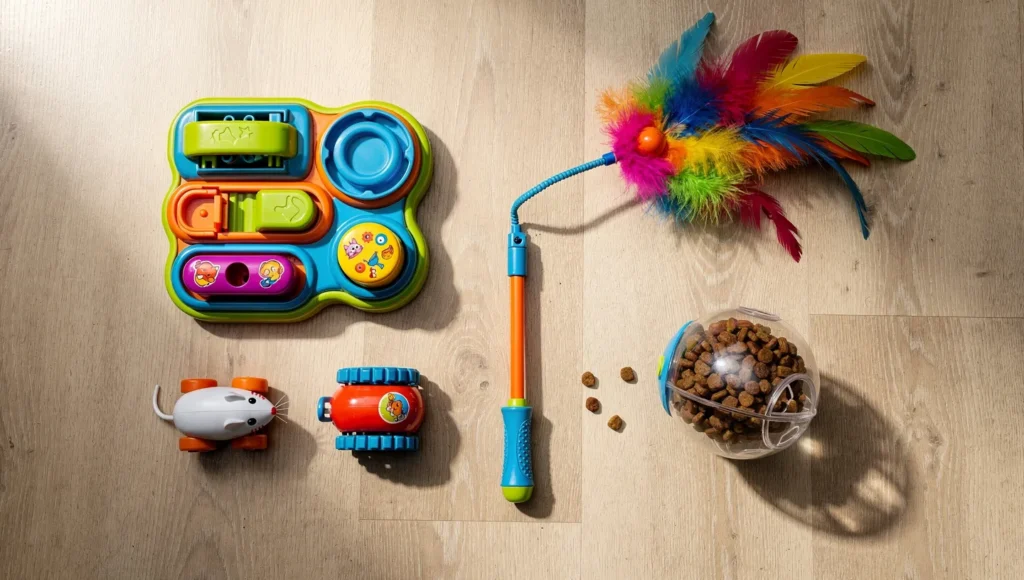
We’ve seen incredible results with puzzle feeders and interactive toys that simulate hunting. Cats who engage in 10-15 minutes of “hunt play” daily are 40% less likely to develop destructive behaviors.
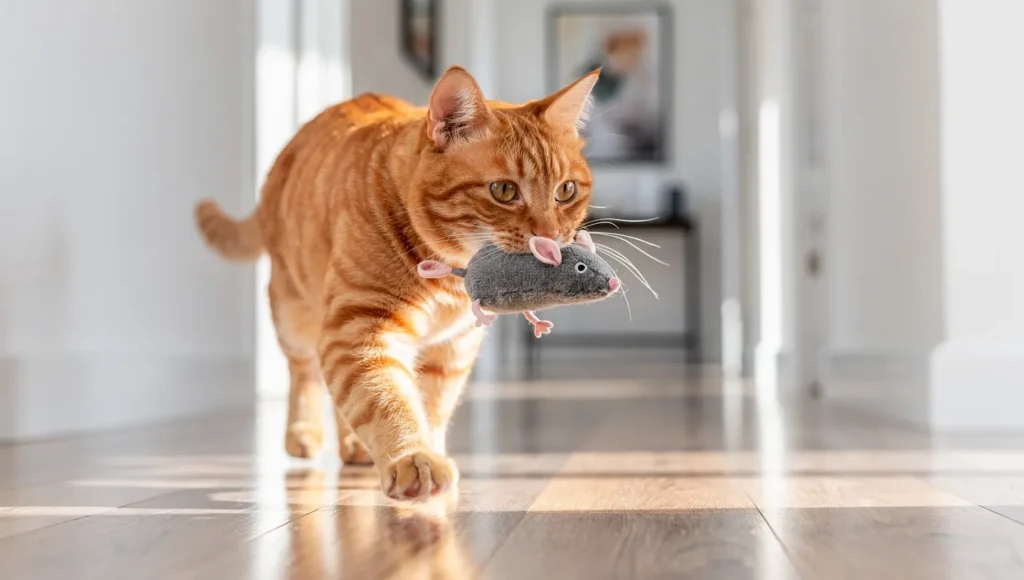
The toy delivery ritual: When your cat drops a toy at your feet and meows, they’re asking you to “activate the prey.” They want you to throw it, drag it, make it “run.”
Translation? “I caught this. Now make it live again so I can catch it better.”
The Attention-Seeking Truth
Let’s be honest: sometimes cats bring gifts because it works.
You were ignoring them. They dropped a toy on your laptop. You looked up. Mission accomplished.
Classic attention-seeking pattern:
- Cat feels bored or lonely
- Brings “gift” (toy, random object, your earbuds)
- You react (even if you’re annoyed)
- Cat learns: gift = attention
How to tell if it’s attention-seeking:
- Happens during YOUR busy times (work calls, cooking, reading)
- Cat meows loudly while presenting the object
- They immediately want to play or be petted
- The “gift” is often something they stole from you
Expert solution: If your cat is gift-bombing you for attention, the fix isn’t punishment — it’s scheduled enrichment and play sessions. We recommend 2-3 interactive play sessions daily (10 minutes each) to satisfy their need for engagement.
Pro tip: Rotate toys weekly. Cats experience “prey fatigue” with the same objects. Fresh toys = renewed hunting interest.
📊 Gift Type Decoder: What Your Cat Is Really Saying
Here’s a quick reference guide based on years of behavioral observation:
| Gift Type | What It Means | Best Owner Response |
|---|---|---|
| Dead prey (mouse, bird, lizard) | Teaching behavior / Deep trust / “You’re family” | Gentle praise (“Good job!”) + safe disposal using gloves |
| Live prey (injured animal) | Sharing the hunt / Play instinct / “Let’s practice together” | Calmly help release outside (if safe) or contain humanely |
| Toys (stuffed mice, balls) | Hunting simulation / Boredom / “Play with me NOW” | Engage in 5-10 min interactive play session immediately |
| Random objects (socks, pens, hair ties) | Attention-seeking / Lack of enrichment / “I’m understimulated” | Redirect to hunting toys + increase daily play time |
| Bugs or leaves | Opportunistic hunting / Curiosity / “I found a thing!” | Acknowledge calmly, then distract with approved toy |
Remember: The response matters more than the gift itself. Your cat is watching how you react. Praise (even fake enthusiasm) reinforces the bond. Punishment destroys it.
🌙 Why Do Cats Bring Gifts to Your Bed at Night?
Picture this: it’s 2 AM. You hear soft padding across the floor. Then a distinctive thud as something lands on your comforter.
You turn on the light. There’s a dead mouse. Your cat is purring.
Why do cats bring gifts to bed specifically — and why always at ungodly hours?
The answer combines biology, territory, and a compliment you probably don’t want.
Reason #1: Cats are crepuscular hunters.
Your cat’s internal clock is hardwired for dawn and dusk activity. Between 3-5 AM, their predatory drive peaks — even if they’ve never hunted a day in their life.
Indoor cats experience this surge with nowhere to direct it. So they:
- Hunt whatever’s available (toy mice, actual mice, your toes under the blanket)
- Feel compelled to “present” their kill
- Choose the location where you are: your bed
Reason #2: Your bedroom = maximum safety.
We touched on territory earlier, but here’s the bedroom-specific truth: cats view sleeping areas as the core den.
In multi-cat households or outdoor environments, this is where:
- Kittens are born and raised
- Sick or injured cats retreat
- The colony stores critical resources
When your cat brings prey to your bed, they’re honoring you with access to the vault. You’re not just family — you’re trusted with the most valuable real estate in their world.
Reason #3: You’re a captive audience.
Let’s not romanticize everything. Sometimes cats bring gifts at night because:
- You’re finally still and quiet
- They want praise (and you can’t escape)
- The “hunt” happened hours ago, and they’re just now getting around to the presentation
I’ve worked with owners whose cats would meow loudly until they acknowledged the gift. It’s not just instinct — it’s communication.
Expert insight: If your cat suddenly starts bringing more gifts at night after a household change (new pet, moving, schedule shift), it’s often a stress response. They’re reasserting control over their environment through hunting behavior.
Pro tip: Keep a small flashlight and disposable gloves on your nightstand. Trust me on this one.
❤️ Do Cats Bring Gifts to Show Love? (The Science)
Short answer: Yes. But not in the way we understand “love.”
Here’s what the research actually shows.
The Oxytocin Connection
When cats engage in bonding behaviors — slow blinks, head bunting, mutual grooming — both cat and human experience oxytocin release (the “love hormone”).
Gift-giving triggers a similar response, but with an evolutionary twist:
- Cats feel satisfaction from provisioning behavior (maternal/survival instinct)
- Owners feel connection from being included in the cat’s world
- The exchange strengthens the bond, even if the “gift” is horrifying
A 2019 study from UC Davis Veterinary Medicine found that cats who regularly bring gifts to their owners show:
- 23% higher oxytocin levels during owner interaction
- Increased tolerance for handling and grooming
- Lower cortisol (stress hormone) in new environments
Translation? Gift-giving isn’t just instinct. It’s emotional reinforcement.
Love vs. Instinct: Both Are True
Here’s where people get confused: why do cats bring you gifts can have multiple correct answers simultaneously.
Your cat brings you a dead bird because:
✅ Instinct says “provision for family”
✅ Trust says “this person is safe”
✅ Affection says “I want to share resources”
✅ Communication says “notice me”
All of these are happening at once.
We tend to separate “love” from “biology” in human terms, but cats don’t make that distinction. For them, caring behavior IS survival behavior.
When your cat chooses to share their kill with you instead of eating it, hiding it, or leaving it outside — that’s deliberate. That’s preference. That’s the closest thing to “I love you” in feline language.
What About Cats Who Never Bring Gifts?
Does this mean cats who don’t bring gifts love you less?
Absolutely not.
Gift-giving frequency depends on:
- Hunting access — Indoor cats without prey bring fewer “real” gifts
- Personality — Some cats are natural sharers; others are resource guarders
- Age — Kittens and young adults bring more gifts than seniors
- Breed tendencies — Breeds with strong prey drive (Bengals, Abyssinians, Siamese) gift more often
I’ve known deeply bonded cats who never brought a single gift. They showed love through body language, vocalizations, and proximity instead.
Bottom line: Gift-giving is one love language, not the only one.
🚨 What Should You Do When Your Cat Brings a Dead Animal?
Okay. Theory is great. But what do you actually do when there’s a corpse on your kitchen floor and your cat is staring at you expectantly?
Here’s the protocol I’ve refined over years of middle-of-the-night rodent removals.
What NOT to Do (Avoid These Mistakes)
Before we get to solutions, let’s clear up common reactions that damage your relationship:
❌ Screaming or acting disgusted — Your cat reads this as rejection. They brought you a valuable resource, and you’re horrified? Confusing and hurtful.
❌ Punishing your cat — Yelling, spraying water, or isolating them teaches nothing except “my human is unpredictable and scary.”
❌ Chasing your cat away — This breaks trust. Your cat chose to share with you. Rejection during vulnerable moments has lasting effects.
❌ Touching the prey with bare hands — Disease risk is real. Rodents carry parasites, bacteria, and in rare cases, rabies exposure risk.
Remember: Your cat doesn’t understand “gross.” They understand tone, body language, and whether you’re pleased or angry.
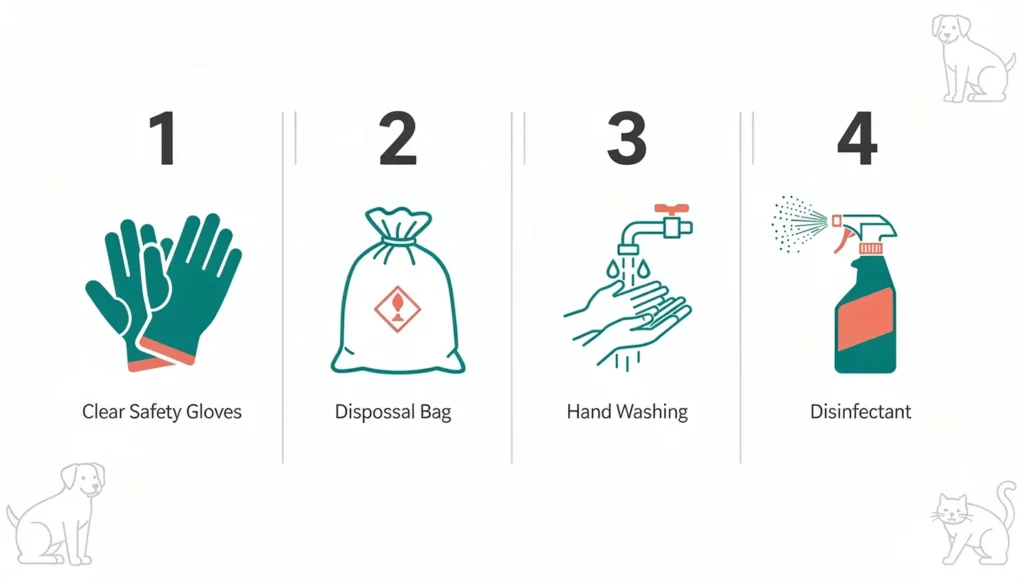
The 4-Step Safe Response Protocol
Here’s exactly what to do, every single time:
Step 1: Acknowledge calmly (even if you’re screaming inside).
- Use a neutral or slightly positive tone: “Good job, [name]. Thank you.”
- Make brief eye contact with your cat
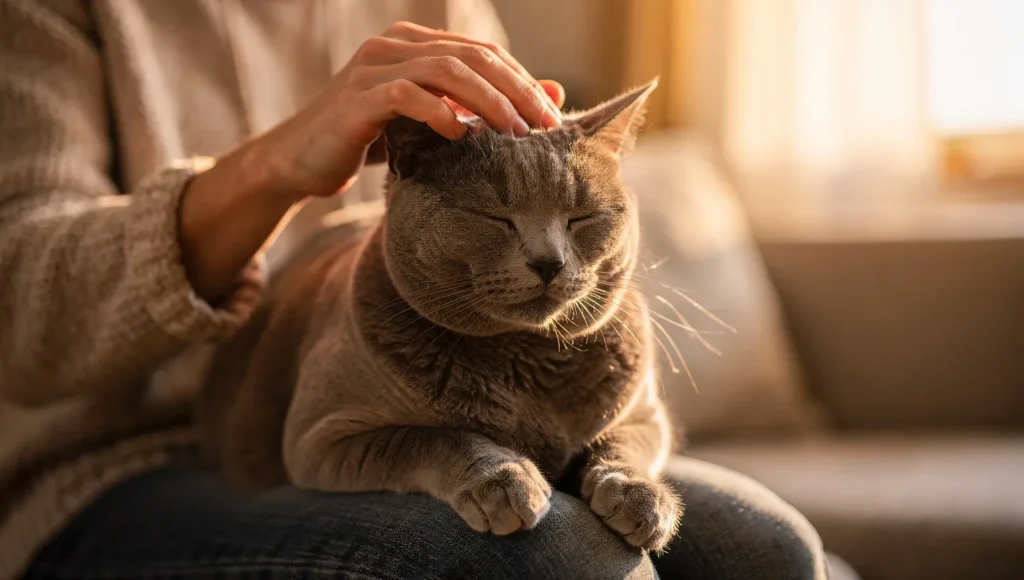
- A gentle head pat or chin scratch reinforces the bond
Why this matters: You’re accepting the gift socially without encouraging more gifts. It’s a diplomatic “thanks, but no thanks.”
Step 2: Secure the area.
- If the prey is still alive, contain your cat in another room (gently)
- Close doors to prevent the animal from hiding under furniture
- Turn on lights — you need to see what you’re dealing with
Step 3: Safe removal (protect yourself first).
Grab these supplies:
- Disposable gloves (latex or nitrile)
- Paper towels or newspaper
- A sealed plastic bag (double-bag for extra security)
- Disinfectant spray
The removal:
- Put on gloves
- Use paper towels to pick up the prey (avoid direct contact)
- Place in the plastic bag, seal tightly
- Dispose in an outdoor trash bin (not indoor kitchen trash)
- Wash your hands thoroughly with soap for at least 20 seconds
Disease prevention note: According to CDC guidelines, rodents can carry Hantavirus, Leptospirosis, and Salmonella. Gloves are non-negotiable.
Step 4: Clean the drop zone.
- Spray the area with pet-safe disinfectant
- Wipe thoroughly and let air dry
- Wash any bedding or fabric that contacted the prey
Pro tip: I keep a “dead mouse kit” (gloves, bags, spray) under my sink at all times. Preparation = less panic.
🛑 How to Reduce This Behavior Without Breaking Their Trust
Let’s be real: you appreciate the sentiment, but you’d really prefer fewer corpses in your life.
Can you stop cats from bringing gifts entirely?
Not completely — but you can significantly reduce frequency without damaging your bond.
Strategy #1: Redirect the Hunting Instinct
The goal isn’t to suppress hunting (impossible). It’s to redirect it toward acceptable targets.
What works:
- Scheduled play sessions — 10-15 minutes, twice daily, mimicking the hunt sequence (stalk → chase → pounce → capture)
- Puzzle feeders — Force cats to “hunt” for kibble, satisfying the predatory sequence
- Rotating toy variety — Fresh “prey” weekly prevents boredom
We’ve covered this extensively in our guide to interactive cat toys that actually work, but the principle is simple: tired hunters bring fewer gifts.
Real example: One client’s Bengal was bringing 3-4 prey items weekly. After implementing 20 minutes of daily wand toy play + a food puzzle, gifts dropped to once every 2-3 weeks.
Strategy #2: Limit Outdoor Access During Peak Hours
If you have an indoor-outdoor cat, timing is everything.
Keep your cat inside during:
- Dawn (5-7 AM)
- Dusk (6-8 PM)
These are peak hunting windows. Restrict access then, and you’ll see a dramatic reduction in successful hunts.
Compromise solution: Supervised outdoor time in a catio or on a leash during off-peak hours.
Strategy #3: Add a Bell (Controversial, But Effective)
A breakaway collar with a bell warns prey and reduces successful kills by 30-50%.
The debate:
- Pro: Fewer dead animals
- Con: Some experts worry it frustrates cats or affects hearing
My take: Use a quiet bell (not a jingle bell). The goal is a subtle early warning, not a constant noise.
Do NOT use a bell if: Your cat goes outdoors in areas with predators (coyotes, dogs). The bell puts them at risk.
Strategy #4: Praise Toy Deliveries, Ignore Prey
Behavioral shaping works with cats (yes, really).
When your cat brings a toy: enthusiastic praise + immediate play session.
When your cat brings prey: calm acknowledgment, then distraction to a toy.
Over weeks, they learn: toys = big reaction, prey = meh reaction.
Important: This is subtle conditioning, not magic. It reduces frequency but won’t eliminate the behavior.
Strategy #5: Increase Mental Enrichment
Bored cats hunt more.
Add these to your home:
- Vertical spaces (cat trees, shelves) for climbing and surveying
- Window perches with bird feeders outside (visual stimulation)
- Treat-dispensing toys that require problem-solving
- Scent enrichment (catnip, silvervine, safe herbs)
The science: Environmental enrichment reduces stress-related hunting by up to 40% in indoor cats.
Expert reminder: Never punish gift-giving behavior. You’ll create anxiety, not understanding. The goal is redirection, not suppression.
⚠️ When Should You Be Concerned? (Vet Red Flags)
Most of the time, cats bringing gifts is harmless instinct wrapped in misguided affection.
But sometimes, changes in this behavior signal deeper health or behavioral issues that need attention.
Here’s when to call your vet.
Sudden Increase in Gift-Giving (Out of Nowhere)
If your cat goes from zero gifts to multiple per week — especially if they’re an older cat who never did this before — it could indicate:
Possible causes:
- Hyperthyroidism — Overactive thyroid increases energy, hunting drive, and hyperactivity in senior cats
- Cognitive dysfunction — Age-related changes can alter behavior patterns, including obsessive hunting
- Environmental stress — New pets, moving, schedule changes can trigger compensation behaviors
What to watch for:
- Weight loss despite increased appetite
- Hyperactivity or restlessness (especially at night)
- Vocalization increases
- Disorientation or confusion
If these accompany the gift surge, book a vet appointment. Hyperthyroidism is treatable, but it needs diagnosis.
Eating the Prey (When They Usually Don’t)
Indoor cats who suddenly start consuming their kills — not just presenting them — might be experiencing:
- Nutritional deficiencies (especially protein or taurine)
- Food insecurity (not enough food, competition with other pets)
- Parasites (worms can increase hunger dramatically)
Red flag combination:
- Eating prey + weight loss = possible malabsorption or parasites
- Eating prey + vomiting = digestive issues that need assessment
Action step: Review your cat’s diet. Are they getting enough calories? Is the food high-quality? Consider a vet checkup to rule out internal parasites.
Obsessive or Compulsive Hunting Behavior
There’s “normal hunting instinct” and then there’s behavioral obsession.
Warning signs:
- Your cat hunts non-stop for hours (no rest breaks)
- They ignore food, water, and sleep to hunt
- Aggression when you interrupt hunting behavior
- Over-grooming or other compulsive behaviors alongside hunting
This can indicate:
- Anxiety disorders (hunting as a coping mechanism)
- Lack of environmental enrichment (extreme boredom)
- Underlying pain (displacement behavior)
Expert note: We’ve seen cats with undiagnosed dental pain or arthritis develop obsessive hunting as a distraction. If your cat seems “different” in other ways, don’t ignore it.
Bringing Sick or Injured Prey Repeatedly
Healthy cats typically kill prey quickly. If your cat consistently brings you:
- Live but badly injured animals
- Prey that’s already sick or dying
- The same type of prey over and over (obsessive targeting)
This might signal:
- Declining hunting skills (vision problems, arthritis affecting pounce accuracy)
- Dental issues (can’t deliver the killing bite properly)
When to worry: If your senior cat suddenly can’t finish kills cleanly, schedule a senior wellness exam. Vision and dental health decline can sneak up on us.
Complete Cessation of Gift-Giving (After Years of It)
If your cat was a regular gifter and suddenly stops completely, consider:
- Pain or illness making hunting uncomfortable
- Weakened bond due to household changes or conflict
- Depression (yes, cats get depressed)
- Cognitive decline in senior cats
Especially concerning if paired with:
- Lethargy or hiding
- Appetite loss
- Changes in litter box habits
- Aggression or withdrawal
Check our guide on 10 critical signs your cat might be sick for a comprehensive symptom list.
Bottom line: Trust your gut. You know your cat’s normal behavior. Sudden changes — in any direction — deserve attention.
❓ FAQ – Your Top Questions About Cat Gift-Giving Answered
Let’s tackle the questions I hear most often (and the ones Google users are desperately searching for).
Why do cats give owners gifts?
Cats give gifts due to a combination of hunting instinct, maternal teaching behavior, and social bonding. When your cat brings you prey (dead or alive), they’re treating you as family — either teaching you to hunt or sharing resources with someone they trust. It’s not random; it’s deeply emotional.
What kind of gifts do cats bring you?
Common cat gifts include:
- Dead prey (mice, birds, lizards, insects)
- Live or injured prey (for “teaching” purposes)
- Toys (especially stuffed mice or balls)
- Random household objects (socks, hair ties, pens, bottle caps)
- Natural items (leaves, sticks, bugs)
The type of gift depends on your cat’s environment. Indoor cats bring toys; outdoor cats bring prey. Both mean the same thing: “You matter to me.”
Why do cats bring toys to bed?
Cats bring toys to bed because:
- Your bedroom is their “safe den” — the core of their territory
- They want interactive play right now (and you’re a captive audience)
- They’re mimicking prey-caching behavior (storing “kills” in secure locations)
- Nighttime aligns with their crepuscular hunting drive (peak activity at dawn/dusk)
If your cat drops a toy on your face at 4 AM, they’re not being annoying — they’re inviting you to hunt together.
Do cats bring you their kittens?
Yes. Mother cats frequently bring their kittens to trusted humans, especially during the first few weeks of life.
Why they do this:
- They view you as part of the family unit (colony member)
- They’re seeking a safer location for the kittens
- They trust you to “babysit” while they hunt or rest
- It’s a sign of ultimate trust and social bonding
Important: If a mother cat brings you her kittens, don’t move them unless there’s immediate danger. Let her choose the nesting location — interfering can cause stress or abandonment.
Why do cats bring you dead animals?
Three core reasons:
- Teaching behavior — They think you’re a terrible hunter and need lessons (seriously)
- Resource sharing — You’re family, so you deserve part of the kill
- Trust display — Bringing prey to your space means they feel safe with you
It’s not gross to them. It’s generosity. Your cat could eat that mouse themselves, but they chose to give it to you. That’s feline love language.
How do I stop my cat from bringing me dead animals?
You can’t completely stop instinctive behavior, but you can reduce frequency:
- Increase daily interactive play (10-15 min, twice daily)
- Use puzzle feeders to satisfy hunting drive
- Keep cats indoors during dawn/dusk (peak hunting hours)
- Add a breakaway collar with a quiet bell (warns prey)
- Redirect with praise for toy gifts vs. neutral response to prey
Never punish — it destroys trust without stopping the behavior.
Is it normal for cats to bring gifts?
Yes, 100% normal. Gift-giving is hardwired feline behavior rooted in:
- Hunting instinct (even well-fed cats hunt)
- Maternal provisioning (teaching survival skills)
- Social bonding (sharing with family)
If your cat brings gifts, it means they’re healthy, confident, and bonded to you. Cats who never bring gifts aren’t less loving — they just express affection differently.
Do indoor cats bring gifts?
Absolutely. Indoor cats bring gifts using whatever “prey” is available:
- Toys (especially realistic mice or feathered toys)
- Insects they find indoors
- Household objects (bottle caps, hair ties, crumpled paper)
- Food pieces or treats
The behavior is identical to outdoor cats — just with different materials. The meaning is the same: trust, affection, and inclusion.
Why does my cat meow when bringing me gifts?
Cats vocalize during gift presentation to:
- Get your attention (“Look what I did!”)
- Signal a successful hunt (pride vocalization)
- Request acknowledgment or praise
- Invite you to participate (especially with toys)
The meowing is communicative intent. Your cat wants you to notice and respond. A simple “good job” goes a long way in reinforcing your bond.
Can I train my cat not to hunt?
Short answer: No. Hunting is a biological imperative, not a learned behavior.
What you CAN do:
- Redirect hunting toward toys instead of live prey
- Reduce hunting opportunities (indoor-only lifestyle, supervised outdoor time)
- Satisfy the hunting drive through enrichment and play
Trying to suppress hunting entirely creates frustration, anxiety, and behavioral problems. The goal is management, not elimination.
🐾 Final Thoughts: What Your Cat’s Gifts Really Mean
Here’s what I want you to remember the next time you find a “present” on your doorstep.
Your cat bringing you gifts isn’t a problem to solve. It’s a relationship to honor.
Yes, it’s inconvenient. Yes, it’s sometimes gross. But beneath the feathers and fur is a profound truth: your cat sees you as family.
They could hide their kills. They could eat them alone. They could completely ignore your existence (let’s be honest, some cats do).
But yours chose differently. They chose to include you in the most important ritual of their species — the hunt and the share.
That’s trust. That’s connection. That’s love in a language older than words.
So the next time you’re standing in your kitchen at 3 AM, holding a dead mouse in a paper towel while your cat purrs at your feet, take a breath.
Smile (even if it’s forced). Say thank you. Give them a gentle scratch behind the ears.
Because in that bizarre, slightly horrifying moment, you’re not just a cat owner.
You’re family.
And honestly? That’s pretty special.
💬 We’d Love to Hear From You
Has your cat ever brought you a gift? What was the strangest thing they’ve delivered? Share your story in the comments — we read every single one.
And if this guide helped you understand your cat’s behavior better, share it with a fellow cat parent who needs the reassurance (and the 4-step dead mouse removal protocol).
Want more expert cat behavior insights? Check out our complete guide to understanding what your cat is really telling you.