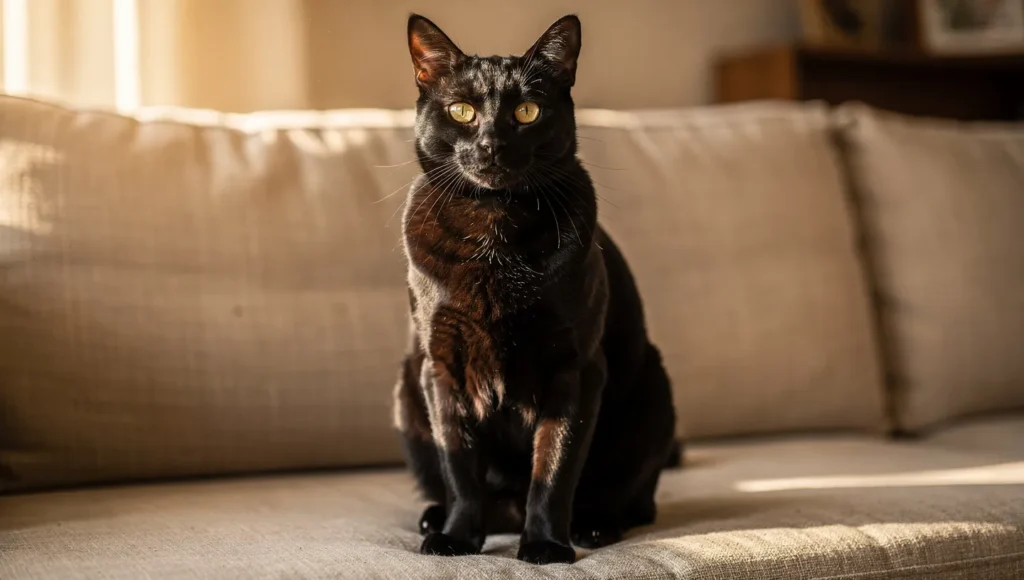
If you want a cat that follows you like a shadow — one that greets you at the door, curls up on your lap uninvited, and somehow always knows when you’ve had a rough day — the Bombay cat personality might be exactly what you’ve been looking for.
These sleek, black-coated cats are often called “velcro cats” for a reason. They don’t just tolerate your presence. They need it.
This guide breaks down everything you need to know about living with a Bombay — from their core temperament to the personality differences between males and females — so you can decide if this breed truly fits your lifestyle.
Quick Answer: The Bombay cat personality is affectionate, people-oriented, intelligent, and highly social. Bombays thrive on human connection, adapt well to apartment living, and form deep bonds with their families. They’re playful, moderately vocal, and known for following their owners from room to room.
The Bombay cat personality is one of the most consistently social temperaments you’ll find in the domestic cat world.
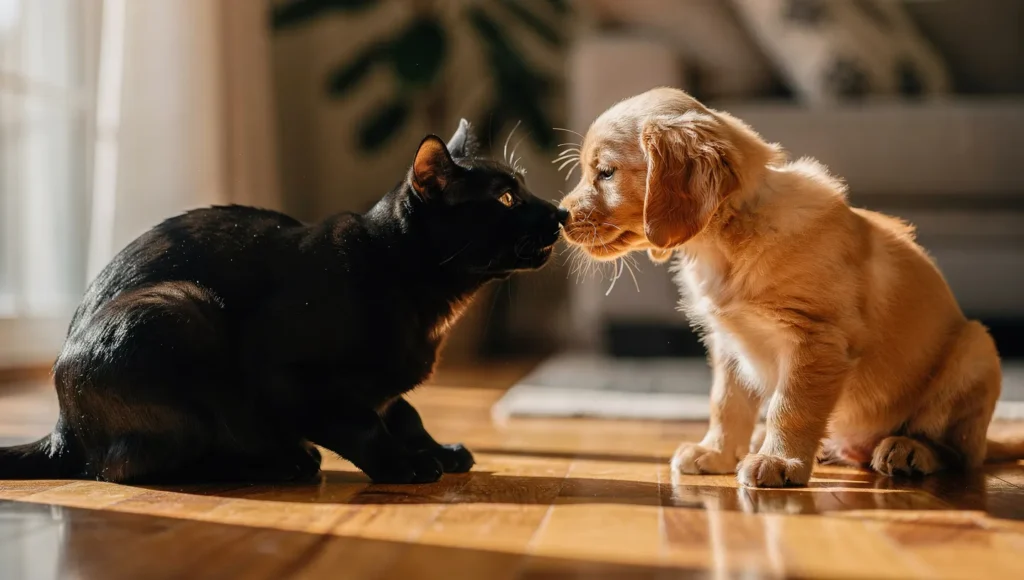
Unlike breeds that pick one person and ignore the rest, Bombays tend to love everyone in the household — including guests, children, and often even the family dog.
They were developed in the 1950s by crossing sable Burmese cats with black American Shorthairs, according to the Cat Fanciers’ Association (CFA).
Here’s a quick snapshot of what to expect:
Highly affectionate — constant lap cat tendencies
Intelligent and curious — quick learners who need mental stimulation
Moderately vocal — communicative without being overwhelming
Energetic and playful — stays kitten-like well into adulthood
Adaptable — handles apartment living and new environments reasonably well
Social — gets along with children, other cats, and dogs
Bombay cats are known for being one of the most human-attached breeds in the domestic cat world — affectionate, alert, and emotionally intuitive. They don’t just live with you. They engage with you.
Understanding the specific bombay cat personality traits helps you anticipate daily life with this breed — not just the highlights, but the full picture.
1. 💛 Affectionate and People-Oriented
This is the defining trait of the Bombay.
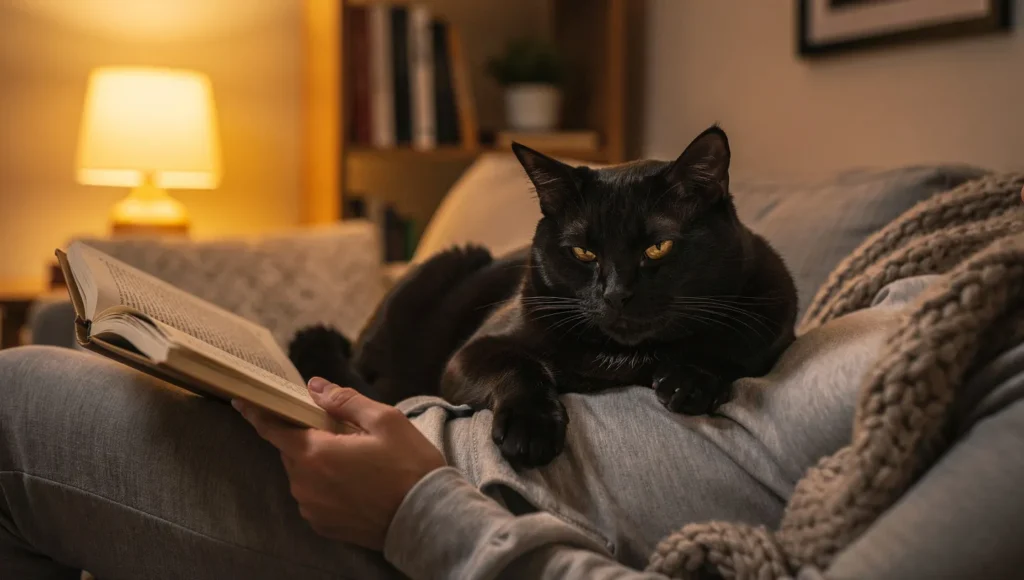
In my experience working with highly social breeds, few match the Bombay’s intensity of attachment. These cats don’t just want to be near you — they want to be on you.
Expect your Bombay to:
Follow you from room to room throughout the day
Insist on sleeping in your bed (or on your pillow)
Headbutt you repeatedly as a greeting
Settle on your lap the moment you sit down
This “velcro cat” behavior isn’t clingy in a concerning way — it’s simply how Bombays express love. But it does mean they’re not suited for owners who are away from home for long stretches without enrichment in place.
If you’ve read our guide on cat separation anxiety, you’ll recognize these patterns immediately — Bombays are one of the breeds most predisposed to this.
2. 🧠 Highly Intelligent
Don’t underestimate how sharp these cats are.
Bombays problem-solve. They figure out door handles, open cabinets, and learn routines faster than most breeds I’ve worked with.
That intelligence is a gift — and a responsibility.
They respond well to puzzle feeders and interactive toys
They pick up on your emotional state quickly
The flip side:
A bored Bombay will find something to do — and you may not like what they choose
They need daily mental engagement, not just physical play
A rotation of interactive cat toys isn’t optional with this breed — it’s essential.
3. 🗣️ Vocal but Not Excessive
Bombays are communicators — but they’re not screamers.
Unlike Siamese cats (who will narrate their entire day), Bombays use a softer, more conversational meow. They’ll let you know when they’re hungry, want attention, or feel ignored — but they won’t wake the neighbors.
One thing I’ve noticed: Bombays often develop personalized vocalizations with their owners over time. It becomes almost like a private language between cat and human.
4. 🎾 Playful Into Adulthood
Most cats slow down significantly after two or three years.
Bombays don’t get that memo.
They retain a kitten-like energy and curiosity well into their adult years, which makes them genuinely fun to live with — but also means you need to keep up with their activity needs.
Daily play sessions of 10–15 minutes are recommended, especially for indoor-only Bombays.
5. 👨👩👧 Social With Guests & Families
One mistake I often see with Bombay owners: they’re surprised when their cat doesn’t hide from strangers.
Most cats retreat when guests arrive. Bombays typically do the opposite — they investigate, charm, and often end up in the lap of the most reluctant person in the room.
With children: Bombays do well with respectful, calm kids. They’re patient and interactive, though like any cat, they need a safe space to retreat when overwhelmed.
With other pets: They generally adapt well to multi-pet households, especially when introductions are handled correctly. More on this shortly.
Bombay Cat Temperament vs Behavior — Is There a Difference?
This is a question worth answering clearly, because a lot of owners confuse the two.
Temperament is what your Bombay is born with — their baseline emotional wiring. Calm, social, adaptable, affectionate. That’s hardcoded into the breed.
Behavior is what you see day-to-day — and it’s shaped by environment, routine, and how the cat is raised.
A Bombay with great temperament can still develop problematic behaviors if they’re understimulated, left alone too long, or introduced to a chaotic home without proper adjustment time.
What makes Bombays stand out temperamentally:
Emotional stability — they don’t startle easily and recover quickly from stress
Adaptability — they adjust to apartment living, new homes, and schedule changes better than most breeds
Routine sensitivity — they appreciate predictability, even if they handle disruption better than anxious breeds like the Siamese
One thing I’ve observed repeatedly: Bombays read their owner’s mood with almost unsettling accuracy. If you’re stressed, they’ll either comfort you or mirror your energy. That emotional attunement is a temperament trait — and it’s one of the most endearing things about this breed.
🤗 Do Bombay Cats Like to Be Held?
Yes — more than most breeds.
The Bombay is one of the few cats that genuinely enjoys being picked up, cradled, and carried. They don’t just tolerate it. Many actively seek it out.
That said, every cat is an individual. Here’s what’s typical:
When Bombays love being held:
During quiet evenings when you’re settled
After you’ve been away — reunion cuddles are real
When they initiate it (they’ll climb toward your arms)
When they may pull back:
Mid-play when their energy is high
If held in an uncomfortable position
Around loud noises or sudden movements
The key is reading their body language. A relaxed Bombay being held will have soft eyes, a loose body, and may even purr immediately. If they’re stiffening or flicking their tail, set them down and let them come back on their terms.
Understanding cat body language makes a real difference with this breed — especially because Bombays are so expressive once you learn their signals.
🐾 Is the Bombay Cat Friendly With Other Pets?
Generally, yes — but context matters.
With other cats: Bombays do well in multi-cat households, especially when introductions are done gradually. They’re not typically dominant or territorial, though they will assert themselves if challenged.
A slow, scent-based introduction process makes a significant difference. Our guide on how to introduce two cats walks through exactly how to do this without triggering conflict.
With dogs: This is where Bombays genuinely surprise people. Their confident, social temperament means they often befriend dog companions — particularly calm, cat-friendly breeds. They don’t tend to hide or cower; they investigate.
The variable that matters most: early socialization. A Bombay raised around other animals from kittenhood will adapt far more easily than one introduced to a new companion at age four.
♂️♀️ Male vs Female Bombay Cat Personality
Both sexes share the core Bombay traits — affectionate, social, intelligent. But there are subtle differences worth knowing before you adopt.
Male Bombay Personality
Male Bombays tend to lean slightly more toward overt affection-seeking.
In my experience, neutered males are often the more openly “needy” of the two — more likely to follow you persistently, demand lap time, and vocalize when ignored. They bond deeply with the whole household rather than selecting one preferred person.
They also tend to be a bit more laid-back about personal space — both theirs and yours.
Female Bombay Personality
Female Bombays are equally affectionate, but often with a slightly more selective quality to their bonding.
They may choose a primary person in the household and show that person noticeably more attention. They’re still social — just occasionally on their own terms.
Some owners describe female Bombays as feeling more like a partnership — present, loving, but with a quiet sense of dignity that males don’t always bother with.
Bottom line: The difference is subtle and heavily influenced by individual personality and upbringing. Don’t choose based on sex alone — meet the cat.
⚠️ Potential Personality Challenges to Know
No breed is without trade-offs. Honest ownership starts here.
Separation anxiety This is the most common behavioral challenge in Bombays. Their deep attachment to people means being left alone for long hours can trigger real distress — excessive vocalization, destructive behavior, or litter box avoidance.
If your schedule involves long work days, a second cat or structured enrichment is not optional — it’s a welfare consideration.
Over-attachment Related to the above, but distinct. Some Bombays become so focused on one person that they struggle when that person travels or changes their routine. This isn’t aggression — it’s anxiety, and it’s manageable with the right approach.
Boredom-related behaviors An understimulated Bombay will find entertainment. Knocked items off shelves, opened cabinets, chewed cords. Their intelligence works against you if it’s not channeled.
How to prevent most of these issues:
Establish a consistent daily routine
Provide puzzle feeders and rotating toys
Consider a feline companion if you’re away often
Never punish attention-seeking — redirect it
✅ Is the Bombay Cat a Good Fit for You?
Be honest with yourself before adopting. Here’s a straightforward checklist:
The Bombay thrives with owners who:
✔ Work from home or have flexible schedules
✔ Want an interactive, engaged companion
✔ Live in apartments (they adapt well to indoor life)
✔ Have children or other pets (with proper introductions)
✔ Enjoy a cat that communicates and responds
The Bombay may struggle if you:
✖ Work 10+ hour days with no enrichment plan
✖ Prefer a low-maintenance, independent cat
✖ Travel frequently without a pet care backup
✖ Want a cat that keeps to itself
💡 Expert Tip: If you love the Bombay personality but worry about separation anxiety, the single best solution is adopting two Bombays together — ideally from the same litter. They’ll entertain each other and reduce the emotional load on you significantly.
❓ Frequently Asked Questions About Bombay Cat Personality
Are Bombay cats clingy?
Yes — more than most breeds. Bombays are known for following their owners from room to room and seeking constant physical contact. It’s not problematic clinginess; it’s simply how they express affection. If you’re away often without enrichment in place, this trait can tip into separation anxiety.
Are Bombay cats good for apartments?
Absolutely. The Bombay adapts well to indoor and apartment living. They don’t need outdoor access to thrive — they need you. As long as they have daily play, mental stimulation, and companionship, they’re perfectly content in smaller spaces.
Do Bombay cats get separation anxiety?
They’re one of the breeds most predisposed to it. Their deep human attachment means long hours alone can cause real distress. A second cat, puzzle feeders, and a consistent routine significantly reduce the risk.
Are male or female Bombay cats more affectionate?
Both are affectionate, but males tend to be more openly demonstrative — seeking lap time and attention from everyone in the household. Females are equally loving, but often bond more selectively with one primary person. Individual personality matters more than sex.
Final Thoughts on Bombay Cat Personality
The Bombay isn’t for everyone — and that’s exactly what makes them so right for the people they’re meant for.
If you want a cat that genuinely participates in your life — one that follows you, reads you, plays with you, and curls up against you at the end of the day — the Bombay delivers that in full.
They’re not low-maintenance. They’re not indifferent. And they’re absolutely not background pets.
But for the right owner? They’re one of the most rewarding companions in the domestic cat world.
Before you bring one home, make sure your environment supports their social needs — think enrichment, routine, and ideally a feline companion. A well-cared-for Bombay, fed a nutritionally complete diet and given proper mental stimulation, will reward you with years of devoted, joyful companionship.
A cat enthusiast dedicated to feline well-being. Here, I share the insights of my experience in understanding cat body language, behavior modification, and selecting the best preventative diets. My goal is to make cat ownership a joyful and seamless experience through simple, effective tips that prioritize prevention over cure.