


I’ll be honest with you — I thought feeding a cat was the easiest thing in the world. If you’ve ever typed “what do cats eat” into Google at midnight while your cat stares at you — you’re not alone, and you’re in the right place.
Pour some food in a bowl. Refill the water. Done, right?
That’s exactly what I thought… until my cat Milo started throwing up almost every morning. He was losing weight, sleeping more than usual, and just seemed… off. Not sick-sick, but not right either.
I panicked and started Googling everything. And what I found genuinely shocked me. Not because it was complicated — but because it was so simple, and I had been getting it wrong for months.
Turns out, I was feeding him like a small human. Not like a cat.
And honestly? Most cat owners are doing the same thing right now without even knowing it.
So if you’ve ever wondered what cats are actually supposed to eat — not just what the commercials tell you — you’re in the right place.
This guide covers everything from their natural diet to what’s sitting in your fridge that could either help or seriously harm them.
Quick note before we dive in: Everything I share here is based on personal experience and research from trusted sources like the ASPCA and Cornell Feline Health Center. I’m not a vet, and this isn’t medical advice — if your cat has specific health issues, always check with your veterinarian first.
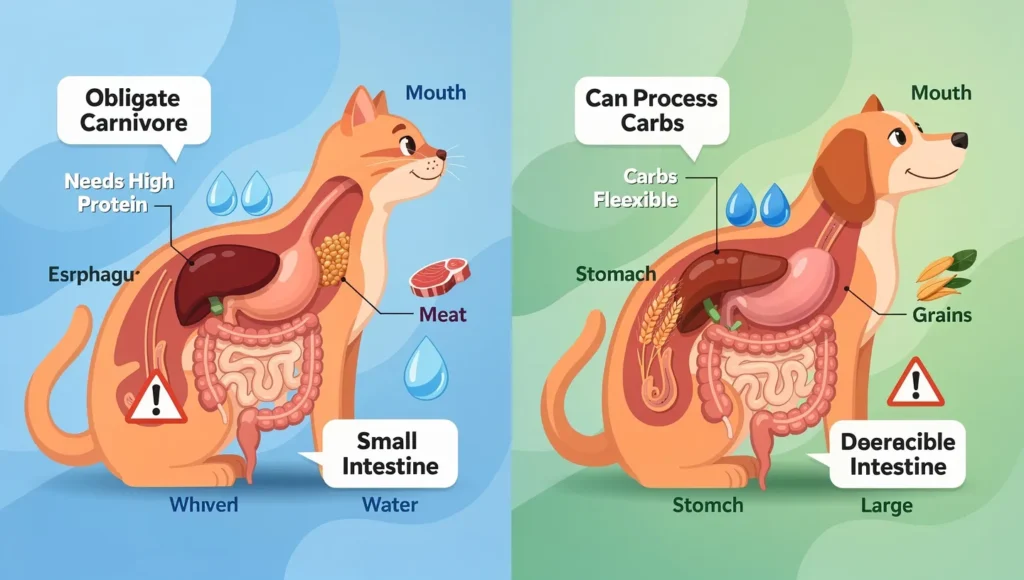
Table of Contents
- What Do Cats Actually Eat? (The Real Answer)
- What Cats Eat in the Wild — And Why It Still Matters
- The Real Cat Diet — What Should Your Cat Eat Daily?
- Wet Food vs. Dry Food — The Honest Truth
- How Much Protein Does a Cat Really Need?
- What About Carbs and Grains?
- What Human Food Can Cats Eat? (The Safe List)
- The Dangerous Foods — What Cats Should NEVER Eat
- Building a Simple Feeding Routine That Actually Works
- How Often Should You Feed Your Cat?
- A Simple Daily Feeding Framework
- What If Your Cat Stops Eating?
- The 5 Biggest Feeding Mistakes Most Cat Owners Make
- Questions Cat Owners Actually Ask
- What do cats eat besides cat food?
- Can cats eat bread?
- Can cats drink milk?
- What do stray cats eat?
- What should cats eat daily for a balanced diet?
- One Last Thing Before You Go
What Do Cats Actually Eat? (The Real Answer)
Cats are obligate carnivores — meaning their bodies are biologically designed to run on animal protein. Unlike dogs or humans, they cannot produce certain essential nutrients on their own, so they must get them directly from meat.
This isn’t a preference. It’s biology.
Here’s what that means in practice: a cat’s diet needs to be high in animal-based protein, moderate in fat, and very low in carbohydrates. Their digestive systems aren’t built to process grains, starches, or plant-based proteins the way ours are.
Think about it this way — a cat in the wild isn’t out there eating corn or wheat. So why is corn listed as the first ingredient in so many commercial cat foods?
That’s a question worth asking.
According to the ASPCA, cats require specific nutrients like taurine, arachidonic acid, and preformed vitamin A — all of which are only found naturally in animal tissue. A diet lacking these can lead to serious health problems over time, including heart disease and vision loss.
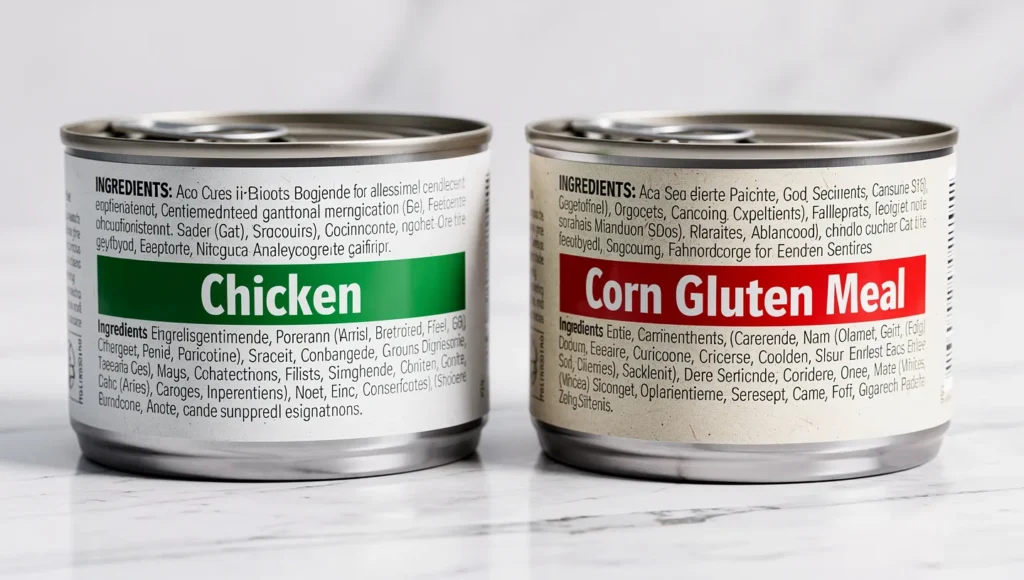
And this is important: “high protein” on a label doesn’t always mean animal protein. Always check the ingredient list. If the first three ingredients aren’t a named meat source (chicken, turkey, salmon), that’s your first red flag.
For a deeper look at how to actually read those labels, this guide on how to read cat food labels breaks it down in a way that’s actually easy to follow.
What Cats Eat in the Wild — And Why It Still Matters
Here’s something most people don’t think about: your cat, no matter how pampered and couch-obsessed, is still about 95% wildcat on a genetic level.
Wild cats eat small prey — mice, birds, small reptiles, insects. A typical “wild cat meal” is roughly 70% moisture, high in protein, moderate in fat, and almost zero carbohydrates. They eat multiple small meals throughout the day, not one or two large ones.
Most people get this wrong. They fill a big bowl of dry kibble in the morning and call it a day. But that’s basically the opposite of what a cat’s body expects.
I remember asking my vet about this during one of Milo’s checkups. She looked at me and said something I never forgot:
“Your cat’s ancestors didn’t have a food bowl. They hunted. And their bodies still expect that — small, protein-rich, moisture-heavy meals. The closer you get to that, the healthier your cat will be.”
That one conversation changed how I fed him completely.
This is where things get interesting, because understanding the wild diet is actually the key to fixing the modern one. It tells you why wet food matters. Why hydration is non-negotiable. And why a bag of grain-heavy kibble — no matter how colorful the packaging — isn’t doing your cat any favors.
Speaking of hydration, if your cat doesn’t drink much water (and most don’t), this cat hydration guide is worth bookmarking.
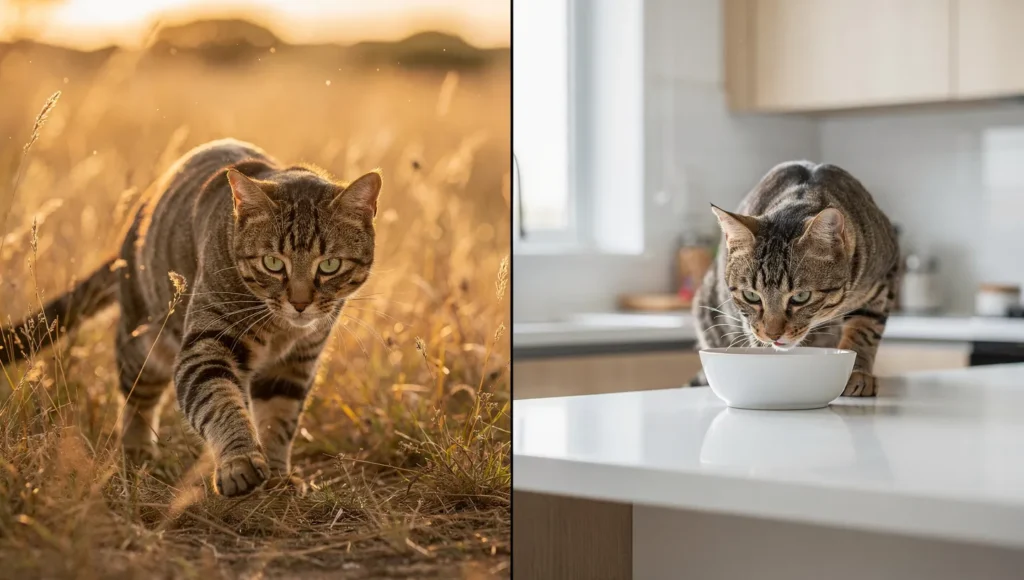
The bottom line? The wild diet isn’t just history. It’s the blueprint. And the closer your cat’s daily meals match that blueprint, the better off they’ll be — in energy, in digestion, and in long-term health.
The Real Cat Diet — What Should Your Cat Eat Daily?
Let’s get practical. Understanding what do cats eat on a daily basis is the difference between a cat that survives and a cat that actually thrives.
Now that you understand the biology, the real question is: what does that actually look like in a bowl every single day?
This is where most owners — including past me — get confused. Because the pet food industry is… a lot. Hundreds of brands, dozens of formulas, and marketing that makes everything sound like the healthiest option on the planet.
So let’s cut through it.
Wet Food vs. Dry Food — The Honest Truth
Here’s the thing nobody in the kibble industry wants you to think about too hard:
Dry food is convenient. Wet food is closer to what cats actually need.
That’s the short version. Here’s the longer one:
| Feature | Wet Food | Dry Food |
|---|---|---|
| Moisture Content | 70–80% | 8–10% |
| Protein Source | Usually animal-based | Often mixed with grains |
| Carbohydrates | Low | High (30–50%) |
| Urinary Health | Supports hydration | Can contribute to issues |
| Cost | Higher | More affordable |
| Convenience | Needs refrigeration | Easy to store |
| Best For | Most cats, especially indoor | Supplement or budget option |
Personally, I wouldn’t rely on dry food alone — especially for a cat that doesn’t drink much water. And honestly, most cats don’t drink enough. It’s just not in their nature.
The sweet spot for most cats? A combination. Wet food as the main meal, with a small amount of quality dry food if needed. But if you have to choose one — go wet.
For a deeper breakdown of both options, this guide on wet vs. dry cat food covers everything you need to know before making a decision.
How Much Protein Does a Cat Really Need?
More than you’d think. And more than most commercial foods actually provide.
According to research from the Cornell Feline Health Center, cats need a minimum of 26% protein on a dry matter basis — but many vets recommend closer to 40% or more for optimal health.
Here’s a simple rule I use when reading labels:
The first three ingredients tell you everything. If you see “chicken,” “turkey,” or “salmon” listed first — that’s a good sign. If you see “corn gluten meal,” “wheat,” or “soy” at the top of the list — put it back on the shelf.
This is where the guide to reading cat food labels becomes genuinely useful. It sounds boring, I know. But five minutes reading that could save your cat years of poor nutrition.
What About Carbs and Grains?
Short answer: cats don’t need them.
Longer answer: cats don’t have a dietary requirement for carbohydrates at all. Their livers don’t even produce the enzyme needed to efficiently process large amounts of starch. Yet somehow, many commercial cat foods are 30–50% carbohydrates.
That’s not a cat food. That’s filler with a cat on the bag.
Grains aren’t automatically evil — small amounts won’t hurt a healthy cat. But when they’re the dominant ingredient? That’s a problem over time. We’re talking weight gain, blood sugar issues, and a digestive system that’s constantly working harder than it needs to.
Most people get this wrong because the packaging looks premium. “Wholesome grains” sounds healthy. For us, maybe. For a cat? Not so much.
What Human Food Can Cats Eat? (The Safe List)
Okay, real talk.
Your cat is staring at your plate right now. Maybe giving you that slow blink. Maybe just… sitting there, judging you silently while you eat your dinner.
Can you share? Sometimes, yes — but the list is shorter than most people think. And the details matter a lot.
Here’s what’s actually safe:
✅ Cooked Chicken or Turkey
Plain, boneless, no seasoning. This is probably the best human food you can give a cat. High protein, easy to digest, and most cats go absolutely wild for it. About a tablespoon or two as an occasional treat is plenty.
✅ Cooked Salmon
Not canned with salt or oil — plain, cooked salmon is fine in small amounts. Rich in omega-3s, great for coat health. Just don’t make it a daily thing (more on that in the next section).
✅ Cooked Eggs
Scrambled or boiled, no butter, no salt. Eggs are actually a great source of protein and amino acids for cats. A small piece — maybe the size of your thumbnail — is a solid occasional treat. For the full breakdown on eggs and cats, this guide on whether cats can eat eggs is worth a quick read.
✅ Plain Cooked Rice
In very small amounts, and only if your cat has an upset stomach. It’s not nutritious for cats, but it won’t hurt them. Think of it as a bland stomach-settler, not a meal.
✅ Blueberries
Surprisingly, yes. A few blueberries here and there are fine — they’re low in calories and contain antioxidants. Most cats won’t even want them, but if yours does, no worries.
The golden rule with all human food? Think of it as an occasional treat, not a diet. Even the safe stuff shouldn’t make up more than 10% of what your cat eats in a day.
For a more complete list of safe foods from the human table, this guide on what cats can eat has you covered with a lot more detail.

The Dangerous Foods — What Cats Should NEVER Eat
Most people know about chocolate.
But these ones? Not so much. And some of them are sitting in your kitchen right now.
⚠️ Onions & Garlic
This one catches people off guard every single time. Onions, garlic, leeks, chives — all of them are toxic to cats. They damage red blood cells and can cause a type of anemia that develops slowly, which means you might not notice anything wrong until it’s serious. And it doesn’t matter if it’s raw, cooked, or powdered. All forms are dangerous.
⚠️ Grapes & Raisins
We still don’t fully understand why, but grapes and raisins can cause sudden kidney failure in cats. Even a small amount. This isn’t a “maybe” situation — it’s a hard no.
⚠️ Milk & Dairy
Here’s the one that surprises everyone.
You’ve seen it in cartoons your whole life — the happy cat lapping up a bowl of milk. It’s practically a cultural icon. But here’s the reality: most adult cats are lactose intolerant. That bowl of milk you’re offering as a treat? It’s likely giving them stomach cramps and diarrhea within a few hours.
Honestly, it’s one of the most common mistakes cat owners make — and one of the easiest to fix. If you want the full science behind it, this guide on whether cats can drink milk explains exactly what happens in their digestive system.
⚠️ Raw Fish — Regularly
Small amounts of cooked fish? Fine. But raw fish on a regular basis contains an enzyme called thiaminase that breaks down vitamin B1 (thiamine). Long-term thiamine deficiency leads to serious neurological problems. Not worth the risk.
⚠️ Tuna — Every Single Day
This one deserves its own paragraph.
Tuna is fine occasionally. But daily tuna creates two real problems: mercury accumulation over time, and something vets call “tuna addiction” — where cats start refusing everything else because nothing tastes as strong. I’ve seen this happen firsthand, and getting a cat off a tuna-only diet is genuinely miserable for everyone involved.
If your cat is already hooked, this deep dive on the dangers of feeding cats tuna daily is exactly what you need to read.
⚠️ Xylitol
Found in sugar-free gum, some peanut butters, and certain baked goods. Extremely toxic — causes rapid insulin release and can lead to liver failure. Check labels before sharing anything sweet.
For the full list of human foods that are dangerous for cats — including some that will genuinely surprise you — this complete guide to toxic foods for cats is worth bookmarking before your next grocery run.
Building a Simple Feeding Routine That Actually Works
Here’s something I wish someone had told me early on:
Consistency matters more than perfection.
You don’t need to become a feline nutritionist overnight. You just need a simple routine that works for your life and meets your cat’s actual needs.
How Often Should You Feed Your Cat?
- Kittens (under 6 months): 3–4 small meals per day
- Adult cats (1–7 years): 2 meals per day, ideally 12 hours apart
- Senior cats (7+): 2–3 smaller meals, depending on health needs
Free feeding — leaving a full bowl of dry food out all day — sounds convenient, but it’s one of the main reasons cats become overweight. Without portion control, most cats will just… keep eating.
A Simple Daily Feeding Framework
| Time | Meal | Type |
|---|---|---|
| Morning (7–8 AM) | Main meal | Wet food (primary) |
| Evening (6–7 PM) | Main meal | Wet food or mix |
| Optional | Small treat | Cooked chicken / safe snack |
That’s it. Nothing complicated.
The key is keeping meal times consistent. Cats are creatures of habit, and irregular feeding times can actually cause stress — which shows up as behavior changes, over-grooming, or digestive issues.
And if your schedule is unpredictable? An automatic feeder can be a genuine lifesaver. This honest review of automatic cat feeders covers what actually works — and what’s just clever marketing.
What If Your Cat Stops Eating?
This is where you pay attention.
A cat skipping one meal isn’t necessarily an emergency. But a cat refusing food for more than 24–48 hours? That needs a vet call. Cats can develop hepatic lipidosis (fatty liver disease) from prolonged food refusal faster than most people realize.
If you’re dealing with this right now, this guide on what to do when your cat stops eating walks you through exactly when to worry and what to do first.
The 5 Biggest Feeding Mistakes Most Cat Owners Make
I made at least 3 of these myself. Probably 4, if I’m being honest.
Mistake 1: Giving Milk as a Treat
Feels kind. Actually causes digestive discomfort. See above.
Mistake 2: Feeding Tuna Every Day
Your cat loves it. Your cat’s kidneys don’t. Keep it occasional.
Mistake 3: Free-Feeding Dry Food Only
Convenient? Yes. Healthy long-term? Not really. Low moisture, high carbs, and zero portion control is a recipe for weight gain and urinary issues down the line.
Mistake 4: Ignoring Hydration
This is the one most people don’t think about at all. Cats have a naturally low thirst drive — they were designed to get most of their water from prey. When they eat mostly dry food and don’t drink much, chronic mild dehydration becomes the norm. And that quietly damages kidney function over years.
If your cat doesn’t drink enough water, the cat hydration guide has seven practical strategies that actually work — including one trick involving running water that changed everything for Milo.
Mistake 5: Switching Food Too Fast
Got a new bag of food? Don’t just swap it overnight. Cats’ digestive systems need a gradual transition — usually 7 to 10 days — or you’re looking at vomiting, diarrhea, and a cat who now refuses the new food entirely. Been there.
This is where things change: the way you transition food matters just as much as the food itself.
Questions Cat Owners Actually Ask
What do cats eat besides cat food?
Small amounts of cooked chicken, turkey, salmon, or eggs can supplement a cat’s diet safely. These should be treats, not replacements — think 10% of the daily diet at most.
Can cats eat bread?
Technically, bread won’t poison a cat. But it offers zero nutritional value and is high in carbs cats don’t need. An occasional tiny piece isn’t an emergency, but it’s not a treat worth giving regularly.
Can cats drink milk?
Most adult cats are lactose intolerant, so regular cow’s milk usually causes stomach upset. Water is always the better choice. If you want to give something milk-like, look for specially formulated cat milk with reduced lactose.
What do stray cats eat?
Stray cats survive on small prey (mice, birds, insects), scavenged food scraps, and whatever they can find. Understanding what do cats eat in the wild helps explain why their diet is naturally high in protein and moisture — and why that’s closer to what a cat’s body actually needs than most commercial dry foods.
What should cats eat daily for a balanced diet?
A balanced daily cat diet should include high-quality animal-based protein as the foundation, adequate moisture (ideally through wet food), essential fatty acids, and key nutrients like taurine and vitamin A — all from named meat sources, not fillers or by-products.
One Last Thing Before You Go
Feeding your cat well doesn’t have to be complicated.
You don’t need to cook gourmet meals or spend a fortune on specialty brands. You just need to understand what your cat’s body actually needs — and stop giving it what it doesn’t.
Start small. Check the ingredient list on the food you’re using right now. If the first ingredient isn’t a real named protein, that’s your starting point.
Milo’s doing great these days, by the way. More energy, no morning vomiting, and he’s back to his usual self — which mostly involves knocking things off shelves and judging me from across the room. Classic cat.
But the difference? It started with something as simple as understanding what he actually needed to eat.
Now I want to hear from you:
What’s one thing you used to feed your cat thinking it was healthy — and later found out it wasn’t?
Drop it in the comments. You might just save someone else from
making the same mistake.