
Your couch is shredded. Your arms look like you wrestled a rosebush. And somewhere between Googling “how to stop my cat from scratching everything” and falling down a rabbit hole of declawing horror stories — you landed on nail caps.
Maybe a friend mentioned them. Maybe you saw a cat with tiny pink claws on Instagram and thought, wait… is that actually a thing?
Are soft claws safe for cats? That’s the question I get asked more than almost any other — and honestly, it deserves a real answer. Not a product pitch. Not a panic response. A clear, experience-based breakdown of what these little caps actually do, how they affect your cat, and whether they’re the right call for your specific situation.
Let’s get into it.
Quick Answer: Yes, soft claws are safe for most indoor cats when applied correctly and monitored regularly.
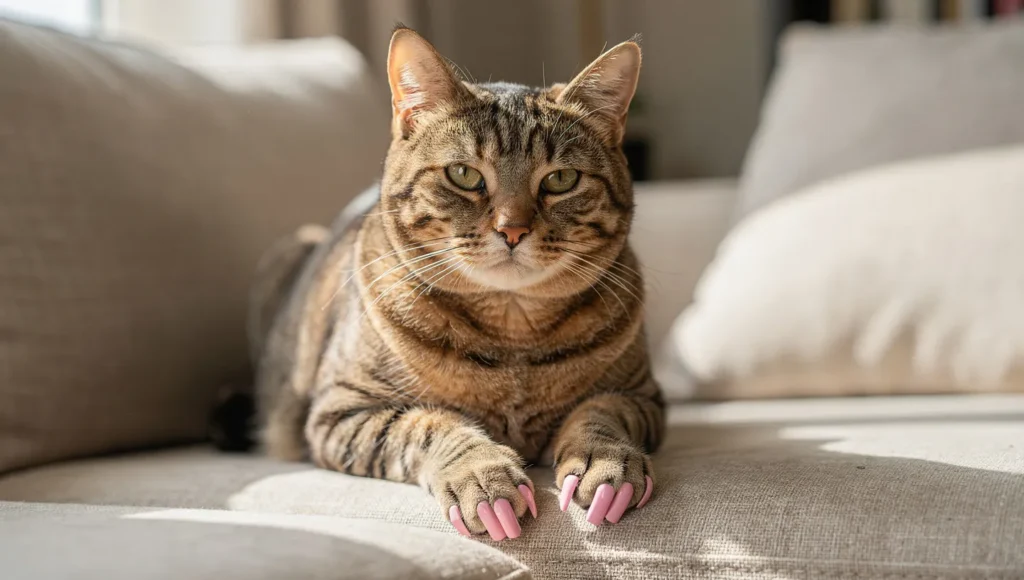
Table of Contents
- What Are Soft Claws for Cats?
- Are Soft Claws Safe for Cats?
- 🐾 How They Affect Your Cat’s Natural Behavior
- 🐾 Do They Cause Pain or Stress?
- 🐾 Can Cats Retract Their Claws Normally?
- Are Soft Claws Cruel or a Humane Alternative?
- ⚖️ Pros and Cons of Cat Nail Caps
- 🩺 Do Vets Recommend Soft Claws?
- 🛠️ How to Apply Soft Claws Safely (Step-by-Step)
- 🚫 When You Should NOT Use Nail Caps
- ❓ Frequently Asked Questions
- How long do nail caps last?
- Can kittens use nail caps?
- Do they stop scratching completely?
- Can the caps fall off early?
- Is the adhesive toxic?
- The Bottom Line
What Are Soft Claws for Cats?
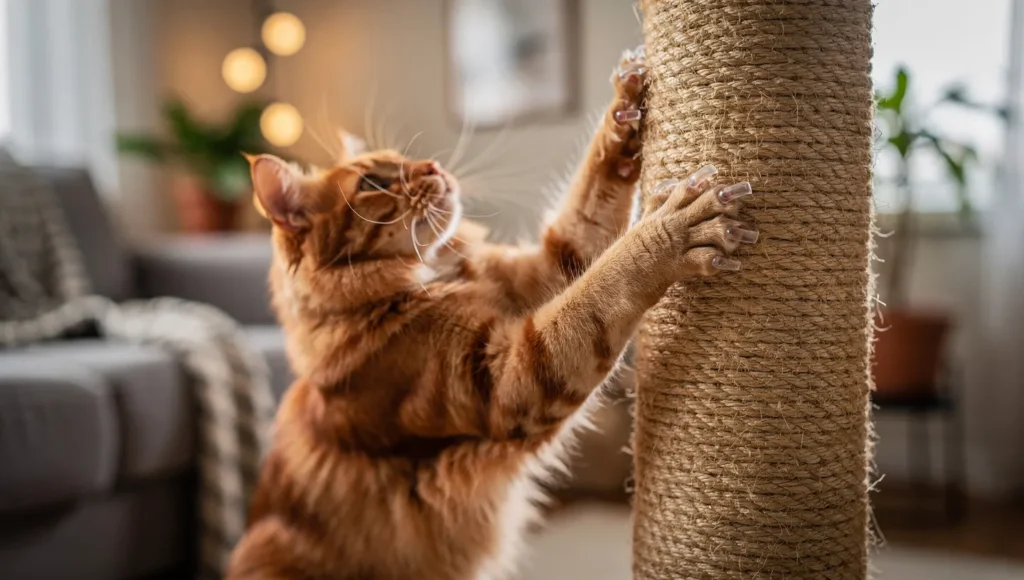
If you’ve never seen them before, the concept sounds a little wild: tiny vinyl caps that glue directly onto your cat’s claws.
Soft Claws is actually a brand name — the original nail cap product, developed by a veterinarian in the early 1990s. But today, “soft claws” has become a catch-all term most cat owners use to describe any brand of nail caps. You’ll also hear them called soft paws, claw caps, or vinyl nail caps.
Here’s how they work:
- Each cap is hollow inside, shaped to fit snugly over a cat’s natural claw
- A small amount of pet-safe adhesive is applied inside the cap
- The cap slides onto the trimmed claw and bonds as the glue dries
- Cats can still extend and retract their claws normally — the cap just blunts the sharp tip
They come in multiple sizes (from kitten to large cat) and a range of colors — everything from clear to neon pink to galaxy swirl, if that’s your thing.
How long do they last?
Typically 4 to 6 weeks per application, as they shed naturally with your cat’s normal claw growth cycle. You’ll usually find the occasional cap on the floor or in the carpet — that’s completely normal.
One thing I want to be clear about right away: nail caps do not prevent scratching behavior. Your cat will still scratch. The caps simply reduce the damage that scratching causes to furniture, skin, and other surfaces.
Are Soft Claws Safe for Cats?
This is the question that really matters — and the answer is: yes, when used correctly, soft claws are generally safe for most indoor cats.
But “generally safe” deserves some unpacking, because there are real nuances here that a lot of product pages gloss over.
🐾 How They Affect Your Cat’s Natural Behavior
Scratching isn’t bad behavior. It’s biological.
Cats scratch to shed the outer layer of their claws, to stretch their muscles, to mark territory (yes, they have scent glands in their paws), and to release stress. Nail caps don’t interfere with any of that — your cat can still go through the full scratching motion.
What changes is tactile feedback. Some cats don’t notice the caps at all. Others spend the first day or two shaking their paws, over-grooming their feet, or looking genuinely offended at their own hands.
In my experience, most cats adapt within 24 to 48 hours. A small percentage — particularly highly sensitive or anxious cats — never fully adjust and remain visibly bothered by the caps long-term. That’s important information, and we’ll come back to it.
🐾 Do They Cause Pain or Stress?
When applied correctly, nail caps should cause zero pain.
The adhesive is non-toxic and doesn’t contact the skin. The cap sits on the outer claw, not the quick (the sensitive blood vessel inside). If your cat is limping, obsessively biting at a specific cap, or showing signs of distress beyond initial adjustment — remove that cap and inspect the claw.
One mistake I often see: owners applying caps without trimming the claw first. This creates pressure points, especially as the claw grows, and can cause discomfort. Always trim before you cap.
Stress is a separate conversation. Some cats tolerate the application process fine. Others find it genuinely upsetting — especially if they’re already sensitive about paw handling. If your cat goes into full panic mode during nail trims, nail caps are going to be a challenge. (More on the application process in a later section.)
🐾 Can Cats Retract Their Claws Normally?
Yes — this is one of the most common misconceptions about nail caps.
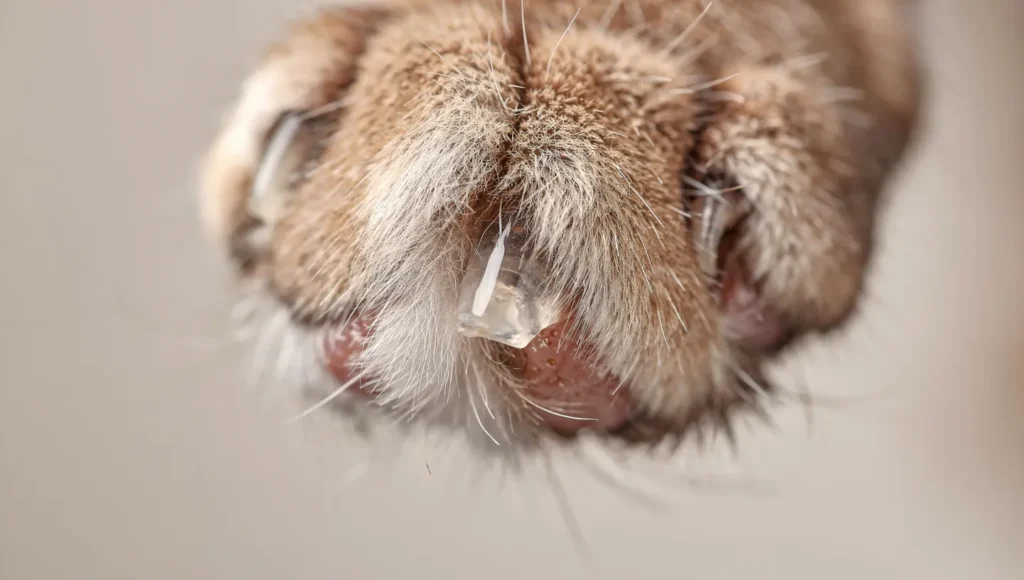
Unlike declawing, which permanently removes the claw and the bone it’s attached to, nail caps leave the claw structure completely intact. Your cat’s retraction mechanism — the tendons, ligaments, and digital flexors that allow the claw to extend and retract — is totally unaffected.
The cap moves with the claw. It doesn’t lock it in any position.
Are Soft Claws Cruel or a Humane Alternative?
Let’s address the elephant in the room — or rather, the declawed cat.
Declawing (onychectomy) is the surgical removal of the last bone in each of a cat’s toes. It’s the equivalent of amputating a human finger at the last knuckle. The procedure is associated with chronic pain, litter box avoidance, increased biting behavior, and long-term mobility issues.
It’s already banned or considered unethical in many countries, and veterinary organizations including the American Veterinary Medical Association have moved strongly against recommending it as a routine procedure.
Nail caps exist in a completely different category.
They’re non-surgical, reversible, and don’t alter any anatomy. When applied correctly and monitored regularly, they don’t cause lasting harm. The cat keeps its claws. The scratching instinct is preserved. You just lose the sharpness that’s destroying your sectional.
Are they perfect? No. Some cats hate them. Some owners find the maintenance inconvenient. A cap can occasionally trap moisture if it doesn’t shed properly, which can lead to minor nail issues if you’re not checking regularly.
But cruel? No — not by any reasonable definition.
The more honest framing: nail caps are a management tool. They work well for some cats and owners, and they’re not right for others. The goal should always be finding what works for your specific cat — not applying a one-size-fits-all solution.
If scratching behavior is the root issue you’re trying to solve, I’d also recommend reading this practical 7-day reset plan for stopping furniture scratching — it covers the behavioral side that nail caps alone won’t fix.
⚖️ Pros and Cons of Cat Nail Caps
No product is perfect — and nail caps are no exception. Here’s the honest breakdown:
✅ Pros:
- Completely non-surgical and reversible
- Protect furniture, skin, and other pets from sharp claws
- Humane alternative to declawing
- Available in multiple sizes and colors
- Most cats adapt within 24–48 hours
❌ Cons:
- Require reapplication every 4–6 weeks
- Some cats never fully adjust to wearing them
- Improper application can cause discomfort
- Not suitable for outdoor cats (removes a key defense mechanism)
- Can trap moisture if a cap fails to shed naturally — requires regular monitoring
The bottom line: they’re a solid tool when used thoughtfully. They’re not a set-it-and-forget-it solution.
🩺 Do Vets Recommend Soft Claws?
Most vets consider nail caps a reasonable, humane option — especially as an alternative to declawing. That said, recommendations vary based on your individual cat.
According to the American Veterinary Medical Association, declawing should only be considered after exhausting all alternatives — and nail caps are consistently cited among those alternatives.
Vets tend to recommend them when:
- The cat is strictly indoors
- The owner is committed to regular reapplication
- Scratching is causing real harm to people or property
They tend to advise against them when:
- The cat shows prolonged stress during or after application
- There are existing nail or paw health issues
- The cat spends any time outdoors
For a deeper look at safe claw maintenance between cap applications, this guide on trimming cat nails safely is worth bookmarking.
🛠️ How to Apply Soft Claws Safely (Step-by-Step)
Trim first — always. Never apply caps to untrimmed claws.
- Trim the claw tip — just the sharp point, avoiding the quick
- Fill the cap 1/3 full with the adhesive provided
- Slide the cap onto the claw and hold gently for 30–60 seconds
- Check for proper fit — the cap shouldn’t extend past the claw tip or press against the toe pad
- Reward immediately — treats, praise, whatever your cat responds to
Common mistakes to avoid:
- Using too much glue (causes the cap to stick to adjacent toes)
- Skipping the trim (creates pressure as the claw grows)
- Rushing the process (stressed cat = poor application)
Most owners get faster and more confident with each round. The first application is always the hardest.
🚫 When You Should NOT Use Nail Caps
Nail caps aren’t the right fit for every cat. Skip them if:
- Your cat goes outdoors — claws are a primary defense and escape tool
- Your cat is highly anxious — prolonged stress from caps can worsen existing anxiety issues. If your cat already shows signs of separation anxiety or chronic stress, check this guide on cat separation anxiety before adding another stressor
- There are existing paw or nail problems — inflammation, infection, or abnormal growth makes cap application risky
- Your cat shows warning signs — limping, obsessive chewing at the paws, or behavioral changes after application. Know what to watch for with these 10 signs your cat might be sick
Understanding your cat’s baseline body language also helps you catch early signs of discomfort — this expert guide to cat body language breaks it down clearly.
❓ Frequently Asked Questions
How long do nail caps last?
4 to 6 weeks. They shed naturally with claw growth — finding a cap on the floor is normal.
Can kittens use nail caps?
Yes, starting around 16 weeks, once the claws are large enough to hold a kitten-sized cap.
Do they stop scratching completely?
No — and they shouldn’t. Scratching is a biological need. Caps reduce damage, not the behavior itself.
Can the caps fall off early?
Yes, especially if the claw wasn’t trimmed first or too little glue was used. Check weekly and replace any missing caps promptly.
Is the adhesive toxic?
No — the glue used in quality nail cap products is non-toxic and pet-safe when used as directed.
The Bottom Line
Are soft claws safe for cats? For most indoor cats — yes. They’re non-invasive, reversible, and a genuinely humane alternative to declawing when used correctly and monitored consistently.
They work best for owners who are willing to stay on top of reapplication and pay attention to how their individual cat responds. They’re not a permanent fix, and they don’t replace the need to address scratching behavior at its root.
If you’re on the fence, start with one paw. See how your cat adjusts. Give it 48 hours before drawing conclusions.
Your cat keeps its claws. Your couch keeps its fabric. That’s a win.