
You’re sitting on the couch when you notice your cat freeze mid-sniff near your gym bag. Their mouth opens slightly, upper lip curls back, and for a few awkward seconds, they look… well, bizarre. Almost like they just smelled something offensive or tasted something foul.
This behavior, known as the cat flehmen response, is completely normal.
But here’s the thing: your cat isn’t disgusted. They’re analyzing.
The cat flehmen response is a natural behavior where a cat curls back its upper lip after smelling something intriguing. The cat flehmen response is a natural behavior in which a cat curls back its upper lip after smelling something. This action directs scent particles to the Jacobson’s organ, allowing cats to analyze pheromones and chemical signals more deeply.
If you’ve ever caught your cat making this face, you’ve witnessed one of the most fascinating examples of feline communication. It’s not a medical issue, not a sign of distress, and definitely not your cat judging your laundry choices (though it might look that way). It’s pure biology at work.
In this guide, we’ll break down exactly what triggers this behavior, why it’s completely normal, and when you should actually pay attention to similar facial expressions that might mean something else.

Table of Contents
- 👀 What Does the Flehmen Face Look Like?
- 🧬 Why Do Cats Flehmen? (The Science Behind It)
- The Jacobson’s Organ — Your Cat’s Secret Scent Analyzer
- 4 Main Reasons Cats Make the Flehmen Face
- 🔍 What Triggers the Flehmen Response in Cats?
- Common Triggers You’ll Notice at Home
- ✅ Is the Flehmen Response Normal in Cats?
- Yes — But Here’s What You Should Know
- Flehmen Response vs. Dental Problems — How to Tell
- 🩺 Should You Be Concerned? (When It’s Normal vs. When to Monitor)
- Signs It’s Just Natural Behavior
- When to Keep an Eye Out
- ❓ Quick FAQs About the Cat Flehmen Response
- Why does my cat open his mouth after smelling something?
- Do female cats have the flehmen response?
- Is flehmen behavior a sign of aggression?
- Can indoor cats show flehmen response?
- Final Thoughts
👀 What Does the Flehmen Face Look Like?
If you’ve never heard the term “flehmen response” before, you might have seen the behavior without knowing what to call it. And honestly? It’s hard to miss once you know what you’re looking for.
Many owners search for “cat open mouth after smelling” — and this is exactly what they’re seeing.
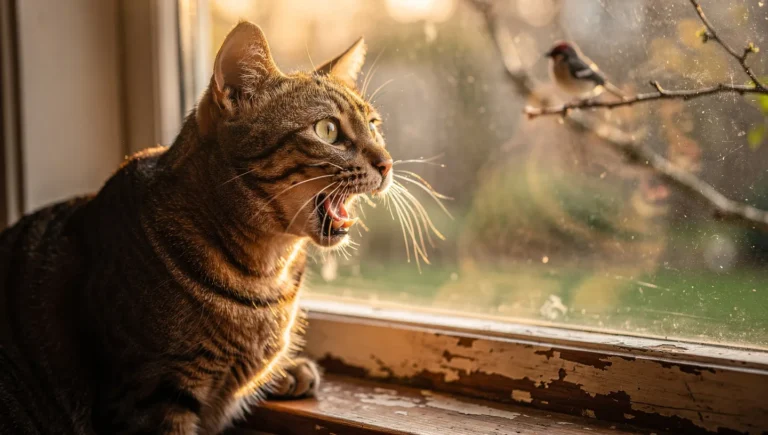
Here’s what the flehmen face typically looks like:
- Mouth slightly open — not wide, just parted enough to expose the front teeth
- Upper lip curled back — this is the signature move that makes the expression so distinctive
- Head tilted slightly upward — as if they’re “tasting” the air
- Eyes often half-closed or squinted — they’re concentrating, not in pain
- Frozen for a few seconds — the behavior is brief, lasting anywhere from 2 to 10 seconds
The whole thing looks a bit like your cat just caught a whiff of something shocking and paused to process it. Some owners describe it as a “stink face,” a “sneer,” or even a “weird smile.” But it’s none of those things.
It’s detection mode.
What makes this expression different from, say, a yawn or a hiss? The timing. The flehmen response almost always happens right after your cat investigates a smell. If your cat is making this face randomly, without sniffing something first, that’s a different story (more on that in the “Should You Be Concerned?” section).
One thing I’ve noticed over the years: male cats, especially intact (unneutered) males, tend to flehmen more often. But female cats absolutely do it too. It’s not exclusive to one gender, it’s just more common in certain situations involving territory and mating signals.
🧬 Why Do Cats Flehmen? (The Science Behind It)
Now that you know what it looks like, let’s talk about why it happens. And trust me, the science here is cooler than you’d think.
The Jacobson’s Organ — Your Cat’s Secret Scent Analyzer
Cats don’t just smell the world. They decode it.
Located on the roof of your cat’s mouth, just behind their front teeth, is a small structure called the Jacobson’s organ (or vomeronasal organ, if you want to get technical). According to Cornell Feline Health Center, this specialized organ plays a crucial role in how cats interpret chemical signals in their environment.
Here’s how it works: when your cat curls their lip and opens their mouth during the flehmen response, they’re creating a direct pathway for scent molecules to reach this organ. The air gets “pumped” into two tiny ducts that lead straight to the Jacobson’s organ, where the real analysis happens.
Think of it like this: regular sniffing is like reading the headline of a newspaper. The flehmen response? That’s reading the fine print.
This isn’t just about smelling. It’s about gathering information. Cats use this system to learn about other animals in the area, detect reproductive status, identify territorial boundaries, and even assess whether a new object in the house is safe or suspicious.

4 Main Reasons Cats Make the Flehmen Face
So what exactly is your cat analyzing when they make that face? Here are the four most common reasons:
1. Detecting Pheromones
This is the big one. Pheromones are chemical signals that cats (and many other animals) use to communicate without making a sound. These signals carry information about identity, emotional state, and reproductive readiness.
When a cat encounters urine marking from another cat, or even picks up scent trails left on furniture or grass, they’ll often flehmen to decode those signals. For intact male cats, this is especially common when they detect a female in heat nearby.
2. Investigating New or Strong Smells
Not all triggers are about other animals. Sometimes, your cat just encounters something with a powerful or unusual scent. This could be your shoes after a hike, a new piece of furniture, or even the bag you brought home from the grocery store.
In my experience, cats are incredibly curious about anything that smells “different” from their established environment. The flehmen response is their way of investigating without fully committing to the smell.
3. Analyzing Other Animals’ Scents
If you have multiple pets, you’ve probably seen one cat flehmen after sniffing another cat’s face, rear end, or favorite sleeping spot. This is normal social behavior. They’re gathering information about their housemate’s health, mood, and recent activities.
Even indoor-only cats will flehmen if they pick up scent traces of outdoor animals that you accidentally tracked inside on your clothes or shoes.
4. Exploring Unfamiliar Environments
Moving to a new home? Visiting the vet? Introducing a new room or piece of furniture? Cats often flehmen more frequently in new environments because there’s a flood of unfamiliar scents to process.
This behavior helps them build a mental map of their surroundings and assess whether the new space is safe. It’s one of the ways cats adapt to change, even if it looks a little odd to us.
🔍 What Triggers the Flehmen Response in Cats?
By now, you understand the “why.” But let’s get specific about the “what.” What are the most common triggers you’ll actually see in your home?
Common Triggers You’ll Notice at Home
Here’s a list of everyday situations that can spark the flehmen response:
- Dirty laundry or worn shoes — Human sweat carries a lot of chemical information. Your cat isn’t being weird, they’re just reading your scent profile.
- New furniture, bags, or packages — Anything that smells unfamiliar or carries outdoor scents is fair game for investigation.
- Other pets’ scents — Whether it’s a visiting dog, a neighbor’s cat, or your own multi-cat household, animals leave scent trails everywhere.
- Urine marking spots — This is especially common if you’ve recently adopted a new cat or if there’s been territorial tension in the house.
- Strong food smells — Some cats flehmen near certain types of fish, meat, or even aromatic herbs. It’s not always about pheromones, sometimes it’s just curiosity.
- Your hands after petting another animal — Yes, your cat knows you’ve been cheating on them. And yes, they’re gathering evidence.
One mistake I often see new cat owners make is assuming their cat is “offended” by a smell. But that’s not what’s happening. The flehmen response isn’t about disgust. It’s about data collection.
If your cat makes this face around something you think might be unsafe (like a cleaning product or a toxic plant), it’s worth removing the item just to be safe. But the behavior itself? Totally normal.

✅ Is the Flehmen Response Normal in Cats?
Short answer: yes. Completely normal.
Long answer: it’s not just normal, it’s actually a sign of a healthy, functioning sensory system. The flehmen response is hardwired into your cat’s biology. It’s not something they learn, it’s something they’re born knowing how to do.
Yes — But Here’s What You Should Know
While the behavior itself is natural, there are a few things worth understanding so you can tell the difference between normal flehmen and something that might need attention.
Gender and frequency: Intact male cats tend to flehmen more often than neutered males or females. This is because they’re more sensitive to reproductive pheromones and territorial signals. But don’t be surprised if your spayed female does it too, especially around unfamiliar scents or after meeting a new cat.
It’s brief: A normal flehmen response lasts just a few seconds. Your cat pauses, makes the face, processes the information, and moves on. If your cat is holding their mouth open for extended periods or seems unable to close it properly, that’s not flehmen. That’s a red flag.
No distress signals: During a true flehmen response, your cat should look focused, not distressed. They’re not pawing at their mouth, shaking their head, or drooling. They’re simply… analyzing.
One thing I’ve worked with cat owners on over the years is recognizing the difference between this behavior and something medical. Because here’s the truth: not every open-mouth expression is flehmen.
Flehmen Response vs. Dental Problems — How to Tell
This is where things get important. Some facial expressions can look like flehmen but are actually signs of pain or discomfort. Here’s a quick comparison to help you tell the difference:
| Flehmen Response | Dental Pain or Other Issues |
|---|---|
| Happens immediately after sniffing something | Happens randomly, not tied to smelling |
| Lasts only a few seconds | Persistent or repeating throughout the day |
| Mouth slightly open, lip curled | Mouth hanging open, sometimes drooling |
| No other symptoms (eating, grooming, playing normally) | Accompanied by drooling, pawing at mouth, reluctance to eat |
| Cat seems calm and focused | Cat seems uncomfortable or distressed |
If your cat is making mouth movements that don’t fit the flehmen pattern, especially if it’s happening frequently or paired with other symptoms, it’s worth a vet check. Dental disease, oral infections, and even foreign objects stuck in the mouth can cause similar expressions.
But if your cat flehmens after sniffing your gym bag and then goes back to napping like nothing happened? That’s textbook normal behavior.

🩺 Should You Be Concerned? (When It’s Normal vs. When to Monitor)
Most of the time, the flehmen response is nothing to worry about. But like any behavior, context matters.
Here’s how to know when it’s just your cat being a cat, and when you should keep an eye on things.
Signs It’s Just Natural Behavior
Your cat is fine if:
- The flehmen face happens occasionally, not constantly throughout the day
- It only lasts a few seconds and your cat moves on quickly
- Your cat is eating, drinking, playing, and grooming normally
- There’s no drooling, pawing at the mouth, or head shaking
- The behavior happens after your cat investigates a new or strong smell
In my experience, most cats flehmen a few times a week, sometimes more if they’re in a multi-cat household or if you’ve recently introduced something new to the environment. That’s expected.
If you’ve got an intact male cat or a recently adopted cat still adjusting to your home, you might see it even more often. That’s also normal.
When to Keep an Eye Out
You should monitor the situation if:
- Your cat’s mouth stays open for more than 10–15 seconds at a time
- The behavior happens multiple times per hour, without any apparent trigger
- Your cat is drooling excessively or pawing at their face
- There’s swelling around the mouth, redness on the gums, or bad breath (worse than usual)
- Your cat is refusing food or seems reluctant to chew
These signs don’t automatically mean something’s wrong, but they’re worth watching. If the symptoms persist for more than 24 hours, or if your cat seems genuinely uncomfortable, a vet visit is a good idea.
Remember: flehmen is about scent investigation. If your cat is making facial expressions that aren’t tied to smelling something, the behavior might not be flehmen at all.
For more insight into how cats communicate through body language, check out our guide on understanding cat body language. It covers everything from tail positions to ear movements, so you can read your cat’s signals with confidence.
And if your cat’s behavior seems stress-related (like excessive sniffing, pacing, or hiding), our article on why cats hide and when to worry can help you identify the difference between normal adjustment behavior and something that needs attention.
❓ Quick FAQs About the Cat Flehmen Response
Let’s wrap up with answers to the most common questions cat owners ask about this behavior.
Why does my cat open his mouth after smelling something?
Your cat is using the flehmen response to analyze scent molecules more deeply. By opening their mouth and curling their upper lip, they’re directing air to the Jacobson’s organ, a specialized scent detector located on the roof of their mouth. This organ picks up chemical signals (like pheromones) that regular sniffing can’t detect. It’s not about tasting or disgust, it’s about gathering information.
Do female cats have the flehmen response?
Yes, absolutely. While intact male cats tend to flehmen more frequently (especially around reproductive scents), female cats use this behavior too. Spayed females, intact females, and even kittens can all make the flehmen face when they encounter intriguing or unfamiliar smells. It’s a universal feline behavior, not limited to one gender.
Is flehmen behavior a sign of aggression?
No, not at all. The flehmen response is a sensory behavior, not an emotional one. Your cat isn’t angry, threatened, or preparing to attack. They’re simply analyzing a scent. That said, if your cat flehmens after smelling another cat’s marking and then shows signs of territorial stress (like hissing, pacing, or tail lashing), those are separate behaviors worth addressing.
Can indoor cats show flehmen response?
Yes, even cats who never go outside will flehmen. Indoor cats encounter plenty of scent triggers: your shoes, bags from the store, visiting guests, scent traces from outdoor animals you accidentally bring inside, or even the residue left by other pets. Cats are incredibly sensitive to chemical signals, and their environment is full of them, even indoors.
For more on how to keep your indoor cat mentally stimulated and happy, take a look at our post on the best interactive toys for cats. Enrichment plays a huge role in reducing stress and supporting natural behaviors like scent investigation.
Final Thoughts
The cat flehmen response might look strange the first time you see it, but now you know: it’s one of the most normal, natural things your cat can do. It’s not a medical issue, not a sign of distress, and definitely not something to worry about in most cases.
Your cat is simply doing what cats have done for thousands of years: reading the chemical language of the world around them. Whether they’re investigating your gym shoes, analyzing a housemate’s scent, or processing the smell of a new piece of furniture, they’re gathering information in a way that we, as humans, can’t fully experience.
So the next time you catch your cat mid-flehmen, frozen with that weird curled-lip expression, just smile. You’re watching biology in action. And honestly? It’s pretty amazing.
If you found this guide helpful, you might also enjoy learning about other quirky feline behaviors, like why cats knead or the secret healing power of purring. The more you understand how your cat communicates, the stronger your bond becomes.