
You’ve probably watched your cat nibble on a blade of grass and wondered — should I be worried?
Most cat owners assume grass-eating means something is wrong. In my experience, it’s usually the opposite.
Cat grass benefits go far beyond what most people expect. From calming an upset stomach to keeping indoor cats mentally engaged, this simple green plant plays a surprisingly important role in your cat’s daily wellbeing.
In this guide, you’ll discover exactly why cats eat grass, what it does for their health, and how to use it safely at home.
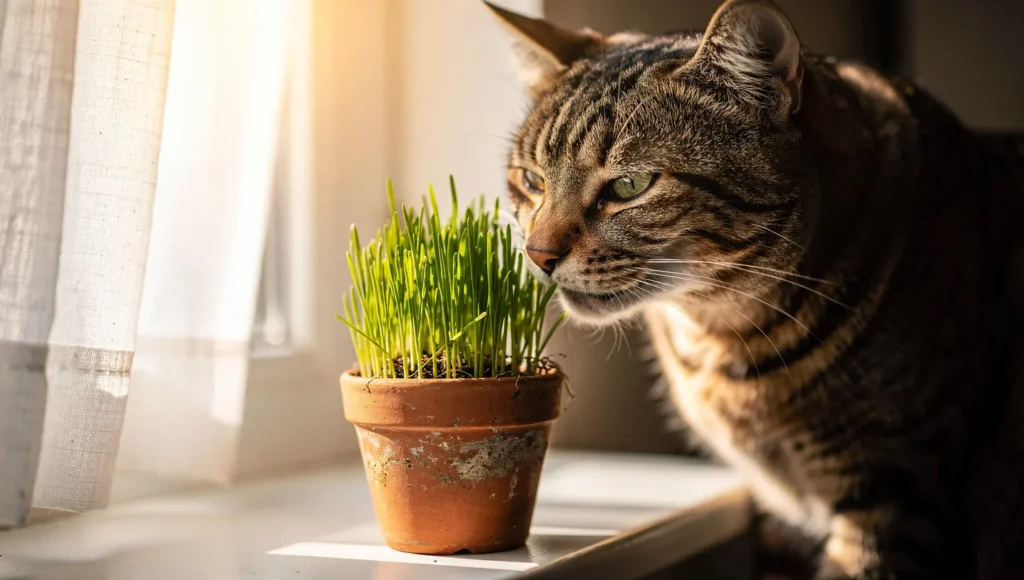
Table of Contents
- What Is Cat Grass?
- 🌱 Common Types of Cat Grass
- Why Do Cats Eat Grass?
- 🐾 Instinct from Wild Ancestors
- 🌿 Helping Digestion
- 🧶 Hairball Control
- 🌾 Natural Fiber Source
- Cat Grass Benefits: 7 Surprising Ways It Helps Your Cat
- 1️⃣ Helps with Digestion
- 2️⃣ Reduces Hairballs
- 3️⃣ Provides Vitamins and Nutrients
- 4️⃣ Supports Natural Detox
- 5️⃣ Encourages Natural Behavior
- 6️⃣ Mental Stimulation for Indoor Cats
- 7️⃣ Safe Plant Alternative
- Why Do Cats Eat Grass and Then Vomit?
- ✅ When Vomiting Is Normal
- ⚠️ When Vomiting Is a Warning Sign
- Is Cat Grass Good for Indoor Cats?
- 💡 Expert Tip
- How Often Should Cats Eat Cat Grass?
- Is Cat Grass Safe for Cats?
- ⚠️ Potential Risks
- ✅ How to Keep It Safe
- 🌱 How to Grow Cat Grass at Home
- What You Need
- Step-by-Step Growing Guide
- How Much Cat Grass Can a Cat Eat?
- ⚠️ Signs Your Cat Might Be Eating Too Much Grass
- ❓ FAQ — People Also Ask
- Is cat grass good for cats?
- Why do cats eat grass and throw up?
- How often should a cat eat cat grass?
- Can kittens eat cat grass?
- Is cat grass necessary for indoor cats?
What Is Cat Grass?
Cat grass isn’t a single plant — it’s a term used for several fast-growing grasses that are safe for cats to chew and digest.
Unlike the outdoor lawn grass that may be treated with pesticides or fertilizers, cat grass is grown specifically for pets. It’s clean, chemical-free, and easy to grow indoors.
Most cat grass kits you’ll find at pet stores contain one or a mix of these grasses, all of which are non-toxic and gentle on your cat’s digestive system.
🌱 Common Types of Cat Grass
| Grass Type | Key Benefit |
|---|---|
| Wheatgrass | Rich in chlorophyll and vitamins |
| Oat grass | Gentle on digestion, high in fiber |
| Barley grass | Supports detox and gut health |
| Rye grass | Fast-growing, great for active nibblers |
Each type offers slightly different nutritional value, but all are safe choices for most cats.
Why Do Cats Eat Grass?
This is one of the most common questions I hear from cat owners — and one of the most misunderstood.
Cats don’t eat grass because something is wrong. They eat it because something is right — their instincts are working exactly as nature intended.
🐾 Instinct from Wild Ancestors
Cats in the wild regularly consumed grass as part of their natural environment. When a cat caught and ate prey, plant material from the prey’s stomach often came with it.
Over thousands of years, grass-eating became a built-in behavior — a way for cats to regulate what goes in and what comes out.
🌿 Helping Digestion
Grass acts as a natural digestive aid. The rough texture stimulates movement in the gut, helping food pass more efficiently.
One mistake I often see is owners assuming their cat has a digestive problem just because it eats grass. In most cases, it’s simply the cat doing its own digestive maintenance.
🧶 Hairball Control
Every cat that grooms itself swallows loose fur. That fur accumulates in the stomach and, without help, becomes a hairball.
Grass adds bulk and stimulates the muscles that push hairballs through — or triggers a gentle vomit to expel them before they become a problem.
If your cat struggles with hairballs, you might find it useful to read our full guide on wh cats throw up after eating — it covers the difference between hairball vomiting and something more serious.
🌾 Natural Fiber Source
Cats are obligate carnivores, but that doesn’t mean fiber has no place in their diet.
Grass provides soluble and insoluble fiber that supports healthy bowel movements, helps prevent constipation, and keeps the gut environment balanced.
Cat Grass Benefits: 7 Surprising Ways It Helps Your Cat
This is where it gets interesting. Most owners know cats eat grass — but very few understand just how much it does.
1️⃣ Helps with Digestion
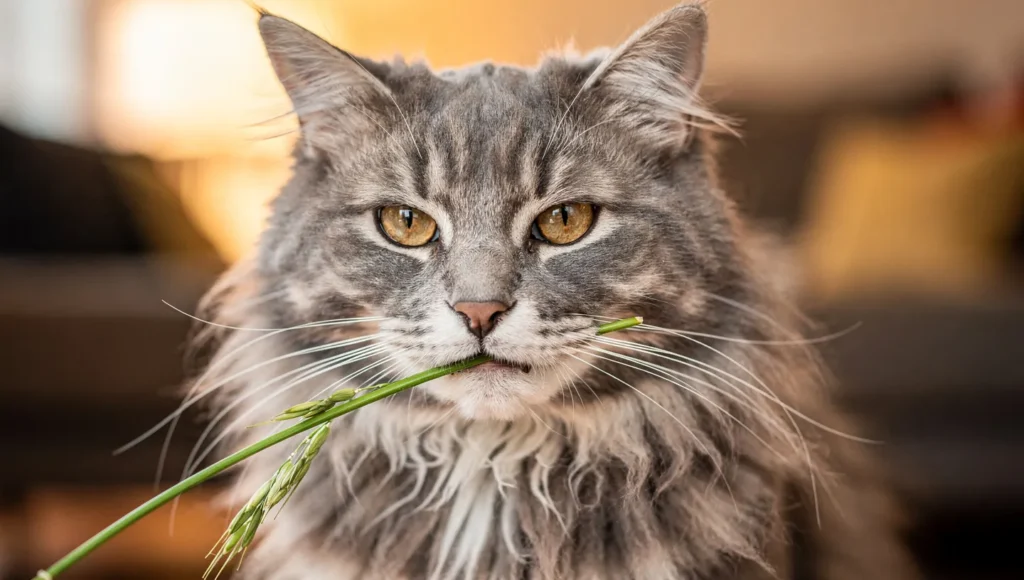
Cat grass gently stimulates the digestive tract, encouraging regular gut movement and reducing bloating or discomfort after meals.
I’ve worked with cats that had chronic soft stools — and simply adding a small pot of oat grass to their routine made a noticeable difference within two weeks.
2️⃣ Reduces Hairballs
This is probably the most well-known benefit — and it’s very real.
The fiber in cat grass binds with swallowed fur and helps move it through the digestive system. Cats that regularly chew grass tend to produce fewer hairballs and vomit less frequently.
For long-haired breeds especially, this is a genuine health benefit worth paying attention to. Check out our guide on how to brush your cat for a full routine that reduces shedding and keeps hairballs under control.
3️⃣ Provides Vitamins and Nutrients
Wheatgrass and barley grass contain small amounts of:
- Chlorophyll — supports cellular health and acts as a natural deodorizer
- Folic acid — essential for oxygen transport in the blood
- Vitamins A, C, and E — antioxidants that support immune health
- Trace minerals — including magnesium, calcium, and potassium
While cat grass isn’t a meal replacement, these micronutrients are a genuine bonus on top of your cat’s regular diet.
To understand how grass fits into the bigger picture, our guide on what cats can eat covers the full range of safe and beneficial additions to a cat’s diet.
4️⃣ Supports Natural Detox
Chlorophyll — found in high concentrations in wheatgrass — has natural detoxifying properties. It binds to certain toxins in the gut and helps flush them out before they’re absorbed.
This doesn’t mean cat grass is a medical detox treatment. But it does support the body’s existing ability to clean itself — quietly, naturally, every time your cat takes a nibble.
According to research published by the National Institutes of Health, chlorophyll has demonstrated antioxidant and antimutagenic properties in several animal studies.
5️⃣ Encourages Natural Behavior
Indoor cats lose access to many of the sensory experiences their instincts expect — textures to bite, surfaces to scratch, things to investigate.
Cat grass restores one of those missing experiences. Chewing, tearing, and nosing through grass activates the predatory and exploratory side of your cat’s brain.
It’s a small addition with a big behavioral payoff.
6️⃣ Mental Stimulation for Indoor Cats
Boredom is one of the most underestimated problems for indoor cats. A pot of cat grass gives them something real to interact with — something that smells different, feels different, and changes day by day as it grows.
In my experience, cats with access to cat grass are calmer, less destructive, and less likely to obsess over houseplants.
7️⃣ Safe Plant Alternative
Most popular houseplants — from peace lilies to pothos — are toxic to cats.
Cat grass gives your cat a safe, approved plant to chew on, which significantly reduces the chances of them going after something dangerous.
If you want to know exactly which plants to keep away from your cat, our full guide on toxic plants for cats is a resource every indoor cat owner should bookmark.
Why Do Cats Eat Grass and Then Vomit?
It looks alarming the first time you see it. But in most cases, it’s completely normal.
Grass triggers a mild gag reflex that helps cats expel whatever their stomach needs to get rid of — swallowed fur, undigested food, or excess bile. Think of it as a built-in reset button.
✅ When Vomiting Is Normal
- Happens occasionally (once or twice a week)
- Clear liquid or small amounts of undigested grass
- Cat returns to normal behavior immediately after
- No signs of pain or distress
⚠️ When Vomiting Is a Warning Sign
- Vomiting repeatedly in a single day
- Blood in the vomit
- Cat seems lethargic, refuses food, or hides afterward
- Vomiting happens even without eating grass
If you’re seeing any of these, our guide on why cats throw up after eating breaks down exactly when to monitor at home and when to act.
Is Cat Grass Good for Indoor Cats?
Absolutely — and arguably more important for them than outdoor cats.
Indoor cats don’t have access to the sensory variety that nature provides. Cat grass fills a real gap:
- Replaces the instinct to graze that would naturally happen outdoors
- Redirects chewing behavior away from toxic houseplants
- Supports gut health without any outdoor exposure risks
- Reduces anxiety-related behaviors linked to environmental boredom
I’ve seen indoor cats that were constantly knocking things over or attacking houseplants calm down noticeably once a pot of cat grass was added to their environment. It’s a small change with a surprisingly big impact.
💡 Expert Tip
Rotate between two pots of cat grass — one actively growing, one being used. This keeps the grass fresh, prevents overgrazing, and gives your cat a consistent supply without gaps. Most cats won’t touch wilted or dry grass, so freshness matters more than quantity.
How Often Should Cats Eat Cat Grass?
There’s no strict schedule — cats self-regulate naturally.
Most cats nibble a few blades per day. That’s normal and healthy. Let your cat decide how much it wants, as long as the grass is clean and pesticide-free.
Watch for: daily vomiting, large quantities consumed in one sitting, or sudden obsessive chewing — these are worth monitoring.
Is Cat Grass Safe for Cats?
Yes — with one important condition: the grass itself must be clean.
⚠️ Potential Risks
- Outdoor grass may contain pesticides, herbicides, or fertilizers
- Mold can develop if the soil stays too wet
- Confusion with toxic plants — always label your pots clearly
✅ How to Keep It Safe
- Always grow cat grass indoors in clean, pesticide-free soil
- Trim and replace grass before it turns yellow or moldy
- Buy from reputable pet brands or grow from certified organic seeds
According to the ASPCA’s toxic plant database, wheatgrass, oat grass, and barley grass are all listed as non-toxic to cats — making them the safest choices for home growing.
🌱 How to Grow Cat Grass at Home
Simple, cheap, and ready in under a week.
What You Need
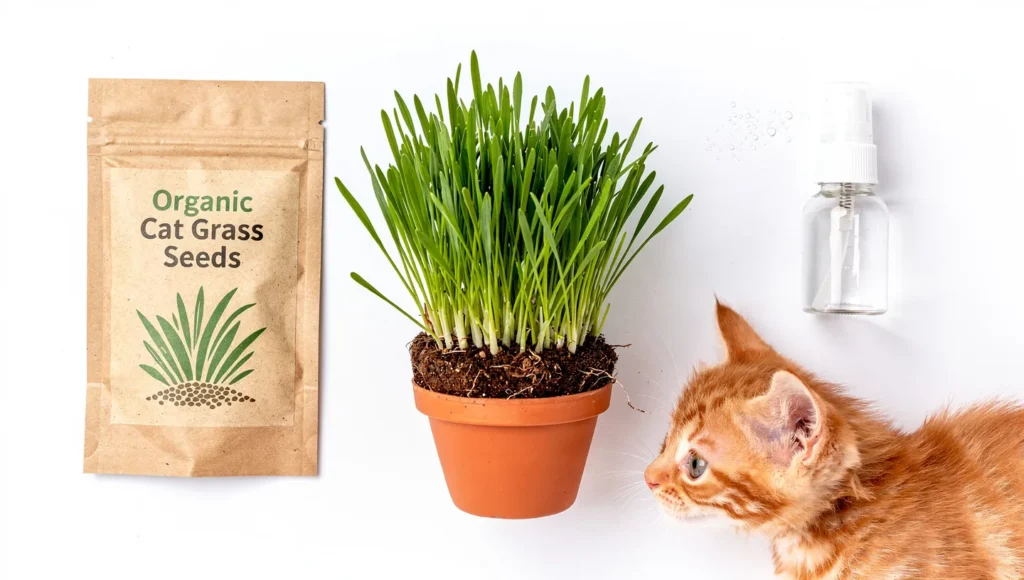
- Organic wheatgrass or oat grass seeds
- A shallow pot or tray with drainage holes
- Potting soil (chemical-free)
- A sunny windowsill or grow light
Step-by-Step Growing Guide
- Fill the pot with 2–3 inches of soil
- Scatter seeds evenly across the surface
- Cover lightly with a thin layer of soil
- Water gently — keep moist but not soaked
- Place in indirect sunlight
- Sprouts appear in 3–5 days, ready to use in 7–10 days
How Much Cat Grass Can a Cat Eat?
A few blades per day is the sweet spot. There’s no fixed gram measurement — cats are good at self-limiting when grass is always available.
The key word is available. Cats that only get grass occasionally tend to overeat it when they do. Keep a fresh pot accessible and most cats will graze lightly and consistently.
For context on how diet variety works for cats overall, our cat hydration guide covers how food texture and plant matter both contribute to your cat’s daily fluid and nutrient intake.
⚠️ Signs Your Cat Might Be Eating Too Much Grass
- Vomiting more than 2–3 times per week
- Loose stools or diarrhea after grazing
- Lethargy or loss of appetite following grass consumption
- Eating grass obsessively and ignoring regular food
If you notice these signs consistently, reduce access temporarily and consult your vet — occasional overconsumption is harmless, but patterns matter.
❓ FAQ — People Also Ask
Is cat grass good for cats?
Yes. Cat grass supports digestion, helps control hairballs, provides trace nutrients, and encourages natural behavior — especially for indoor cats.
Why do cats eat grass and throw up?
Grass stimulates the gag reflex, which helps cats expel fur, bile, or undigested material. Occasional vomiting after eating grass is normal and self-regulating.
How often should a cat eat cat grass?
There’s no set schedule. Most cats nibble a few blades daily. Keep fresh grass available and let your cat self-regulate.
Can kittens eat cat grass?
Yes, but introduce it slowly after 8 weeks of age. Start with very small amounts and monitor for any digestive upset.
Is cat grass necessary for indoor cats?
Not strictly necessary — but highly beneficial. It replaces natural grazing instincts, reduces boredom, and keeps cats away from toxic houseplants.