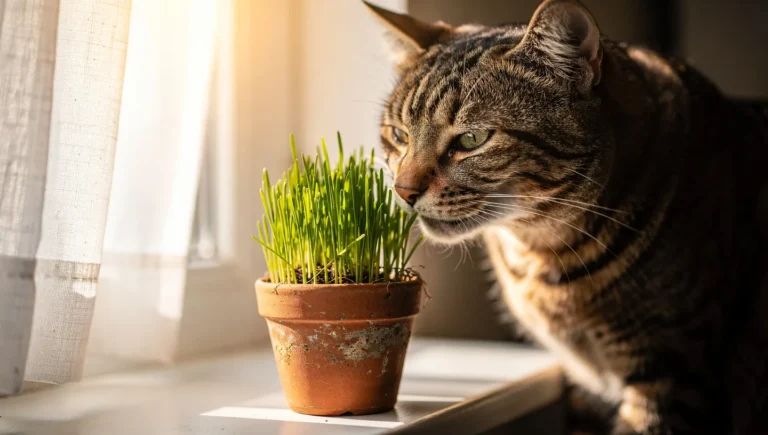

Nutritional yeast for cats is often the secret trick behind suddenly empty food bowls — even for the pickiest eaters.
You sprinkle a little on their food — and suddenly, the pickiest cat in the world cleans the bowl.
That’s the moment most cat owners discover nutritional yeast. And once you see it work, you want to understand it. Is it actually good for them? How much is too much? And why does it work like magic on cats who otherwise refuse everything?
I’ve seen this play out dozens of times. Cat owners reaching for nutritional yeast as a last resort — and being genuinely shocked by the results. But I’ve also seen what happens when it’s used wrong. So before you make it a daily habit, let’s go through what the research and real-world experience actually say.
Table of Contents
- Is Nutritional Yeast Safe for Cats?
- ✅ Quick Expert Answer
- ✅ When It Is Safe
- ⚠️ When It Becomes Dangerous
- Why Cats Love Nutritional Yeast (The “Magic Dust” Effect)
- 🌿 Natural Umami Taste
- 🍽️ A Real Tool for Picky Eaters
- 🧠 Behavioral Psychology
- 🌟 7 Proven Benefits of Nutritional Yeast for Cats
- 1. Rich in B Vitamins
- 2. Supports Skin & Coat Health
- 3. 🍴 Boosts Appetite Naturally
- 4. 💪 Adds Usable Protein
- 5. 🦠 Supports Digestive Health
- 6. ⚡ May Support Energy Levels
- 7. 🎯 Enhances Food Palatability
- 💡 Expert Tip
- ⚠️ 5 Hidden Risks of Nutritional Yeast for Cats
- 🔬 Nutritional Yeast vs Brewer’s Yeast vs Baker’s Yeast
- 📏 How Much Nutritional Yeast Should You Give Your Cat?
- 🥄 How to Use Nutritional Yeast for Cats (Step-by-Step)
- How to Choose the Best Nutritional Yeast for Cats
- 🧠 Special Cases: When to Be Extra Careful
- Nutritional Yeast for Cats with Kidney Disease
- Nutritional Yeast for Cats with Diarrhea
- Can Cats Eat Nutritional Yeast Daily?
- ❓ Quick Answers: Everything Else You’re Wondering About
- Is nutritional yeast safe for cats?
- How much nutritional yeast can I give my cat?
- Is nutritional yeast the same as brewer’s yeast?
- Is nutritional yeast bad for cats?
- Final Takeaway
Is Nutritional Yeast Safe for Cats?
Nutritional yeast is generally safe for cats when used in small amounts and in its plain, deactivated form — free from additives like garlic, onion, or artificial flavoring.
✅ Quick Expert Answer
Yes — with conditions.
Nutritional yeast (Saccharomyces cerevisiae, deactivated) is not toxic to cats. It’s a food-grade ingredient with a solid nutritional profile. But “not toxic” doesn’t automatically mean “use freely.” Context matters a lot here.
✅ When It Is Safe
- It’s plain and unflavored (no garlic, onion, or spice blends)
- Used as an occasional food topper, not a daily supplement
- Given in small amounts (more on exact dosage below)
- Your cat has no history of kidney disease, yeast sensitivity, or inflammatory conditions
⚠️ When It Becomes Dangerous
- When the product contains garlic or onion powder — both are toxic to cats
- When given in large or frequent amounts to cats with kidney issues (due to phosphorus content)
- When used as a substitute for a balanced diet
- When a cat shows signs of GI distress and the owner keeps giving it
One mistake I often see is cat owners assuming that because something is “natural” or “human-grade,” it’s automatically safe in any amount. With nutritional yeast, the dose is everything.
Why Cats Love Nutritional Yeast (The “Magic Dust” Effect)
If you’ve ever watched a picky cat suddenly devour food they’ve been ignoring for days — just because you added a pinch of nutritional yeast — you already know what I’m talking about.
🌿 Natural Umami Taste
Nutritional yeast has an intense savory, umami-forward flavor profile. It naturally contains glutamates — the same compounds that make food taste rich and deeply satisfying. Cats are hardwired to seek out protein-rich, savory flavors, and nutritional yeast hits that receptor perfectly.
🍽️ A Real Tool for Picky Eaters
In my experience, nutritional yeast is one of the most effective appetite stimulants for cats who are transitioning to new food or recovering from illness. The smell alone is enough to pull hesitant cats toward the bowl.
If you’re switching your cat’s food and hitting a wall, you can read more about making that process smoother in our guide on how to switch cat food safely.
🧠 Behavioral Psychology
Cats respond strongly to scent before taste. Nutritional yeast has a powerful aroma that triggers the feeding response — especially in cats who’ve become “bored” with their current food. It’s not manipulation. It’s just working with your cat’s biology.
🌟 7 Proven Benefits of Nutritional Yeast for Cats
Benefits of nutritional yeast for cats go beyond just making food taste better. Here’s what the nutritional profile actually delivers.
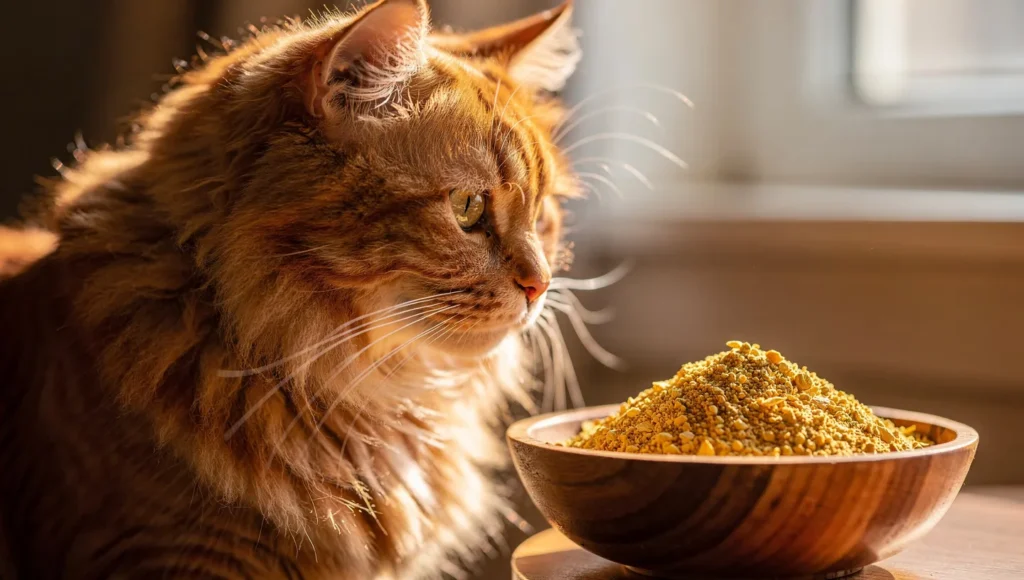
1. Rich in B Vitamins
Nutritional yeast is one of the most concentrated natural sources of B-complex vitamins — particularly B1 (thiamine), B2 (riboflavin), B3 (niacin), B6, and B9 (folate).
These aren’t optional extras for cats. B vitamins support:
- Neurological function
- Energy metabolism
- Red blood cell production
- Proper liver function
Cats who are eating a limited diet or recovering from illness are often subtly deficient in B vitamins — and this is where nutritional yeast can genuinely help.
According to research published in the National Library of Medicine, B vitamin adequacy plays a significant role in feline metabolic health, particularly B3 and B6, which cats cannot synthesize efficiently on their own.
2. Supports Skin & Coat Health
The combination of B vitamins — especially biotin — and the amino acid profile in nutritional yeast supports healthy skin cell turnover and coat quality.
I’ve worked with cats that came in with dull, flaky coats and within a few weeks of dietary adjustments (including small amounts of nutritional yeast), the difference was visible. This isn’t a miracle cure — but it’s a real contributing factor.
3. 🍴 Boosts Appetite Naturally
As covered above — the umami hit from nutritional yeast is one of the most reliable ways to encourage a reluctant cat to eat. This is especially useful for:
- Senior cats with reduced appetite
- Cats recovering from illness or surgery
- Cats being transitioned to new food
4. 💪 Adds Usable Protein
Nutritional yeast contains roughly 50% protein by dry weight, made up of all essential amino acids — including lysine and methionine, which are critical for cats.
It’s not a protein replacement for meat. Cats are obligate carnivores and need animal-based protein as the foundation of their diet. But as a supplement, nutritional yeast adds a meaningful protein contribution.
For a complete picture of what cats actually need nutritionally, our guide on what cats eat and the best diet for a healthy cat covers the full picture.
5. 🦠 Supports Digestive Health
Nutritional yeast contains beta-glucans — a type of soluble fiber with prebiotic properties. These feed the beneficial bacteria in your cat’s gut microbiome, which supports:
- Smoother digestion
- Reduced bloating
- More consistent stool formation
This is different from baker’s yeast, which is active and can actually cause digestive disruption. Nutritional yeast is deactivated — it feeds the good bacteria without fermenting in the gut.
6. ⚡ May Support Energy Levels
The B vitamin complex — particularly B1, B2, and B3 — plays a direct role in how efficiently the body converts food into cellular energy (ATP production).
Cats who are lethargic due to suboptimal nutrition (not due to illness) sometimes show improved alertness and activity when their B vitamin intake improves. This is a supporting role, not a cure — but it’s worth noting.
7. 🎯 Enhances Food Palatability
This one is underrated from a health perspective. A cat who actually eats their food consistently — without skipping meals — is a healthier cat. Nutritional yeast makes food more appealing, which means better compliance with whatever diet you’re trying to maintain.
If your cat has a history of vomiting after meals or inconsistent eating, it’s worth exploring underlying causes too. Our guide on why cats throw up after eating breaks down the most common reasons.
💡 Expert Tip
If you’re using nutritional yeast to boost appetite, start with less than ¼ teaspoon on top of wet food — not mixed in. This way you can see exactly how much your cat is consuming, and you can adjust gradually based on their response.
⚠️ 5 Hidden Risks of Nutritional Yeast for Cats
Nutritional yeast for cats side effects are real — and often overlooked. Here’s what to watch for:
- Excess phosphorus — Nutritional yeast is high in phosphorus. For cats with kidney disease, this is a serious concern. Damaged kidneys can’t filter phosphorus efficiently, which accelerates decline.
- Kidney strain — Even in healthy cats, consistent high-phosphorus intake adds long-term pressure on the kidneys. Use it sparingly.
- Allergic reactions — Rare, but possible. Watch for excessive scratching, skin irritation, or GI upset after introduction.
- Overfeeding risks — Too much disrupts the nutritional balance of a carefully chosen diet. More is not better here.
- Medical interactions — Cats on prescription diets or managing chronic conditions (IBD, CKD, diabetes) should only have nutritional yeast with vet approval.
For a full breakdown of foods that can silently harm your cat, check our guide on human foods toxic to cats.
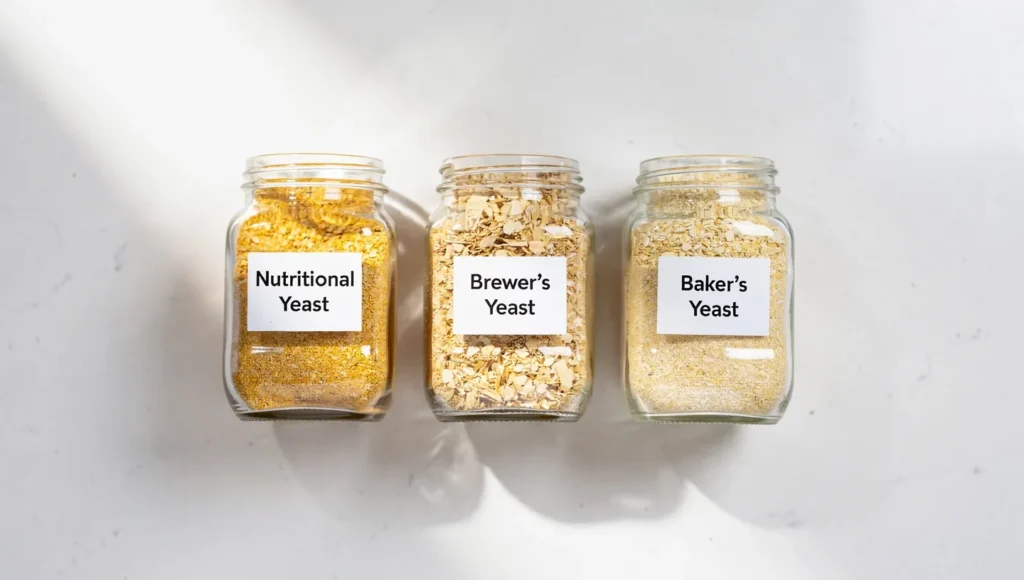
🔬 Nutritional Yeast vs Brewer’s Yeast vs Baker’s Yeast
Not all yeast is the same — and the differences matter.
| Type | Active? | Safe for Cats? | Key Notes |
|---|---|---|---|
| Nutritional Yeast | ❌ Deactivated | ✅ Yes (plain only) | Best option — rich in B vitamins |
| Brewer’s Yeast | ❌ Deactivated | ✅ Generally yes | Similar benefits, slightly bitter taste |
| Baker’s Yeast | ✅ Active | ❌ No | Can ferment in the gut — dangerous |
The rule: Always deactivated, always plain, always check the ingredient list for garlic or onion powder.
📏 How Much Nutritional Yeast Should You Give Your Cat?
Recommended starting dose: ¼ teaspoon (about 1g) sprinkled over food, 2–3 times per week.
- Start with ⅛ teaspoon to test tolerance
- Never exceed ½ teaspoon per serving
- Not recommended daily — treat it as an occasional topper, not a staple
- Cats with kidney disease: Avoid entirely unless cleared by a vet
Signs of overfeeding: loose stools, gas, reduced appetite, or vomiting. If any appear — stop and wait 5–7 days before trying again at a lower dose.
🥄 How to Use Nutritional Yeast for Cats (Step-by-Step)
Simple, practical, effective:
- Start small — ⅛ teaspoon on top of wet food, not mixed in
- Observe — Watch for GI changes over 48 hours
- Increase gradually — Move to ¼ teaspoon if no issues appear
- Keep frequency low — 2–3x per week maximum
- Pair with wet food — The moisture helps with digestion and the flavor combination is more appealing to most cats
Avoid adding it to dry kibble as the primary method — it tends to fall off and get wasted, and dry food already stresses hydration levels. For context on why hydration matters so much, our complete cat hydration guide explains the full picture.
How to Choose the Best Nutritional Yeast for Cats
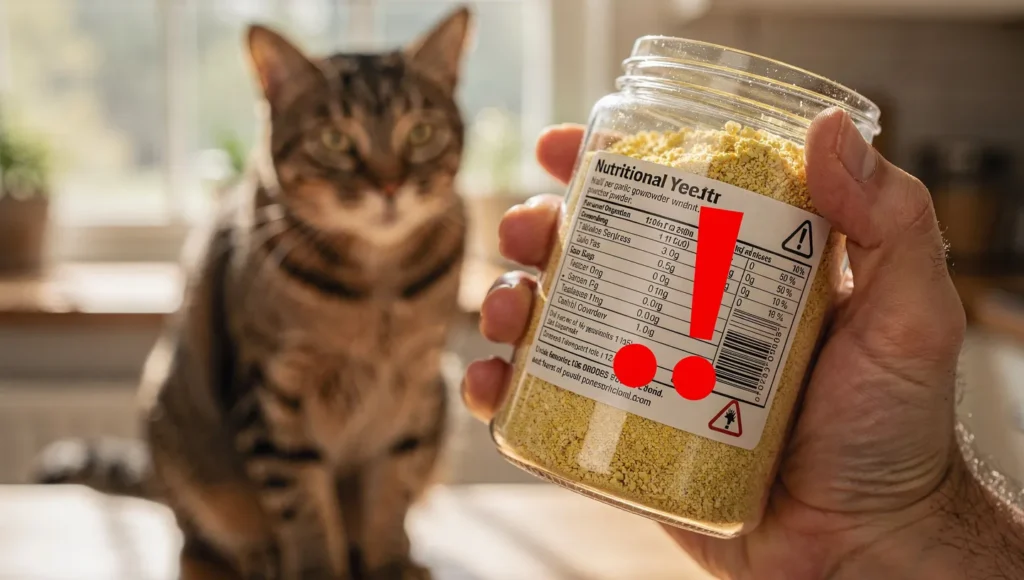
What to look for on the label:
- ✅ “Deactivated” or “inactive” yeast — active yeast is dangerous
- ✅ Single ingredient — just yeast, nothing added
- ✅ Flakes or powder — both work, flakes are easier to dose
- ❌ Garlic powder — toxic to cats, found in many human-grade blends
- ❌ Onion powder — equally toxic, often hidden in flavored versions
- ❌ Artificial flavoring or sodium — unnecessary and potentially harmful
Brands marketed for humans are usually fine — just read every label, every time. Formulations change.
Understanding how to read ingredient lists properly is a skill that protects your cat long-term. Our guide on how to read cat food labels covers exactly what to look for.
🧠 Special Cases: When to Be Extra Careful
Nutritional Yeast for Cats with Kidney Disease
Avoid it. The phosphorus load — even in small amounts — is not worth the risk for cats already managing CKD. Stick to vet-prescribed, phosphorus-controlled diets.
Nutritional Yeast for Cats with Diarrhea
Pause immediately. If your cat has loose stools, adding nutritional yeast won’t help and may worsen GI irritation. Reintroduce only after stools normalize — and at a lower dose.
Can Cats Eat Nutritional Yeast Daily?
No. Even in healthy cats, daily use increases phosphorus accumulation and removes the “occasional supplement” safety margin. 2–3 times per week is the practical ceiling.
❓ Quick Answers: Everything Else You’re Wondering About
Is nutritional yeast safe for cats?
Yes — when it’s plain, deactivated, and used in small amounts. Avoid any product containing garlic, onion, or artificial additives.
How much nutritional yeast can I give my cat?
Start at ⅛ teaspoon and work up to ¼ teaspoon maximum, 2–3 times per week. Never daily.
Is nutritional yeast the same as brewer’s yeast?
Similar, but not identical. Both are deactivated and generally safe. Nutritional yeast is more neutral in flavor; brewer’s yeast has a slightly bitter edge. Both are far safer than baker’s yeast, which is active and should never be given to cats.
Is nutritional yeast bad for cats?
Not inherently — but it becomes a problem in large doses, in cats with kidney disease, or when the product contains toxic additives. Context and quantity are everything.
Final Takeaway
Nutritional yeast is one of those tools that genuinely earns its place in a cat owner’s pantry — when used correctly.
It supports B vitamin intake, makes food irresistible to picky eaters, and adds real nutritional value in small doses. But it’s not a daily supplement, it’s not safe for every cat, and the label matters more than the brand name.
Use it smart: plain, deactivated, small amounts, a few times a week. And if your cat has any underlying health condition — especially kidney disease — get a vet sign-off first.
That’s the difference between a helpful food topper and an avoidable mistake.