

Ragamuffin vs Ragdoll is one of the most confusing breed comparisons for cat owners — and for good reason.
If you’ve ever stood in front of two fluffy, floppy cats and thought, “Wait… aren’t these the same breed?” — you’re not alone.
Ragamuffin vs Ragdoll is one of the most common mix-ups in the cat world. And honestly? It makes sense. Both breeds are large, silky-soft, and melt-in-your-arms affectionate. But spend a week with each, and the differences become impossible to ignore.
In my experience working with both breeds, the cats themselves will tell you they’re different — if you know what to look for.
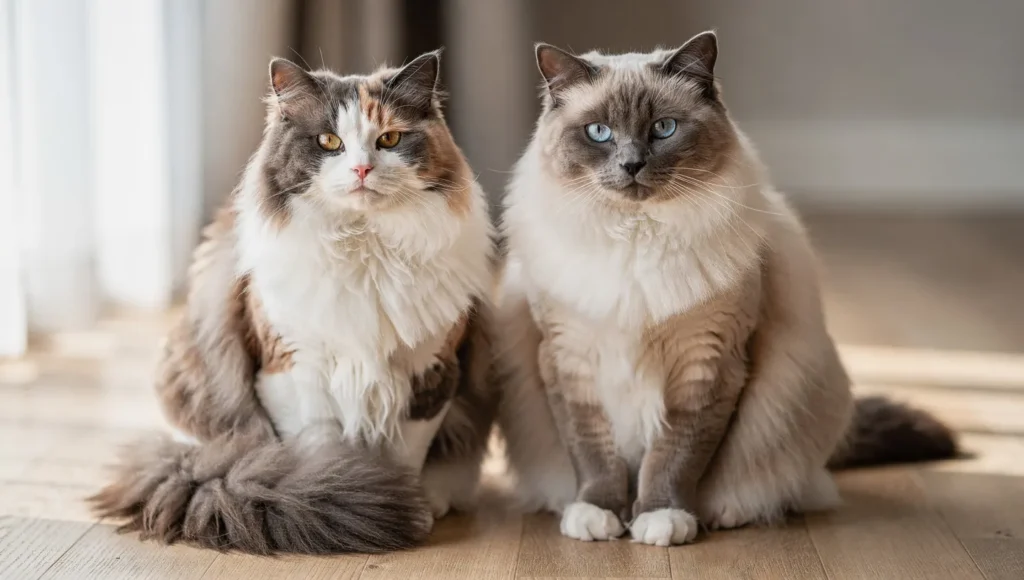
Table of Contents
- Ragamuffin vs Ragdoll: Quick Comparison Table
- What Is the Main Difference Between a Ragamuffin and a Ragdoll?
- Personality Differences: Ragamuffin vs Ragdoll Temperament 🧠
- Ragamuffin vs Ragdoll Personality: Which Is More Playful?
- Do Ragamuffins Go Limp Like Ragdolls?
- Are Ragamuffins Aggressive? 🐾
- Size & Physical Differences — What Makes Each Breed Unique 📏
- Coat, Colors & Eye Differences 🎨
- Expert Tip 💡
- Ragamuffin vs Ragdoll Lifespan & Health Expectations ❤️
- Genetic Conditions to Be Aware Of 🧬
- Price Comparison — Ragamuffin vs Ragdoll Cost 💰
- Which Breed Is Better for Your Home? 🏠
- Quick Summary 📌
- Which Is More Affectionate?
- Which Is Easier to Care For?
- Final Thoughts
Ragamuffin vs Ragdoll: Quick Comparison Table
| Feature | Ragamuffin | Ragdoll |
|---|---|---|
| Size | Large | Large |
| Weight | 10–20 lbs | 10–20 lbs |
| Coat Pattern | All colors & patterns | Color-point only |
| Eye Color | Any color | Blue only |
| Temperament | Sweet & playful | Calm & floppy |
| Lifespan | 12–16 years | 12–17 years |
| Price (Kitten) | $800–$2,000 | $1,000–$2,500 |
What Is the Main Difference Between a Ragamuffin and a Ragdoll?
Ragamuffin vs Ragdoll comes down to three things: coat variety, eye
color, and energy level. Ragdolls are always blue-eyed with color-point
coats. Ragamuffins come in every color and pattern imaginable, with
eyes ranging from green to gold. Both are gentle giants — but
Ragamuffins tend to stay more playful into adulthood.
Personality Differences: Ragamuffin vs Ragdoll Temperament 🧠
Both breeds are famous for being “dog-like” — they follow you around,
greet you at the door, and genuinely seem to enjoy human company.
But their personalities diverge in ways that matter for daily life.
Ragamuffin vs Ragdoll Personality: Which Is More Playful?
Ragamuffins are the social butterflies of the two.
They stay kitten-like well into adulthood — curious, engaged, and
always ready for a game. I’ve worked with Ragamuffins that would
fetch toy mice for 20 minutes straight, then curl up on your lap like
nothing happened.
Ragdolls, by contrast, tend to settle into a calm, almost meditative
presence earlier in life. They’re affectionate, yes — but their default
mode is relaxed, not energetic.
The bottom line: If you want a playful companion that stays
interactive, the Ragamuffin has the edge. If you prefer a serene,
easygoing lap cat, the Ragdoll is your match.
For more on reading your cat’s mood and energy signals, check out our
guide on Cat Body Language.
Do Ragamuffins Go Limp Like Ragdolls?
This is one of the most-asked questions — and the answer surprises
most people.
The “floppy” trait (going limp when picked up) is a defining
characteristic of the Ragdoll breed. It’s baked into their genetics
and temperament.
Ragamuffins are relaxed and tolerant of being held, but they don’t
reliably go limp the same way. Some do, some don’t. One mistake I
often see is people expecting Ragamuffin kittens to behave exactly
like Ragdolls — and then feeling confused when the cat wriggles to
get down.
Quick answer: Ragdolls go limp more consistently. Ragamuffins
are cuddly, but on their own terms.
Are Ragamuffins Aggressive? 🐾
No — Ragamuffins are one of the least aggressive cat breeds you’ll
find.
They’re patient, gentle, and rarely scratch or bite even when
overstimulated. According to the
The International Cat Association (TICA), Ragamuffins are specifically noted for
their exceptionally sweet temperament and tolerance — making them
ideal for households with children or other pets.
That said, any cat can show defensive behavior if they’re in pain,
frightened, or poorly socialized. The breed isn’t the issue — the
environment is.
If you’ve recently brought home a new cat and are seeing tension, our
guide on
How to Introduce Two Cats walks you through a stress-free process.
Size & Physical Differences — What Makes Each Breed Unique 📏
Both the Ragamuffin and the Ragdoll are considered large cat breeds —
but “large” covers a lot of ground.
Understanding the physical nuances helps you set realistic expectations
before bringing one home.
Weight & Body Frame
| Ragamuffin | Ragdoll | |
|---|---|---|
| Weight | 10–20 lbs | 10–20 lbs |
| Body Type | Broad, rounded | Long, muscular |
| Bone Structure | Medium-heavy | Large-boned |
| Maturity Age | 4–5 years | 4 years |
Both breeds take longer than average to reach full size — don’t be
surprised if your kitten keeps growing well into year three or four.
Coat Density
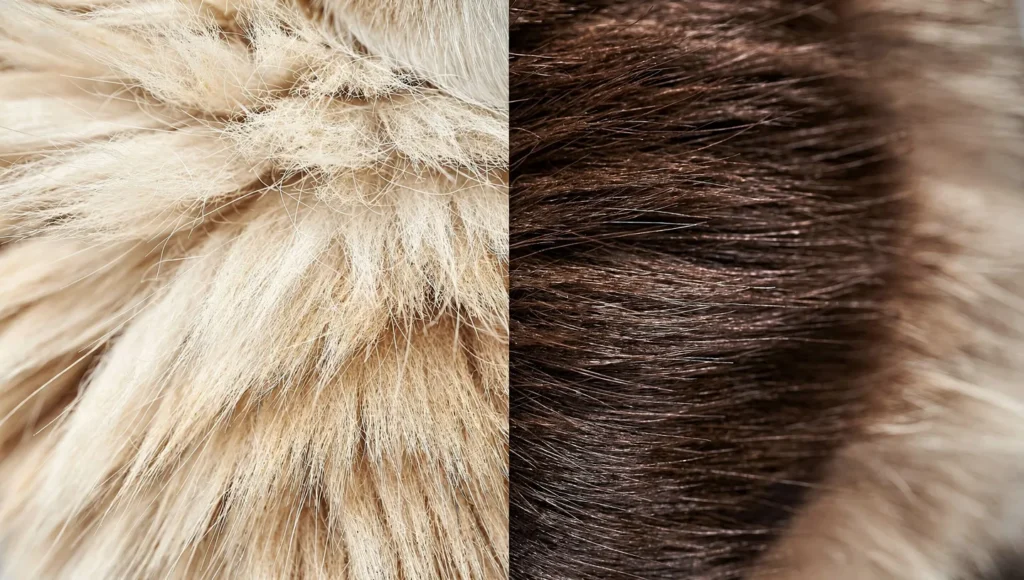
The Ragamuffin’s coat is thick, plush, and almost rabbit-like in
texture — it’s one of the first things people notice when they hold
one.
The Ragdoll’s coat is silkier and lies flatter against the body.
Both coats are medium-long, but the Ragamuffin coat tends to require
slightly more frequent brushing to prevent matting — especially
around the neck and belly.
For a stress-free grooming routine for either breed, our guide on
How to Brush Your Cat breaks it down step by step.
Coat, Colors & Eye Differences 🎨
This is where the two breeds diverge most visibly — and it’s the
easiest way to tell them apart at a glance.
Why Ragdolls Only Have Blue Eyes
The Ragdoll’s iconic blue eyes are directly linked to their color-point
genetics — the same gene responsible for their pointed coat pattern
(darker ears, face, paws, and tail) suppresses pigmentation in the
iris.
This means: if a cat is marketed as a “Ragdoll” but doesn’t have blue
eyes, it’s either a Ragamuffin, a mix, or from an unrecognized
bloodline.
Why Ragamuffins Come in Every Color
Ragamuffins were selectively bred for diversity after splitting from
the original Ragdoll bloodline in the 1990s.
The result? A cat that can be:
- Solid white, black, or cream
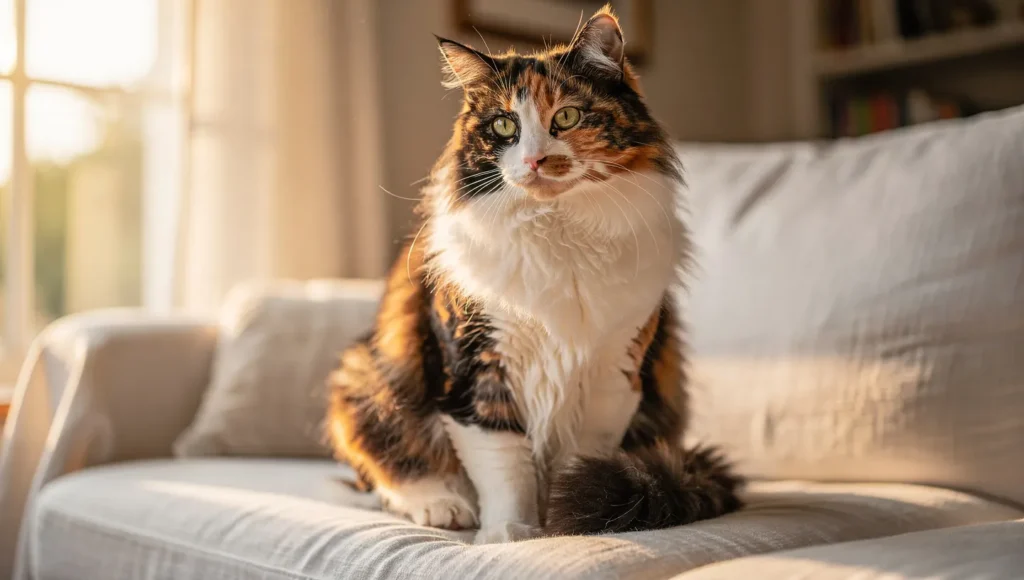
- Tabby or tortoiseshell
- Bicolor or mitted patterns
- Any eye color: gold, green, hazel, or blue
One mistake I often see: owners falling in love with a “blue-eyed,
fluffy cat” at a shelter and assuming it’s a Ragdoll. The coat
pattern and eye color together are your best diagnostic tools.
Grooming Needs Compared
| Ragamuffin | Ragdoll | |
|---|---|---|
| Coat Texture | Thick, plush, tangle-prone | Silky, lies flat |
| Brush Frequency | 2–3x per week | 1–2x per week |
| Shedding Level | Moderate-high | Moderate |
| Matting Risk | Higher (neck/belly) | Lower |
Expert Tip 💡
Quick Answer: What Is the Main Difference Between a Ragamuffin and a Ragdoll?
Ragdolls are always blue-eyed with color-point coats.
Ragamuffins come in any color, pattern, or eye color.
Both are large, gentle, and affectionate — but Ragamuffins tend
to be more playful, while Ragdolls are calmer and more consistently
“floppy” when held.
Ragamuffin vs Ragdoll Lifespan & Health Expectations ❤️
Both breeds are generally healthy, long-lived cats — but there are
genetic realities every owner should understand before committing.
Which Breed Lives Longer?
Ragdolls have a slight edge in documented lifespan data:
| Ragamuffin | Ragdoll | |
|---|---|---|
| Average Lifespan | 12–16 years | 12–17 years |
| Longevity Factor | Overall robust | Slightly longer |
That said, individual lifespan depends far more on diet, environment,
and preventive care than on breed alone.
For actionable tips on keeping senior cats thriving, our
Senior Cat Care Guide
covers hydration, diet adjustments, and early warning signs to watch
for.
Genetic Conditions to Be Aware Of 🧬
Neither breed is “fragile” — but both carry elevated genetic risks
that responsible owners should monitor.
Ragdoll:
- Hypertrophic Cardiomyopathy (HCM): The most serious genetic
risk. A known mutation in the myosin binding protein C gene has been
identified in Ragdoll lines. According to the
Cornell Feline Health Center,
HCM is the most commonly diagnosed cardiac disease in cats, with
Ragdolls among the predisposed breeds. - Bladder stones: More common in Ragdolls than the general
cat population. - FIP susceptibility: Slightly higher sensitivity noted in
some lines.
Ragamuffin:
- HCM risk exists but is less documented than in Ragdolls.
- Polycystic Kidney Disease (PKD): Worth screening for, especially
in cats from non-tested breeding programs. - Obesity: Their calm, food-motivated nature makes weight management
important.
Practical preventive steps for both breeds:
- Annual cardiac screening (echocardiogram) after age 3
- DNA testing before adoption from a breeder
- Weight monitoring every 6 months
Price Comparison — Ragamuffin vs Ragdoll Cost 💰
Let’s be direct: both breeds come with a price tag that surprises
first-time buyers.
Kitten Prices (From Reputable Breeders)
| Ragamuffin | Ragdoll | |
|---|---|---|
| Kitten Price | $800–$2,000 | $1,000–$2,500 |
| Show Quality | Up to $3,000 | Up to $3,500+ |
| Adoption Fee | $75–$200 | $75–$200 |
Why Are Ragdolls Often More Expensive?
Three reasons:
- Higher name recognition drives demand
- Stricter breed standards mean fewer “qualifying” kittens per
litter - More established breeder networks with longer waitlists
Long-Term Ownership Cost
The purchase price is just the beginning. Budget for:
- Annual vet visits: $200–$400
- Cardiac screening after age 3: $300–$500 per test
- Quality food for a 15–20 lb cat: $600–$900/year
- Grooming tools (especially for Ragamuffins): $50–$100/year
In my experience, owners who budget only for the kitten price are
often caught off guard by the ongoing investment — particularly for
large breeds with above-average food consumption.
Which Breed Is Better for Your Home? 🏠
This is the question that actually matters — and the answer depends
entirely on your lifestyle.
| Lifestyle | Better Fit |
|---|---|
| Active household with kids | Ragamuffin |
| Quiet home, single owner | Ragdoll |
| Apartment living | Both |
| First-time cat owner | Ragdoll |
| Multi-pet home | Ragamuffin |
| Want a reliably calm lap cat | Ragdoll |
| Want a playful companion | Ragamuffin |
Families with Kids
Ragamuffins edge ahead here. Their slightly higher energy and
patience with unpredictable movement makes them a natural fit for
households with young children. Ragdolls are gentle — but their
preference for calm environments can make them stressed in chaotic
homes.
Apartment Living
Both breeds adapt well to indoor-only life, provided they have
vertical space, enrichment, and regular playtime. Neither breed has
strong outdoor instincts. For enrichment ideas, our guide on
Best Interactive Cat Toys
has breed-appropriate recommendations for large, intelligent cats.
First-Time Owners
Ragdolls are slightly easier to manage — their predictable, calm
temperament leaves less room for surprises. Ragamuffins require
more interactive engagement to stay mentally stimulated.
Multi-Pet Homes
Ragamuffins generally adapt faster to other cats and dogs. If you’re
already navigating a multi-pet household, our step-by-step guide on
How to Introduce Two Cats
will save you a lot of stress.
Quick Summary 📌
Which Is More Affectionate?
Both breeds are deeply affectionate — but in different ways.
Ragdolls show love through calm, constant proximity. Ragamuffins
show love through active engagement: following you around,
initiating play, and demanding attention on their own schedule.
Which Is Easier to Care For?
Ragdolls require slightly less grooming and tend to be more
predictable behaviorally — giving them a small edge for ease of
care. Ragamuffins need more brushing and more interactive play to
stay happy.
Final Thoughts
Ragamuffin vs Ragdoll isn’t really a competition — it’s a
personality match.
Both cats will fill your home with warmth, fur, and the kind of
quiet companionship that makes a house feel lived in.
Choose a Ragdoll if you want a serene, blue-eyed lap cat that
goes limp in your arms and asks for very little beyond your presence.
Choose a Ragamuffin if you want a playful, expressive companion
that grows with your family and surprises you every day.
Either way — you’re getting one of the gentlest, most human-oriented
cats on the planet.
And that’s never a bad choice.

