
This article is for informational purposes only and does not replace professional veterinary advice.
I still remember the day I brought home my first tortoiseshell cat.
She was tiny, all patched in orange and black, sitting in the corner of the shelter
cage with this look on her face that said, “I’m not impressed.”
The shelter volunteer laughed when she saw my expression. “Oh, you picked a tortie,”
she said. “Good luck — she’s got opinions.”
She wasn’t wrong.
If you’re living with a tortoiseshell cat, you already know what I’m talking about.
One minute she’s curled up purring on your lap, the next she’s giving you a swat for
absolutely no reason. And if you’ve ever searched tortoiseshell cat personality
online, you’ve probably come across the word “tortitude” — that infamous mix of sass,
independence, and unexpected sweetness that tortie owners know all too well.
But here’s what I’ve come to realize after years of living with these cats and
researching their behavior: tortoiseshell cats aren’t difficult. They’re just deeply,
unapologetically themselves.
In this guide, I’ll walk you through the real tortoiseshell cat personality — the
traits, the science, the challenges, and everything in between — based on what I’ve
observed firsthand and what credible sources like the
ASPCA
and animal behavior researchers have found.
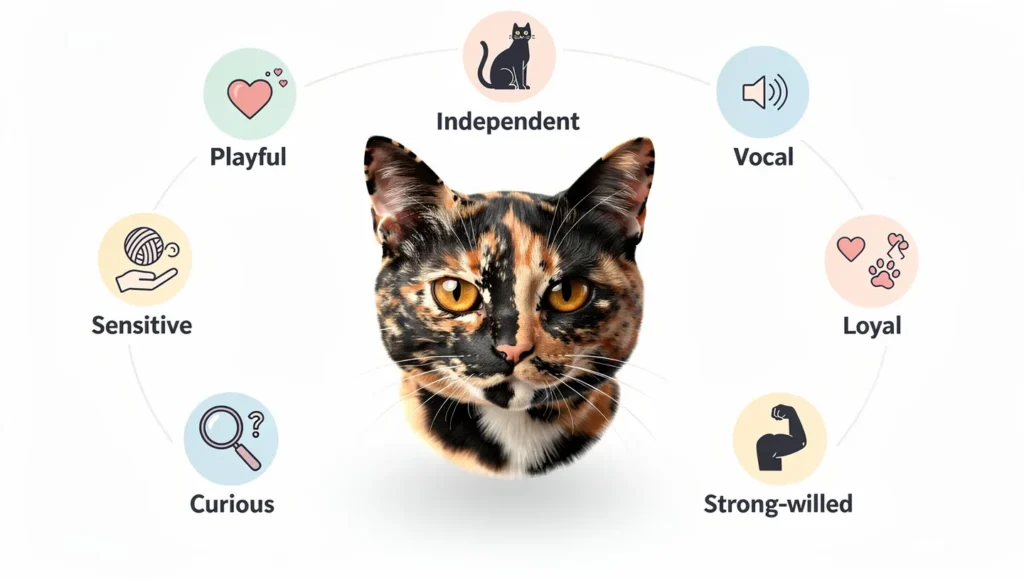
Table of Contents
- 🐚 What Is a Tortoiseshell Cat?
- 🧠 Tortoiseshell Cat Personality — 7 Core Traits
- 1 Independent but Selectively Affectionate
- 2 Strong-Willed & Confident
- 3 Highly Vocal & Expressive
- 4 Playful Yet Unpredictable
- 5 Fiercely Loyal to Their Person
- 6 Sensitive to Routine & Environment
- 7 Curious and Intelligent
- 🔥 What Is “Tortitude”? The Truth Behind the Attitude
- ⚖️ Female vs. Male Tortoiseshell Cat — Does Gender Change Personality?
- ⚠️ Common Tortoiseshell Cat Personality Challenges
- 😤 Overstimulation & Sudden Mood Shifts
- 🏠 Territorial Behavior
- 🔄 Sensitivity to Change
- ❤️ Are Tortoiseshell Cats Affectionate or Aggressive?
- 🐾 How Tortoiseshell Cats Behave With Humans & Other Pets
- 🧬 Why Do Tortoiseshell Cats Have Such Strong Personalities?
- 🧠 How to Live Happily With a Tortitude Cat
- Respect Her Boundaries
- Provide Mental Stimulation
- Avoid Overstimulation
- Build Trust the Right Way
- 🚫 Common Mistakes to Avoid With Tortoiseshell Cats
- ❓ FAQs About Tortoiseshell Cat Personality
- Why does tortoiseshell cat personality sometimes seem aggressive?
- Do tortoiseshell cats have attitude?
- Are tortoiseshell cats rare?
- Are they good for first-time owners?
- Do tortoiseshell cats pick one person?
- Final Thoughts
🐚 What Is a Tortoiseshell Cat?
Before diving into personality, it’s worth clearing up one common mix-up.
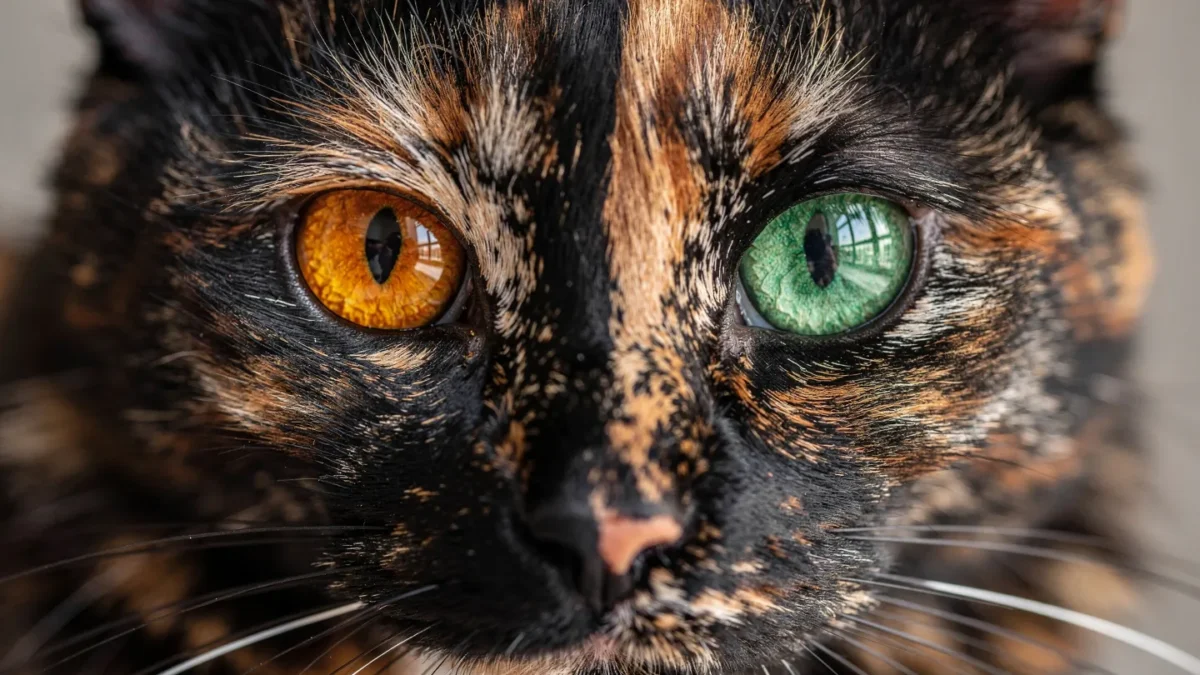
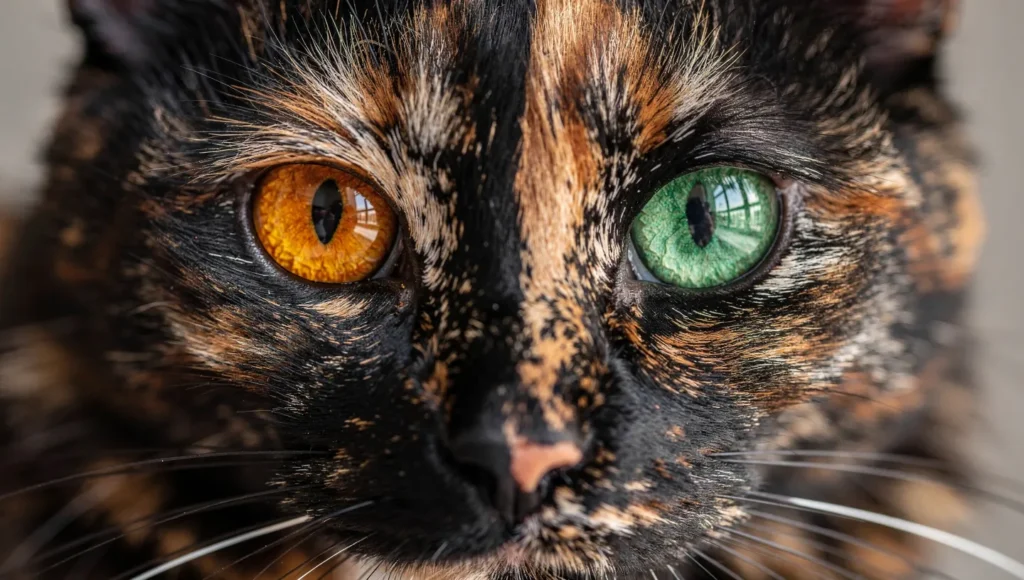
A tortoiseshell cat is not a breed. It’s a coat pattern — a mosaic of black, orange,
and sometimes cream or brown, woven together in a way that makes every single tortie
look completely unique. You’ll find this pattern across many breeds, from domestic
shorthairs to Persians.
One of the most fascinating things about torties? Nearly all of them are female.
We’re talking about 99.9% female, according to feline genetics research. The reason
comes down to X chromosomes — the genes that control orange and black coat colors are
both carried on the X chromosome, so producing both colors requires two X chromosomes,
which is why males almost never carry this pattern. The rare male tortoiseshell that
does exist usually has a genetic condition (XXY), which often makes him sterile.
It’s one of those biology facts that makes you stop and think: this coat pattern is almost exclusively female, and so is the personality that comes with it.
To better understand how your tortie communicates beyond her coat, you might also enjoy
reading about
cat body language
— it adds a whole new layer to understanding what she’s trying to tell you.
🧠 Tortoiseshell Cat Personality — 7 Core Traits
When it comes to tortoiseshell cat personality, here’s where it gets interesting
Over the years, I’ve noticed that torties share a recognizable set of traits — not
because of some magical coat-color connection, but likely because of a combination of
genetics, hormones, and the simple fact that most torties are female.
Here’s what you can generally expect:
1 Independent but Selectively Affectionate
Tortoiseshell cats don’t hand out love like a golden retriever. They choose their
moments — and when they choose you, it feels earned.
Many tortie owners describe it as having a cat that acts like a best friend who
happens to also be emotionally unavailable on Tuesdays. She’ll curl up next to you
on her terms, and that’s part of what makes it special.
2 Strong-Willed & Confident
Torties tend to know what they want — and they’re not shy about letting you know.
Whether it’s a specific spot on the couch, a particular feeding time, or the exact
way she wants to be petted (and for exactly how long), these cats have preferences
and they will communicate them.
3 Highly Vocal & Expressive
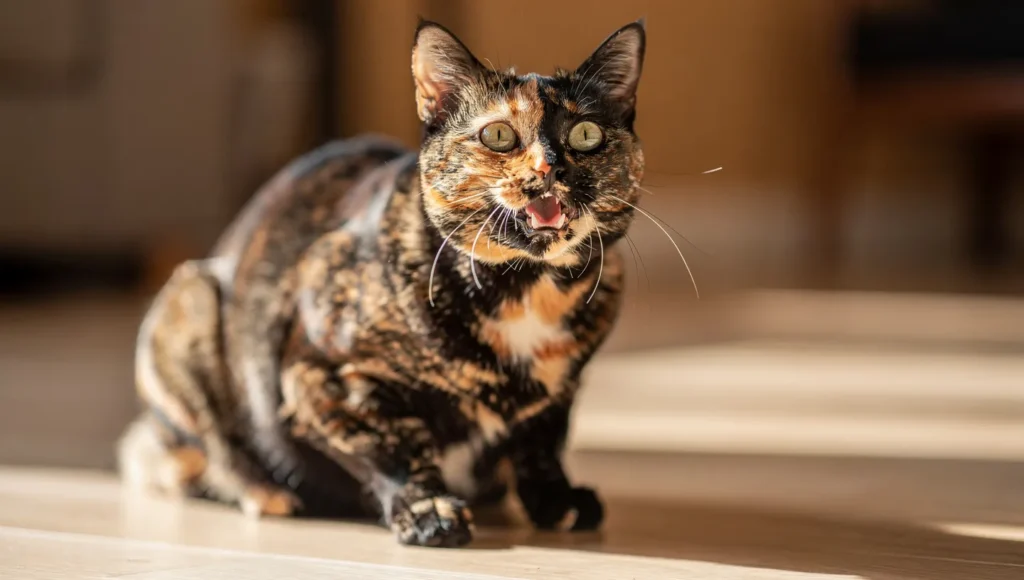
From soft chirps to full-on yowls, tortoiseshell cats are often described as
“talkative.” Based on what I’ve seen, this varies by individual, but many torties
are noticeably more vocal than other cats.
They’re not just making noise — they’re having a conversation. And if you learn to
listen, it tells you a lot.
4 Playful Yet Unpredictable
One moment she’s chasing a toy feather with the intensity of a tiny lion. The next
she’s completely over it and walking away like the game was beneath her.
This unpredictability keeps life interesting — and it keeps you on your toes.
5 Fiercely Loyal to Their Person
Here’s the side of torties that often surprises new owners: many of them form an
incredibly deep bond with one specific person in the household.
They may be indifferent to guests, cautious with strangers, but absolutely devoted
to their human. If that person is you, consider yourself chosen.
6 Sensitive to Routine & Environment
Torties tend to notice changes — a moved piece of furniture, a new smell, a shift
in your schedule. This sensitivity can show up as increased vocalization or temporary
withdrawal when something in their environment shifts.
7 Curious and Intelligent
These cats are watchers. They observe, they assess, and then they act — usually
when it’s least expected. That intelligence is part of what makes them so
entertaining to live with, and also why they need mental stimulation to stay happy.
| Trait | What It Looks Like | What It Means |
|---|---|---|
| Independent | Chooses when to cuddle | She trusts on her own terms |
| Vocal | Chirps, meows, yowls | She’s communicating with you |
| Strong-willed | Pushes back on rules | She has clear preferences |
| Loyal | Follows one person | You’ve been chosen |
| Sensitive | Reacts to change | She’s highly aware of her world |
| Playful | Bursts of energy | She needs engagement |
| Curious | Watches everything | High intelligence |
🔥 What Is “Tortitude”? The Truth Behind the Attitude
If you’ve spent five minutes in a cat owner forum, you’ve seen the word.
Tortitude. That legendary blend of attitude, stubbornness, and unexpected warmth
that tortoiseshell cats are famous for. But is it actually real — or is it just a
cute internet label that owners project onto their cats?
The answer, based on what I’ve read and experienced, is: a little of both.
A study from the University of California, Davis, surveyed over 1,200 cat owners and
found that cats with tortoiseshell, calico, and tuxedo patterns were more frequently
described as “intolerant,” “feisty,” and “prone to swatting” compared to other coat
colors. The findings were self-reported by owners, which means there’s some room for
confirmation bias — but the pattern across thousands of responses is hard to ignore.
According to ASPCA’s behavior resources,
a cat’s personality is shaped by genetics, early socialization, and environment —
coat color alone doesn’t determine behavior. But genetics and coat color are
sometimes linked through chromosomal connections, which may explain why tortie
owners consistently report similar personality patterns.
So is tortitude real? Based on what I’ve seen: yes, there’s something there.
But it’s not attitude for attitude’s sake — it’s a cat with strong preferences,
high emotional sensitivity, and a very low tolerance for things she didn’t agree to.
Expert Tip: If your tortie seems “moody,” she may actually be overstimulated
or anxious. Learning to read her signals — like a flicking tail or flattened ears —
can transform your relationship with her. It’s worth exploring
how to read cat body language if you haven’t already.
⚖️ Female vs. Male Tortoiseshell Cat — Does Gender Change Personality?
As I mentioned earlier, 99% of torties are female — and that matters more than
people think.
Female cats, in general, tend to be more territorial and independent than males.
Combine that with the tortoiseshell’s already strong-willed nature, and you get
a cat who knows exactly what she wants and isn’t afraid to enforce it.
The rare male tortoiseshell (XXY genetics) is often described as calmer and more
docile — but the sample size is so small that it’s hard to draw real conclusions.
Bottom line: gender plays a role, but individual personality always wins.
⚠️ Common Tortoiseshell Cat Personality Challenges
Every tortie owner hits these at some point. Here’s what to watch for — and what
actually helps:
😤 Overstimulation & Sudden Mood Shifts
- She’s purring, then suddenly swats — classic overstimulation
- Watch for: tail flicking, skin rippling, ears rotating back
- Fix: stop petting before she signals she’s done
🏠 Territorial Behavior
- May guard specific spots, food areas, or “her” human
- Fix: provide vertical space (cat trees, shelves) to reduce competition
- If you have multiple cats, read:
how to introduce two cats — it changes everything
🔄 Sensitivity to Change
- New furniture, new people, schedule shifts — she’ll notice all of it
- Fix: keep her routine consistent; introduce changes gradually
❤️ Are Tortoiseshell Cats Affectionate or Aggressive?
Both — and the difference usually comes down to context.
Torties show deep affection on their own schedule: slow blinks, head bunts,
following you from room to room. But push past her limits and you’ll see the
other side fast.
She’s affectionate when:
- She initiated the contact
- She’s in a calm, familiar environment
- She trusts you (built over time, not assumed)
She shows aggression when:
- Overstimulated or startled
- Her territory feels threatened
- She’s in pain or unwell
If biting has become a pattern, it’s worth understanding the root cause —
why cats bite
goes deeper than most people expect.
🐾 How Tortoiseshell Cats Behave With Humans & Other Pets
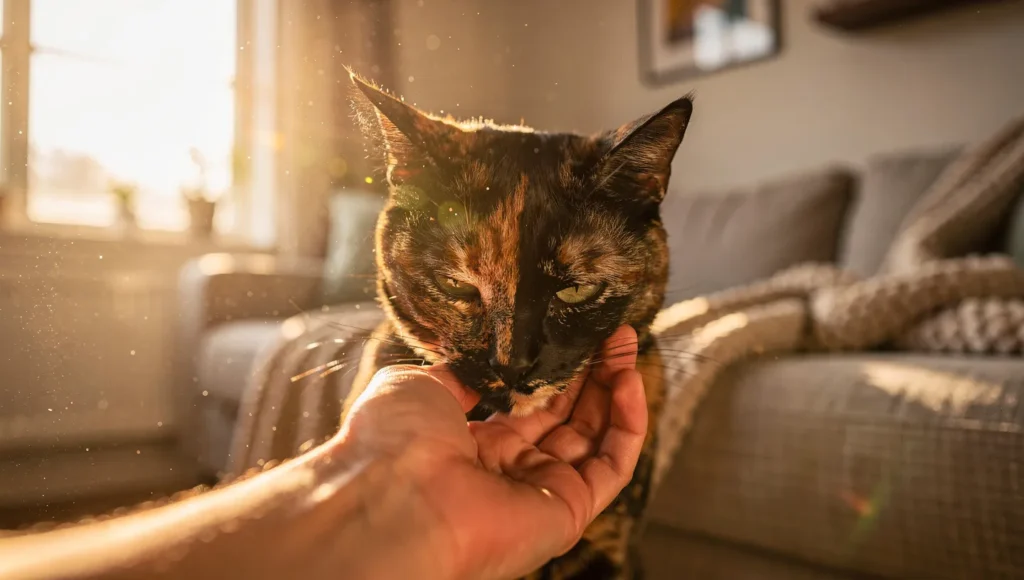
With kids: Can work well, but needs boundaries. Teach children to read her
signals and never force interaction — she’ll come around on her own terms.
With other cats: Torties can be territorial. Slow introductions are non-
negotiable. Expect some initial tension, especially with same-sex cats.
With strangers: Usually cautious or indifferent at first. Give her space to
observe — she’ll warm up when she decides you’re trustworthy, not when you
decide she should be.
🧬 Why Do Tortoiseshell Cats Have Such Strong Personalities?
Here’s the honest answer: we don’t fully know.
What research suggests is that coat color genes and behavioral genes can sit
close together on chromosomes — meaning the same genetics that produce that
distinctive pattern may influence temperament in subtle ways. Add the fact that
almost all torties are female (with the hormonal and behavioral tendencies that
come with that), and you get a consistently strong personality profile.
It’s not magic. It’s biology — and it’s fascinating.
🧠 How to Live Happily With a Tortitude Cat
After years with torties, these are the things that genuinely make a difference:
Respect Her Boundaries
- Never force cuddles — let her come to you
- Watch her body language; it tells you everything
Provide Mental Stimulation
- Puzzle feeders, window perches, rotating toys
- A bored tortie is a destructive (and very vocal) tortie
Avoid Overstimulation
- Short, frequent petting sessions beat long ones
- Learn her “I’m done” signals before she has to use her claws
Build Trust the Right Way
- Consistency is everything — same routine, same voice, same energy
- If anxiety is part of the picture, check out this guide on
cat separation anxiety — some torties are more prone to it than others
🚫 Common Mistakes to Avoid With Tortoiseshell Cats
- Forcing affection — she’ll remember, and she’ll hold it against you
- Ignoring her routine — small disruptions feel big to a sensitive tortie
- Misreading signals — a wagging tail in cats means agitation, not happiness
- Treating her like “just a cat” — torties respond to genuine engagement
- Expecting consistency — her moods will shift; that’s not a flaw, it’s her
❓ FAQs About Tortoiseshell Cat Personality
Why does tortoiseshell cat personality sometimes seem aggressive?
They’re not mean — they’re selective. Torties have strong preferences and low
tolerance for things they didn’t consent to. Learn her signals and the “meanness”
mostly disappears.
Do tortoiseshell cats have attitude?
Yes, and most tortie owners wouldn’t trade it. The attitude comes with deep loyalty
and a personality that keeps you genuinely entertained.
Are tortoiseshell cats rare?
The pattern itself is fairly common, but male torties are extremely rare —
only about 1 in 3,000, according to genetic research.
Are they good for first-time owners?
They can be, as long as you go in with realistic expectations. If you want a
lap cat that’s always available — maybe not. If you want a cat with real
personality and a deep bond — absolutely.
Do tortoiseshell cats pick one person?
Many do. It’s one of their most endearing traits — being chosen by a tortie
feels genuinely special.
Final Thoughts
Living with a tortoiseshell cat isn’t always easy — but it’s never boring.
What I’ve come to understand after years with these cats is that tortitude isn’t
attitude. It’s a cat with a full emotional life, clear preferences, and the
confidence to act on both. Once you stop trying to change that and start working
with it, everything shifts.
She won’t love you the way a golden retriever does. She’ll love you the way a
tortie does — fierce, loyal, and completely on her own terms.
And honestly? That’s better.
Remember: every cat is an individual. If you notice sudden changes in your tortie’s behavior or temperament, it’s always worth a check-in with your veterinarian to rule out any underlying health issues.