
Let me be completely honest with you.
When I first decided to bring a Maine Coon home, I genuinely thought I was getting a regular cat. You know — the kind that sleeps 18 hours, ignores you politely, and occasionally allows you to pet it. Simple. Elegant. Low drama.
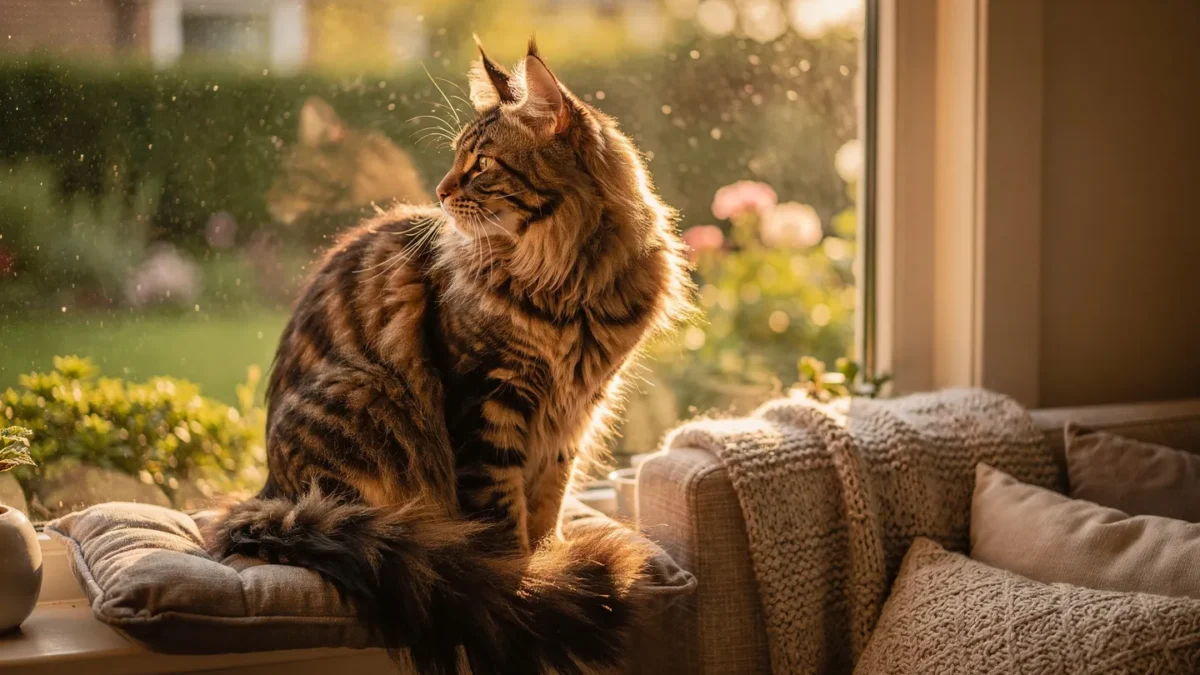
What I actually got was a 18-pound furry roommate who immediately claimed the kitchen sink as his personal spa, knocked my coffee off the counter while making direct eye contact, and shed enough fur in the first week to knit an entire sweater. Maybe two.
I wasn’t prepared. Not even close.
And if you’re here reading this, you’re either already living with one of these magnificent chaos creatures — or you’re thinking about it. Either way, you deserve the real guide. Not the Wikipedia version. The one written by someone who has vacuumed the same couch cushion four times in one day and still found fur in their cereal.
This is that guide.
A quick note before we dive in: Everything in this article is based on personal experience with Maine Coons, along with research from trusted sources like the ASPCA and AVMA. It’s meant to inform and help — not replace actual veterinary advice. If something seems off with your cat, please reach out to your vet. They went to school for this. I just lived it.
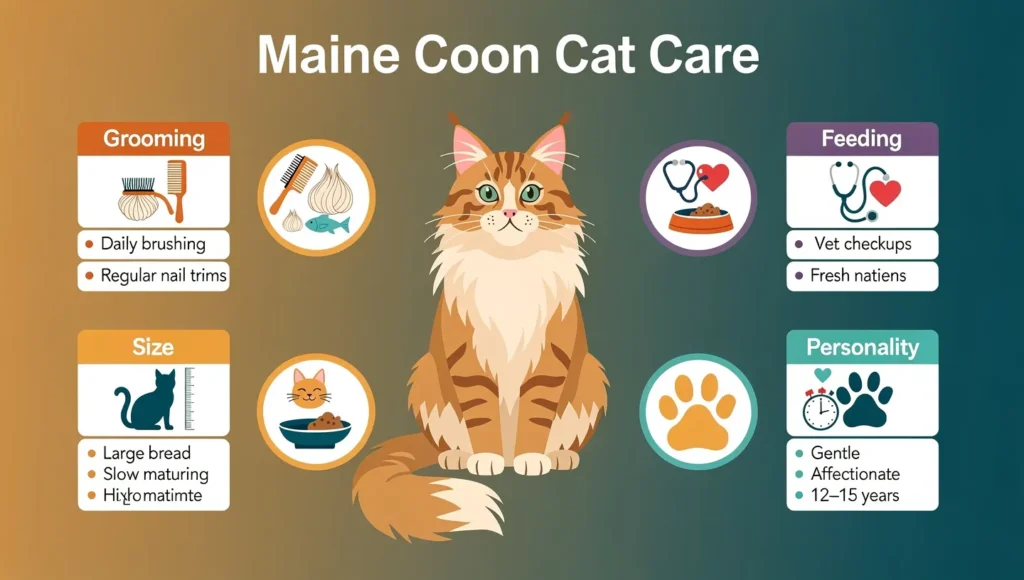
Table of Contents
- What Makes Maine Coon Cat Care Different from Other Cats?
- Size Changes Everything
- The Personality Factor
- Are Maine Coons High Maintenance?
- Maine Coon Grooming: The Art of Taming the Fluff
- How Often Should You Brush a Maine Coon?
- The Right Tools Make All the Difference
- Dealing With Mats Before They Turn Ugly
- 🔥 My First Grooming Disaster
- Bathing a Maine Coon: Do You Actually Need To?
- Maine Coon Feeding: How to Feed a Cat the Size of a Small Dog
- How Much Should a Maine Coon Eat?
- Wet Food vs Dry Food for Maine Coons
- Maine Coon Kitten Feeding: The First Year Is Different
- Hydration: The Silent Problem Nobody Talks About
- Maine Coon Health: The Real Risks Every Owner Must Know
- HCM: The Heart Condition That Targets This Breed
- Hip Dysplasia & Weight Management
- How Long Do Maine Coons Live?
- 5 Red Flags That Need Immediate Attention
- Maine Coon Kitten Care: The First 6 Months Matter Most
- Maine Coon Personality & Daily Life
- Do Maine Coons Like Water?
- Are Maine Coons Good Indoor Cats?
- Are They Good with Children?
- Maine Coon vs Norwegian Forest Cat: Quick Comparison
- Quick Answers to Big Questions
- Are Maine Coons hard to take care of?
- Are Maine Coons high maintenance?
- How often should you groom a Maine Coon?
- Do Maine Coons shed a lot?
- What do Maine Coons need daily?
- How long do Maine Coons live?
- The Bottom Line
What Makes Maine Coon Cat Care Different from Other Cats?
Maine Coon care is genuinely different — mostly because everything about this cat is bigger. Bigger body, bigger personality, bigger grooming needs, and yes, bigger vet bills if you’re not paying attention.
To put it simply: yes, Maine Coons are higher maintenance than your average domestic cat. But here’s the thing most guides won’t tell you — it’s not overwhelming once you have a system. It just requires consistency and a really good vacuum cleaner.
Size Changes Everything
The average Maine Coon weighs between 12 and 25 pounds, with some males pushing past that. That’s not a cat. That’s a small dog with better hair and worse listening skills.
This size affects everything — the litter box you buy (you’ll need XL), the cat tree you choose (flimsy ones will collapse), the food portions you measure, and honestly, the amount of surface area available for fur to land on in your home.
Personally, I switched to an extra-large cat tree within the first month because my first one looked like it was genuinely afraid of him. This is the structural reality of daily maine coon cat care that you have to prepare for.
The Personality Factor
Here’s where maine coon cat care becomes incredibly rewarding: the personality factor. These cats are social. Like, surprisingly, almost annoyingly social for a species that’s supposed to be independent.
Mine follows me from room to room. He sits outside the bathroom door and chirps softly, as if to say, “Are you okay in there? It’s been three minutes.” He greets guests at the door. He has opinions about dinnertime.
If you’re looking for a quiet, aloof cat that respects your personal space — wrong breed, friend.
But if you want a cat that actually engages with you, plays with your kids, and has the energy of a golden retriever trapped in a fluffy feline body? Welcome home.
Are Maine Coons High Maintenance?
Honestly? Yes — but mostly because of three things: grooming, size, and health monitoring.
The grooming alone puts them in a different category from short-haired breeds. Their coat is long, thick, and has a water-resistant outer layer that catches absolutely everything — dust, debris, and the general chaos of life. Without regular brushing, that beautiful fur turns into mats fast.
The good news is that once you build the routine, it becomes second nature. Most Maine Coon owners I’ve talked to say the same thing: “I was terrified at first. Now I actually enjoy it.”
More on that in the next section — including the story of my first grooming attempt, which did not go the way I planned.
Maine Coon Grooming: The Art of Taming the Fluff
Let’s get one thing straight right away: Maine Coon grooming is not optional.
I know that sounds dramatic, but I mean it. Skip it for two weeks and you’ll understand what I mean when you find your first mat the size of a walnut hiding behind their ear. That fur is gorgeous — but it demands respect.
How Often Should You Brush a Maine Coon?
The short answer: 2 to 3 times per week minimum, and daily during shedding season (which, fun fact, feels like it lasts approximately 11 months of the year).
During spring and fall, the shedding ramps up significantly. This is when you’ll start finding fur in places that genuinely defy physics — inside sealed containers, under furniture you’ve never moved, and somehow in your morning coffee despite the mug having a lid.
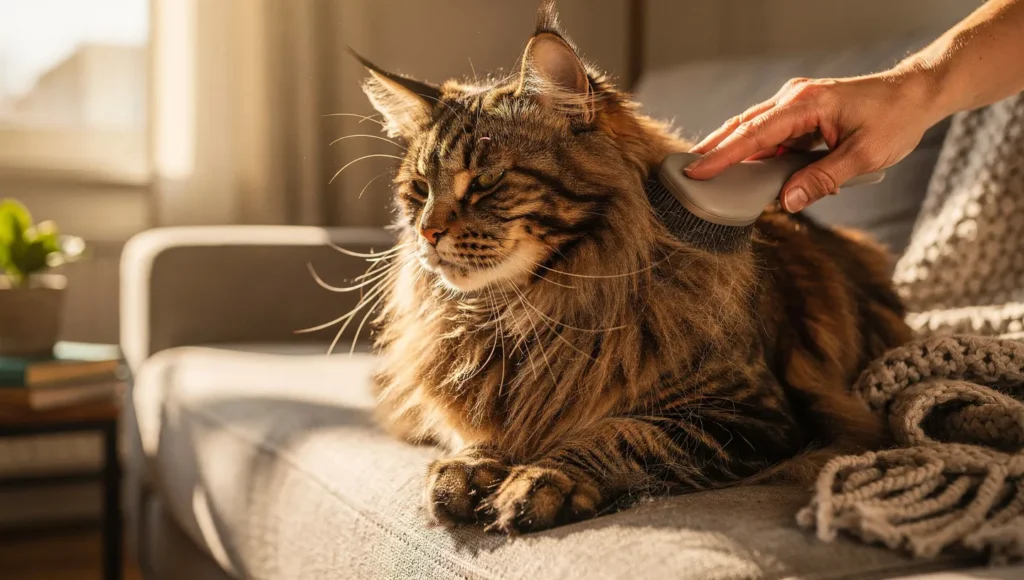
Daily brushing during these peak periods isn’t just about aesthetics. It reduces hairballs, keeps the skin healthy, and honestly? Most Maine Coons actually enjoy it once they’re used to it. Mine starts purring the moment he sees the brush come out. It took about three weeks to get there. The journey was… eventful.
The Right Tools Make All the Difference
Most people get this wrong. They grab whatever brush is on sale and wonder why their cat hates every second of it.
For a Maine Coon coat, you need:
- A wide-tooth metal comb — for detangling the outer layer without pulling
- A slicker brush — for smoothing and removing loose fur
- A de-shedding tool (like a Furminator) — for undercoat work during heavy shedding seasons
- Blunt-tipped scissors — for small mats only (we’ll get to that)
Start with the comb, work through any tangles gently, then follow with the slicker brush. When it comes to maine coon cat care, using the correct sequence prevents breaking the fur. Think of it like detangling human hair — you don’t start from the root when there’s a knot.
For a full step-by-step brushing routine that works for most cats including long-haired breeds, this guide on how to brush your cat covers everything in detail.
Dealing With Mats Before They Turn Ugly
Mats are the enemy. And with a Maine Coon, they’re basically inevitable if you slack on brushing — especially behind the ears, under the armpits (yes, cats have armpits), and around the collar area.
The golden rule: never pull a mat. The skin underneath is sensitive, and yanking causes pain and breaks trust fast.
Instead:
- Hold the base of the mat firmly with your fingers (between the mat and the skin)
- Work the comb through from the tip of the mat inward
- Use a detangling spray if needed — a few spritzes make a real difference
- For stubborn mats, use blunt-tipped scissors to split the mat vertically into smaller sections before combing
If the mat is tight against the skin, or your cat is showing signs of discomfort — stop. At that point, a professional groomer or vet is the right call. Trying to force it out at home can cause cuts or serious stress.
For a detailed guide specifically on removing stubborn tangles safely, check out this article on how to remove matted cat fur — it covers the exact technique without hurting your cat.
🔥 My First Grooming Disaster
Okay. Story time. And I’m not even slightly embarrassed about this.
About two weeks after bringing my Maine Coon home, my friend came over — let’s call him Dave — and Dave, with the supreme confidence of someone who has never owned a cat in his life, looked at my fluffy giant and said: “How hard can brushing him be? He’s just a cat.”
Famous last words.
We set up in the living room. Good lighting. Nice brush. Positive energy. My cat — who had been suspiciously calm all morning — seemed cooperative at first.
Three minutes in, he decided he was done.
What followed was five minutes of pure chaos. Fur filled the air like a blizzard. The couch disappeared under a layer of white fluff. Dave somehow ended up with what looked like a full beard made entirely of Maine Coon fur stuck to his face. My cat — completely unbothered — climbed to the top of his cat tree, sat down, and stared at us with the expression of a king surveying a battle he had already won.
Dave left shortly after. He vacuumed his car for 20 minutes.
The lesson I took from that afternoon: Maine Coon grooming needs a system, not enthusiasm. Short sessions. The right tools. Building trust over time. Start young if you can — Maine Coon kittens who get used to brushing early turn into adults who actually lean into the brush.
Now? My cat grooms sessions last about 10 minutes, happen three times a week, and he falls asleep halfway through. We got there. It just took patience — and one very furry afternoon.
Bathing a Maine Coon: Do You Actually Need To?
Here’s something that surprises most people: Maine Coons are one of the few cat breeds that genuinely don’t mind water. Some of them are borderline obsessed with it. Mine tries to join me in the shower on a regular basis.
That said, you don’t need to bathe them frequently. Every 4 to 6 weeks is plenty for most Maine Coons, and only if they actually need it — dirty coat, oily skin, or that specific “cat smell” starting to develop.
When you do bathe them, use a cat-specific shampoo, lukewarm water, and work quickly and calmly. The experience goes much better when the cat already has positive associations with water — which, again, Maine Coons often do naturally.
For a complete step-by-step bathing process, this guide on how to bathe a cat is genuinely one of the most practical ones out there.
One more thing worth mentioning: some Maine Coon owners opt for a Lion Cut during the hotter months to manage shedding and prevent mats. It’s a legitimate option, but it comes with real trade-offs — their coat actually provides insulation in both directions (warm and cool). Worth reading about before deciding. There’s a full breakdown in this article on lion cut for cats if you’re considering it.
Maine Coon Feeding: How to Feed a Cat the Size of a Small Dog
Let me paint you a picture.
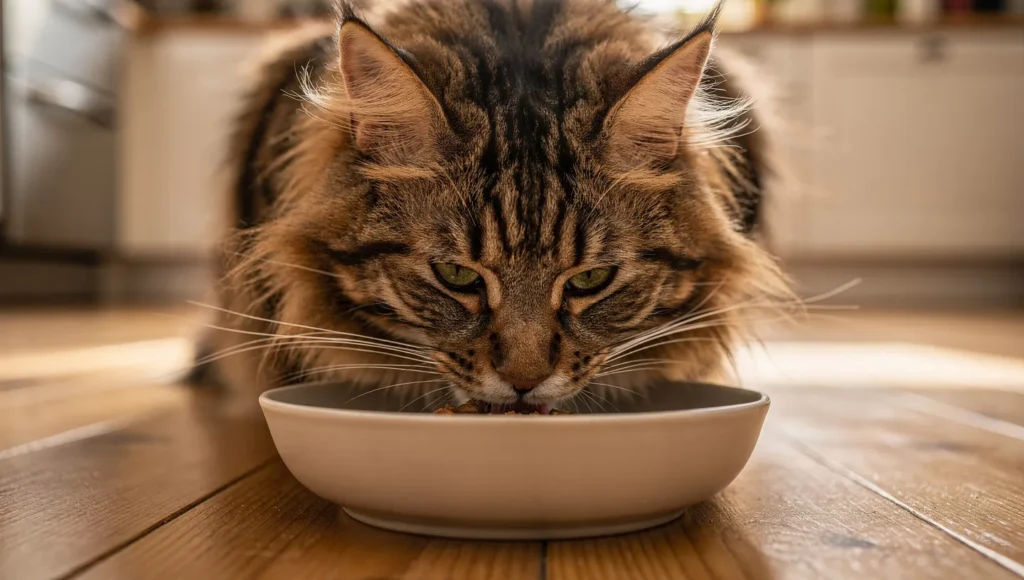
First week with my Maine Coon, I put down the same portion size I’d seen recommended for “adult cats” on the back of the bag. He looked at the bowl. Then he looked at me. Then he looked at the bowl again — with the kind of quiet disappointment that only a 20-pound cat can truly convey.
He ate it in about 45 seconds and then sat next to the empty bowl for 10 minutes, just existing, silently judging my math skills.
Maine Coons eat more than average cats. Significantly more. This means your budget for maine coon cat care will look different from a standard cat. And because they grow slowly — reaching full size between 3 and 5 years — their nutritional needs shift over time in ways most generic feeding guides completely ignore.
Here’s what actually works.
How Much Should a Maine Coon Eat?
The honest answer is: it depends on age, weight, activity level, and whether you’re feeding wet food, dry food, or both.
As a general starting point, here’s a practical reference table:
| Weight | Daily Calories (Approx.) | Wet Food | Dry Food |
|---|---|---|---|
| 10 lbs | 250–280 kcal | ~6 oz | ~¾ cup |
| 15 lbs | 330–360 kcal | ~8 oz | ~1 cup |
| 20 lbs | 400–430 kcal | ~10 oz | ~1¼ cup |
| 25 lbs | 460–500 kcal | ~12 oz | ~1½ cup |
Important: These are estimates. Calorie counts vary significantly between brands. Always check the specific food’s feeding guide and adjust based on your cat’s actual body condition — you should be able to feel their ribs slightly without pressing hard.
Split daily portions into 2 to 3 meals rather than free-feeding. Maine Coons have a tendency toward obesity if food is available around the clock, and excess weight puts serious strain on their already vulnerable joints.
Wet Food vs Dry Food for Maine Coons
This is a debate that never fully ends in the cat community, but for Maine Coons specifically, wet food should be a significant part of the diet — ideally the majority of it.
Here’s why: Maine Coons are prone to urinary issues and kidney stress if chronically underhydrated. Wet food provides moisture directly through meals, which matters a lot for a breed this size. Dry food alone simply doesn’t cut it for long-term urinary and kidney health.
That said, a combination approach works well for most owners — wet food as the primary meal, with a measured amount of high-quality dry food as a supplement or for dental benefit.
When choosing food, look for:
- Named animal protein as the first ingredient (chicken, turkey, salmon — not “meat by-products”)
- High protein content — Maine Coons are obligate carnivores and need protein to maintain muscle mass
- Low carbohydrate content — especially important for indoor cats with lower activity levels
- No artificial preservatives like BHA or BHT
For a deeper comparison of wet versus dry options and how to evaluate quality, this guide on wet vs dry cat food breaks it down clearly without the marketing noise.
And if you’re shopping for dry food specifically, this breakdown of best dry cat food brands includes a solid list of what’s actually worth buying — and what to avoid.
Maine Coon Kitten Feeding: The First Year Is Different
Maine Coon kittens need kitten-specific food until at least 12 to 15 months — some vets recommend extending that to 18 months given how slowly this breed matures.
Kitten formulas are higher in protein, fat, and essential nutrients like DHA that support brain and bone development. Switching to adult food too early can genuinely impact their growth.
Feed kittens 3 to 4 small meals per day in the first 6 months, then transition to 2 to 3 meals as they approach their first birthday.
For a detailed feeding chart organized by age and weight, this guide on how much to feed a kitten is one of the most practical references I’ve found.
Hydration: The Silent Problem Nobody Talks About
This is where I want to slow down for a second, because it’s genuinely important.
Most cats — and Maine Coons are no exception — do not drink enough water on their own. They evolved from desert animals, and their instinct to seek water is surprisingly weak. The problem is that chronic low-level dehydration quietly damages the kidneys over time, and by the time symptoms appear, the damage is already significant.
A few things that actually help:
- A cat water fountain — moving water triggers a cat’s instinct to drink. This single change made a noticeable difference for my cat
- Multiple water stations around the house — not just next to the food bowl
- Wet food as the primary diet — as mentioned above
- Adding a small amount of warm water or low-sodium broth to dry food — sounds odd, works surprisingly well
For a full strategy guide including how to spot early dehydration signs at home, this article on cat hydration covers everything in detail.
And this one is worth saying clearly: if your Maine Coon suddenly starts drinking significantly more or less water than usual, that’s a signal worth paying attention to. It can indicate kidney issues, diabetes, or urinary problems — all of which are more common in larger breeds.
Maine Coon Health: The Real Risks Every Owner Must Know
Maine Coons are generally healthy cats — but they carry a few breed-specific risks that every owner needs to know upfront. Ignoring them doesn’t make them go away. Knowing them early gives you a real advantage.
HCM: The Heart Condition That Targets This Breed
Hypertrophic Cardiomyopathy (HCM) is the most serious health concern in Maine Coons. It’s a genetic condition where the heart muscle thickens over time, reducing its ability to pump blood efficiently. According to the AVMA, HCM is the most common heart disease in cats — and Maine Coons are among the highest-risk breeds.
What you need to know:
- Annual cardiac screening (echocardiogram) is strongly recommended — especially after age 3
- Early stages show no obvious symptoms — which is exactly why routine vet visits matter
- A responsible breeder will screen parent cats for HCM before breeding
Hip Dysplasia & Weight Management
Maine Coons are also predisposed to hip dysplasia — an abnormal formation of the hip joint that causes pain and mobility issues over time. Excess weight makes it significantly worse.
Keeping your cat at a healthy weight isn’t just about looks. It’s joint protection. If you’re already noticing weight creep, this guide on cat weight loss has a practical, stress-free approach that actually works.
How Long Do Maine Coons Live?
12 to 15 years is the typical range — with well-cared-for cats sometimes reaching 17 or 18. Diet, weight management, regular vet visits, and cardiac screening are the biggest factors within your control.
5 Red Flags That Need Immediate Attention
- Sudden weight loss or gain
- Open-mouth breathing or labored breathing
- Lethargy that lasts more than 24–48 hours
- Changes in litter box habits (frequency, straining, blood)
- Loss of appetite for more than 24 hours
Any of these warrants a vet call — not a Google search. For a broader checklist of warning signs, this guide on how to tell if your cat is sick is a genuinely useful reference to bookmark.
Maine Coon Kitten Care: The First 6 Months Matter Most
The foundation you build in the first six months shapes everything — temperament, trust, and long-term health habits.
Key priorities:
- Safe space first — a quiet room with food, water, litter, and hiding spots before full house access. Full breakdown in this kitten care guide
- Socialization early — handle paws, ears, and mouth regularly so grooming and vet visits aren’t traumatic later
- Vaccinations on schedule — your vet will set the timeline based on age and lifestyle
- Play, play, play — Maine Coon kittens have serious energy. Interactive toys aren’t optional, they’re necessary. This guide on best interactive cat toys has solid options for high-energy breeds
One thing most guides skip: Maine Coons don’t fully mature until age 3 to 5. They stay kitten-like in energy and behavior far longer than most breeds. Plan accordingly.
Maine Coon Personality & Daily Life
Do Maine Coons Like Water?
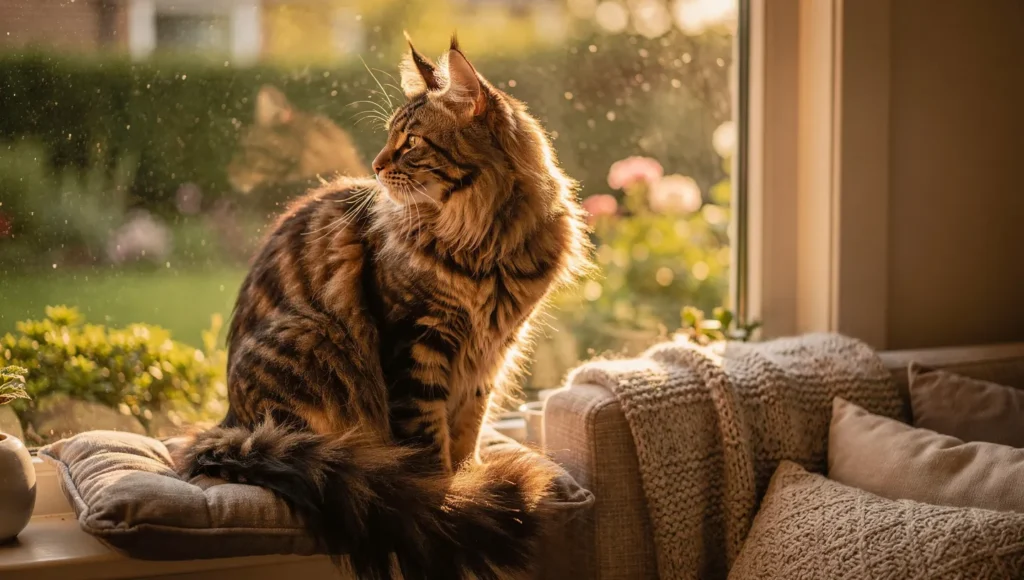
Yes — genuinely. It’s one of their most famous quirks. Mine has “supervised” every shower I’ve taken for three years. Some will actually step in. Most at minimum will sit on the edge and supervise intensely.
Are Maine Coons Good Indoor Cats?
Absolutely — as long as their environment is enriched. A bored Maine Coon is a destructive Maine Coon. They need vertical space, interactive play, and mental stimulation daily. If you’re in an apartment, it’s very doable — this guide on best cat breeds for apartments covers what to consider before committing.
Are They Good with Children?
One of the best. Maine Coons are patient, gentle, and surprisingly tolerant — they’re not the type to swipe first. They tend to walk away from overstimulation rather than react aggressively. For families, they’re genuinely one of the top choices.
Maine Coon vs Norwegian Forest Cat: Quick Comparison
They look similar enough to confuse even experienced cat people. Here’s the short version:
| Feature | Maine Coon | Norwegian Forest Cat |
|---|---|---|
| Size | Larger (up to 25 lbs) | Slightly smaller |
| Face shape | Square muzzle | Triangular, straighter profile |
| Personality | Dog-like, follows you everywhere | More independent |
| Coat texture | Shaggy, uneven layers | Dense, more uniform |
| Water affinity | Often loves it | Generally indifferent |
| Vocalization | Chirps and trills | Quieter |
For a full side-by-side breakdown, this article on Norwegian Forest Cat vs Maine Coon goes deep on every difference that actually matters.
Quick Answers to Big Questions
Are Maine Coons hard to take care of?
Not hard — but consistent. The grooming schedule and health monitoring are non-negotiable. Once you have a routine, it becomes second nature.
Are Maine Coons high maintenance?
Yes, compared to most domestic cats — primarily because of their coat, size, and health needs. But owners consistently say the personality makes every bit of it worthwhile.
How often should you groom a Maine Coon?
2 to 3 times per week minimum. Daily during shedding season (spring and fall).
Do Maine Coons shed a lot?
Yes. A lot. Invest in a good de-shedding brush and a vacuum you actually like using.
What do Maine Coons need daily?
Fresh water, measured meals, at least 15–20 minutes of active play, and some quality time with you. They genuinely need social interaction — this isn’t a cat that does well being ignored.
How long do Maine Coons live?
Typically 12 to 15 years. With good care, cardiac screening, and healthy weight management, some reach 17 or 18.
The Bottom Line
Maine Coon cat care isn’t complicated — it’s just committed. These cats give you a level of companionship that most people don’t expect from a cat. In return, they ask for consistent grooming, good food, regular vet visits, and your presence.
Honestly? That’s a pretty fair deal.
And look — if you’re reading this and still on the fence: the fur on the couch is real, the vet bills are real, and the grooming sessions are real. But so is the chirp they make when you walk through the door. So is the way they drape themselves across your lap like they’ve been waiting all day just for that moment.
Worth every single hair.
I’d love to hear from the Maine Coon owners in the Felina Care Hub family — what’s the wildest thing your gentle giant has ever done? Drop it in the comments. We read every single one, and honestly, your stories make our day.