

Disclaimer: This article is for informational purposes only and does not replace professional veterinary advice. Always consult your vet for health-related concerns.
Warming wet cat food might seem like a small detail, but it can make a huge difference in your cat’s appetite and overall eating behavior.
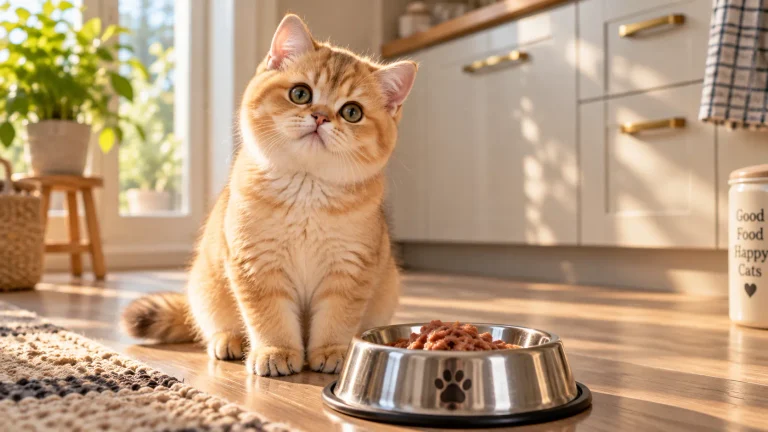
I still remember the morning my cat Olive turned her nose up at a perfectly good can of food — sniffed it, looked at me like I’d personally offended her, and walked away.
She wasn’t sick. She wasn’t picky (well, not that picky). The food had just come straight from the fridge, and it was cold.
If you’ve been there, you’re not alone. A lot of cat owners deal with this exact thing — a cat that suddenly refuses food that was fine yesterday, simply because the temperature changed. And once I started warming Olive’s food slightly before serving it, the difference was immediate. She finished the whole bowl.
So, should you warm wet cat food? Is it actually safe? And if so, what’s the right way to do it?
Based on what I’ve researched and experienced firsthand, I’ll walk you through everything — the right temperatures, the safest methods, and the mistakes that could actually harm your cat.

Table of Contents
- 🌡️ Is It Safe to Warm Wet Cat Food?
- 🔍 Why Warmth Can Actually Help Your Cat
- ⚠️ When Warming Becomes Dangerous
- 🐱 Do Cats Prefer Warm or Cold Wet Food?
- 🍲 How to Warm Wet Cat Food Safely (Step-by-Step)
- ✅ Method 1: Warm Water Bath (Best Option)
- ⚠️ Method 2: Microwave (Use With Caution)
- 💧 Method 3: Add a Splash of Warm Water
- 🚫 How to Warm Cat Food Without a Microwave
- 🔥 Can You Microwave Wet Cat Food? (Important Warning)
- 🌡️ How Warm Should Cat Food Be? (Ideal Temperature)
- 🚫 Common Mistakes When Warming Cat Food
- 🧊 Should You Warm Refrigerated Cat Food?
- 🚫 When You Should NOT Warm Cat Food
- 🍽️ Does Warming Cat Food Increase Appetite?
- ❓ FAQ: Warming Wet Cat Food
- Is it okay to warm up my cat’s wet food every day?
- Can I warm cat food in the microwave?
- Do cats like warm food?
- How long does wet cat food last after opening?
- Can I warm cat food that’s been in the fridge for 3 days?
- What if my cat still refuses warmed food?
- ✅ Final Verdict
🌡️ Is It Safe to Warm Wet Cat Food?
The short answer: yes — but with some important conditions.
Warming wet cat food is generally safe when done correctly. The key word there is correctly. Heat can be your friend or a real problem depending on how you use it.
🔍 Why Warmth Can Actually Help Your Cat
Cats are wired to eat prey at body temperature — around 100°F (38°C). That’s the natural state of a freshly caught mouse or bird.
Refrigerated wet food, by contrast, comes out at around 35–40°F (2–4°C). That’s a huge gap from what their instincts expect.
When warming wet cat food slightly, you’re not just making it more appealing — you’re actually helping release the aroma compounds that trigger a cat’s appetite. According to information from sources like ASPCA, a cat’s sense of smell plays a major role in food acceptance, especially for cats that are sick, elderly, or recovering.
⚠️ When Warming Becomes Dangerous
The risk isn’t in warming — it’s in overheating.
Food that’s too hot can:
- Burn your cat’s mouth or throat
- Destroy temperature-sensitive nutrients
- Create uneven “hot spots” (especially with microwaves) that aren’t obvious from the surface
The goal is warm, not hot. Think body temperature, not soup temperature.
🐱 Do Cats Prefer Warm or Cold Wet Food?
Most cats prefer food served at or slightly above room temperature. Here’s a quick breakdown:
| Temperature | Cat’s Reaction | Notes |
|---|---|---|
| Straight from fridge (35–40°F) | Often rejected | Too cold, low aroma |
| Room temperature (65–70°F) | Usually accepted | Better than cold |
| Slightly warm (95–100°F) | Preferred by most cats | Mimics natural prey |
| Hot (above 110°F) | Dangerous ❌ | Risk of burns |
From what I’ve seen with my own cats and read from other owners, the “straight from the fridge” meal is one of the most common reasons a cat suddenly “goes off” food they normally love.
It’s not always a health issue — sometimes it’s just temperature.
🍲 How to Warm Wet Cat Food Safely (Step-by-Step)
There are a few different ways of warming wet cat food safely. Each has its pros and cons.
✅ Method 1: Warm Water Bath (Best Option)
This is my go-to method — it’s the safest and most consistent.
How to do it:
- Place the portion of cat food in a small, sealed container or leave it in the can
- Set it in a bowl of warm (not boiling) water
- Wait 5–10 minutes
- Stir and test the temperature with your finger before serving
No hot spots, no nutrient loss, no guesswork. It gently brings the food up to a natural serving temperature.

⚠️ Method 2: Microwave (Use With Caution)
The microwave works, but it requires attention.
How to do it:
- Transfer the food to a microwave-safe dish (never microwave directly in the can)
- Heat for 5–10 seconds only
- Stir thoroughly — this is critical to eliminate hot spots
- Test the temperature before serving
The biggest mistake people make: heating for 30+ seconds thinking more is better. Even 15 seconds too long can create burning hot pockets inside food that feels fine on the surface.
💧 Method 3: Add a Splash of Warm Water
This is the quickest low-effort option — especially useful if your cat also needs more hydration.
Just add a small amount of warm water to the food, stir well, and serve. It won’t raise the temperature dramatically, but it takes the chill off and boosts moisture content at the same time.
For more on why hydration matters so much for cats, check out our guide on cat hydration — it covers some strategies that pair well with this approach.
🚫 How to Warm Cat Food Without a Microwave
If you’d rather skip the microwave entirely, the warm water bath method is your best friend. It’s slower, but it’s consistent and gentle — no risk of hot spots, no nutrient concerns.
You can also leave refrigerated food out for 15–20 minutes before serving to let it naturally come to room temperature, though this works better in warmer climates than in air-conditioned homes.
🔥 Can You Microwave Wet Cat Food? (Important Warning)
Yes — but it’s the method that requires the most care.
The microwave heats unevenly. What feels lukewarm on the outside can be scalding hot just a centimeter deeper. This is what veterinary sources refer to as “thermal hot spots,” and they’re the main reason warming cat food in the microwave gets a cautious reputation.
Key safety rules if you use a microwave:
- Never microwave in the can — always transfer to a microwave-safe bowl
- 5–10 seconds maximum per heating cycle
- Stir thoroughly after heating — every time
- Touch-test the food before serving (it should feel barely warm on your fingertip)
- Never reheat more than once
Done carefully, the microwave is fine. Done carelessly, it’s the fastest way to burn your cat’s mouth.
🌡️ How Warm Should Cat Food Be? (Ideal Temperature)
This is one of those details that makes a real difference once you know it.
The ideal serving temperature for wet cat food is approximately 95–100°F (35–38°C) — essentially body temperature.
A simple way to test this without a thermometer:
- Touch a small amount of food with your fingertip
- It should feel neutral to very slightly warm — not hot, not cold
- If it feels warm to you, it’s probably too warm for your cat
Think of it this way: if you’d describe it as “warm” rather than “barely noticeable,” dial it back.
💡 Expert Tip
If your cat is sick, elderly, or has lost their appetite, slightly warming their food can make a significant difference in whether they eat at all. The enhanced aroma from warm food is sometimes enough to trigger interest in a cat that’s been turning down meals. This is especially true for cats recovering from illness — a topic covered in more detail in our article on how to tell if your cat is sick.

🚫 Common Mistakes When Warming Cat Food
These are the most common mistakes people make when warming wet cat food — and some of them are surprisingly easy to make.
- Overheating — anything above 110°F puts you in burn territory. More heat is not more helpful.
- Serving immediately out of the microwave — always stir and test first, without exception.
- Skipping the stir — even after a warm water bath, stir before serving to distribute heat evenly.
- Reheating the same food multiple times — once warmed, serve it. Don’t reheat leftovers again.
- Leaving food out too long after warming — warmed food left at room temperature for more than 30–40 minutes starts to become a bacteria risk. When in doubt, toss it.
- Assuming cold = better for safety — some owners avoid warming because they worry it’s risky. But cold food from the fridge has its own downsides (rejection, digestive discomfort in some cats).
🧊 Should You Warm Refrigerated Cat Food?
Yes — and it makes a bigger difference than most owners realize.
Cold food straight from the fridge mutes the aroma, which is the main thing that triggers a cat’s appetite. Based on what I’ve seen, this single habit change fixes a lot of “my cat stopped eating” situations overnight.
Quick protocol:
- Take the food out 15–20 minutes before serving, OR
- Use the warm water bath method for 5 minutes
- Always serve at or near body temperature (~98°F)
According to AVMA guidelines, proper food handling and serving temperature are part of basic feline nutrition hygiene — not just a comfort preference.
🚫 When You Should NOT Warm Cat Food
Warming isn’t always the right call. Skip it if:
- The food smells off or looks discolored — warming won’t fix spoilage, it accelerates it
- The food has been sitting open for more than 2 hours at room temperature
- Your cat genuinely prefers it cold (rare, but some cats do)
- You plan to leave the bowl out — warmed food reaches unsafe bacterial levels faster than cold food
When in doubt: fresh food > warmed old food. Every time.
🍽️ Does Warming Cat Food Increase Appetite?
Yes — and this is backed by feline behavioral research.
Heat releases volatile aroma compounds in protein-rich food. For cats, smell is the first filter for whether food is worth eating. A warm bowl triggers appetite signals that a cold one simply doesn’t.
This is especially useful for:
- Sick or recovering cats — see our full guide on how to tell if your cat is sick
- Senior cats with declining sense of smell
- Picky eaters going through a food transition — relevant if you’re also working through switching cat food safely
- Underweight cats that need encouragement to eat more
If your cat’s appetite has dropped and you haven’t tried warming their food yet, that’s the first thing I’d test before assuming something’s wrong.

❓ FAQ: Warming Wet Cat Food
Is it okay to warm up my cat’s wet food every day?
Absolutely. Daily warming is safe as long as you’re using a gentle method (warm water bath or brief microwave) and testing the temperature before serving.
Can I warm cat food in the microwave?
Yes, but keep it to 5–10 seconds, always stir, and always touch-test before the bowl reaches your cat. Hot spots are the real risk here.
Do cats like warm food?
Most do. It mimics the temperature of natural prey and enhances the aroma — both of which matter a lot to a cat’s appetite response.
How long does wet cat food last after opening?
In the fridge: up to 3–5 days in a covered container. At room temperature: no more than 30–40 minutes before it becomes a bacterial concern.
Can I warm cat food that’s been in the fridge for 3 days?
Yes — as long as it still smells fresh and looks normal. Warming doesn’t extend shelf life, but it doesn’t shorten it either if the food was stored correctly.
What if my cat still refuses warmed food?
It could be a texture issue, a flavor preference, or an underlying health concern. If refusal persists beyond 24–48 hours, a vet check is worth it. You can also check if there are signs of a problem in our guide on why cats stop eating or drinking.
✅ Final Verdict
Warming wet cat food is one of the simplest, lowest-effort things you can do to improve your cat’s mealtime experience — and sometimes it’s the thing that turns a food refusal situation around completely.
The rule is simple:
- Warm = good (95–100°F, body temperature range)
- Hot = dangerous (above 110°F, risk of burns and nutrient loss)
- Cold from the fridge = often rejected (too far from natural prey temperature)
Stick to the warm water bath method when you can, use the microwave sparingly and carefully, and always test before serving.
Your cat won’t thank you out loud — but a clean, empty bowl tells you everything you need to know.