
What Do Cats Eat is the core question you face when you’re standing in the pet food aisle.
One side is stacked with colorful bags. The other is lined with endless cans. “Grain-free.” “Indoor formula.” “Hairball control.” “Premium. Holistic. Natural.”
If you’re a new cat owner, this moment can feel overwhelming. You want to do the right thing. You want your cat to be healthy, active, and happy. But every package claims to be “the best,” and the marketing makes it feel like one wrong choice could harm your cat.
Here’s the truth most labels won’t tell you: feeding a cat well is actually very simple. Cats haven’t changed their nutritional needs just because packaging has become fancier. Once you understand what a cat is biologically designed to eat, the confusion fades. The brands, trends, and buzzwords stop mattering as much.
This guide will strip everything back to the basics and help you choose a daily diet that truly supports your cat’s health—without the stress. In addition to their standard meals, you might wonder What Can Cats Eat when it comes to safe human foods.
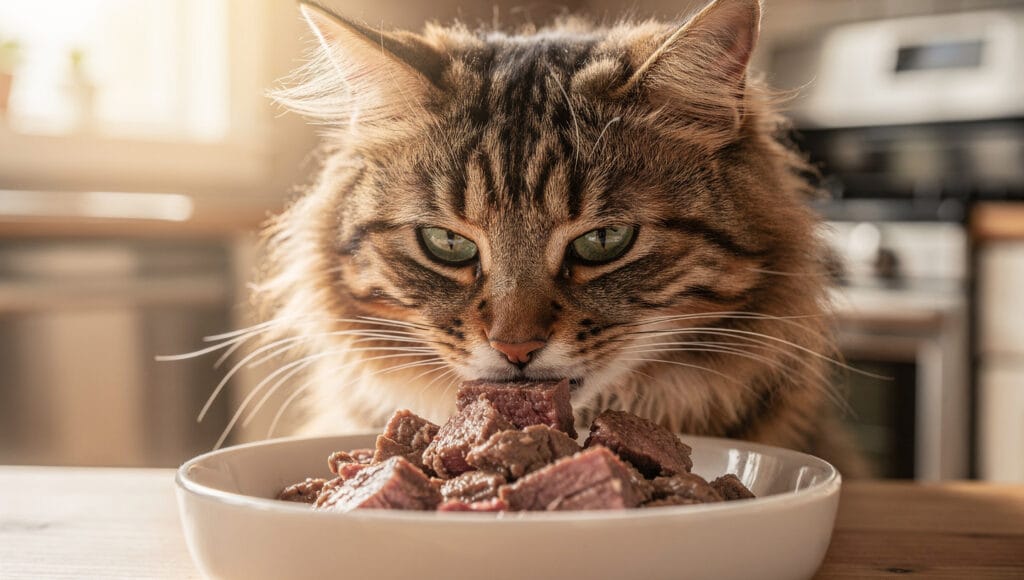
Table of Contents
- What Cats Are Designed to Eat (The Natural Prey Diet Explained)
- How Much Protein Does a Cat Really Need?
- What Do Cats Eat: Wet Food vs. Dry Food — Which Is Better?
- Dry Food (Kibble): Pros & Cons
- Wet Food (Canned): Pros & Cons
- The Best of Both Worlds: Mixing Wet and Dry Food
- What About Raw Diets?
- Wet vs. Dry vs. Raw: A Simple Comparison
- How to Read a Cat Food Label Like a Pro
- Ingredients You WANT to See
- Ingredients to LIMIT or Avoid
- How Often Should You Feed a Cat?
- Avoid These Common Mistakes:
- Water and Hydration: The Most Overlooked Nutrient
- How to Encourage Your Cat to Drink More:
- Frequently Asked Questions About What Cats Eat
- What type of food do cats really need?
- Can I feed my cat only dry food?
- What human foods are safe for cats to eat?
- How do I know if my cat is eating the right diet?
- Is grain-free food better for cats?
- Conclusion: So… What Do Cats Eat Best?
What Cats Are Designed to Eat (The Natural Prey Diet Explained)
Cats are obligate carnivores. This means their bodies are built to survive on animal-based food—not plants, not grains, and not carbohydrates. In the wild, a cat doesn’t eat kibble. It hunts mice, small birds, and insects.
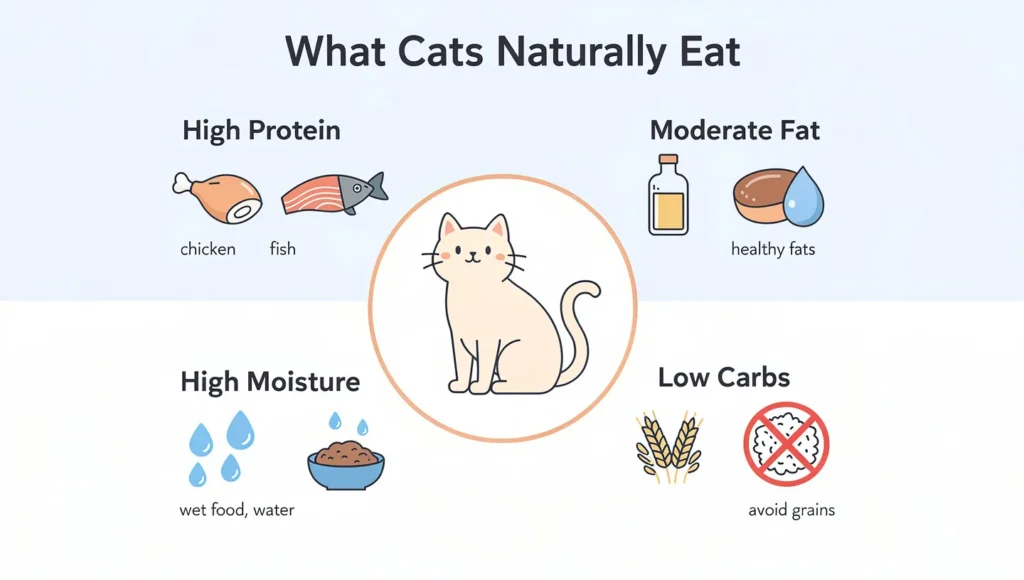
When a cat eats prey, it consumes:
- High-quality animal protein for muscle and energy.
- Animal fat for calories and vital nutrients.
- Natural moisture from the prey’s body.
- Very little carbohydrate.
This matters because a cat’s body is not efficient at processing carbs. Cats don’t need grains for energy. They don’t need vegetables to “balance” their meals. Their metabolism is tuned almost entirely for protein and fat.
Moisture is just as important. Wild prey is roughly 70–75% water. Because of this, cats evolved with a low thirst drive. They are meant to get most of their hydration from food—not from a water bowl. So the big takeaway is simple: A healthy cat diet should be rich in animal protein, moderate in fat, low in carbs, and provide adequate moisture.
How Much Protein Does a Cat Really Need?
Most healthy adult cats thrive on a diet that contains at least 30–40% protein on a dry matter basis. This reflects their natural diet in the wild, where protein is the primary energy source. Always check the label and prioritize foods where real meat comes first.
What Do Cats Eat: Wet Food vs. Dry Food — Which Is Better?
This is the question almost every cat owner asks. And the honest answer is: it depends. Let’s break it down clearly and calmly.
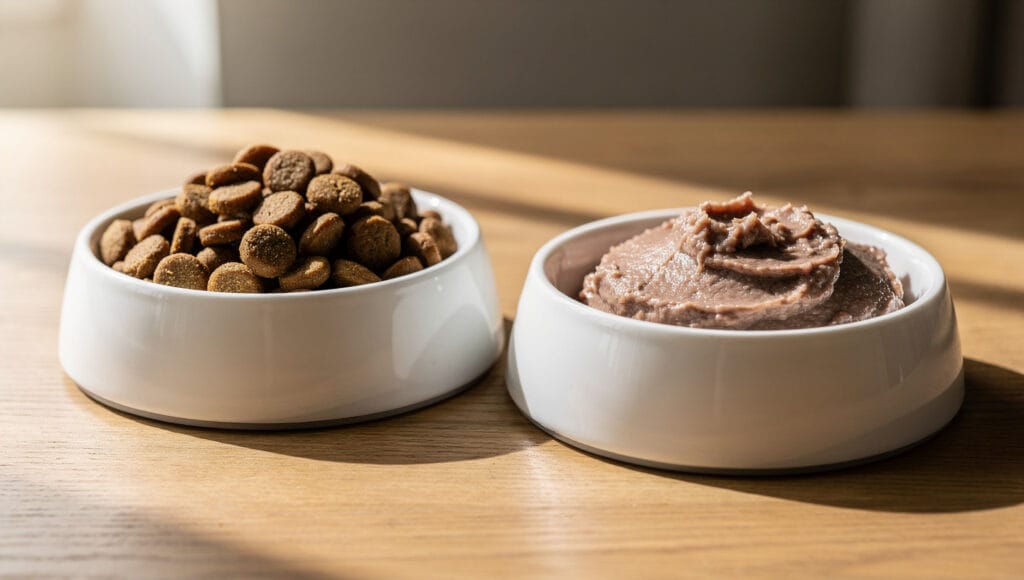
Dry Food (Kibble): Pros & Cons
- Pros: Very convenient, affordable, and has a long shelf life.
- Cons: Very low moisture (6–10%), dehydration risk, often higher in carbohydrates.
- Bottom line: Dry food is practical, but it does not match a cat’s natural moisture needs. Long-term, it can contribute to urinary and kidney issues if hydration isn’t managed carefully. If you notice your pet having trouble, it might explain why does my cat pee on the bed? as a sign of health stress.
Wet Food (Canned): Pros & Cons
- Pros: High moisture content (70–80%), supports kidney health, higher protein, lower carbs.
- Cons: More expensive, short shelf life after opening.
- Bottom line: Wet food is biologically superior for most cats, especially indoor cats. It’s often the healthier foundation of a cat’s diet.
The Best of Both Worlds: Mixing Wet and Dry Food
For many households, the most realistic and balanced approach is combining both. A common strategy is: Wet food for main meals (breakfast and dinner) and a small amount of dry food for grazing. This approach boosts daily moisture intake while controlling costs and maintaining convenience.
What About Raw Diets?
Raw diets aim to mimic natural prey and can be excellent, but they carry bacterial risks (Salmonella) and are difficult to balance without expert guidance. They are an advanced option, not recommended for beginners without proper education.
Wet vs. Dry vs. Raw: A Simple Comparison
| Food Type | Moisture Level | Protein Quality | Best For | Main Drawback |
|---|---|---|---|---|
| Wet Food | High (70–80%) | High | Hydration & overall health | More expensive, spoils faster |
| Dry Food | Low (6–10%) | Moderate | Convenience & budget | Low moisture, higher carbs |
| Raw Diet | Natural moisture | Very high | Advanced feeding approach | Risky if not balanced properly |
How to Read a Cat Food Label Like a Pro
Cat food labels can look intimidating, but you don’t need a degree in nutrition to understand them. For more details, you can refer to professional resources on feeding your cat safely.
Ingredients You WANT to See
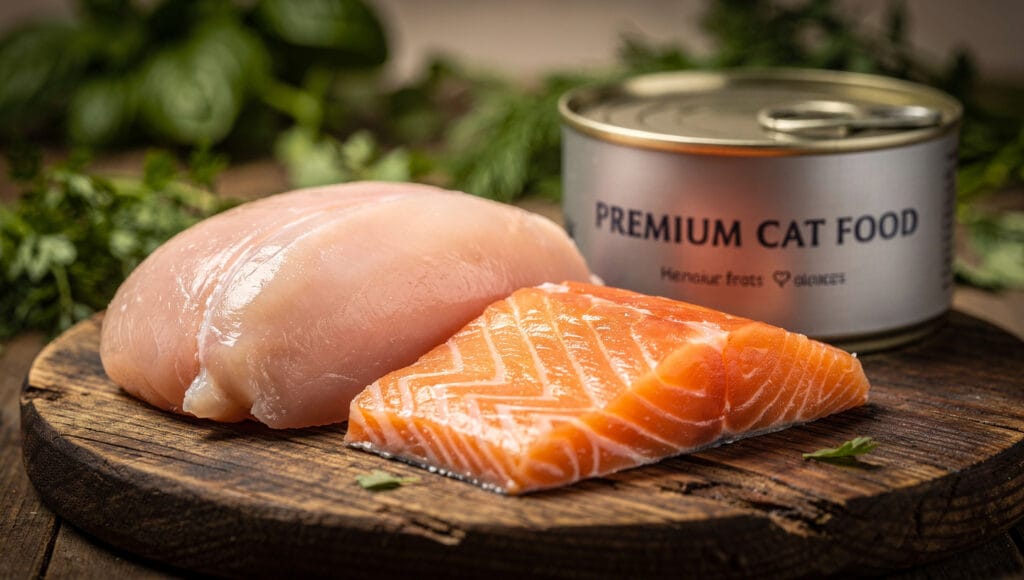
Look for clearly named animal proteins as the first ingredients:
- Chicken, Turkey, Beef, Lamb, Salmon.
- Chicken liver / Turkey liver.
- Animal fat (e.g., chicken fat).
- Taurine.
Ingredients to LIMIT or Avoid
Avoid ingredients used to lower costs or bulk up food:
- Corn, Wheat, Soy.
- Plant-heavy fillers.
- Artificial colors and flavors.
- Vague terms like “Meat meal” or “animal by-products” (when the source is not defined).
Quick Label Tip: Ignore marketing terms like “Premium,” “Holistic,” or “Gourmet.” They are not regulated. Ingredients tell the real story. Choosing the wrong ingredients can sometimes lead to digestive upset; if this happens, check our guide on why does my cat throw up after eating?
How Often Should You Feed a Cat?
Feeding frequency matters just as much as food quality. Understanding what do cats eat includes knowing when they should eat it.
- Adult Cats: 2 meals per day is ideal (morning and evening). This mimics natural hunting patterns and prevents overeating.
- Kittens: 3–4 small meals per day because they grow fast and burn energy quickly.
Avoid These Common Mistakes:
- Free-feeding unlimited dry food all day.
- Guessing portions without checking guidelines.
- Feeding only once per day.
Water and Hydration: The Most Overlooked Nutrient
Cats are naturally bad drinkers. Because they evolved to get water from prey, they don’t feel thirsty until they’re already slightly dehydrated.
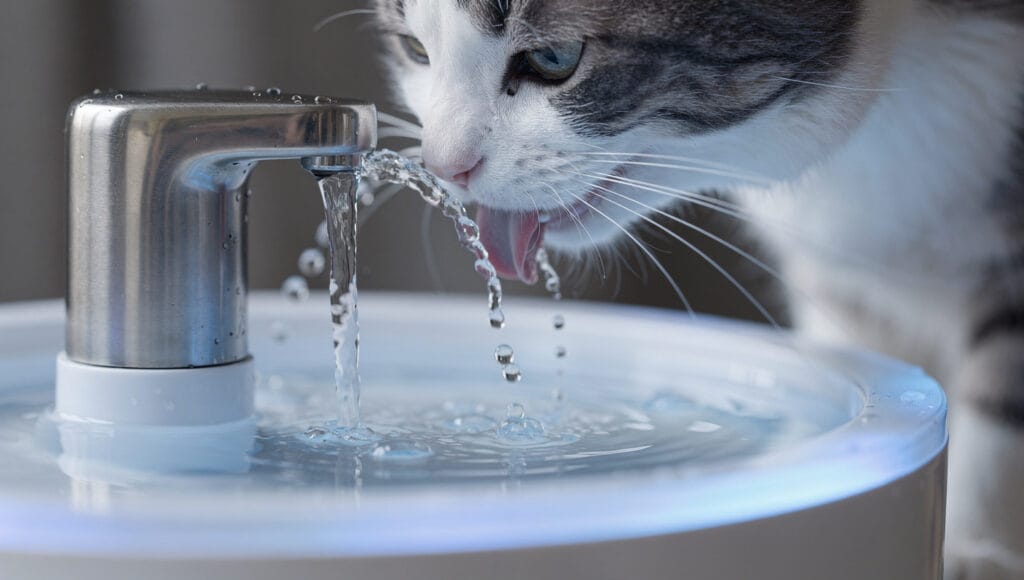
Why Hydration Matters: It supports kidney health, protects the urinary tract, and helps digestion.
How to Encourage Your Cat to Drink More:
- Feed wet food regularly (biggest impact).
- Use a water fountain (cats prefer moving water).
- Keep water bowls AWAY from food bowls (cats prefer separation).
- Refresh water daily.
Frequently Asked Questions About What Cats Eat
What type of food do cats really need?
Cats need a diet that is primarily based on animal protein. Their bodies are designed to process meat, not plants. A good diet should be rich in high-quality protein, contain moderate fat, and stay low in carbohydrates. Moisture is also essential, which is why wet food is often a better choice.
Can I feed my cat only dry food?
Technically, yes—but it’s not ideal. Most cats don’t drink enough water on their own, and dry food contains very little moisture. Over time, this can lead to dehydration and increase the risk of urinary or kidney problems. Adding wet food can make a big difference.
What human foods are safe for cats to eat?
Some plain, cooked foods like chicken, turkey, or fish can be safe in small amounts. However, they should never replace a complete cat diet. Avoid seasoning, salt, onions, garlic, and anything processed. Always keep it simple and occasional.
How do I know if my cat is eating the right diet?
A healthy cat usually has a shiny coat, good energy levels, and maintains a stable weight. If your cat seems lethargic, loses weight, or has digestive issues, it may be time to review their diet or consult a vet.
Is grain-free food better for cats?
Not always. Grain-free doesn’t necessarily mean healthier. What really matters is the overall quality of the ingredients, especially the amount of animal protein. Some grain-free foods still contain high levels of carbohydrates from other sources.
Conclusion: So… What Do Cats Eat Best?
Here’s the honest truth: The best food for your cat is the one they eat, that meets their nutritional needs, and fits your budget. You don’t need perfection. You don’t need the most expensive brand.
What matters most is prioritizing animal protein, supporting hydration, and avoiding unnecessary fillers. Start today by doing one simple thing: turn the package around and read the ingredient label. Once you know what you’re looking for in terms of **what do cats eat**, the confusion disappears—and your cat benefits for years to come.