Why do cats hide when you just want to shower them with love? It is a question that keeps many dedicated cat parents awake at night, wondering if their feline friend is simply enjoying some “me-time” or if something is secretly wrong. Seeing an empty sofa where your cat usually lounges can trigger instant anxiety, but understanding this behavior is the first step toward a deeper bond.
While a disappearing act often stems from a cat’s natural survival instincts, it can also be a silent plea for help. In this guide, we will dive deep into the psychology of feline concealment, helping you distinguish between a playful game of hide-and-seek and a clinical red flag that requires attention.
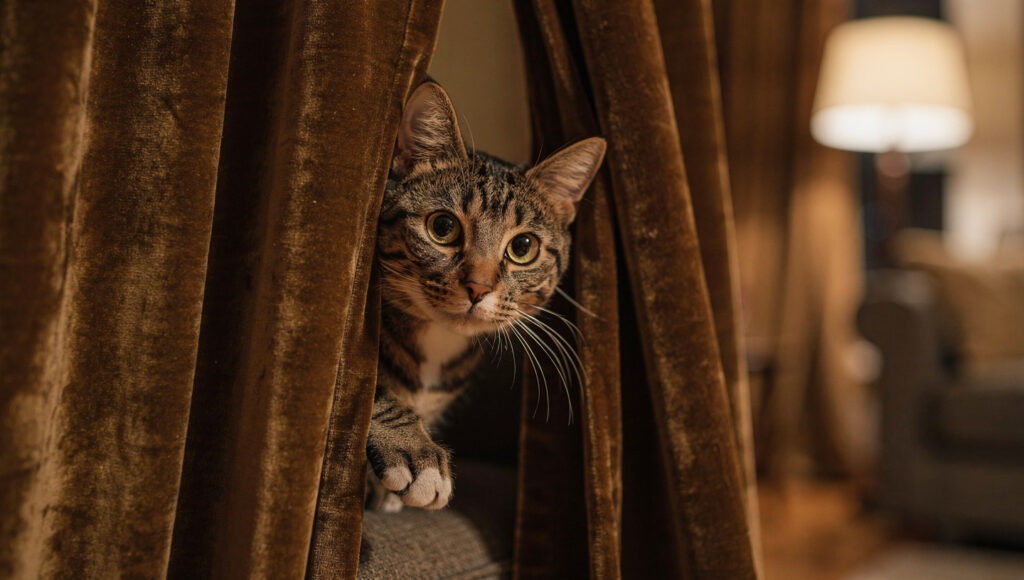
To understand why do cats hide, we have to look back at their wild ancestors. In the wild, a cat is both a predator and potential prey. Finding a cramped, enclosed space isn’t just a preference—it is a biological necessity for safety. When your cat wedges themselves behind the TV or inside a cardboard box, they are simply activating their “safe mode.”
🛡️ Stress Management and The Solitary Hunter
Cats do not possess the same social conflict-resolution skills that humans or dogs do. If a situation becomes overwhelming—be it a loud vacuum cleaner or a new houseguest—their primary defense is feline hiding behavior. By removing themselves from the environment, they can lower their cortisol levels and “recharge” in peace.
Environmental Security: Enclosed spaces provide a 360-degree sense of protection, allowing the cat to sleep without fear of an ambush.
Temperature Regulation: Small, dark spots (like the back of a closet) often hold heat better, which is vital for a cat’s high basal body temperature.
The Element of Surprise: Hiding serves as a tactical advantage. A hidden cat can observe its “territory” (your living room) without being spotted by “prey” (that feather wand toy).
💡 Expert Tip
If your cat is hiding but still responds to the sound of a treat bag or maintains a healthy appetite, they are likely just seeking a temporary break. Respect their “do not disturb” sign to build trust; dragging them out of a safe spot can actually increase their stress levels.
Understanding these subtle cues is part of mastering cat body language, which helps you realize that a hidden cat isn’t necessarily a lonely cat—it’s often just a cat being a cat.
🚩 Red Flags: When Hiding Means Your Cat Is Sick
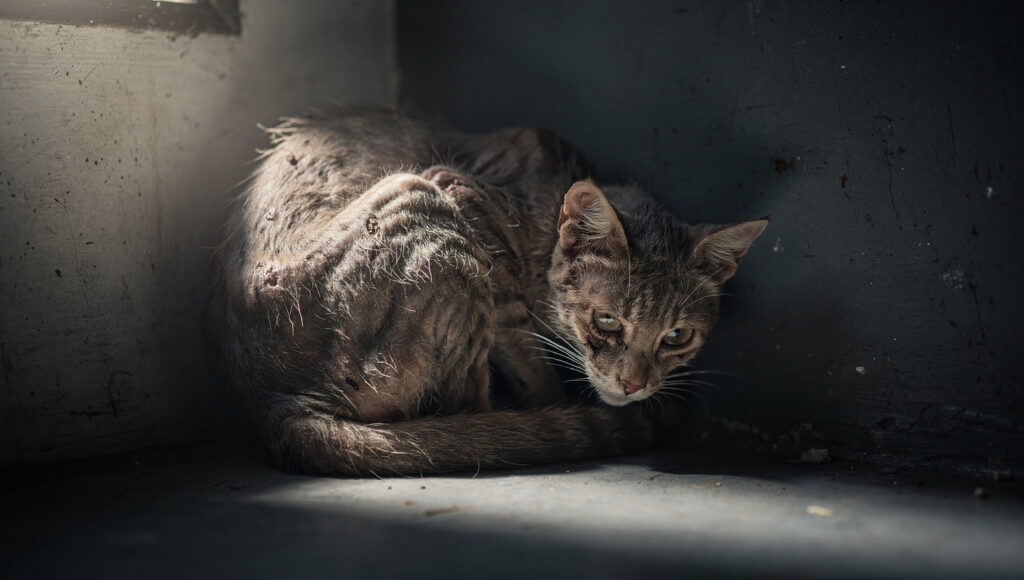
Cats are evolutionary masters at hiding pain. In the wild, showing weakness makes you a target, so your feline companion has inherited a “poker face” that can be hard to crack. However, when why do cats hide transitions from a brief nap to a permanent disappearance, it is often one of the first sickness signs in cats.
If your cat is suddenly spending hours in the back of a dark closet and refuses to come out even for their favorite tuna, your “intuition” is likely right. Sudden behavioral shifts are rarely random; they are often a physical response to discomfort or malaise.
📊 Natural Hiding vs. Sick Hiding: How to Tell the Difference
Use this quick comparison table to evaluate your cat’s current behavior. If you notice more than two “Sick Hiding” traits, a consultation with a professional is highly recommended.
Feature
Natural Hiding (Normal)
Sick Hiding (Red Flag)
Responsiveness
Alert; ears twitch at sounds; comes out for treats.
Lethargic; unresponsive to toys or favorite food.
Body Posture
Relaxed, curled up, or “loafing” comfortably.
Tense, “hunched” back, or head pressed against a wall.
Grooming
Coat looks sleek and clean.
Unkempt, greasy, or “spiky” fur (lack of grooming).
Litter Box Habits
Normal usage.
Accidents outside the box or frequent unsuccessful trips.
⚠️ The Silent Connection: Chronic Kidney Disease & Stress
One of the most critical reasons why do cats hide unexpectedly is related to internal discomfort, specifically kidney disease symptoms in cats. When the kidneys aren’t filtering toxins efficiently, cats often feel nauseous and “off,” leading them to seek isolation. This is often accompanied by increased thirst or a sudden change in breath odor.
Furthermore, chronic stress can manifest as physical illness. If a cat feels constantly unsafe, their immune system weakens. Learning how to tell if your cat is sick through these subtle behavioral changes can be a lifesaver. For more detailed clinical information on renal health, you can refer to the Cornell Feline Health Center.
🩺 Expert Tip: The “Golden Hour”
Watch your cat’s eyes when they are hiding. Dilated pupils (in a room that isn’t dark) or a “glassy” look often indicate signs of pain in cats. If the hiding is paired with a sudden loss of appetite for more than 24 hours, treat it as an urgent matter.
🏠 The “New Home” Syndrome: Navigating Feline Hiding Behavior
Moving house is ranked as one of the most stressful life events for humans, but for a cat, it is a complete territorial collapse. When you enter a new space, you see fresh paint and more square footage; your cat sees a foreign landscape devoid of their scent and safety markers. This is why cat behavior in new home environments almost always begins with a disappearing act.
If you are wondering why do cats hide after a move, remember that they are mapping out their new kingdom from the shadows. They aren’t being “antisocial”—they are performing a tactical assessment of every nook and cranny to ensure no hidden “predators” are lurking.
⏱️ The 3-3-3 Rule for New Environments
To help manage your expectations and lower your stress levels, experts often refer to the “3-3-3 Rule.” This timeline explains how long it typically takes for feline hiding behavior to transition into confident exploration:
The First 3 Days: Total overwhelm. Expect your cat to hide almost 24/7. They may refuse to eat during the day and only emerge at night to use the litter box.
The First 3 Weeks: Curiosity starts to outweigh fear. They will begin to explore one room at a time, usually creeping along the walls or under furniture.
The First 3 Months: “Ownership” begins. Your cat will start to claim vertical spaces (like shelves) and feel confident enough to sleep in the middle of the room.
During this transition, it is vital to keep their resources—food, water, and litter—close to their chosen sanctuary. If you have recently added another pet to the mix during the move, check out our guide on how to introduce two cats to ensure the hiding isn’t due to territorial bullying.
💡 Expert Tip: Scent Swapping
To speed up the “settling in” process, take a soft cloth and rub it gently on your cat’s cheeks while they are hiding, then rub that cloth on the corners of the furniture in the new room. Distributing their facial pheromones helps them realize the new space is actually “theirs,” reducing the urge to stay hidden.
🕵️♂️ Common Hiding Spots and Their Hidden Meanings
Not all hiding spots are created equal. Where your cat chooses to retreat can tell you a lot about their current emotional state and what they are trying to avoid—or achieve. By observing their choice of “bunker,” you can better understand why do cats hide in specific scenarios.
Is it a temporary nap spot, or a fortress built out of fear? Let’s decode the most common feline hideouts and the psychology behind them.
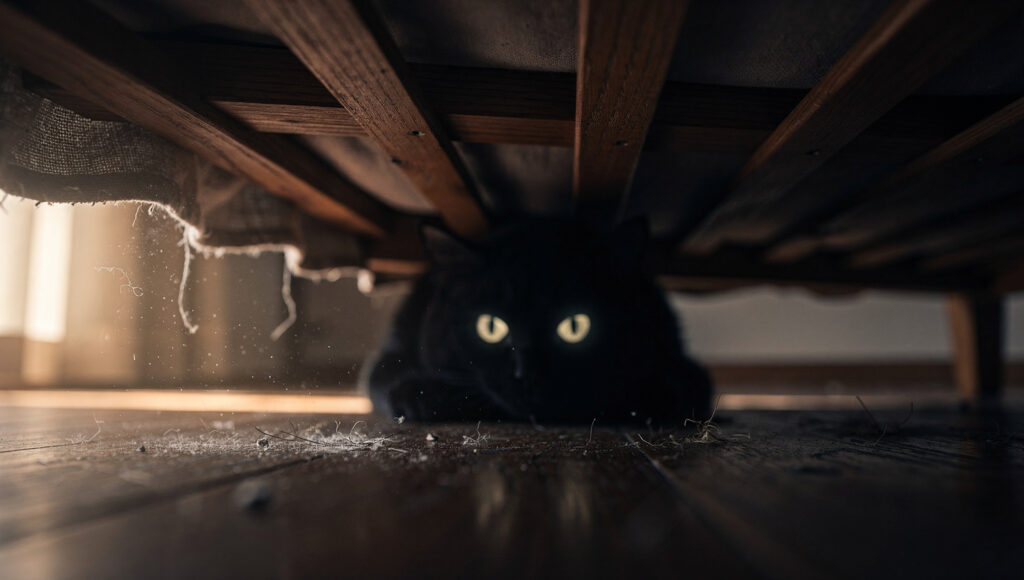
Under the Bed (The Fortress): This is perhaps the most searched-for behavior. The cat hiding under bed meaning usually boils down to total security. With a low “ceiling” and limited entry points, the cat feels invincible. If they are here, they likely feel overwhelmed by the environment and need a complete sensory break.
High Shelves or Top of Wardrobes (The Observation Deck): When cats hide up high, they aren’t necessarily scared; they are being tactical. High spots allow them to monitor the entire room while remaining “invisible.” This is common in multi-pet households where a cat wants to stay out of the reach of a playful dog.
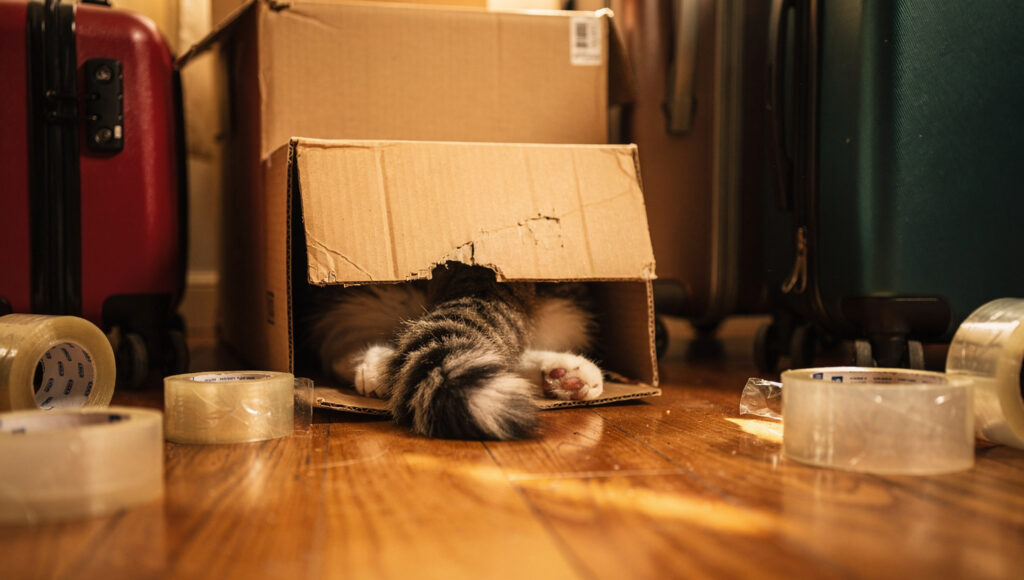
Cardboard Boxes (The Stress Reliever): Scientific studies have shown that boxes significantly reduce feline stress. The tight fit provides a “hug” sensation that releases calming hormones. If your cat is in a box, they are proactively managing their own anxiety.
Dark Closets or Laundry Baskets (The Sensory Deprivation Chamber): If your cat is seeking out the darkest, quietest corner of a closet, they might be experiencing a headache, nausea, or overstimulation from loud noises (like thunderstorms or fireworks).
🔍 Where Do Cats Hide When They Are Scared?
When a cat is genuinely terrified, they don’t look for a view; they look for “compression.” This is why you might find a panicked cat hiding under bed covers or squeezed into the tiny gap behind a washing machine. In these moments, their goal is to become as small and “un-findable” as possible.
💡 Expert Tip: The “Safe Space” Audit
Take a look at your cat’s favorite hiding spot. Is it near a loud appliance? Is it in a high-traffic hallway? If so, your cat might be trying to hide but failing to find true peace. Moving a cozy box to a quiet, low-traffic corner can provide them with the ultimate mental health retreat.
🛠️ DIY Guide: How to Create the Ultimate “Safe Haven”
Instead of constantly wondering why do cats hide in inconvenient or dangerous places, why not design a sanctuary specifically for them? Providing intentional safe spaces for cats can drastically reduce anxiety and prevent many stress-related behavioral issues. A “Safe Haven” isn’t just a bed; it’s a strategically placed retreat that respects their natural instincts.
You don’t need an expensive interior designer to make your cat feel secure. By focusing on verticality, enclosure, and quiet, you can transform any corner of your home into a feline paradise.
🏗️ Designing Your Cat’s Stress-Free Zone
To effectively lower cat stress signals, your DIY safe haven should incorporate these three essential elements:
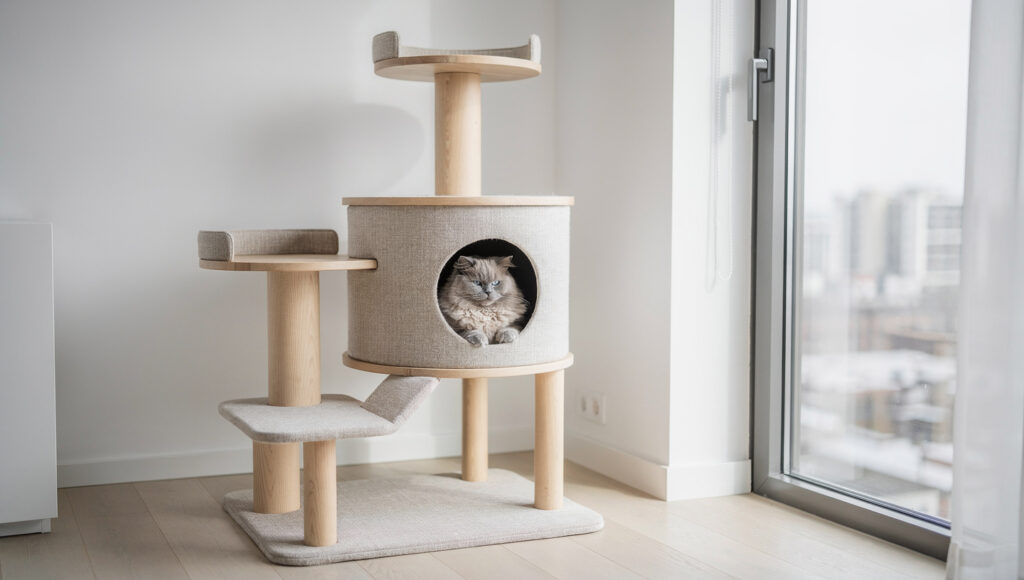
The “High-Low” Strategy: Provide both a high perch (like a sturdy shelf) and a low, enclosed bunker (like a felt igloo). This allows your cat to choose their defense mechanism based on how they feel.
The “Double-Exit” Rule: Whenever possible, ensure their hiding spot has two potential exits. A cat feels trapped if there is only one way out; having a “back door” provides the mental peace of knowing they can’t be cornered.
The Pheromone Anchor: Place a worn t-shirt of yours inside the hiding spot. Your familiar scent acts as a natural stabilizer, helping them associate the new “Safe Haven” with comfort and security.
🔇 The Golden Rules of Sanctuary Maintenance
Creating the space is only half the battle; maintaining its “sanctity” is what builds long-term trust. Follow these guidelines to ensure the space remains effective:
The “No-Touch” Zone: Once your cat enters their safe space, they are officially “off-limits.” Never pull them out for cuddles or medication while they are in their bunker.
Quiet Calibration: Place the haven away from the “noise triangle” (the TV, the vacuum storage, and the washing machine).
Strategic Visibility: Position the opening of the hiding spot toward the room’s entrance so the cat can monitor who is coming and going without being seen.
💡 Expert Tip: The Cardboard Hack
If you are on a budget, a simple cardboard box turned upside down with a “U” shape cut out for a door is often more effective than an expensive plush bed. Sprinkle a little organic catnip inside to encourage initial exploration and positive association with the new spot.
🏁 Conclusion: Supporting Your Cat’s Mental Health
Deciphering why do cats hide is a journey into the very heart of feline nature. It is a delicate balance between respecting their wild, solitary instincts and being the vigilant guardian they need when they are feeling vulnerable. By providing a home that offers both vertical heights and quiet bunkers, you are giving your cat the psychological tools they need to thrive in a human world.
Remember that your most powerful tool is observation. A cat that hides with a curious gaze is simply enjoying their territory; a cat that hides with a hunched back and dull eyes is asking for your help. Stay patient during transitions, especially in a new home, and always prioritize their “Safe Haven” as a sacred space where they can truly be themselves.
Your bond with your cat is built on these small moments of understanding. When you stop wondering why do cats hide and start providing them with the security they crave, you become more than just an owner—you become their ultimate protector.
A cat enthusiast dedicated to feline well-being. Here, I share the insights of my experience in understanding cat body language, behavior modification, and selecting the best preventative diets. My goal is to make cat ownership a joyful and seamless experience through simple, effective tips that prioritize prevention over cure.