
Finding a cat peeing on the bed hits hard. It’s frustrating. It smells awful. It feels personal. And if you’re being honest, it can break your heart a little—because you love your cat, and now your safe space feels ruined.
Here’s the most important thing to hear right now: This is not revenge. Your cat isn’t angry at you. They’re not being spiteful. They’re trying to tell you that something is wrong. When a cat pees on the bed, it’s almost always a message—often about pain, fear, or discomfort. And before we talk about stress, litter boxes, or behavior, there’s one critical step that must come first.
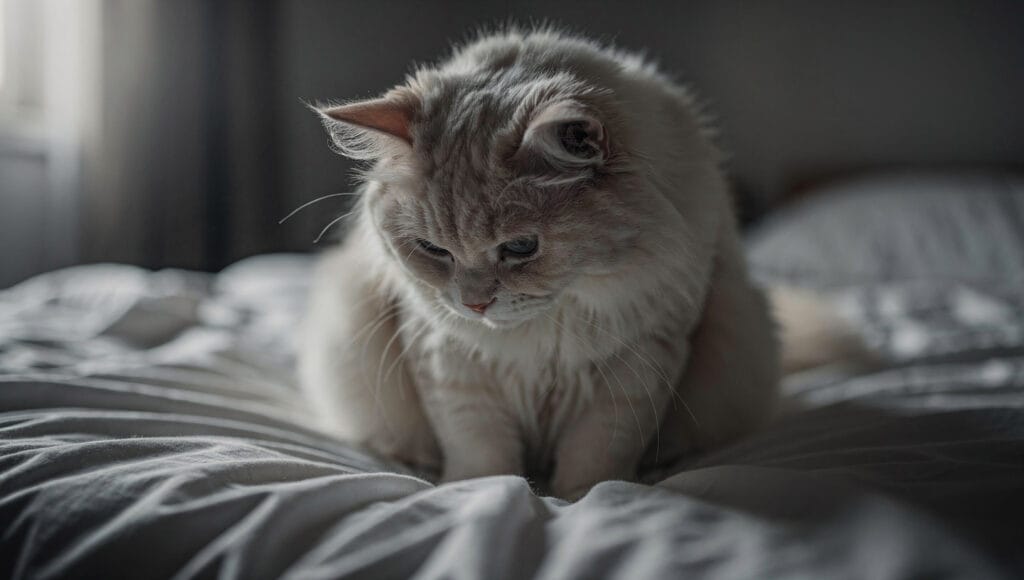
A sad cat sitting on a bed, illustrating the behavioral and emotional triggers of a cat peeing on the bed.
Table of Contents
- First Things First — Is Your Cat Sick? (Medical Causes You Must Rule Out)
- Urinary Tract Infections (UTIs)
- Feline Lower Urinary Tract Disease (FLUTD)
- Cat peeing on the bed: Behavioral Reasons Your Cat Chooses the Bed
- Stress and Anxiety (The #1 Behavioral Cause)
- The Litter Box Itself (Time for Brutal Honesty)
- Why the Bed Specifically?
- Scent Equals Safety
- Soft, Absorbent Surfaces Feel Safer
- How to Stop Your Cat from Peeing on the Bed (Step-by-Step)
- Step 1: Confirm Medical Health (Always First)
- Step 2: The Litter Box Reboot
- Step 3: The Cleaning Secret That Actually Works (Enzyme Cleaners)
- What NOT to Do (Critical Warning)
- Never Rub Their Nose in It
- Never Yell or Scold
- Avoid Ammonia-Based Cleaners
- Frequently Asked Questions (FAQ)
First Things First — Is Your Cat Sick? (Medical Causes You Must Rule Out)
If a cat suddenly stops using the litter box, pain is the number one reason. Cats are incredibly good at hiding illness. Instead of crying or limping, they change behavior. When urinating starts to hurt, the litter box becomes the enemy in their mind. They remember the pain, and they avoid the place where it happened. So they look for somewhere else. The bed makes sense to them. It’s soft. It’s warm. It smells like you. It feels safe.
Urinary Tract Infections (UTIs)
A urinary tract infection causes burning, pressure, and constant urgency. Imagine needing to pee all the time—and every time it hurts. Common signs include:
- Frequent trips to the litter box with little urine.
- Straining or crying while urinating.
- Licking the genital area more than usual.

A professional veterinarian examining a cat for medical conditions like UTIs that cause a cat peeing on the bed.
Feline Lower Urinary Tract Disease (FLUTD)
FLUTD is an umbrella term for painful bladder conditions in cats. Stress plays a huge role, especially for indoor cats and males. ⚠️ If you notice blood in the urine, crying while peeing, straining, or sudden changes in bathroom habits, you need to see a veterinarian immediately. You can learn more about clinical signs from the Cornell Feline Health Center.
Cat peeing on the bed: Behavioral Reasons Your Cat Chooses the Bed
If your vet has ruled out infection, pain, and urinary disease, take a breath. This doesn’t mean your cat is “misbehaving.” It means something in their world feels off. Understanding Cat Tail Language can often help you spot these signs of stress before they escalate.
Stress and Anxiety (The #1 Behavioral Cause)
Cats are creatures of predictability. Small changes that seem harmless to us can feel overwhelming to them. Common triggers include:
- A new baby or a new pet.
- Moving to a new home.
- Loud construction or unfamiliar noises.
Peeing outside the box becomes emotional communication. It’s not rebellion. It’s your cat saying, “I don’t feel safe right now.” If this stress turns into aggression, you might also wonder, Why Does My Cat Bite Me? as both behaviors often stem from the same root of overstimulation or fear.
The Litter Box Itself (Time for Brutal Honesty)
Let’s ask the uncomfortable question: Is the litter box dirty? Cats have extremely high hygiene standards. If their bathroom smells bad to you, it’s unbearable to them. Common problems include: Not scooping daily, old litter, or a box that is too small or hidden in a noisy area. The ASPCA provides excellent guidelines on maintaining a proper setup.
Why the Bed Specifically?
This is the question that keeps cat owners awake at night. Why the bed? The answer is emotional—and surprisingly touching.
Scent Equals Safety
Your bed smells the most like you. To a cat, your scent represents comfort, stability, and security. When a cat pees on the bed, they’re mixing their scent with yours. This scent blending helps them feel calmer in moments of stress. This is similar to why they use scent glands when they knead; read more in Why Do Cats Knead? to see how they claim their safe spaces.
Soft, Absorbent Surfaces Feel Safer
Beds absorb urine quickly. There’s no splash. No echo. For an anxious cat, soft surfaces reduce stimulation and make the act feel less stressful. Remember: When a cat pees on your bed, it is not an insult. It is a compliment—born from insecurity. They chose the place that feels safest. They chose you.
How to Stop Your Cat from Peeing on the Bed (Step-by-Step)
Fixing this cat peeing on the bed behavior isn’t about punishment—it’s about removing the reason your cat felt the need to do it.
Step 1: Confirm Medical Health (Always First)
Even if the issue feels behavioral, a vet check is non-negotiable. Pain changes everything.
Step 2: The Litter Box Reboot
Here’s the rule many owners don’t know: The N+1 Rule. If you have 1 cat, you need 2 litter boxes. If you have 2 cats, you need 3 boxes. Also:
- Scoop daily.
- Use unscented litter.
- Choose open boxes when possible.
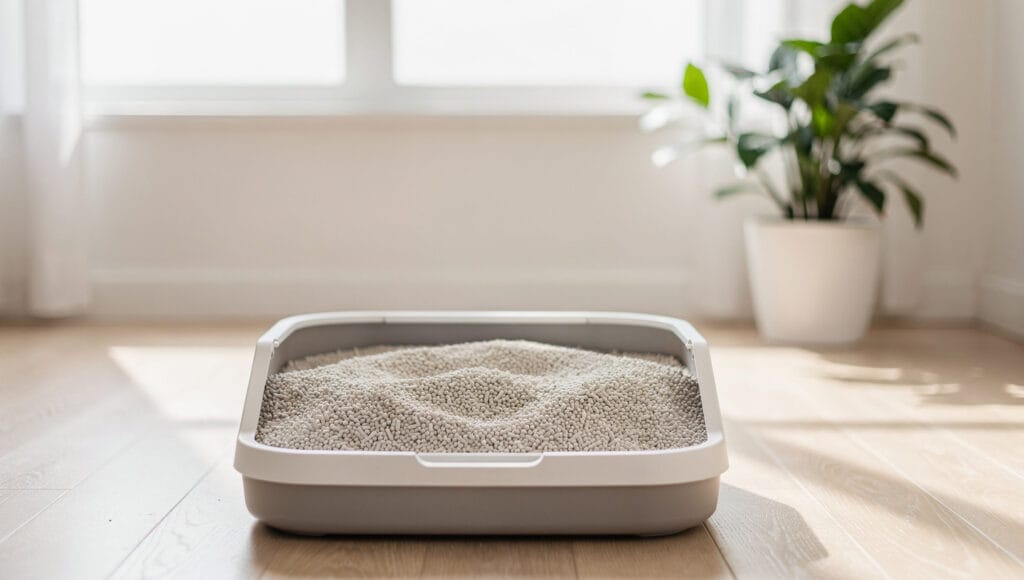
A perfectly clean and open litter box setup designed to prevent the issue of a cat peeing on the bed.
Step 3: The Cleaning Secret That Actually Works (Enzyme Cleaners)
Regular soap or vinegar does not remove the smell of cat urine at a level your cat’s nose can detect. You must use an enzyme cleaner. Enzyme cleaners break down uric acid crystals. If those markers remain, your cat will return to the same spot.
What NOT to Do (Critical Warning)
When dealing with a cat peeing on the bed, your reaction matters as much as the solution.
Never Rub Their Nose in It
This is an outdated myth. It does not teach your cat anything—except fear. Cats do not connect punishment with past actions.
Never Yell or Scold
Yelling raises stress hormones. Stress is one of the strongest triggers for litter box issues. If you shout, your cat doesn’t think, “I made a mistake.” They think, “I am not safe.”
Avoid Ammonia-Based Cleaners
Ammonia smells similar to urine to a cat. Using it on a soiled area is like placing a giant sign that says: “Bathroom here.”
Frequently Asked Questions (FAQ)
Is my cat doing this out of spite?
No. Cats do not urinate out of revenge. They don’t have the emotional wiring for spite. When a cat pees on the bed, it’s a response to pain, stress, fear, or an unmet need—not anger.
Should I lock my cat out of the bedroom?
Yes—temporarily. Closing the bedroom door while you address the medical or behavioral cause prevents the habit from becoming reinforced. Once the issue is resolved, many cats can return to the bedroom.
Will neutering stop my cat from peeing on the bed?
It can—if the behavior is spraying (marking territory). Unneutered male cats are especially prone to this. Neutering significantly reduces spraying.
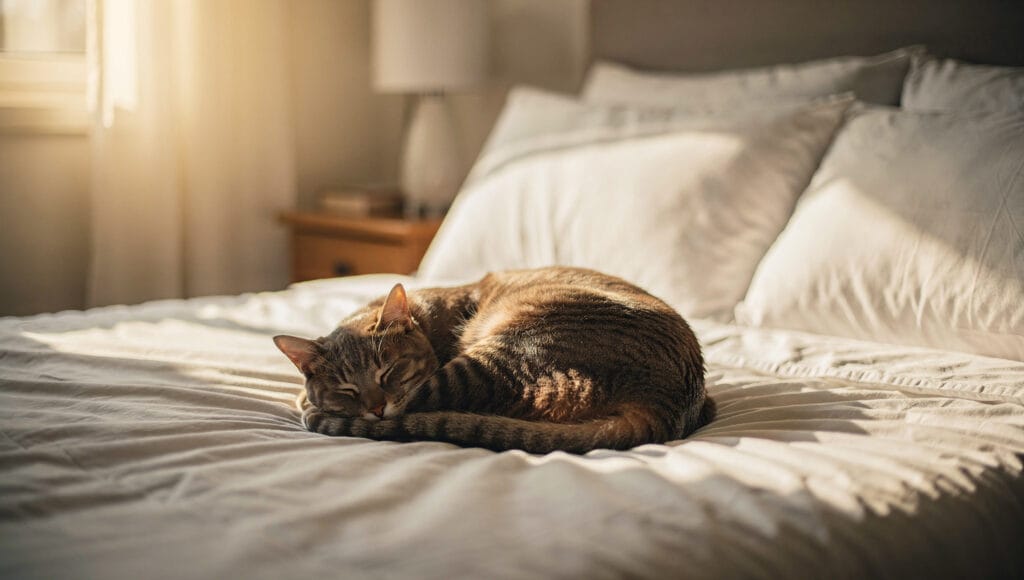
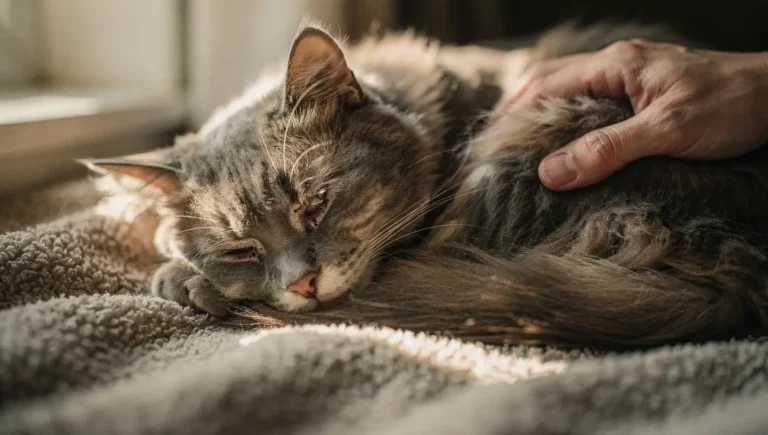
A relaxed and happy cat sleeping on a clean bed after successfully stopping the cat peeing on the bed habit.
A cat peeing on the bed feels overwhelming—but it’s a solvable problem. This behavior is communication, not defiance. When you identify the cause and respond with patience instead of punishment, improvement usually follows faster than you expect. Your cat isn’t trying to push you away. They’re asking for help. And with the right steps, your bed will be safe again.