
You finally find a cat that makes your heart melt — and then the sneezing starts.
If you’ve ever had to leave a friend’s house early because their cat turned your eyes into faucets, you already know that loving cats and living with them are two very different things. And if someone has ever told you, “Just get a Siberian cat — they’re hypoallergenic!” you’ve probably spent more time than you’d like to admit wondering if that’s actually true.
Here’s the honest answer: it’s complicated — but not in the way you think.
In this article, we’re going to break down the real science behind cat allergies, what makes Siberian cats different from other breeds, and whether they’re genuinely a safer choice for allergy sufferers. No fluff. No false promises. Just the truth you need before making a decision that affects both your health and your future cat’s life.
Table of Contents
- Are Siberian Cats Hypoallergenic? 🐱
- What Actually Causes Cat Allergies?
- The Fel d 1 Protein Explained
- How Cat Allergens Spread in Your Home
- Why Siberian Cats May Trigger Fewer Allergies
- Lower Fel d 1 Production
- Coat Structure, Shedding, and Allergen Spread
- Are Siberian Cats Good for People With Allergies? ⚖️
- Some People Experience Fewer Symptoms
- Others Still React to Siberian Cats
- 🧪How to Test if You Are Allergic to a Siberian Cat
- Tips for Living With a Cat if You Have Allergies
- 🌬️ Use HEPA Air Purifiers
- 🖌️ Brush Your Cat Regularly
- 🧼 Wash Hands After Contact
- 🛏️ Create Allergy-Free Zones
- Other Lower-Allergen Cat Breeds Worth Knowing
- Siberian Cat Personality: What You’re Actually Getting 🧡
- Pros & Cons for Allergy Sufferers — Final Verdict ✅❌
- Frequently Asked Questions ❓
- Are Siberian cats truly hypoallergenic?
- What is the most hypoallergenic cat breed?
- Can allergy sufferers live with Siberian cats?
- Do Siberian cats produce less Fel d 1?
- Final Thoughts: Are Siberian Cats Hypoallergenic?
Are Siberian Cats Hypoallergenic? 🐱
Let’s start with the answer most people are actually searching for.
No cat is 100% hypoallergenic — including Siberian cats.
But here’s what makes Siberians stand out: research and breeder observations consistently suggest that Siberian cats produce lower levels of the protein responsible for most cat allergies. For some allergy sufferers, this makes a real, noticeable difference. For others, it doesn’t.
Here’s a quick breakdown:
- ✅ Siberian cats may produce lower levels of the Fel d 1 protein
- ✅ Some allergy sufferers report significantly fewer symptoms around Siberians
- ⚠️ Reactions vary widely from person to person
- ❌ No Siberian cat is guaranteed to be allergy-safe for everyone
Think of it less as “hypoallergenic” and more as “lower allergenic potential.” That’s a meaningful difference — but it still requires testing before you commit.
What Actually Causes Cat Allergies?
Most people assume cat allergies are about fur. They’re not.
The Fel d 1 Protein Explained
The real culprit is a tiny protein called Fel d 1, produced primarily in your cat’s saliva and sebaceous (skin) glands. When your cat grooms herself — which cats do obsessively — she spreads this protein all over her coat. It dries, flakes off, and becomes airborne.
That’s what you’re actually reacting to. Not the fur itself.
According to research published by the National Institutes of Health (NIH), Fel d 1 is the dominant allergen in roughly 95% of cat allergy cases. It’s incredibly lightweight, meaning it can stay airborne for hours and settle on furniture, clothing, and walls long after your cat has left the room.
In my experience working with allergy-prone cat owners, the biggest shock is always this: you can be allergic to a hairless cat just as easily as a fluffy one. The fur is just the carrier — not the cause.
How Cat Allergens Spread in Your Home
Once Fel d 1 is on the fur, it goes everywhere:
- Dander (dried skin flakes) carries the protein into the air
- Saliva left on surfaces after grooming dries and becomes airborne
- Fur acts as a transport vehicle, carrying allergens to your couch, bed, and clothes
Even a home that looks clean can have high allergen levels — especially in soft furnishings, carpets, and HVAC systems.
Why Siberian Cats May Trigger Fewer Allergies
So if all cats produce Fel d 1 — why do Siberians have a reputation for being easier on allergy sufferers?
Lower Fel d 1 Production
The answer comes down to biology. Several studies and extensive breeder data suggest that Siberian cats, on average, produce measurably lower concentrations of Fel d 1 compared to most other breeds.
A study referenced by Cats Protection UK noted that while no breed is allergen-free, certain breeds including Siberians showed lower Fel d 1 levels in saliva samples — though individual variation remains significant.
One mistake I often see is people assuming all Siberian cats are low-allergen. They’re not. Even within the same litter, Fel d 1 levels can vary dramatically. A cat from a reputable breeder who tests their cats’ allergen levels is a very different situation from a random Siberian you meet at a shelter.
Coat Structure, Shedding, and Allergen Spread
Here’s where it gets interesting — and a little counterintuitive.
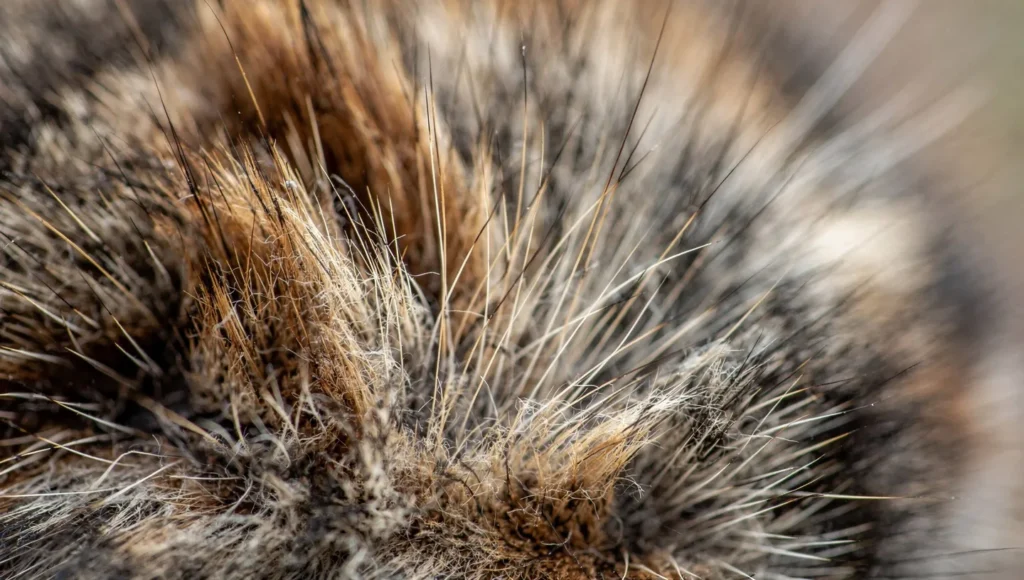
Siberian cats have a dense triple-layer coat: a soft undercoat, a middle insulating layer, and a longer, water-resistant topcoat. You’d think more fur equals more allergens. But the coat’s structure may actually trap some allergens close to the skin rather than releasing them freely into the air.
That said, Siberians do shed seasonally — heavily in spring and fall. During these periods, even a low-Fel d 1 Siberian can trigger more reactions simply due to the volume of loose fur in the environment.
Practical takeaway: Regular brushing during shedding season isn’t optional if you have allergies. It’s essential. (More on that below.)
Are Siberian Cats Good for People With Allergies? ⚖️
This is the question I get most often — and I always give the same honest answer: it depends on you, not just the cat.
Some People Experience Fewer Symptoms
For mild-to-moderate allergy sufferers, Siberian cats have genuinely been a life-changer. I’ve worked with cat owners who had given up on the idea of ever having a cat — and a Siberian changed everything for them. Minimal sneezing, no eye irritation, completely manageable.
This is especially true for people whose allergies are triggered primarily by high Fel d 1 levels. If a Siberian’s lower output puts you below your personal reaction threshold, you may live comfortably with one.
Others Still React to Siberian Cats
Here’s the part that doesn’t always get mentioned: some allergy sufferers react just as strongly to Siberians as they do to any other breed.
If your allergies are severe, or if you’re sensitive to even trace amounts of Fel d 1, a Siberian may not offer enough relief to make a difference. This isn’t a failure of the breed — it’s just biology. Everyone’s immune system has a different threshold.
This is also why responsible breeders will always encourage you to spend time with the specific cat before adopting — not just any Siberian, but that individual cat.
💡 Expert Tip: Ask Siberian breeders if they test their cats for Fel d 1 levels. Some reputable breeders actually measure allergen output and can match you with a cat that falls on the lower end of the spectrum. This isn’t standard practice everywhere, but it exists — and it matters.
🧪How to Test if You Are Allergic to a Siberian Cat
Before you fall in love with a cat you can’t live with, test yourself first. Here’s how:
- Visit a reputable Siberian breeder — spend at least 30–60 minutes in a room with adult Siberians. Don’t just hold one cat; sit in the space where they live.
- Visit more than once — allergen reactions can be cumulative. Some people feel fine the first visit and react on the second.
- Get a formal allergy test — a skin prick test or blood test from an allergist can confirm whether you’re reactive to Fel d 1 specifically and gauge severity.
- Don’t test with kittens only — kittens produce less Fel d 1 than adults. A kitten that doesn’t trigger you isn’t a reliable indicator of how you’ll react to the same cat at age 3.
Understanding your own cat dander and allergy triggers before bringing a cat home is one of the smartest steps you can take.
Tips for Living With a Cat if You Have Allergies
Managing allergies isn’t about finding a perfect cat — it’s about building a smart environment. These four habits make the biggest difference:
🌬️ Use HEPA Air Purifiers
Place a HEPA air purifier in the rooms your cat frequents most. Look for units that filter particles as small as 0.3 microns — that’s small enough to capture airborne Fel d 1. Run it continuously, not just when symptoms flare.
🖌️ Brush Your Cat Regularly
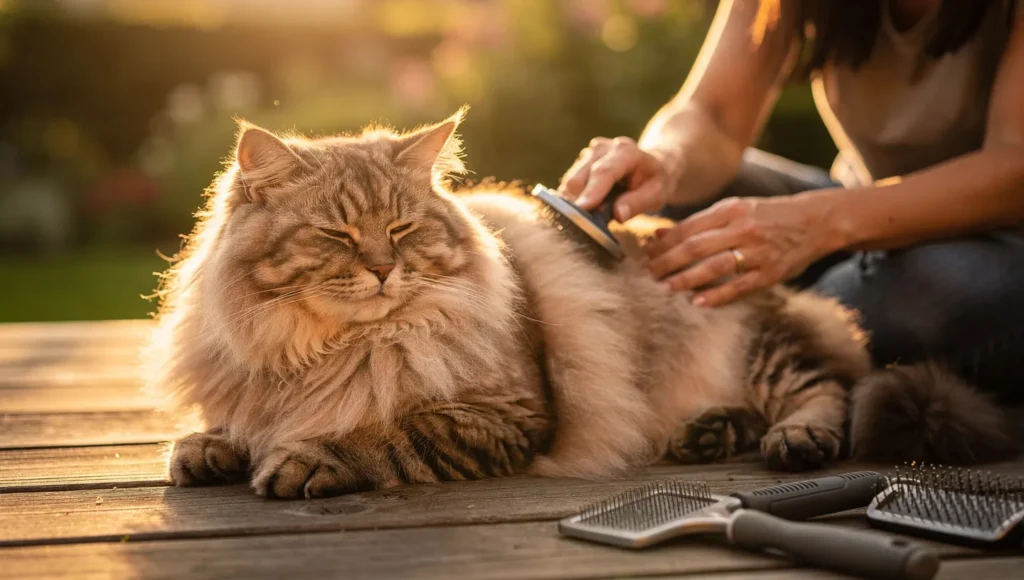
Brushing removes loose fur and dander before it spreads through your home. Do it outdoors or in a well-ventilated space, and ideally have a non-allergic household member handle it. Our stress-free brushing guide walks you through the right technique to make this a calm, routine habit.
🧼 Wash Hands After Contact
Simple but underrated. Washing your hands immediately after handling your cat stops you from transferring allergens to your face, eyes, and nose.
🛏️ Create Allergy-Free Zones
Keep your bedroom a cat-free zone. Eight hours of allergen-free air while you sleep makes a measurable difference in daily symptom load. This single change helps more allergy sufferers than almost anything else.
Other Lower-Allergen Cat Breeds Worth Knowing
If you’re exploring options beyond Siberians, these breeds are also frequently discussed for lower allergen potential:
| Breed | Why It’s Considered Lower-Allergen |
|---|---|
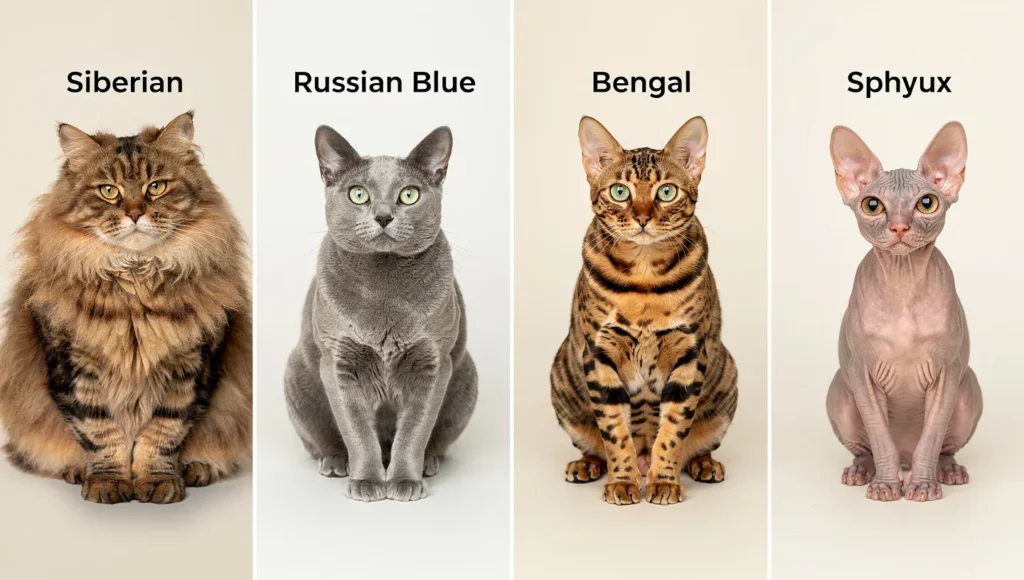
| Russian Blue | May produce lower Fel d 1; dense short coat traps dander |
| Balinese | Single-layer coat; anecdotally lower Fel d 1 output |
| Bengal | Short, fine coat; less grooming means less allergen spread |
| Sphynx | Hairless, but still produces Fel d 1 — less fur spread only |
No breed on this list is a guaranteed safe choice. Every individual cat is different.
For a deeper look at the Russian Blue specifically, check out our Russian Bue Cat Guide.
Siberian Cat Personality: What You’re Actually Getting 🧡
Beyond the allergy question, Siberians are genuinely wonderful companions.
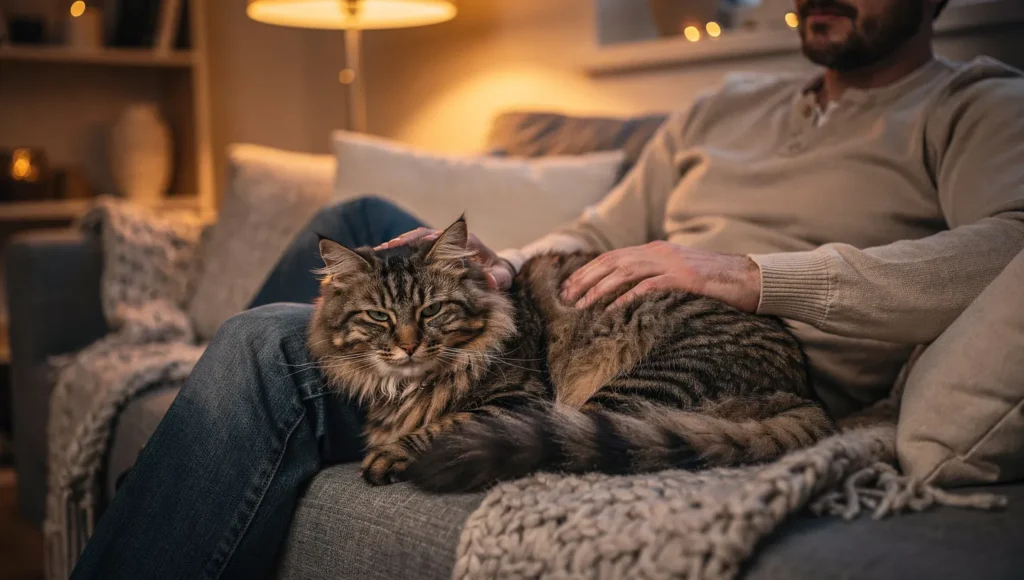
- Affectionate without being clingy — they follow you around but don’t demand constant attention
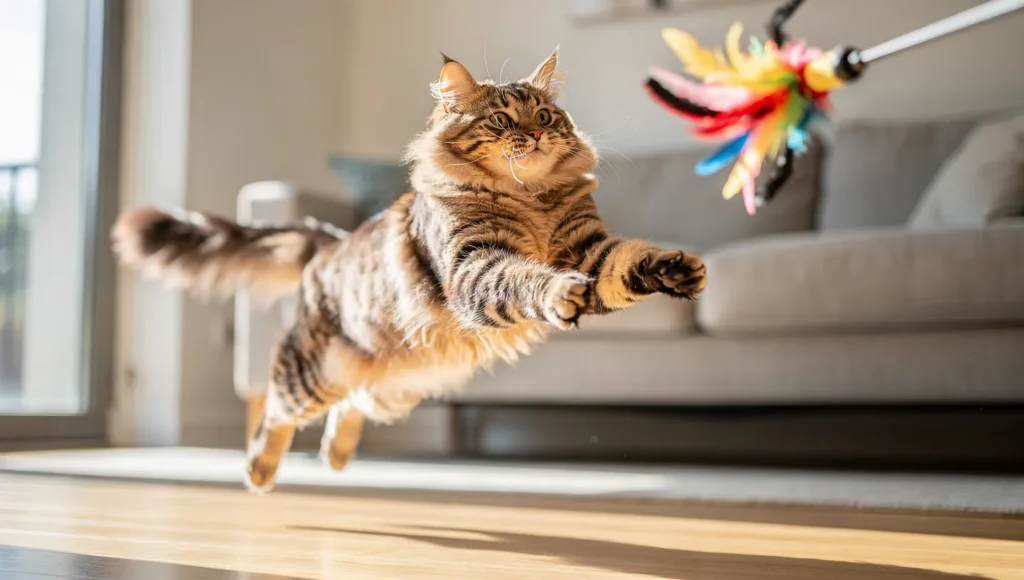
- Playful and athletic well into adulthood — they love climbing, jumping, and interactive toys
- Highly intelligent — they problem-solve, learn routines, and communicate clearly
- Family-friendly — typically good with children, dogs, and other cats
Understanding their communication style helps build a stronger bond. Our guide to cat body language is a great place to start.
Pros & Cons for Allergy Sufferers — Final Verdict ✅❌
Pros:
- May produce measurably lower Fel d 1 than most breeds
- Affectionate, social personality makes the relationship rewarding
- Some allergy sufferers live comfortably with Siberians long-term
Cons:
- Still produces allergens — no guarantees
- Heavy seasonal shedding requires consistent grooming management
- Individual reactions vary widely — testing is non-negotiable
Bottom line: Siberian cats are arguably the best starting point for allergy sufferers who want a large, affectionate, long-haired cat. But “best option” is not the same as “safe option.” Spend real time with the specific cat. Test before you commit. Build smart habits at home.
If you want to go deeper on managing the environment side of things, our guide on cat dander and allergies covers practical home strategies in detail.
Frequently Asked Questions ❓
Are Siberian cats truly hypoallergenic?
No cat is truly hypoallergenic. Siberian cats may produce lower levels of Fel d 1, which can mean fewer symptoms for some people — but reactions vary by individual.
What is the most hypoallergenic cat breed?
No breed is allergen-free. Siberians, Balinese, and Russian Blues are most commonly associated with lower Fel d 1 levels, but individual testing is the only reliable method.
Can allergy sufferers live with Siberian cats?
Many do — successfully. Mild-to-moderate allergy sufferers often manage well with a combination of a low-Fel d 1 Siberian and consistent home management habits.
Do Siberian cats produce less Fel d 1?
Studies and breeder data suggest many Siberians produce lower Fel d 1 levels than average. However, this varies between individual cats, so testing with the specific cat matters more than breed reputation alone.
Final Thoughts: Are Siberian Cats Hypoallergenic?
So, are Siberian cats hypoallergenic? Not exactly — but they may be one of the better options for people who love cats but struggle with allergies.
What makes Siberians unique isn’t that they eliminate allergens completely, but that many of them produce lower levels of the Fel d 1 protein, which is responsible for most cat allergy reactions. For some people, that difference is enough to live comfortably with a cat again.
That said, every person — and every cat — is different. The most important step is always to spend time with the specific cat before adopting, pay attention to how your body reacts, and create a home environment that helps manage allergens.
If you do that, a Siberian cat might not just be a possibility — it might become the affectionate, playful companion you’ve been hoping for all along.