
Russian Blue Cat: Personality, Care, Price & The Truth Before You Adopt ( The Ultimate Guide )
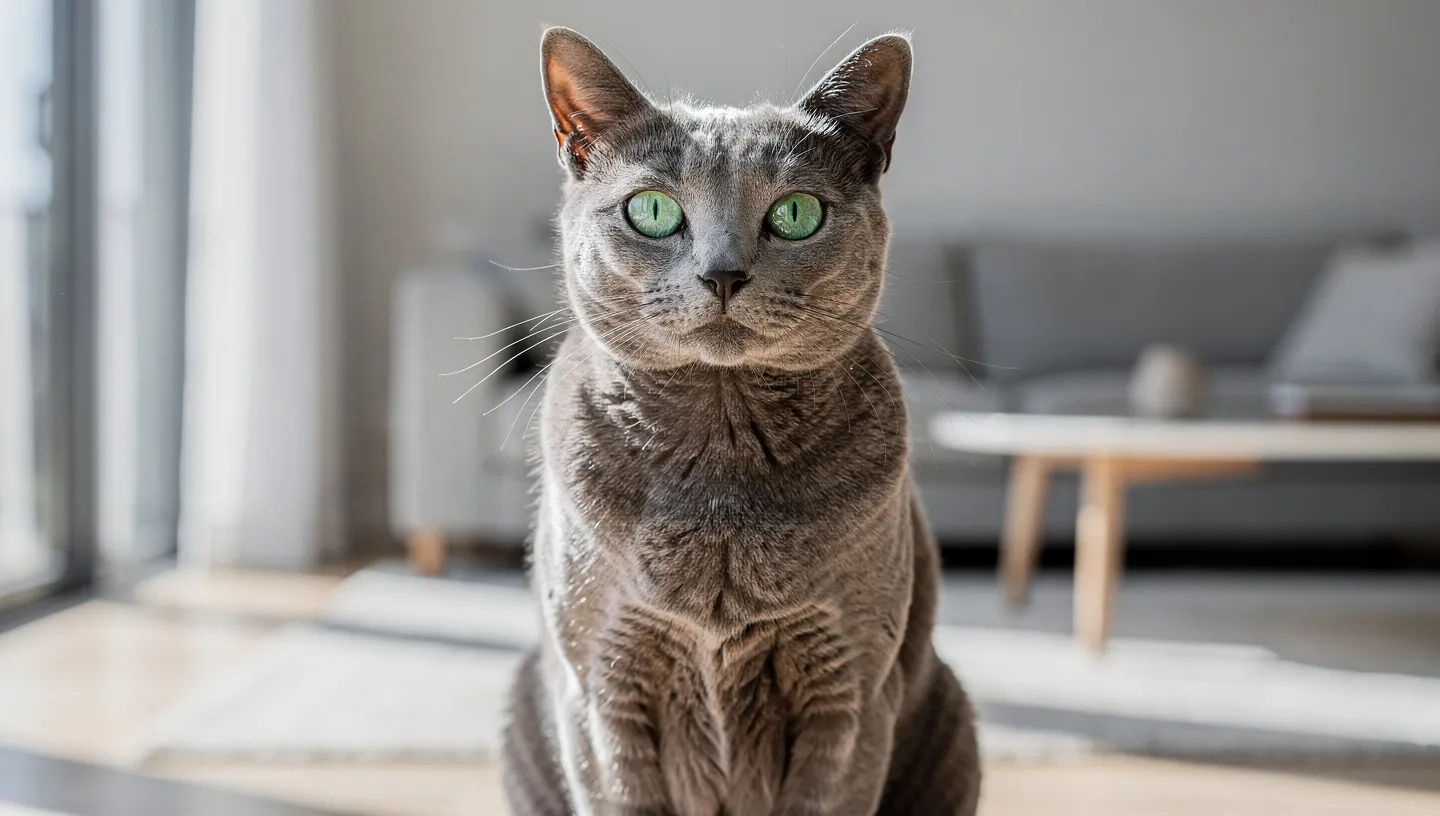
I still remember the day a friend called me, almost whispering: “I just brought home a Russian Blue… and she’s been hiding under the bed for three days. Did I make a mistake?”
I’d heard this exact story before. More than once, actually. And honestly? It’s not a mistake — it’s just what happens when you bring home one of these cats without knowing what you’re really getting into.
Russian Blue cats are stunning. The silvery-blue coat, those piercing green eyes, that almost regal posture. But beneath that calm exterior is a cat with very specific needs, specific quirks, and a personality that either fits your life perfectly — or doesn’t fit at all.
If you’re thinking about adopting one, this guide is going to give you the real picture. Not the marketing version. The actual truth about living with a Russian Blue — personality, care, costs, and whether this breed is genuinely right for you.
⚠️ This article is for informational purposes only and is not a substitute for professional veterinary advice.
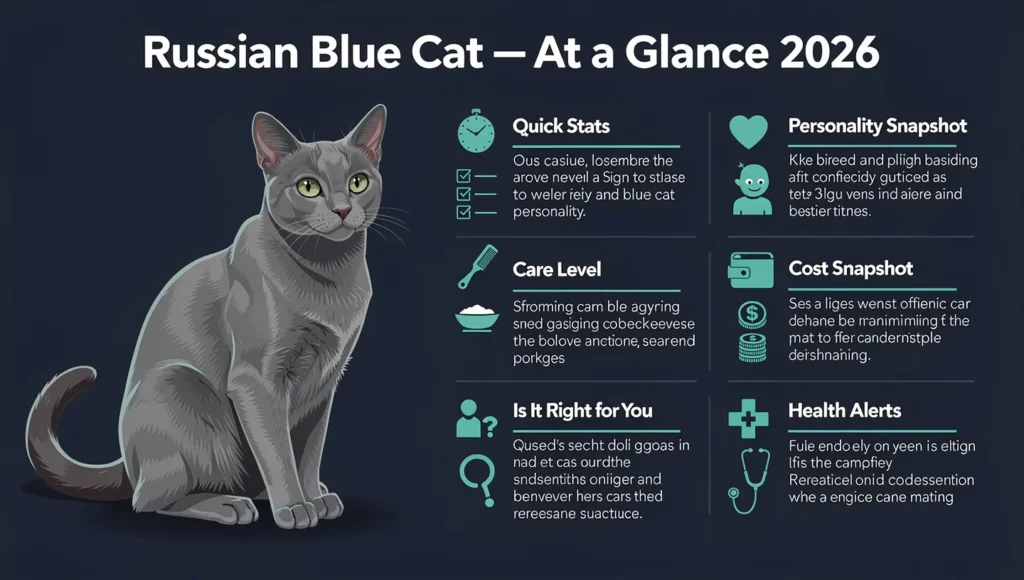
What Is a Russian Blue Cat?
Russian Blue cats are one of the oldest and most naturally occurring breeds in the world. According to most historical accounts, they originated in the port city of Arkhangelsk in northern Russia — which is actually where they got the nickname “Archangel Blue.”
They were reportedly brought to Western Europe by sailors in the 1860s, and over time became one of the most recognizable breeds in the cat world.
What makes them stand out physically:
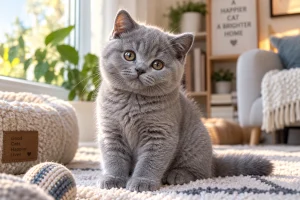
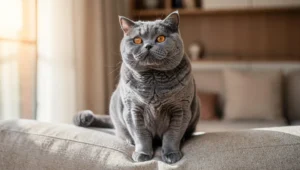
- A dense, double-layered coat that’s a striking blue-gray color with silver-tipped hairs — it literally shimmers in the light
- Vivid green eyes (kittens are born with yellow eyes that gradually turn green)
- A lean, muscular body despite looking slender
- A slightly upturned mouth that makes them look like they’re always smiling
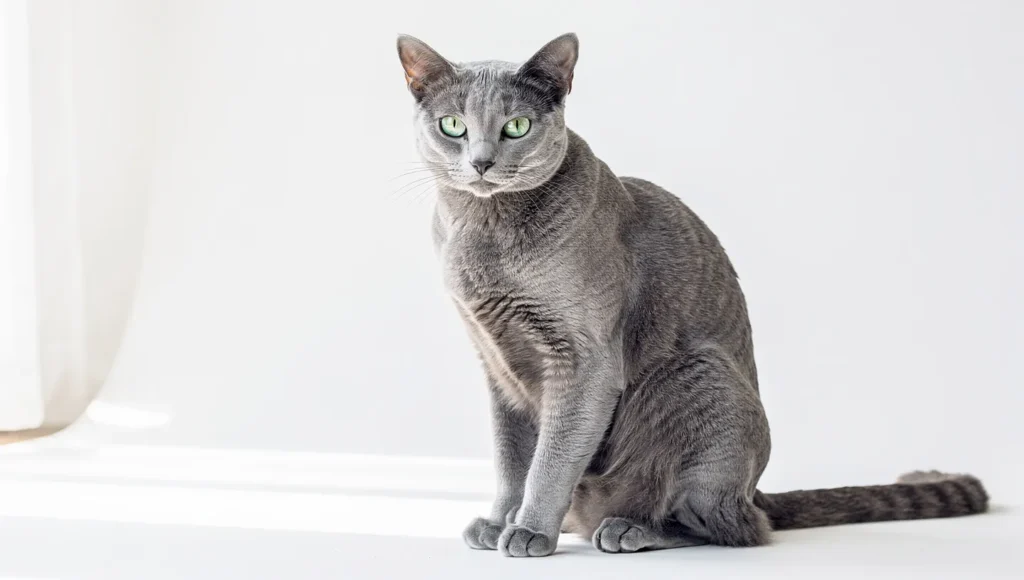
This breed is medium-sized, typically weighing between 7 and 12 pounds, and carries itself with a quiet dignity that cat people either fall in love with immediately — or find a little standoffish.
😼 Russian Blue Cat Personality — The Real Truth
Here’s where I want to be completely honest with you, because this is where a lot of people get surprised.
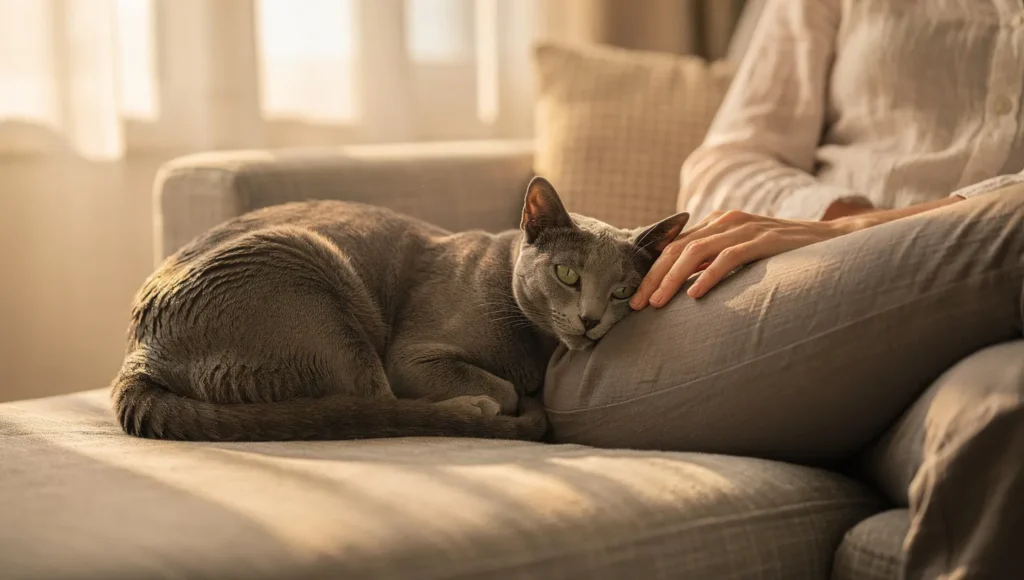
Russian Blue cats are not lap cats in the traditional sense. They’re deeply loyal — but on their own terms.
Based on what I’ve observed and researched, here’s how their personality actually breaks down:
- They bond deeply with one or two people — and tend to be reserved or even shy around strangers
- They’re incredibly intelligent — they learn routines fast, remember things, and will absolutely notice if you’ve moved their food bowl two inches to the left
- They’re quiet cats — not big vocalizers, which is either a blessing or a problem depending on what you want
- They love routine — disruptions stress them out more than most breeds
- They’re playful but not hyperactive — they enjoy interactive play but don’t need constant stimulation
For a deeper understanding of how to read what your Russian Blue is communicating, this guide on cat body language is genuinely useful.
✅ Russian Blue Cat Pros
- Exceptionally quiet — ideal for apartment living or noise-sensitive households
- Low grooming needs — that double coat sheds less than you’d expect; weekly brushing is usually enough
- Clean and fastidious — they’re meticulous about their litter box and personal hygiene
- Loyal and affectionate — once they trust you, the bond is real and lasting
- Gentle temperament — rarely aggressive, even when stressed
⚠️ Russian Blue Cat Cons
- Shy with strangers — don’t expect them to charm your dinner guests
- Sensitive to change — new furniture, new people, new schedule? Expect a period of withdrawal
- Can develop separation anxiety — they attach deeply, which means being left alone for long periods affects them
If you’re already seeing clingy behavior or stress signals, this 14-day separation anxiety reset plan is worth bookmarking.
- Not great with loud environments — young kids who are constantly noisy can genuinely stress this breed out
🏠 Are Russian Blue Cats Good for You?
This is the section that actually matters before you make any decision.
A Russian Blue is likely a great fit if:
- You live in an apartment or a calm, quieter home
- You work from home or spend a good amount of time there
- You want a cat that’s affectionate without being demanding
- You’re a first-time cat owner who wants something manageable
- You appreciate a cat that has a real personality without being chaotic
A Russian Blue is probably NOT the right fit if:
- You have very young children who are loud and unpredictable
- You travel frequently and leave your cat alone for days at a time
- You want a highly social cat that interacts enthusiastically with everyone
- Your household is busy, loud, and constantly changing
One thing I’ve seen misunderstood a lot: people assume “calm” means “low-maintenance emotionally.” It doesn’t. Russian Blues are emotionally sensitive. They just express it quietly — and that quiet stress can turn into real behavioral issues if their environment doesn’t suit them.
💰 Russian Blue Cat Price & Cost — The 2026 Reality
Let’s talk numbers, because this is where a lot of people get caught off guard.
The purchase price is just the beginning.
Purchase Price:
| Source | Price Range |
|---|---|
| Reputable Breeder | $800 – $2,000 |
| Show-Quality Kitten | Up to $3,000 |
| Rescue / Adoption | $75 – $150 |
My honest take? If you can find a Russian Blue through a rescue organization, that’s always worth exploring first. But if you’re going through a breeder, don’t let a price under $500 seem like a deal — it’s usually a red flag.
Annual Cost Breakdown:
| Expense | Estimated Annual Cost |
|---|---|
| High-quality food | $400 – $700 |
| Vet visits (routine) | $200 – $400 |
| Litter | $150 – $300 |
| Grooming supplies | $50 – $100 |
| Toys & enrichment | $50 – $150 |
| Total (estimated) | $850 – $1,650/year |
These numbers are estimates based on general research — your actual costs will vary depending on your location and your cat’s specific health needs.
Before buying food, learning how to read cat food labels can save you real money while keeping your cat healthier. And for litter, this 2026 cat litter guide covers the best options across different budgets.

🪮 Russian Blue Cat Care: Easier Than You Think
One of the things I genuinely appreciate about this breed is that their care routine isn’t overwhelming — as long as you’re consistent.
Grooming:
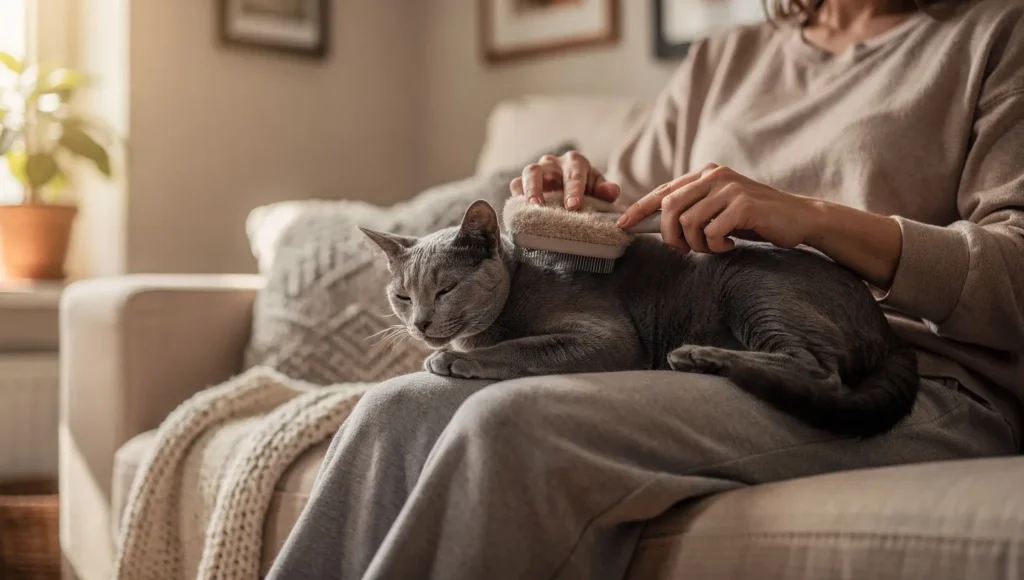
Their double coat is dense but surprisingly low-maintenance. A gentle brush once or twice a week is usually enough to manage shedding and keep that silvery coat looking its best.
For technique and tools, this stress-free cat brushing guide is a good place to start, especially if your cat is still getting used to being handled.
Feeding:
Russian Blues have a tendency to overeat — they’re good at convincing you they’re still hungry. Measured meals twice a day work better than free-feeding for this breed.
Hydration:
Based on what I’ve seen and researched, many Russian Blues are picky about water. A cat water fountain often works better than a static bowl. For more strategies, this cat hydration guide covers the topic well.
Activity:
They’re not couch potatoes, but they’re not Bengal cats either. Daily interactive play sessions of 15–20 minutes keep them mentally stimulated without requiring you to run a circus.
💡 Quick Insight:
Russian Blues are smart enough to get bored — and a bored Russian Blue will find ways to entertain itself that you probably won’t enjoy.
🏥 Russian Blue Cat Health & Lifespan
This is one area where the Russian Blue genuinely shines.
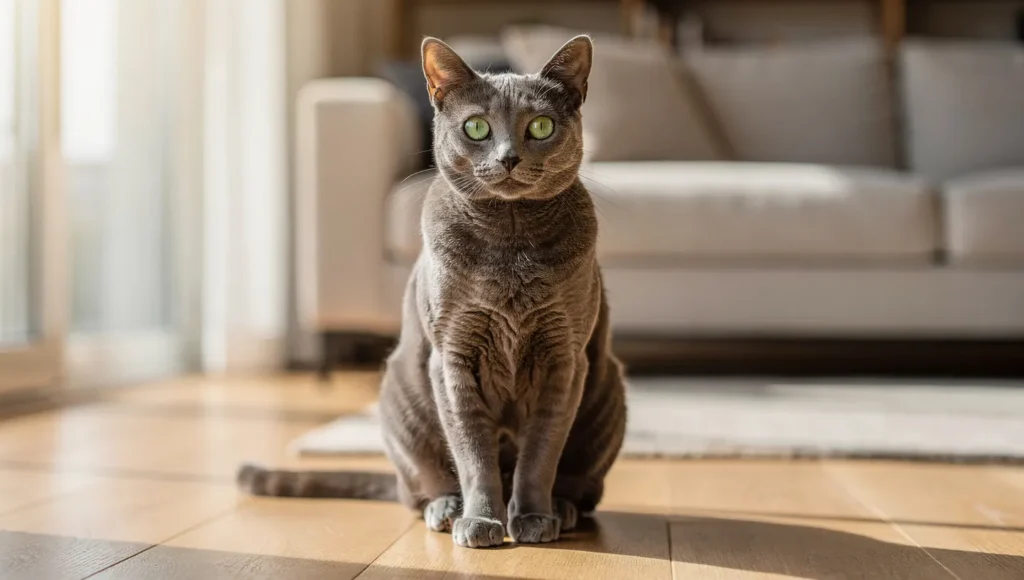
They’re considered a naturally healthy breed with a lifespan that typically ranges from 15 to 20 years — which is on the longer end for domestic cats.
Health concerns to be aware of:
- Obesity — their love of food combined with a calm temperament makes weight gain a real risk. This cat weight loss guide is worth reading if you notice your cat getting heavier
- Dental disease — like most cats, dental health is often overlooked until it becomes a problem. Regular checks matter more than most owners realize, and this cat dental care guide explains what to watch for
- Bladder issues — some Russian Blues can be prone to urinary problems, which is another reason hydration matters
According to information from ASPCA’s general cat care resources, routine annual vet visits are one of the most effective ways to catch health issues early, regardless of breed.
🤧 Are Russian Blue Cats Hypoallergenic?
Short answer: not exactly — but they’re often better tolerated by people with mild cat allergies.
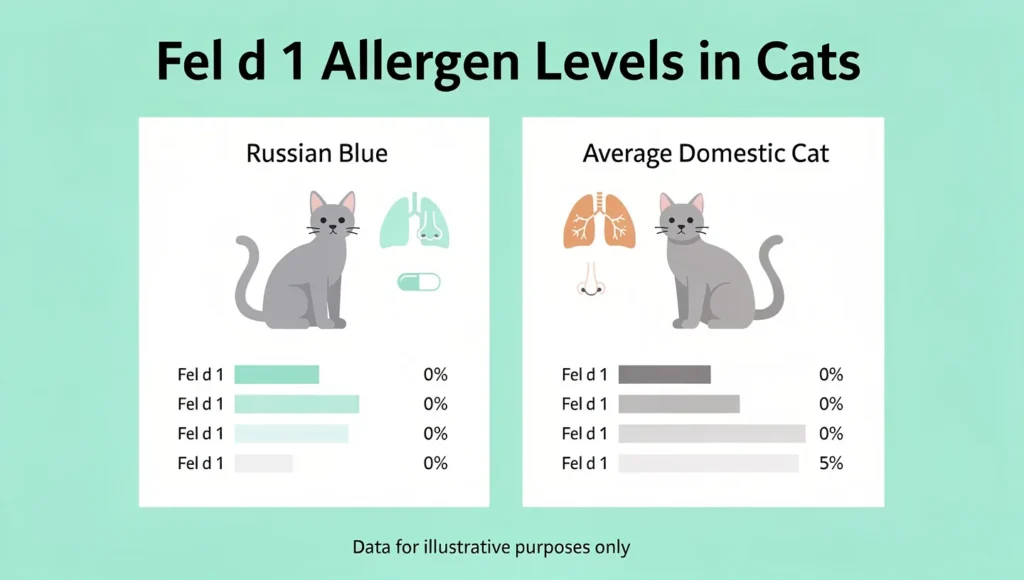
Here’s what’s actually happening: Russian Blues tend to produce lower levels of Fel d 1, which is the primary protein responsible for triggering cat allergies in humans. This doesn’t make them allergy-free, but it does mean some allergy sufferers report fewer reactions around this breed compared to others.
💡 Quick Insight:
“Hypoallergenic” doesn’t mean “allergy-proof.” If you have cat allergies, spend time with the specific cat before committing — every individual cat produces different allergen levels.
If managing allergens in your home is a priority, this guide on cat dander and allergies has practical strategies that actually help.
⚖️ Russian Blue vs Other Popular Breeds
Before you decide, it helps to see how the Russian Blue stacks up against similar breeds.
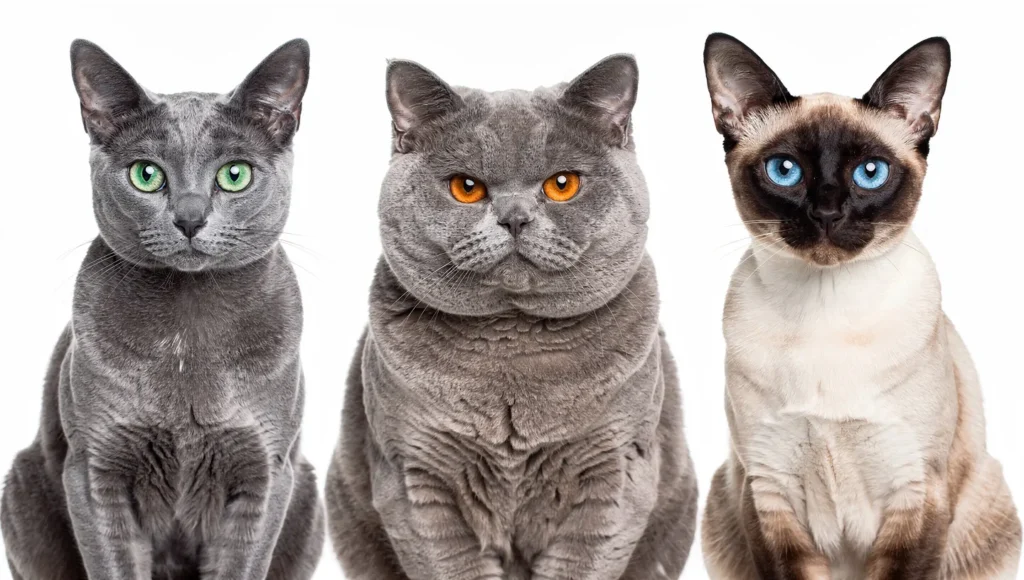
| Factor | Russian Blue | British Shorthair | Siamese |
|---|---|---|---|
| Noise Level | Very quiet | Quiet | Very vocal |
| Affection Style | Selective, loyal | Calm, independent | Demanding, social |
| Energy Level | Moderate | Low–moderate | High |
| Stranger-Friendly | Shy | Reserved | Outgoing |
| Grooming Needs | Low | Low–moderate | Low |
| Ideal For | Calm homes, singles, WFH | Families, relaxed homes | Active owners, social households |
For a deeper look at the British Shorthair or the Siamese, both guides cover what living with those breeds actually looks like day to day.
❌ Common Mistakes Russian Blue Owners Make
Based on what I’ve seen and researched, these are the patterns that come up most often:
- Forcing socialization too fast — giving a new Russian Blue time to adjust on their own terms isn’t spoiling them, it’s respecting their temperament
- Free-feeding — this breed will overeat if food is always available; measured meals are better
- Ignoring routine — these cats notice schedule changes more than most; try to keep feeding times and play sessions consistent
- Assuming “quiet” means “fine” — a stressed Russian Blue won’t yell about it. Watch for hiding, reduced appetite, or over-grooming as stress signals
- Skipping annual vet visits — because they’re so calm and seem healthy, it’s easy to put off checkups. Don’t.
❓ FAQ — Russian Blue Cat
Are Russian Blue cats friendly?
Yes — but selectively. They’re deeply loyal to their people and genuinely affectionate, but they tend to be reserved around strangers. Don’t mistake shyness for coldness.
Are Russian Blue cats rare?
They’re not extremely rare, but they’re not as common as breeds like the Maine Coon or British Shorthair. Finding a reputable breeder may take some research and patience.
Do Russian Blue cats like being alone?
They can handle moderate alone time, but they don’t thrive with long, repeated periods of isolation. If you’re away from home for 10+ hours daily, consider whether this breed is the right fit — or whether a second cat might help.
Are Russian Blue cats good for apartments?
Yes — they’re actually one of the better breeds for apartment living. They’re quiet, moderate in energy, and adapt well to smaller spaces as long as they have vertical space and daily play.
Do Russian Blue cats shed a lot?
Less than you’d expect from a double-coated breed. Weekly brushing is usually enough to manage shedding.
🏆 Final Verdict — Is a Russian Blue Cat Right for You?
After everything we’ve covered, here’s the honest summary:
Choose a Russian Blue if:
- You want a calm, loyal, and intelligent companion
- You live in a quieter home or apartment
- You can commit to a consistent routine
- You appreciate a cat that bonds deeply — even if it takes time
Think twice if:
- Your household is loud, busy, or constantly changing
- You travel frequently and leave your cat alone for long stretches
- You want a cat that’s immediately warm with everyone
The Russian Blue cat is genuinely one of the most rewarding breeds to live with — but the relationship takes patience. Give them the right environment, respect their pace, and they’ll give you 15 to 20 years of quiet, steady companionship.
That friend I mentioned at the beginning — whose cat hid under the bed for three days? By week two, the cat was sleeping next to her every night.
Sometimes the best things just take a little time.

Reader Discussion (0)
Have a question regarding this guide? Join the community discussion below.