
I still remember the first time I left Miso alone for three days.
I must have checked the food bowl four times before walking out the door. Refilled it. Checked again. Then stood in the hallway wondering if I was being completely irresponsible. She wasn’t a kitten anymore, but still — three days felt like forever.
That trip is what pushed me to finally try an automatic cat feeder. And honestly? It changed the way I think about feeding cats altogether. Not because it’s some magical gadget, but because it solved a problem I didn’t even fully realize I had.
Quick note: Everything here is based on my personal experience and research from trusted sources like ASPCA and PetMD. This is for informational purposes only and isn’t a substitute for advice from your vet — especially if your cat has specific health or dietary needs.
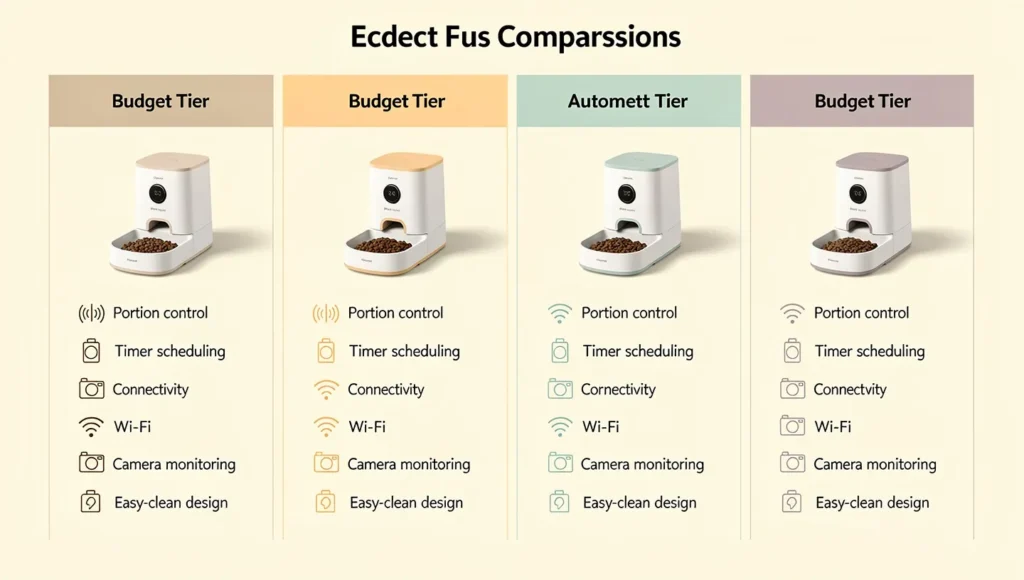
Table of Contents
- What Is an Automatic Cat Feeder, Really?
- Is an Automatic Cat Feeder Actually Worth It?
- How to Choose the Right One for YOUR Cat
- Mistakes I Made (So You Don’t Have To)
- Can You Leave Your Cat Alone With a Feeder?
- Quick Comparison — Features Worth Paying For
- Quick Answers Every Cat Owner Should Know
- Is an automatic cat feeder a good idea?
- How does an automatic cat feeder work?
- What’s the best feeder for wet food?
- Can automatic feeders help with weight management?
- What Actually Matters At The End
What Is an Automatic Cat Feeder, Really?
Here’s the simple version: it’s a device that dispenses a set amount of food at scheduled times — without you being there to do it.
You program it. It feeds your cat. That’s the core idea.
But the “automatic cat feeder” category has grown a lot in the past few years, and not all of them work the same way. Here’s a quick breakdown of what you’ll actually find out there:
Dry food timer feeders — the most common type. You set the time and portion size, and a rotating tray or conveyor drops kibble into the bowl. Simple, reliable, affordable.
Wet food feeders — these usually work with a rotating ice pack tray to keep food fresh. They’re trickier to find and a bit more expensive, but they’re a game-changer if your cat refuses dry food. (Check out our guide on Wet vs Dry Cat Food to see why this matters.)
Microchip feeders — these only open for the cat whose microchip is registered. If you have more than one cat and one of them is constantly stealing the other’s food — yes, food stealing is a real and surprisingly common problem — this type is worth every extra dollar.
Camera feeders — connected to your phone via WiFi, so you can watch your cat eat in real time and sometimes even dispense food manually from an app. Great if you’re the anxious type. (No judgment — I’ve been there.)
Gravity feeders — these just let food flow down continuously as the bowl empties. Technically “automatic,” but they offer zero portion control. I’d personally avoid these unless your cat is really good at self-regulating. Most aren’t.
The important thing to understand is that these aren’t all solving the same problem. Choosing the wrong type — even a well-reviewed one — can make your life harder, not easier. That’s a mistake I’ll get into later.
Is an Automatic Cat Feeder Actually Worth It?
Short answer: yes — but only if you’re buying it for the right reasons.
Here’s the thing. A lot of people buy an automatic feeder thinking it’ll solve every feeding problem they have. And then they’re disappointed when their cat still wakes them up at 5am, or when the machine jams on day two of their vacation.
The feeder isn’t a magic fix. It’s a tool. And like any tool, it works great when you use it right — and creates new problems when you don’t.
When it genuinely makes sense:
- You work long hours and can’t always feed on schedule. Cats thrive on routine, and inconsistent meal times can actually cause stress and digestive issues. An automatic feeder keeps things consistent even when your day doesn’t cooperate.
- Your cat is overweight and needs portion control. Honestly, this might be the single best use case for these devices. Free-feeding (leaving a full bowl out all day) is one of the biggest contributors to feline obesity. A feeder that dispenses exact amounts, twice or three times a day, takes the guesswork — and the guilt — out of the equation. If this sounds familiar, our cat weight loss guide covers this in detail.
- You travel occasionally and need a short-term solution. Key word: short-term. A feeder can handle food for a day or two. It cannot replace a human checking on your cat, refreshing water, or noticing if something seems off.
When it’s NOT the answer:
- If your cat has a medical condition that requires careful monitoring. In that case, you really need a human present, or at minimum a pet sitter who can observe and report.
- If you’re using it as a long-term substitute for human contact. This is where I’d push back a little. Cats are more social than people give them credit for. A feeder handles hunger. It doesn’t handle loneliness. If you notice signs like excessive vocalization, destructive behavior, or your cat becoming unusually clingy when you are home, that’s worth paying attention to. We have a whole piece on cat separation anxiety if you want to dig into that.
Personally, I think every cat household with a busy schedule should have one. Not because it’s fancy, but because consistency in feeding genuinely matters for a cat’s physical and emotional health. The peace of mind alone is worth it.
How to Choose the Right One for YOUR Cat
Most people pick a feeder based on reviews and price. And that’s fine — but it’s not the whole picture.
The better question is: what does your specific situation actually need?
If you have one cat who eats dry food:
You have the most options. Almost any timed dry food feeder will work. Focus on build quality and portion accuracy. Cheap feeders jam. I learned that the hard way.
If your cat only eats wet food:
Your options are narrower, but they exist. Look specifically for feeders designed with a cooling tray or ice pack compartment.
Don’t try to use a standard dry food feeder with wet food — it will spoil, and your cat will either refuse it or get sick. According to ASPCA guidelines on cat nutrition, wet food left out for more than 30 minutes at room temperature can start to spoil and become unsafe.
If you have two or more cats:
This is where things get complicated. If they eat the same food and get along well, a larger-capacity feeder with multiple bowls can work.
But if one cat bullies the other at mealtime — or if they’re on different diets — a microchip feeder is genuinely worth the investment. It reads each cat’s chip and only opens for the right animal. No more food stealing, no more one cat eating everything while the other goes hungry.
If you travel frequently:
Go for a feeder with a large hopper capacity and a backup battery option. WiFi camera feeders are also worth considering — not because you’ll be watching 24/7, but because being able to check in once a day genuinely reduces anxiety. Yours, not just the cat’s.
If your cat is on a diet or has a health condition:
Prioritize precision. Some feeders are accurate to within a few grams per portion. Others… aren’t. Read the specs carefully. And always loop in your vet before making changes to feeding schedules if there’s an underlying health issue involved.
One thing I always tell people: buy based on your cat’s needs first, your budget second, and aesthetics last. A feeder that looks great on your kitchen counter but jams every three days is worthless.
Mistakes I Made (So You Don’t Have To)
I’ll be honest — my first automatic feeder lasted about six weeks before I gave up on it. Not because the concept was bad, but because I made every rookie mistake possible.
The one that stung the most: I left for a weekend trip, and somewhere around hour 30, Miso just… stopped eating from it. Turns out she’d never fully warmed up to the sound it made when dispensing. I’d never done a proper introduction. I just plugged it in and left.
Here’s what I’d do differently:
- Introduce it gradually. Run the feeder alongside your normal routine for at least a week before relying on it solo. Let your cat get used to the sounds and the portions.
- Check the power cord. Cats chew things. Especially cords. Secure it properly or use a cord protector — a chewed wire mid-trip means no food and a potential hazard.
- Don’t overfill the hopper. Dry food can clump or go stale if it sits too long, especially in humid environments.
- Test portion accuracy before you trust it. Weigh the dispensed portions for a few days. Cheap feeders can be wildly inconsistent.
- Never assume “feeder = taken care of.” The machine handles food. It doesn’t handle water, litter, or the simple fact that your cat misses you.
That last one matters more than people expect. If you’ve noticed your cat getting anxious when you leave, even with a feeder in place, it’s worth reading about cat separation anxiety — because food alone won’t fix that.
Can You Leave Your Cat Alone With a Feeder?
Most people get this wrong. A feeder covers food. That’s it.
For a single day? You’re probably fine if your cat is healthy, water is available, and the litter box is clean. Beyond that, the risks start adding up — not from hunger, but from everything else:
- Fresh water running out (cats need more than people realize — see our full cat hydration guide)
- A health issue going unnoticed
- Stress from extended isolation
For trips longer than 24–48 hours, a feeder should be part of your plan — not the whole plan. A pet sitter, a trusted neighbor, or a cat-monitoring camera adds the human layer that a machine simply can’t replace.
Quick Comparison — Features Worth Paying For
| Budget Range | What You Get | Worth It? |
|---|---|---|
| Under $30 | Basic timer, dry food only, limited portions | Fine for short-term use |
| $30–$60 | Better accuracy, larger hopper, backup battery | Sweet spot for most owners |
| $60–$100 | WiFi + camera, app control, wet food options | Worth it for travelers |
| $100+ | Microchip reader, multi-cat, precision portions | Best for complex households |
The jump from under $30 to the $30–$60 range is genuinely worth it. The jump beyond $100 only makes sense for specific situations — multiple cats, medical diets, or frequent travel.

Quick Answers Every Cat Owner Should Know
Is an automatic cat feeder a good idea?
For most busy cat owners, yes. It keeps feeding consistent, helps with portion control, and reduces stress on both ends. Just don’t treat it as a substitute for actual care.
How does an automatic cat feeder work?
You set a schedule and portion size. At the programmed time, the device dispenses food into the bowl automatically — no human required. Some models connect to an app for remote control.
What’s the best feeder for wet food?
Look for one with a built-in ice pack or cooling tray. Standard dry food feeders aren’t designed for wet food and can lead to spoilage. Always check the specs before buying.
Can automatic feeders help with weight management?
Absolutely — and this is honestly one of the best use cases. Controlled portions, consistent timing, no “just a little extra” moments. Pair it with the right food choices (our wet vs dry cat food guide breaks this down well) and you’ve got a solid foundation.
What Actually Matters At The End
An automatic cat feeder won’t make you a better cat owner. But used right, it gives you one less thing to worry about — and that’s not nothing.
Start simple. Test it at home before you rely on it. And remember: the goal isn’t to replace your presence. It’s to make sure your cat is fed well even when life gets complicated.
That’s a good goal.