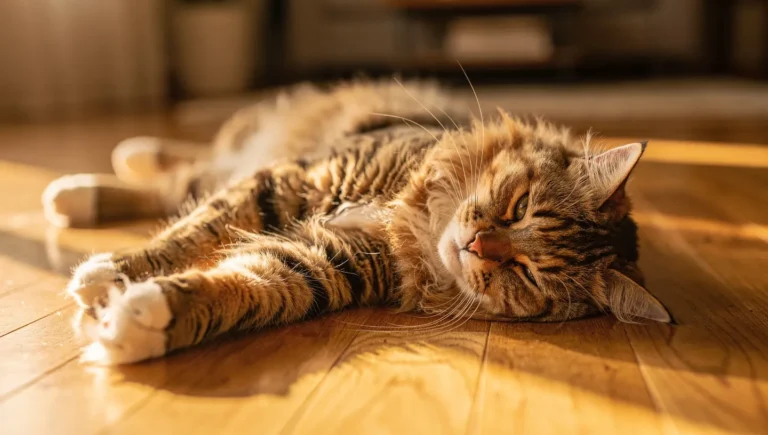

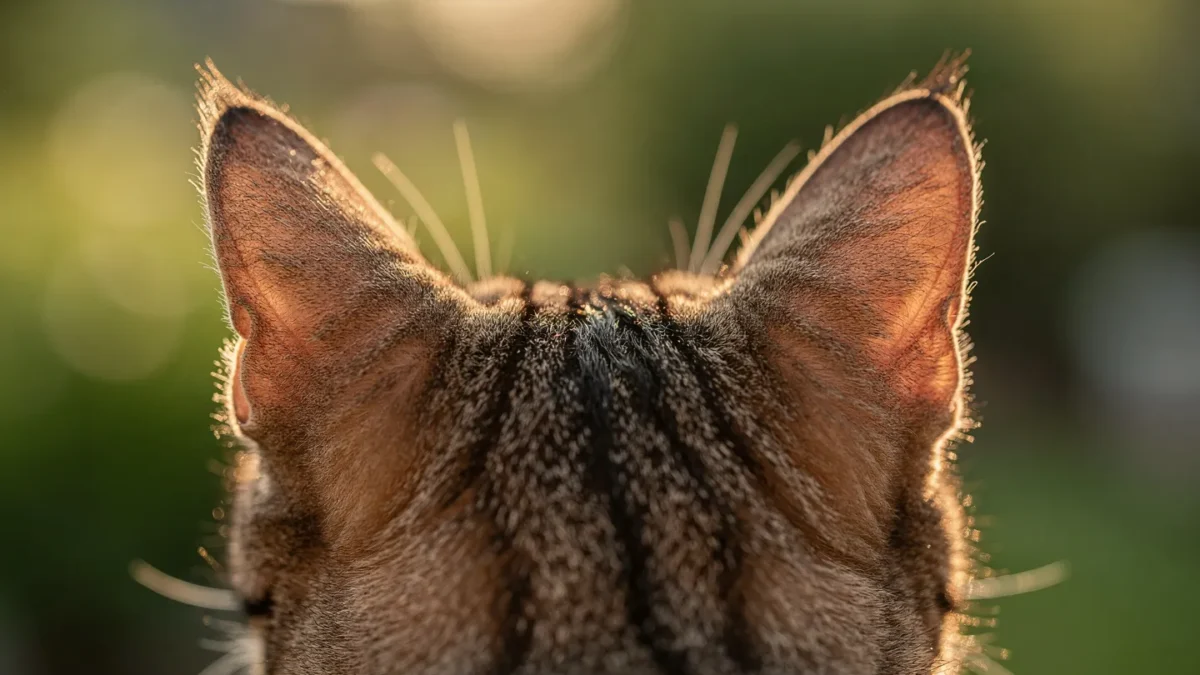
Understanding cat ear position meaning is like unlocking a secret language that your feline friend uses every single day.
Last month, my sister came over with her kids for the afternoon, and I realized just how much I was missing. They were so excited to meet Luna, my usually sweet tabby cat. But the moment they walked through the door, I noticed something weird—Luna’s ears were pinned flat against her head.
I didn’t think much of it at first. Maybe she was just being cautious around new people, right?
But then things got tense. My nephew, bless his heart, ran straight toward her with his arms open. “Kitty!” he squealed. And that’s when Luna hissed—loud and sharp—and swiped at him. I barely pulled him back in time.
My heart was racing. Luna had never acted like this before. She wasn’t an aggressive cat. So what just happened?
That night, I couldn’t stop replaying the scene in my head. I started digging through articles, watching videos, reading anything I could find. And that’s when it hit me: I’d been completely blind to what her ears were screaming at me the whole time.
Turns out, cat ear positions aren’t just cute quirks—they’re a full-blown communication system. And I’d been ignoring the warnings for years.
Honestly.
If you’ve ever wondered why your cat suddenly scratched you, hissed at a guest, or seemed “moody” for no reason, the answer might be sitting right on top of their head.
Disclaimer:
Just so you know—this article is based on my personal experience as a cat owner and research from trusted veterinary sources like the ASPCA and Cornell Feline Health Center. It’s meant to help you understand your cat better, but it’s not a replacement for professional advice. If your cat’s behavior suddenly changes or they seem in pain, please reach out to your vet.
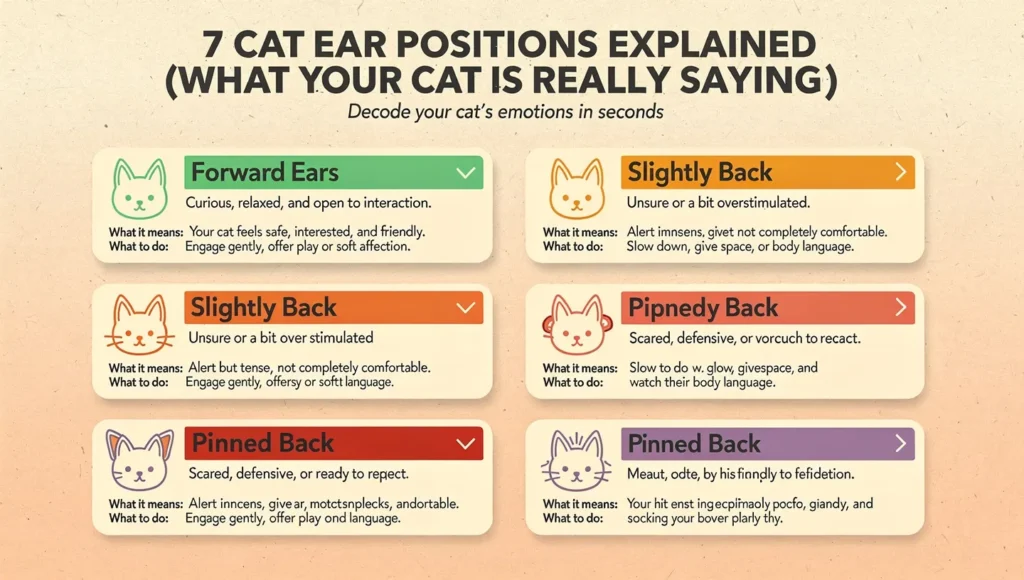
Table of Contents
- What Do Cat Ear Positions Mean? (The Basics)
- The 7 Main Cat Ear Positions (And What They Really Mean)
- 1. Ears Forward and Upright: The Happy Cat Ear Position Meaning
- 2. Ears Slightly Tilted Back (Relaxed or Unsure)
- 3. Ears Pinned Back: A Critical Cat Ear Position Meaning
- 4. Ears Completely Flat (Airplane Ears) – Fear or Aggression
- 5. Ears to the Side (Confused or Irritated)
- 6. One Ear Up, One Ear Down (Listening in Two Directions)
- 7. Ears Twitching or Moving Rapidly (Processing Sounds)
- Mixed Signals: When Ears Don’t Tell the Whole Story
- Example 1: Ears Back + Purring = Overstimulated (Not Happy)
- Example 2: Ears Forward + Tail Flicking = Annoyed (Not Curious)
- Example 3: Flat Ears + Slow Blink = Scared But Trusting You
- When Cat Ear Position Means Pain (Not Just Emotion)
- Cat Ear Positions During Sleep (Is It Normal?)
- Quick Reference: Cat Ear Position Chart
- Common Questions About Cat Ear Positions
- What is the meaning of cat ears being pinned back?
- Why is one of my cat’s ears down?
- Do all cats use ear positions the same way?
- Can I train my cat to move their ears?
- What’s the “I love you” signal in cats?
- You’re Now Fluent in Cat Ear Language
What Do Cat Ear Positions Mean? (The Basics)
Understanding the true meaning of cat ears is one of the most accurate ways to read your cat’s emotional state. Each specific cat ear position meaning signals a different mood—from relaxed and happy to scared or about to attack. But here’s the thing: you can’t just look at the ears alone.
You need to combine them with other body language signals like the tail, eyes, and posture to get the full picture.
And this is important.
Cats have 32 muscles in each ear. Humans? We’ve got six. That means your cat’s ears are designed to move independently, rotate almost 180 degrees, and pick up sounds you’ll never hear. They’re not just listening—they’re communicating.
Once I understood this, everything changed. I stopped getting scratched during playtime. I knew when Luna needed space. I could tell the difference between “I’m curious” and “back off before I make you regret it.”
From my experience, learning to read cat ears is like learning a new language. At first, it feels like guesswork. But once you start paying attention, you realize your cat’s been talking to you this whole time—you just didn’t know how to listen.
Most people think a cat’s ears are just… there. But they’re actually tiny emotional billboards. And ignoring them? That’s how you end up with scratches, bites, or a cat that hides every time you have guests over.
Here’s what I wish someone had told me years ago: if you want to understand your cat, start with their ears. Everything else—the tail flicks, the slow blinks, the purring—makes way more sense once you crack the ear code.
According to research from the ASPCA, ear position is one of the clearest indicators of a cat’s intentions. It’s not just about emotions—it’s about survival. In the wild, clear communication prevents fights and injuries. Your house cat still carries those instincts.
So whether your cat’s ears are standing tall, tilted back, or completely flattened like little wings, there’s always a reason. And once you know what to look for, you’ll never misread your cat again.
Let’s break down the hidden meaning of cat ears in every situation, so you never feel confused again.
Want to understand the full picture of what your cat’s trying to say? Check out our complete guide to cat body language—it covers everything from ear positions to tail signals and eye contact.
The 7 Main Cat Ear Positions (And What They Really Mean)
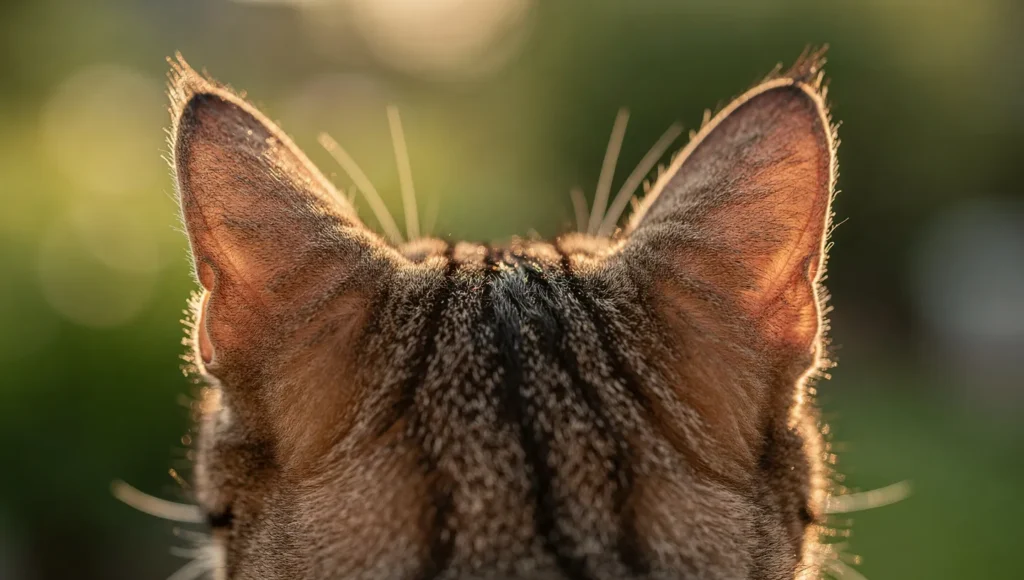
Here’s where things get practical. I’m breaking down the seven most common ear positions you’ll see—and more importantly, what you should do when you spot them.
1. Ears Forward and Upright: The Happy Cat Ear Position Meaning
This is your cat’s default “I’m good” position.
When Luna’s ears are standing tall and facing forward, she’s either relaxed, curious, or actively paying attention to something interesting. Maybe it’s a bird outside the window. Maybe it’s the sound of me opening a can of tuna. Either way, forward ears = positive vibes.
What to do:
This is the green light. Your cat’s open to interaction. It’s a great time to play, pet, or just hang out. They’re confident and comfortable.
Real-life example:
Every morning when I shake Luna’s treat bag, her ears shoot forward like little satellite dishes. She’s locked in, ready for action, and absolutely thrilled about what’s coming next.
One thing though.
If the ears are forward but the body is stiff and the tail’s straight up or puffed, that’s not happiness—that’s high alert. Your cat’s locked onto something they’re not sure about yet. Could be prey. Could be a threat. Context matters.
2. Ears Slightly Tilted Back (Relaxed or Unsure)
This one’s tricky because it sits right in the middle.
When your cat’s ears are angled back just a little—not pinned, just tilted—they’re either totally chill or slightly uncertain about the situation. It’s like they’re saying, “I’m listening, but I haven’t decided how I feel yet.”
What to do:
Move slowly. Let your cat come to you instead of forcing interaction. If they’re unsure, pushing them will only make things worse.
Context clue:
Check the tail. If it’s relaxed and gently swaying, your cat’s probably fine. If it’s twitching or low to the ground, they’re on edge.
Personally, I see this position a lot when Luna’s hanging out on the couch but hears a noise she doesn’t recognize. She’s not scared—just cautious.
3. Ears Pinned Back: A Critical Cat Ear Position Meaning
Okay, this is where my story from earlier comes in.
Remember that day with my sister’s kids? Luna’s ears were pinned straight back against her head. Not flat—just pulled back tight. I thought she was being dramatic. Turns out, she was giving me a crystal-clear warning: “I’m uncomfortable. Back off. Now.”
What it means:
Your cat’s defensive, scared, or annoyed. This is their way of saying, “If you don’t give me space, I’m going to make you regret it.”
What to do:
❌ Don’t touch them.
❌ Don’t force interaction.
✅ Give them space and let them calm down on their own terms.
From my experience, this is the position most people misread. They think the cat’s just being “moody.” But moody doesn’t exist in cat language—there’s always a reason.
Medical note:
If your cat’s ears are constantly pinned back and they’re also hiding, not eating, or avoiding touch, that’s not just fear—it could be pain. Cats hide discomfort really well, and ear position can be one of the first clues something’s wrong.
If this behavior lasts more than 24 hours, it’s time to check in with your vet. Trust me, I learned this the hard way when Luna had a dental issue I almost missed.
Need help spotting other warning signs? Our guide on how to tell if your cat is sick covers the subtle signals most owners overlook.
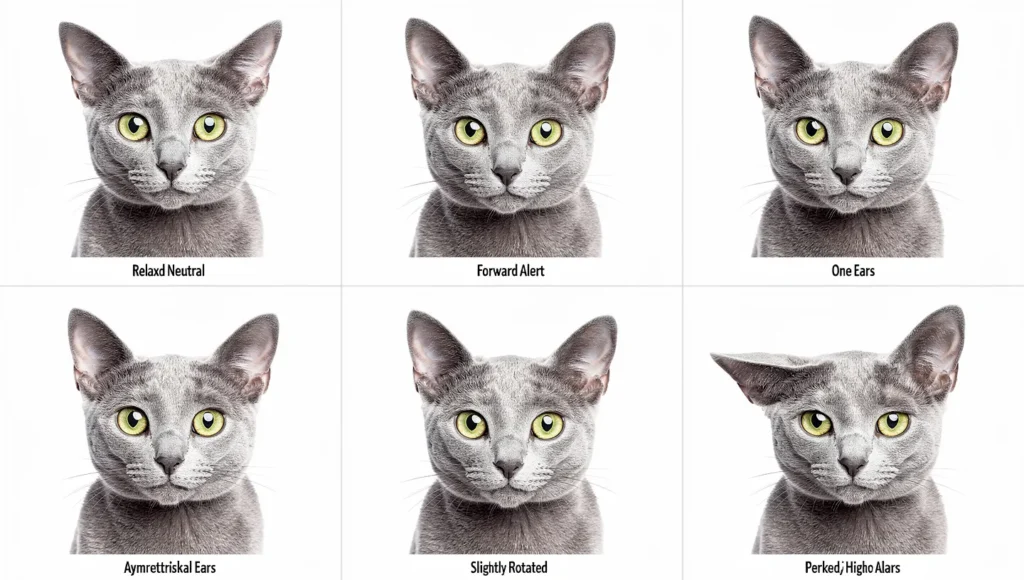
4. Ears Completely Flat (Airplane Ears) – Fear or Aggression
This is the red alert.
When a cat’s ears are pressed completely flat against their head—so flat they almost disappear—you’re looking at maximum fear or about to witness an attack. This classic cat ear position meaning is nicknamed “airplane ears” because, well, they look like little wings.
And this is important.
If you see airplane ears, your cat is done warning you. They’ve moved past “please leave me alone” and entered “I will defend myself if I have to” mode.
What to do:
⚠️ Stop everything.
⚠️ Back away slowly.
⚠️ Never corner a cat in this state—they will lash out.
Visual cue to watch for:
Flat ears + dilated pupils + low body = serious danger. If you see all three at once, leave the room if you can. Let them decompress.
Luna hit this position once when a neighbor’s dog got loose and came running toward her. I’d never seen her that scared. Her ears vanished, her pupils went huge, and she hissed louder than I thought possible. I scooped her up (carefully) and got her inside. It took her a full hour to calm down.
Understanding when your cat’s moving from “annoyed” to “aggressive” can save both of you from a bad situation. For more on reading aggression signs, check out our cat body language guide.
5. Ears to the Side (Confused or Irritated)
This is what I call the “I don’t know how I feel about this” position.
When your cat’s ears swivel out to the sides—not back, but sideways—they’re either overstimulated, confused, or getting irritated. It’s like they’re stuck between curiosity and annoyance.
What it means:
Your cat’s hit their limit. They might not be ready to attack yet, but they’re close.
What to do:
If you’re petting them, stop immediately. If you’re playing, take a break. Watch for tail flicking—that’s the final warning before they bite or scratch.
Real example:
I used to make this mistake all the time with Luna. I’d be petting her, she’d start purring, and I’d think, “Great, she’s happy!” But then her ears would slide sideways, and two seconds later—chomp. She wasn’t being mean. I just ignored the “I’m done now” signal.
This is textbook petting-induced aggression. And once I learned to spot the side ears, I stopped getting bitten during cuddle sessions.
Ever wonder why your cat suddenly bites during playtime? Our article on why cats bite breaks down the triggers most owners miss.
6. One Ear Up, One Ear Down (Listening in Two Directions)
This one’s actually adorable—and totally normal.
Cats can move their ears independently, which means they can listen to two different sounds at the same time. So if one ear’s pointing at you and the other’s swiveled toward the window, your cat’s just multitasking.
What it means:
Your cat’s relaxed but curious. They’re keeping tabs on their surroundings without being stressed about it.
What to do:
Nothing special. This is just your cat being a cat. Enjoy the cute factor.
Fun fact:
Cats can rotate their ears up to 180 degrees. That’s why they can hear a mouse moving in the walls while simultaneously eavesdropping on your phone conversation. They’re basically tiny surveillance systems with fur.
Luna does this all the time when she’s napping on my lap but hears something outside. One ear stays on me (loyalty points), and the other tracks whatever’s happening in the yard.
7. Ears Twitching or Moving Rapidly (Processing Sounds)
If your cat’s ears are doing a little dance—twitching, flicking, rotating quickly—they’re in high alert mode or about to pounce.
What it means:
Your cat’s locked onto something. Could be prey (a bug, a toy, a shadow). Could be excitement. Either way, their hunting instincts just kicked in.
What to do:
Perfect time for interactive play! Grab a wand toy or a laser pointer. Your cat’s in the zone and ready to chase something.
When to worry:
If your cat’s ears are constantly twitching and they’re shaking their head or scratching at their ears, that’s not excitement—that’s discomfort. Could be an ear infection, ear mites, or an allergy.
According to the Cornell Feline Health Center, ear infections are more common than most owners realize, especially in cats with folded ears or heavy ear wax buildup.
If the twitching doesn’t stop or your cat seems bothered by it, schedule a vet visit. And if you’re comfortable checking their ears at home first, our guide on cleaning cat ears safely walks you through what to look for.
Mixed Signals: When Ears Don’t Tell the Whole Story
Here’s the thing nobody tells you.
Cat ears are a huge part of the puzzle, but they’re not the whole puzzle. You can’t just look at the ears and call it a day—you need to read the full package: tail, eyes, body posture, and even the sounds they’re making.
I learned this the hard way (again).
One time, Luna was sitting on my lap, purring like a little engine, but her ears were pulled back. I thought, “She’s purring, so she must be happy, right?” Wrong. Two minutes later, she bit my hand and jumped off.
What I missed: the purring was stress-related, not happiness. The ears were the giveaway. But I ignored them because I thought purring = good.
Let me break down some common contradictions so you don’t make the same mistake.
Example 1: Ears Back + Purring = Overstimulated (Not Happy)
What’s happening:
Your cat’s enjoying the attention at first, but they’re hitting sensory overload. The purring continues (it’s involuntary sometimes), but the ears are saying, “I’m done.”
What to do:
Stop petting immediately. Let them reset. If you push it, you’ll get scratched or bitten.
Example 2: Ears Forward + Tail Flicking = Annoyed (Not Curious)
What’s happening:
Your cat’s ears look interested, but that tail flick is a red flag. They’re irritated, not engaged.
What to do:
Back off. Don’t assume forward ears = happy. Always check the tail.
Want to master tail signals too? Check out our deep dive on cat tail language—it’s the missing piece most owners overlook.
Example 3: Flat Ears + Slow Blink = Scared But Trusting You
What’s happening:
Your cat’s terrified (maybe of a loud noise or a stranger), but they’re looking to you for comfort. The slow blink is their way of saying, “I trust you to keep me safe.”
What to do:
Stay calm. Speak softly. Don’t pick them up if they’re hiding—just let them know you’re there. They’ll come to you when they’re ready.
Slow blinking is one of the most beautiful signals a cat can give you. If you’ve never heard of it, our guide on cat slow blink meaning will change how you bond with your cat.
When Cat Ear Position Means Pain (Not Just Emotion)
This section is critical, so pay attention.
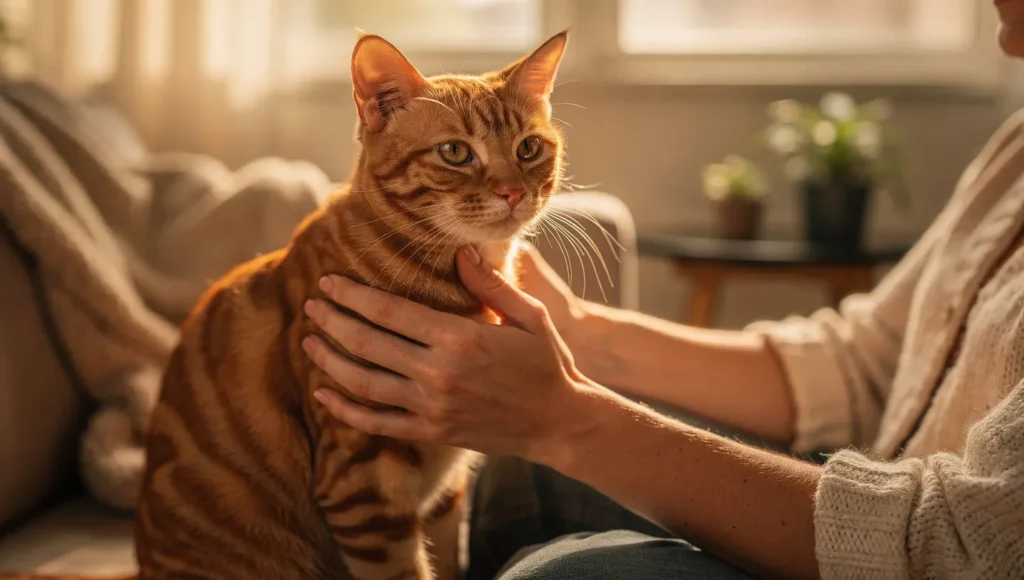
Sometimes, ear position isn’t about mood—it’s about pain. And cats are masters at hiding discomfort, so you have to be extra vigilant.
Warning signs to watch for:
- Ears constantly pinned back or flat (even when alone and calm)
- Avoiding being touched near the head or ears
- Head shaking or tilting to one side
- Scratching at the ears repeatedly
- Discharge or bad smell coming from the ears
Possible issues:
- Ear infection
- Ear mites (super common in cats)
- Dental pain (yes, this affects ear position)
- Headaches or neurological issues
Action plan:
If your cat’s ear position seems “off” for more than 24 hours and they’re also acting lethargic, hiding more than usual, or refusing food, don’t wait. Call your vet.
I almost missed an ear infection with Luna because I thought she was just being grumpy. Her ears were back constantly, and she kept shaking her head. Turns out, she had a bacterial infection that needed antibiotics. Caught early, it cleared up fast. But if I’d ignored it? Could’ve turned into something way worse.
For a complete checklist of health warning signs, our guide on how to tell if your cat is sick covers the 10 critical symptoms every owner needs to know.
Cat Ear Positions During Sleep (Is It Normal?)
Quick question: have you ever watched your cat sleep and noticed their ears twitching or moving toward sounds?
That’s totally normal.
Cats are light sleepers by nature (survival instinct from their wild ancestors). Even when they’re napping, their ears stay semi-active, scanning for potential threats or interesting noises.
What’s normal:
- Ears twitching toward sounds during light sleep
- One ear moving while the other stays still
- Ears relaxing completely during deep sleep
When it means your cat feels safe:
If your cat’s ears are fully relaxed and floppy while they’re sleeping, that’s a huge compliment. It means they trust their environment (and you) enough to completely let their guard down.
When to worry:
If your cat’s ears are constantly moving during sleep and they never seem to fully relax, that could indicate stress or anxiety. Maybe they’re not comfortable in their sleeping spot, or maybe there’s too much noise in the house.
Try creating a quiet, safe space for them—somewhere elevated, cozy, and away from high-traffic areas.
Curious about why cats sleep so much in the first place? Our article on why cats sleep so much explains the science behind their 16-hour nap schedule.
Quick Reference: Cat Ear Position Chart
Here’s a simple table you can bookmark (or screenshot) for quick reference:
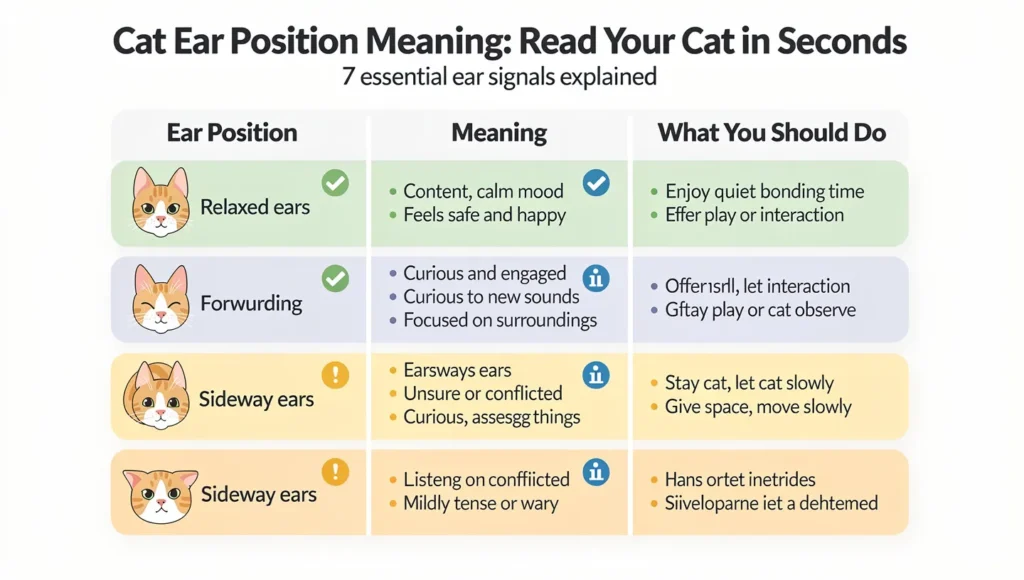
| Ear Position | Meaning | What to Do |
|---|---|---|
| Forward & Upright | Alert, Happy, Curious | Safe to interact |
| Slightly Back | Unsure, Listening | Move slowly |
| Pinned Back | Warning, Defensive | Give space immediately |
| Flat (Airplane Ears) | Fear or Aggression | Leave them alone |
| To the Side | Confused, Irritated | Stop petting/playing |
| One Up, One Down | Multi-tasking, Alert | Normal behavior—no action needed |
| Twitching | Excited, Hunting Mode | Great time for play! |
Save this chart. Print it. Stick it on your fridge. I promise it’ll save you from at least one scratch.
Common Questions About Cat Ear Positions
What is the meaning of cat ears being pinned back?
It’s a warning signal. Your cat is defensive, scared, or annoyed.
Context matters: If the ears are back and they’re purring, they might just be overstimulated. If the ears are back and the tail is low or flicking, they’re telling you to back off.
Why is one of my cat’s ears down?
Usually: It’s just your cat listening in two directions at once. Totally normal multi-tasking behavior.
But: If one ear stays down for days and your cat’s shaking their head or scratching at it, get it checked by a vet. Could be an ear infection or mites.
Do all cats use ear positions the same way?
Yes and no. Ear language is universal across cats, but some breeds are harder to read.
For example, Scottish Folds have naturally folded ears, so you can’t rely on ear position alone. You have to read their eyes, tail, and body language more carefully.
If you’re raising a Scottish Fold, our Scottish Fold health and care guide covers the unique challenges of this breed.
Can I train my cat to move their ears?
Nope. Ear movement is involuntary—it’s a reflex tied to emotion and sound.
But you can train yourself to read them better. And once you do, you’ll feel like you unlocked a secret superpower.
What’s the “I love you” signal in cats?
It’s not the ears—it’s the slow blink.
When your cat looks at you and slowly closes their eyes, they’re saying, “I trust you completely.” It’s the cat equivalent of a hug.
But here’s the bonus: if your cat gives you a slow blink and their ears are relaxed and forward, that’s maximum trust and affection. You’ve officially been accepted into the inner circle.
You’re Now Fluent in Cat Ear Language
Look, I’m not going to lie—mastering the cat ear position meaning takes practice and patience. But once you start paying attention, it becomes second nature.
You’ll spot the warnings before they escalate. You’ll know when your cat’s in pain before it gets serious. You’ll understand when they want to play and when they need space.
My relationship with Luna completely changed once I started listening to what her ears were telling me. We don’t have miscommunications anymore. I don’t get scratched. And honestly? I feel like I finally get her.
Your cat’s been talking to you this whole time.
Now you can finally understand.
💬 Your turn: Has this ever happened to you? Have you ever misread your cat’s ear signals and regretted it later? Drop a comment below—I’d love to hear your story. And if this guide helped you avoid a scratch (or worse), share it with a fellow cat parent who needs it!