

If you’re wondering how to cat proof your home to protect both your feline friend and your furniture, you’re not alone. My neighbors Jake and Lisa got their first cat about eight months ago.
Whiskers — a beautiful seven-year-old tabby with the energy of a toddler and the attitude of a CEO — came into their lives and immediately claimed every corner of their apartment as her personal kingdom.
Last week, I was sitting at their kitchen table when Lisa let out this exhausted sigh and pointed at their couch. “She got it again.” The armrest was shredded.
Tyler, their eight-year-old, had left a charging cable on the floor, and Whiskers had already started chewing on it. Meanwhile, little Mia was chasing the cat with a toy xylophone mallet, and honestly — it was beautiful chaos.
But here’s the thing. Jake looked at me and said, “I think she just hates us.” She doesn’t hate you, Jake. She just lives there too. And nobody set the place up for her.
That conversation is literally why I’m writing this. Because cat proofing your home isn’t really about protecting your stuff from your cat. It’s about creating a space where both of you can actually live — without the stress, the destroyed furniture, and the 2 a.m. panic when you realize something got knocked off the counter.
Quick note: Everything I share here is based on personal experience and research from trusted sources like ASPCA and AVMA. It’s meant to inform, not replace advice from your vet — especially if your cat has specific health needs.
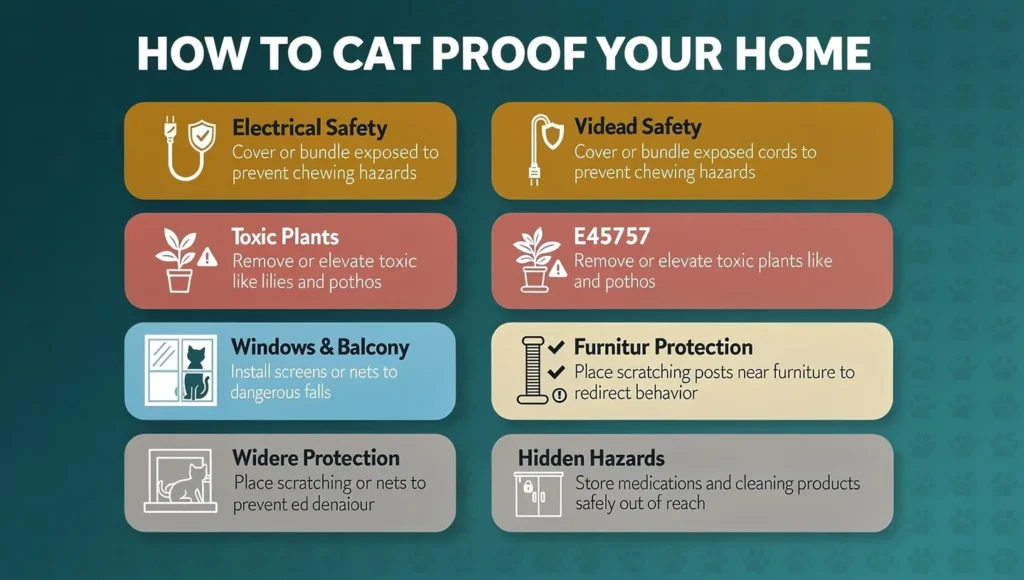
Table of Contents
- What Does “Cat Proofing” Actually Mean?
- Start Here — The Most Dangerous Spots You’re Probably Ignoring
- How to Cat Proof Your Home: A Room-by-Room Guide
- The Living Room
- The Kitchen
- The Bedroom
- The Balcony & Windows
- Cat Proofing with Kids in the House
- Protecting Your Furniture Without Punishing Your Cat
- Special Considerations for Senior Cats Like Whiskers
- Quick Cat Proofing Checklist (Save This)
- Before You Go — A Few Questions You Might Be Asking
- How to cat proof your home?
- What does “cat proof” actually mean?
- How do I protect my furniture from cat scratching?
- How do I cat proof a balcony?
- Is cat proofing different for apartments?
- One Last Thing, Jake and Lisa
What Does “Cat Proofing” Actually Mean?
Cat proofing your home means removing hazards and redirecting your cat’s natural behaviors toward safe alternatives — so both of you can coexist without constant damage control.
Most people think it means hiding your valuables and hoping for the best. It doesn’t. Real cat proofing is two things at once: making your home safer for your cat, and making it more livable for you. Those aren’t the same goal, but they work together better than you’d think.
Here’s the thing — cats aren’t destructive because they’re misbehaving. They scratch because it’s how they stretch and mark their territory. They chew wires because the texture is interesting.
They knock things off shelves because, honestly, they can. Understanding why your cat does what she does is 90% of the solution. The other 10% is just buying the right stuff.
Start Here — The Most Dangerous Spots You’re Probably Ignoring
Before you worry about your sofa, let’s talk about the things that can actually hurt your cat.
Electrical cords are the number one hazard most people overlook. Cats — especially younger ones — are drawn to cables the way kids are drawn to anything they’re not supposed to touch.
A chewed power cord isn’t just a ruined charger. It’s a real electrocution risk. Flex tubing (the kind you can find at any hardware store for a few dollars) works surprisingly well. Just bundle the cords, run them through the tube, and suddenly they’re a lot less interesting.
Toxic plants are another one that catches people off guard. A lot of common houseplants — lilies, pothos, snake plants — are genuinely dangerous for cats.
According to the ASPCA’s toxic plant database, even small amounts of certain plants can cause kidney failure in cats. I’ve written a full breakdown of this in Toxic Plants for Cats — worth a read before you redecorate.

Whiskers, by the way, gave Jake and Lisa their first scare about three months in. Lisa found her sniffing around a pothos on the windowsill. Nothing happened, thankfully — but they moved every plant in the apartment that same afternoon. Good instinct.
Medications and cleaning products left on counters or in low cabinets are an easy fix: just move them up or use childproof latches. Same ones you’d use for a toddler, actually — which Jake already had from when Tyler was small.
Windows and balconies deserve their own mention. Cats have an overconfidence problem with heights. They think they can land any jump. Sometimes they’re wrong. A simple window screen or a balcony net (you can find them online for under $30) can genuinely save your cat’s life.
This matters even more for senior cats like Whiskers — older cats don’t always judge distances as well as they used to, and their joints don’t absorb falls the same way.
How to Cat Proof Your Home: A Room-by-Room Guide
This is where most guides give you a generic list and call it a day. I want to actually walk through each room — because the risks are different, and the fixes are different too.
The Living Room
This is Whiskers’ favorite battlefield, apparently.
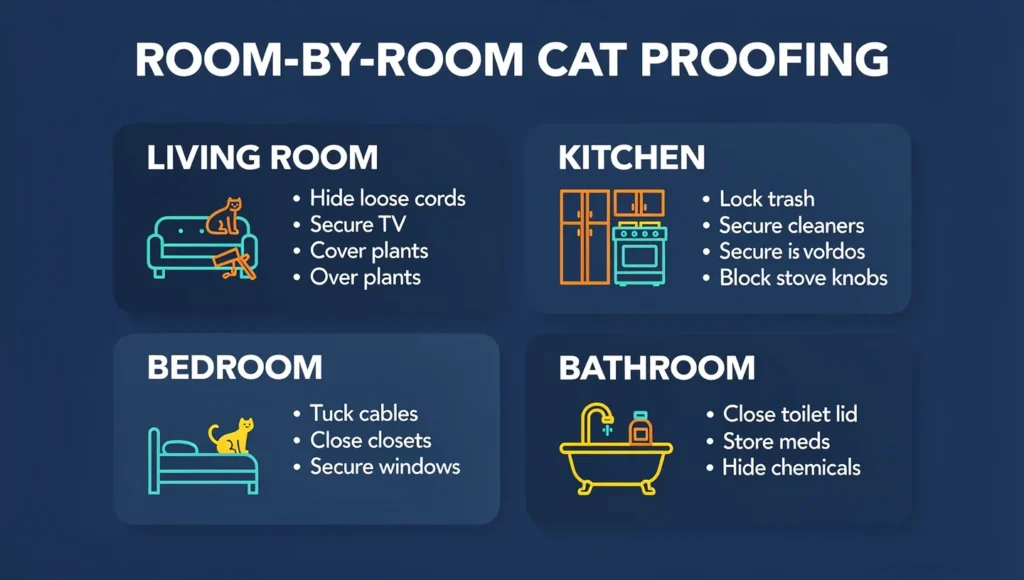
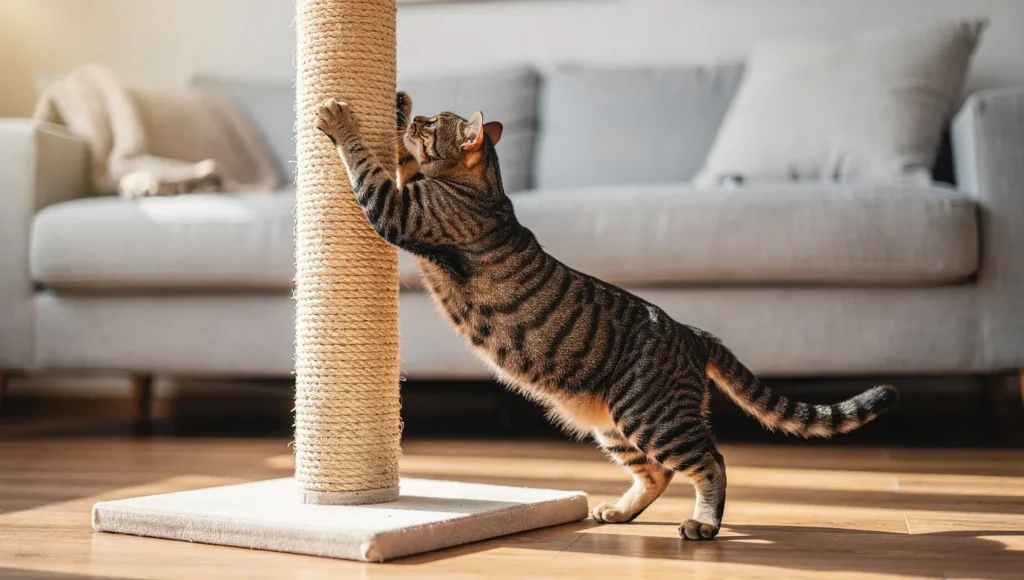
Start with the couch. If your cat is scratching the furniture, the problem usually isn’t the cat — it’s that she doesn’t have a better option nearby. A good scratching post placed right next to the couch (not across the room) makes a real difference.
I go into a lot more detail on this in the Stop Cat Scratching Furniture guide, but the short version is: location and texture matter more than most people realize.
Cables on the floor — bundle them, cover them, or run them behind furniture. This room is a critical step in how to cat proof your home, as it’s usually where most of the loose wires live (TV, gaming consoles, lamps), so it’s worth spending twenty minutes doing a proper cable management pass.
Shelves and tall furniture are a mixed bag. Some cats love being high up — and that’s fine, even healthy. Just make sure anything up there isn’t going to hurt her if she knocks it down, and isn’t something fragile you’d be devastated to lose.
The Kitchen
When learning how to cat proof your home, honestly, the kitchen is where I’d focus first.
Unsecured cabinets under the sink are a common entry point for cats — and that’s exactly where most people store cleaning supplies. A simple magnetic cabinet lock costs about $3 and takes two minutes to install. Worth every penny.
The trash can is another one. Get a lidded can. Cats can get into open bins and either eat something they shouldn’t or get stuck. Neither is fun for anyone.
The stove is a real hazard — especially the burners. Some cats like to jump up there. Using stove knob covers and keeping the oven door closed when not in use are simple habits that can prevent burns.
According to the AVMA, kitchen hazards are among the most common causes of household cat injuries — most of which are entirely preventable.
The Bedroom
The bedroom is usually lower risk, but there are a few things worth checking.
Nightstand medications — melatonin, ibuprofen, antidepressants — all of these are dangerous for cats in even small doses. Keep them in a drawer, not on the surface.
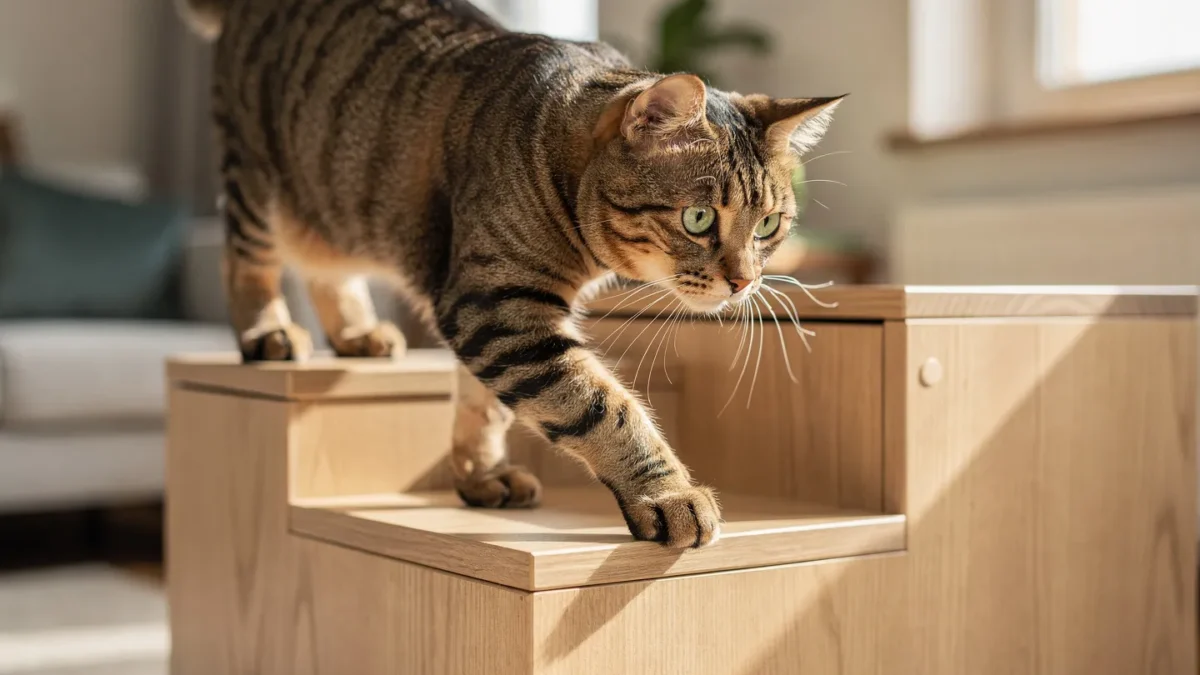
If your cat sleeps with you (and a lot of cats do), just make sure she can get on and off the bed safely. For Whiskers specifically, Jake told me she’s started jumping down kind of stiffly in the mornings. A small pet step or even a folded blanket on the floor next to the bed can take the pressure off older joints.
The Balcony & Windows
If you have a balcony, this section is non-negotiable.
The two best options are balcony cat nets (available on Amazon, usually around $25–40 for a standard size) and window screens with a secure frame. If you’re renting and can’t drill, tension-mounted screens exist and work reasonably well.
For apartment dwellers — and this comes up a lot — the balcony is often the scariest part of cat proofing. Even cats who’ve never shown interest in the edge can have one moment of misjudgment. It’s not worth the risk.
Cat Proofing with Kids in the House
This is the part nobody writes about. And it’s the part Jake and Lisa needed most.
The danger here actually goes both ways. Yes, you want to protect your furniture and your cat from the kids. But you also want to protect the kids from the cat — and the cat from the kids.
Tyler is eight, which means he’s old enough to understand basic rules: don’t chase Whiskers, don’t pull her tail, don’t corner her. These aren’t just manners — a cornered cat will scratch, and it won’t be her fault.
Mia is four. Four-year-olds don’t have the impulse control for “gentle hands” yet. This isn’t a criticism — it’s just developmental reality. At that age, supervision is the real cat proofing tool.
From a cat’s perspective, small toys are the bigger risk. Lego pieces, rubber bands, hair ties, small figurines — these are all choking hazards if swallowed. Cats don’t chew and think about consequences. They just chew.
I actually watched this play out in real time at Jake and Lisa’s. Tyler had left a small rubber ball on the living room floor — about the size of a golf ball — and Whiskers was batting it toward the space under the couch like she was playing solo hockey. Funny to watch. Less funny if she’d swallowed it.
The fix is pretty simple: establish a “cat-safe zone” for the kids’ play area, and make it a habit to do a quick floor scan before bed. It sounds like a lot, but after a couple of weeks it becomes automatic.
For more on understanding cat behavior in multi-person households, the Cat Body Language guide is genuinely useful — especially if you have kids learning how to read their cat’s signals.
Protecting Your Furniture Without Punishing Your Cat
Punishment doesn’t work with cats. Honestly, it just makes them anxious — and an anxious cat scratches more. The real solution is giving her something better to scratch than your couch.
Here’s what actually works:
- Scratching post placement — put it right next to the furniture she targets, not across
the room. Location is everything. - Double-sided tape (Sticky Paws) — cats hate the texture. Apply it to the corners of your
sofa for a week or two while she’s learning the new post. - Deterrent spray — a DIY citrus spray works fine. Cats generally dislike citrus scents.
- Furniture covers — not glamorous, but effective short-term while you’re retraining.
For a full breakdown of what actually stops scratching behavior (and what makes it worse), the 7-Day Cat Scratching Reset Plan goes deep on the behavioral side of this.
| Solution | Budget Option | Premium Option | Effectiveness |
|---|---|---|---|
| Scratching Post | Basic sisal ~$15 | Tall cat tree ~$80+ | ⭐⭐⭐⭐⭐ |
| Deterrent Spray | DIY citrus spray | Commercial spray ~$12 | ⭐⭐⭐⭐ |
| Furniture Cover | Old blanket | Couch protector ~$25 | ⭐⭐⭐ |
| Double-Sided Tape | Regular tape | Sticky Paws ~$10 | ⭐⭐⭐⭐ |
Personally, I’d start with the scratching post and tape combo before spending anything on sprays or covers. Simple and cheap — and it works most of the time.
Special Considerations for Senior Cats Like Whiskers
Older cats don’t always show pain the way younger ones do. Whiskers is seven — not ancient, but old enough that her joints are starting to feel the daily wear of jumping on and off furniture. Jake mentioned she’s been hesitating before jumps lately. That’s a signal worth paying attention to.
A few simple adjustments make a real difference for senior cats:
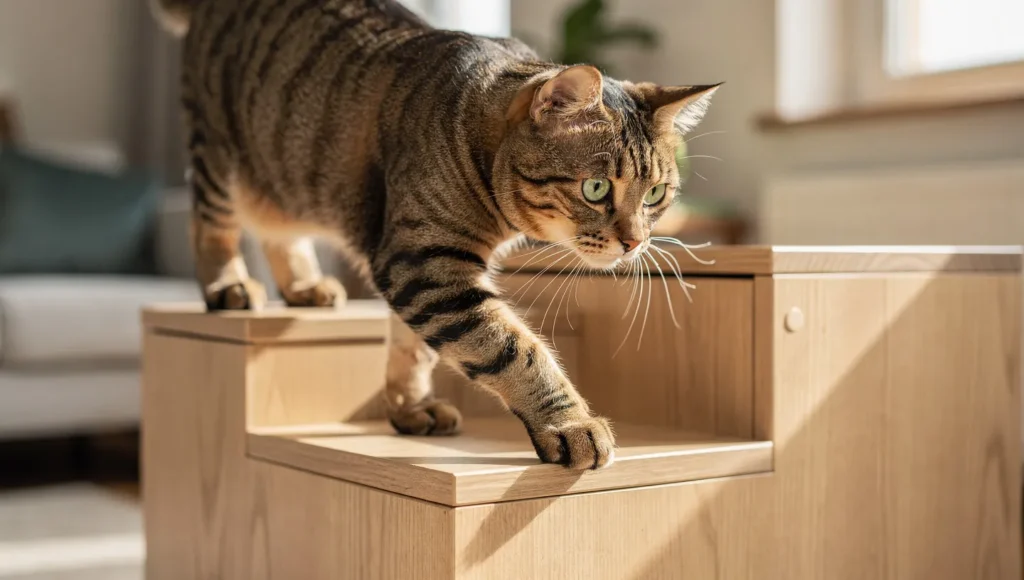
- Pet stairs or ramps next to the couch and bed — takes pressure off the joints on landing
- Low-entry litter box — standard boxes with high sides become genuinely difficult for older cats
- Elevated food and water bowls — reduces neck strain during meals
- Sleeping spots at ground level — give her a cozy option that doesn’t require a jump
For more on caring for an aging cat — diet, hydration, and what to watch for — Senior Cat Care: Hydration and Specialized Diets covers the full picture.
Quick Cat Proofing Checklist (Save This)
Whether you’re bringing home a new cat or doing a safety audit of your current setup — run through this before anything else.
Safety Essentials:
- ✅ All electrical cords covered or bundled
- ✅ Toxic plants removed or relocated out of reach
- ✅ Medications and cleaning products in locked/high cabinets
- ✅ Windows and balcony secured with screens or nets
- ✅ Trash cans lidded
Behavior & Comfort:
- ✅ Scratching post placed near favorite scratch spots
- ✅ Cat tree or vertical space available
- ✅ Small objects (rubber bands, hair ties, toy parts) off the floor
- ✅ Litter box in a quiet, accessible location
For Senior Cats:
- ✅ Pet stairs or ramp next to furniture
- ✅ Low-entry litter box
- ✅ Ground-level sleeping option
If you’re bringing a new cat home for the first time, New Cat First Night walks you through exactly what to expect — and what mistakes to avoid in those first 24 hours. And if it’s a kitten, the Kitten Care Guide is the most complete starting point I know.
Before You Go — A Few Questions You Might Be Asking
How to cat proof your home?
Start with the biggest hazards first — cords, toxic plants, unsecured cabinets — then work room by room. Add scratching alternatives and vertical spaces, and you’ve covered 90% of it.
What does “cat proof” actually mean?
It means making your home safe for your cat and livable for you — by removing real dangers and redirecting natural behaviors to appropriate outlets.
How do I protect my furniture from cat scratching?
Place a sisal scratching post right next to the furniture she targets. Add double-sided tape to the scratch spots temporarily. Most cats switch within a week or two. More detail here: Stop Cat Scratching Furniture.
How do I cat proof a balcony?
A cat balcony net ($25–40 on Amazon) is the simplest solution. For windows, use secure screen frames — tension-mounted ones work if you’re renting and can’t drill.
Is cat proofing different for apartments?
Mostly the balcony and window risks are higher in apartments. Otherwise the same principles apply — just on a smaller footprint. Focus on vertical space, cord management, and one well-placed scratching post.
One Last Thing, Jake and Lisa
If you’re reading this — and I hope you are — Whiskers isn’t trying to ruin your couch. She’s just doing what cats do. Give her a scratching post she actually likes, move that pothos off the windowsill, and get a little ramp for the bed so she doesn’t have to jump quite so hard in the mornings.
And maybe tell Tyler to put the rubber balls away before bed.
Your home can work for all five of you — Whiskers included. It just takes a little setup. The good news is, most of it costs less than the couch repair bill.