
If you’ve ever looked at your feline friend and wondered, “why do cats sleep so much?” you’re definitely not alone. I used to think I was the one running the household, until I realized my cat was running a 16-hour sleep marathon.
Then I got a cat.
Her name was Luna, and within the first week, she had claimed my keyboard, my pillow, and roughly 16 hours of every single day. I remember calling my friend Ben — who happens to be a vet — with what I thought was a completely reasonable concern: “Dude, is my cat broken? She does nothing but sleep.”
He laughed. Then he said something I didn’t expect: “She’s not broken. You’re just living in her house now.”
That conversation started a deep rabbit hole for me. And honestly? What I found out completely changed how I see my cat — and how I worry (or don’t worry) about her sleeping habits.
⚠️ Quick note before we dive in: Everything in this article is based on personal experience, hours of research, and trusted veterinary sources. It’s here to inform and reassure — not to replace actual veterinary advice. If something feels off with your cat, please reach out to your vet. You know your cat best.
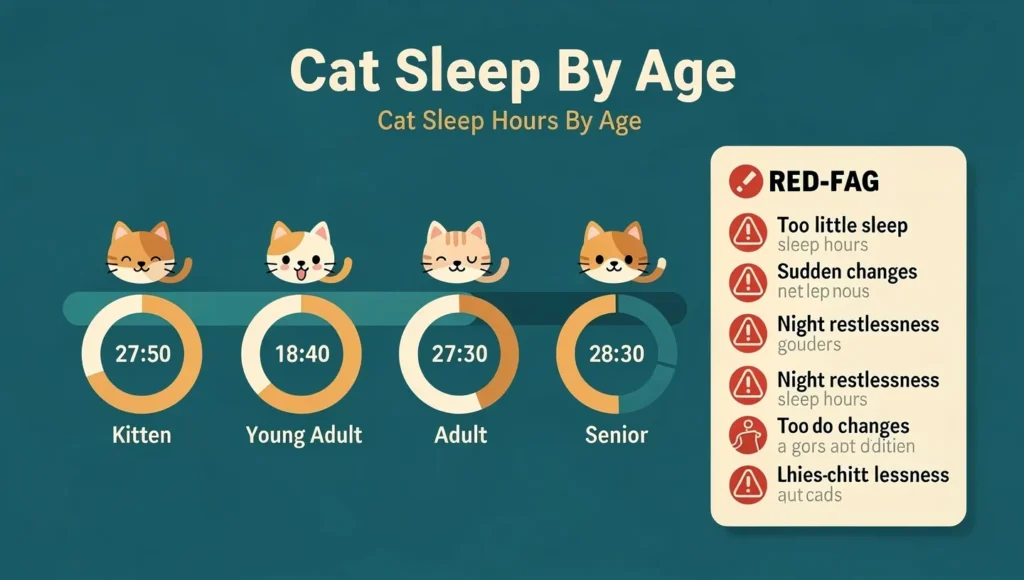
Table of Contents
- How Many Hours Do Cats Really Sleep? (The Answer Might Shock You)
- Why Do Cats Sleep So Much? 7 Real Reasons
- 1. They’re Built for Short, Explosive Bursts of Energy
- 2. Sleep Is How They Conserve Hunting Energy
- 3. Age Changes Everything
- 4. Weather and Seasons Actually Affect Cat Sleep
- 5. Indoor Cats Sleep More Than Outdoor Cats
- 6. Boredom Is a Real (and Underrated) Sleep Trigger
- 7. Food Coma Is Absolutely a Thing for Cats
- Normal Sleep vs. Worrying Sleep — How to Tell the Difference
- Cat Sleep Positions and What They Actually Mean
- The Loaf 🍞
- Curled Up Tight 🌀
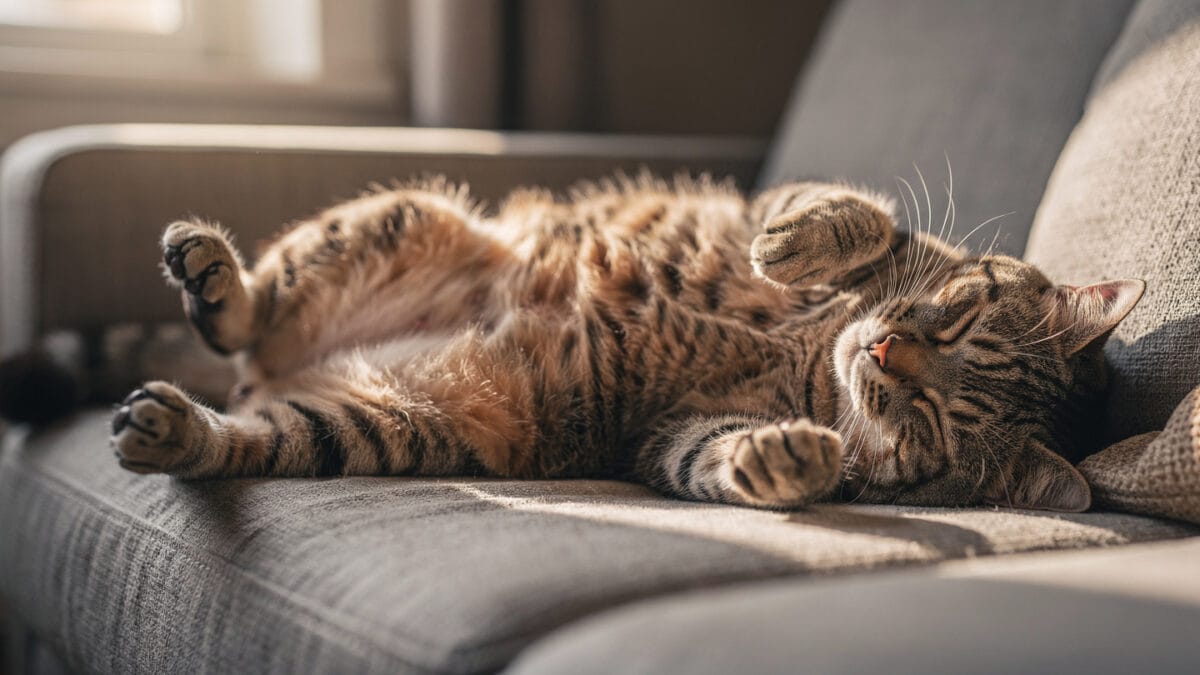
- The Belly Up
- Pressed Against You (or Your Head) 😴
- When Sleeping Too Much Becomes a Red Flag
- Why Does My Cat Sleep Next to Me?
- FAQ — Quick Answers
- Is it normal for cats to sleep all day?
- Do cats sleep more in winter?
- Do bored cats sleep more?
- Why does my cat sleep so much all of a sudden?
- How many hours do cats sleep by age?
- Are cats happier when they sleep with you?
- Final Thoughts
How Many Hours Do Cats Really Sleep? (The Answer Might Shock You)
To understand why do cats sleep so much, you first have to look at the numbers: cats sleep between 12 and 16 hours a day on average, but some can reach 20 hours. — but some sleep up to 20 hours, and that can still be completely normal.
Here’s the thing most articles don’t tell you: the “right” amount of sleep isn’t one-size-fits-all. It changes dramatically based on your cat’s age, health, environment, and even the weather outside.
| Cat’s Age | Average Daily Sleep |
|---|---|
| Newborn kittens (0–4 weeks) | Up to 20 hours |
| Young kittens (4–12 weeks) | 16–20 hours |
| Adult cats (1–7 years) | 12–16 hours |
| Senior cats (7+ years) | 16–20 hours |
Personally, when I first saw that table, I felt genuinely relieved. Luna was right in the normal range the whole time — I just didn’t know it.
According to the American Veterinary Medical Association (AVMA), cats are considered polyphasic sleepers — meaning they sleep in multiple short cycles throughout the day rather than one long stretch like humans do. So what looks like “sleeping all day” is actually a series of naps adding up.
And yes — they do experience REM sleep. Ben told me cats dream. I’m choosing to believe Luna dreams about aggressively knocking things off shelves.
Why Do Cats Sleep So Much? 7 Real Reasons
While it’s easy to call them lazy, the scientific reasons behind why do cats sleep so much are actually rooted in their survival instincts as predators.
Most articles stop at: “Cats sleep a lot because they’re predators.”
That’s technically true. But it’s also about as helpful as saying “cars go fast because of engines.”
Let’s actually break this down.
1. They’re Built for Short, Explosive Bursts of Energy
Cats are what biologists call crepuscular animals — meaning they’re naturally most active at dawn and dusk. Not during the day. Not at night. At the edges.
This is important. It means all that sleeping during the afternoon? Completely intentional from an evolutionary standpoint. Their bodies are literally saving up energy for those peak activity windows.
This is also why your cat might be perfectly still for eight hours and then sprint full-speed through the hallway at 3 AM for no apparent reason.
2. Sleep Is How They Conserve Hunting Energy
Here’s the thing about being a natural-born predator: hunting is exhausting.
Even though Luna has never hunted anything more dangerous than a hair tie, her body still operates on that ancient programming. Her nervous system is wired to conserve energy between “hunts” — even if those hunts are just chasing a laser pointer across the living room floor.
The rest period between activity bursts isn’t laziness. It’s biological preparation.
3. Age Changes Everything
This one is huge and somehow almost nobody talks about it.
Kittens sleep a ridiculous amount — up to 20 hours a day — because sleep is when growth hormones are released. Their little bodies are basically under construction 24/7.
Senior cats (7 years and older) also sleep more as their metabolism slows and their joints start to ache. If you have an older cat who suddenly seems to be sleeping even more than usual, that’s worth paying attention to. It might be normal aging — or it might be a sign of something like arthritis or kidney issues that your vet should check.
Adult cats in the middle years (roughly 1–7) are your baseline. If they’re sleeping 12–16 hours, eating well, playing when engaged, and generally acting like themselves — you’re good.
4. Weather and Seasons Actually Affect Cat Sleep
This one surprised me the first winter I had Luna.
She went from moderately lazy to aggressively lazy. Like, champion-level napping. I thought something was wrong.
Turns out, cats are genuinely sensitive to barometric pressure changes and light levels. When it’s cloudy, cold, or rainy, many cats sleep significantly more. It’s not a myth — even indoor cats respond to seasonal shifts because they can sense the light difference through windows.
Most people get this wrong. They panic in November when their cat suddenly seems like a furry lump. Usually? It’s just winter.
5. Indoor Cats Sleep More Than Outdoor Cats
And this is important.
An outdoor cat has constant stimulation — smells, sounds, other animals, movement. Their brain is actively engaged for hours each day.
An indoor cat? Their environment is mostly static. Same smells. Same sounds. Same furniture. Unless you’re actively enriching their space, there’s simply less reason to stay awake.
This doesn’t mean indoor cats are unhappy — it just means they need more intentional play and environmental stimulation to stay mentally engaged. If your indoor cat is sleeping 18+ hours a day and seems completely disinterested in everything, boredom might genuinely be the answer. More on that in the next section.
6. Boredom Is a Real (and Underrated) Sleep Trigger
Most people get this wrong.
We assume cats love doing nothing. Some do. But many cats — especially younger, more intelligent breeds — sleep out of boredom the same way some people binge TV when they’re understimulated.
The difference between a content sleeping cat and a bored sleeping cat is subtle but real:
- A content cat wakes up bright-eyed, plays enthusiastically, and engages with you
- A bored cat wakes up sluggish, shows little interest in toys, and may seem generally “flat”
If that second description sounds familiar, interactive toys and window perches can make a dramatic difference. I added a window bird feeder outside Luna’s favorite window last year, and she basically got a second wind — way more alert, way more herself.
7. Food Coma Is Absolutely a Thing for Cats
You know that sleepy feeling after a big meal? Cats get that too.
Digestion requires real energy. After eating — especially a larger meal — many cats will immediately find a warm spot and crash. It’s normal, it’s expected, and it usually lasts an hour or two.
If your cat always sleeps right after eating, that’s not a problem. That’s biology.
I remember the first time I actually timed it. Luna ate, walked approximately four steps, and folded herself into a perfect loaf shape on the couch cushion. Ben thought it was hilarious when I sent him the video. “Congratulations,” he said. “You have a cat.”
Normal Sleep vs. Worrying Sleep — How to Tell the Difference
When asking why do cats sleep so much, the real concern is often whether it’s normal or a sign of illness. Honestly, that question alone doesn’t tell you much without context.
The real question is: how is your cat sleeping, and what happens when they wake up?
Here’s the framework Ben gave me, and I’ve used it ever since:
| What You’re Seeing | What It Likely Means | What To Do |
|---|---|---|
| 🟢 Sleeping 12–16 hrs, eating well, plays when engaged | Completely normal | Enjoy the peace |
| 🟢 Sleeping more in cold/rainy weather | Normal seasonal response | Nothing |
| 🟢 Sleeping after meals | Normal digestion response | Nothing |
| 🟡 Sleeping 17–18 hrs but still eating and drinking | Monitor for a few days | Watch closely |
| 🟡 Less playful than usual but no other symptoms | Possible boredom or minor illness | Enrich environment, observe |
| 🟡 Sleeping more after a recent change (new home, new pet) | Stress response | Give time and space |
| 🔴 Sudden increase in sleep + not eating | Potential illness | Vet visit soon |
| 🔴 Sleeping in unusual spots (floor, corners) + hiding | Pain or serious illness | Vet visit urgently |
| 🔴 Can’t be woken up easily, seems disoriented | Emergency | Vet immediately |
This is where things change.
Most cat owners I’ve talked to — including myself — only start worrying when something looks dramatic. But cats are masters at hiding discomfort. By the time they look visibly sick, they’ve often been struggling for a while.
The subtle signs matter more than the obvious ones.
If your cat’s sleep is paired with any of these, don’t wait:
- Hasn’t eaten in more than 24 hours — check our guide on what to do when your cat stops eating
- Straining in the litter box or avoiding it — could be signs of a UTI
- Sneezing, discharge, or labored breathing — might be a respiratory infection
- Potbelly, dull coat, or weight loss — possible worm symptoms
- Loose stools alongside lethargy — worth reading about cat diarrhea causes
Honestly? The sleeping itself is rarely the problem. It’s what comes with the sleeping that tells the real story.
Cat Sleep Positions and What They Actually Mean
Okay. This is my favorite part.
Because once you start actually watching how your cat sleeps — not just that they sleep — a whole new level of cat communication opens up. Ben introduced me to this and I genuinely haven’t looked at Luna the same way since.
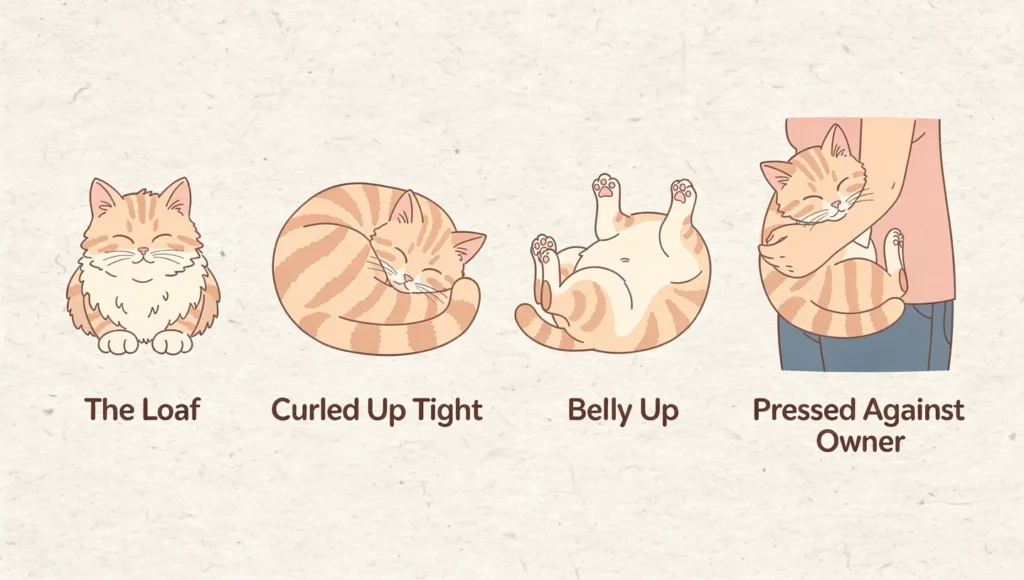
The Loaf 🍞
You know this one. All four paws tucked under the body. Perfectly rectangular. Zero structural weakness.
This is a cat that’s resting but not fully committed to sleep. They’re alert enough to respond if needed — ears might still rotate toward sounds, eyes might be half open.
It means: I’m comfortable, I trust this environment, but I’m keeping one eye on things.
Personally, I think The Loaf is the cat’s way of saying “I’m here, I see you, but I’m not interested in participating right now.” Relatable, honestly.
Curled Up Tight 🌀
Tail wrapped around the body, nose tucked in. Maximum surface area covered.
This one is pure warmth conservation — an instinct that goes back thousands of years. A curled cat is protecting its vital organs and staying warm, which means they feel safe enough to go into a deeper sleep.
If your cat curls up in a tight ball more often in winter? Completely normal. They’re just cold and cozy.
The Belly Up
Here’s the thing.
A cat showing you its belly while sleeping is not an invitation. I repeat: it is NOT an invitation.
Ben told me — with what I can only describe as a veteran’s exhaustion — that this is one of the most misunderstood things in cat ownership. The belly-up position means your cat feels completely safe. Zero threat level. Maximum vulnerability accepted.
It is the highest compliment a cat can pay to their environment.
It is also a trap.
Because the moment you reach down to touch that fluffy exposed belly, you will activate what I personally call “the reflex of betrayal” — all four paws plus teeth, instantaneously. Luna got me three times before I accepted this truth.
From my experience, the belly-up cat is basically saying: “I trust you completely. Don’t ruin it.”
Pressed Against You (or Your Head) 😴
This one is less about sleep position and more about location.
If your cat specifically chooses to sleep touching you — against your legs, on your chest, or directly on your pillow next to your face — that’s a deliberate choice. Cats are warm-seeking creatures, yes. But they also choose their sleeping partners based on trust and attachment.
There’s actually a whole fascinating explanation for why cats sleep next to your head specifically — it has to do with scent, warmth, and feeling protected from multiple directions.
Short version: if your cat sleeps on you, you’ve been approved. Congratulations.
When Sleeping Too Much Becomes a Red Flag
Let me be direct here, because this is where a lot of owners miss the window.
Cats that are genuinely unwell often show increased sleep as one of the first signs — before vomiting, before refusing food, before anything obvious. It’s a subtle shift. The kind of thing you almost explain away.
Phrases like:
- “She’s just tired today.”
- “He’s getting older.”
- “It’s probably the weather.”
Sometimes those are true. But sometimes they’re not.
Here are the specific red flags that mean: stop waiting, call your vet.
Sleep + any of these = don’t wait:
- Sleeping in unusual locations (cold floor, closet corners, behind the toilet)
- Flinching or vocalizing when touched while sleeping
- Not responding normally when you call their name
- Noticeably heavier breathing during sleep
- Waking up disoriented or stumbling
- Sleeping through their usual meal time without waking
The location shift is the one most people miss. A cat that suddenly prefers the cold bathroom floor over their usual warm spot is often telling you something. Cats instinctively seek cool surfaces when they have a fever or internal discomfort.
And if you’re ever unsure whether your cat is just deeply asleep or something is wrong — gently call their name. A healthy sleeping cat will respond, even slightly. An ear twitch, a tail flick, something. Complete non-response to their name is worth taking seriously.
Why Does My Cat Sleep Next to Me?
Because you passed the test.
That’s the short answer, and I genuinely mean it.
Cats don’t sleep near people out of obligation. They don’t have to. They’re independent enough to find a perfectly warm, comfortable spot anywhere in your home without you.
When a cat chooses you as a sleep location — or specifically gravitates toward sleeping touching you — it means you’ve been evaluated and approved as a safe, trusted presence.
There’s also a practical warmth component (you’re a great heater, honestly), but the trust piece is real and it matters.
Ben once told me: “A cat that sleeps on you isn’t dependent on you. They’ve just decided you’re part of their safe space. That’s different.”
Luna sleeps pressed against my legs almost every night. I used to move her. Now I just quietly rearrange myself around her and consider it an honor.
If you want to understand more about the specific habit of cats sleeping near your face or head — including why some cats are almost obsessive about it — this breakdown explains exactly what’s going on.
FAQ — Quick Answers
Is it normal for cats to sleep all day?
Yes, for the most part. Adult cats sleep 12–16 hours daily, and some sleep up to 20 hours. As long as your cat is eating normally, responds when engaged, and plays when offered the opportunity, daytime sleeping is completely natural behavior rooted in their biology as energy-conserving hunters.
Do cats sleep more in winter?
They do. Cats are sensitive to light levels and temperature changes, even indoors. During colder, darker months, many cats noticeably increase their sleep time. It mirrors a mild seasonal response and is considered normal unless paired with other symptoms like appetite loss or lethargy.
Do bored cats sleep more?
Yes — and this is one of the most underappreciated reasons for excessive sleeping in indoor cats. A cat with limited stimulation will often default to sleeping simply because there’s nothing engaging happening. Interactive toys, window access, and regular play sessions can significantly reduce boredom-driven oversleeping. Our guide on best interactive cat toys has some genuinely good options for this.
Why does my cat sleep so much all of a sudden?
A sudden increase in sleep is worth paying attention to. If it lasts more than 48 hours and is accompanied by any change in eating, drinking, litter box use, or behavior, contact your vet. Sudden lethargy can be an early indicator of infection, pain, or other health issues that are much easier to treat when caught early.
How many hours do cats sleep by age?
Newborns sleep up to 20 hours. Young kittens sleep 16–20 hours. Adult cats sleep 12–16 hours. Senior cats often return to 16–20 hours as they age. All of these are normal ranges — what matters more than the number is whether the behavior feels consistent with your individual cat’s baseline.
Are cats happier when they sleep with you?
Research suggests that cats who choose to sleep near their owners show lower stress markers overall. It’s not that sleeping with you makes them happy — it’s that a cat who sleeps near you is already expressing that they feel safe and content. The relationship between cats and their owners is more emotionally layered than most people realize.
Final Thoughts
Here’s my honest take after years of watching Luna sleep in increasingly creative configurations:
Stop worrying purely about why do cats sleep so much and start paying attention to the patterns of their behavior.
A cat that sleeps 16 hours and wakes up bright, playful, hungry, and engaged? That’s a healthy cat. A cat that sleeps 14 hours but seems flat, uninterested, and off? That’s worth a closer look.
The number isn’t the signal. The change is the signal.
And if you’re ever genuinely unsure — that’s what vets are for. Ben has gotten more than a few texts from me that started with “okay this is probably nothing but—” and he’s never once made me feel silly for asking.
That’s the thing about cat ownership. You learn to read your specific cat, in your specific home, with their specific quirks. Nobody knows your cat better than you do.
Trust that instinct. It’s usually right.
If this helped you understand your cat a little better, share it with another cat owner who’s probably googling the same thing at 2 AM. And if your cat has a particularly iconic sleep position or a sleeping habit that puzzles you — drop it in the comments below. I read every single one, and honestly, the stories from this community are some of the best parts of running this site. Let’s figure it out together.
Sources: