
I’ll never forget the panic in Sarah’s voice when she called me at 11 PM. Her indoor cat, Whiskers, had been scratching non-stop for days, and she’d just discovered tiny black specks jumping on her white bedsheets. “But he never goes outside!” she kept repeating. That’s when I had to break the news: flea prevention for cats isn’t just for outdoor adventurers—it’s for every cat, no matter how pampered or protected they seem.
Table of Contents
- 🚨 The Silent Threat: Why Most Cat Owners Get Flea Prevention Wrong
- 🐱 Why Flea Prevention Matters (Even for Indoor Cats)
- The Indoor Cat Myth: Debunked
- The 30-Day Nightmare: Understanding the Flea Life Cycle
- Real Risks: What Fleas Actually Do to Your Cat
- 🧭 How to Choose the Right Flea Prevention for Your Cat
- The Decision Framework: 4 Key Factors
- Quick Decision Table
- The Golden Rule: Consistency Over Perfection
- 💊 Types of Flea Prevention for Cats: What Really Works
- 🩹 Topical Flea Prevention (Spot-On Treatments)
- Pros & Cons of Topical Flea Prevention
- 💊 Oral Flea Prevention (Pills & Chewables)
- Pros & Cons of Oral Flea Prevention
- 🌿 Natural Flea Prevention (What Works & What Doesn’t)
- What Actually Has Some Evidence
- The Harsh Reality
- Which Type Should You Choose?
- ⚠️ 5 Deadly Mistakes Cat Owners Make (And How to Avoid Them)
- 🩺 When to Talk to a Vet (Red Flags)
- 📦 Quick Summary: Your Flea Prevention Action Plan
- ❓ FAQs About Flea Prevention for Cats
- 💙 Conclusion: Your Cat’s Safety Starts with You
🚨 The Silent Threat: Why Most Cat Owners Get Flea Prevention Wrong
Here’s the uncomfortable truth: over 60% of cat owners don’t use any flea prevention until they actually see fleas. By then, you’re not preventing—you’re fighting a full-blown infestation.
The problem isn’t laziness. It’s a dangerous combination of myths and misinformation that keeps cats vulnerable:
The Indoor Cat Fallacy: “My cat stays inside, so they’re safe.” False. Fleas hitch rides on your shoes, clothes, and even through window screens. I’ve treated countless “indoor-only” cats with severe flea allergic dermatitis.
The “I’ll Know When I See Them” Approach: By the time you spot a single flea on your cat, there are likely 100+ more in your home at different life stages. Fleas are stealth masters—they hide in carpet fibers, furniture cracks, and even between floorboards.
The Natural-Only Mentality: Essential oils and herbal sprays might smell nice, but they won’t stop a flea infestation. I’ve seen cats suffer for weeks while owners tried Pinterest remedies instead of proven prevention.
Here’s what shocked me most in my years of practice: the average cat owner waits 3-4 weeks after noticing scratching before seeking help. In that time, a single female flea can lay up to 500 eggs. Do the math—that’s an exponential nightmare.
The Real Cost of Waiting:
- Anemia in kittens: Severe flea infestations can literally drain a young cat’s blood supply
- Tapeworm transmission: Fleas carry tapeworm larvae that infect cats when they groom
- Flea Allergy Dermatitis (FAD): Even one flea bite can trigger weeks of intense itching in sensitive cats
- Home contamination: Treating your home after an infestation costs 5-10x more than prevention
The truth? Flea prevention isn’t about “if”—it’s about “when.” And the answer should always be: before you ever see a problem.
🐱 Why Flea Prevention Matters (Even for Indoor Cats)
Let me address the elephant in the room: “My cat never goes outside. Why would they need flea prevention?”
I hear this at least three times a week, and I understand the logic. It makes sense—no outdoor exposure, no fleas, right? Wrong.
The Indoor Cat Myth: Debunked
Indoor cats face flea exposure in ways most owners never consider:
You Are the Delivery Service: Every time you walk through grass, visit a friend with pets, or even stand in line at the grocery store, you’re a potential flea taxi. Flea eggs and larvae can cling to your shoes, pants, and bags. One study found that 25% of “indoor-only” households had detectable flea populations.
Other Pets = Open Door: If you have a dog that goes outside, or if your cat shares space with any animal that ventures outdoors, fleas will find their way in. They don’t respect the “indoor cat” boundary.
Proximity Exposure: Live in an apartment? Fleas can travel through ventilation systems, under doors, and through tiny cracks. Your neighbor’s flea problem can become yours overnight.
Wildlife Visitors: Mice, rats, squirrels—if any of these critters get into your attic, basement, or walls, they’re bringing fleas with them.
I learned this lesson the hard way with my own cat, Luna. She was strictly indoors, yet one day I found flea dirt on her chin. Turns out, a family of mice had nested in our garage, and fleas migrated inside. Prevention would have saved us both weeks of stress.
The 30-Day Nightmare: Understanding the Flea Life Cycle
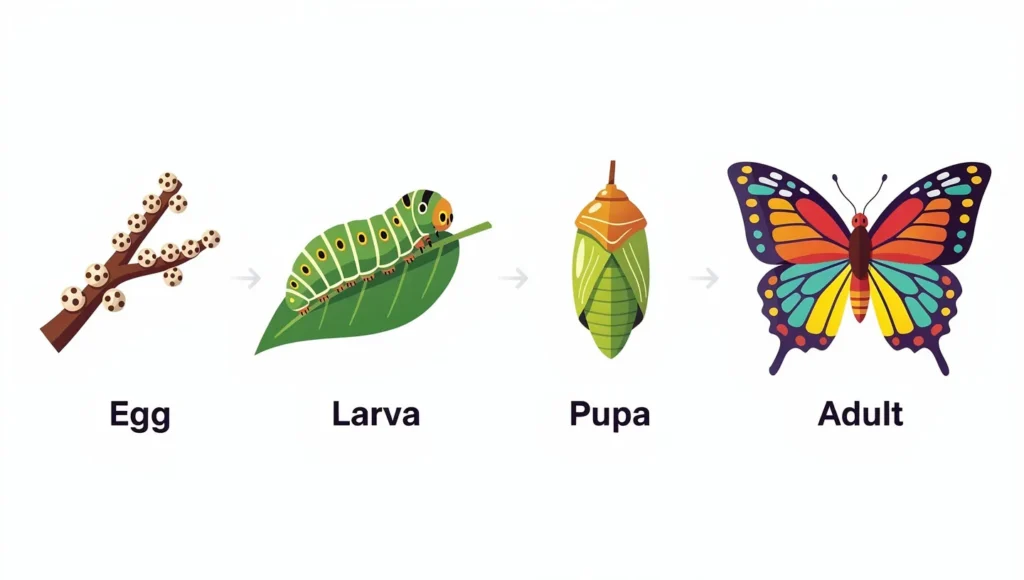
Here’s why waiting until you see fleas is a losing strategy. Fleas operate on a rapid reproductive cycle that makes them nearly impossible to control once established:
Day 1-2: Adult flea jumps on your cat, feeds on blood, and starts laying eggs within 24-48 hours.
Day 3-7: Each female flea lays 40-50 eggs per day. These eggs don’t stick to fur—they fall off into your carpet, bedding, and furniture.
Day 7-14: Eggs hatch into larvae that burrow deep into carpet fibers, under baseboards, and between couch cushions. They feed on flea dirt (digested blood) and organic debris.
Day 14-21: Larvae spin cocoons and enter the pupal stage. Here’s the terrifying part: pupae can remain dormant for up to 6 months, waiting for the perfect conditions (warmth, vibration, CO2) to emerge.
Day 21-30: Adult fleas emerge from cocoons, jump onto your cat, and the cycle starts again.
The Math That Should Scare You:
One female flea can theoretically produce 20,000 offspring in just 90 days. Even if only 1% survive (which is conservative), that’s 200 fleas. And those 200 are laying eggs too.
This is why flea prevention for cats must be proactive, not reactive. Once the cycle starts, you’re not just treating your cat—you’re fighting an invisible army in your home.
Real Risks: What Fleas Actually Do to Your Cat
Fleas aren’t just annoying—they’re dangerous. Here’s what I’ve seen in practice:
Flea Allergy Dermatitis (FAD): Some cats are hypersensitive to flea saliva. A single bite can trigger intense itching for 2-3 weeks. In such cases, your cat’s cat body language will change drastically. These cats scratch themselves raw, develop hot spots, and can suffer secondary bacterial infections. I’ve treated cats who’ve lost patches of fur and developed open sores from FAD.
Anemia (Especially in Kittens): Fleas feed on blood. A severe infestation on a small kitten can cause life-threatening anemia. I once treated a 10-week-old kitten who needed a blood transfusion because fleas had drained so much of her blood supply. Her gums were white, and she could barely stand.
Tapeworm Transmission: Fleas carry tapeworm larvae. When cats groom themselves, they ingest fleas and become infected. You’ll see rice-like segments in their stool or around their rear end, which is one of the critical signs your cat is sick. While not immediately life-threatening, tapeworms cause weight loss, digestive issues, and nutritional deficiencies.
Bartonella (Cat Scratch Fever): Fleas can transmit Bartonella henselae, a bacteria that causes cat scratch disease. This can affect both cats and humans, causing fever, swollen lymph nodes, and fatigue.
Behavioral Changes: Chronic itching causes stress, anxiety, and sleep disruption. I’ve seen sweet, calm cats become irritable and aggressive due to constant flea discomfort. They stop grooming properly, hide more often, and lose interest in play.
The Bottom Line:
Flea prevention for cats isn’t optional care—it’s foundational health protection. Whether your cat is indoor, outdoor, or somewhere in between, fleas are an opportunistic threat that doesn’t discriminate.
The question isn’t “Does my cat need flea prevention?” It’s “Which flea prevention method is right for my cat’s lifestyle?” And we’ll answer that next.
🧭 How to Choose the Right Flea Prevention for Your Cat
Not all cats need the same flea prevention strategy. What works for an adventurous outdoor Maine Coon won’t necessarily be right for a sensitive indoor Persian.
I’ve watched too many owners waste money on products that don’t match their cat’s needs—or worse, cause unnecessary stress because they chose based on price or marketing instead of their cat’s actual lifestyle.
Let me give you the framework I use when recommending flea prevention. This isn’t about pushing expensive products; it’s about matching the right solution to your cat’s unique situation.
The Decision Framework: 4 Key Factors
Factor #1: Lifestyle (Indoor vs. Outdoor Exposure)
Strictly Indoor Cats:
- Lower risk, but NOT zero risk
- Monthly prevention during peak flea season (spring through fall in most regions)
- Year-round prevention if you have other pets that go outside
- Consider less aggressive options (topical over oral in many cases)
Indoor-Outdoor Cats:
- High risk year-round
- Consistent monthly prevention is non-negotiable
- Need protection against fleas AND ticks
- Oral medications often work better due to outdoor grooming/swimming
Outdoor-Only or Feral Cats:
- Maximum risk exposure
- Long-acting topical or oral options preferred
- Must account for difficulty in monthly application
Factor #2: Age and Life Stage
Kittens (Under 12 Weeks):
- Many flea prevention products aren’t safe for young kittens.
- Check minimum age/weight requirements carefully; a mistake here is a common issue I cover in my kitten care guide.
- Some topicals can be used as early as 8 weeks, others require 12+ weeks.
- Manual flea removal + frequent bathing may be necessary for very young kittens.
- Critical: Never guess dosing for kittens—consult your vet.
Adult Cats (1-10 Years):
- Widest range of options available
- Can use topical, oral, or combination approaches
- Generally tolerate treatment well
- Focus on consistency over specific product type
Senior Cats (10+ Years):
- May have kidney or liver issues that affect medication processing
- Some seniors have thinning skin that makes topical application irritating
- Oral options might be gentler if they have skin sensitivity
- Always discuss with your vet if your senior cat has underlying health conditions
Factor #3: Health Status
Healthy Cats:
- Standard prevention protocols work well
- Can choose based on convenience and lifestyle
Cats with Seizure History:
- Some flea medications can lower seizure threshold
- Avoid products containing certain isoxazolines without vet approval
- May need alternative prevention strategies
Pregnant or Nursing Cats:
- Very limited options—many products are contraindicated
- Must use vet-approved products only
- Never assume “natural” means “safe” during pregnancy
Cats with Skin Sensitivities:
- Topical applications may cause irritation, redness, or hair loss at application site
- Oral medications often better tolerated
- Some cats are sensitive to alcohol-based carriers in topicals
Underweight or Overweight Cats:
- Dosing is weight-based—accuracy matters
- Underweight cats may not meet minimum weight requirements
- Overweight cats may need higher doses or more frequent application
Factor #4: Your Ability to Administer
Be honest with yourself here. The best flea prevention is the one you’ll actually use consistently.
If Your Cat Hates Pills:
- Topical spot-on treatments are your friend
- Applied to the back of the neck where they can’t lick it off
- Takes 5 seconds once you have them scruffed
If Your Cat Has Severe Grooming Habits:
- Oral medications prevent the “lick it off” problem
- Some cats over-groom application sites on topicals
- Better absorption, no residue concerns
If You Have Multiple Cats:
- Oral prevents cross-contamination (cats grooming each other)
- With topicals, you must separate cats for 24 hours post-application
- Consider staggered application days if using topicals
If You Forget Monthly Treatments:
- Look for longer-acting options (some last 2-3 months)
- Set phone reminders
- Mark calendar on application day
- Some clinics offer injectable options that last 6 months
Quick Decision Table
Here’s a simple reference to narrow your choices:
| Cat Profile | Best Option | Why |
|---|---|---|
| Indoor-only, healthy adult | Topical (monthly during flea season) | Lower risk, less aggressive treatment needed |
| Indoor-outdoor, healthy adult | Oral or topical (year-round monthly) | Consistent protection, less affected by grooming/water |
| Kitten under 12 weeks | Vet consultation required | Age/weight restrictions on most products |
| Senior cat with health issues | Vet consultation required | Need to check drug interactions and organ function |
| Multi-cat household | Oral preferred | Prevents cross-grooming contamination |
| Cat with seizure history | Vet-approved alternatives only | Some products can trigger seizures |
| Outdoor adventurer + tick exposure | Combination topical/oral with tick coverage | Need broader parasite protection |
| Pill-resistant cat | Topical spot-on | Easier application, no stress of pilling |
The Golden Rule: Consistency Over Perfection
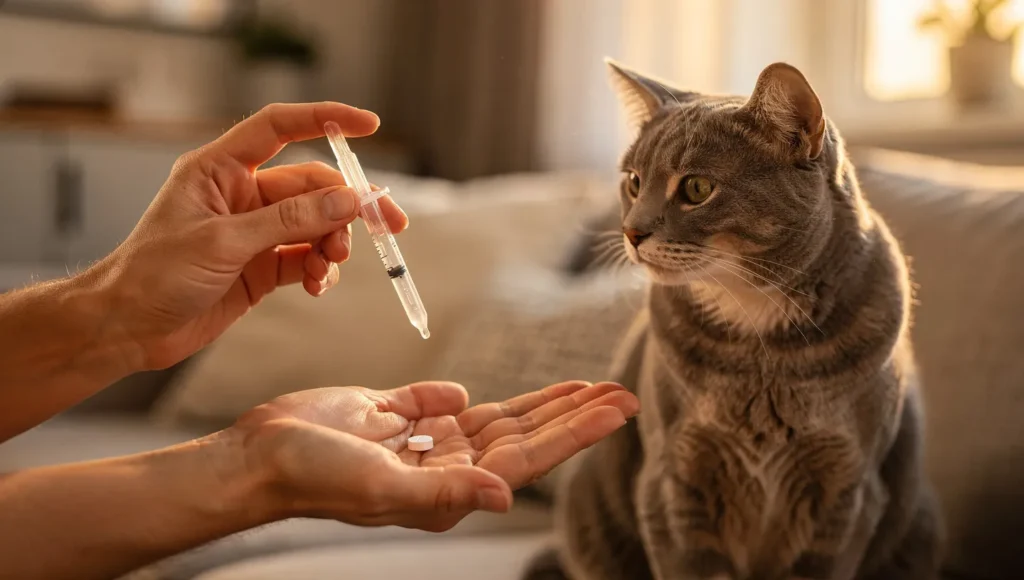
I’ve seen owners obsess over finding the “perfect” product while their cat suffers through weeks of flea exposure. Here’s the truth: the best flea prevention for cats is the one you’ll apply every single month, on schedule, without fail.
A good product used consistently beats a “perfect” product used sporadically.
If you start with one type and it doesn’t work—your cat reacts poorly, you can’t apply it easily, or fleas persist—don’t give up. Switch strategies. Talk to your vet. Try a different format.
But don’t stop protecting your cat while you search for the mythical “perfect solution.”
Now that you know how to choose, let’s break down exactly what each type of flea prevention does and how it works.
💊 Types of Flea Prevention for Cats: What Really Works
Now we’re getting to the practical part: what actually goes on or in your cat, and how does it stop fleas?
I’m going to break down the three main categories of flea prevention for cats—topical, oral, and natural—with brutal honesty about what works, what doesn’t, and what you need to watch out for.
No fluff. No brand promotions. Just the science and real-world application.
🩹 Topical Flea Prevention (Spot-On Treatments)
Topical flea prevention is what most people picture when they think of flea control: a small tube of liquid applied to the back of your cat’s neck.
How They Work:
You apply the product directly to your cat’s skin, usually between the shoulder blades where they can’t lick it off. The active ingredients spread through the skin’s oil layer across the entire body over 24-48 hours.
When fleas bite your cat, they ingest the medication and die. Some topicals also disrupt the flea life cycle by preventing eggs from hatching or larvae from developing.
Common Active Ingredients:
- Fipronil: Kills adult fleas and ticks by disrupting their nervous system
- Selamectin: Kills fleas, prevents heartworm, treats ear mites and some intestinal parasites
- Imidacloprid: Kills adult fleas within 12 hours of application
- Pyriproxyfen: Insect growth regulator that prevents flea eggs and larvae from developing
Application Guide (The Right Way):
Getting this wrong reduces effectiveness significantly. Here’s the proper technique:
- Part the fur at the base of the skull, between the shoulder blades
- Apply directly to skin, not on top of fur
- Use the entire tube—partial application = partial protection
- Don’t bathe your cat 48 hours before or after application
- Separate cats for 24 hours if you have multiple cats (prevents them from grooming the application site)
- Wash your hands immediately after application
Duration: Most topical treatments last 30 days. Mark your calendar and reapply on schedule.
Pros & Cons of Topical Flea Prevention
| Pros ✅ | Cons ❌ |
|---|---|
| No pilling required (easier for pill-resistant cats) | Can cause skin irritation at application site in some cats |
| Fast-acting (many start killing fleas within 12-24 hours) | Requires separation of multi-cat households for 24 hours |
| Some formulas include tick, heartworm, and parasite protection | Greasy residue can be visible for 24-48 hours |
| Once monthly application | Not water-resistant for first 48 hours (no baths/swimming) |
| Broad coverage across body | Some cats have adverse reactions to carrier oils |
| Available OTC or prescription depending on strength | Can be licked off if not applied correctly |
Real-World Performance:
In my experience, topical treatments work exceptionally well for most cats—when applied correctly. The biggest failures I see aren’t product failures; they’re application errors.
I’ve treated cats whose owners applied the liquid on top of thick fur instead of parting to reach skin. Result? No protection. The medication never absorbed.
Safety Notes:
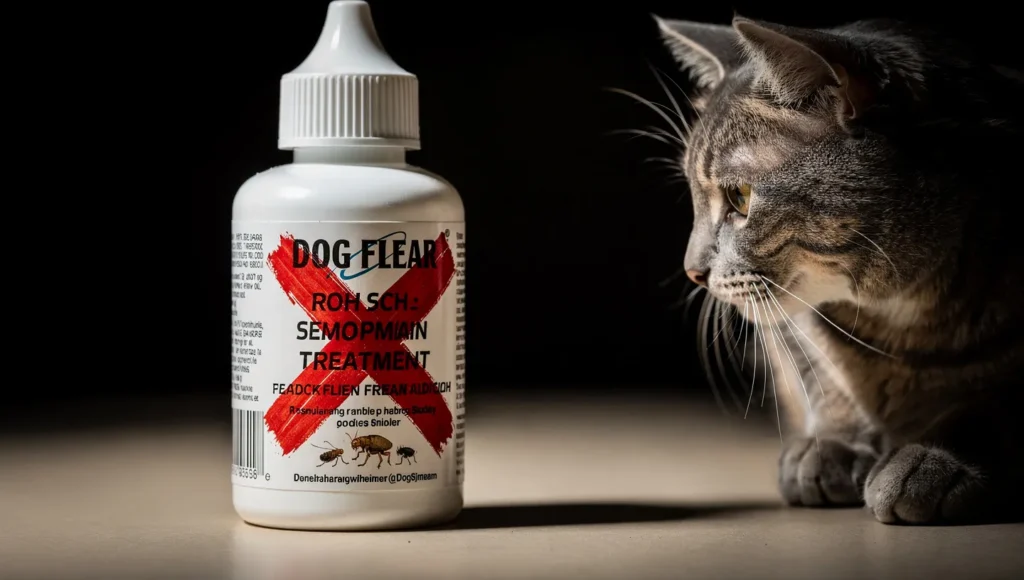
- Never use dog flea products on cats. Dog topicals often contain permethrin, which is highly toxic to cats and can cause seizures and death. Never apply dog products even in small doses—there is no “safe amount” of permethrin for a cat.
- If your cat shows signs of irritation (excessive scratching, redness, hair loss at application site), discontinue use and contact your vet.
- Keep cats indoors for 24 hours after application to prevent rain/water exposure.
💊 Oral Flea Prevention (Pills & Chewables)
Oral flea prevention has become increasingly popular over the past decade. Instead of applying something to your cat’s skin, you give them a pill or chewable tablet.
How They Work:
Your cat ingests the medication, which enters their bloodstream. When fleas bite and feed on your cat’s blood, they ingest the active ingredient and die.
The beauty of oral prevention? Fleas don’t need to lay eggs first—they die before reproduction.
Common Active Ingredients:
- Nitenpyram: Ultra-fast acting (starts killing fleas within 30 minutes), but only lasts 24 hours—used for rapid knockdown during infestations
- Spinosad: Starts killing fleas within 30 minutes, lasts 30 days
- Lufenuron: Insect growth regulator—doesn’t kill adult fleas but prevents eggs from hatching (often combined with other ingredients)
Administration Tips:
Let’s be honest: most cats aren’t enthusiastic about taking pills. Here’s what works:
The “Hide It in Food” Method:
- Crush the pill (if allowed—check label first)
- Mix with a small amount of wet food or treat
- Ensure they eat the entire portion
- Pro tip: Use something smelly like tuna or salmon to mask any bitter taste
The Direct Method:
- Hold cat gently but firmly (wrap in towel if needed)
- Tilt head back slightly
- Open mouth and place pill as far back on tongue as possible
- Close mouth and stroke throat to encourage swallowing
- Follow with water or wet treat to ensure pill goes down
The Pill Pocket Method:
- Use commercial pill pockets or soft cheese/butter
- Wrap pill completely
- Offer as a “special treat”
Duration: Most oral flea prevention lasts 30 days. Some rapid-acting options only last 24 hours and are meant for emergency situations.
Pros & Cons of Oral Flea Prevention
| Pros ✅ | Cons ❌ |
|---|---|
| No residue or separation needed in multi-cat homes | Requires successful pilling (stressful for some cats) |
| Water-resistant immediately (safe to bathe/swim) | May cause vomiting if given on empty stomach |
| Can’t be groomed off by cat or other pets | Some cats refuse to eat hidden pills |
| Some formulas start working within 30 minutes | Typically only kills adult fleas (not eggs/larvae) |
| No skin irritation concerns | Need to monitor for gastrointestinal upset |
| Ideal for cats with skin sensitivities | May not be suitable for cats with liver/kidney issues |
Real-World Performance:
Oral flea prevention works incredibly well for cats who tolerate pilling. I’ve seen dramatic results—owners report seeing dead fleas within hours of the first dose.
The challenge? Getting it into the cat consistently every month.
I had one client whose cat, Mr. Whiskers, could detect a crushed pill in any food, no matter how well hidden. We switched to topical, and the problem was solved. Know your cat’s personality and choose accordingly.
Safety Notes:
- Give with food to reduce risk of vomiting
- Monitor for signs of allergic reaction (facial swelling, difficulty breathing, hives)
- If your cat vomits within 2 hours of taking the pill, contact your vet—you may need to re-dose
- Not all oral flea medications are safe for kittens under 8 weeks or under minimum weight
🌿 Natural Flea Prevention (What Works & What Doesn’t)
This is where I need to be blunt: natural flea prevention is the most misunderstood and overhyped category in pet care.
I’m not anti-natural remedies. I’m anti-suffering. And I’ve seen too many cats suffer through severe flea infestations because their owners relied on methods that simply don’t work.
What “Natural” Usually Means:
- Essential oils (lavender, cedarwood, peppermint)
- Diatomaceous earth
- Apple cider vinegar
- Herbal collars
- Brewer’s yeast supplements
- Garlic (please don’t—it’s toxic to cats)
The Uncomfortable Truth:
Natural flea prevention might repel some fleas temporarily, but it will not eliminate or prevent a flea infestation. Period.
Here’s why:
Essential Oils: Many are toxic to cats, even in small amounts. Cats lack the liver enzymes to metabolize certain compounds. I’ve treated cats with essential oil poisoning—it’s not pretty. Symptoms include drooling, vomiting, tremors, and difficulty breathing.
Diatomaceous Earth: Food-grade DE can kill fleas mechanically (by damaging their exoskeleton), but it must be applied to environments (carpets, bedding), not directly on cats. It’s a supplementary tool, not a prevention method. Plus, inhaling DE dust can irritate lungs in both cats and humans.
Apple Cider Vinegar: Some people spray diluted ACV on their cat’s coat. Does it repel fleas? Maybe slightly. Does it prevent infestations? Absolutely not. And some cats hate the smell and will avoid you.
Herbal Collars: Cute idea, zero efficacy. I’ve never seen an herbal collar stop a flea infestation.
Brewer’s Yeast/Garlic Supplements: The theory is that these make your cat’s blood taste bad to fleas. The reality? There’s no scientific evidence this works. And garlic is toxic to cats in higher doses.
What Actually Has Some Evidence
I’m not completely dismissing natural approaches—but let’s be realistic about what they can and can’t do:
Cedarwood Oil (Diluted Properly):
- Some evidence it repels fleas
- Must be heavily diluted (1-2 drops per ounce of carrier oil)
- Never apply undiluted essential oils to cats
- Use only under vet guidance
Neem Oil:
- Contains azadirachtin, which disrupts insect reproduction
- Can be used in very diluted form as a spray for bedding/environment
- Not for direct application to cats without vet approval
Environmental Control:
- Frequent vacuuming (daily during infestations).
- Washing bedding in hot water weekly (this also helps if you’re trying to manage cat dander and allergies at home).
- Steam cleaning carpets and furniture.
- This is effective but must be combined with actual flea prevention on your cat.
The Harsh Reality
If your cat has fleas, natural remedies alone will not solve the problem. You need proven, vet-approved flea prevention for cats.
Natural methods can supplement a prevention plan—keep your home clean, wash bedding frequently, use environmental sprays—but they cannot replace FDA-approved flea medications.
I’ve had clients come in with cats who’d been scratching for months because they refused to use “chemicals.” By the time they sought help, their cats had flea allergy dermatitis, anemia, and secondary skin infections.
The Bottom Line on Natural Prevention:
- Not a standalone solution
- Some ingredients are dangerous to cats
- Can supplement (not replace) proven prevention
- Environmental control is helpful but insufficient alone

Which Type Should You Choose?
Here’s the decision tree I use:
Choose Topical If:
- Your cat is impossible to pill
- You have only one cat (or can separate them post-application)
- Your cat doesn’t swim or get frequent baths
- You want additional parasite protection (some topicals cover ticks, heartworm, etc.)
Choose Oral If:
- You have multiple cats who groom each other
- Your cat swims or gets bathed frequently
- You can successfully pill your cat
- Your cat has sensitive skin
- You need rapid flea knockdown (some start working in 30 minutes)
Choose Natural If:
- You’re supplementing proven prevention with environmental control
- You’re using it for bedding/carpet treatment (not on your cat)
- Your vet has specifically recommended a particular natural product
What I Use:
For my own cats, I use a combination approach: monthly oral flea prevention during peak flea season (April-November), plus weekly vacuuming and monthly washing of all bedding in hot water.
This gives me peace of mind without over-treating or under-protecting.
Your strategy should match your cat’s lifestyle, your local climate, and your ability to maintain consistency. That’s the formula that works.
⚠️ 5 Deadly Mistakes Cat Owners Make (And How to Avoid Them)
Avoid these common pitfalls that I’ve seen turn into emergencies in my 10+ years of practice:
- Using Dog Products: As emphasized, Permethrin is lethal. Never “math out” a dog dose for a cat; there is no safe margin here.
- The “Winter Break” Myth: Fleas thrive in heated homes during cold months. Skipping winter prevention is how massive spring infestations start.
- Treating Only One Pet: If you have multiple pets, you must treat all of them simultaneously. One untreated pet acts as a “flea reservoir” for your entire home.
- Inaccurate Weight Guessing: Dosing is weight-dependent. Using an old weight for a growing cat leads to under-dosing and treatment failure.
- Buying from Unverified Sources: Counterfeit flea meds are a rising issue. Stick to reputable clinics or authorized retailers to avoid toxic imitations.
🩺 When to Talk to a Vet (Red Flags)
Prevention is your job; diagnosis is the vet’s. Consult a professional immediately if you notice:
- Open Sores or Scabs: Signs of secondary bacterial skin infections that need antibiotics.
- Pale Gums or Lethargy: High risk of flea-induced anemia, especially critical in kitten care.
- Visible Tapeworms: If you see “rice grains” in stool, you need a prescription-strength dewormer.
- Neurological Signs: Tremors, stumbling, or seizures after applying a product (possible flea medication toxicity).
📦 Quick Summary: Your Flea Prevention Action Plan
- Step 1: Assess lifestyle (Strictly Indoor vs. Outdoor Explorer).
- Step 2: Choose your format (Oral for multi-cat homes, Topical for easy application).
- Step 3: Set a recurring monthly phone reminder—consistency is everything.
- Step 4: Vacuum high-traffic areas weekly to break the environmental life cycle.
❓ FAQs About Flea Prevention for Cats
Q: Can I use natural oils instead of vet-approved chemicals?
A: No. Natural oils lack the efficacy to stop an infestation and many are toxic to cats. Use them for the environment only, never as a primary repellent.
Q: How long does it take for fleas to die after treatment?
A: Most adulticides kill fleas within 12–24 hours, but clearing the eggs in your home can take up to 3 months.
Q: My cat is scratching but I don’t see fleas. Why?
A: It could be Flea Allergy Dermatitis (one bite is enough) or other skin issues. If scratching persists, a vet check is required.
💙 Conclusion: Your Cat’s Safety Starts with You
Flea prevention for cats isn’t about avoiding a minor nuisance; it’s about providing a stress-free, healthy life for your feline companion. By staying consistent and debunking the “indoor myth,” you’re ensuring that your home remains a safe haven. Your cat trusts you to make the right choice—don’t wait for the first itch to act.