
I noticed it on a Tuesday afternoon.
My cat Miso was scratching behind her ear — not the casual kind, but the kind that makes you stop and actually watch. I checked her coat and found nothing. No fleas, no dirt, nothing obvious.
Two weeks later? Full infestation. In my apartment. On my couch. In my carpet.
Flea prevention for cats is something many owners overlook — especially if they have indoor cats. And honestly, I get it. If your cat never goes outside, it feels unnecessary. But that’s exactly the thinking that cost me three weeks of deep cleaning and a very stressed cat.
If you’re wondering whether your cat really needs flea protection, or you just want a clear plan that actually works — you’re in the right place.
📌 This article is for informational purposes only and is not a substitute for professional veterinary advice.
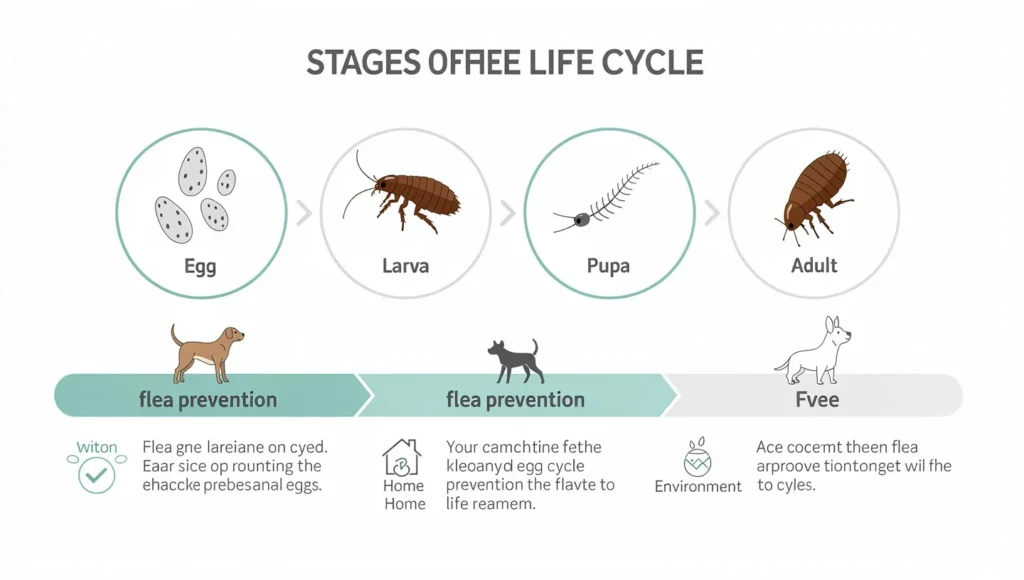
Table of Contents
- Why Flea Prevention Matters More Than You Think
- Flea Prevention for Cats — Do Indoor Cats Really Need It? 🐾
- How Fleas Spread (The Short Version)
- Best Flea Prevention for Cats — What Actually Works 💊
- Topical Treatments (Spot-On)
- Oral Medications
- Natural Methods — Reality Check 🌿
- 🔍 Quick Comparison
- How to Choose the Right Flea Prevention
- The Best Flea Prevention for Cats Based on Lifestyle
- Based on Age 🐱
- Based on Your Cat’s Behavior
- 5 Common Flea Prevention Mistakes to Avoid ⚠️
- When to See a Vet 🏥
- Quick Flea Prevention Plan — 4 Simple Steps
- Your Questions About Flea Prevention, Answered
- Do indoor cats really need flea prevention?
- How fast do flea treatments work?
- Are natural remedies enough to prevent fleas?
- Why is my cat scratching but I don’t see any fleas?
- Can the food I give my cat affect how well they handle flea-related stress?
- Final Thoughts
Why Flea Prevention Matters More Than You Think
Most people think fleas are just annoying. The reality is a little more serious than that. Based on information from sources like the
ASPCA,
a single flea can bite your cat hundreds of times a day. For a small or young cat, that adds up fast.
Here’s what fleas can actually cause:
- Constant itching and skin irritation — leading to open sores from scratching
- Flea allergy dermatitis (FAD) — one of the most common skin conditions in cats
- Anemia — especially dangerous in kittens
- Tapeworm infection — cats can swallow fleas while grooming
- Stress and behavioral changes — a cat that can’t stop itching is not a happy cat
The good news? Prevention is genuinely easier — and cheaper — than treatment.
Once fleas are in your home, you’re not just treating your cat.
You’re treating your furniture, your floors, your bedding, and potentially every corner
of every room.
Prevention takes minutes. Dealing with an infestation takes weeks.
Flea Prevention for Cats — Do Indoor Cats Really Need It? 🐾
This is the question I hear most often — and the answer surprises a lot of people.
When it comes to flea prevention for cats, indoor cats are often the most overlooked.
Yes. Even indoor cats need flea prevention.
Here’s why the “my cat never goes outside” logic doesn’t fully hold up:
- You go outside. Flea eggs and larvae can hitch a ride on your shoes, socks, or pants without you ever noticing.
- Visitors bring them in. A guest who has a dog or outdoor cat can unknowingly carry fleas into your home.
- Windows and doors aren’t sealed perfectly. Fleas can jump through window screens or gaps in doors.
- Other pets in the building. If you live in an apartment, fleas from a neighbor’s pet can travel through shared hallways.
From what I’ve seen, the cats that get hit hardest are often the ones whose owners thought they were completely safe.
Even the most pampered indoor cat isn’t 100% protected.
The risk might be lower — but it’s never zero.
Cat flea prevention isn’t just for outdoor cats — it matters for every cat.
💡 From what I’ve observed: owners who skip prevention for indoor cats are usually the ones who end up dealing with the worst infestations — because they catch it late.
How Fleas Spread (The Short Version)
You don’t need a biology degree to understand this. But knowing the basics helps you see why prevention has to be consistent.
Here’s a simple breakdown of how fleas spread:
| Stage | Where It Happens | Time |
|---|---|---|
| Egg | Dropped in carpet, bedding, furniture | 1–10 days |
| Larva | Hides in dark, warm areas | 5–20 days |
| Pupa | Cocoon stage — hard to kill | Up to 6 months |
| Adult | Jumps onto your cat | Immediately |
The tricky part? Only about 5% of a flea infestation is on your cat.
The other 95% is in your home — in the carpet, in the couch, in places you can’t easily reach.
That’s why waiting until you see fleas is already too late.
Best Flea Prevention for Cats — What Actually Works 💊
Choosing the right flea prevention for cats can feel overwhelming.
But not all of them work the same way — and what works for one cat might not be the right fit for another.
Based on what I’ve researched and what many cat owners report, here’s an honest breakdown of the main options.
Topical Treatments (Spot-On)
This is the most commonly used method — and for good reason.
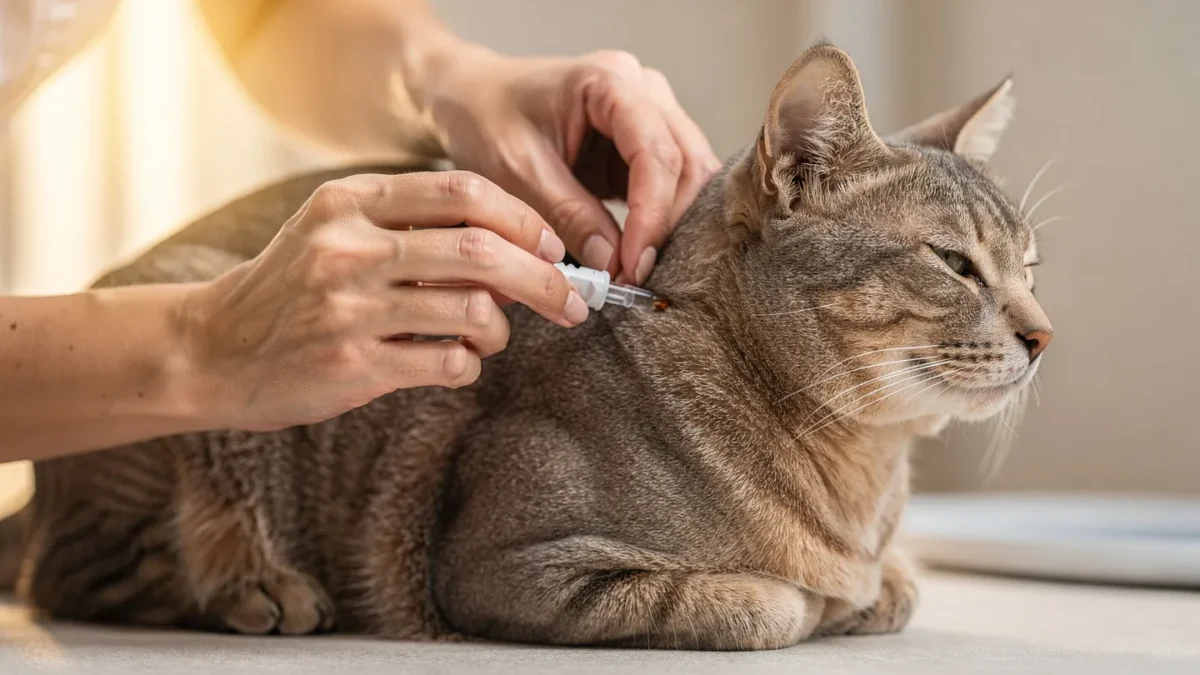
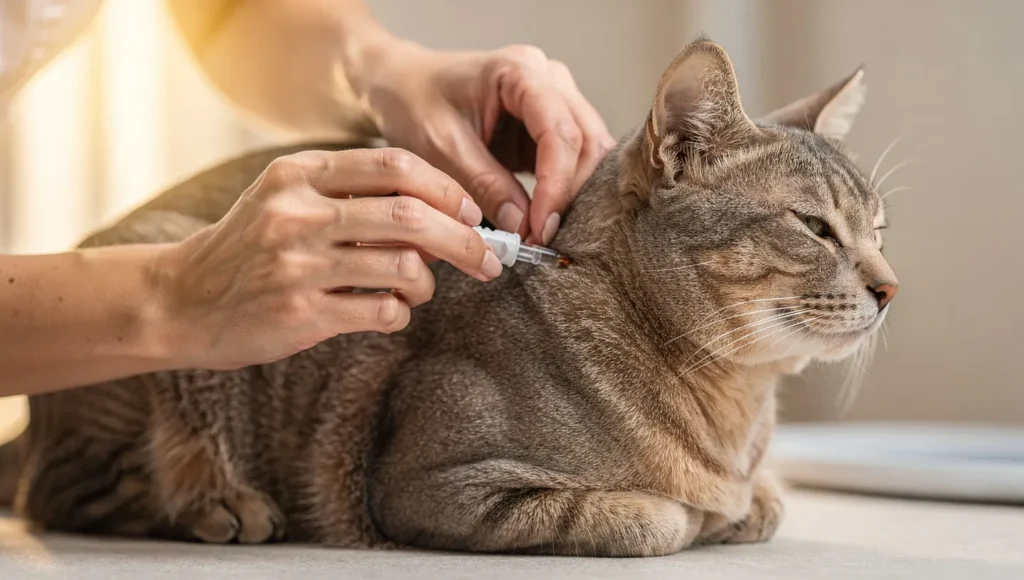
You apply a small amount of liquid directly to the skin, usually at the back of the neck where your cat can’t lick it off. It absorbs into the skin and works for about 30 days.
How it works:
Spreads through the skin’s natural oils and kills fleas on contact — before they can bite.
Best for:
- Cats who resist pills
- Multi-cat households
- Owners who want a simple monthly routine
Things to keep in mind:
- Must be applied exactly as directed
- Some cats with sensitive skin may react
- Never use dog flea products on cats — this is genuinely dangerous
Oral Medications
Some cats absolutely refuse to sit still for spot-on treatment.
For those cats, oral options can be a practical alternative.
Oral flea medications work from the inside out — they enter the bloodstream and kill fleas when they bite.
How it works:
Fleas ingest the medication when they feed and die quickly — usually within hours.
Best for:
- Cats who tolerate pill pockets or soft treats
- Households where topical residue is a concern
(young children, sensitive family members) - Faster knockdown when dealing with an active infestation
Things to keep in mind:
- Requires a vet prescription in most cases
- Not all oral options are safe for kittens under a certain age
- Always confirm with your vet before starting
Natural Methods — Reality Check 🌿
I want to be honest here, because there’s a lot of misinformation online.
Things like essential oils, apple cider vinegar, and diatomaceous earth
are frequently recommended as natural flea solutions.
From what I’ve researched, the picture is more complicated:
- Diatomaceous earth (food-grade) may help reduce fleas in the environment,
but it’s not effective as a standalone treatment on your cat - Essential oils — many are actually toxic to cats, including tea tree,
eucalyptus, and lavender in high concentrations - Apple cider vinegar — no solid evidence it repels or kills fleas
Natural methods might work as a complement — but they are not enough on their own. — but according to sources like
AVMA,
they are not a reliable substitute for proven treatments.
💡 My honest take: I tried a “natural” approach once before switching
to a proper spot-on treatment. The fleas didn’t care about the lavender spray.
🔍 Quick Comparison
Here’s a quick comparison to help you choose the best flea prevention for your cat:
| Method | Effectiveness | Ease of Use | Best For |
|---|---|---|---|
| Spot-On (Topical) | ⭐⭐⭐⭐⭐ | Easy | Most cats |
| Oral Medication | ⭐⭐⭐⭐⭐ | Medium | Pill-tolerant cats |
| Natural Methods | ⭐⭐ | Easy | Supplement only |
How to Choose the Right Flea Prevention
Knowing your options is one thing.
Choosing the right one for your specific cat is where it gets practical.
Here’s how I break it down:
The Best Flea Prevention for Cats Based on Lifestyle
Indoor-only cats:
- Risk is lower but not zero
- A monthly spot-on or a vet-recommended oral option is usually enough
- Focus on consistency — skipping months is where problems start
Indoor/outdoor or strictly outdoor cats:
- Higher exposure = higher priority
- Monthly treatment is non-negotiable
- Consider treating your home environment as well
(sprays, vacuuming, washing bedding regularly)
Based on Age 🐱
| Age Group | What to Look For |
|---|---|
| Kittens (under 8 weeks) | Most products are NOT safe — ask your vet |
| Kittens (8–12 weeks) | Only kitten-specific formulas |
| Adult cats | Full range of options available |
| Senior cats | Check for kidney/liver considerations with your vet |
Based on Your Cat’s Behavior
- Hates pills? → Spot-on is your easiest path
- Hates being touched on the neck? → Oral medication or a flea collar
designed for sensitive cats - Multi-cat household? → Treat all cats at the same time —
treating one and not the others doesn’t work - Sensitive skin? → Look for fragrance-free, gentle formulas
and monitor for any reaction after the first application
💡 Expert Tip
From what I’ve seen, the biggest mistake isn’t choosing the wrong product — it’s being inconsistent.
Flea prevention only works when it’s done every single month, year-round. One skipped month is enough for fleas to get a foothold — especially during warmer seasons.
Pick the method your cat tolerates best, set a monthly reminder, and stick to it. That’s honestly 80% of the battle.
5 Common Flea Prevention Mistakes to Avoid ⚠️
Even owners who want to do the right thing sometimes make these errors.
I’ve made a few of them myself.
- Using dog flea products on your cat
This is the most dangerous mistake on the list.
Many dog treatments contain permethrin — which is highly toxic to cats.
Always check the label. If it says “for dogs only,” keep it away from your cat completely. For more on household dangers, this guide on human foods and toxins that affect cats is worth reading too. - Skipping months because “it’s winter”
Fleas can survive indoors year-round, especially in heated homes. There’s no safe season to skip prevention. - Treating only one pet in a multi-pet household
If you have two cats and only treat one, the untreated cat becomes a flea hotel — and the problem comes right back. Treat every pet in the house at the same time. - Using the wrong dosage based on weight
Flea products are dosed by weight. Using a product made for a larger cat on a small or young cat — or vice versa — can either be ineffective or cause a reaction. Always check the weight range on the packaging. - Waiting until you see fleas to start prevention
By the time you spot a flea on your cat, there are likely hundreds more in your home environment. Prevention works best when it’s consistent — not reactive.
When to See a Vet 🏥
Most flea situations can be managed at home with the right products.
But there are moments when it’s best to get professional eyes on the situation.
Watch for these signs:
- Excessive scratching that leads to open sores or bald patches
- Lethargy or unusual tiredness — especially in kittens
- Pale gums — a potential sign of anemia from heavy flea feeding
- Small rice-like segments near the tail — possible sign of tapeworms
- Skin that looks red, inflamed, or infected
- A reaction after applying a flea treatment — drooling, trembling,
or loss of coordination means get to a vet immediately
If you notice any of these alongside other behavioral changes,
this guide on how to tell if your cat is sick can help you figure out what warrants a vet visit versus
what you can monitor at home.
When in doubt, it’s always better to check with a vet — especially with kittens, seniors, or cats with existing health conditions.
Quick Flea Prevention Plan — 4 Simple Steps
If you want to skip the research and just do something today, here’s the simplest version of an effective flea prevention routine:
Step 1: Choose the right treatment
Pick a product appropriate for your cat’s age, weight, and lifestyle. When unsure, ask your vet for a recommendation.
Step 2: Apply monthly — without skipping
Set a calendar reminder. The same date every month. Consistency is what makes prevention actually work.
Step 3: Clean your home regularly
Vacuum carpets, wash your cat’s bedding weekly, and pay attention to furniture where your cat sleeps.
This eliminates eggs and larvae before they develop.
Step 4: Monitor your cat
Do a quick check during grooming sessions — look for “flea dirt” (tiny black specks) at the base of the tail or around the neck. Catching early signs makes everything easier.
A healthy, well-hydrated cat also tends to recover faster from any skin irritation — so keeping up with your cat’s overall wellness matters too. This complete cat hydration guide is a good place to start if you want to cover that base.
Your Questions About Flea Prevention, Answered
Do indoor cats really need flea prevention?
Yes — fleas can enter your home on shoes, clothing, or through windows. Even indoor cats are at risk, so consistent prevention is recommended
How fast do flea treatments work?
Most topical and oral treatments start killing fleas within 12 to 24 hours. Some fast-acting oral options work within 30 minutes, but these are typically short-term solutions rather than monthly prevention.
Are natural remedies enough to prevent fleas?
Based on what I’ve researched, natural methods alone are generally not reliable enough as a primary prevention strategy.
They may help as a complement — but shouldn’t replace proven treatments, especially for cats with regular exposure risk.
Why is my cat scratching but I don’t see any fleas?
Fleas are fast and hard to spot. Your cat may also be reacting to
flea allergy dermatitis — where even a single bite causes significant itching long after the flea is gone.
Check for flea dirt (small black specks) in the coat, and consider a vet visit if the scratching is persistent.
Can the food I give my cat affect how well they handle flea-related stress?
Nutrition plays a role in your cat’s overall skin and immune health.
A well-balanced diet supports faster recovery from skin irritation. If you’re reviewing your cat’s diet, this comparison of wet vs dry cat food covers the key differences worth knowing.
Final Thoughts
Flea prevention isn’t complicated — but it does require consistency.
From my own experience, the cats that stay flea-free aren’t necessarily the ones with the most expensive treatments. They’re the ones whose owners just… don’t skip months.
Pick a method that works for your cat’s personality and your routine.
Set that reminder. Check in regularly during grooming. And don’t wait for a problem to show up before you take action.
Your cat can’t tell you when something’s wrong — but a good prevention habit means they may never have to.
This article is for informational purposes only and does not replace professional veterinary advice. If you have concerns about your cat’s health, please consult a licensed veterinarian.