
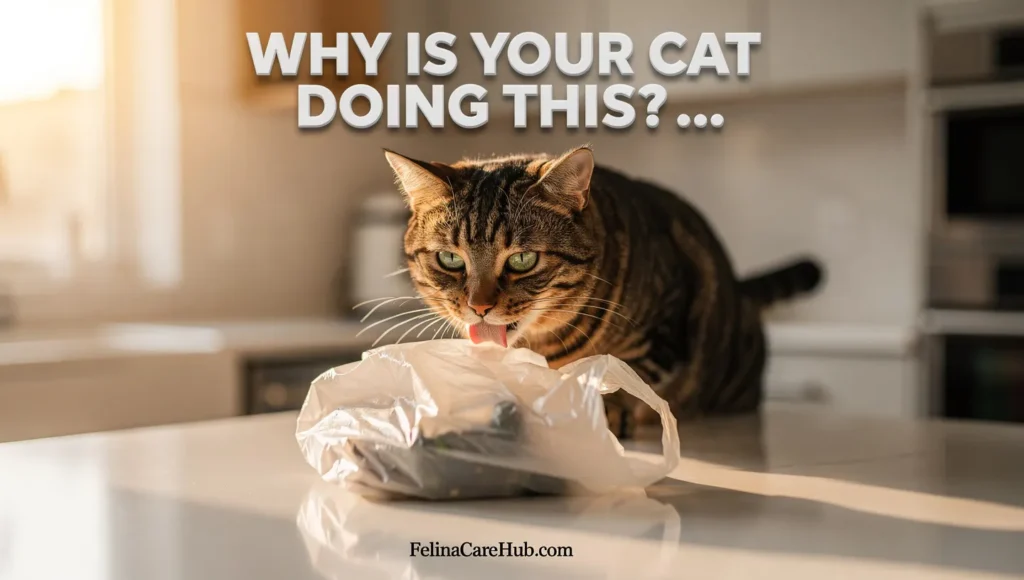
You’re unpacking groceries when you hear it—that unmistakable sound of your cat frantically licking a plastic bag like it’s the best thing they’ve ever tasted.
You pull the bag away, and within seconds, they’re back at it. Licking. Chewing. Sometimes even trying to eat it.
If you’ve ever wondered “why do cats lick plastic?”—you’re not alone. This bizarre behavior is more common than you think, and while it might seem harmless, it can actually signal underlying issues that need your attention.
In this guide, I’ll walk you through the real reasons cats are obsessed with plastic, when it becomes dangerous, and exactly how to stop it before it leads to a vet emergency.
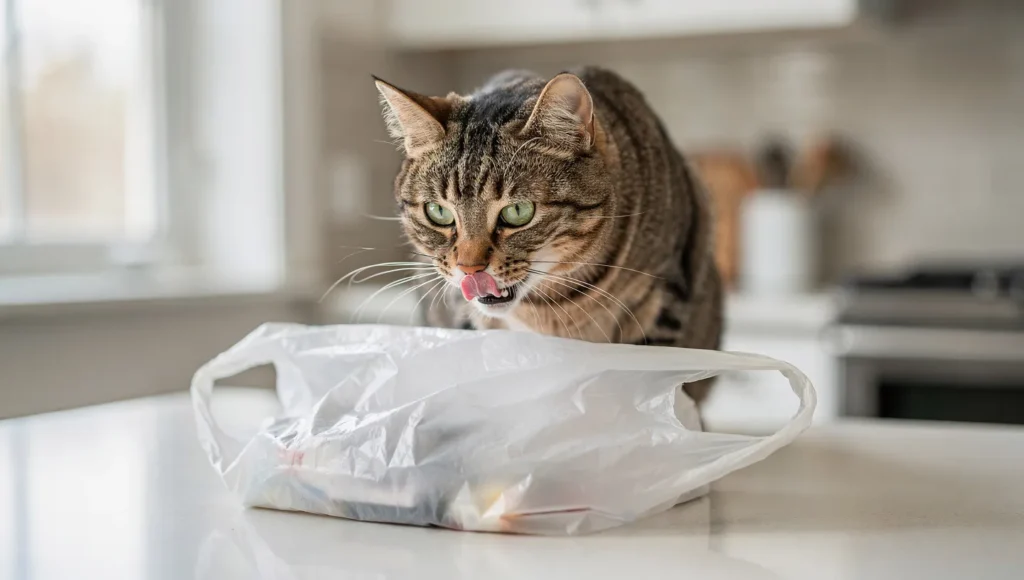
Table of Contents
- Quick Answer
- 🧠 Why Do Cats Lick Plastic Bags? The Science Behind the Behavior
- The Role of Pica in Cats
- Texture Attraction: Why Plastic Feels Good
- 🎒 Why Do Cats Like to Lick Plastic Bags Specifically?
- Chemical Coating & Animal-Based Additives
- Smell Memory: Groceries & Food Association
- 🍽️ Why Does My Cat Lick Plastic When Hungry?
- 🤮 Cat Licking Plastic Bags and Throwing Up: Is It Dangerous?
- 🧬 Why Do Cats Lick and Chew Plastic? (Beyond Just Licking)
- Teething in Kittens
- Anxiety & Stress-Related Chewing
- Dental Issues in Adult Cats
- 🛑 How to Stop Cat From Licking Plastic: 5 Proven Strategies
- Environmental Enrichment Solutions
- Diet Adjustments That Actually Work
- ❓ Is It Safe for My Cat to Lick Plastic Bags?
- 🩺 When Should You Call the Vet?
- ❓ Frequently Asked Questions
- Why does my cat lick plastic but not eat it?
- Is plastic licking always a sign of pica?
- Can plastic make cats sick?
- 🧩 Final Thoughts: Understanding Your Cat’s Plastic Obsession
Quick Answer
Cats lick plastic because of sensory attraction, food residue smells, animal-based additives, boredom, anxiety, or a condition called pica. While occasional licking may not be dangerous, chewing or swallowing plastic can lead to serious health risks.
🧠 Why Do Cats Lick Plastic Bags? The Science Behind the Behavior
At first glance, plastic licking seems random. But there’s actually a method to the madness.
Cats don’t lick plastic just for fun. In most cases, it’s driven by sensory attraction, nutritional gaps, or compulsive behavior patterns.
Let’s break down the science.
The Role of Pica in Cats
Pica is a condition where cats eat or lick non-food items—plastic, fabric, cardboard, you name it.
It’s not just a quirk. It’s a behavioral or medical issue.
In my experience working with cats who exhibit pica, I’ve noticed it often starts innocently. A kitten licks a bag once out of curiosity, gets a rewarding sensory hit, and boom—habit formed.
Sometimes pica is linked to:
- Early weaning (kittens separated from their mothers too soon)
- Nutritional deficiencies (especially lack of fiber)
- Underlying anxiety or stress
If your cat is obsessively licking plastic multiple times a day, pica could be the culprit. And it’s not something to ignore—it can lead to choking, intestinal blockages, or toxicity.
Texture Attraction: Why Plastic Feels Good
Here’s something most cat owners don’t realize: plastic bags have a texture that mimics certain natural surfaces cats find irresistible.
The smooth, slightly waxy feel combined with the crinkling sound creates a sensory experience that some cats crave.
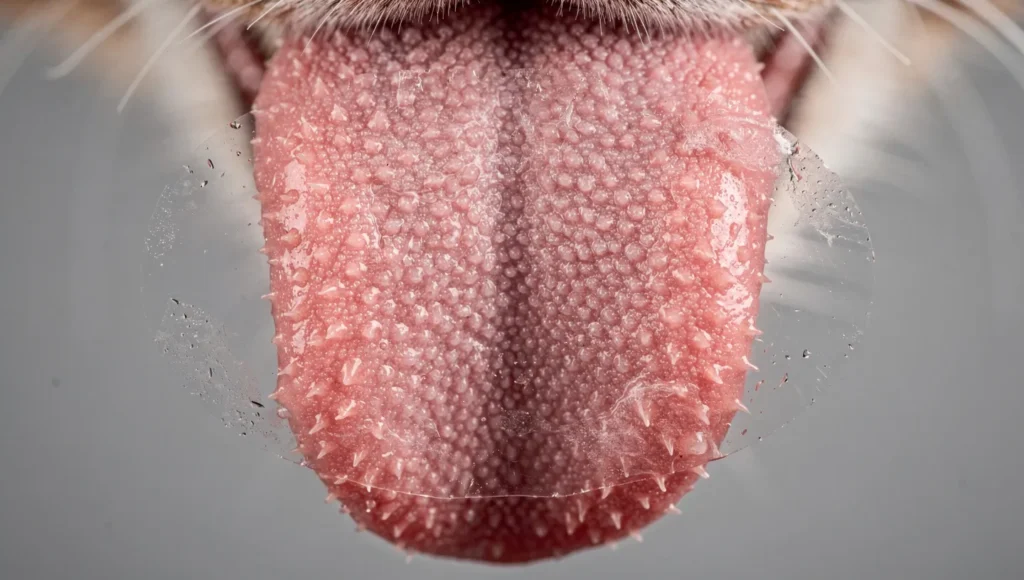
Think about it. Cats have highly sensitive tongues covered in tiny barbs called papillae. When they lick plastic, those barbs catch on the surface, creating a satisfying tactile feedback loop.
Add in the rustling noise—which can sound like prey moving through grass—and you’ve got a perfect storm of sensory stimulation.
One mistake I often see is owners assuming their cat is just “being weird.” But in reality, your cat might be seeking enrichment they’re not getting elsewhere.
🎒 Why Do Cats Like to Lick Plastic Bags Specifically?
Not all plastic is created equal in your cat’s mind. Grocery bags, in particular, seem to have a magnetic pull.
Why?
Because they’re coated in things your cat finds delicious—even if you can’t smell them.
Chemical Coating & Animal-Based Additives
Here’s the kicker: many plastic bags contain animal-based additives called stearates.
These are derived from animal fats and used to make plastic more pliable. To a cat’s incredibly sensitive nose, these bags smell faintly like food.
Some plastic bags also contain:
- Cornstarch (used as a biodegradable additive)
- Fish oils (in certain eco-friendly plastics)
- Gelatin-based coatings
Your cat isn’t crazy. They’re literally detecting trace amounts of animal products you can’t perceive.
I’ve worked with cats that only lick certain brands of grocery bags. When we switched to uncoated reusable bags, the behavior stopped completely.
Smell Memory: Groceries & Food Association
Even if the bag itself doesn’t contain animal products, it’s been in contact with food.
Raw chicken. Fresh fish. Cheese. Deli meats.
Cats have scent memories that rival bloodhounds. If a bag carried groceries, your cat can still smell it hours—even days—later.
In their mind, licking the bag is like licking a phantom meal. It’s a sensory echo of something delicious.
This is especially true for cats who are:
- Food-motivated (always begging for meals)
- On a restrictive diet (weight loss or prescription food)
- Free-fed and bored between meals
💡 Quick Expert Tip:
In my experience, cats who lick grocery bags excessively are often seeking sensory stimulation or dealing with nutritional gaps. If your cat is licking plastic daily, check their diet first. Are they getting enough fiber? Are they eating enough in general? Sometimes a simple diet tweak eliminates the behavior entirely.
🍽️ Why Does My Cat Lick Plastic When Hungry?
If your cat only licks plastic before meals or when their bowl is empty, hunger is likely the trigger.
Cats with nutritional deficiencies—especially lack of fiber—often seek out non-food items to compensate. Plastic bags, cardboard, and even houseplants become stand-ins for the roughage their diet is missing.
Signs it’s hunger-related:
- Licking intensifies before feeding times
- Stops immediately after eating
- Your cat is on a low-fiber or dry-food-only diet
What to do:
- Switch to a high-quality diet with added fiber
- Offer small, frequent meals instead of one or two large ones
- Add a fiber supplement (like canned pumpkin) with your vet’s approval
Boredom can mimic hunger. If your cat is licking plastic out of sheer lack of stimulation, increase interactive play sessions and environmental enrichment.
🤮 Cat Licking Plastic Bags and Throwing Up: Is It Dangerous?
Yes. This is where plastic licking crosses from quirky to dangerous.
When cats lick plastic excessively, they often ingest small pieces—either by accident or because they’re chewing, not just licking. Those pieces can cause serious problems.
Dangers include:
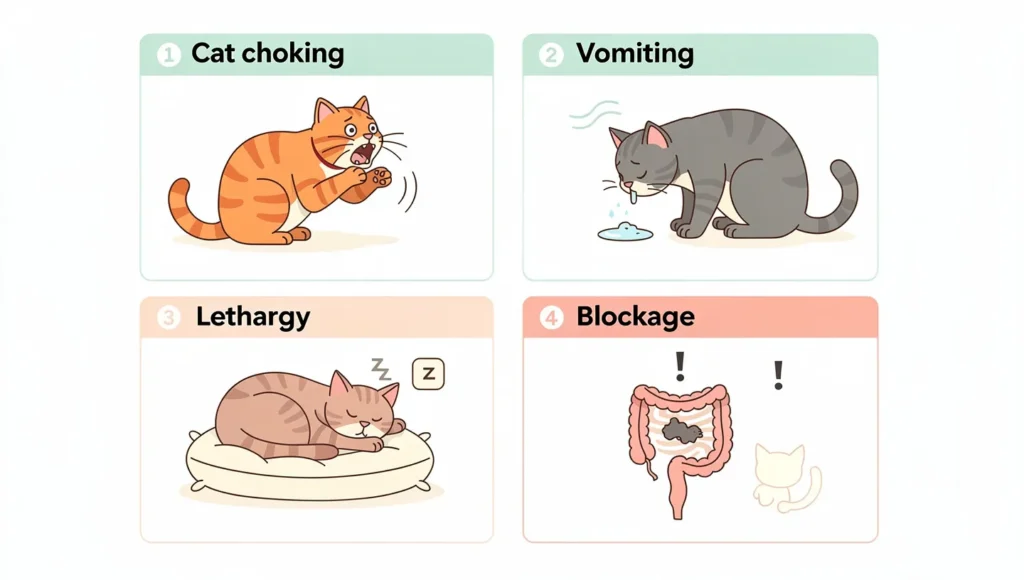
- Choking hazards – Plastic can block the airway
- Intestinal blockage – Swallowed plastic doesn’t digest and can cause life-threatening obstructions
- Toxic chemicals – Some plastics contain BPA, phthalates, or other harmful substances
- Vomiting & lethargy – Early signs of toxicity or blockage
If your cat vomits after licking plastic, don’t brush it off. Check the vomit for plastic fragments. If you see any—or if vomiting happens more than once in 24 hours—call your vet immediately.
According to the ASPCA Animal Poison Control, ingestion of plastic is one of the top non-food emergencies in cats.
🧬 Why Do Cats Lick and Chew Plastic? (Beyond Just Licking)
Licking is one thing. Chewing and eating plastic is another level entirely.
Teething in Kittens
Kittens between 3–6 months old go through a teething phase. Their gums are sore, and they’ll chew anything for relief—including plastic bags, cords, and toys.
Solution: Provide safe chew toys designed for teething kittens. Remove all plastic bags from reach during this phase.
Anxiety & Stress-Related Chewing
Adult cats who suddenly start chewing plastic may be dealing with anxiety. Recent changes—new home, new pet, schedule shifts—can trigger compulsive behaviors.
If your cat’s body language shows signs of stress (flattened ears, excessive grooming, hiding), address the root cause first.
Dental Issues in Adult Cats
Sometimes chewing plastic is your cat’s way of saying, “My mouth hurts.”
Gingivitis, tooth decay, or oral infections can cause discomfort that cats try to relieve by chewing. If your cat’s breath smells bad or they’re drooling while chewing plastic, schedule a dental checkup.
🛑 How to Stop Cat From Licking Plastic: 5 Proven Strategies
You can’t reason with a cat, but you can outsmart them.
| Strategy | Effectiveness | Best For |
|---|---|---|
| Remove plastic bags entirely | ⭐⭐⭐⭐⭐ | All cats |
| Provide alternative textures | ⭐⭐⭐⭐ | Sensory-seeking cats |
| Increase fiber in diet | ⭐⭐⭐⭐ | Nutritional deficiency |
| Interactive play sessions | ⭐⭐⭐⭐ | Bored cats |
| Bitter spray deterrents | ⭐⭐⭐ | Persistent lickers |
Environmental Enrichment Solutions
Give your cat something better to do. Boredom drives a lot of plastic-licking behavior.
Try:
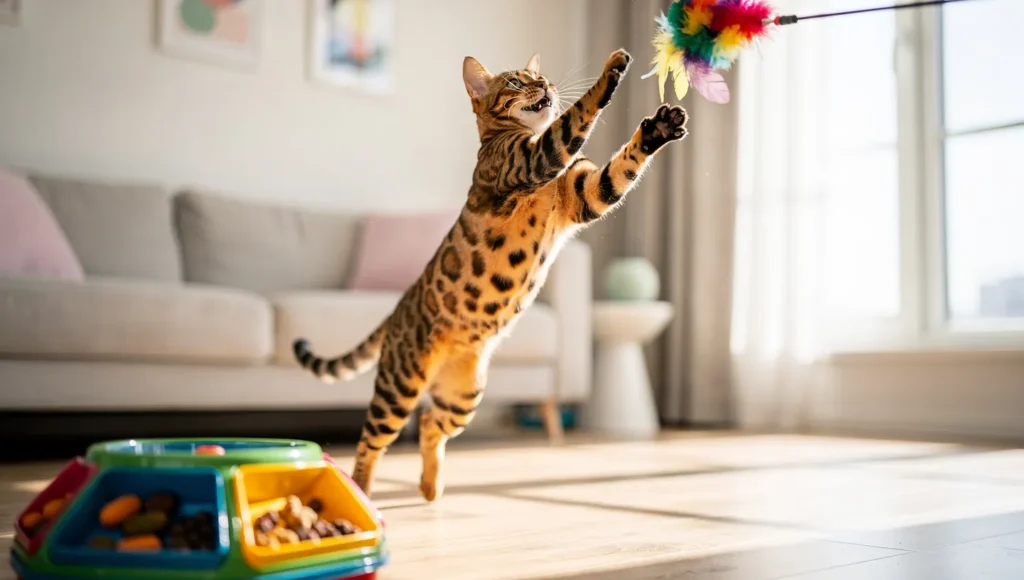
- Cat grass or catnip plants (safe, edible texture alternative)
- Puzzle feeders to slow down eating and engage their brain
- Daily play sessions with wand toys to mimic hunting
Diet Adjustments That Actually Work
Add more fiber. Seriously—it works.
Mix a teaspoon of plain canned pumpkin into wet food, or switch to a high-fiber cat food. I’ve seen this eliminate plastic licking in under a week for multiple cats.
❓ Is It Safe for My Cat to Lick Plastic Bags?
Short answer: No, not really.
Even if your cat isn’t swallowing plastic, the chemicals on the surface can still cause issues. Prolonged licking can lead to:
- Mild toxicity from BPA or phthalates
- Digestive upset
- Accidental ingestion over time
The safest approach:
- Remove all plastic bags from your cat’s environment
- Use reusable fabric or paper bags instead
- Store plastic bags in a closed cabinet or drawer
If you catch your cat licking plastic once or twice, don’t panic. Just remove the temptation and monitor for any unusual symptoms.
🩺 When Should You Call the Vet?
Trust your gut. If something feels off, it probably is.
Call your vet immediately if you notice:
- Excessive drooling after licking plastic
- Vomiting more than once in 24 hours
- Loss of appetite or lethargy
- Visible plastic pieces in vomit or stool
- Behavioral changes like hiding, aggression, or crying
These are signs of potential poisoning or intestinal blockage—both of which require urgent care. Don’t wait to “see if it gets better.” Cats are masters at hiding pain until it’s severe.
For more on recognizing serious health issues early, check out our guide on how to tell if your cat is sick.
❓ Frequently Asked Questions
Why does my cat lick plastic but not eat it?
Some cats are drawn to the texture and smell of plastic but don’t actually swallow it. However, repeated licking can still pose risks over time.
Is plastic licking always a sign of pica?
No. Occasional licking may be sensory-driven. Pica is typically diagnosed when a cat repeatedly eats non-food items.
Can plastic make cats sick?
Yes. Swallowing plastic can cause choking, intestinal blockage, or exposure to harmful chemicals.
🧩 Final Thoughts: Understanding Your Cat’s Plastic Obsession
If you’ve been asking yourself why do cats lick plastic, now you know the real reasons behind it.
Plastic licking isn’t just weird—it’s your cat’s way of telling you something.
Whether it’s boredom, hunger, anxiety, or a genuine medical issue like pica, the behavior deserves your attention. The good news? In most cases, it’s fixable with simple changes to diet, environment, and supervision.
Remove the plastic. Add enrichment. Watch for red flags. And if the behavior persists or escalates, loop in your vet.
Your cat didn’t come with a manual, but you’re doing the work to understand them—and that’s what great cat ownership looks like.