
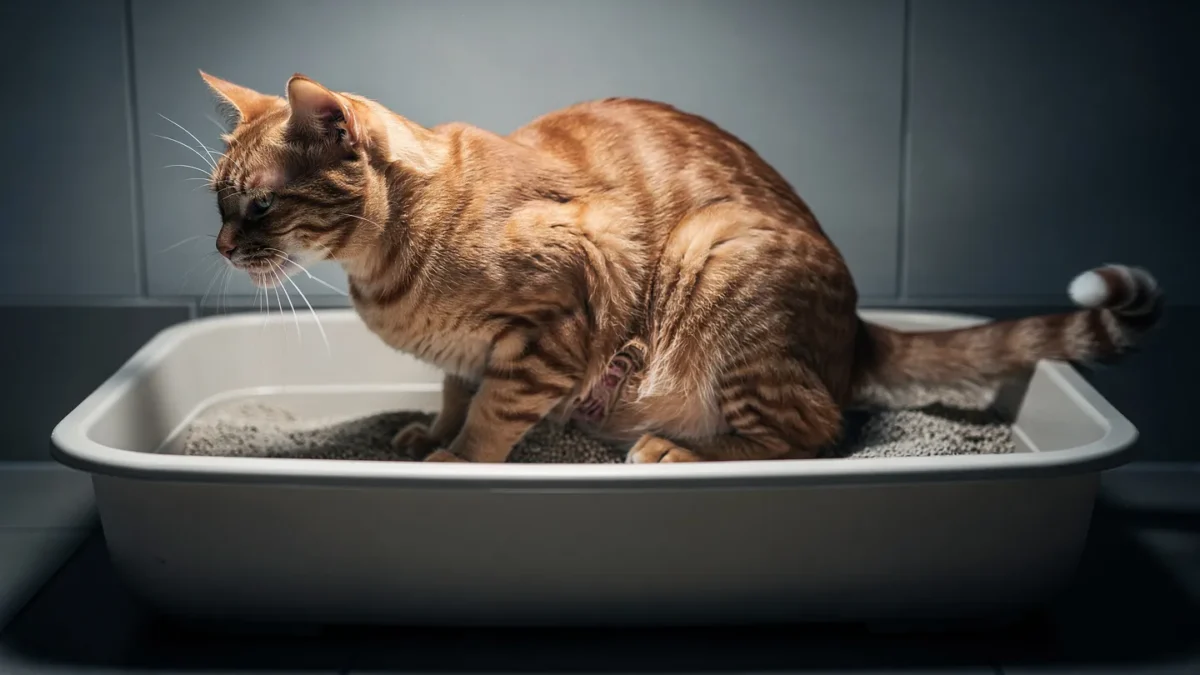
I almost missed the early signs of UTI in cats, and it nearly cost my cat Luna her health.
Luna — my ridiculously dramatic tabby — had been making extra trips to her litter box for about two days. In and out. In and out. I figured she was just being her usual weird self. Cats do strange things, right?
But then I noticed something that made my stomach drop.
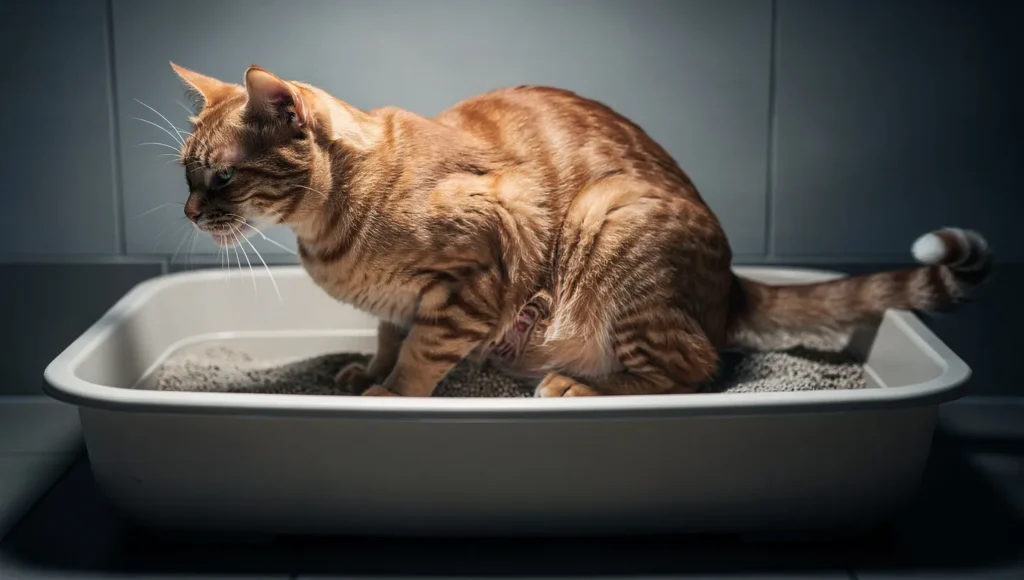
She was squatting in there for a solid minute… and almost nothing was coming out. Just a few drops. Sometimes nothing at all. And the look on her face — that uncomfortable, slightly panicked expression — told me something was very wrong.
I texted Dr. Ben at 7 a.m. (yes, 7 a.m. — the man is a saint, honestly). He’s a vet friend of mine who somehow always picks up, even when I’m in full panic mode over my cat’s bathroom habits. He told me to bring her in as soon as possible.
That morning changed the way I look at cat health forever.
Turns out, Luna had a urinary tract infection — a UTI. And according to Dr. Ben, I had caught it just in time. A little longer, and it could have become something much more serious.
If you’re reading this because your cat is acting strange around the litter box, you need to understand the critical signs of UTI in cats before they escalate into an emergency. I’m going to walk you through exactly what I learned—the hard way.
⚠️ Quick note before we dive in: This guide on the signs of UTI in cats is based on my personal experience with Luna and research from trusted veterinary sources. It’s meant for informational purposes only and is not a substitute for professional veterinary advice. If your cat is showing any of the signs below — especially straining with no output — please contact your vet right away.
Table of Contents
- What Is a Cat UTI — And Why It’s So Easy to Miss
- 7 Signs of UTI in Cats (From Obvious to Easy-to-Miss)
- 1. Frequent Trips to the Litter Box With Little or Nothing Coming Out
- 2. Crying or Straining While Urinating
- 3. Blood in the Urine
- 4. Licking “Down There” More Than Usual
- 5. Strong or Unusual Urine Odor
- 6. Urinating Outside the Litter Box
- 7. Lethargy and Loss of Appetite
- Male vs. Female Cats — Does It Make a Difference?
- The Severity Scale — Green, Yellow, or Red?
- What to Do in the Next 24 Hours
- Can You Prevent Cat UTIs? (What Dr. Ben Told Me)
- Common Concerns & Quick Fixes
- Will a cat UTI go away on its own?
- Can I check at home if my cat has a UTI?
- How do you fix a UTI in a cat?
- How long does a cat UTI last?
- One Last Thing
What Is a Cat UTI — And Why It’s So Easy to Miss
A cat UTI (urinary tract infection) happens when bacteria enter and irritate the bladder or urinary tract, causing inflammation, discomfort, and difficulty urinating.
Here’s the thing — the early signs are subtle. Most owners, myself included,
mistake them for quirky cat behavior. That’s exactly why UTIs in cats often go unnoticed until they become painful or dangerous.
According to the Cornell Feline Health Center, urinary issues in cats are grouped under a broader term called Feline Lower Urinary Tract Disease (FLUTD) — which includes UTIs, bladder stones, and blockages. You can read more about FLUTD here.
The tricky part? Cats are masters at hiding discomfort. By the time they’re visibly in pain, the infection has usually been brewing for a while.
This is where knowing the signs — really knowing them — makes all the difference.
7 Signs of UTI in Cats (From Obvious to Easy-to-Miss)
Most people get this wrong. They wait for their cat to “act sick” in an obvious way—vomiting, refusing food, or hiding. But the actual signs of UTI in cats are much sneakier than that. They show up in small, easy-to-dismiss behaviors long before they become a visible crisis.
Here’s what to actually look for:
1. Frequent Trips to the Litter Box With Little or Nothing Coming Out
This was Luna’s first sign — and the one I almost ignored.
If your cat is making trip after trip to the litter box but producing only a few drops (or nothing at all), that’s not quirky behavior. That’s a red flag.
The medical term is “pollakiuria” — frequent urination attempts with minimal output. It happens because the inflamed bladder keeps sending “I need to go” signals, even when there’s nothing left to pass.
Honestly, this single sign alone is enough reason to call your vet.
2. Crying or Straining While Urinating
Some cats are vocal. Luna occasionally chirps at birds through the window like she’s auditioning for a nature documentary. But crying in the litter box? That’s different.
If your cat is straining, hunching unusually low, or making any kind of vocalization while trying to urinate — that’s pain. Plain and simple.
This is where things get serious. Don’t wait to see if it passes.
3. Blood in the Urine
I know. Just reading that feels alarming. But blood in cat urine (hematuria) is actually one of the more common signs of a UTI — and while it looks scary, it doesn’t always mean the worst.
You might notice:
- Pink or reddish tint in the litter
- Small dark spots on light-colored litter
- Discoloration on surfaces outside the box
If you see any of these, don’t panic — but do call your vet that same day.
4. Licking “Down There” More Than Usual
Cats groom themselves constantly — we know this. But excessive licking of the genital area is often a cat’s way of trying to soothe urinary discomfort.
From my experience, this one flies under the radar the most. It just looks like normal grooming until you notice it’s happening way more than usual, and always after litter box visits.
Pay attention to patterns, not just individual behaviors. Excessive grooming is one of the most frequently overlooked signs of UTI in cats, especially in multi-cat households where it’s hard to monitor every single litter box visit.
5. Strong or Unusual Urine Odor
Cat urine already has a… let’s say “distinctive” smell. But a UTI can make it noticeably stronger or different — almost sharp and ammonia-heavy in a way that hits you before you even get close to the litter box.
Dr. Ben actually told me this is one of the clues owners most often overlook because they assume it’s just a “dirty litter box” issue. Clean the box, and if the smell persists? Worth investigating.
6. Urinating Outside the Litter Box
This one confuses a lot of people — and understandably so.
When a cat suddenly starts peeing on the floor, the bed, or the laundry pile, most owners assume it’s a behavioral problem. Spite. Attitude. Classic cat drama.
But here’s the thing — a cat with a UTI often associates the litter box with pain. So they start avoiding it, hoping a different spot will hurt less.
It’s not rebellion. It’s desperation.
If your cat has started urinating in unusual places, I’d strongly recommend reading this guide on why cats pee outside the litter box — it breaks down the behavioral and medical reasons in detail.
7. Lethargy and Loss of Appetite
By the time a UTI reaches this stage, your cat is uncomfortable enough that it’s affecting their whole day.
Luna got quiet. Not her usual “leave me alone, I’m napping” quiet — genuinely withdrawn. She skipped her evening meal, which for a cat who treats dinnertime like a national holiday, was a serious warning sign.
If your cat seems off, low-energy, and uninterested in food alongside any of the signs above — that combination needs veterinary attention. Same day.
Quick word here: I wouldn’t have caught half of these signs without Dr. Ben walking me through what to look for. The man answered my 7 a.m. panic text with full patience and zero judgment — which, if you’ve ever called someone before their morning coffee, you know is genuinely heroic. Grateful doesn’t even cover it.
Male vs. Female Cats — Does It Make a Difference?
Short answer: yes. While the primary signs of UTI in cats are similar regardless of gender, the physical risks for male cats are significantly higher, often turning a manageable infection into a life-threatening emergency.
Female cats have a shorter, wider urethra — which means infections can develop more easily, but urine can still pass through. Uncomfortable, yes. Dangerous immediately? Not always.
Male cats are a different story.
Their urethra is longer and much narrower. When inflammation or crystals are involved, it can become completely blocked. And a blocked male cat — one who cannot urinate at all — is a medical emergency that can turn fatal within 24 to 48 hours.
This is where I want to be very direct with you:
If you have a male cat who is straining with zero output, crying in the litter box, or hasn’t urinated in several hours — don’t wait until morning. Don’t Google it. Go to an emergency vet now.
Dr. Ben told me once: “People think blockages are rare. They’re not. And by the time some owners bring their male cats in, we’re in crisis mode.”
That line stuck with me.
The Severity Scale — Green, Yellow, or Red?
Not every UTI sign means your cat needs emergency care right this second. But knowing how to read the situation can save you both unnecessary panic — and dangerous delays.
Here’s a simple framework Dr. Ben helped me understand:
| Level | Signs | What to Do |
|---|---|---|
| 🟢 Green | Slightly more litter box visits, mild odor change, no straining | Monitor closely for 12–24 hours. Call vet if no improvement. |
| 🟡 Yellow | Straining with small output, licking excessively, avoiding litter box | Call your vet today. Schedule same-day or next-day appointment. |
| 🔴 Red | No urine output at all, crying in pain, lethargy, vomiting, male cat straining | Emergency vet immediately. Do not wait. |
Most people get this wrong — they either panic at green signs or wait too long at red ones. This table is what I wish I’d had the first time Luna scared me.
And this is important: when in doubt, always move up a level. It’s better to make an “unnecessary” vet call than to wait out something serious.
What to Do in the Next 24 Hours
Okay. So you’ve read through the signs, maybe recognized a few in your cat, and now you’re wondering — what do I actually do?
Here’s a simple action plan:
Hour 0–2: Observe
- Watch your cat’s litter box behavior closely
- Check for output (any urine at all?)
- Note any vocalizations, straining, or unusual posture
- Look at the litter for blood or discoloration
Hour 2–6: Assess
- Has anything improved or gotten worse?
- Is your cat eating and drinking normally?
- Are they grooming excessively in the genital area?
- Male cat with no output at all → skip to emergency
Hour 6–24: Decide
- Green signs with slight improvement → continue monitoring, call vet in the morning
- Yellow signs with no change → call vet now, don’t wait for “business hours”
- Red signs at any point → emergency vet, period
Personally, I’ve learned to trust my gut with Luna. If something feels off — even if I can’t fully explain it — I text Dr. Ben. Nine times out of ten, he tells me it’s fine. But that one time it wasn’t? I’m glad I didn’t wait.
If you want to understand the bigger picture of how to spot when something is genuinely wrong with your cat — beyond just urinary issues — this guide on how to tell if your cat is sick is one of the most useful things I’ve put together.
Can You Prevent Cat UTIs? (What Dr. Ben Told Me)
After Luna’s UTI cleared up, I sat down with Dr. Ben over coffee and asked him if we could have prevented the signs of UTI in cats from developing in the first place.
“Could I have prevented this?”
He gave me that calm, matter-of-fact look he always has and said: “Maybe not entirely. But there are things that genuinely reduce the risk.”
Here’s what he shared — and what I’ve been doing ever since:
1. Hydration is everything
Cats who drink more water produce more diluted urine, which flushes bacteria out before it can cause problems. Most dry-food-only cats are chronically under-hydrated without their owners realizing it.
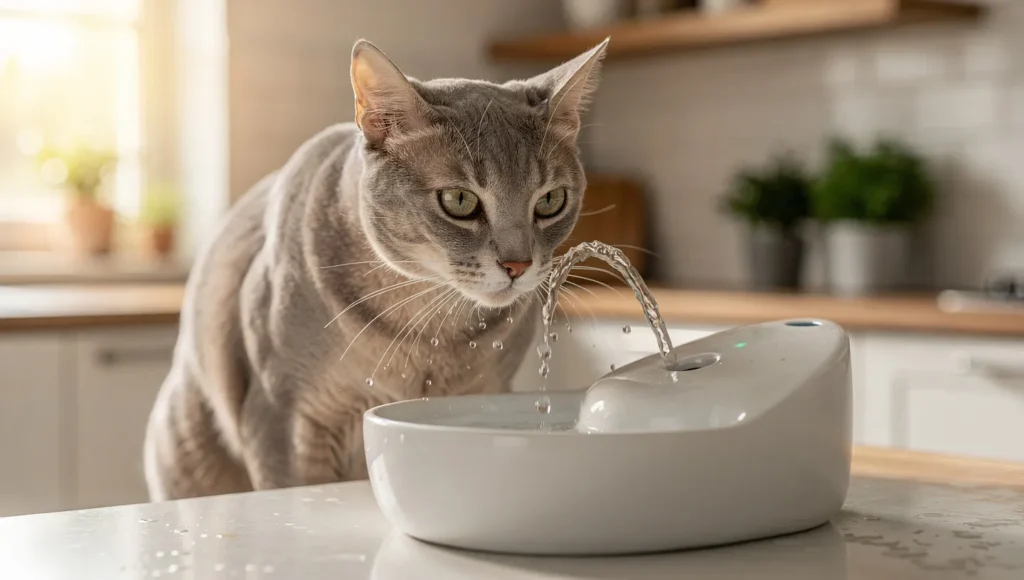
Dr. Ben recommended switching at least partially to wet food and adding a water fountain — cats are instinctively attracted to moving water. It made a real difference with Luna.
If you want to go deeper on this, I wrote a full guide on cat hydration strategies that covers everything from water fountains to moisture-rich foods.
2. Keep the litter box clean — really clean
A dirty litter box can discourage your cat from urinating frequently, which allows bacteria to linger. Dr. Ben recommends scooping at least once a day and doing a full clean weekly.
3. Reduce stress
This one surprised me. Stress is a major trigger for urinary issues in cats — especially a condition called FIC (Feline Idiopathic Cystitis), which mimics UTI symptoms but isn’t bacterial. Environmental changes, new pets, even a rearranged living room can set it off.
4. Regular vet checkups
I know, I know — not the most exciting advice. But catching early signs of urinary issues during a routine visit is a thousand times easier than treating a full infection.
Dr. Ben has been genuinely invaluable through all of this. The kind of vet friend who explains everything without making you feel silly for asking — and who somehow manages to be both reassuring and completely honest at the same time. If you have someone like that in your corner, hold onto them.
Common Concerns & Quick Fixes
Will a cat UTI go away on its own?
Rarely — and I wouldn’t bet Luna’s health on it. Mild irritation might settle down, but a true bacterial UTI almost always needs antibiotics. Waiting it out risks the infection spreading to the kidneys, which is a much harder battle.
Can I check at home if my cat has a UTI?
You can observe — but you can’t diagnose. Watch for:
Straining or frequent litter box trips
Blood in urine or unusual odor
Excessive genital licking
Behavioral changes like hiding or skipping meals
These signs point toward a problem, but only a vet can confirm a UTI through a urinalysis. Home observation buys you information — not a diagnosis.
How do you fix a UTI in a cat?
Typically with antibiotics prescribed by a vet after a urine test. Depending on severity, your vet may also recommend:
Increased hydration (wet food, water fountain)
Urinary-support diet
Pain relief medication for comfort
Never give human antibiotics or medications to your cat. Ever.
How long does a cat UTI last?
With proper treatment, most cats improve within 3–5 days and fully recover in 7–14 days. Without treatment? It doesn’t just linger — it gets worse. If your cat isn’t improving 48 hours after starting antibiotics, call your vet back.
One Last Thing
Recognizing the signs of UTI in cats early is the single most important thing you can do as a dedicated owner. These infections are common, but they are also very treatable—when you catch them before it’s too late.
The signs are there if you know what to look for. A few extra litter box trips. A strange smell. A cat who seems just a little… off. Trust that gut feeling. It’s usually right.
Luna is doing great now, by the way. Back to her dramatic self — chirping at birds, stealing my spot on the couch, and acting like the UTI never happened. Cats, right? 😄
If this article helped you, share it with a fellow cat owner — you might catch something they’ve been missing. And if your cat has been through a UTI, I’d love to hear your story in the comments below. Every experience is different, and honestly, reading what other owners have been through is one of my favorite parts of running this little corner of the internet.
And one more time — thank you, Dr. Ben. For the 7 a.m. texts, the patient explanations, and the genuine love you have for animals. The world needs more vets like you.