
I’ll never forget the day my vet gently placed her hand on Momo’s belly and said, “She’s gained almost two pounds.” Two pounds doesn’t sound like much, right? But for a cat, that’s like a human gaining 20. I stood there, cat carrier in hand, feeling like the worst cat parent ever.
I’d been feeding her the same food for years—good quality stuff, or so I thought. Turns out, finding the best cat food for indoor cats like Momo required a completely different approach than I’d been taking.
Here’s the thing.
Most of us don’t realize that the moment our cats stop going outside, their entire nutritional needs shift. And the food industry? They’re not always clear about what “indoor formula” actually means.
Quick heads up: This article is based on my personal experience raising indoor cats and research from trusted sources like ASPCA and AVMA. It’s for informational purposes only and doesn’t replace professional veterinary advice. Always consult your vet about your cat’s specific dietary needs.
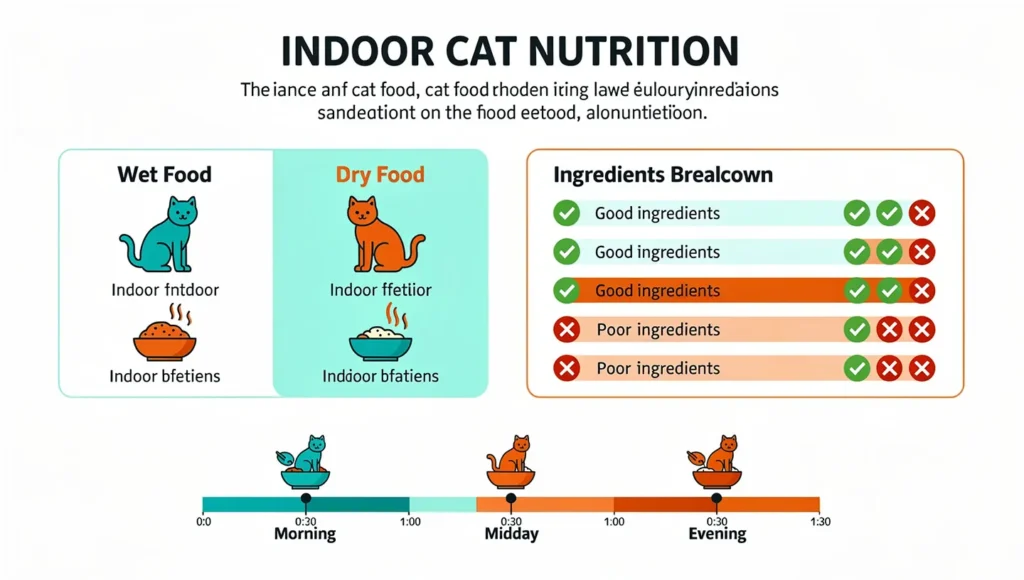
Table of Contents
- Why Indoor Cats Need a Different Kind of Food
- The Science Behind the Best Cat Food for Indoor Cats
- High-Quality Protein (The Non-Negotiable)
- Lower Calories (Because They’re Not Hunting Mice)
- Moisture Content (The Forgotten Essential)
- The Biggest Mistake I Made (And Most Indoor Cat Owners Do Too)
- Wet vs Dry Food for Indoor Cats (What Actually Worked)
- Best Types of Cat Food for Indoor Cats (Simple Criteria That Matter)
- If Your Indoor Cat Has a Sensitive Stomach or Throws Up
- Foods and Ingredients You Should Avoid (This Changed Everything)
- My Simple Feeding Routine for Indoor Cats (What Actually Works)
- Quick FAQ: Best Cat Food for Indoor Cats
- What is the healthiest food for an indoor cat?
- Which is the Best Cat Food for Indoor Cats: Wet or Dry?
- What ingredients should I avoid in indoor cat food?
- Can indoor cats eat the same food as outdoor cats?
- Final Thoughts (What Really Matters at the End of the Day)
Why Indoor Cats Need a Different Kind of Food
When Momo stopped going outside (we moved from a house to an apartment), I didn’t think twice about her food. She was the same cat, right?
Wrong.
Indoor cats live completely different lives than their outdoor cousins. While outdoor cats spend hours stalking, climbing, and patrolling their territory, indoor cats… well, they nap. A lot. According to research, indoor cats can sleep up to 16 hours a day and burn significantly fewer calories than outdoor cats.
Think about it this way: if you went from running marathons to sitting at a desk job, you wouldn’t eat the same amount of food. Same logic applies to cats.
Let’s be real: an indoor cat’s biggest enemy is the “extra fluff” that leads to diabetes. I saw it happening to Momo, and it’s heartbreaking.
And this is where most cat foods fail indoor cats.
I learned this the hard way when Momo started refusing her meals and sleeping even more than usual. Turns out, she was overfed, under-stimulated, and her food wasn’t designed for her lifestyle. Once I understood what indoor cats actually need, everything changed.
If you’ve been feeding your indoor cat the same food as outdoor cats—or worse, just grabbing whatever’s on sale—you’re not alone. But your cat deserves better, and honestly, it’s easier than you think to get it right.
Let’s talk about cat weight management strategies and what indoor cats really need to thrive.
The Science Behind the Best Cat Food for Indoor Cats
This is where I wish someone had just given me a straight answer years ago. No fluff, no marketing BS—just the essentials.
After working with my vet and doing way too much research at 2 AM (thanks, anxiety), I realized that the best cat food for indoor cats must check these three non-negotiable boxes, or it’s just fancy filler
High-Quality Protein (The Non-Negotiable)
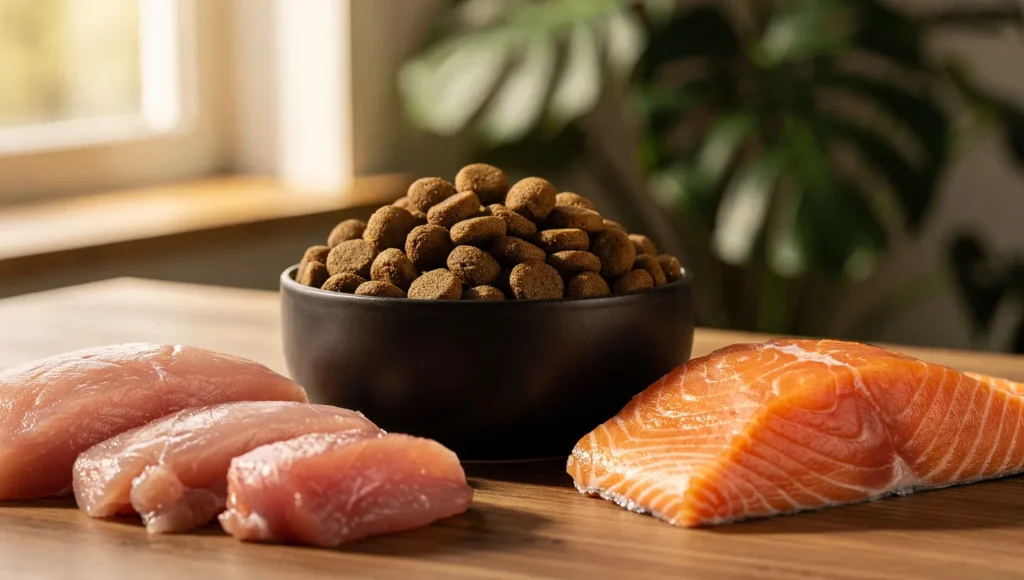
Cats are obligate carnivores. That’s a fancy way of saying they need meat to survive. Not “meat by-products.” Not “meat meal” from mystery sources. Real, identifiable animal protein.
Indoor cats need at least 30-40% protein in their diet to maintain lean muscle mass, support organ function, and keep their metabolism running. When I switched Momo to a high-protein food, I noticed she had more energy during her rare moments of activity and her coat looked shinier within weeks.
Here’s what I look for on the label:
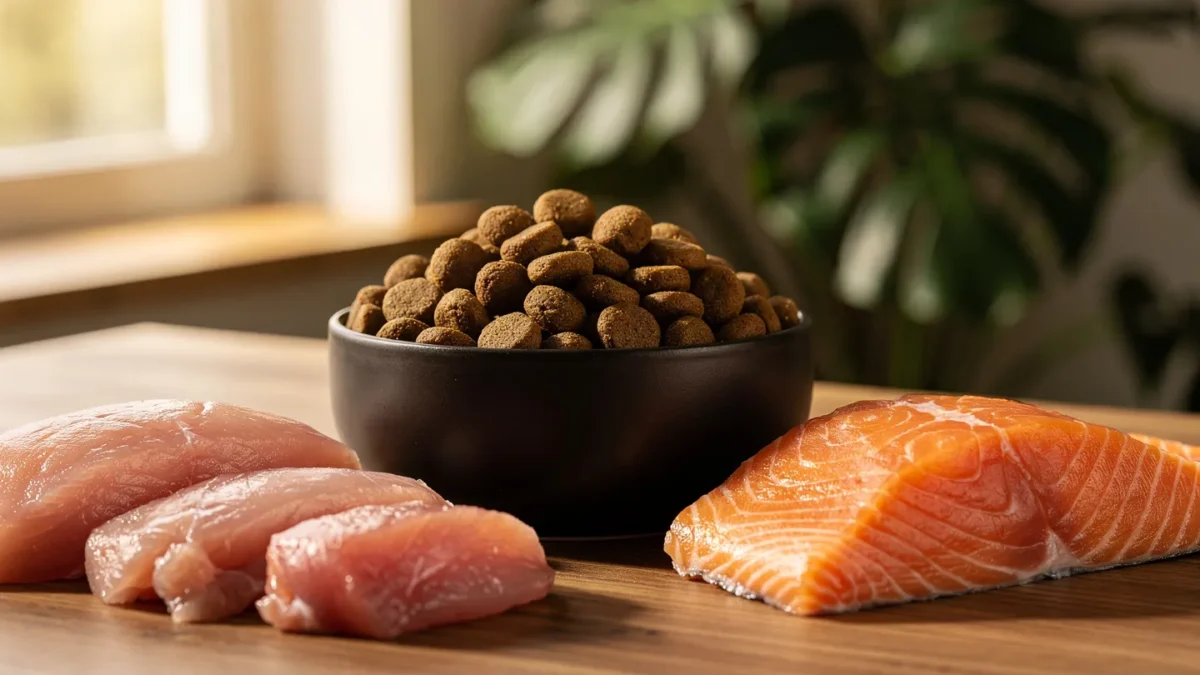
- Named meat as the first ingredient (chicken, turkey, salmon—not just “poultry”)
- Multiple animal protein sources in the top five ingredients
- Minimal plant-based proteins (peas and lentils are fine in small amounts, but cats can’t digest them as efficiently)
Personally, I avoid foods where corn or wheat gluten is listed as a primary protein source. Cats aren’t designed to process that stuff.
Lower Calories (Because They’re Not Hunting Mice)
This one stung a little when I realized my mistake.
Indoor cats need about 20-30% fewer calories than outdoor cats. But if you’re feeding them “regular” cat food—even high-quality brands—you’re probably overfeeding them without realizing it.
I was pouring the same amount of food I’d always given Momo, not accounting for the fact that she went from roaming a backyard to lounging on a couch. The math didn’t add up, and her waistline showed it.
Most indoor cat formulas have around 350-400 calories per cup, compared to 450-500 in regular formulas. That difference matters when your cat is eating twice a day, every day, for years.
From my experience, portion control is just as important as the food itself. I started using a measuring cup instead of eyeballing it, and honestly, that simple change made a huge difference.
Moisture Content (The Forgotten Essential)
Cats are notoriously bad at drinking water. It’s evolutionary—they’re desert animals who historically got most of their hydration from prey. But indoor cats eating dry kibble all day? That’s a recipe for dehydration and urinary problems.
I didn’t realize how dehydrated Momo was until my vet pointed out her slightly tacky gums. She wasn’t drinking enough, and her dry-food-only diet wasn’t helping.
Wet food typically contains 70-80% moisture, compared to 10% in dry kibble. Adding even one meal of wet food per day can dramatically improve your cat’s hydration levels.
If you want to keep your indoor cat hydrated, wet food is your best friend. And if you’re struggling to decode cat food labels, trust me, you’re not alone—it’s intentionally confusing.
Most people get this wrong. They think dry food is “better” because it’s convenient and helps with dental health (spoiler: it doesn’t, but that’s another story). The truth is, moisture matters more than we give it credit for.
The Biggest Mistake I Made (And Most Indoor Cat Owners Do Too)
I was feeding Momo like she was still an outdoor cat. Same portions, same high-calorie food, same routine. The problem? She wasn’t burning those calories anymore.
Most of us make three critical mistakes:
- Ignoring the calorie count — We focus on “premium” brands but never check if they’re designed for low-activity cats
- Free-feeding dry kibble — Leaving food out all day is a fast track to obesity (learned that one the hard way)
- Skipping label ingredients — If you can’t pronounce the first five ingredients or don’t see real meat, put it back
Honestly, the wake-up call was seeing Momo struggle to jump onto her favorite shelf. That’s when I knew something had to change.
Wet vs Dry Food for Indoor Cats (What Actually Worked)
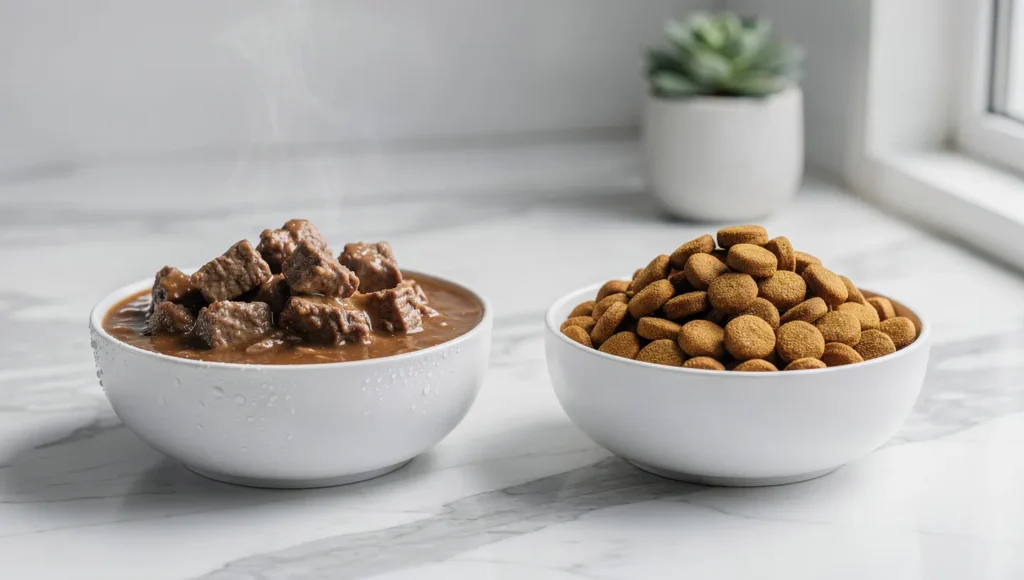
Here’s what I learned after trying both:
Dry Food:
- Convenient and affordable
- Helps reduce tartar buildup (slightly)
- But: low moisture, often high in carbs, easy to overfeed
Wet Food:
- 70-80% moisture (game-changer for hydration)
- Higher protein, lower carbs
- More expensive and less convenient
- But: Momo’s urinary issues disappeared within weeks
My solution? A mix of both. Wet food in the morning, measured dry food in the evening. This gave her hydration, variety, and portion control without breaking the bank.
If you’re still debating, check out this complete wet vs dry food comparison — it breaks down everything you need to know.
Best Types of Cat Food for Indoor Cats (Simple Criteria That Matter)
Forget the brand wars. When you’re hunting for the best cat food for indoor cats, ignore the flashy photos of salmon on the bag. Focus on these specific criteria instead:
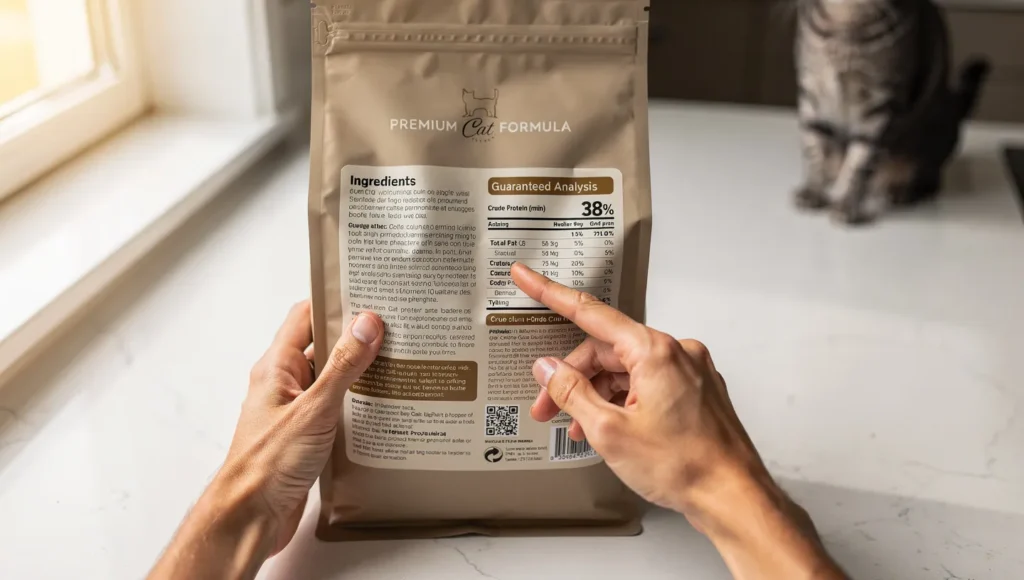
Look for these on the label:
- Protein: 30-40% minimum (from named meat sources like chicken, turkey, salmon)
- Fat: 10-15% (indoor cats don’t need high-fat diets)
- Fiber: 3-5% (helps with hairballs and digestion)
- Grain-free or limited grains (cats don’t need corn or wheat fillers)
- No artificial colors, flavors, or preservatives (BHA, BHT, ethoxyquin are red flags)
Quick comparison table:
| What to Look For | Why It Matters | Red Flags |
|---|---|---|
| Named meat (chicken, salmon) | Real protein source | “Meat by-products” or “meal” from unknown sources |
| Low carbs (<10%) | Cats are carnivores | Corn, wheat, soy as top ingredients |
| Added fiber | Hairball control | Excessive plant fillers |
| Natural preservatives | Safer long-term | BHA, BHT, ethoxyquin |
From my experience, brands that focus on “indoor formulas” usually get these ratios right. But always double-check the label — marketing doesn’t always match reality.
For evidence-based guidance, the ASPCA cat nutrition guidelines are a solid starting point.
If Your Indoor Cat Has a Sensitive Stomach or Throws Up
This was my nightmare for months before I figured it out.
If your cat is vomiting after meals or has frequent diarrhea, the food is usually the culprit. Here’s what worked for Momo:
- Switch to limited ingredient diets (single protein source like turkey or duck)
- Avoid common allergens (chicken, dairy, fish can trigger sensitivities)
- Transition slowly (mix 25% new food with 75% old, increase gradually over 7-10 days)
- Smaller, more frequent meals (3-4 times daily instead of 2 large portions)
Most important: don’t change foods overnight. That’s a guaranteed upset stomach.
If vomiting persists after dietary changes, read this guide on why cats vomit after eating and learn how to safely switch your cat’s food without causing digestive chaos.
Foods and Ingredients You Should Avoid (This Changed Everything)
Once I learned to spot these ingredients, everything clicked.
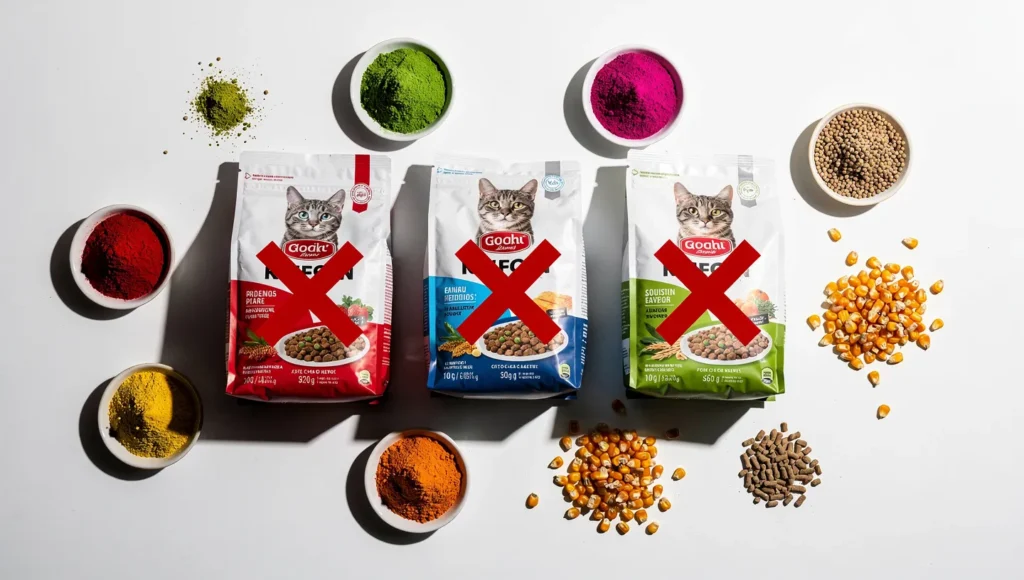
Avoid at all costs:
- Corn, wheat, and soy — Cheap fillers with zero nutritional value for cats
- Meat by-products — Could be anything from beaks to feet (not kidding)
- Artificial colors (Red 40, Yellow 5) — Your cat doesn’t care if food is colorful; these are for humans
- Chemical preservatives (BHA, BHT, ethoxyquin) — Linked to health issues in long-term studies
- Excessive carbs (>10%) — Cats can’t process carbs efficiently; leads to weight gain and diabetes
I used to think “by-products” just meant organ meat. Nope. It’s the leftover stuff not fit for human consumption. Once I switched to foods with named ingredients, Momo’s energy levels and coat quality improved dramatically.
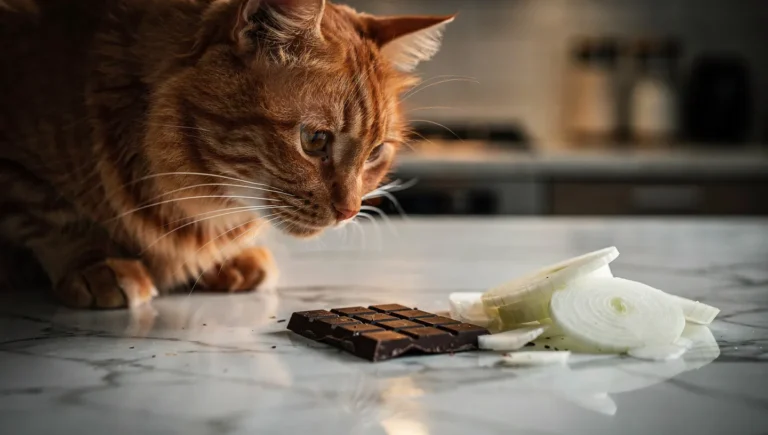
And please, for the love of everything, keep these foods toxic to cats far away from your indoor cat’s diet.
The AVMA feeding guidelines also emphasize avoiding low-quality fillers and focusing on species-appropriate nutrition.
My Simple Feeding Routine for Indoor Cats (What Actually Works)
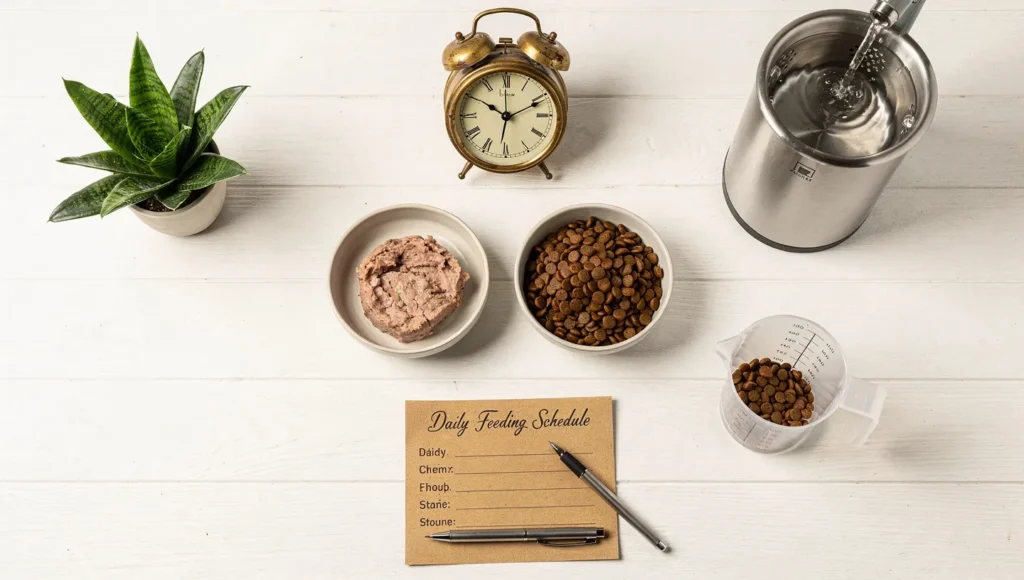
Even the best cat food for indoor cats won’t work if the routine is a mess. Here’s the “Momo-tested” schedule that finally clicked:
Daily Schedule:
| Time | Food Type | Portion |
|---|---|---|
| 7:00 AM | Wet food | 3 oz (half a 5.5 oz can) |
| 7:00 PM | Dry food | ¼ cup measured |
| Throughout day | Fresh water | Unlimited (fountain preferred) |
Key principles:
- Measure everything — Use an actual measuring cup, not the scoop that comes with the bag
- Stick to 2 meals daily — Mimics natural hunting patterns
- Treats = max 10% of daily calories — I use freeze-dried chicken (about 5-6 pieces per day)
- Always provide fresh water — I switched to a fountain and Momo drinks 3x more now
This routine keeps Momo at a healthy 9.5 lbs, active during her play sessions, and her vet visits are drama-free.
Consistency is everything. Cats thrive on routine, and their digestive system works better when meals are predictable.
Quick FAQ: Best Cat Food for Indoor Cats
What is the healthiest food for an indoor cat?
The healthiest food combines high animal protein (30-40%), low carbs (<10%), adequate moisture, and no artificial additives. Look for named meat sources (chicken, turkey, salmon) as the first ingredient and avoid fillers like corn or wheat. A mix of quality wet and dry food usually works best for indoor cats.
Which is the Best Cat Food for Indoor Cats: Wet or Dry?
Wet food is generally better for indoor cats because of its high moisture content (70-80%), which helps prevent dehydration and urinary issues. However, a combination of both works well — wet food for hydration and protein, dry food for convenience and dental benefits. Just measure portions carefully to avoid overfeeding.
What ingredients should I avoid in indoor cat food?
If you see corn or soy at the top of the list, you’re not buying cat food—you’re buying expensive chicken feed. Put it back.
Can indoor cats eat the same food as outdoor cats?
No. Indoor cats need 20-30% fewer calories due to lower activity levels. Feeding them regular outdoor cat food leads to obesity and related health problems. Always choose formulas specifically designed for indoor cats or carefully measure portions of all-life-stage foods to match their energy needs.
Final Thoughts (What Really Matters at the End of the Day)
Look, feeding your indoor cat doesn’t have to be complicated.
Focus on high protein, low carbs, and adequate moisture. Read labels like you’re buying food for yourself. And when in doubt, ask your vet — they’ve seen it all and won’t judge you for feeding mistakes (trust me, they’ve heard worse).
Momo’s transformation taught me that small changes make massive differences. Better food = better energy, healthier weight, fewer vet visits, and honestly, a happier cat.
Your indoor cat is counting on you to get this right. You’ve got this.