
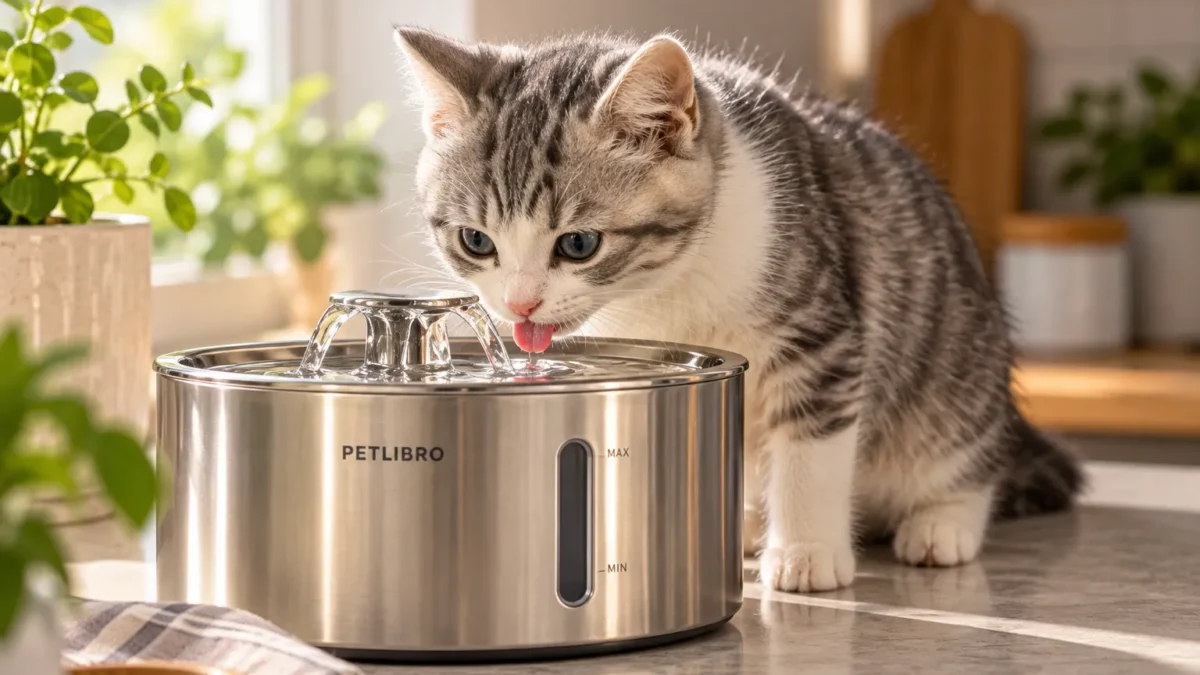
Tired of refilling that water bowl every hour, only to watch your cat strut right past it and head for the kitchen faucet — or worse, the mop bucket? Your cat isn’t being difficult.
It’s following an instinct that treats still water as a potential risk, which is exactly why so many owners struggle to get their cats to drink enough water from a traditional bowl in the first place.
A cat water fountain solves this by mimicking natural running water, keeping your cat interested in drinking throughout the day — and supporting the kind of long-term hydration that helps protect against kidney and urinary issues down the road.
But with so many types on the market, how do you pick one that actually gets used — and doesn’t end up as an abandoned decoration on your counter? Here’s the complete guide to what actually matters.
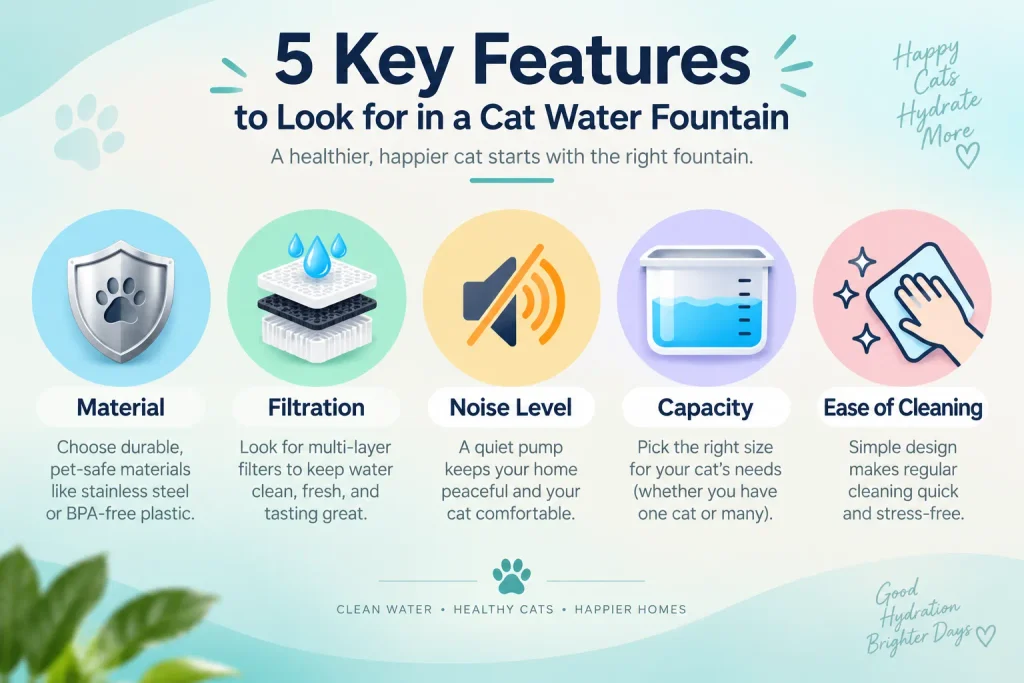
Table of Contents
- What Is a Cat Water Fountain?
- Why Do Cats Prefer Running Water?
- What to Look for in the Best Cat Water Fountain
- Material: Stainless Steel vs. Ceramic vs. Plastic
- Filtration
- Noise Level
- Capacity and Multiple Cats
- Ease of Cleaning
- Automatic/Wireless vs. Gravity
- Common Problems With Cat Water Fountains (and How to Avoid Them)
- Our Recommended Cat Water Fountain
- Petlibro Dockstream
- PetSafe Drinkwell
- Veken Pet Fountain
- Cat Water Fountain Comparison
- What Cat Owners Say
- Can You Make a DIY Cat Water Fountain?
- Frequently Asked Questions
- What is the best water fountain for cats?
- Do cats prefer a water fountain?
- Are cat water fountains worth it?
- Is stainless steel better than plastic for a cat water fountain?
- How often should I clean a cat water fountain?
- Do cat water fountains need filters?
- Before You Go
What Is a Cat Water Fountain?
A cat water fountain is a pet drinking device that keeps water moving — usually through a small pump — instead of sitting still in a bowl. Most models filter the water at the same time, which cuts down on hair, dust, and food debris.
You’ll also see these called cat water dispensers or pet water fountains; the terms get used pretty interchangeably online, though “fountain” usually points to something with a pump, while “dispenser” can mean anything from a fountain to a simple gravity-fed bottle.
Why Do Cats Prefer Running Water?
Cats gravitate toward moving water because it taps into an old survival instinct — in the wild, still water is more likely to carry bacteria or parasites, while flowing water tends to be fresher. That instinct doesn’t just disappear because your cat lives on your couch now.
There’s also a physical side to it that a lot of owners never connect to their cat’s water habits: whisker fatigue. Cats’ whiskers are packed with sensitive nerve endings, and repeatedly brushing them against the sides of a narrow bowl can actually be uncomfortable enough to make a cat hesitate to drink.
A wide, open fountain design sidesteps that problem entirely — Cornell Feline Health Center notes that reducing stress around food and water access can meaningfully improve a cat’s willingness to eat and drink.
Honestly, once you look at it this way, the “picky” cat that ignores its water bowl starts to make a lot more sense.
What to Look for in the Best Cat Water Fountain
Not all fountains are created equal, and the wrong one can end up gathering dust in a cabinet. Here’s what actually separates a fountain your cat will use from one it won’t.
Material: Stainless Steel vs. Ceramic vs. Plastic
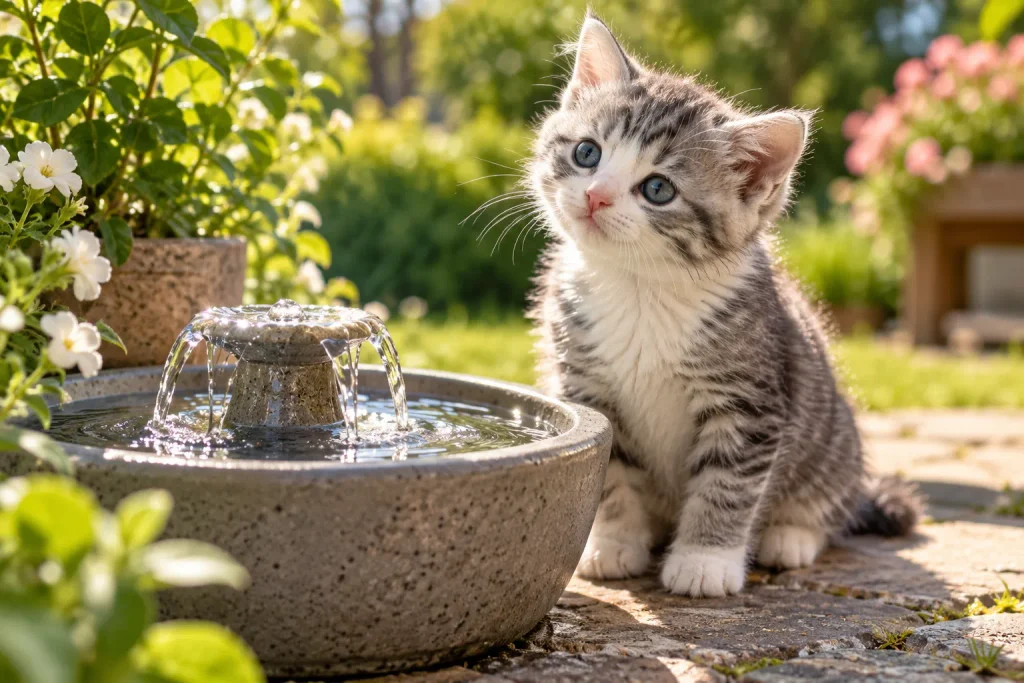
Stainless steel and ceramic are generally the easiest to keep clean and the least likely to build up bacteria over time; plastic is often the cheapest option but can scratch easily, and those scratches are where bacteria love to hide.
Design matters here too, not just material — a fountain with a wide, shallow basin is easier on your cat’s whiskers than a deep, narrow one. If you’re dealing with a cat who seems oddly reluctant around bowls in general, it’s worth reading up on whisker fatigue in cats before you buy.
Filtration
Most fountains use a carbon filter to catch hair, debris, and food particles, and to help reduce odor and taste changes in standing water. Filters typically need replacing every 2–4 weeks, though this varies by model and by how many cats are sharing the fountain — worth checking before you buy, since replacement filters aren’t always cheap in the long run.
Noise Level
A fountain that hums or splashes loudly is one your cat may actually avoid, especially skittish cats. Look for models specifically advertised as quiet or ultra-quiet, and don’t be afraid to check owner reviews for real-world noise complaints — manufacturer noise ratings don’t always match reality.
Capacity and Multiple Cats
A single cat can usually get by with a fountain holding around 50–60 oz, but multi-cat households should look for something bigger, or a model rated specifically for multiple cats, so nobody’s waiting in line for a drink.
Ease of Cleaning
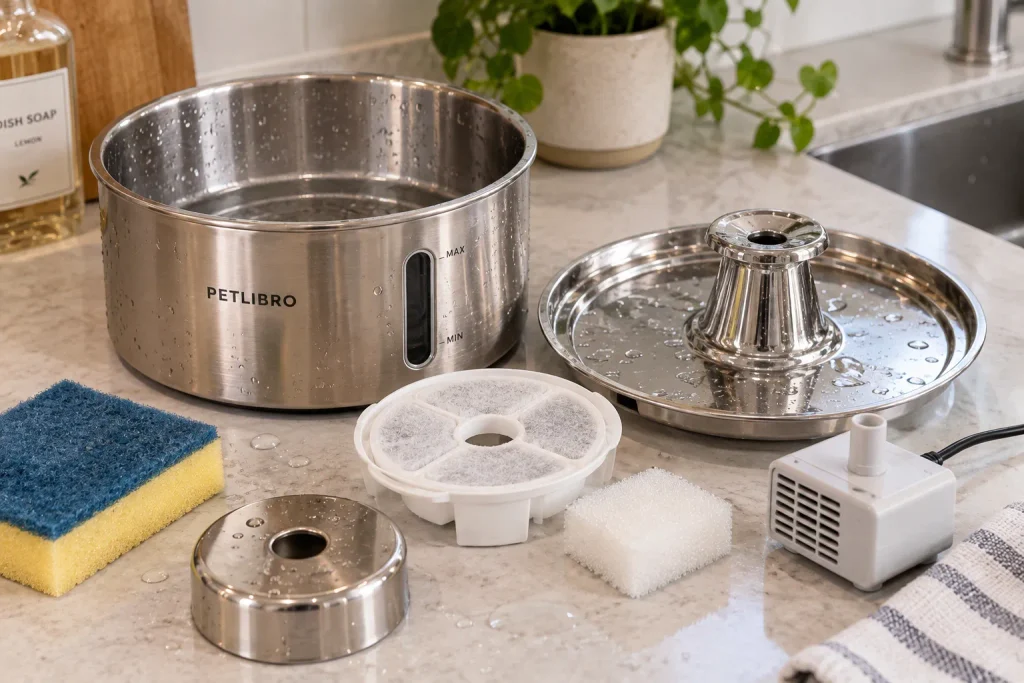
This is the one that makes or breaks the whole experience. Fountains with fewer separate parts, dishwasher-safe components, and pumps that come apart without tools are dramatically easier to maintain — and a fountain that’s a pain to clean is a fountain that eventually stops getting cleaned, which defeats the entire purpose.
Automatic/Wireless vs. Gravity
These two work very differently, and it’s worth knowing the difference before you shop. A gravity dispenser has no pump or electricity — it just uses gravity to refill a bowl from a reservoir as your cat drinks, similar in spirit to an automatic cat feeder.
An automatic or wireless fountain uses a small electric pump to actually circulate the water, which is what creates that moving-water effect cats are drawn to. If your goal is specifically to mimic running water, you’ll want an electric fountain — gravity dispensers keep water available, but they don’t move it.
Common Problems With Cat Water Fountains (and How to Avoid Them)
Even a good fountain can turn into a headache if you don’t know what to watch for. Staying on top of these issues matters more than people realize — consistent hydration plays a real role in preventing urinary tract issues and bladder stones, so a fountain that’s neglected or gathering slime isn’t just annoying, it defeats the purpose.
- Slime and buildup in the pump — the single most common complaint among fountain owners. It happens when the pump and tubing aren’t cleaned often enough. A weekly rinse and a monthly deep clean (including the motor, where the manufacturer allows it) usually prevents it.
- Filter costs adding up — some models need filter changes every two weeks, which can get expensive fast. Look for reusable or washable filters, or a longer recommended replacement interval, if cost is a concern.
- Wi-Fi and app glitches — smart fountains with app connectivity are convenient, but owners report occasional false notifications or syncing issues. A simpler non-wifi model may be less of a headache if constant connectivity isn’t a must-have.
- Short power cords — a handful of owners run into cords that don’t comfortably reach a nearby outlet. Worth checking cord length against your planned placement before buying.
Our Recommended Cat Water Fountain
We looked at owner reviews, real complaints, and what actually holds up over time — not just spec sheets. Here are three fountains that consistently come out ahead.
Petlibro Dockstream
Petlibro Dockstream (Petlibro Dockstream) is a wireless, app-connected fountain that’s become one of the most talked-about options among multi-cat households. Owners consistently mention how easy it is to take apart for cleaning — the water tank separates from the base, and the pump pulls apart without tools. The app tracks how much your cat is drinking, which can be genuinely useful for spotting early signs something’s off.
- Pros: Very easy to clean, wireless/battery option, drinking-tracking app
- Cons: Requires the app for full functionality, some owners report occasional notification glitches
- Best for: Multi-cat households and owners who want drinking-habit tracking
PetSafe Drinkwell
PetSafe Drinkwell ( PetSafe Drinkwell) is one of the longest-standing names in the pet fountain space, and the porcelain version in particular gets consistent praise for being easy to keep genuinely clean — porcelain doesn’t scratch the way plastic does, which means fewer places for bacteria to hide.
- Pros: Durable porcelain option, simple and reliable, trusted long-running brand
- Cons: Fewer smart features than newer competitors
- Best for: Owners who want a dependable, low-tech option
Veken Pet Fountain
Veken ( Veken Pet Fountain) has built a loyal following for offering solid build quality at a more approachable price point. It’s a frequently recommended starter fountain for owners who aren’t sure their cat will even take to a fountain yet.
- Pros: Budget-friendly, solid build quality, widely available replacement filters
- Cons: No smart/app features
- Best for: First-time fountain buyers or budget-conscious households
Cat Water Fountain Comparison
| Fountain | Best for | Filter | Noise | Cleaning | Capacity |
|---|---|---|---|---|---|
| Petlibro Dockstream | Multi-cat households | ✓ | Quiet | Easy — tool-free disassembly | Large |
| PetSafe Drinkwell | Reliable, low-tech option | ✓ | Quiet | Easy — porcelain, dishwasher-safe | Medium |
| Veken Pet Fountain | Budget/first-time buyers | ✓ | Quiet | Moderate | Medium |
What Cat Owners Say
Real owner feedback backs up what the specs alone won’t tell you. Across cat owner communities, stainless steel and porcelain models consistently get praised as “very easy to clean,” while plastic fountains draw more complaints about buildup and bacteria over time.
Ease of cleaning comes up again and again as the single biggest factor in whether an owner sticks with their fountain — or gives up on it after a few months.
Several owners also mention keeping a couple of water glasses around the house as backup, since some cats surprisingly still prefer drinking from a plain glass over a fountain — a good reminder that no single solution works for every cat, and it’s worth watching your own cat’s habits before committing to one setup.
Can You Make a DIY Cat Water Fountain?
Technically, yes — some owners have improvised with things like an empty aquarium and a small pump. But DIY setups usually lack proper filtration and can be trickier to keep clean safely, so for most owners, a purpose-built fountain ends up being the simpler and more reliable choice.
Frequently Asked Questions
What is the best water fountain for cats?
It depends on your priorities — the Petlibro Dockstream is great for multi-cat homes, while the PetSafe Drinkwell is a solid, no-frills reliable pick.
Do cats prefer a water fountain?
Many cats do, since fountains mimic the moving water they’re instinctively drawn to. That said, some cats stick with bowls or glasses regardless — it really comes down to the individual cat.
Are cat water fountains worth it?
For most households, yes. They tend to encourage cats to drink more, and the built-in filtration keeps the water fresher between cleanings.
Is stainless steel better than plastic for a cat water fountain?
Generally, yes. Stainless steel and ceramic resist scratching, which means fewer spots for bacteria to build up compared to plastic.
How often should I clean a cat water fountain?
A quick rinse weekly and a deeper clean (including the pump) monthly is a good baseline, though households with multiple cats may need to clean more often.
Do cat water fountains need filters?
Most do, and they help catch hair and debris while reducing odor. Some models offer reusable filters if you want to cut down on replacement costs.
Before You Go
At the end of the day, a good cat water fountain isn’t just a gadget — it’s one of the easiest ways to keep your cat interested in staying hydrated, without you turning into a full-time kitchen faucet monitor.
If this helped, feel free to share it with fellow cat owners (and save their water bowls from being ignored too).
💬 Tell us in the comments: does your cat also prefer the faucet? What’s the strangest place you’ve caught them drinking from? We read every comment and love hearing your cat stories!