

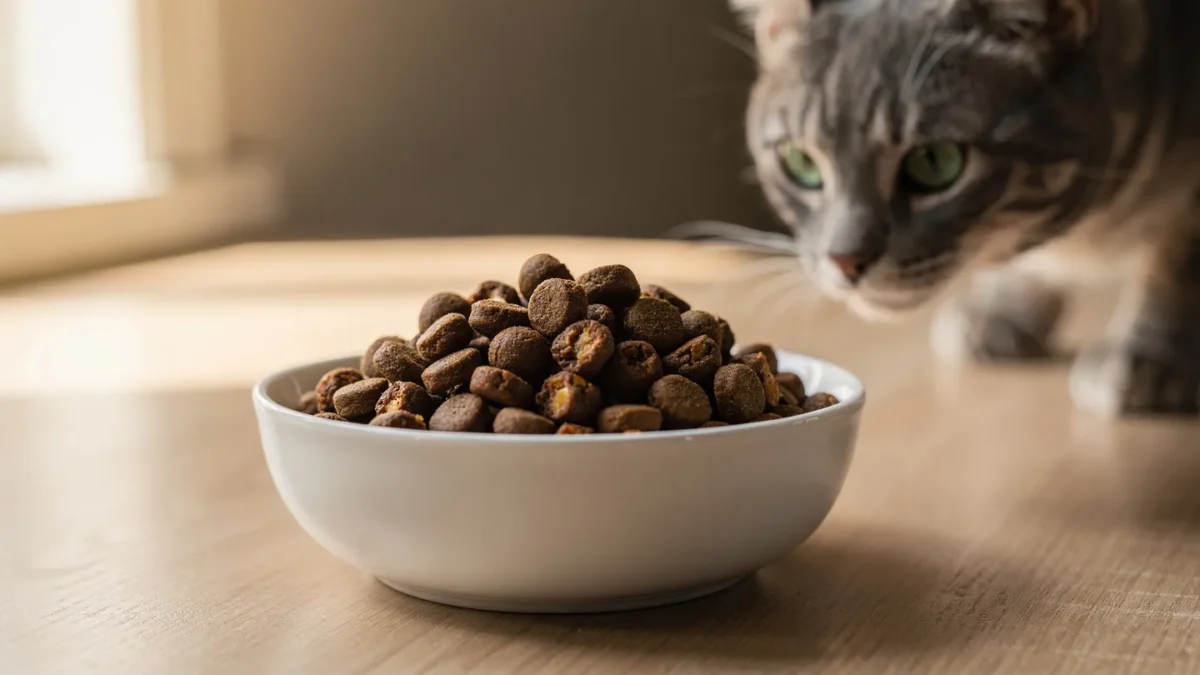
I came home to another pile of vomit on the carpet. Again.
My cat Luna had been throwing up after almost every meal for two weeks, and I was running out of ideas—and carpet cleaner. I’d already switched her food twice, tried smaller portions, even elevated her bowl. Nothing worked.
That’s when I realized I was doing this all wrong. I was guessing instead of understanding what her stomach actually needed.
If your cat’s been dealing with frequent vomiting, diarrhea, or just seems uncomfortable after eating, you’re probably in the same boat I was. The good news? Once I figured out what to look for in cat food—and what to avoid—everything changed.
In this guide, I’m going to help you find the best cat food for sensitive stomach based on what actually worked for Luna (and what didn’t). You’ll learn how to read ingredient lists like a pro, which brands are worth the money, and how to transition without making things worse.
Quick heads up: This article is based on my personal experience with my own cats and research from trusted veterinary sources like the Cornell Feline Health Center and ASPCA. It’s for informational purposes only and doesn’t replace professional vet advice. If your cat is vomiting frequently or showing other symptoms, please consult your vet.
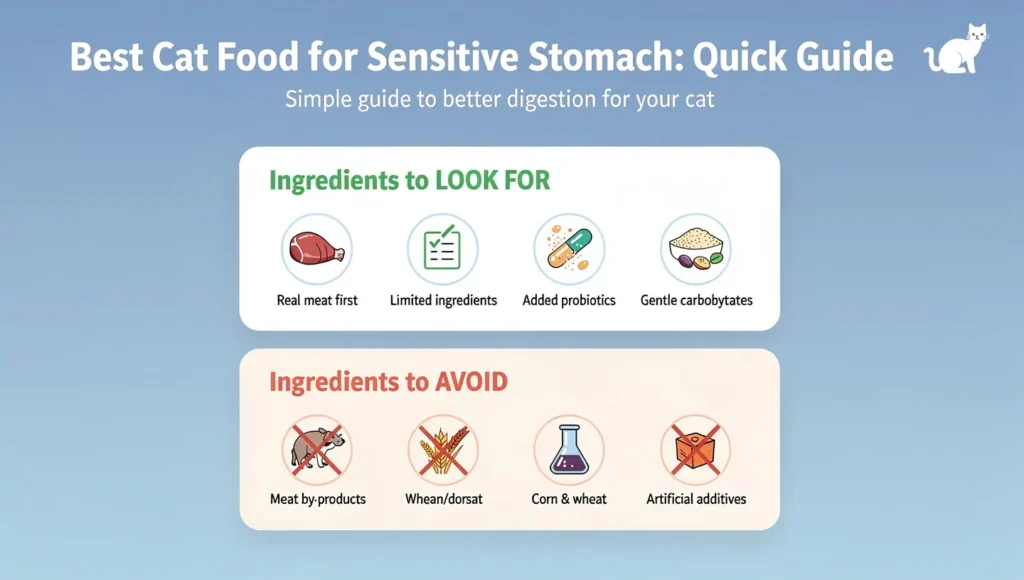
Table of Contents
- What Is the Best Cat Food for Cats with Sensitive Stomachs?
- Signs Your Cat Has a Sensitive Stomach
- Why Does My Cat Have a Sensitive Stomach?
- Best Cat Food for Sensitive Stomach and Vomiting (Top 7 Picks)
- 1. Hill’s Science Diet Sensitive Stomach & Skin – Best Overall
- 2. Purina Pro Plan Sensitive Skin & Stomach – Best for Budget
- 3. Royal Canin Digestive Care (Wet) – Best Wet Food for Sensitive Stomach
- 4. Blue Buffalo Sensitive Stomach (Dry) – Best Dry Food for Sensitive Stomach
- 5. Instinct Limited Ingredient Diet – Best for Vomiting
- 6. Wellness CORE Digestive Health – Best Limited Ingredient
- 7. I and Love and You Lovingly Simple – Best Non-Prescription
- Best Wet Cat Food for Sensitive Stomach
- Best Dry Cat Food for Sensitive Stomach
- Best Cat Food for Sensitive Stomach and Diarrhea
- How to Choose the Best Cat Food for Sensitive Stomach (Step-by-Step)
- Ingredients to Look For ✅
- Ingredients to Avoid 🚩
- How to Transition to New Food (Without Making Things Worse)
- When to See a Vet (Don’t Ignore These Signs)
- Your Top Questions, Answered (Because I’ve Been There Too)
- What’s the best cat food for a cat that throws up?
- Is wet or dry food better for sensitive stomachs?
- Can I make homemade food for my cat’s sensitive stomach?
- How long does it take to see improvement?
- Should I get prescription food or non-prescription?
- A Quick Note From My Heart (And Luna’s Stomach)
What Is the Best Cat Food for Cats with Sensitive Stomachs?
The best cat food for cats with sensitive stomachs is one that’s highly digestible, made with limited ingredients, and free from common allergens like corn, wheat, and artificial additives. Look for brands with real meat as the first ingredient and added probiotics for digestive support.
Here’s the thing.
A sensitive stomach isn’t just about your cat being “picky.” It’s usually their digestive system reacting to something in their food—whether that’s low-quality fillers, artificial ingredients, or proteins they can’t handle well.
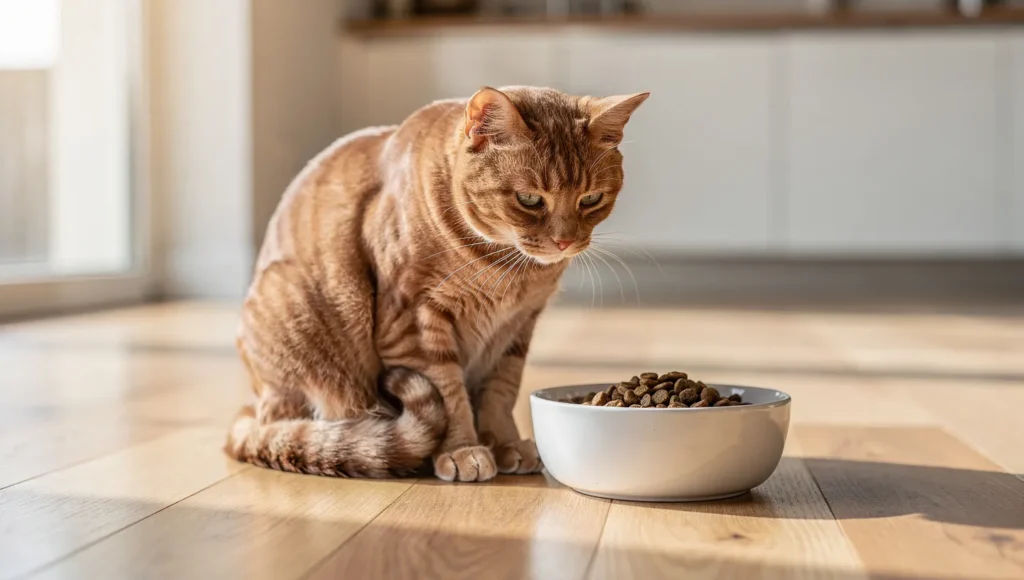
When I was dealing with Luna’s issues, I learned that sensitive stomachs show up in a few different ways. Some cats vomit right after eating. Others have chronic diarrhea or soft stools. Some just seem uncomfortable—bloated, gassy, or refusing to eat altogether.
The solution isn’t always about finding the most expensive food. It’s about finding the right food for your specific cat.
According to the Cornell Feline Health Center, many digestive issues in cats are directly linked to diet, especially when it comes to ingredient quality and digestibility. That’s why switching to a limited-ingredient, high-protein formula often solves the problem within a week or two.
Signs Your Cat Has a Sensitive Stomach
Before we dive into food options, let’s make sure we’re dealing with a sensitive stomach and not something more serious.
Here’s what to watch for:
- Frequent vomiting – Especially within 20-30 minutes of eating (not just the occasional hairball)
- Diarrhea or consistently soft stools – More than a day or two
- Loss of appetite – Sniffing the food but walking away
- Gas or bloating – You might notice their belly feels tight or they seem uncomfortable
- Weight loss – Even if they’re eating regularly
With Luna, the biggest red flag was the timing—she’d throw up within 20 minutes of eating. That’s when I knew it wasn’t just a hairball issue.
If your cat is showing multiple symptoms, or if the vomiting and diarrhea persist for more than 48 hours, don’t wait. Get them to a vet. Sensitive stomach issues can sometimes mask bigger problems like inflammatory bowel disease (IBD), parasites, or pancreatitis.
Why Does My Cat Have a Sensitive Stomach?
This is the part most articles skip—and honestly, it’s the most important.
Understanding why your cat’s stomach is sensitive helps you choose the right food instead of just guessing.
Here are the most common causes:
1. Food allergies or intolerances
Cats can develop sensitivities to certain proteins (chicken, beef, fish) or ingredients like dairy, grains, or soy. It’s not always dramatic—sometimes it just shows up as chronic low-grade digestive upset.
2. Low-quality ingredients
Fillers like corn, wheat, and by-products are hard for cats to digest. They’re cheap, so they’re common in budget foods, but they wreak havoc on sensitive systems.
3. Eating too fast
Some cats inhale their food and then throw it right back up. (Luna did this for a while.) This isn’t always a food problem—it’s a behavior problem. Slow-feeder bowls can help.
4. Underlying health issues
IBD, parasites, hyperthyroidism, or kidney disease can all cause digestive symptoms. If switching food doesn’t help within two weeks, see a vet.
I thought Luna was just picky. Turns out, the corn and wheat in her old food were wreaking havoc on her digestive system. Within five days of switching to a limited-ingredient formula, the vomiting stopped.
Most people don’t realize how much junk is hiding in “premium” cat food until they actually read the ingredient list. More on that in a bit.
Best Cat Food for Sensitive Stomach and Vomiting (Top 7 Picks)
Alright, let’s get to what actually works.
These are the brands I tested with Luna, ranked by what delivered real results. I’m focusing on digestibility, ingredient quality, and whether they actually stopped the vomiting (because that’s what matters).
1. Hill’s Science Diet Sensitive Stomach & Skin – Best Overall
Why I picked it:
This is what finally worked for Luna. It’s specifically formulated for digestive issues, and you can actually see the difference in the ingredient list.
Key Features:
- Prebiotic fiber for digestive health
- Highly digestible ingredients (no fillers)
- Real chicken as the first ingredient
- Veterinarian-recommended formula
- Available in both wet and dry
Best for: Cats with both vomiting and skin issues (bonus: Luna’s coat got shinier too)
Price range: $$
Personal note: I was skeptical about the price at first, but one bag lasts a while, and I wasn’t constantly cleaning up vomit anymore. Worth it.
2. Purina Pro Plan Sensitive Skin & Stomach – Best for Budget
Why I picked it:
If you’re on a tighter budget, this is your best bet. It’s not as “premium” as Hill’s, but it still uses quality ingredients and has probiotics.
Key Features:
- Live probiotics for digestive balance
- Real salmon or turkey as first ingredient
- No corn, wheat, or soy
- Easy to find in most stores
- Affordable without sacrificing quality
Best for: Budget-conscious cat owners who still want results
Price range: $
Personal note: Before I switched to Hill’s, I tried this for two weeks. Luna’s vomiting reduced by about 60%, which was a huge improvement. It’s a solid starter option.
3. Royal Canin Digestive Care (Wet) – Best Wet Food for Sensitive Stomach
Why I picked it:
Wet food is easier to digest than dry, and Royal Canin’s digestive formula is specifically designed for cats with stomach issues.
Key Features:
- High moisture content (helps with hydration)
- Highly digestible proteins
- Balanced fiber blend
- Pate texture (easier on the stomach than chunks)
Best for: Cats who prefer wet food or need extra hydration
Price range: $$
Personal note: I mix this with her dry food a few times a week. The pate texture seems easier on her stomach than chunk-style wet food.
If you’re debating wet vs dry, check out our complete guide on wet vs dry cat food to see which is best for your cat’s needs.
4. Blue Buffalo Sensitive Stomach (Dry) – Best Dry Food for Sensitive Stomach
Why I picked it:
Blue Buffalo gets a lot of hype, and for sensitive stomachs, it actually lives up to it. The formula is grain-free and focuses on easy-to-digest ingredients.
Key Features:
- Deboned chicken as first ingredient
- Brown rice for gentle fiber
- No poultry by-products
- Omega-3 and Omega-6 fatty acids for coat health
Best for: Cats who do better on dry food
Price range: $$
Personal note: This is a good “middle ground” food. It’s not as specialized as Hill’s, but it’s cleaner than most grocery store brands.
5. Instinct Limited Ingredient Diet – Best for Vomiting
Why I picked it:
Limited ingredient diets (LID) are gold for cats with mystery sensitivities. Fewer ingredients = fewer things that can go wrong.
Key Features:
- Only 5-7 ingredients total
- Single animal protein source (turkey or salmon)
- Grain-free
- No artificial colors, flavors, or preservatives
Best for: Cats who vomit frequently and you can’t figure out why
Price range: $$$
Personal note: This is on the pricier side, but if your cat has multiple food sensitivities, it’s a game-changer. You can also use it as a “reset” food while you figure out what’s causing the issue.
6. Wellness CORE Digestive Health – Best Limited Ingredient
Why I picked it:
Another limited-ingredient option, but slightly more affordable than Instinct. It also includes probiotics, which is a nice bonus.
Key Features:
- Turkey and turkey meal as main proteins
- Added probiotics and prebiotics
- Grain-free
- No fillers or by-products
Best for: Cats with digestive upset and inflammatory issues
Price range: $$
7. I and Love and You Lovingly Simple – Best Non-Prescription
Why I picked it:
This brand flies under the radar, but it’s surprisingly good for the price. It’s limited-ingredient, affordable, and you don’t need a vet prescription.
Key Features:
- Limited ingredients (no common allergens)
- Real meat as first ingredient
- No grains, fillers, or artificial junk
- Available in most pet stores
Best for: First-time switchers who want something simple
Price range: $
Personal note: I used this when I was testing different brands with Luna. It didn’t completely stop her vomiting, but it reduced it significantly. Good starter food.
Best Wet Cat Food for Sensitive Stomach
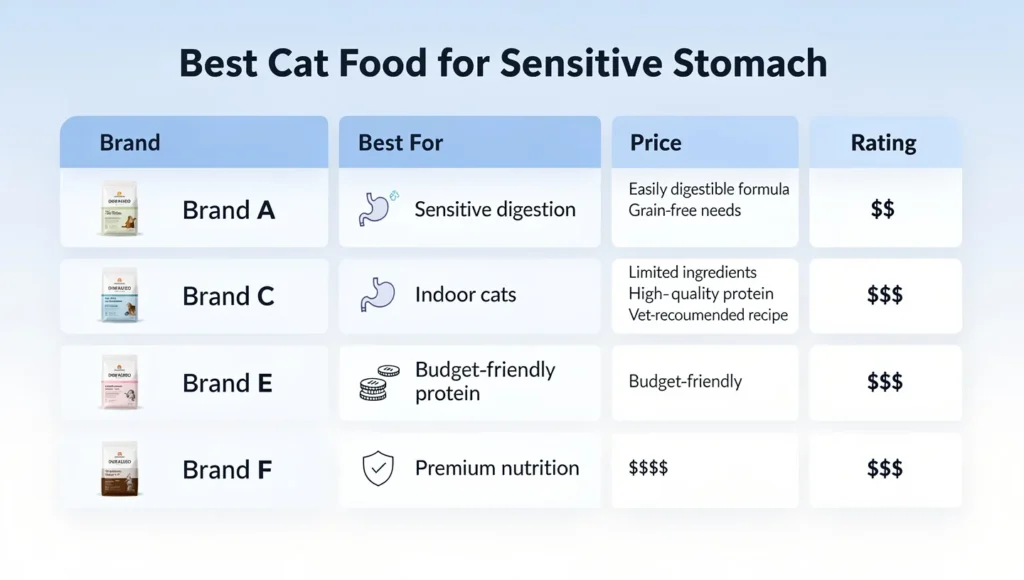
When searching for the best cat food for sensitive stomach, many owners overlook the benefits of wet food. It’s often easier on the gut because it’s more digestible and keeps your cat hydrated. and keeps your cat hydrated. The moisture helps things move smoothly through their system, which is huge if your cat deals with constipation or vomiting.
Top picks:
- Royal Canin Digestive Care – Pate texture, highly digestible proteins
- Hill’s Science Diet Sensitive Stomach (Wet) – Prebiotic fiber, gentle on the gut
- Wellness CORE Grain-Free Pate – Limited ingredients, single protein source
Pro tip: Pate works better than chunks for most cats with sensitive stomachs. The smooth texture is easier to digest.
If you’re still deciding between wet and dry, our guide on wet vs dry cat food breaks down the pros and cons based on your cat’s health needs.
Best Dry Cat Food for Sensitive Stomach
Dry food can work for sensitive stomachs if you choose high-quality kibble with digestible ingredients. The key is avoiding fillers and cheap grains.
Top picks:
- Blue Buffalo Sensitive Stomach – Deboned chicken, brown rice, no by-products
- Purina Pro Plan Sensitive Skin & Stomach – Live probiotics, budget-friendly
- Instinct Limited Ingredient (Dry) – Minimal ingredients, grain-free
Important: If your cat vomits dry food but keeps wet food down, it might be an eating speed issue. Try a slow-feeder bowl before switching foods completely.
Best Cat Food for Sensitive Stomach and Diarrhea
Diarrhea usually means something in the food isn’t agreeing with your cat’s gut—could be protein, fillers, or additives.
What to look for:
- Highly digestible proteins (chicken, turkey, salmon)
- Added probiotics (Purina Pro Plan, Hill’s)
- Low fiber or balanced fiber blend
- No corn, wheat, soy, or artificial ingredients
Best options:
- Hill’s Science Diet Sensitive Stomach & Skin
- Royal Canin Gastrointestinal (if vet-recommended)
- Wellness CORE Digestive Health
When to worry: If diarrhea lasts more than 48 hours, or if you see blood in the stool, call your vet immediately. According to the ASPCA, prolonged diarrhea can lead to dehydration and needs professional attention.
Honestly, when Luna had diarrhea for more than two days, I didn’t wait—I called the vet. Better safe than sorry.
How to Choose the Best Cat Food for Sensitive Stomach (Step-by-Step)
Here’s my simple system for picking food that actually works:
Step 1: Read the ingredient list
First ingredient should be real meat (not “meat by-product” or “meal”). If corn or wheat is in the top 5, skip it.
Step 2: Check for common allergens
Avoid corn, wheat, soy, dairy, and artificial additives. These are the usual suspects for digestive upset.
Step 3: Look for digestive support
Probiotics, prebiotics, or prebiotic fiber = good signs. They help balance gut bacteria.
Step 4: Consider your cat’s preferences
Some cats do better on wet, some on dry. Pay attention to what your cat actually eats (and keeps down).
Step 5: Transition slowly
This is where most people mess up. Switch too fast and you’ll make the problem worse.
For more details on ingredient quality and what to avoid, check out our guide on how to read cat food labels.
Ingredients to Look For ✅
- Real meat protein – Chicken, turkey, salmon (not by-products)
- Limited ingredients – 5-10 max (easier to identify triggers)
- Probiotics & prebiotics – Supports gut health
- Easily digestible carbs – Sweet potato, pumpkin (not corn or wheat)
Ingredients to Avoid 🚩
Most people get this wrong.
- Corn, wheat, soy – Common allergens, hard to digest
- Artificial colors/flavors – No nutritional value, can irritate the gut
- By-products – Low-quality filler (beaks, feet, organs)
- Excessive fillers – If the ingredient list is 20+ items, it’s probably junk
How to Transition to New Food (Without Making Things Worse)
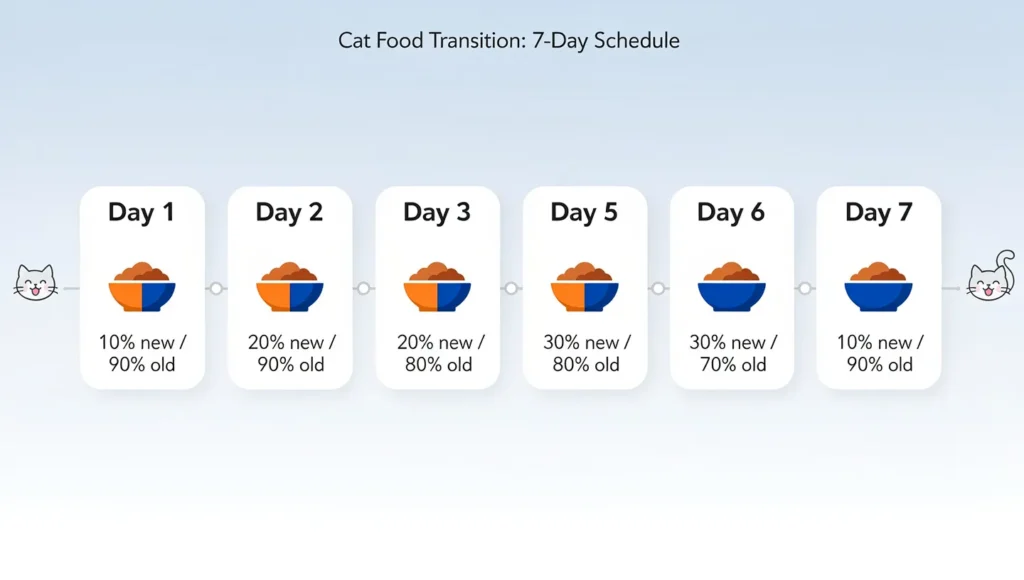
Switching food too quickly is the #1 mistake I see. Your cat’s gut bacteria need time to adjust.
7-Day Transition Plan:
- Days 1-2: 25% new food / 75% old food
- Days 3-4: 50% new / 50% old
- Days 5-6: 75% new / 25% old
- Day 7: 100% new food
I learned this the hard way—switching too fast made Luna’s vomiting even worse. Take it slow.
For a complete transition guide with tips for picky eaters, see our article on how to switch cat food safely.
When to See a Vet (Don’t Ignore These Signs)
Sensitive stomach is manageable at home most of the time. But some symptoms mean you need professional help.
See a vet if:
- Vomiting more than 2-3 times in 24 hours
- Blood in vomit or stool
- Lethargy, weakness, or hiding
- No improvement after 2 weeks on new food
- Sudden weight loss
If something feels off, trust your gut. It’s always better to check with your vet than to wait and regret it.
For more on recognizing serious health issues, read our guide on how to tell if your cat is sick.
💡 Pro Tip: Choosing the best cat food for sensitive stomach is a huge win for your cat’s health. But if you’re curious about how these specialized diets compare to everyday top-rated options, don’t miss our ultimate guide to the best cat food brands where we break down the entire market.
Your Top Questions, Answered (Because I’ve Been There Too)
What’s the best cat food for a cat that throws up?
Look for limited-ingredient formulas with real meat as the first ingredient and added probiotics. Hill’s Science Diet Sensitive Stomach or Instinct Limited Ingredient Diet are your best bets. Also, make sure your cat isn’t eating too fast—slow-feeder bowls help.
Is wet or dry food better for sensitive stomachs?
Wet food is usually easier to digest because of the moisture content, but some cats do fine on high-quality dry food. It depends on your cat. If you’re unsure, try a mix of both and see what they tolerate better.
Can I make homemade food for my cat’s sensitive stomach?
You can, but it’s tricky to get the nutritional balance right. Cats need specific nutrients (like taurine) that are hard to replicate at home. If you want to try homemade options, start with simple treats—check out our guide on homemade cat treats for safe recipes.
How long does it take to see improvement?
Most cats show improvement within 5-7 days of switching to a sensitive stomach formula. If you don’t see any change after two weeks, the food might not be the issue—talk to your vet.
Should I get prescription food or non-prescription?
Non-prescription food works for most cats with mild sensitivity. Prescription food (like Royal Canin Gastrointestinal or Hill’s Prescription Diet) is for severe or chronic issues like IBD. Start with non-prescription and upgrade only if your vet recommends it.
A Quick Note From My Heart (And Luna’s Stomach)
Finding the best cat food for sensitive stomach takes a bit of patience—and probably a few tries. But once you see your cat happy and healthy again, it’s all worth it.
Start with one of the options above, transition slowly, and watch how your cat responds. You’ve got this.
And if you’re looking for more ways to keep your cat healthy, check out our complete guide on what cats can eat safely—because a balanced diet is more than just kibble.

Hold on, hold on. I cannot find a bison/lamb type of freeze or air dried (no grain) cat food without fish or kelp. Why is it that nearly all of these cat food companies add fish (unless it’s poultry only but even then…)! They are aware that one of the most likely issues in senior cats is hyperthyroid, sheesh!
Spot on, Todd! Honestly, it’s a total headache how fish and kelp sneak into everything. It’s like brands ignore the thyroid risks just to pad the ingredients. I’m with you—finding a clean, red-meat protein shouldn’t be this hard. Thanks for calling t