
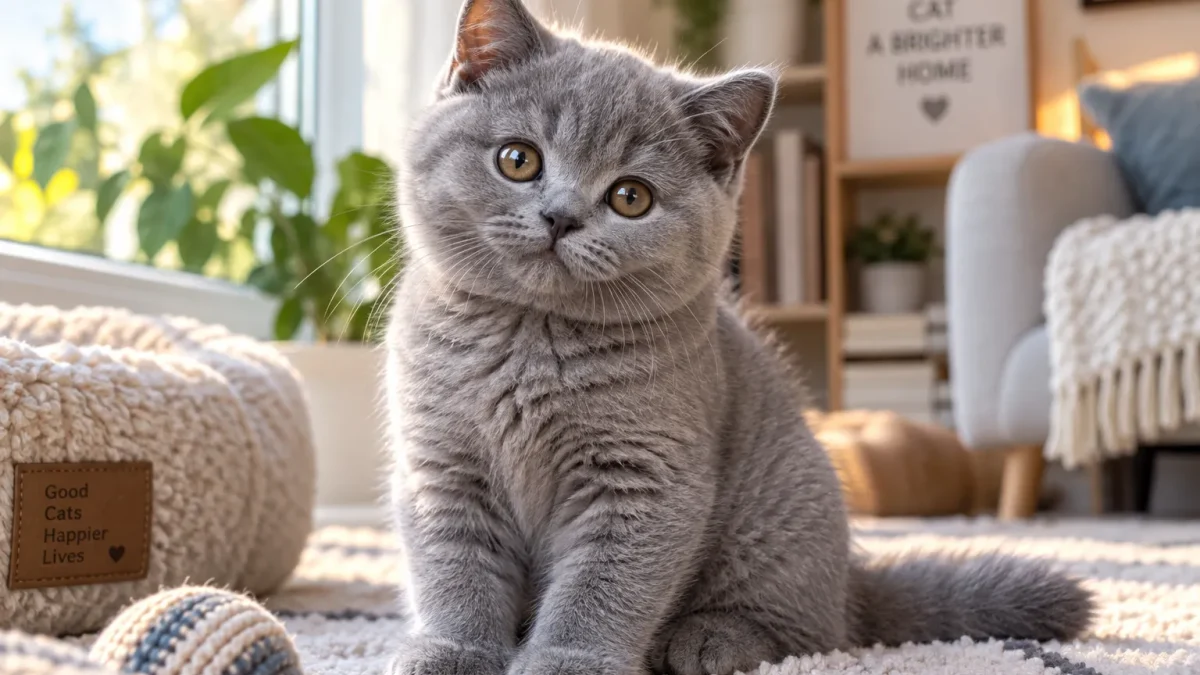
Picture this: you finally bring home your British Shorthair kitten, that round-faced, velvet-coated little teddy bear you’ve been dreaming about. You scoop him up, ready for a lifetime of cuddles, and for about two hours, life is perfect.
Then he gives you a long, unbothered stare, like he’s inspecting the lease on the apartment, before casually deciding the curtains look climbable. Welcome to owning a British Shorthair kitten — equal parts adorable and delightfully opinionated.
The truth is, the first year with a British Shorthair kitten is full of surprises breed catalogs never mention. This guide pulls from real owner experiences to walk you through everything that first year actually involves, from the moment your kitten walks through the door to the calm, confident cat he’ll eventually become.
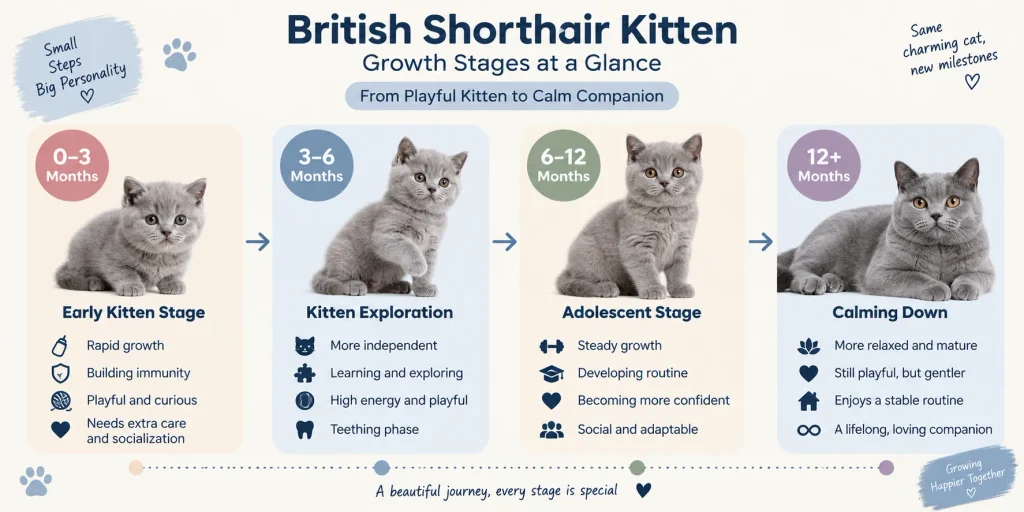
Table of Contents
- What Makes British Shorthair Kittens Different From Other Kittens?
- British Shorthair Kitten Personality & Behavior
- Are British Shorthair Kittens Affectionate or Aloof?
- Vocal or Quiet? What Owners Actually Report
- British Shorthair Kitten Growth & Development Timeline (0–12 Months)
- When Do British Shorthairs Calm Down?
- Daily Care for a British Shorthair Kitten
- Feeding
- Grooming & Coat Care
- Litter Box Setup
- Play & Exercise
- Bringing a British Shorthair Kitten Home: The First Days
- Preparing Your Home
- The First 24–48 Hours
- Health Basics Every Kitten Buyer Should Know
- Choosing a Healthy, Well-Bred British Shorthair Kitten
- Quick Answers for Future British Shorthair Owners
- How much do British Shorthair kittens cost?
- Are British Shorthair kittens good with kids and other pets?
- Do British Shorthair kittens like cuddles?
- Do British Shorthair kittens need a lot of grooming?
- Settling In With Your Round-Faced Roommate
What Makes British Shorthair Kittens Different From Other Kittens?
British Shorthair kittens stand out for their round, chubby-cheeked faces, dense plush coats, and a temperament that leans calm even before they’re fully grown. Most kittens are bundles of chaotic energy, but British Shorthairs tend to show a steadier, more observant streak from early on — even while they’re still figuring out where the couch ends and the floor begins.
A few things set them apart from other kittens:
- A round face and stocky, broad-chested build that’s already visible in kittenhood
- A short, dense coat that doesn’t tangle easily
- A generally quiet voice, though — as you’ll see below — that’s not a universal rule
- Slower physical and emotional maturity compared to many other breeds
- A playful streak that’s real, but rarely as hyperactive as breeds like Bengals or Abyssinians
That slower maturity is worth remembering. A British Shorthair kitten at four months old is still very much a kitten — the famously laid-back “loaf on the couch” personality most people associate with the breed is really an adult trait that develops gradually. For a full look at what that adult temperament and appearance looks like, our British Shorthair breed guide covers it in more detail.
British Shorthair Kitten Personality & Behavior
British Shorthair kittens are affectionate, but on their own terms — most bond closely with their families while preferring company over constant physical contact. That distinction trips up a lot of new owners who expect a lap cat and end up with something closer to a loyal, low-key roommate.
Are British Shorthair Kittens Affectionate or Aloof?
Owner experiences here are genuinely mixed, and that’s worth being upfront about instead of pretending every British Shorthair behaves the same way.
On cat forums and Facebook groups, some owners describe kittens who follow them from room to room and climb into their arms unprompted, while others say their cat tolerates being near them but isn’t interested in being picked up or held for long.
One recurring theme: many British Shorthairs show affection through closeness rather than lap-sitting — sitting a foot away, leaning against a leg, or parking themselves on the same piece of furniture without asking to be touched.
Here’s the thing — breed tendencies are a starting point, not a guarantee. Early handling, socialization, and simply the individual kitten’s personality all shape how cuddly he ends up being. If a deeply affectionate lap cat is a must-have, it’s worth spending time with the kitten (or its parents, if visiting a breeder) before bringing him home.
Vocal or Quiet? What Owners Actually Report
British Shorthairs have a reputation as a quiet breed, but real owner reports don’t always agree. Plenty of people describe their British Shorthair kitten as nearly silent, reserving meows for feeding time. Others report the opposite entirely — a kitten who narrates every activity, chirps at birds through the window, or won’t stop meowing the moment a human leaves the room.
Most owners land somewhere in the middle: a cat who’s generally low-key vocally but has his moments, especially around mealtimes or when he wants attention. If a kitten seems unusually vocal or distressed rather than just chatty, that’s worth mentioning to a vet, since it can occasionally point to discomfort rather than personality.
British Shorthair Kitten Growth & Development Timeline (0–12 Months)
British Shorthair kittens develop more slowly than many other breeds, both physically and emotionally, so the “calm, mellow” adult most people picture doesn’t really show up until well past the first birthday. Growth happens in fairly distinct stages.
| Stage | Age Range | What to Expect |
|---|---|---|
| Early Kitten Stage | 0–3 Months | Rapid physical and social growth; kittens learn coordination and basic social skills, and most go to their new home toward the end of this stage |
| Socialization & Coordination | 3–6 Months | Energy tends to peak here, though the steadier British Shorthair temperament often starts to show through the play; a key window for reinforcing good habits |
| Adolescence & Growing Independence | 6–12 Months | Physical build starts resembling an adult cat; many kittens noticeably settle down compared to the previous stage, though not fully mature yet |
When Do British Shorthairs Calm Down?
Most British Shorthairs start settling into their signature calm temperament somewhere between one and two years old, though full physical and emotional maturity can take up to three years.
So if a nine-month-old kitten still seems more interested in curtains than couches, that’s completely normal — the famous laid-back British Shorthair adult is still a little ways off. For more on what that fully mature temperament looks like day to day, our British Shorthair care guide covers adult routines and needs in depth.
Daily Care for a British Shorthair Kitten
A British Shorthair kitten’s daily care needs are fairly manageable, but a few habits matter more than others: steady portion control, regular brushing, and a litter box setup that actually gets used.
Feeding
The biggest feeding mistake owners make with this breed is treating “hearty appetite” as “bottomless appetite.” British Shorthair kittens are prone to gaining weight easily, so measured meals of a quality kitten food matter more than free-feeding.
Our kitten feeding chart by age breaks down portions by age and weight if a more precise starting point is helpful, and if picky eating shows up during the transition to solid food, a high-quality canned option can make that switch easier.
Grooming & Coat Care
The dense, plush coat looks high-maintenance but really isn’t. Weekly brushing is usually enough to manage shedding and keep the coat comfortable, with more frequent sessions during seasonal shedding periods. Starting this early also helps kittens get used to handling, which makes vet visits and nail trims far less dramatic later on.
Litter Box Setup
Litter box placement matters more than most new owners expect — a box tucked in a noisy, high-traffic spot is a common reason kittens avoid using it. Our guide to choosing the best litter box location covers the setups that tend to work best.
Play & Exercise
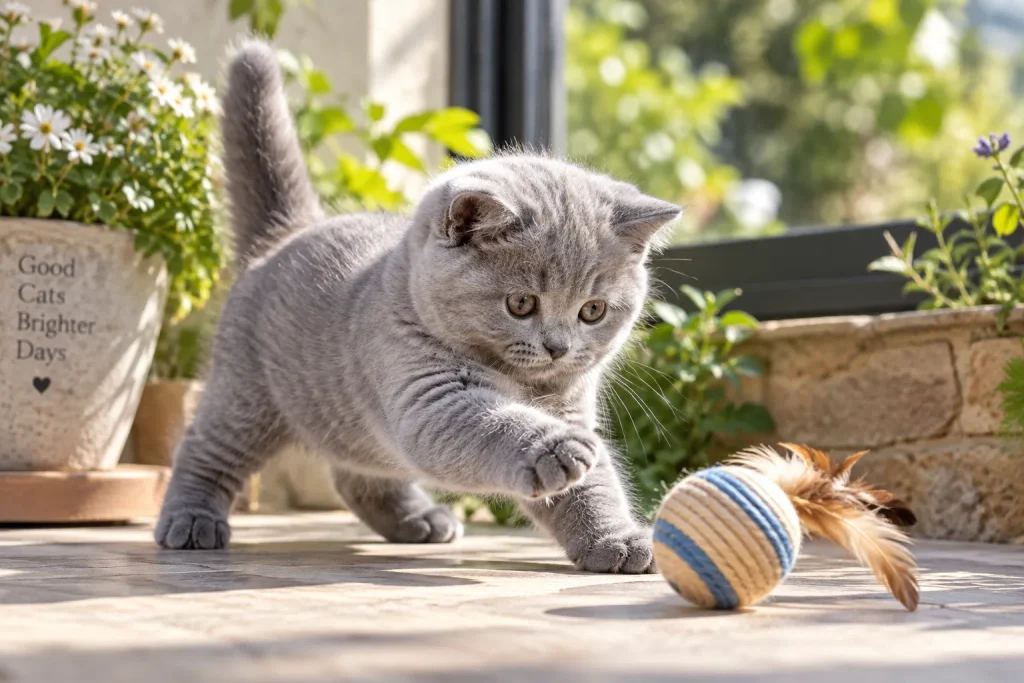
British Shorthair kittens aren’t as high-energy as some breeds, but they still need regular play to stay physically and mentally engaged — short, interactive sessions a few times a day work better than expecting them to entertain themselves.
A common mistake: because British Shorthairs rarely beg dramatically for food the way some cats do, it’s easy to underestimate how much they’re actually eating relative to their activity level. Regularly checking body condition (not just the scale) helps catch weight gain early, before it becomes a bigger issue.
Bringing a British Shorthair Kitten Home: The First Days
The first few days with a new British Shorthair kitten are less about bonding instantly and more about giving him room to adjust at his own pace.
Preparing Your Home
Kitten-proofing before he arrives saves a lot of stress later — securing loose wires, removing anything small enough to swallow, and setting up a quiet room with food, water, a litter box, and a hiding spot gives a new kitten a manageable space to start in rather than the whole house at once.
The First 24–48 Hours
It’s completely normal for a new kitten to hide, cry occasionally, or seem unsure of his surroundings during the first couple of days. Our first-night guide walks through what to expect and how to help him settle in without overwhelming him with attention before he’s ready for it.
Health Basics Every Kitten Buyer Should Know
This section is based on research into veterinary sources, not personal veterinary experience — it’s meant as general information and doesn’t replace advice from your own vet.
British Shorthairs are generally a sturdy, healthy breed, but like most pedigree cats, they carry a known predisposition to a few specific conditions. The most talked-about is hypertrophic cardiomyopathy (HCM), a heart condition that’s been documented in the breed and is one of the main reasons responsible breeders screen their breeding cats.
Cornell Feline Health Center and other veterinary sources note that HCM can affect cats of any breed, but certain pedigree lines — including British Shorthairs — show a higher documented incidence.
This doesn’t mean every British Shorthair kitten will develop heart problems. It does mean it’s worth asking a breeder directly whether their breeding cats have been screened, and keeping up with routine veterinary checkups as your kitten grows, since early detection makes a real difference.
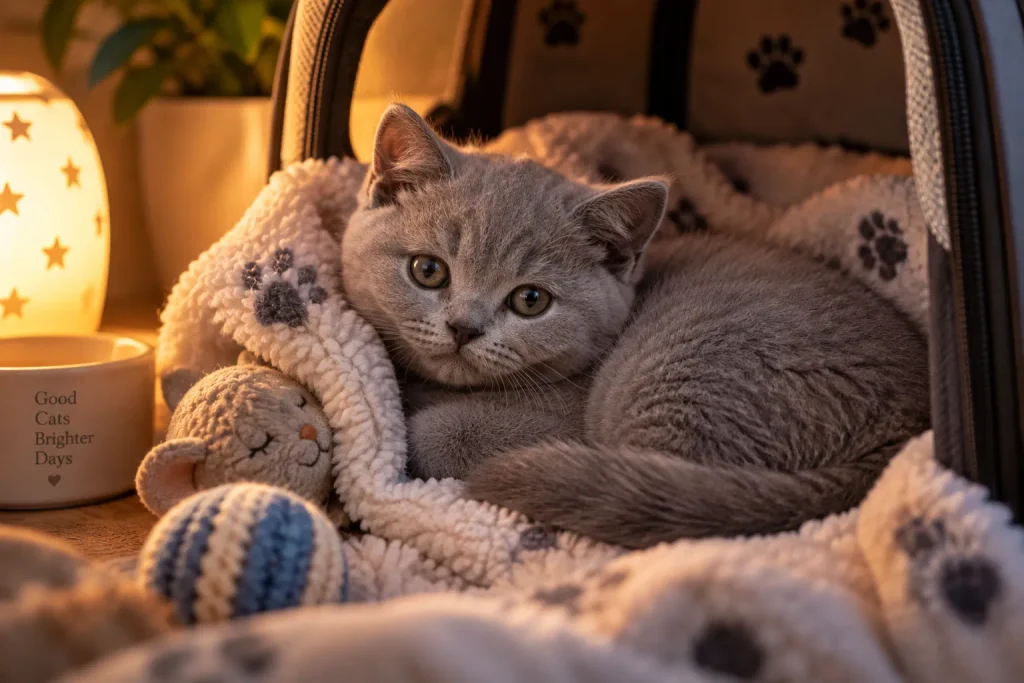
Choosing a Healthy, Well-Bred British Shorthair Kitten
A reputable British Shorthair breeder should be able to answer questions openly and show, not just tell, that their kittens are raised well. A few things worth looking for:
- Health testing for both parent cats, including HCM screening
- Kittens raised in a clean, social home environment rather than isolated cages
- Willingness to let you meet the kitten’s mother
- Kittens that aren’t sent home before roughly 12 weeks of age, giving them enough time with their mother and littermates
- Clear, direct answers about the cattery’s health and socialization practices
Breeders who dodge these questions, or can’t provide any health information at all, are worth walking away from — no matter how tempting that fluffy face is.
Quick Answers for Future British Shorthair Owners
How much do British Shorthair kittens cost?
In the US, registered breeders typically charge somewhere in the $900–$1,800 range, though pricing varies by lineage, color, and location. Unregistered or backyard breeders sometimes charge less, but that often comes with fewer health guarantees.
Are British Shorthair kittens good with kids and other pets?
Generally, yes. Their patient, easygoing temperament tends to hold up well around normal household chaos, though kittens should always be supervised with young children to keep handling gentle on both sides.
Do British Shorthair kittens like cuddles?
Some do, plenty don’t — at least not in the constant-lap-cat sense. Most show affection through closeness and routine rather than nonstop physical contact, though every kitten is a little different.
Do British Shorthair kittens need a lot of grooming?
Not really. Weekly brushing covers most of it, with a bit more during seasonal shedding. It’s one of the lower-maintenance parts of owning this breed.
Settling In With Your Round-Faced Roommate
Life with a British Shorthair kitten has a way of turning your home into a warmer, funnier place — even on the days he treats you more like staff than family. Understanding what this first year actually looks like, quirks and all, is what turns a stressful adjustment period into the start of a bond that lasts well over a decade.
If this guide helped you get ready for your own round-faced roommate, feel free to share it with fellow cat lovers who could use it too.
And we’d genuinely love to hear from you: does your British Shorthair have a favorite “diva moment” from that first year? Drop it in the comments — we read every single one, and there’s nothing better than swapping British Shorthair stories.