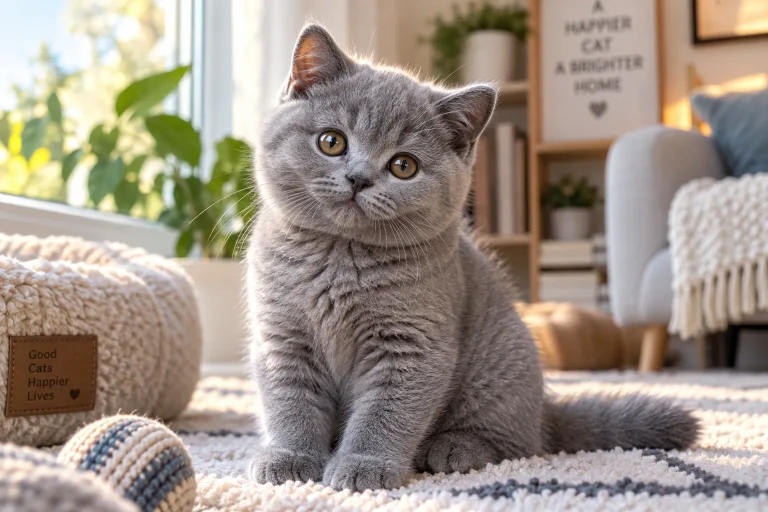

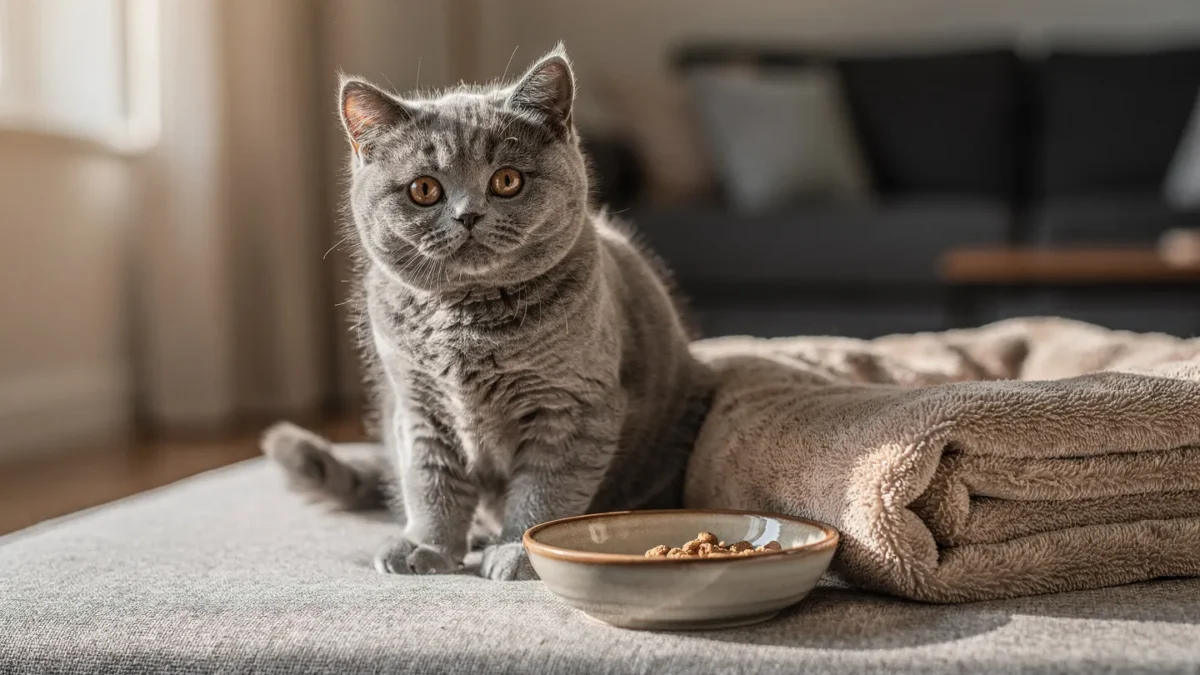
If your British Shorthair has ever stared at you from the sofa as if you’ve just interrupted a very important royal meeting, you’re not alone.
These cats have a special talent for looking completely relaxed while somehow making you feel like the one who needs to explain yourself. And when it comes to care, that calm, easygoing personality can make them seem almost effortless to live with.
But there’s a little more to British Shorthair care than filling the food bowl, scooping the litter box, and admiring that wonderfully round face.
Their dense coat, sturdy build, tendency to enjoy a good nap, and sometimes very selective attitude toward exercise all mean that a few simple habits can make a big difference.
In this guide, we’ll walk through the practical side of caring for a British Shorthair—from feeding and grooming to weight management, exercise, litter box care, kitten care, and the health issues owners should keep an eye on.
A quick note before we start: This guide is based on research and practical cat-care information and is intended for general educational purposes. It is not a substitute for veterinary advice. If your British Shorthair has a medical condition, unusual symptoms, or special dietary needs, talk with your veterinarian before making changes to their care routine.
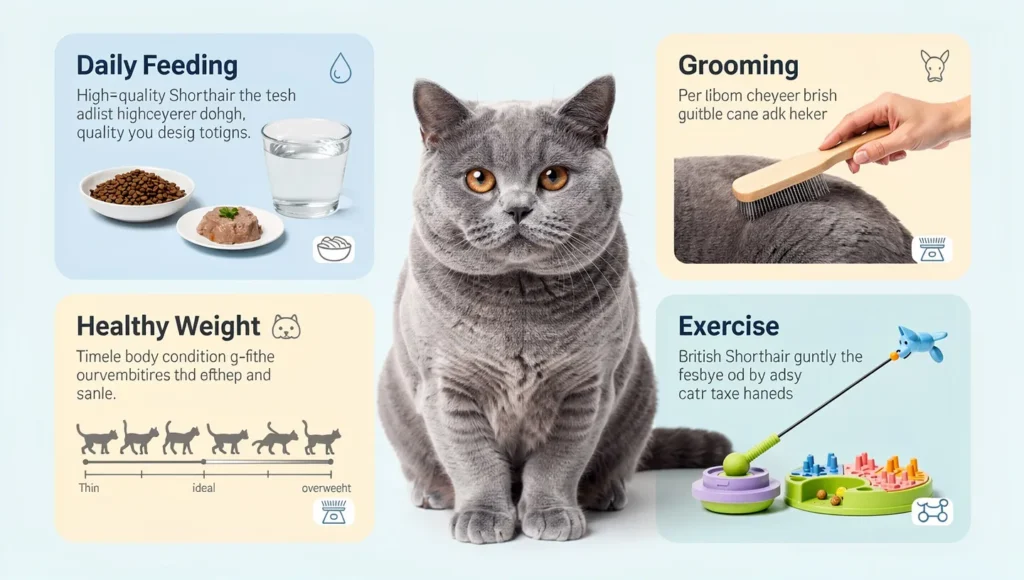
Table of Contents
- How Much Care Does a British Shorthair Really Need?
- What Makes British Shorthair Care a Little Different?
- A Simple Daily British Shorthair Care Routine
- What Does Good British Shorthair Care Look Like?
- British Shorthair Feeding: What and How Much Should You Feed?
- Choose a Complete, Balanced Cat Food
- Wet Food vs. Dry Food: Which Is Better?
- How Much Should You Feed a British Shorthair?
- Don’t Let the Food Bowl Become an All-Day Buffet
- What About Treats?
- What About Supplements?
- A Simple Feeding Rule to Remember
- How to Groom a British Shorthair
- A simple grooming routine
- Keeping a British Shorthair at a Healthy Weight
- Simple ways to stay ahead of weight gain
- Exercise and Enrichment for a British Shorthair
- Easy ways to keep your British Shorthair moving
- Litter Box Setup for a British Shorthair
- British Shorthair Kitten Care
- A Simple British Shorthair Care Checklist
- Every Day
- Every Week
- Regularly
- British Shorthair Care FAQ
- Are British Shorthairs easy to take care of?
- How often should you brush a British Shorthair?
- Do British Shorthairs need baths?
- Are British Shorthairs prone to obesity?
- Can British Shorthairs live happily indoors?
- How do you care for a British Shorthair kitten?
- A Little Final Tip From One Cat Lover to Another
How Much Care Does a British Shorthair Really Need?
British Shorthairs are generally easy to live with, but “easygoing” doesn’t mean “set the food bowl down and let the cat handle the rest.” Their calm nature, sturdy build, and very dense coat make a simple, consistent care routine especially important.
The good news? You don’t need to spend your entire day grooming, entertaining, or following your British Shorthair around the house with a clipboard. A few small habits, done consistently, can go a long way.
What Makes British Shorthair Care a Little Different?
The first thing to remember is that British Shorthairs are built differently from many more slender, athletic cat breeds.
They have a broad, sturdy body and a short coat that is exceptionally dense. That plush coat is one of the things people love most about them—but it also means regular brushing deserves a place in your routine.
Their calm personality can also work against them when it comes to exercise.
A British Shorthair may be perfectly happy to spend a large part of the afternoon stretched across the sofa, looking like a very expensive cushion that has opinions.
That’s perfectly fine.
The problem starts when naps consistently replace movement, especially when meals and treats are not carefully measured.
So the goal isn’t to turn your British Shorthair into a marathon runner. It’s to keep everyday care balanced:
- Feed measured, appropriate portions.
- Keep fresh water available.
- Brush the coat regularly.
- Encourage short, enjoyable play sessions.
- Keep the litter box clean.
- Pay attention to changes in weight, appetite, grooming, or behavior.
- Make routine veterinary care part of your cat’s life.
A Simple Daily British Shorthair Care Routine
You don’t need a complicated schedule to keep things under control.
A simple routine might look like this:
| Every Day | Every Week | Regularly |
|---|---|---|
| Fresh water | Brush the coat | Trim nails when needed |
| Measured meals | Check body condition and weight trend | Dental care |
| Clean litter box | Check coat and skin | Veterinary checkups |
| Short play sessions | Look for changes in grooming habits | Preventive care as recommended |
| Quick behavior check | Wash food and water bowls thoroughly | Review diet as your cat ages |
The important part is consistency.
You might miss one brushing session. You might have a day when your cat decides that playing with a toy is beneath their dignity. That’s normal.
What matters is the overall routine—not achieving some imaginary level of feline perfection.
What Does Good British Shorthair Care Look Like?
Think of care as a collection of small habits rather than one big task.
Your British Shorthair doesn’t need you to constantly fuss over them. They need appropriate food, clean water, a clean toilet area, regular grooming, opportunities to move and play, and an environment where they can rest comfortably and feel secure.
And don’t forget the less obvious part of cat care: observation.
You know your cat’s normal routine better than anyone. If your normally hungry British Shorthair suddenly stops eating, starts hiding more than usual, loses interest in play, or changes their litter box habits, that change matters.
You don’t need to diagnose the problem yourself. You simply need to notice that something is different and know when it’s time to ask your veterinarian.
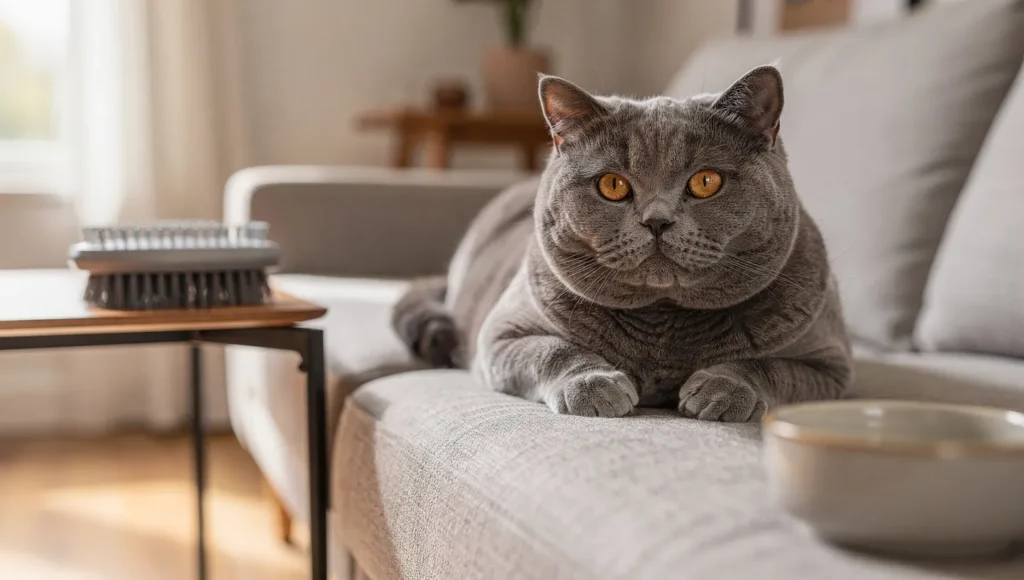
The best British Shorthair care routine is therefore not complicated.
It’s simple, consistent, and easy enough to maintain every day.
And once those basics are in place, the rest becomes much easier—including feeding, grooming, weight management, and keeping your famously relaxed British Shorthair moving.
British Shorthair Feeding: What and How Much Should You Feed?
If your British Shorthair acts like you’ve never fed her in your entire life, even though she finished dinner twelve minutes ago, welcome to the club.
That look of innocent betrayal can be surprisingly convincing.
But feeding a British Shorthair isn’t really about giving her as much food as she asks for. It’s about choosing a nutritionally appropriate food, serving sensible portions, and adjusting the routine as her age, weight, activity level, and health needs change.
Choose a Complete, Balanced Cat Food
The simplest place to start is with a complete and balanced cat food appropriate for your cat’s life stage.
Adult British Shorthairs generally need food formulated for adult cats, while kittens need a kitten formula designed to support growth and development. Your cat’s nutritional needs can also change as she gets older or if a health condition develops.
You don’t necessarily need a food marketed specifically as “British Shorthair food.”
The more important question is whether the food is appropriate for your cat’s life stage and provides complete nutrition.
When choosing a food, look for a clear nutritional adequacy statement on the label and consider your cat’s individual needs rather than choosing a bag simply because it has a picture of a British Shorthair on it.
And if you’re confused by the ingredient list, our guide to reading cat food labels can help you understand what you’re actually looking at.
Wet Food vs. Dry Food: Which Is Better?
There isn’t one universal answer that makes every British Shorthair owner choose wet food or dry food forever.
Both wet and dry foods can be part of an appropriate feeding routine when the overall diet is nutritionally complete and suitable for the individual cat.
Wet food has a much higher water content, which can be useful for cats that don’t naturally drink much if you’re concerned about how much water your cat gets daily, see our complete guide to cat hydration.
Dry food, on the other hand, is convenient to store and serve, and some owners find it easier to measure into controlled portions.
The important thing is not to turn the choice into a competition.
Instead, consider:
- What your cat actually eats willingly.
- Whether the food provides complete and balanced nutrition.
- Your cat’s water intake.
- Her body condition and weight.
- Any medical or dietary recommendations from your veterinarian.
- How easy the feeding routine is for you to maintain consistently.
If your British Shorthair does well with a combination of wet and dry food, there is no need to make mealtime unnecessarily complicated.
How Much Should You Feed a British Shorthair?
This is where things get a little more personal.
There isn’t one magic number of cups, cans, or grams that is perfect for every British Shorthair.
Two cats can weigh the same and still need different amounts of food because their age, activity level, metabolism, reproductive status, and body condition can differ.
Start with the feeding guidance for the specific food you’re using, then use your cat’s body condition, weight trend, and veterinary guidance to determine whether the portion needs adjusting.
And don’t forget that the food bowl is not the only source of calories.
Treats count too.
If you’re giving several treats throughout the day, those calories need to be considered as part of the overall feeding routine.
A kitchen scale can also be useful if you want more consistent portions, especially if your British Shorthair has started gaining weight.
Don’t Let the Food Bowl Become an All-Day Buffet
Free-feeding can be convenient, but it isn’t ideal for every cat.
For a British Shorthair that is already gaining weight or has a tendency to eat whenever food is available, leaving a constantly full bowl can make portion control much harder.
Measured meals give you a better idea of how much your cat is actually eating.
They also make it easier to notice changes.
If your cat suddenly leaves most of her food untouched, becomes unusually hungry, or starts asking for food far more often than normal, that’s useful information—not something to automatically solve by adding more food.
What About Treats?
Treats are perfectly capable of becoming a small-scale bribery system in a British Shorthair household.
One treat for being cute.
Another because she came when called.
A third because she stared at you while you were eating.
And suddenly the “tiny treat” collection has become an extra meal.
Keep treats small and occasional, and make sure they don’t gradually replace the balanced nutrition your cat gets from her regular food.
If you enjoy making homemade treats, our homemade cat treats guide covers simple options and important safety considerations.
What About Supplements?
A complete and balanced commercial cat food generally provides the nutrients your cat needs without requiring you to build a supplement cabinet beside the food bowl.
Don’t add vitamins, minerals, or other supplements simply because they sound healthy.
If your British Shorthair has a nutritional deficiency, medical condition, or special dietary requirement, let your veterinarian decide whether a supplement is actually appropriate.
More supplements do not automatically mean a healthier cat.
Sometimes the healthiest supplement routine is no supplement routine at all.
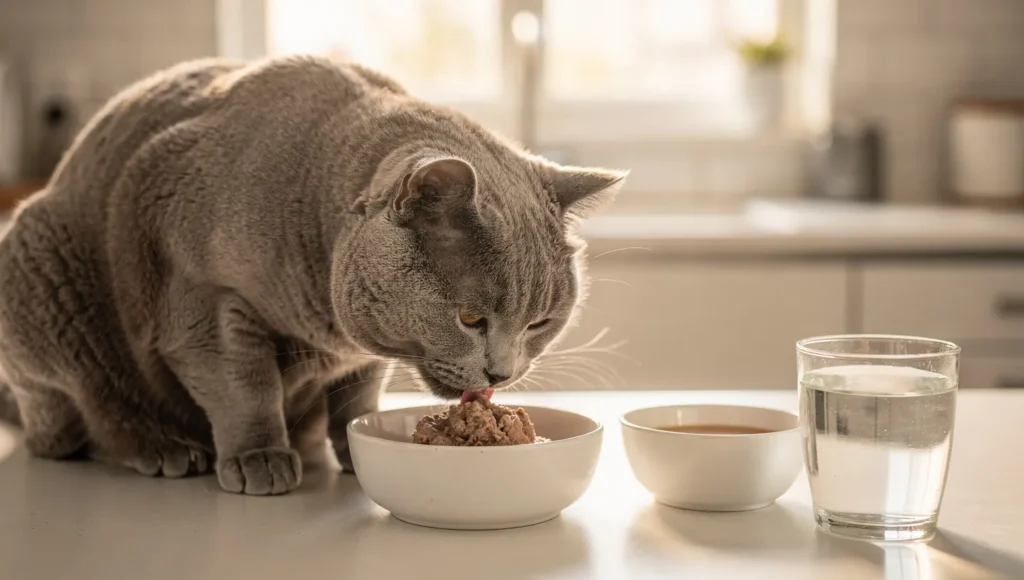
A Simple Feeding Rule to Remember
Don’t aim for a perfectly full bowl.
Aim for a healthy cat.
That means choosing appropriate food, measuring portions, keeping treats under control, providing fresh water, and paying attention to how your British Shorthair’s body condition changes over time.
Because when your cat gives you that heartbreaking “I’m starving” look five minutes after dinner, remember:
She may be telling the truth.
She may also be running an extremely successful emotional manipulation campaign.
You don’t have to find out the hard way.
How to Groom a British Shorthair
That plush British Shorthair coat looks almost maintenance-free. Almost.
Because it is exceptionally dense, regular brushing helps remove loose hair and keep the coat in good condition. The Cat Fanciers’ Association recommends weekly brushing or combing for routine care, with extra attention during heavier seasonal shedding.
A simple grooming routine
- Brush once or twice a week with a suitable metal comb or rubber brush.
- Brush more often during heavy shedding if your cat is dropping noticeably more fur.
- Trim the claws when needed rather than waiting until they become too long.
- Check the ears occasionally for unusual dirt, odor, redness, or discharge.
- Don’t bathe routinely unless your cat actually needs a bath.
The trick is to make grooming boring—in the best possible way. A few calm minutes are usually much easier than waiting until your cat’s coat is full of loose fur and suddenly announcing that today is “spa day.”
For a step-by-step brushing routine, see our guide to How to Brush Your Cat.
Keeping a British Shorthair at a Healthy Weight
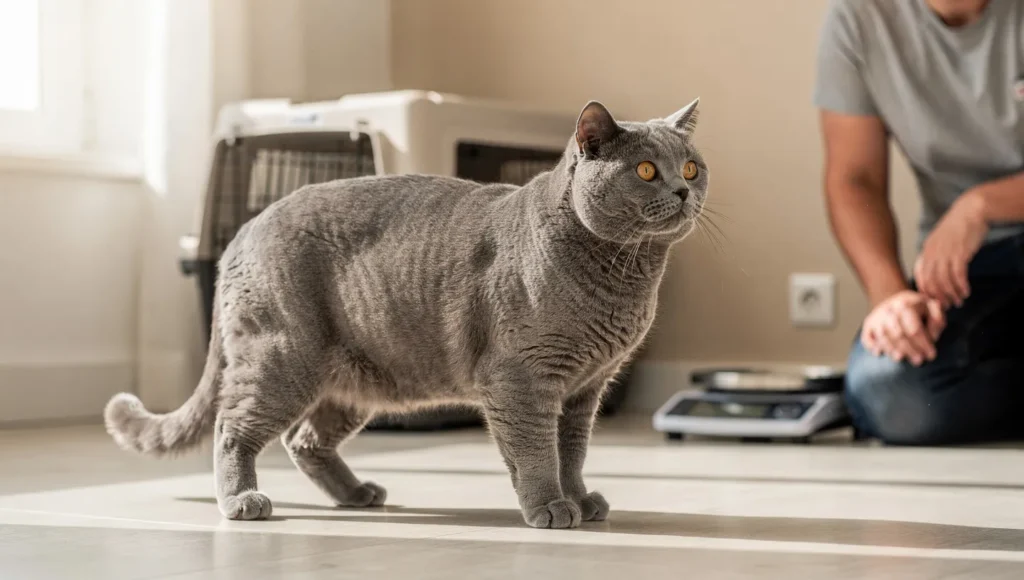
A British Shorthair can look wonderfully solid without actually being overweight—but that broad, sturdy body can make excess weight surprisingly easy to overlook.
Don’t judge by the scale alone. Watch the trend in your cat’s weight and body condition instead.
Simple ways to stay ahead of weight gain
- Measure meals instead of guessing.
- Count treats as part of the daily diet.
- Avoid leaving unlimited food available if your cat tends to overeat.
- Check the body shape regularly: you should be able to feel the ribs without a thick layer of fat.
- Weigh your cat periodically so gradual changes don’t go unnoticed.
If your British Shorthair is already carrying extra weight, don’t put her on a crash diet. Sudden food restriction can be dangerous for cats. Work with your veterinarian on a safe plan.
For a deeper step-by-step approach, see our Cat Weight Loss Guide.
Exercise and Enrichment for a British Shorthair
British Shorthairs aren’t famous for sprinting around the house like they’ve just discovered electricity. They’re generally calm, moderately active cats—and that’s perfectly fine.
The goal is simply to make movement part of everyday life.
Easy ways to keep your British Shorthair moving
- Short interactive play sessions with a wand or feather toy.
- Puzzle feeders that make your cat work for part of the meal.
- A sturdy cat tree for climbing and stretching.
- Scratching posts in areas your cat actually uses.
- A safe window perch for watching the world go by.
Think little bursts of activity, not forced exercise.
A few minutes of enthusiastic chasing followed by a dramatic collapse onto the sofa still counts.
Litter Box Setup for a British Shorthair
Your British Shorthair may forgive you for buying the wrong toy.
She is much less likely to forgive you for a dirty litter box.
Keep the setup simple:
- Choose a large enough box for your cat to turn around comfortably.
- Put it somewhere quiet and easy to access.
- Keep it away from food and water.
- Scoop regularly.
- Clean the box properly rather than simply covering odors.
- If your cat suddenly starts avoiding the box, don’t assume she’s being difficult—changes in litter box behavior can have medical or environmental causes.
For more detailed placement and setup advice, see our Litter Box Placement Guide.
British Shorthair Kitten Care
A British Shorthair kitten doesn’t need a completely different universe of care—but she does need more support while she’s growing.
Focus on the basics:
- Feed a complete kitten diet appropriate for growth.
- Follow an age-appropriate feeding schedule rather than improvising portions.
- Introduce brushing, nail handling, and gentle handling early.
- Give her safe opportunities to play and explore.
- Kitten-proof the home before she arrives.
- Keep vaccinations, parasite prevention, and veterinary visits on schedule.
One important reminder: British Shorthairs mature slowly. The breed standard notes that full physical maturity can take around 3–5 years, so don’t expect a young British Shorthair to look like a miniature finished adult see The Cat Fanciers’ Association breed standard for full details.
For feeding amounts by age, see our Kitten Feeding Guide.
A Simple British Shorthair Care Checklist
Every Day
- ☐ Fresh water
- ☐ Measured meals
- ☐ Clean litter box
- ☐ A little play or movement
- ☐ Quick check of appetite and behavior
Every Week
- ☐ Brush the coat
- ☐ Check the skin and coat
- ☐ Look for changes in body condition
- ☐ Wash food and water bowls thoroughly
Regularly
- ☐ Trim claws when needed
- ☐ Dental care
- ☐ Veterinary checkups
- ☐ Review diet and care needs as your cat ages
Save this checklist somewhere you’ll actually see it. The best cat-care routine isn’t the most complicated one—it’s the one you can consistently stick to.
British Shorthair Care FAQ
Are British Shorthairs easy to take care of?
Generally, yes. Their short coat is relatively easy to maintain, and their calm personality makes them manageable companions. Their main care priorities are consistent grooming, sensible feeding, weight control, play, and routine health care.
How often should you brush a British Shorthair?
For most cats, once or twice a week is a practical routine, with more frequent brushing during heavier shedding periods.
Do British Shorthairs need baths?
Usually not on a regular schedule. Their short coat is relatively easy to maintain, so bathing is generally something you do when there is a specific reason rather than because the calendar says it’s Saturday.
Are British Shorthairs prone to obesity?
Their sturdy build and relatively moderate activity level mean owners should pay close attention to portions and weight trends. Keeping meals measured and encouraging regular movement can help prevent unnecessary weight gain.
Can British Shorthairs live happily indoors?
Yes. They are generally well suited to indoor living, provided they have a comfortable environment, opportunities for play, scratching, climbing, and mental stimulation.
How do you care for a British Shorthair kitten?
Start with a complete kitten diet, safe play, gentle handling, early grooming habits, appropriate veterinary care, and a kitten-proofed home. Keep the routine simple and consistent while your kitten grows.
A Little Final Tip From One Cat Lover to Another
Don’t try to turn your British Shorthair into the most energetic cat on the block.
Give her good food, fresh water, a clean litter box, regular grooming, a little playtime, and a comfortable place to nap—and she’ll probably consider the arrangement perfectly acceptable.
And if your British Shorthair has her own rules about when she wants to be brushed, played with, or left completely alone, you’re definitely not the only one. 😼
We’d genuinely love to hear about your experience. Leave a comment and tell us what caring for your British Shorthair is really like. What does your cat love? What does she absolutely refuse to tolerate? Your experience could help another British Shorthair owner dealing with the exact same thing.
We read every comment, so don’t be shy.
And if you found this guide useful, share it with another cat owner who might need a little help keeping their furry royal healthy and happy.