
I’ll be honest with you — I was absolutely clueless.
My name is Luca, and I genuinely believed that getting a Bengal cat breed meant I’d have a slightly fancier version of my old cat Biscuit. You know Biscuit — the guy who’d sleep 18 hours a day, knock over one cup of water per week for drama, and call it a life. I thought a Bengal would be… similar. Just with cooler spots.
I was so wrong it’s almost funny.
But before I tell you what happened the first week Kovu came home, let me take you back to the conversation that started all of this — a Saturday afternoon at my place, three friends, terrible coffee, and a debate about where Bengal cats actually come from.
Marcus — the one who reads everything and adjusts his glasses before every sentence — leaned forward and said, “Luca, the Bengal is a hybrid breed. It started in the 1960s when a geneticist named Jean Mill crossed a domestic black cat with an Asian Leopard Cat. She was trying to preserve the wild cat’s genetics while creating something safe to live with. So technically?
Your future cat has literal jungle leopard DNA.”
Then Dave opened his mouth.
“Nah, that’s not it,” Dave said, with the confidence of someone who has never been right about anything. “A regular cat climbed a banana tree in India, met a small leopard, and… you know. Nature happened. It’s simple biology, guys.”
We stared at him for a full five seconds.
I called Dr. Sami — my vet, my sanity anchor, and somehow still my friend despite the number of panicked 6 AM texts I send him. He laughed, confirmed that Marcus was right, and explained something I hadn’t considered: Bengal cats went through generations of selective breeding, from F1 (first generation, still very wild) all the way to F4 and beyond, before they became the domesticated house cats we know today. But here’s the thing
Dr. Sami made very clear — “domesticated” doesn’t mean calm. It just means they won’t actually hunt your neighbors.
After that call, I spent weeks researching. I talked to breeders, read everything I could find, and — most importantly — learned from people who already lived with Bengals. Everything I wish someone had told me is in this guide.
Quick note: This article is based on personal experience and research from trusted sources. It’s for informational purposes only and isn’t a substitute for professional veterinary advice. When in doubt, always check with your vet.
Table of Contents
- What Is the Bengal Cat Breed, Exactly? (More Than Just a Pretty Coat)
- Bengal Cat Personality — What You’re Actually Not Prepared For
- The Intelligence That Will Outsmart You
- The Operatic Meowing (Yes, It’s That Loud)
- The Water Obsession Nobody Warns You About
- Separation Anxiety & What Happens When You Leave
- Bengal Cat Pros and Cons — The Honest Table
- Bengal Cat Price & True Ownership Costs
- Is a Bengal Cat Right for You? The Honest Decision Framework
- You’ll Love a Bengal If…
- You Should NOT Get a Bengal If…
- Frequently Asked Questions About the Bengal Cat Breed
- Are Bengal cats good pets?
- Are Bengal cats aggressive?
- Do Bengal cats like water?
- Can Bengal cats live indoors?
- Are Bengal cats good for beginners?
- The Part They Don’t Put in Breed Guides
What Is the Bengal Cat Breed, Exactly? (More Than Just a Pretty Coat)
The Bengal cat breed is a domesticated hybrid breed developed by crossing
domestic cats with the Asian Leopard Cat, resulting in a highly intelligent, athletic feline with a distinctive spotted or marbled wild-looking coat, strong muscles, and an energy level that most first-time owners severely underestimate.
And that last part? That’s the part the pretty Instagram photos never show you.
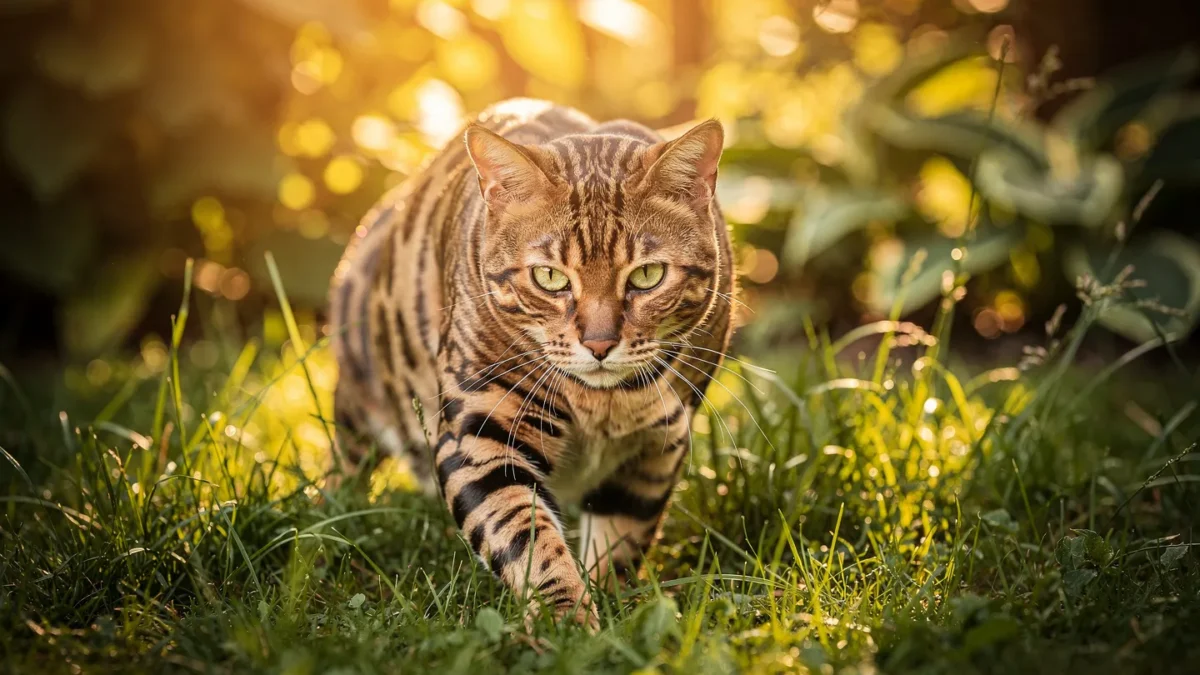
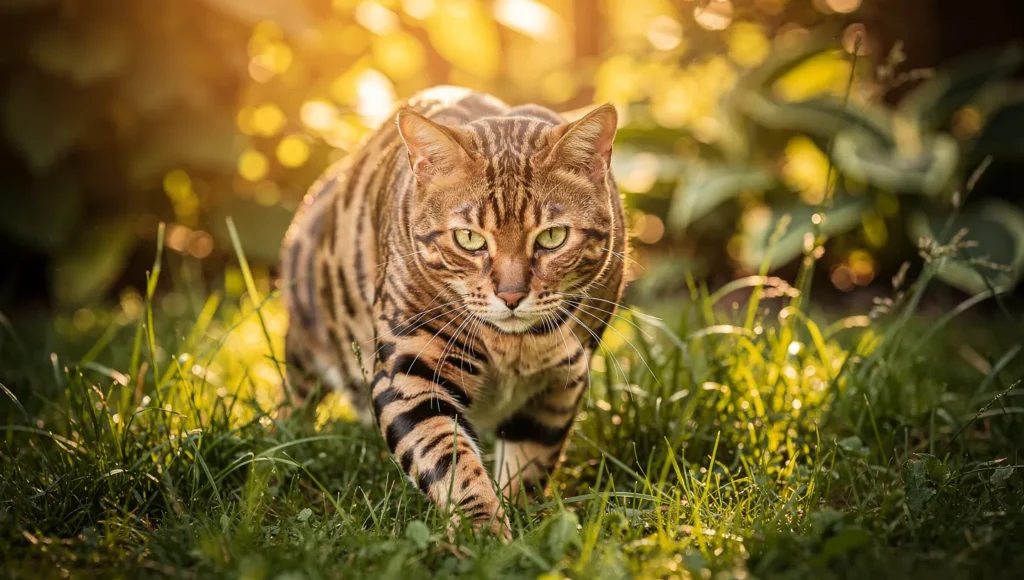
In person, a Bengal is something else entirely. The coat has this quality
called “glitter” — individual hairs that catch light and almost shimmer, like someone scattered gold dust across a leopard. It sounds dramatic, but when Kovu walks through a patch of sunlight, people literally stop mid-sentence.
The body is muscular and low to the ground — more athletic than fluffy.
Their hind legs are slightly longer than their front legs, which gives them this powerful, stalking walk. You don’t just see a Bengal cross a room. You watch it.
According to TICA (The International Cat Association), the Bengal is one of the most popular registered breeds in the world — and it’s easy to understand the attraction. What’s harder to understand, until you live with one, is everything underneath that gorgeous exterior.
Honestly. The coat is the easy part.
Bengal Cat Personality — What You’re Actually Not Prepared For
Here’s the thing most breed guides won’t tell you.
When people describe Bengals as “intelligent” and “energetic,” they say it like it’s a fun bonus feature. Like finding out your new car has heated seats. What they don’t tell you is that this intelligence is relentless.
It doesn’t take days off. It doesn’t respect your work schedule, your sleep, or your carefully organized kitchen cabinets.
I learned this on a Tuesday.
The Intelligence That Will Outsmart You
It was 7 AM. I was running late for a meeting, half-awake, and I walked into my kitchen to find Kovu sitting on top of the refrigerator.
Not unusual.
What was unusual was the open cabinet below him. And the torn bag of premium cat food on the floor. And the fact that he was looking at me with the exact expression of someone who just won an argument they didn’t need to have.
He had watched me open that cabinet maybe three times. Three times. And he figured out the mechanism, waited for the right moment, and executed.
Personally, I was more impressed than angry. But I did buy a child-proof lock that afternoon.
This is what Bengal intelligence actually looks like in real life — not cute
tricks on command, but independent problem-solving that works against you.
They need serious mental stimulation every single day. Without it, they invent their own entertainment. And you won’t like their ideas.
Puzzle feeders, rotating toys, and dedicated play sessions aren’t optional with this breed — they’re survival tools for your furniture. If you want to know what actually works for keeping a Bengal mentally occupied, I put together everything in this guide on the best interactive cat toys — some of those picks were genuinely game-changers for Kovu.
The Operatic Meowing (Yes, It’s That Loud)
Bengals are vocal. Not “oh how cute, the kitty is talking” vocal.
I mean — standing in the hallway at 2 AM, delivering what sounds like a full emotional monologue, complete with pauses for effect, vocal.
Kovu has a range. There’s the regular “I’m bored” meow, the “I see a bird outside and I have opinions about it” meow, and then there’s the one I can only describe as an existential crisis. Long, loud, deeply committed.
According to the ASPCA, excessive vocalization in cats is often tied to boredom, attention-seeking, or understimulation — and with Bengals, all three can happen before breakfast.
If your Bengal is waking you up at night with this kind of performance, it’s usually not random. There’s almost always a reason. I covered the most common ones in detail over here: Cat Meowing at Night — 7 Reasons Why.
Most people get this wrong — they try to ignore it or respond to it.
Neither works long-term. The fix is almost always about energy and stimulation earlier in the day.
The Water Obsession Nobody Warns You About
The first time Kovu followed me into the shower, I thought it was an accident.
The second time, I realized he had a plan.
Bengals have a well-documented fascination with water that goes back to their wild ancestors — Asian Leopard Cats are known to hunt near streams and actually enjoy water. In domestic Bengals, this shows up as pawing at running faucets, sitting on the edge of the bathtub, occasionally joining you in places you’d prefer to be alone, and a deep suspicion of still water bowls.
This last point actually matters for their health. Many Bengals prefer moving water and will genuinely drink more from a fountain than a bowl — which makes a real difference in preventing dehydration and urinary issues.
Everything you need to know about keeping a Bengal properly hydrated is here: Cat Hydration Guide.
This is where things change for a lot of owners. A simple switch to a running water fountain can transform how much your Bengal drinks daily. Small thing. Big difference.
Separation Anxiety & What Happens When You Leave
This one catches people off guard.
Bengals bond hard. They’re not the independent, aloof cats that pop culture
keeps promising you. When Kovu is left alone for long stretches — real talk — things happen. Curtains get tested. Shelves get “reorganized.” Once I came home to find he had systematically removed every item from my bedside table and arranged them on the floor. Not knocked over. Arranged. Like a tiny protest installation.
This is separation anxiety, and it’s genuinely common in high-intelligence breeds. The behavior isn’t spite — it’s stress. A Bengal that destroys things when alone is a Bengal that needs more structured enrichment, more interactive time, and sometimes a companion animal.
If you’re seeing signs of this with your cat, this guide breaks down a practical plan that actually helped us:
Cat Separation Anxiety — 14-Day Reset Plan.
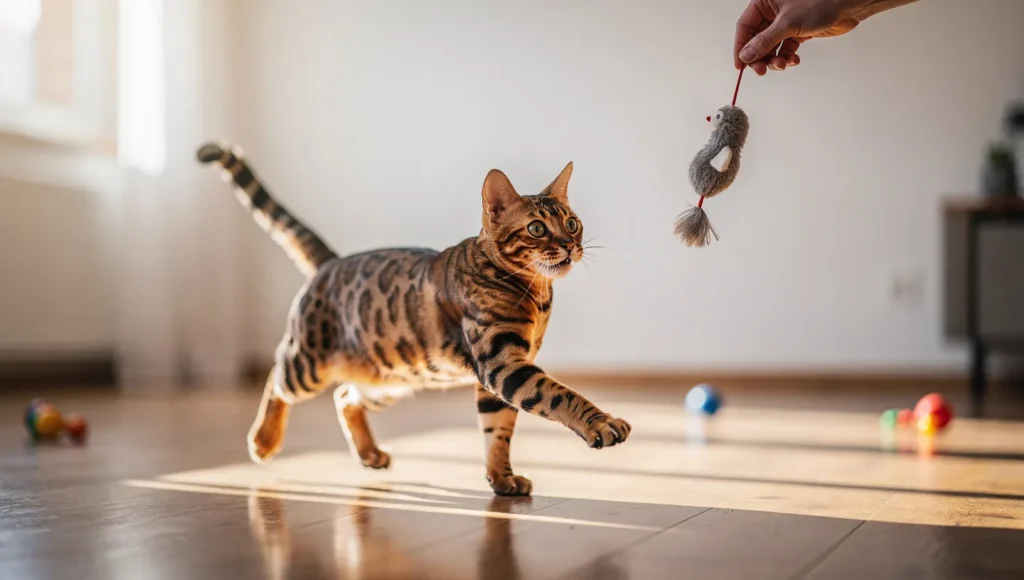
Bengal Cat Pros and Cons — The Honest Table
Most people researching Bengal cats find the same thing everywhere: beautiful photos, glowing descriptions, and a list of “challenges” that reads like fine print nobody actually warns you about.
So here’s the Bengal cat breed version I wish existed before I got Kovu.
| ✅ The Good Stuff | ❌ The Hard Truth |
|---|---|
| Stunning, exotic appearance | High-maintenance energy — every single day |
| Deeply bonded and affectionate | Separation anxiety if left alone too long |
| Highly intelligent and trainable | Will use that intelligence against you |
| Loves interactive play | Needs structured play or things get destroyed |
| Fascinating water behavior | May join you in the shower uninvited |
| Low-shedding coat | Still needs regular grooming and enrichment |
| Incredibly entertaining | Vocal. Very, very vocal. Especially at 2 AM |
| Strong, athletic build | Needs vertical space — cat trees aren’t optional |
And this is important: the “cons” column isn’t a reason not to get a Bengal.
It’s a reason to go in with your eyes open. Every single challenge in that list is manageable — if you’re prepared for it.
Bengal Cat Price & True Ownership Costs
Let’s talk money. Because this is where a lot of people get surprised.
The purchase price of a Bengal kitten from a reputable breeder typically runs between $1,500 and $3,000 in the US — sometimes higher for show-quality lines or rare coat patterns. That number alone makes people pause.
But honestly? The purchase price isn’t what gets you.
It’s everything after.
| Expense | Estimated Cost |
|---|---|
| Bengal kitten (reputable breeder) | $1,500 – $3,000 |
| Initial vet visit + vaccines | $150 – $300 |
| Spay/neuter | $200 – $500 |
| Large cat tree (non-negotiable) | $100 – $300 |
| Interactive toys (rotating supply) | $50 – $100 every few months |
| High-protein cat food (monthly) | $60 – $120/month |
| Water fountain | $30 – $80 |
| Annual vet visits | $200 – $400/year |
| Pet insurance (recommended) | $30 – $60/month |
From my experience, budget around $150–$200 per month after the initial setup costs. That’s the realistic number for doing this right.
The cat tree situation deserves its own sentence: Bengals need height.
Not as a preference — as a necessity. A flimsy small tree won’t cut it. I went through two before finding something that actually held up. If you want to skip that mistake, I covered the best options in detail here:
Best Cat Trees 2026 — the stability ratings and weight limits matter more than people think.
For food, Bengals do best on high-protein diets that reflect their carnivorous ancestry. What worked for Kovu and what the research actually supports is covered here: Best Cat Food for Indoor Cats.
Is a Bengal Cat Right for You? The Honest Decision Framework
This is the section most Bengal cat breed guides skip entirely.
They’ll tell you everything about the cat. They won’t tell you whether you’re the right person for the cat. And with Bengals especially — that distinction matters.
You’ll Love a Bengal If…
- You have time for at least 30–45 minutes of active play daily
- You work from home or have flexible hours
- You find animal intelligence genuinely entertaining, even when it inconveniences you
- You already have another pet for companionship
- You don’t mind some noise — or actually enjoy a cat that communicates
- You have vertical space in your home (tall shelves, cat trees, wall perches)
- You’ve owned cats before and understand that independence varies
by breed
You Should NOT Get a Bengal If…
- You’re away from home 10+ hours a day with no enrichment plan
- You live in a very small apartment with no vertical options
- You’re a first-time cat owner expecting a low-maintenance pet
- You have very young children who can’t read cat body language yet
- You value silence — genuinely, deeply value silence
- You’re not prepared for a cat that will test every boundary you set
Personally, I’d add one more thing to that second list: if you’re getting a Bengal because it looks cool in photos, please reconsider. The coat is real. The energy is also very real. And unlike the coat, the energy doesn’t photograph as elegantly at 2 AM when it’s knocking your water glass off the nightstand.
Frequently Asked Questions About the Bengal Cat Breed
Are Bengal cats good pets?
Yes — but only for the right owner. Bengals are affectionate,
entertaining, and deeply bonded to their families. They’re just not low-effort pets. If you can match their energy and stimulation needs, they’re genuinely one of the most rewarding breeds out there.
Are Bengal cats aggressive?
Not inherently. Most Bengal aggression comes from boredom,
understimulation, or feeling trapped. A well-exercised, mentally engaged Bengal is typically gentle and playful. If you’re seeing aggression signs, this breakdown helps: Cat Aggression Signs.
Do Bengal cats like water?
Most of them, yes — more than any other domestic breed. Running faucets,
bathtub edges, and occasionally your shower are all fair game. It’s charming until it isn’t, and then it’s charming again.
Can Bengal cats live indoors?
Absolutely — and it’s actually recommended for their safety. But indoor
Bengals need serious environmental enrichment to stay mentally healthy. Bare apartment walls and one toy mouse won’t cut it.
Are Bengal cats good for beginners?
Honestly? No. Not because they’re dangerous, but because their needs
are genuinely demanding. If you’re new to cats and set on a Bengal, go in with a solid plan — not just enthusiasm.
The Part They Don’t Put in Breed Guides
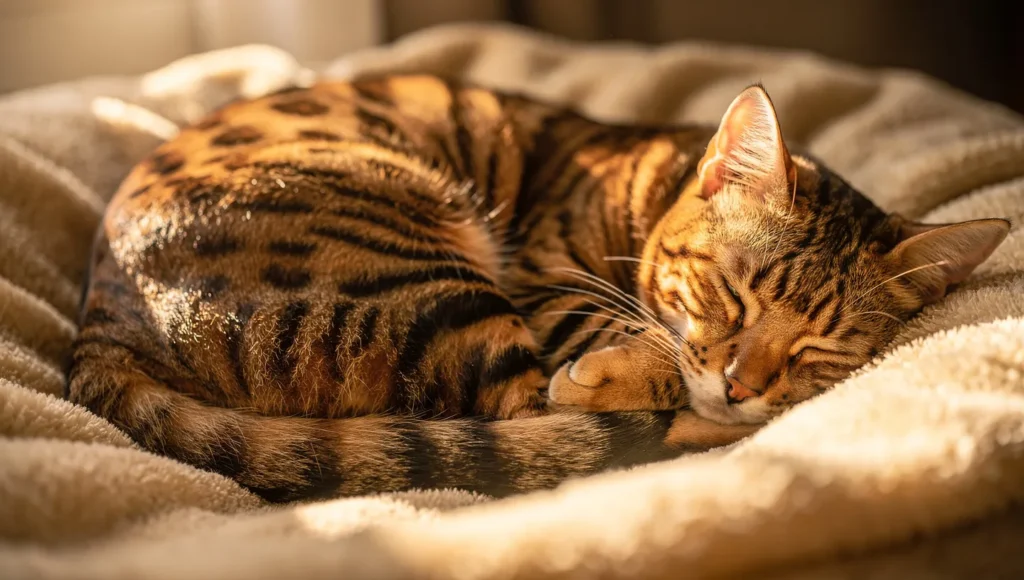
Last night, Kovu did the thing he does when he’s done with his evening chaos. He jumped onto the bed, walked in two slow circles, and settled directly next to my head. Then came the purr — that low, steady rumble that somehow makes the whole day make sense.
I’ve read that cats who sleep near their owner’s head are showing deep
trust and a specific kind of attachment. If you want to understand what that behavior actually means, it’s beautifully explained here: Why Does My Cat Sleep Next to My Head.
In that moment, I didn’t think about the cabinet. Or the curtains. Or the 2 AM opera performance from the hallway.
I just thought — this Bengal cat breed is the most alive, most present, most genuinely interesting animal I’ve ever shared a home with.
And I’d do it all over again. Stitched curtains and all.
A special thank you to Marcus, who saved me from Dave’s banana tree theory and armed me with actual facts. To Dave — buddy, I love you, and I genuinely hope you never give anyone pet advice. And to
Dr. Sami: thank you for answering my panicked messages at 6 AM without ever once changing your phone number. You are a saint in scrubs, and Kovu and I are lucky to know you.
Now it’s your turn, Felina Care Hub family.
Do you have a Bengal at home? Have they opened a cabinet you thought was secure? Joined you somewhere you really didn’t invite them? Delivered a 3 AM vocal performance worthy of a standing ovation?
Drop your story in the comments — I read every single one, and I
genuinely need to know I’m not alone in this. And if you know someone thinking about getting a Bengal, share this with them. It might save their curtains. It might save their sanity. Either way, you’ll have done a good thing.