

If you’ve ever lived with a British Shorthair, you’ve probably discovered one important truth: you don’t really own this cat… you just live in the house she has generously agreed to share with you.
Picture the scene.
You walk into the kitchen in the morning and find your cat sitting there, calmly watching you.
You open the food can.
She stares at you.
You put the food in her bowl.
She stares at you again.
Then she looks at the bowl as if she’s thinking:
“Is this breakfast? Seriously? This is the best you could do?”
You reach down to pet her. She gives you about three seconds of attention, then gets up and walks away with the confidence of someone who has a very important meeting to attend.
A few minutes later, she’s asleep in the most comfortable spot in the house.
And you’re left wondering where you’re supposed to sit.
That’s the British Shorthair.
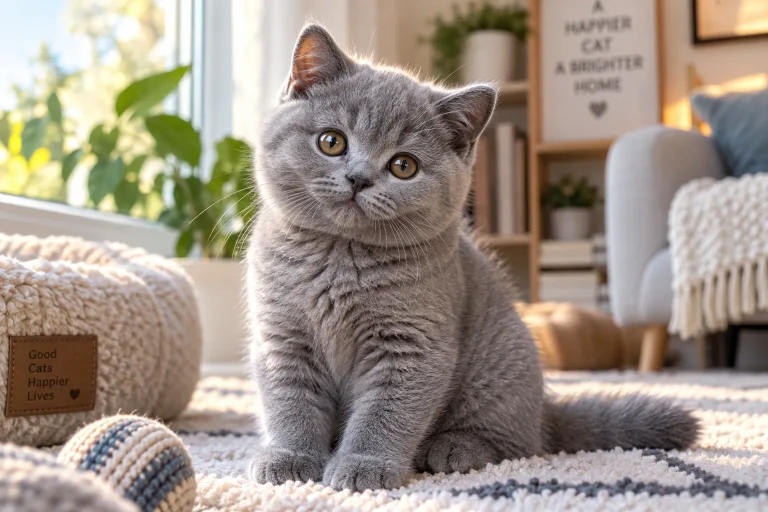
Calm. Beautiful. Round-faced. Wrapped in a thick, plush coat that makes her look like she has been wearing a luxury winter coat her entire life.
But here’s the thing: that quiet, teddy-bear appearance doesn’t mean this is simply a pretty cat that needs a food bowl and a comfortable couch.
There’s much more going on underneath that adorable face.
The British Shorthair has a fascinating history, a distinctive body shape, and a personality that can be surprisingly different from what first-time owners expect. She can be affectionate without being clingy, independent without being distant, and playful without turning your home into a 24-hour racetrack.
So, is a British Shorthair actually right for you?
How big does she get? How long can she live? Is she affectionate or independent? Does she get along with children and other pets? And why does she sometimes look like she doesn’t care about you when she’s actually watching everything you do?
In this guide, we’ll take a closer look at the breed—from its history and appearance to personality, size, colors, everyday life, health, and the things future owners should know before bringing one home.
By the end, you’ll have a much clearer idea of what it’s really like to share your home with this famously calm British cat.
Just remember one thing before we start:
If you finish this article and decide you absolutely need a British Shorthair, don’t say I didn’t warn you.
It may begin with a small kitten quietly sitting on the couch…
A few months later, you may find yourself sitting on the very edge while she has somehow claimed the entire thing.
And don’t bother explaining that it’s your couch.
She probably has a different opinion.
A quick note before we begin: This guide is based on research and trusted information about cats and is intended for general educational purposes. It isn’t a substitute for veterinary care. If your cat has unusual symptoms, an ongoing health problem, or special dietary needs, talk with your veterinarian before making changes to her care routine.

Table of Contents
- British Shorthair: The Quick Answer
- British Shorthair at a Glance
- Where Did the British Shorthair Come From?
- From Working Cats to Household Companions
- Why Did They Become So Popular?
- What Does a British Shorthair Actually Look Like?
- Size and Body Shape
- The Famous Round Face
- That Thick, Plush Coat
- British Shorthair Personality: Affectionate, Independent, or Both?
- Are British Shorthairs Affectionate?
- Do They Like Being Held?
- Are They Quiet?
- Is a British Shorthair a Good Match for Your Home?
- British Shorthairs and Children
- British Shorthairs and Dogs
- Can a British Shorthair Live in an Apartment?
- What If You Work Long Hours?
- What Is Everyday Life With a British Shorthair Really Like?
- Exercise and Play
- Grooming
- Feeding and Weight Management
- Health, Weight, and What Owners Should Know
- Weight Matters More Than the Number on the Scale
- British Shorthair Colors and Coat Patterns
- How Long Do British Shorthairs Live?
- How Much Does a British Shorthair Cost?
- British Shorthair Pros and Cons
- The Pros
- The Cons
- Frequently Asked Questions
- Are British Shorthairs good for first-time cat owners?
- Are British Shorthairs affectionate?
- Do British Shorthairs shed?
- Are British Shorthairs good with children?
- Can British Shorthairs live in apartments?
- Are British Shorthairs hypoallergenic?
- How big do British Shorthairs get?
- How long do British Shorthairs live?
- Are British Shorthairs easy to care for?
- So… Who Actually Owns Whom?
British Shorthair: The Quick Answer
The British Shorthair is a medium-to-large cat known for her round face, dense plush coat, sturdy body, and calm, easygoing personality. She can be affectionate and sociable while still enjoying her independence, which makes her a good fit for many different households.
In other words, she’s often the kind of cat who wants to be near you without necessarily needing to be on top of you.
And honestly, that distinction matters.
British Shorthair at a Glance
| Characteristic | What to Expect |
|---|---|
| Size | Medium to large |
| Body | Broad, sturdy, muscular |
| Coat | Short, dense, plush |
| Personality | Calm, gentle, independent |
| Activity level | Moderate |
| Vocalization | Usually quiet |
| Grooming | Regular brushing |
| Children | Often a good match with respectful children |
| Other pets | Can adapt well with proper introductions |
| Lifespan | Often around 12–20 years |
These are general breed characteristics, not guarantees for every individual cat. Your British Shorthair may be more playful, more affectionate, more reserved, or simply… more opinionated than the next one.
That’s one of the fun parts of living with a cat.
The breed gives you a general idea.
The individual cat writes the rest of the story.
Where Did the British Shorthair Come From?
The British Shorthair has a long history in Britain, where sturdy working cats were valued for their ability to control rodents before eventually becoming beloved companion animals.
Over time, breeders developed the distinctive appearance we recognize today: a broad body, round head, dense coat, and those famously expressive eyes.
From Working Cats to Household Companions
The breed’s story is closely connected with Britain and the cats that lived alongside people for generations.
They weren’t originally bred simply to look cute on Instagram.
They had a job.
They were practical working cats, valued for their hunting ability and their ability to adapt to everyday life around people.
As cat breeding became more organized, breeders began selecting for particular physical characteristics and temperament. The result was the stocky, plush-coated cat that eventually became known as the British Shorthair.
The famous British Blue—the blue-gray version of the breed—became especially popular and is still the look many people picture when they hear the words “British Shorthair.”
But British Blue isn’t the whole story.
The breed comes in many colors and patterns, something we’ll get into later.
Why Did They Become So Popular?
It’s easy to understand the appeal.
They have the face of a teddy bear, the body of a little tank, and a personality that is usually much calmer than their chunky appearance might suggest.
They also tend to adapt well to different household situations.
That combination is a big reason the breed remains so popular with cat lovers.

What Does a British Shorthair Actually Look Like?
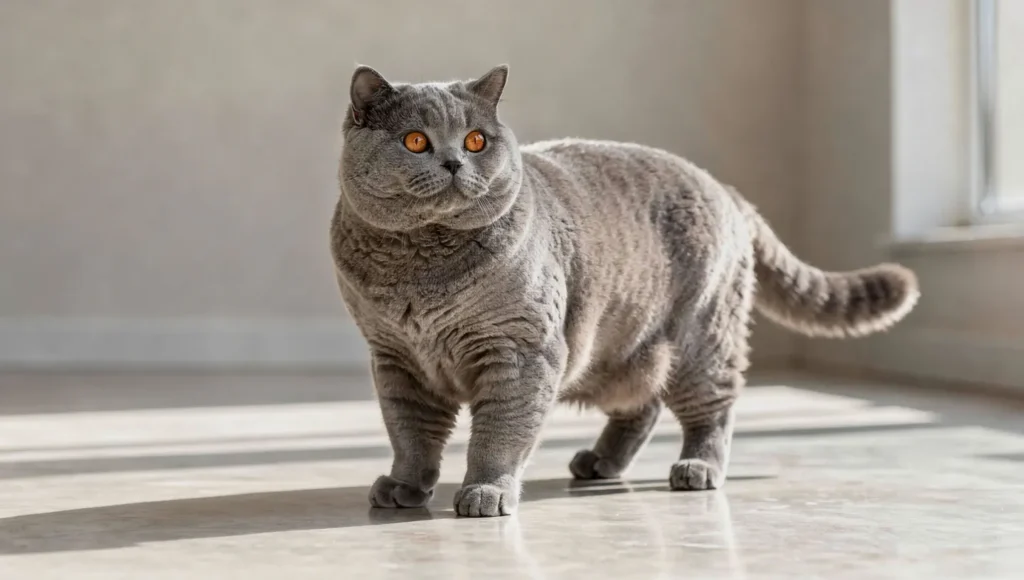
A British Shorthair has a distinctive, sturdy appearance: a broad chest, strong legs, a rounded head, full cheeks, and a short, dense coat that feels almost plush.
The overall impression is less “slender athlete” and more “soft-looking tank.”
And that’s exactly what makes this breed so recognizable.
Size and Body Shape
British Shorthairs are generally medium to large cats, with males typically becoming heavier than females.
Their bodies are broad and muscular rather than long and delicate. They have strong legs, a substantial chest, and a compact appearance that can make them look even heavier than they actually are.
According to PetMD, male British Shorthairs can weigh up to about 17 pounds, while females can reach around 12 pounds, although individual cats can naturally fall outside those numbers.
This is also where a common mistake happens.
People sometimes see a chunky British Shorthair and assume that “round” automatically means “healthy.”
Not necessarily.
A strong, substantial body is part of the breed’s appearance, but healthy body condition still matters. A British Shorthair can gain excess weight just like any other cat.
The Famous Round Face
The face is probably the first thing you’ll notice.
British Shorthairs are known for their rounded heads, full cheeks, short muzzle, and large, expressive eyes.
That combination gives them the almost permanently unimpressed expression that has made the breed so popular.
You know the look.
You could be offering her the finest meal you’ve ever prepared, and she may still look at you as though your performance needs improvement.
It’s part of the charm.
Their eyes can come in several colors depending on the coat, while the famous blue-coated British Shorthair is especially associated with striking orange or amber eyes.
That Thick, Plush Coat
The coat is another major part of the British Shorthair’s identity.
It’s short, but don’t confuse “short” with “thin.”
The fur is dense and plush, giving the cat that soft, almost stuffed-animal appearance.
The famous British Blue has a blue-gray coat, but British Shorthairs can come in many other colors and patterns too.
And yes, they shed.
A short coat still leaves hair behind, especially during heavier shedding periods.
So if you’re imagining a completely hair-free couch because your cat has short fur, I have some bad news for you.
The vacuum cleaner may still become part of the family.
British Shorthair Personality: Affectionate, Independent, or Both?
British Shorthairs are generally calm, gentle, and independent cats that enjoy being around their people without constantly demanding attention.
That last part is important.
Because if you’re expecting a cat that follows you around screaming for attention every second of the day, the British Shorthair may surprise you.
She may simply sit beside you.
Or across the room.
Or on the other side of the couch.
And somehow, that is her version of spending time together.
Are British Shorthairs Affectionate?
Yes, many are affectionate—but they often show it in a quieter way.
PetMD describes the breed as personable and adaptable, while noting that British Shorthairs generally prefer keeping all four paws on the ground rather than being carried around.
That means affection doesn’t always look like a cat jumping into your lap.
Sometimes it looks like this:
You’re working at your desk.
Your cat walks into the room.
She looks at you.
She settles down nearby.
That’s it.
No dramatic entrance.
No demand for attention.
She just wanted to know where you were.
Personally, I think this is one of the most misunderstood things about the breed.
Some people see an independent cat and assume she’s cold.
She’s not necessarily cold.
She may simply have a different idea of what companionship means.
Do They Like Being Held?
This is where individual personality really matters.
Many British Shorthairs prefer having their feet on the floor rather than being picked up and carried around. Others may tolerate or even enjoy being held for short periods.
The important thing is not to assume that every cat will react the same way.
Watch the cat in front of you.
If she relaxes in your arms, that’s one thing.
If she stiffens, pushes away, or clearly wants down, listen to her.
A cat doesn’t have to be a lap cat to love you.
Are They Quiet?
Usually, yes.
British Shorthairs are generally not known for being extremely vocal cats. They can communicate with you, of course, but they’re usually not the breed that needs to provide a running commentary on everything happening in the house.
Which can be wonderfully peaceful.
Until you open the wrong food can.
Then suddenly, she has a speech prepared.
Is a British Shorthair a Good Match for Your Home?
For many households, yes. British Shorthairs are generally adaptable and can do well with families, first-time cat owners, and multi-pet homes when introductions are handled properly.
But “good with families” doesn’t mean “automatically perfect for every family.”
The details matter.
British Shorthairs and Children
A British Shorthair can be a good companion for children, particularly when the child learns how to interact with a cat respectfully.
That means no chasing.
No pulling the tail.
No grabbing the cat while she’s trying to leave.
And no turning the cat into a stuffed toy.
The safest approach is simple: teach children to let the cat choose when she wants interaction and when she wants space.
A calm cat is much more likely to remain calm when the humans around her understand her boundaries.
British Shorthairs and Dogs
British Shorthairs can live successfully with cat-friendly dogs.
But don’t rush the introduction.
A confident adult cat may still be uncomfortable if a huge, excited dog suddenly runs into her personal space.
Slow introductions, separate safe spaces, and allowing the animals time to become familiar with each other’s smell and presence can make the transition much easier.
The same principle applies when introducing another cat.
British Shorthair doesn’t mean “automatically best friends with every animal.”
It means the breed often has the temperament to adapt when the introduction is handled well.
Can a British Shorthair Live in an Apartment?
Yes. Their calm, adaptable nature can make them a good choice for apartment living, provided they have enough enrichment, comfortable resting areas, scratching options, and opportunities for play.
And here’s something people sometimes get wrong:
A calm cat is not the same thing as a cat that needs nothing to do.
Even a British Shorthair benefits from toys, interaction, places to watch the world outside, and short bursts of activity throughout the day.
For more great options suited for compact spaces, check out our guide on the best cat breeds for apartments.
What If You Work Long Hours?
This is one area where the British Shorthair’s independent personality can be helpful.
They can generally tolerate some alone time better than cats that constantly demand human attention, but that doesn’t mean you can simply leave them with a bowl of food and forget about them.
They still need fresh water, a clean litter area, play, mental stimulation, and social interaction.
A cat may be independent.
She isn’t furniture.
That’s an important difference.
What Is Everyday Life With a British Shorthair Really Like?
Living with a British Shorthair is usually less about nonstop activity and more about small moments throughout the day.
A little play in the morning.
A nap by the window.
A quiet check-in while you’re working.
A sudden burst of energy at the exact moment you thought the house was finally peaceful.
Then back to sleep.
Exercise and Play
British Shorthairs are generally moderate in activity rather than hyperactive.
They still enjoy play, especially interactive games that allow them to chase, stalk, and pounce.
Think wand toys, small toy mice, puzzle feeders, and other activities that give them something to figure out.
PetMD specifically notes that British Shorthairs may enjoy interactive play, toy hunting, bird watching, and food puzzles.
The goal isn’t to turn your British Shorthair into an Olympic athlete.
It’s simply to keep her body moving and her brain interested.
Grooming
Their short coat doesn’t require the same level of grooming as a long-haired breed, but regular brushing is still useful because the coat is so dense.
Brushing can help remove loose hair and keep the coat looking its best, particularly during heavier shedding periods.
It’s also a nice opportunity to get your cat comfortable with being handled.
And yes, some cats will cooperate beautifully.
Others will look at the brush, look at you, and walk away.
You may have guessed which category the British Shorthair in your house will choose.
Feeding and Weight Management
British Shorthairs have a naturally solid build, but that doesn’t mean extra weight is harmless.
Their activity level can be fairly moderate, and overfeeding can gradually turn a healthy, sturdy body into an overweight one.
There isn’t one universal food portion that works for every British Shorthair. Age, lifestyle, activity level, and individual body condition all matter when determining how much a cat should eat.
So instead of judging your cat by the number on a food bag alone, pay attention to her overall condition and discuss her individual nutritional needs with your veterinarian.
For a deep dive into daily routines, grooming steps, and practical schedules, explore our complete British Shorthair care guide.
The important distinction is simple:
This article tells you what the breed is like.
That care guide goes deeper into how to look after one day to day.

Health, Weight, and What Owners Should Know
British Shorthairs are generally sturdy cats, but their solid build shouldn’t make you assume they’re automatically healthy. Like any breed, they can develop health problems, and some deserve extra attention.
Weight Matters More Than the Number on the Scale
That famous chunky body can make extra weight surprisingly easy to overlook. Keep an eye on:
- A gradually disappearing waist
- Difficulty jumping or playing
- Less interest in movement
- Trouble grooming hard-to-reach areas
- Rapid or unexplained weight changes
A healthy British Shorthair should look sturdy—not simply overweight.
One condition worth knowing about is hypertrophic cardiomyopathy (HCM), a form of heart disease that can sometimes remain unnoticed early on. PetMD notes that routine veterinary examinations can help identify concerning findings, and prospective owners can ask breeders about appropriate health screening. PetMD’s British Shorthair health guide is a useful starting point for understanding the breed’s known health concerns.
If you’re buying from a breeder, don’t be afraid to ask what health testing has been performed on the parents. That’s not being difficult. That’s being a responsible owner.
British Shorthair Colors and Coat Patterns
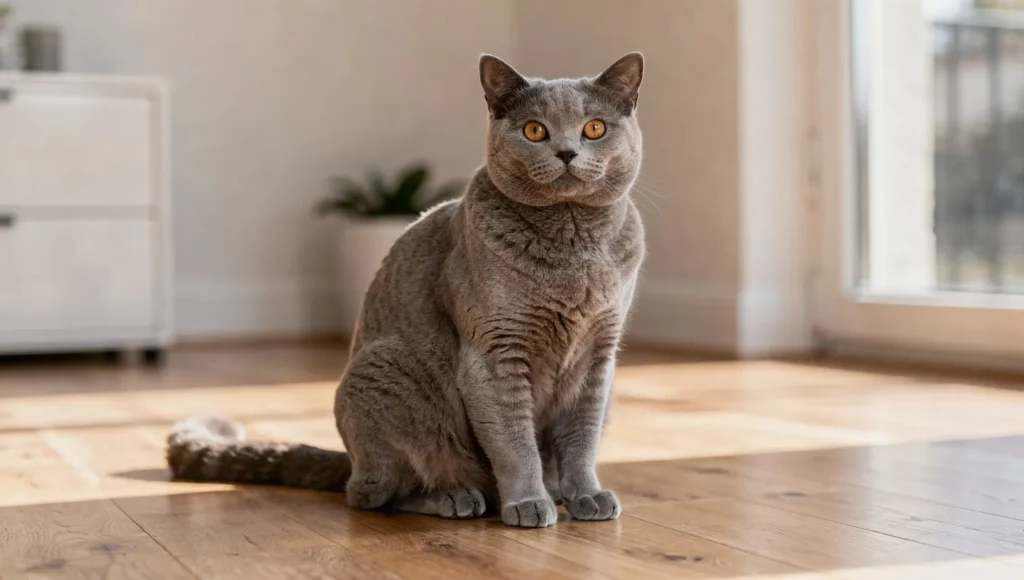
The famous blue-gray British Shorthair is only one piece of the puzzle. The breed is recognized in a wide range of colors and patterns, including solid, tabby, shaded, smoke, tortoiseshell, calico, and bicolor variations. The Cat Fanciers’ Association breed standard documents a particularly broad range of accepted British Shorthair colors and patterns. CFA’s British Shorthair breed standard is the best place to check the formal details.
Some of the colors and patterns you may encounter include:
- Blue
- Black
- White
- Red
- Cream
- Chocolate
- Lilac
- Silver
- Golden
- Tabby
- Shaded
- Smoke
- Tortoiseshell
- Calico
- Bicolor
And here’s something worth remembering: coat color doesn’t tell you what the cat’s personality will be like.
A golden British Shorthair isn’t automatically more affectionate than a blue one. A black British Shorthair isn’t automatically more independent. The individual cat matters far more than the color of her coat.

How Long Do British Shorthairs Live?
A well-cared-for British Shorthair can potentially share your home for many years, but lifespan is never a guarantee.
The boring answer—nutrition, healthy weight, preventive veterinary care, safe housing, and regular attention to changes in behavior—is actually the useful answer.
Small habits add up.
A cat that maintains a healthy weight, stays active, receives appropriate veterinary care, and gets its health problems addressed early has a better foundation for a long, comfortable life.
How Much Does a British Shorthair Cost?
The purchase price is only the beginning. The real cost of owning a British Shorthair includes food, litter, veterinary care, grooming supplies, enrichment, and unexpected expenses.
When comparing kittens, look beyond the price tag.
Things that can affect the cost include:
- Breeder reputation
- Pedigree and registration
- Location
- Age
- Coat color and pattern
- Health screening
- Vaccination and veterinary records
- What is included in the purchase
A very cheap kitten isn’t automatically a bargain.
Sometimes the cheapest option is simply the one with the fewest answers.
And if you’re comparing breeds before making a decision, our Russian Blue vs. British Shorthair comparison can help you look beyond appearance and think about personality, care, and lifestyle fit.
British Shorthair Pros and Cons
Before falling in love with those round cheeks, look at both sides of the deal.
The Pros
- Calm and generally easygoing
- Distinctive teddy-bear appearance
- Often adaptable to apartment living
- Usually not excessively vocal
- Can be affectionate without being clingy
- Dense coat is relatively manageable compared with long-haired breeds
The Cons
- Can gain excess weight
- May not enjoy being carried around
- Some individuals are more independent than owners expect
- Short fur doesn’t mean no shedding
- Health screening and routine veterinary care still matter
Personally, I think the biggest question isn’t whether British Shorthairs are “good cats.”
They are.
The better question is whether their personality matches your idea of what living with a cat should feel like.
Frequently Asked Questions
Are British Shorthairs good for first-time cat owners?
They can be. Their calm temperament and relatively manageable grooming needs can make them a comfortable choice for many first-time owners. The key is understanding that calm doesn’t mean completely hands-off.
Are British Shorthairs affectionate?
Yes, many are affectionate—but often in a quieter way. Don’t be surprised if your cat prefers sitting beside you rather than spending hours in your lap.
Do British Shorthairs shed?
Yes. Their coat is short, but it’s extremely dense. Regular brushing can help manage loose hair, especially during heavier shedding periods.
Are British Shorthairs good with children?
They can be, especially when children understand how to respect a cat’s boundaries. A child who knows when to pet, play, and back off is much more important than simply choosing a breed labeled “family-friendly.”
Can British Shorthairs live in apartments?
Yes. They can adapt well to apartment life when they have comfortable resting areas, scratching options, play, enrichment, food, water, and a clean litter setup.
Are British Shorthairs hypoallergenic?
No cat breed is completely hypoallergenic. A British Shorthair still produces the proteins responsible for cat allergies, so allergy sufferers should spend time around the individual cat before making a commitment.
How big do British Shorthairs get?
They are medium-to-large, sturdy cats, with males generally becoming more massive than females. The breed standard describes them as compact, powerful, broad-chested cats rather than long and slender ones.
How long do British Shorthairs live?
They can live well into their senior years, but individual lifespan varies. Genetics, nutrition, weight, environment, preventive care, and overall health all play a role.
Are British Shorthairs easy to care for?
Compared with some high-maintenance breeds, their short coat makes grooming relatively straightforward. But they still need proper nutrition, exercise, dental care, veterinary attention, enrichment, and daily interaction.
So… Who Actually Owns Whom?
After everything we’ve covered, the British Shorthair starts to make a little more sense.
She’s beautiful, calm, sturdy, and independent—with that round face that makes saying “no” surprisingly difficult.
She may not greet you at the door like you’ve returned from a ten-year expedition. She may not spend every waking hour in your lap.
Instead, she might quietly sit beside you.
Watch what you’re doing.
Follow you into another room.
Then walk away without explanation.
Why?
Honestly, nobody knows.
She’s a British Shorthair.
And that’s part of the charm.
Living with one isn’t simply about owning a beautiful cat. It’s about learning the small ways she communicates comfort, trust, curiosity, and even the occasional disagreement with your household decisions.
So if you’re thinking about bringing one home, take a little time to understand the breed—and then remember that the individual cat in front of you will always matter more than any breed description.
Now we’re curious about your experience.
Do you live with a British Shorthair?
Is your cat actually as calm as everyone promised, or does she run the house like a tiny CEO who doesn’t accept questions?
Tell us about her in the comments.
Your experience might be exactly what another cat owner needs to read before bringing one home.
And if this guide helped you—or simply reminded you of the ridiculous little boss currently sitting on your couch—share it with another cat lover.
Because somewhere out there, someone still believes they’re the owner.
Their British Shorthair knows better.
Thanks for reading.
We’ll see you in the next guide…
assuming the British Shorthair approves.