
Cat body language is the secret key to unlocking a deep, soulful connection with your feline companion. While we rely on words, our cats are constantly communicating through a complex symphony of whisker twitches, tail flicks, and subtle ear shifts. Understanding these silent signals is not just about curiosity; it is a fundamental part of responsible cat ownership that ensures your pet feels safe, understood, and truly loved.
Every blink and every arch of the back tells a story. When you master the art of reading your cat, you move beyond being just a “food provider” and become a true confidant. This guide will help you decode the most mysterious behaviors, from the famous “slow blink” to the subtle warning signs of overstimulation, ensuring a stress-free environment for everyone in the home.
💡 Expert Tip: Cats are masters of subtlety. Always observe the “whole package”—look at the eyes, ears, and tail together rather than focusing on just one part to get the most accurate emotional reading.
If you’ve ever wondered why your pet suddenly shifts from purring to nipping, or what that twitching tail really means, you’re in the right place. Let’s dive into the fascinating world of feline communication and strengthen that beautiful bond you share.
Looking for specific tail signals? Check out our ultimate guide to cat tail language here.
Let’s dive into the fascinating world of feline communication—starting with the most expressive feature of all: your cat’s ears.
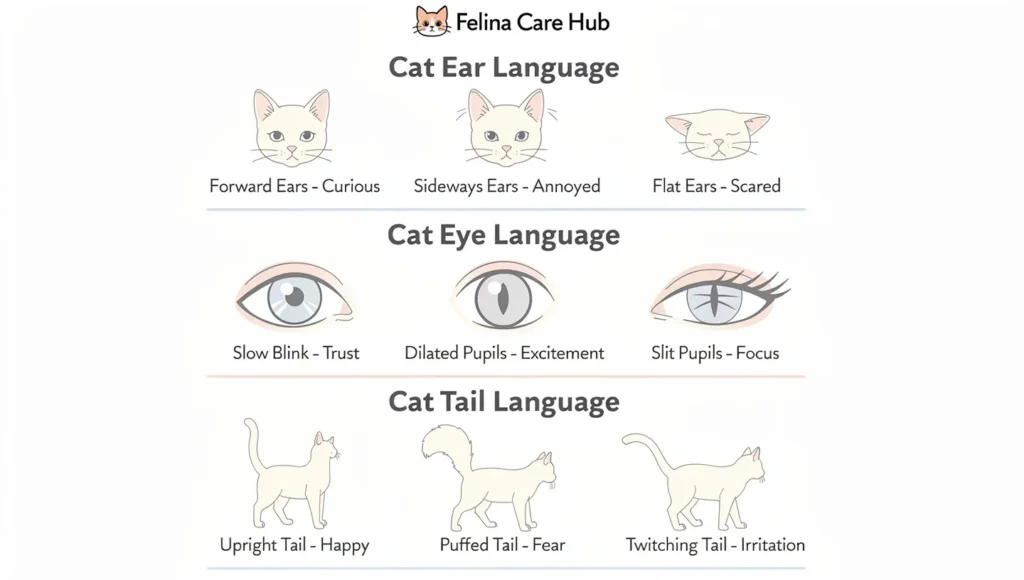
Table of Contents
- 👂 Cat Ear Positions: Reading Your Cat’s Radar
- Cat Eye Blinking and Dilation: The Windows to the Feline Soul
- Cat Body Postures: Deciphering Fear, Relaxation, and Playfulness
- 🐈⬛ Understanding Domestic Cat Behaviors: Subtle Signals You Miss
- 🩺 Identifying Pain or Sickness Through Cat Body Language
- Cat Language Decoded: Your Top Questions Answered
- How can I tell if my cat actually loves me through body language?
- What do “airplane ears” mean in cat language?
- Why are my cat’s pupils so large even when it’s not dark?
- Why does my cat thump their tail on the floor when I pet them?
- Your Journey to Feline Fluency: Building the Ultimate Bond
👂 Cat Ear Positions: Reading Your Cat’s Radar
Cat ear positions act like a sophisticated radar system, signaling emotional shifts before the rest of the body even moves. By paying close attention to these subtle rotations, you can gain an incredible advantage in interpreting overall cat body language and preventing potential conflicts or stress.
1. Perked Forward: The Sign of a Curious Explorer
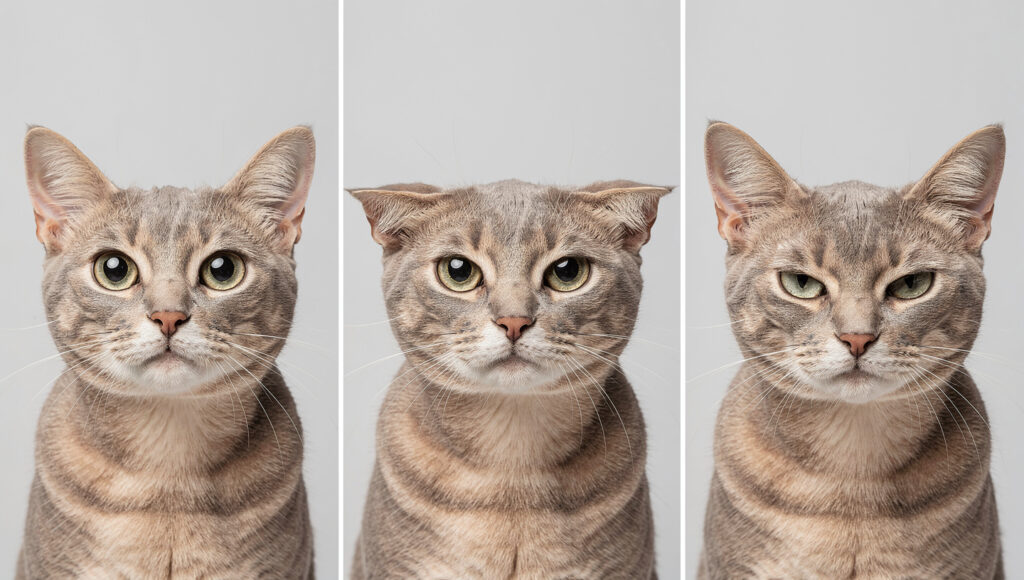
When your cat’s ears are facing forward and slightly tilted, they are in “active mode.” This position indicates that they are curious, relaxed, or intensely interested in something—like a bird outside the window or the sound of a treat bag. It is a positive sign that your cat is engaged with their environment.
2. Sideways or “Airplane Ears”: The Warning Signal
When ears start to rotate outward and flatten slightly, looking like the wings of a plane, your cat is feeling annoyed or overstimulated. This is a critical moment in cat body language where you should give them space. Continuing to pet a cat with airplane ears often leads to a defensive nip or scratch.
3. Flat and Backward: Fear or Extreme Aggression
Ears pinned flat against the skull are a universal sign of a cat that feels threatened. Whether they are terrified or ready to launch an attack, this position protects their delicate ears during a fight. If you see this, stop all interaction immediately and ensure the cat has a clear exit path to a safe hiding spot.
| Ear Position | Emotional State | Recommended Action |
|---|---|---|
| Forward & Up | Relaxed / Curious | Calm interaction is fine |
| Sideways (Airplane) | Irritated / Overstimulated | Stop petting immediately |
| Pinned Flat Back | Fear / Aggression | Retreat and give space |
💡 Quick Summary: Ears are the “pre-check” for a cat’s mood. While a twitching tail is a strong signal, the ears often react milliseconds faster, giving you a head start in understanding their needs.
If your cat’s ears are frequently pinned back without an obvious trigger, they may be experiencing hidden stress or discomfort. Learn how to spot other critical signs of illness in our health guide.
For more scientific insights into feline anatomy and senses, you can visit the Cornell Feline Health Center.
Cat Eye Blinking and Dilation: The Windows to the Feline Soul
If you want to truly master cat body language, you must learn to read their eyes. Unlike humans, a cat’s gaze isn’t just about seeing; it’s about signaling trust, fear, or intense excitement. By observing the pupils and the eyelids, you can instantly tell if your feline friend is feeling relaxed or ready to pounce.
1. The Slow Blink: The Ultimate “I Love You”
The slow blink is perhaps the most famous part of positive cat body language. When a cat looks at you and slowly closes and opens their eyes, they are performing a “cat kiss.” This gesture shows complete trust and vulnerability, as they feel safe enough to close their eyes in your presence.
2. Dilated Pupils: High Energy or Hidden Fear?
Large, round pupils (dilation) are often a sign of high arousal. In a playful setting, it means your cat is excited and ready to hunt a toy. However, if your cat is cornered, dilated pupils signify intense fear. Always check the rest of the body to distinguish between “play mode” and “panic mode.”
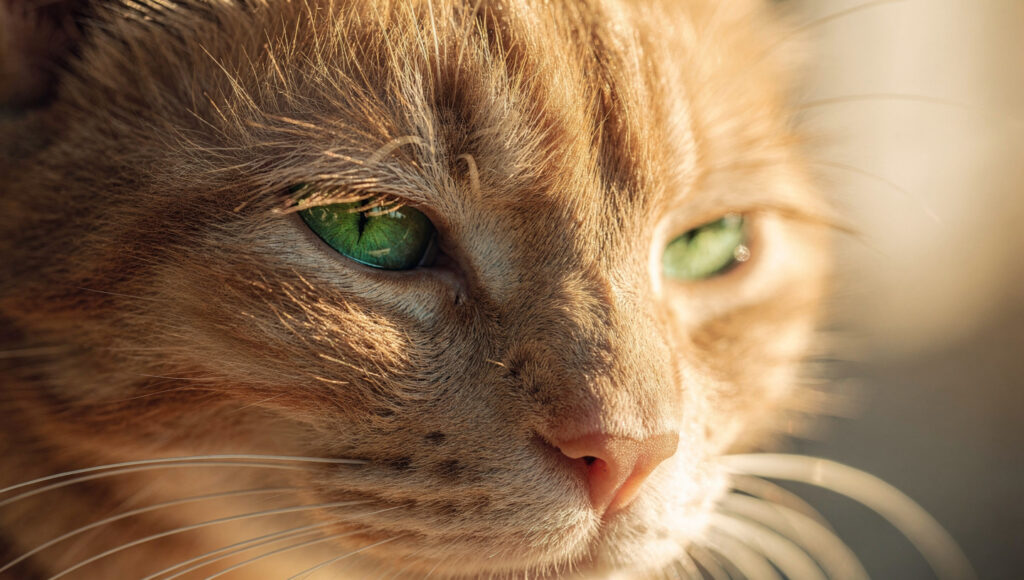
3. Constricted Slits: Focus and Possible Aggression
When a cat’s pupils become narrow slits, they are either in a very bright environment or feeling incredibly focused and potentially aggressive. A staring contest with constricted pupils is often a challenge. If the ears are also back, it’s a clear sign that the cat is feeling territorial or angry.
| Eye Appearance | Meaning | What to Do |
|---|---|---|
| Slow Blinking | Trust and Affection | Blink back slowly to bond |
| Fully Dilated | Excitement / Fear | Monitor the environment |
| Narrow Slits | Focus / Aggression | Avoid direct eye contact |
💡 Expert Tip: To build a stronger bond, try “mirroring” your cat. When they look at you, give them a deliberate slow blink. It’s the most effective way to communicate safety and love in their own natural cat body language.
Understanding these ocular cues can help you prevent overstimulation during play. If you notice your cat’s pupils dilating rapidly, it might be time to take a break. Discover more about why cats bite during play in our behavioral guide.
Cat Body Postures: Deciphering Fear, Relaxation, and Playfulness
A cat’s overall stance is the most visible part of cat body language. While ears and eyes provide the details, the posture tells the whole story of how a cat is coping with its environment. Learning to distinguish between a defensive posture and a relaxed one is essential for maintaining a stress-free home and preventing behavioral issues.
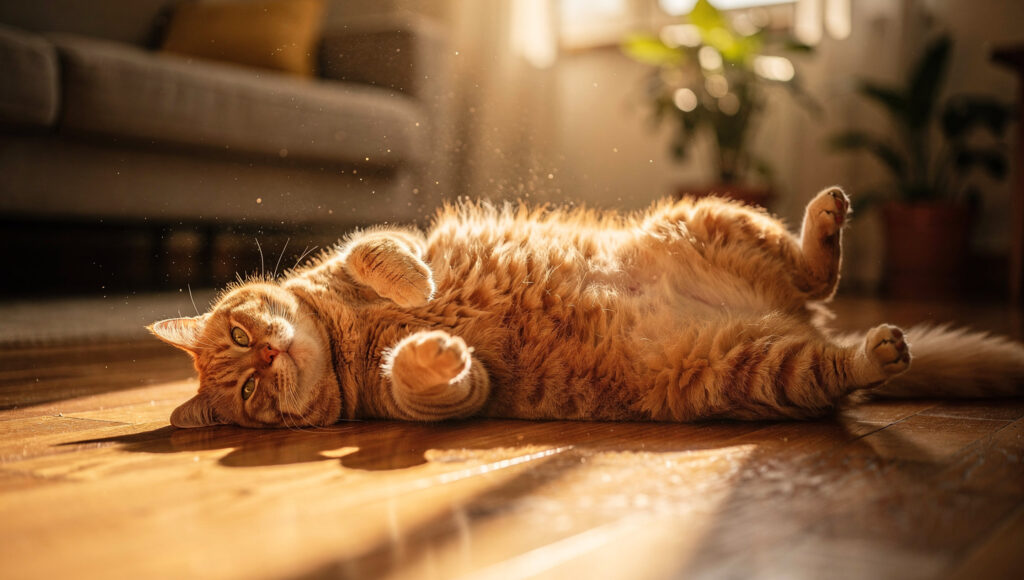
1. The Relaxed Roll and Exposed Belly
When a cat lies on its side or back, exposing its belly, it is a peak sign of trust in cat body language. This posture means they feel completely safe in your presence. However, be careful—for many cats, showing the belly is a sign of greeting and trust, not necessarily an invitation for a belly rub!
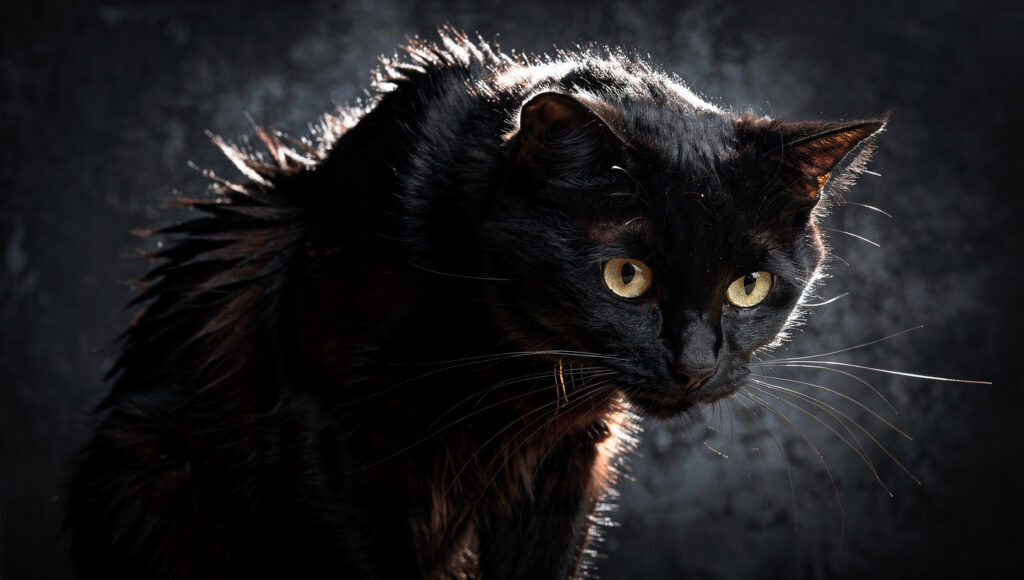
2. The Arched Back (The “Halloween Cat”)
An arched back with fur standing on end (piloerection) is a classic defensive posture. Your cat is trying to look larger and more intimidating to a perceived threat. This is a high-stress moment where the cat feels cornered and may lash out if approached.
3. The Loaf and Relaxed Tuck
The “loaf” position—where a cat tucks its paws under its chest—indicates a cat that is relaxed but still somewhat alert. They are comfortable enough to rest but ready to move if needed. If they are kneading their paws before settling, it’s a sign of deep contentment. Discover the sweet truth about why cats knead here.
4. The Play Bow and Pouncing Stance
A playful cat will often have its rear end slightly raised with its tail twitching. This “ready to spring” posture is an exciting part of cat body language that mimics hunting behavior. It’s the perfect time to grab a wand toy and engage in a safe play session.
| Posture Type | Physical Signs | Mental State |
|---|---|---|
| Relaxed | Belly exposed, loose limbs, slow blinking | Calm and Trusting |
| Defensive | Arched back, puffed fur, ears back | Terrified / Threatened |
| Playful | Wiggling rear, focused eyes, tail twitching | Excited / Predatory |
💡 Quick Summary: Context is everything. A cat lying on its back in a sunbeam is happy, but a cat on its back during a fight is using its most dangerous weapon—all four sets of claws—to defend itself. Always look at the environment before reacting to cat body language.
If you are introducing a new feline friend to your home, observing these postures is vital to ensure both pets feel safe. Check out our stress-free guide to introducing two cats to help them find a relaxed rhythm together.
For more professional tips on feline welfare, you can explore resources from the American Association of Feline Practitioners.
🐈⬛ Understanding Domestic Cat Behaviors: Subtle Signals You Miss
True mastery of cat body language lies in noticing the small details that most people overlook. While a hiss or a purr is obvious, the subtle shift in whisker tension or the way a cat uses its scent can tell you exactly what’s happening in their mind. Understanding domestic cat behaviors at this level allows you to anticipate their needs before they become stressed or frustrated.
1. Whisker Positions: The Silent Mood Indicators
Did you know that whiskers are highly sensitive emotional barometers? When a cat is relaxed, their whiskers hang loosely to the sides. If they are hunting or curious, the whiskers thrust forward. Conversely, whiskers bunched tight against the face indicate a cat that is fearful or ready to defend itself—a subtle but vital cue in cat body language.
2. Bunting and Scent Marking: “You Belong to Me”
When your cat rubs their cheeks or forehead against your hand or furniture, they are “bunting.” This behavior is a sophisticated form of communication where they deposit pheromones from glands in their face. It’s a sign of affection and territorial security, signaling that they feel safe and “own” their environment.
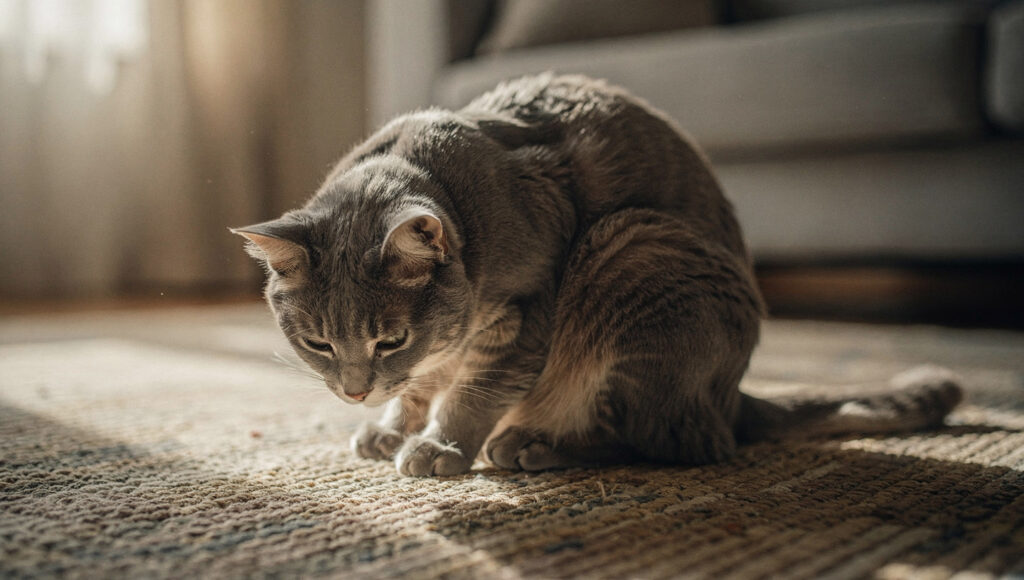
3. The Tiny Tail Tip Twitch
While we’ve covered tail basics before, the very tip of the tail is worth watching. A tiny, rhythmic twitch of just the tip usually means the cat is intensely focused or mildly frustrated—think of it as a human tapping their finger while waiting. If the twitching turns into a heavy thump, the mood has shifted toward irritation.
| Subtle Signal | Physical Action | Secret Meaning |
|---|---|---|
| Whiskers Forward | Thrust toward an object | Intense curiosity / Hunting mode |
| Cheek Rubbing | Rubbing face on objects/people | Scent marking / Deep trust |
| Slow Tail Tip Move | Only the very end twitches | Concentration or slight indecision |
💡 Expert Tip: Never ignore the “stare.” In the world of cat body language, a long, unblinking stare between two cats is a high-stakes standoff. If your cat stares at you without blinking, break the tension by offering a “slow blink” to show you aren’t a threat.
Understanding these micro-gestures is key to a happy home. For a deeper dive into the most expressive part of their body, read our specialized guide on cat tail language and what every flick means.
If you want to see how these behaviors change during a life-changing event like introducing a new pet, check out our guide on how to introduce two cats without the drama.
🩺 Identifying Pain or Sickness Through Cat Body Language
Cats are evolutionary experts at hiding discomfort to avoid appearing vulnerable. This means that by the time a cat shows obvious signs of illness, the condition may already be advanced. Mastering the observation of cat body language is your best tool for early detection, allowing you to catch health issues before they become emergencies.
1. The Hunched Posture (The “Pain Guarding” Stance)
One of the most telling signs of internal pain in cat body language is the hunched posture. Unlike the relaxed “loaf” position, a cat in pain will have a curved back, with their head lowered and paws tucked tightly but awkwardly. Their nose may be pointed toward the floor, and they often look “tense” rather than resting.
2. The Feline Grimace Scale: Reading the Face
Recent veterinary research has highlighted specific facial changes in cats experiencing pain. Look for “orbital tightening” (squinted eyes), ears that are pulled apart and flattened, and whiskers that appear bunched or straight rather than loosely curved. These are subtle shifts in cat body language that signal distress.
3. Changes in Hiding and Social Behavior
While hiding is a part of normal cat body language for naps, a sudden increase in hiding in unusual spots (like the back of a dark closet) is a major red flag. If your normally social cat becomes withdrawn or reacts aggressively to being touched in a specific area, they are likely protecting a painful spot.
| Feature | Healthy / Relaxed | Potential Pain / Sickness |
|---|---|---|
| Back Posture | Straight or gently curved | Sharply arched or hunched |
| Head Position | Held up or resting on paws | Drooped, nose toward the ground |
| Eyes | Bright, open, or slow-blinking | Squinted, glassy, or fixed stare |
| Activity Level | Normal grooming and play | Lethargy or excessive hiding |
💡 Expert Tip: Watch for “over-grooming” or “under-grooming.” A cat that suddenly stops cleaning itself often feels too ill to try, while a cat that obsessively licks one specific joint may be trying to soothe localized arthritis pain.
If you notice any of these shifts in your pet’s cat body language, it is essential to monitor them closely. For a more detailed breakdown of medical warning signs, read our comprehensive guide on 10 critical signs your cat is sick.
For scientifically validated information on feline pain management, you can refer to the World Small Animal Veterinary Association (WSAVA) guidelines.
Cat Language Decoded: Your Top Questions Answered
How can I tell if my cat actually loves me through body language?
One of the biggest signs of feline “true love” is the famous slow blink—think of it as a cat kiss. If your cat looks at you and slowly closes their eyes, they’re showing total trust. Other signs include “bunting” (rubbing their cheeks against you) and a tail that’s held high with a little curl at the very tip, like a question mark.
What do “airplane ears” mean in cat language?
If you see your cat’s ears rotating outward and flattening slightly (looking like the wings of a plane), it’s a major red flag. This means your cat is feeling irritated, overstimulated, or annoyed. It’s their way of saying, “I’ve had enough petting for now—give me some space before I nip!”
Why are my cat’s pupils so large even when it’s not dark?
Large, dilated pupils are a sign of high arousal. In a playful setting, it means your cat is in “hunter mode” and ready to pounce on a toy. However, if the rest of their body is tense or they are hiding, those big pupils mean they are feeling terrified or threatened. Always look at the ears and tail to know which one it is.
Why does my cat thump their tail on the floor when I pet them?
Unlike dogs, a thumping tail in the cat world isn’t a sign of joy. It’s a rhythmic signal of growing frustration. If your cat starts hitting the floor or the couch with their tail while you’re cuddling, they are becoming “touched out.” It’s best to stop petting immediately to keep the interaction positive.
Your Journey to Feline Fluency: Building the Ultimate Bond
Mastering cat body language doesn’t happen overnight. It is a rewarding, ongoing conversation between you and your feline companion. By paying attention to the subtle flick of a tail or the soft blink of an eye, you are telling your cat that their voice matters. This mutual understanding is the foundation of a truly happy, healthy, and stress-free life together.
As you move forward, remember that every cat is a unique individual. While these expert guidelines provide the “alphabet” of feline communication, your specific cat might have their own quirky “slang.” The more time you spend observing without overstimulating, the deeper your connection will grow. You aren’t just a pet owner anymore; you are a feline linguist.
💡 Final Expert Tip: Always approach your cat on their terms. If their cat body language says “not now,” respecting that boundary is the fastest way to earn their long-term trust and affection.
What is your cat telling you right now?
We’d love to hear about your cat’s unique signals! Does your feline friend have a specific “mood” that only you can decode? Share your stories in the comments below and let’s learn from each other.
Ready to bond even further? Learn the stress-free way to brush your cat and keep them purring.