
It was a Tuesday night when my friend Marcus texted me out of nowhere: “Hey, is it bad if a cat doesn’t eat for a whole day? Asking for a reason.” I called him back immediately.
Turns out his two-year-old tabby, Scout, had been completely ignoring her food bowl since that morning — dry food, wet food, even the fancy tuna she goes crazy for. Nothing. Marcus was trying to stay calm, but I could hear the worry in his voice.
That conversation is actually what pushed me to write this guide. Because I realized how many owners feel helpless when they see their cat not eating, and they don’t know if they should panic or wait.
Quick note before we dive in: I’m not a vet, and nothing here replaces a real diagnosis. What I can offer is 10+ years of living with cats, a lot of late-night research, and the kind of honest advice I’d give a friend at 2am. If your gut says something is seriously wrong — trust it, and call your vet.
Table of Contents
- Is It an Emergency? The First Thing You Need to Know
- Why Is My Cat Not Eating? 9 Real Reasons (From Mild to Serious)
- 1. Stress or a Change in Environment
- 2. New Food or Picky Eating
- 3. Dental Pain
- 4. Upset Stomach or Digestive Issues
- 5. Respiratory Infection
- 6. Whisker Fatigue
- 7. Medication Side Effects
- 8. Kidney Disease or Liver Issues
- 9. Pain or Injury
- Cat Not Eating But Drinking Water — What Does It Mean?
- The 24-Hour Action Plan — What To Do Right Now
- Decision Tree — Should You Go to the Vet?
- How Long Can a Cat Go Without Eating?
- Quick Answers to Common Worries
- Why is my cat not eating but still drinking water?
- Should I force feed my cat?
- What can I feed a cat that won’t eat?
- Is it normal for cats to not eat for a day?
- The Bottom Line (And Scout’s Update)
Is It an Emergency? The First Thing You Need to Know
A cat not eating for more than 24–48 hours is a serious concern and requires veterinary attention, especially if combined with lethargy, vomiting, or not drinking water.
Here’s the thing — cats are not like dogs. They can’t go days without food and just “bounce back.” Their bodies are actually wired in a way that makes skipping meals genuinely dangerous. After 48 hours without eating, cats are at real risk of developing a condition called hepatic lipidosis (fatty liver disease) — and it can happen fast.
But before you panic, let’s slow down for a second.
Not every missed meal is a code red. Context matters a lot here.
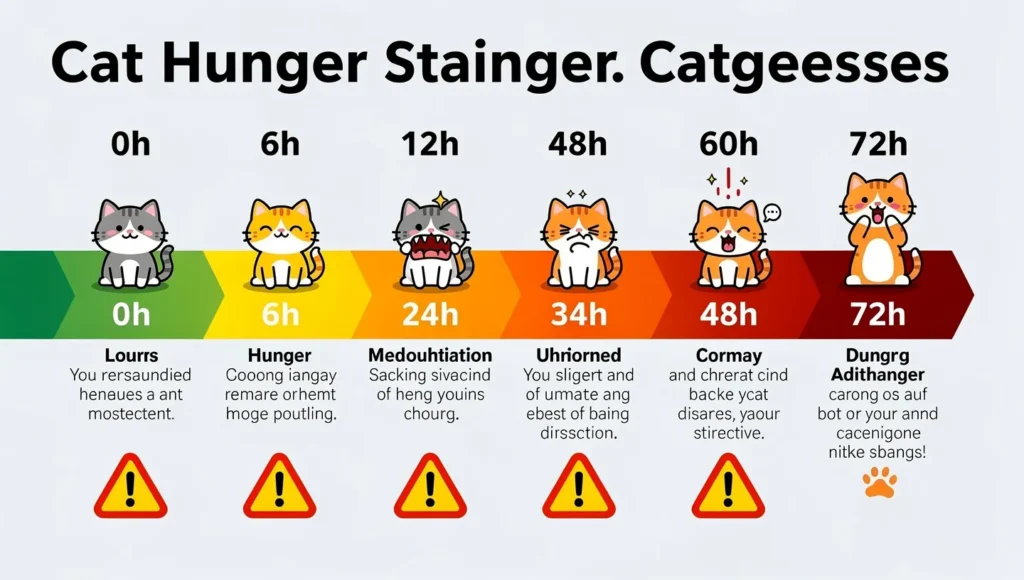
| Timeframe | What It Means | What To Do |
|---|---|---|
| Skipped 1 meal | Likely nothing serious | Monitor closely |
| Not eating for 24 hours | Worth paying attention | Check for other symptoms |
| Not eating for 48 hours | Concerning | Call your vet |
| Not eating for 72+ hours | Emergency 🚨 | Vet visit — do not wait |
And if your cat isn’t eating and isn’t drinking? That’s a different level of urgency entirely. More on that in a bit.
Most people get this wrong — they either panic too soon or wait way too long. The goal of this guide is to help you land somewhere in the middle: informed, calm, and ready to act if needed.
Why Is My Cat Not Eating? 9 Real Reasons (From Mild to Serious)
Cats stop eating for many reasons — from something as simple as a new food they don’t like, to something as serious as kidney disease. Identifying the root cause behind a cat not eating is always the first and most important step to fixing the problem.
Honestly, this is where most articles just dump a list on you and call it a day. I want to actually walk you through these — because the why behind each reason changes everything about how you respond.
1. Stress or a Change in Environment
Cats are creatures of habit. Like, deeply creatures of habit. A new apartment, a new baby, a new piece of furniture in the wrong spot — any of these can throw them completely off.
When Marcus first moved to a new place last year, Scout stopped eating for almost two days. No medical issue at all. Just a cat adjusting to unfamiliar smells and sounds.
If something recently changed in your home — even something that seems minor to you — stress is probably the first place to look.
2. New Food or Picky Eating
This one is more common than people think. Cats can go on hunger strikes over something as small as a formula change in their usual brand. They notice everything — texture, smell, temperature.
If you recently switched foods, that might be your answer right there. The key is transitioning slowly and safely. I actually wrote a full guide on how to switch cat food without the drama — worth a read if this sounds familiar.
3. Dental Pain
Here’s something a lot of cat owners overlook: if eating hurts, your cat simply won’t eat. Broken teeth, gum disease, mouth ulcers — these are more common than you’d think, especially in cats over 5.
Watch for pawing at the mouth, drooling, or dropping food mid-chew. Those are your clues. For a deeper look at what’s actually going on inside your cat’s mouth, this dental care guide covers it really well.
4. Upset Stomach or Digestive Issues
Sometimes a cat just has a bad stomach day — ate something weird, hairball situation, minor bug. They’ll skip a meal and then be fine by the next day.
The question is whether it stays at “one off day” or turns into something more. If your cat is also vomiting or has diarrhea alongside not eating, that changes the picture. Check out why cats throw up after eating for more context on that.
5. Respiratory Infection
Cats rely heavily on smell to decide if food is worth eating. If their nose is stuffy from an upper respiratory infection, food literally smells like nothing to them — so they ignore it.
Look for sneezing, watery eyes, or nasal discharge. A vet visit is usually needed here.
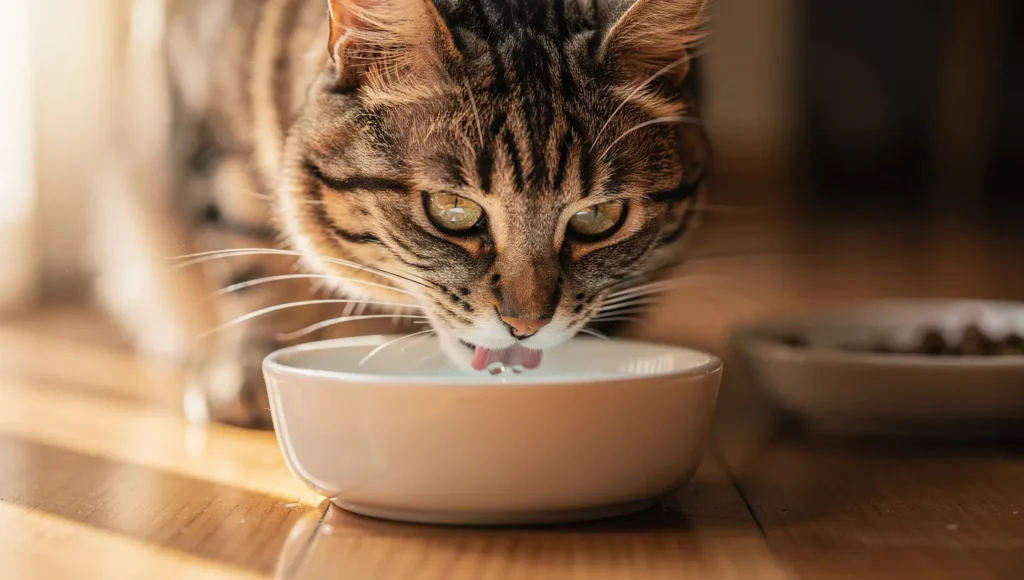
6. Whisker Fatigue
And this is important — a lot of people have never even heard of this one.
Whisker fatigue happens when a cat’s sensitive whiskers are constantly touching the sides of a deep or narrow food bowl. It overstimulates their nervous system, which is a very common but hidden reason for a cat not eating despite being hungry. uncomfortable. They might stand in front of the bowl, act interested, and then walk away.
Simple fix: switch to a wide, shallow dish. That’s genuinely all it takes sometimes. I have a whole breakdown on whisker fatigue and what to do about it if you want the full picture.
7. Medication Side Effects
If your cat recently started a new medication, loss of appetite is one of the most common side effects. It doesn’t always mean something is wrong — but it’s worth mentioning to your vet so they can adjust the dosage or suggest an alternative.
8. Kidney Disease or Liver Issues
This is where things get more serious. Chronic kidney disease (CKD) is one of the leading causes of appetite loss in older cats. Same with liver issues. Both affect how a cat feels overall — nausea, fatigue, general discomfort — and eating becomes the last thing they want to do.
According to the American Veterinary Medical Association (AVMA), kidney disease affects a significant portion of cats over 10 years old. If your cat is a senior and suddenly not eating, please don’t wait on this one.
9. Pain or Injury
Cats hide pain really well — it’s a survival instinct. But internal pain, arthritis, or even a sore paw can cause a cat to withdraw from normal behaviors, including eating.
If your cat is moving differently, less social, or seems generally “off” in addition to not eating, pain might be the underlying issue. Knowing the signs that your cat is sick can help you catch this early.
Cat Not Eating But Drinking Water — What Does It Mean?
If your cat is skipping food but still drinking, that’s actually a better sign than not doing either — but it still needs attention.
Drinking water tells you the body is trying to compensate for something. Common reasons include nausea, kidney issues, or a mild infection. The water intake might look reassuring, but don’t let it delay action past 24–48 hours.
- Drinking more than usual + not eating → possible kidney or diabetes issue
- Drinking normally + not eating → stress, dental pain, or digestive upset
- Not eating + not drinking → 🚨 call your vet today, no waiting
The 24-Hour Action Plan — What To Do Right Now
When you’re dealing with a cat not eating, you shouldn’t just watch and wait. Here is a proactive sequence that actually works.
- Check the basics first: any vomiting, lethargy, hiding, or changes in litter box behavior?
- Try warming the food: gently warming wet food releases the smell and often triggers appetite. Here’s the safe way to do it without burning sensitive nutrients
- Switch the bowl: wide and shallow — whisker fatigue is real and often overlooked
- Offer something different: a small amount of a new texture or flavor, not a full diet change
- Remove stress triggers: loud noise, new pets, schedule changes — address what you can
- If nothing works in 24 hours: call your vet. Not tomorrow. Today.
Decision Tree — Should You Go to the Vet?
Use this as your quick reference. No guessing.
| Situation | Action |
|---|---|
| Not eating + acting normal | Monitor for 24h, try the tips above |
| Not eating + lethargic | Call vet within a few hours |
| Not eating + vomiting | Call vet today |
| Not eating + not drinking | Emergency — go now 🚨 |
| Not eating + hiding | Call vet — cats hide when they’re in pain |
| Kitten not eating | Never wait — call immediately |
Senior cats and kittens = zero waiting. Their systems don’t have the same buffer as a healthy adult cat.
How Long Can a Cat Go Without Eating?
Most healthy adult cats can survive 1–2 days without food — but that doesn’t mean you should ignore a cat not eating for that long.
After 48 hours, the liver starts pulling stored fat for energy. In cats, this process can trigger hepatic lipidosis (fatty liver disease) — one of the most serious and unfortunately common conditions in cats that stop eating. According to the ASPCA, hepatic lipidosis can develop quickly and requires aggressive veterinary treatment.
Kittens and senior cats? That window shrinks dramatically. Don’t test it.
Quick Answers to Common Worries
Why is my cat not eating but still drinking water?
Usually points to nausea, a mild infection, or an early kidney issue. Monitor closely and call your vet if it lasts more than 24 hours.
Should I force feed my cat?
No — not without vet guidance. Force feeding done wrong can cause aspiration and make things worse. If your cat needs assisted feeding, your vet will show you the right way to do it.
What can I feed a cat that won’t eat?
Try warmed wet food, low-sodium chicken broth, or plain cooked chicken. Small amounts, no pressure. If your cat is on a specific diet, check out what cats can safely eat before improvising.
Is it normal for cats to not eat for a day?
One skipped meal — maybe. A full day with no interest in food at all? That’s worth paying close attention to, especially if anything else seems off. Knowing the early signs your cat is sick can help you catch problems before they escalate.
The Bottom Line (And Scout’s Update)
Marcus texted me three days after that phone call: “Scout ate her whole bowl this morning. Vet said mild stress from the new neighborhood. All good.”
That’s the best case scenario — and most of the time, it really is something manageable. But the only reason Marcus caught it early was because he paid attention and didn’t brush it off.
Trust your instincts. You know your cat better than anyone. And when something feels wrong — act on it.